sales

Tesla fires VP of manufacturing Omead Afshar amid declining EV sales

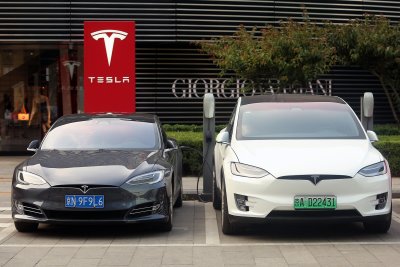
A row of Teslas charge at a Tesla power station (2018). The company announced on Thursday that it sold fewer cars in 2024 than it did in 2023, the first time sales dropped since Tesla began mass producing EVs. Its profits fell 71% in the first quarter of 2025, too. File Photo by Stephen Shaver/UPI | License Photo

June 26 (UPI) — Tesla CEO Elon Musk fired the carmaker’s vice president of manufacturing and operations following a falloff in auto sales in the nation’s largest markets this year.

Omead Afshar oversaw more than six upper-level employees in the company, including Troy Jones, Tesla’s vice president of sales in North America, and Joe Ward, vice president of the Europe, Middle East and Africa region.

The firing was first reported by Bloomberg News.

Afshar is the second high-level employee to leave the company recently. His termination follows the resignation of Milan Kovac, who was the company’s head of its Optimus humanoid robotics program.

Kovac said in a post on X that he was leaving Tesla to spend more time with his family. Musk later thanked Kovac publicly for his time with the company.

In 2022, Afshar was the subject of an internal investigation at Tesla that focused on his involvement in trying to secure construction materials for a secret project for Musk that included hard-to-get glass.

Prior to his job as Tesla vice president, Afshar worked for SpaceX, Musk’s aerospace company. Afshar’s X account, which had not been updated, said he still works for Tesla, and he praised Musk for his leadership and work ethic following the launch of the company’s Robotaxi service in Austin, Texas.

“Thank you, Elon, for pushing us all,” Afshar wrote.

Tesla’s stock price has dropped 19% this year, and took an especially hard hit following Musk’s association with President Donald Trump, who appointed Musk to oversee the Department of Government Efficiency.

DOGE took a broad and aggressive approach to eliminating federal employees, downsizing federal agencies and ending diversity, equity and inclusion programs at some of the nation’s largest companies and universities.

The company sold fewer cars in 2024 than it did in 2023, the first time sales dropped since Tesla began mass producing EVs. Its profits fell 71% in the first quarter of 2025. European sales dropped 28%, and dropped for a fifth straight month in May.

The European Automobile Manufacturers Association said buyers are shifting to cheaper Chinese models.

Source link

Amid declining EV sales, Tesla fires vice president of manufacturing

A row of Teslas charge at a Tesla power station (2018). The company announced on Thursday that it sold fewer cars in 2024 than it did in 2023, the first time sales dropped since Tesla began mass producing EVs. Its profits fell 71% in the first quarter of 2025, too. File Photo by Stephen Shaver/UPI | License Photo

June 26 (UPI) — Tesla CEO Elon Musk has fired the carmaker’s vice president of manufacturing and operations following a falloff in auto sales in the nation’s largest markets this year.

Omead Afshar oversaw more than a half dozen upper-level employees in the company, including Troy Jones, Tesla’s vice president of sales in North America, and Joe Ward, vice president of the Europe, Middle East and Africa region.

The firing was first reported by Bloomberg News.

Afshar is the second high-level employee to leave the company recently. His termination follows the resignation of Milan Kovac, who was the company’s head of its Optimus humanoid robotics program.

Kovac said in a post on X that he was leaving Tesla to spend more time with his family. Musk later thanked Kovac publicly for his time with the company.

In 2022, Afshar was the subject of an internal investigation at Tesla that focused on his involvement in trying to secure construction materials for a secret project for Musk that included hard-to-get glass.

Prior to his job as Tesla vice president, Afshar worked for SpaceX, Musk’s aerospace company. Afshar’s X account, which had not been updated, said he still works for Tesla, and he praised Musk for his leadership and work ethic following the launch of the company’s Robotaxi service in Austin, Texas.

“Thank you, Elon, for pushing us all,” Afshar wrote.

Tesla’s stock price has dropped 19% this year, and took an especially hard hit following Musk’s association with President Donald Trump, who appointed Musk to oversee the Department of Government Efficiency.

DOGE took a broad and aggressive approach to eliminating federal employees, downsizing federal agencies and ending diversity, equity and inclusion programs at some of the nation’s largest companies and universities.

The company sold fewer cars in 2024 than it did in 2023, the first time sales dropped since Tesla began mass producing EVs. Its profits fell 71% in the first quarter of 2025. European sales dropped 28%, and dropped for a fifth straight month in May.

The European Automobile Manufacturers Association said buyers are shifting to cheaper Chinese models.

Source link

Rhode Island lawmakers pass bill to ban sales of assault weapons

Rhode Island’s Democratic-controlled state House on Friday approved legislation that would ban the sale and manufacture of many semiautomatic rifles commonly referred to as assault weapons.

The proposal now heads to the desk of Democratic Gov. Daniel McKee, who has said he supports assault weapons bans. If the bill is signed into law, Rhode Island will join 10 other states that have some sort of prohibition on high-powered firearms that were once banned nationwide and are now largely the weapon of choice among those responsible for most of the country’s mass shootings.

Gun control advocates have been pushing for an assault weapons ban in Rhode Island for more than a decade. But despite being a Democratic stronghold, lawmakers throughout the country’s smallest state have long argued over the necessity and legality of such proposals.

The bill applies only to the sale and manufacturing of assault weapons and not possession. Only Washington state has a similar law. Residents looking to purchase an assault weapon from nearby New Hampshire or elsewhere will also be blocked. Federal law prohibits people from traveling to a different state to purchase a gun and returning it to a state where that particular of weapon is banned.

Nine states and the District of Columbia have bans on the possession of assault weapons, covering major cities including Los Angeles and New York. Hawaii bans assault pistols.

Democratic Rep. Rebecca Kislak described the bill during floor debates Friday as an incremental move that brings Rhode Island in line with neighboring states.

“I am gravely disappointed we are not doing more, and we should do more,” she said. “And given the opportunity to do this or nothing, I am voting to do something.”

Critics of Rhode Island’s proposed law argued Friday during floor debates that assault weapons bans do little to curb mass shootings and only punish people with such rifles.

“This bill doesn’t go after criminals, it just puts the burden on law-abiding citizens,” said Republican Sen. Thomas Paolino.

Republican Rep. Michael Chippendale, the House minority leader, predicted that if the legislation were to become law, the U.S. Supreme Court would deem it unconstitutional.

“We are throwing away money on this,” he said.

It wasn’t just Republicans who opposed the legislation. David Hogg — a gun control advocate who survived the 2018 school shooting in Parkland, Fla. — and the Rhode Island Coalition Against Gun Violence described the proposed ban as the “weakest assault weapons ban in the country.”

“I know that Rhode Islanders deserve a strong bill that not only bans the sale, but also the possession of assault weapons. It is this combination that equals public safety,” Hogg said in a statement.

Elisabeth Ryan, policy counsel at Everytown for Gun Safety, rejected assertions that the proposed law is weak.

“The weakest law is what Rhode Island has now — no ban on assault weapons,” Ryan said. “This would create a real, enforceable ban on the sale and manufacture of assault weapons, just like the law already working in Washington state, getting them off the shelves of Rhode Island gun stores once and for all.”

Nationally, assault weapons bans have been challenged in court by gun rights groups that argue the bans violate the 2nd Amendment. AR-15-style firearms are among the bestselling rifles in the country.

The conservative-majority Supreme Court may soon take up the issue. The justices declined to hear a challenge to Maryland’s assault weapons ban in early June, but three conservative justices — Samuel A. Alito Jr., Neil M. Gorsuch and Clarence Thomas — publicly noted their disagreement. A fourth justice, Brett M. Kavanaugh, indicated he was skeptical that the bans are constitutional and predicted the court would hear a case “in the next term or two.”

Kruesi writes for the Associated Press. AP writers David Lieb in Jefferson City, Mo., and Lindsay Whitehurst in Washington, D.C., contributed to this report.

Source link

Nine Hobbycraft stores to shut in DAYS as part of huge restructuring – and they’ve launched closing down sales

HOBBYCRAFT will shut nine stores in days with huge closing down sales launched.

Sites across Bristol, Dunstable, Borehamwood and Basildon are all set to close on June 21, The Sun can reveal.

Hobbycraft store exterior.

1

Hobbycraft is closing a number of stores in the coming weeksCredit: Getty

A further two sites in Essex and one in Gloucestershire are also set to close, with a site in Kent closing earlier this year.

The impacted stores are part of at least nine Hobbycraft stores that have been earmarked for closure this year.

News of the closures has come as a blow to locals in the area, with Bristol residents describing it as a “shame”.

While another said the store would be missed and they needed to find another “rainy day activity”.

A Kent local said: “Oh noooooo it’s the only one I go to regularly as the rest are too far away!”.

Another resident said they would “need therapy” following news of the closure.

Closing down sales have also been launched across the stores, with up to 70% off on some items.

It comes as new owner Modella Capital is launching an overhaul after buying Hobbycraft in August last year.

Modella also agreed to purchase WHSmith’s high street business earlier this year.

The move is set to impact between 72 and 126 jobs.

Popular retailer to RETURN 13 years after collapsing into administration and shutting 236 stores

It is said the shake-up will help secure the future of 99 stores and around 1,800 jobs across the arts and crafts business.

You can check out the full list of stores earmarked for closure below.

  • Canterbury, Kent – closed 
  • Basildon, Essex – June 21
  • Borehamwood, Hertfordshire – June 21
  • Bristol, Imperial Retail Park – June 21
  • Dunstable, Bedfordshire – June 21 
  • Epping Forest, Essex – June 21
  • Lakeside Shopping Centre, Essex – June 21
  • Cirencester, Gloucestershire  -June 21
  • Bagshot, Surrey – June 21

OTHER STORE CLOSURES

Hobbycraft is not the only retailer facing hard times.

Up to 11 Original Factory Shops stores are to set to close this month, including sites across Worcestershire, Durham and Cumbria.

Meanwhile, another five stores across Nairn, Market Drayton, Troon, Blairgowrie and Castle Douglas have been put up for sale.

It comes as part of a major restructuring carried out by new owner Modella Capital with a number of loss-making stores having to close as result.

You can see the full list of store closures here:

  • Milford Haven, Pembrokeshire – June 26
  • Perth – June 28
  • Chester Le Street, County Durham – June 28
  • Arbroath, Angus – June 28
  • Kidwelly, Carmarthenshire – June 28
  • Pershore, Worcestershire – June 28
  • Normanton, West Yorkshire – June 28
  • Peterhead, Aberdeenshire – June 28
  • Shaftesbury, Dorset – June 28
  • Staveley, Cumbria – July 12
  • Middlewich – TBC

The following stores are also up for sale:

  • Nairn
  • Market Drayton
  • Troon
  • Blairgowrie
  • Castle Douglas

It comes after pivate equity firm Modella bought The Original Factory Shop back in February and has since launched a restructuring effort to renegotiate rents at 88 TOFS stores.

At the end of April, Modella drew up plans to initiate a company voluntary arrangement (CVA) for TOFS.

Companies often use CVAs to prevent insolvency, which could otherwise result in store closures or the collapse of the entire business.

They allow firms to explore different strategies such as negotiating reduced rent rates with landlords.

RETAIL PAIN IN 2025

The British Retail Consortium has predicted that the Treasury’s hike to employer NICs will cost the retail sector £2.3billion.

Research by the British Chambers of Commerce shows that more than half of companies plan to raise prices by early April.

A survey of more than 4,800 firms found that 55% expect prices to increase in the next three months, up from 39% in a similar poll conducted in the latter half of 2024.

Three-quarters of companies cited the cost of employing people as their primary financial pressure.

The Centre for Retail Research (CRR) has also warned that around 17,350 retail sites are expected to shut down this year.

It comes on the back of a tough 2024 when 13,000 shops closed their doors for good, already a 28% increase on the previous year.

Professor Joshua Bamfield, director of the CRR said: “The results for 2024 show that although the outcomes for store closures overall were not as poor as in either 2020 or 2022, they are still disconcerting, with worse set to come in 2025.”

Professor Bamfield has also warned of a bleak outlook for 2025, predicting that as many as 202,000 jobs could be lost in the sector.

“By increasing both the costs of running stores and the costs on each consumer’s household it is highly likely that we will see retail job losses eclipse the height of the pandemic in 2020.”

Source link

Trump tells US chip design software makers to halt China sales: Report | Technology News

US electronic design automation software makers were told via letters to stop supplies to China, the FT reported.

United States President Donald Trump’s administration has ordered US firms that offer software used to design semiconductors to stop selling their services to Chinese groups, the Financial Times has reported, citing people familiar with the move.

Electronic design automation software makers, which include Cadence, Synopsys and Siemens EDA, were told via letters from the US Commerce Department to stop supplying their tech, the report, which was published on Wednesday, said.

A spokesperson for the Commerce Department declined to comment on the letters but said it is reviewing exports of strategic significance to China, while noting that, “in some cases, Commerce has suspended existing export licenses or imposed additional license requirements while the review is pending”.

Shares of Cadence, which declined to comment, closed down by 10.7 percent, while shares of Synopsys fell by 9.6 percent.

Synopsys CEO Sassine Ghazi said in a call with analysts that the company had not received a letter, nor had it heard from the Commerce Department’s Bureau of Industry (BIS) and Security, which enforces export controls.

“We are aware of the reporting and speculations, but Synopsys has not received a notice from BIS. So, our guidance that we are reiterating for the full year, reflects our current understanding of BIS export restrictions as well as our expectations for year-over-year decline in China. We have not received a letter,” Ghazi said.

After the market closed, Synopsys reaffirmed its revenue forecast for 2025. Its shares and those of Cadence bounced back 3.5 percent in trading after the close.

Siemens EDA did not immediately respond to a request for comment.

The software of these firms is used to design both high-end processors as well as simpler products.

While the scope of the policy change described in the report was not immediately clear, any move to strip the software makers of their Chinese customers could deal a blow to their bottom line and to their Chinese chip design customers, which heavily rely on top-of-the-line US software.

“They are the true choke point,” said a former Commerce Department official, who added that rules restricting the export of EDA tools to China have been under consideration since the first Trump administration, but were ruled out as too aggressive.

Synopsys relies on China for about 16 percent of its annual revenue, while China accounts for about 12 percent of annual revenue for Cadence.

Synopsys, which partners with chip companies such as Nvidia, Qualcomm and Intel, provides software and hardware used for designing advanced processors.

Source link

BYD stocks plunge following deep price cuts as EV sales surpass Tesla in Europe

By Tina Teng

Published on
27/05/2025 – 7:49 GMT+2

ADVERTISEMENT

Shares of BYD, the largest Chinese electric vehicle brand, tumbled 8.6% on Monday following news that the company offered steep discounts in some models, sparking concerns about a fresh price war in China’s EV markets.

The decline continued in Tuesday’s Asian session, with BYD shares falling a further 4% in Hong Kong as of 5am CEST. Despite the drop, the stock remains up more than 50% year-to-date on the Hong Kong Stock Exchange. In contrast, global competitor Tesla saw little change in its share price on Monday, but remains down 13% year-to-date in 2025.

The aggressive pricing strategy has raised concerns over slowing EV demand amid persistent weakness in the Chinese economy and heightened US-China trade tensions. Other major Chinese EV makers also saw declines on Monday, with shares of Geely, Great Wall Motor, and Xpeng falling between 4% and 9% due to fears that deeper discounts could squeeze sector profit margins.

A sweeping price cut

BYD announced broad price reductions across 22 electric and plug-in hybrid models, effective until 30 June, according to a post on the company’s official Weibo account. The discounts, which range from 10% to 30%, apply to vehicles from its Ocean and Dynasty series. The most significant cut was for the Seal 07 DM-i model, with a discount of 53,000 yuan (€6,460), or 34%.

Analysts expect rival Chinese carmakers to follow BYD’s lead as domestic competition intensifies. The pricing strategy also appears aimed at reducing the excess inventory of older models. In the first four months of 2025, BYD’s dealer inventory rose by approximately 150,000 units, equal to around half a month’s worth of retail sales, according to CnEVPost.

Citi analysts estimate that the price reductions could drive a 30% to 40% weekly surge in sales. This may potentially offset margin pressure.

BYD growth remains robust, surpassing Tesla in European sales

Despite investor concerns, BYD remains on a strong growth trajectory and continues to challenge Tesla in global markets. In April, BYD reported 380,089 sales of new energy vehicles (NEVs), a 21% year-on-year increase. Overseas sales also set a new record for the fifth consecutive month.

In a key milestone, BYD outsold Tesla in Europe for the first time last month, with 7,231 new battery-electric vehicles registered, a 169% year-on-year jump. By comparison, Tesla’s sales have fallen across Europe in 2025, a trend attributed in part to growing anti-Tesla sentiment linked to CEO Elon Musk’s political involvement.

During the first quarter, BYD sold nearly 1 million vehicles, placing it firmly on track to achieve its 2025 target of 5.5 million annual vehicle sales. The company reported a net income of 9.15 billion yuan (€1.11 billion), with a gross profit margin of 20%. This compares with Tesla’s $409 million (€359 million) and a 16% margin over the same period.

BYD is also investing in advanced driver-assistance systems. The company’s adoption of DeepSeek’s R1 AI model is expected to rival Tesla’s Full Self-Driving (FSD) technology, potentially at a significantly lower cost.

In addition, BYD is China’s second-largest battery manufacturer after CATL, giving it a competitive edge in cost control and vertical integration.

BYD is likely to remain less impacted by US tariffs as it does not sell passenger vehicles to the US. Instead, it is focusing on Southeast Asia and South America for international growth. The company is also establishing a manufacturing plant in Hungary, which is expected to boost European sales.

Source link

Senate votes to overturn California’s ban on new gas-only car sales

The Republican-controlled U.S. Senate defied congressional norms and voted Wednesday to revoke California’s progressive vehicle emission standards that would’ve effectively banned the sale of new gasoline-only cars by 2035.

In a 51-44 vote, the Senate overturned a Biden-era waiver that enabled California and a contingent of Democratic-led states to enforce zero-emission requirements for the sale of new passenger vehicles. After several hours of debate and testimony, legislators struck down a landmark regulation that aimed to drastically accelerate electric vehicle sales in California and nearly a dozen other states that chose to follow its lead, substantially reducing air pollution and planet-warming carbon emissions from tailpipes.

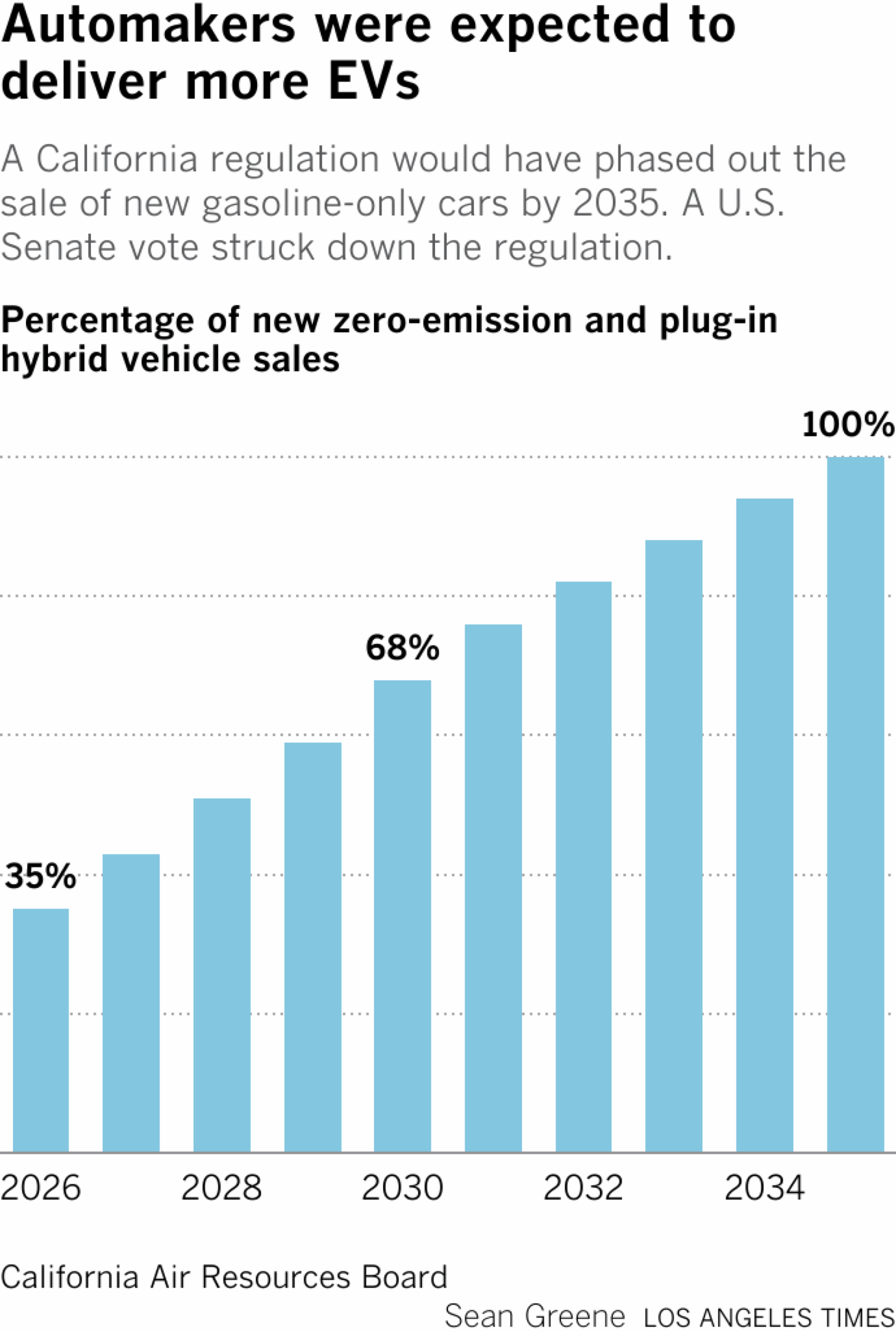
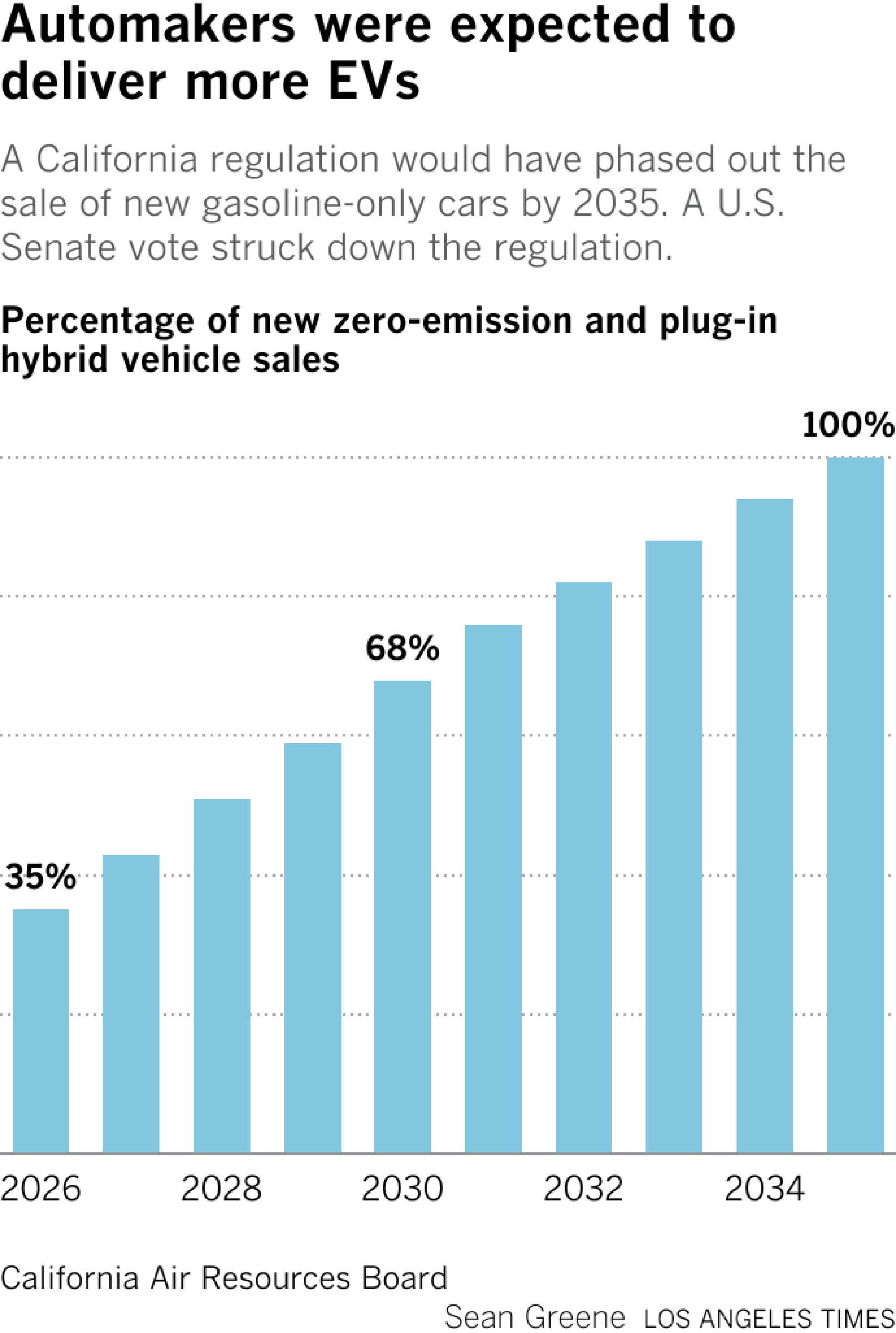
The Advanced Clean Cars II rule, enacted in 2022 by the California Air Resources Board and granted a federal waiver by the Biden administration’s Environmental Protection Agency in December 2024, required car manufacturers to sell an increasing percentage of zero-emission or plug-in hybrid vehicles to California dealerships over the next decade. Starting next year, the rule would have mandated that 35% of all new vehicles supplied to California dealerships be zero-emission vehicles or plug-in hybrids. By 2035, it would’ve prohibited the sale of new, gas-only cars statewide.

By invalidating the rule, Republican senators stamped out one of California’s most ambitious environmental policies and, more broadly, challenged the state’s authority to enact vehicle standards to combat its notoriously unhealthy air quality. If the measure is signed into law by President Trump and survives impending legal challenges, the vote would serve as a coup de grace to the state’s decades-long efforts to comply with federal smog standards in Southern California and meet California’s own ambitious climate goals.

Bar chart shows how a California rule would require an increasing share of zero- and plug-in hybrid vehicles to be sold in the state. Beginning in 2026, the percentage of sales would be 35%, rising to 100% in 2035.

The zero-emission requirements were expected to eliminate nearly 70,000 tons of smog-forming emissions and 4,500 tons of soot statewide by 2040, preventing more than 1,200 premature deaths and providing $13 billion in public health benefits, according to the California Air Resources Board. It also was expected to prevent the release of 395 million metric tons of carbon emissions — roughly the amount released by 100 coal plants in a year.

Ahead of the vote, Sen. Adam Schiff (D-Calif.) warned that nullifying this rule and stripping California’s regulatory power would have serious health effects across the state.

“We are sowing poison seeds for the future,” Schiff said. “Seeds that will grow to be more asthma and more sickness and more hospitalization and more death. That is the bleak but blatant reality of what we are debating here today.”

Republicans, however, argued that California’s zero-emission requirements threatened to cripple the American auto industry and significantly limit the options for car buyers. In the coming days, Republicans plan to undo additional California clean-air rules that require the state’s heavy-duty truck fleet to adopt cleaner engines and a growing percentage of zero-emission vehicles.

“Democrats have this delusional dream of eliminating gas-powered vehicles in America,” Sen. John Barrasso (R-Wyo.) said Tuesday from a lectern on the floor of the U.S. Capitol. “They want to force-feed electric vehicles to every man and woman who drives in this country. Well, Republicans are ready to use the Congressional Review Act to end this Democrat electric vehicle fantasy.”

Republicans moved ahead with the vote despite the warnings from the Government Accountability Office and the Senate Parliamentarian that the waivers could not be overturned with the Congressional Review Act — a law that was meant to allow legislators to inspect and potentially block federal rules adopted in the waning days of a previous presidential administration.

Sen. Alex Padilla (D-Calif.), the ranking member of the Senate Committee on Rules and Administration, said the vote was a flagrant abuse of the Congressional Review Act. He threatened to block or delay the confirmation process for four Trump nominees to the U.S. Environmental Protection Agency if Senate Republicans voted to overturn California’s vehicle emission standards.

“It appears that Republicans want to overturn half a century of precedent in order to undermine California’s ability to protect the health of our residents by using the Congressional Review Act to revoke California’s waivers that allow us to set our own vehicle emission standards,” Padilla said. “Republicans seem to be putting the wealth of the big oil industry over the health of our constituents.”

Environmental advocates, many of whom had spent years supporting California’s emissions standards, expressed their disappointment in the vote.

“This is a major blow to the decades-long public health protections delivered under the Clean Air Act,” said Will Barrett, senior director of nationwide clean air advocacy for the American Lung Assn. “It is more important than ever that California and all other states that rely on Clean Air Act waivers continue to cut tailpipe pollution through homegrown, health-protective policies.”

Because of its historically poor air quality, California has been an innovator in clean car policy, enacting the nation’s first tailpipe emissions standards in 1966. California was later granted the special authority to adopt vehicle emission standards that are more strict than the federal government’s under the Clean Air Act. But the state must seek a federal waiver from the U.S. EPA for any specific rule to be enforceable.

In the five decades since then, the state has enacted dozens of rules to reduce air pollution and planet-warming greenhouse gases. Padilla stressed that these rules were largely meant to alleviate lung-aggravating smog, which was a persistent threat where he grew up in Los Angeles.

“On a pretty regular basis, we would be sent home from grade school because of the intensity and dangers of smog that settled over the San Fernando Valley,” Padilla said. “That’s the case for far too many Californians, still to this day. But it’s the reason why, decades ago, Congress recognized both California’s unique air quality challenges and its technical ingenuity, and granted California special authority to do something about it.”

Due to its enormous economy and population, automakers have conformed to California’s rules. In addition, many Democrat-led states have chosen to adhere to California’s auto emissions rules, applying more pressure on car companies first to make cleaner engines and later to manufacture more electric vehicles.

California leads the nation in zero-emission vehicle sales. In 2023 and 2024, about 25% of new cars sold in California were zero-emission or plug-in hybrids, according to the California Energy Commission. This year, the share of zero-emission vehicle sales has slightly slumped, making up only 23% of light-duty vehicle sales.

But the Advanced Clean Cars II rule would require a jump in zero-emission sales next year, with at least 35% of vehicles supplied to car dealer lots to be zero-emission or plug-in hybrids.

Mike Stanton, president of the National Automobile Dealers Assn., contended that consumer demand for electric vehicles falls far below California’s requirements, in part, because of unreliable charging infrastructure.

“Banning gas and hybrid cars is a national issue that should be decided by Congress, not an unelected state agency,” Stanton wrote in a letter to senators, referring to the California Air Resources Board.

In February, EPA administrator Lee Zeldin brought the Biden-era waivers to Congress, suggesting that they were federal rules that had not been reviewed. However, none of California’s waivers for the state’s vehicle emission standards had been brought before Congress for review, because they were largely regarded as administrative orders.

The House of Representatives voted this month to advance the resolution to the Senate. Thirty-five Democratic lawmakers, including California Reps. George Whitesides (D-Agua Dulce) and Lou Correa (D-Santa Ana), joined with the Republican majority.

In the Senate, the 51-44 vote was split along party lines.

Experts say the Senate vote could have lasting implications for congressional procedures.

To topple California auto emission standards, Senate Republicans controversially invoked the Congressional Review Act, a 1996 law that allows an incoming Congress to rescind major federal rules approved near the end of a previous presidential administration. This process notably allows federal legislators to bypass a filibuster and requires only a simple majority to repeal federal rules rather than the typical 60 votes.

However, the Government Accountability Office, a nonpartisan government watchdog, said federal waivers for California emission standards were not subject to the Congressional Review Act, because the federal waiver is technically not a rule; it’s an order. The Senate Parliamentarian, a non-partisan advisor to the congressional body, upheld that interpretation, ruling that the Senate couldn’t use the Congressional Review Act to repeal California’s waivers.

The Senate vote proceeded in defiance of the parliamentarian’s ruling, marking a stunning rebuke of congressional norms.

The decision by Republican senators amounted to a “nuclear option” that would set a dangerous precedent, Padilla said.

“The old adage says, ‘What goes around comes around,’” he said. “It won’t be long before Democrats are once again in the driver’s seat, in the majority once again. And when that happens, all bets would be off.”
Source link

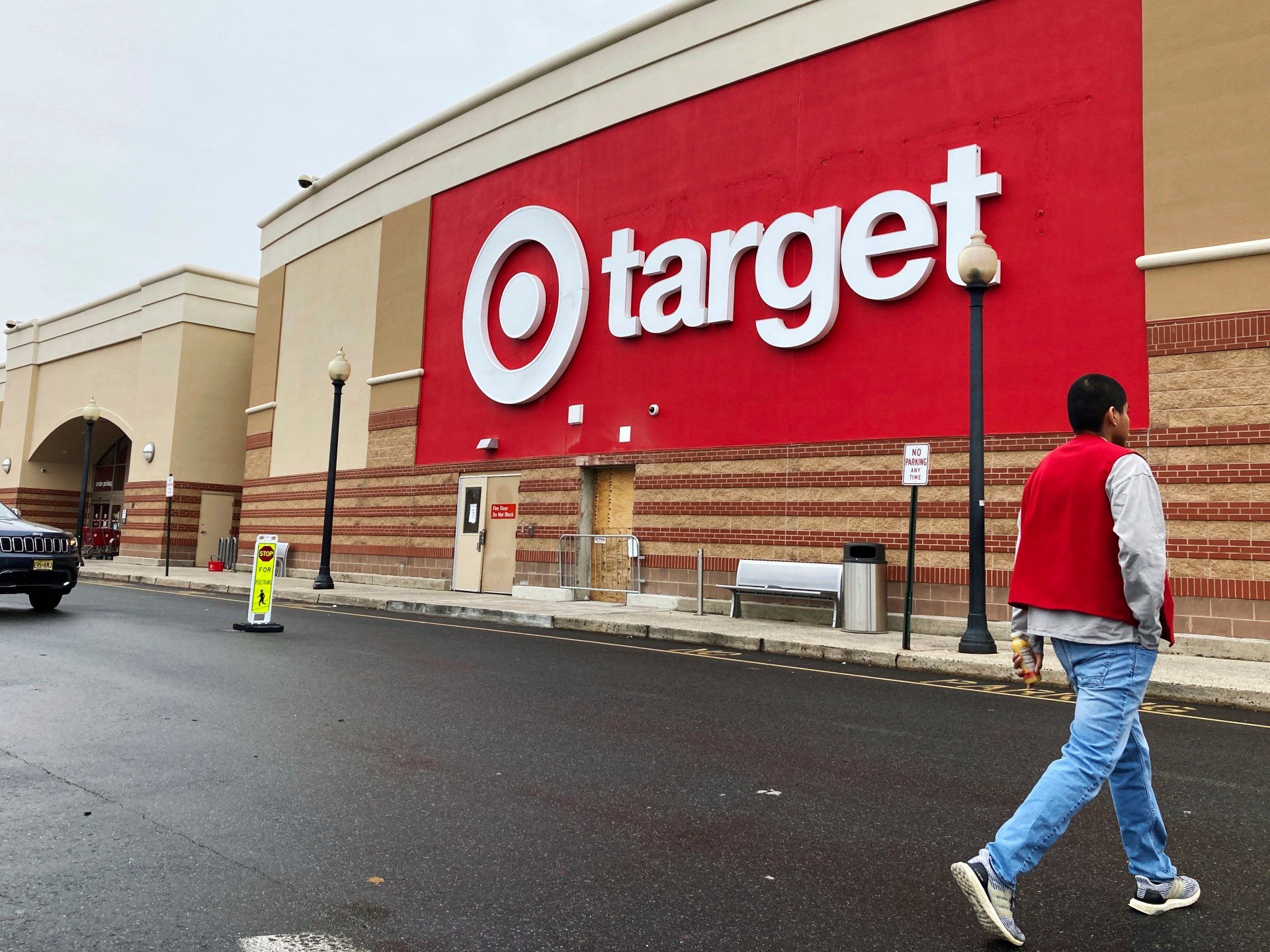
Target cuts annual forecast as tariffs, boycotts weigh on sales | Business and Economy

Target has slashed its annual forecasts amid a pullback in discretionary spending due to tariff-driven uncertainty and a backlash against shifts in its diversity, equity and inclusion (DEI) policy.

The United States big box retailer, which reported its first-quarter earnings on Wednesday, relies on China for 30 percent of its store label goods. While it is on track to reduce its dependency by another 5 percent by the end of the year, tariff-driven uncertainty has caused a slump.

In its forecast, the Minneapolis, Minnesota-based retailer expects a low single-digit decline in annual sales. Wall Street analysts expected a marginal increase of 0.27 percent in annual sales, according to the LSEG. Target previously forecasted net sales growth of about 1 percent.

This comes as Bank of America recently forecasted that consumers have eased up on spending as the most recent report from The Conference Board showed a slowdown in consumer confidence, which hit a 13-year low in April. The US economy also showed the first contraction in three years in the first quarter.

Target’s first-quarter comparable sales fell 3.8 percent compared with analysts’ estimates of a 1.08 percent decline. It expects annual adjusted earnings of $7 to $9 per share, compared with its prior forecast of $8.80 to $9.80. Analysts were expecting $8.40.

“Expectations were very low for Target’s first quarter. Even against that, Target’s results came in light,” Michael Baker, a DA Davidson analyst, told the news agency Reuters. Target’s stock has performed poorly, down nearly 28 percent this year, in contrast to Walmart’s 9 percent gain and Home Depot’s 2.3 percent decline.

Target’s stock is tumbling on the news of its disappointing earnings report. As of 11am in New York (15:00 GMT), it was down 2.91 percent from the market open although it is up more than 1 percent over the past five days.

DEI boycotts weigh on sales 

Target also said its first-quarter performance was impacted by changes made to its DEI policies in January.

Target ended many of its DEI policies, drawing condemnation as some of its critics noted that its commitment to inclusiveness had helped attract younger, more diverse consumers. The decision generated more attention as it coincided with US President Donald Trump’s executive order to eliminate DEI policies in federal agencies and schools.

The backlash led to economic boycotts, notably from Reverend Jamal-Harrison Bryant, a Georgia pastor who organised a 40-day “fast” of Target stores. He has since called for those efforts to continue in recognition of the fifth anniversary of George Floyd’s murder by police in Minneapolis, Target’s headquarters.

CEO Brian Cornell said the reversal of some DEI policies played a role in first-quarter performance but he couldn’t quantify the impact.

Worse than competitors 

“Target’s [results] do nothing to restore confidence in the company. On the contrary, they are emblematic of a business that has made too many mistakes and has lost its way on several fronts,” GlobalData Managing Director Neil Saunders told Reuters, pointing to issues including poor inventory management and a lack of exciting merchandise.

Target’s forecast contrasts with its bigger rival Walmart, which maintained its annual forecasts last week but said it would need to pass on higher prices due to tariffs. That has drawn the ire of Trump, who said Walmart should “eat the tariffs” on imported goods instead of passing on the costs.

Unlike Walmart, which generates the bulk of its revenues by selling groceries like bananas, milk, toilet paper and shampoo, a majority of what Target sells falls in the nonessential category – largely apparel, home furnishings and beauty products, which it sources from China.

TJX, the parent company of retailer TJ Maxx, also reported its earnings on Wednesday, and while tariffs loom, the company is set to maintain its forecasts. The Massachusetts-based big box retailer expects comparable sales to grow 2 percent to 3 percent during the current quarter.

Unlike Target and Walmart, TJ Maxx, relies on expansive sourcing from middlemen in the US, which limits the impact of any new tariffs on China.

Looming price hike 

On a media call, Target executives declined to provide details on potential price increases due to tariffs. Most tariff-related increases could be offset, they said, but acknowledged that raising prices could be a “last resort”.

Cornell said pricing decisions will largely depend on ongoing efforts to source more products from the US and reduce reliance on China.

“That is going to play a very important role,” he said.

Rick Gomez, the company’s chief commercial officer, said Target is working on negotiating with suppliers, expanding sourcing to other Asian countries beyond China, re-evaluating its product assortment, and adjusting the timing and quantity of orders.

“These efforts are expected to offset the vast majority of the incremental tariff exposure,” Gomez said.

Source link

Iconic car brand boss gives major update on merger with rival as firms say EV push is slashing sales

THE BOSS of an iconic car brand has revealed a major update on its merger with a rival, as the company admits the EV push is hurting sales.

Despite rumours of a potential tie-up between Stellantis and Renault, both companies have denied seeking a partnership.

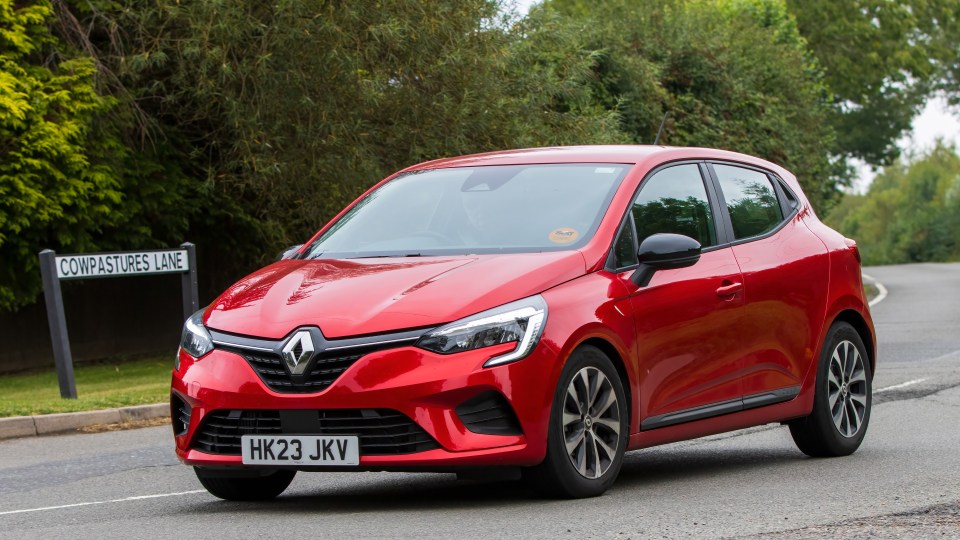
Red Renault Clio driving on a road.

2

The Renault group reported record sales last yearCredit: Getty
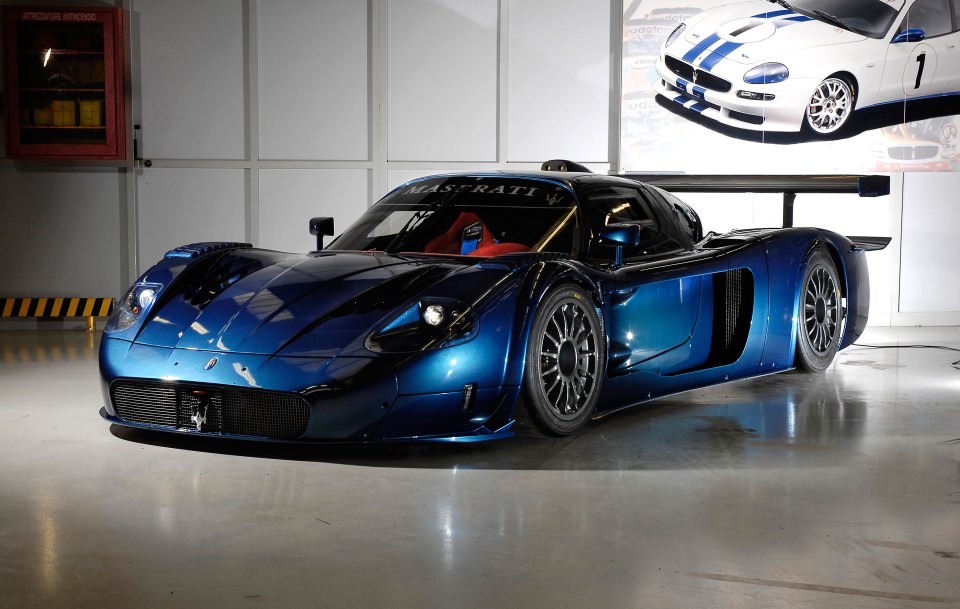
Maserati MC12 Corsa race car.

2

Stellantis manages several brands, including the supercar maker MaseratiCredit: Alamy

John Elkann, Stellantis Chairman, told the Financial Times: “We are not discussing any merger.”

Management at the automotive giant has been turbulent following the resignation of the former CEO, Carlos Tavares, who they still haven’t replaced.

The automotive giant currently oversees many carmakers such as Peugeot, Fiat and Vauxhall.

However, Stellantis has several underperforming brands, such as Chrysler, described as “a shadow of its former self,” according to motor1.com

Another failing car manufacturer is Abarth, which has seen revenues drop during its push to go fully electric.

This has caused major concern at Stellantis, adding to the company’s decision not to get involved in a massive merger.

Last year, the Auto conglomerate recorded a 12 per cent drop in shipments, which they blamed on “temporary gaps in product offerings”.

On the other hand, the Renault group reported their highest sales.

The two major companies share a common ground regarding the future of cars in Europe.

Both share concerns over strict emission regulations negatively impacting their profit and production of gas-powered city cars.

Fiat 500e production paused

The European Union recently granted automakers an extension to meet their emission targets.

However, by 2030, stricter regulations will come into force, banning the sale of new cars with harmful emissions across the EU.

This comes after Europe’s second-largest carmaker halted production of an iconic model as its EV lineup faces “deep trouble”.

An initial manufacturing break at Stellantis has now been extended as bosses report a collapse in demand for electric cars.

The Fiat 500 was one of the vast company’s most successful and beloved models across two production runs lasting a collective 35 years.

Dating back to 1957, it has sold more than six million units between its two iterations.

However, the 500e, unveiled in 2020 as an electric alternative, has proved less popular.

The model is intended as the long-term successor to the 500 beyond the 2035 ban on petrol and diesel car sales.

But stuttering demand has now forced a pause in its production.

The latest data suggest that both the petrol and electric 500 sol 74,885 units from January to July.

That’s almost a quarter down on the same period last year.

Bosses told Autocar that poor sales were “linked to the deep difficulties experienced in the European EV market by all producers.”

They have also reportedly told union reps that the electric car segment is facing “deep trouble” more generally.

Fiat CEO Olivier François said: “We obviously, like everyone else, thought that the world would go electric faster and the cost of electrification would go down faster.

“But we couldn’t imagine that Covid would happen, shortage of raw materials would happen [and] the European Society – not all, not the youngest part – would turn their backs on the sustainable solutions.

“But this is the reality. We have to face those realities.”

Source link

China’s industrial output, retail sales dip amid US trade tensions | International Trade News

Despite slowdown, data points to reliance of Chinese economy in the face of Donald Trump’s tariffs.

China’s industrial output and retail sales growth have slowed amid trade tensions with the United States.

Factory output grew 6.1 percent year-on-year in April, down from a 7.7 percent rise in March, data released by China’s National Bureau of Statistics showed on Monday.

While down compared with the previous month, the figure beat analysts’ expectations.

Analysts polled by the Reuters and Bloomberg news agencies had respectively forecast growth of 5.5 percent and 5.7 percent.

Retail sales grew 5.1 percent year-on-year, slower than the 5.9 percent growth recorded in March and below analysts’ forecasts.

Fixed-asset investment, which includes property and infrastructure investment, rose 4 percent.

Unemployment fell slightly, from 5.2 percent to 5.1 percent.

The latest data is likely to bolster hopes of China’s economy remaining resilient in the face of US President Donald Trump’s tariffs, after gross domestic product expanded a better-than-expected 5.4 percent in the January-March period.

The National Bureau of Statistics said the economy maintained “new and positive development momentum” due to Beijing’s economic policies, despite the “increasing impact of external shocks”.

“However, we should be aware that there are still many unstable and uncertain factors in external environment, and the foundation for sustained economic recovery needs to be further consolidated,” the statistics agency said in a statement.

The economic figures are the first to be released since Washington and Beijing last week agreed to dramatically reduce tariffs on each other’s goods for 90 days.

Under the deal reached in Geneva, the US lowered its tariff on Chinese goods from 145 percent to 30 percent, while China slashed its rate from 125 percent to 10 percent.

“The risk is that tariffs remain in place for a long time, and eventually, we see production offshored,” Lynn Song, chief economist for Greater China at ING, said in a note on Monday.

“But amid tariff unpredictability, not just for China but across the world, few companies will be rushing to commit resources to set up offshore manufacturing facilities. This could mean that a decent portion of China’s manufacturing and exports will be less impacted than originally feared.”

Source link

In surprise move Wegovy-maker Novo Nordisk ousts CEO amid sagging sales | Business and Economy News

Days earlier, Novo Nordisk cut its sales and profit forecast for first time since the launch of Wegovy four years ago.

Wegovy-maker Novo Nordisk has pushed out CEO Lars Fruergaard Jorgensen over concerns the company is losing its first-mover advantage in the highly competitive obesity drug market.

Novo Nordisk announced the decision on Friday.

Days earlier, Novo Nordisk cut its sales and profit forecast for the first time since the launch of Wegovy four years ago, though Jorgensen had predicted a return to growth in its biggest market in the second half of this year.

Novo’s chairman, Helge Lund, tried to reassure analysts and investors on a call that the company’s strategy was intact and the plan for executing it had not changed.

He told the Reuters news agency that discussions to replace Jorgensen had occurred over the past few weeks. Novo said earlier that Jorgensen will remain in his role until a successor is found.

Under Jorgensen’s leadership, Novo Nordisk became a world leader in the weight-loss drug market, with skyrocketing sales of its Wegovy and Ozempic treatments.

Analysts and investors were unconvinced of the need to replace him.

“He was leading the company for eight years and was, in my opinion, extremely successful,” Lukas Leu, a portfolio manager at Bellevue Asset Management, told Reuters.

Danske Bank analyst Carsten Lonborg Madsen was similarly caught off guard.

“The way we know Novo Nordisk is that normally you have patience when you’re on the right track, and then you let things move in the right direction once you have the strategy right,” he said.

“It just feels like there’s something that has gone pretty wrong here,” he said on the call.

Novo’s shares have plunged since hitting a record high in June last year as competition, particularly from US rival Eli Lilly, makes inroads into its market share and as its pipeline of new drugs has failed to impress investors.

“The changes are made in light of the recent market challenges Novo Nordisk has been facing, and the development of the company’s share price since mid-2024,” Novo said in its statement.

Shares down

Jorgensen, at 58, has been CEO since 2017. He said in an interview with Danish broadcaster TV2 that he did not see the decision coming, and was only informed very recently.

Booming sales of Wegovy helped make Novo the most valuable listed company in Europe, worth $615bn at its peak in June last year, but its market value has halved to about $310bn.

Novo Nordisk’s share price fell on the news, trading 0.8 percent lower by 14:01 GMT after being 4 percent higher earlier in the day.

The shares are down 32 percent year-to-date and 59 percent from their all-time high.

Eli Lilly has seen US prescriptions for its Zepbound obesity shot surpass Wegovy since mid-March in its biggest market. Eli Lilly shares were up 2.6 percent after the news.

Camilla Sylvest, Novo’s head of commercial strategy and corporate affairs and a consistent presence alongside CEO Jorgensen, stepped down last month without citing a reason.

Former CEO of Novo Nordisk for 16 years and current chair of the Novo Nordisk Foundation, Lars Rebien Sorensen, will join the board as an observer with immediate effect with the aim of taking a seat at the next annual general meeting, Novo said.

The company is controlled by the Novo Nordisk Foundation through its investment arm, which owns 77 percent of the voting shares.

Source link