Japan expands emergency use of Russian Sakhalin oil amid Hormuz risks

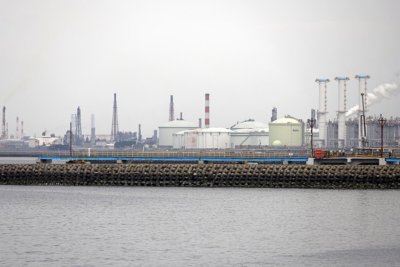
Large-scale crude oil storage tanks are seen in the background at a Sodegaura Refinery in Sodegaura, Chiba Prefecture, Tokyo Bay, Japan, 06 April 2026. Photo by FRANCK ROBICHON / EPA
May 8 (Asia Today) — Japan is expanding imports of Russian Sakhalin-2 crude oil beyond a one-time emergency purchase, extending supply arrangements to multiple refiners and fuel networks around Tokyo Bay as concerns grow over instability in the Strait of Hormuz.
Japanese officials have reportedly asked Fuji Oil, an Idemitsu Kosan affiliate, to accept crude shipments from the Sakhalin-2 project after similar imports were arranged through Taiyo Oil.
The move comes as Japan seeks to reduce risks tied to Middle Eastern oil supplies while continuing to use sanction exemptions that remain in place for Sakhalin-2 energy resources.
The Sankei Shimbun reported Wednesday that the tanker Voyager, carrying crude oil from the Russian Far East project, was heading toward Fuji Oil facilities in Sodegaura, Chiba Prefecture.
Fuji Oil became a subsidiary of Idemitsu Kosan in November 2025 and operates a refinery that supplies petroleum products to the greater Tokyo metropolitan area.
According to ship tracking data cited by the newspaper, the Voyager departed Prigorodnoye Port in southern Sakhalin on April 24 and arrived near Imabari in western Japan on Sunday. The vessel later conducted unloading operations at Taiyo Oil facilities before departing for Tokyo Bay.
The tanker is expected to arrive in Sodegaura on Friday and leave Tokyo Bay on Saturday.
Idemitsu Kosan acknowledged the shipment was made at the request of Japan’s Ministry of Economy, Trade and Industry.
A company spokesperson told Sankei that the import did not violate sanctions and described it as part of efforts to diversify procurement sources and maintain stable fuel supplies.
Before halting most Russian crude purchases after Moscow’s invasion of Ukraine in 2022, Idemitsu sourced roughly 4% of its oil imports from Russia.
Analysts say the significance of the latest shipment lies not simply in Japan buying Russian oil again, but in Tokyo integrating Sakhalin-2 crude into a broader emergency procurement network involving multiple refiners.
Japan had already begun using the sanctions exemption amid rising Middle East tensions, but the latest deliveries suggest the mechanism is evolving into a more permanent contingency supply channel.
The development is also drawing attention in South Korea, which remains heavily dependent on Middle Eastern oil imports.
According to Korea National Oil Corp. data, South Korea imported about 1.03 billion barrels of crude oil in 2024, with 71.5% sourced from the Middle East. Saudi Arabia accounted for 32.2% of imports, followed by the United States at 16.4% and the United Arab Emirates at 13.7%.
Although South Korea has steadily increased imports of U.S. crude, its supply structure remains highly exposed to shipping disruptions through the Strait of Hormuz.
Energy analysts say South Korea may eventually need to move beyond reliance on strategic petroleum reserves alone and develop broader contingency planning that includes alternative suppliers, refinery compatibility and supply stability at major refining hubs such as Ulsan, Yeosu, Daesan and Incheon.
Japan’s latest actions suggest governments are increasingly seeking practical emergency supply options within existing sanctions frameworks rather than relying solely on traditional energy security measures.
— Reported by Asia Today; translated by UPI
© Asia Today. Unauthorized reproduction or redistribution prohibited.
Original Korean report: https://www.asiatoday.co.kr/kn/view.php?key=20260508010001814