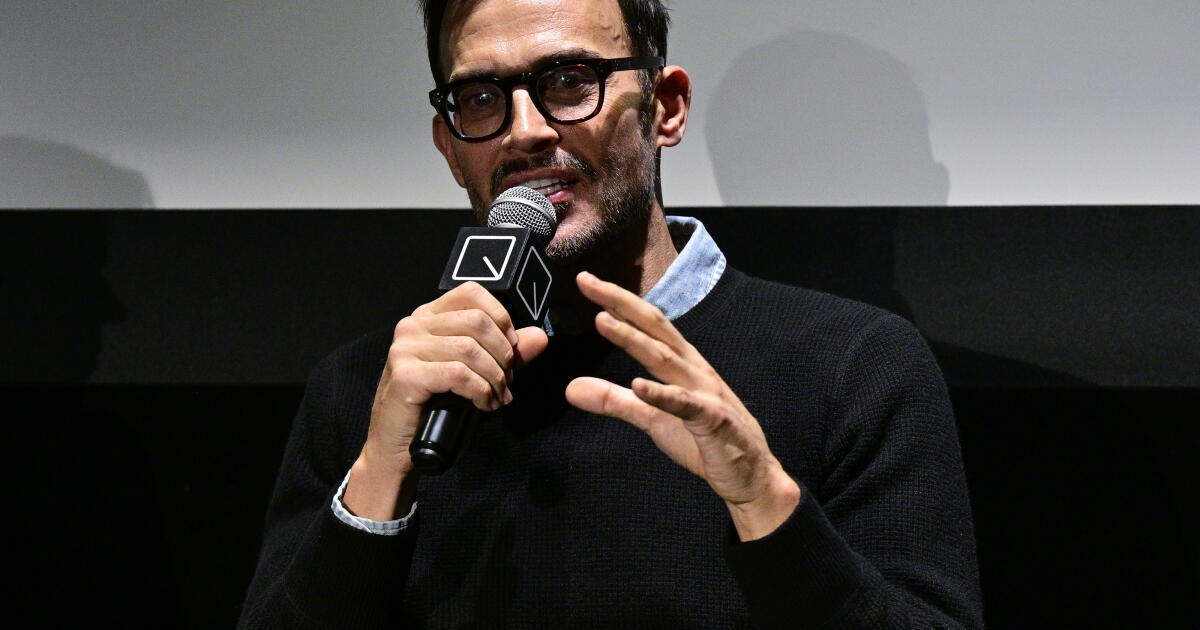
Cheyenne Jackson isn’t only actor a ‘job away’ from losing healthcare
Actor and singer Cheyenne Jackson, who has starred on Broadway and held roles on dozens of television series including “American Horror Story,” “30 Rock” and “Glee,” had never considered that he might lose his health insurance.
But in a grim moment last year, he realized he was several thousand dollars short of the roughly $28,000-annual minimum to qualify for healthcare through actors union SAG-AFTRA. Otherwise, he would lose the plan that also covered his husband and their 11-year-old twins.
“Auditions weren’t coming in. It was just a really lean, lean time,” Jackson said. “I think I just took my insurance for granted. I thought it would always happen.”
Jackson and other actors are speaking openly about struggles qualifying for SAG-AFTRA healthcare amid declines in film and television production in Hollywood, an exodus of film jobs abroad, job loss from industry consolidation and concerns of AI incursions.
Jackson reflected on the experience while on a layover Sunday in Atlanta’s airport for his one-man musical act, “Midlife Torso Tour.” He decided to offer to spotlight other union members on social media who were short on their earnings. Within 24 hours of posting about the project idea on Instagram, he had received hundreds of messages, he said.
Jackson credited his friend Kathy Bates, the Oscar- and Emmy-winning actor he worked with on four seasons of “American Horror Story,” for helping him pull through last year. He had texted her describing his plight. She called him back within five minutes and told him, “I have good news and bad news,” he recalled.
The good news, she explained, was that she got him a part on “Matlock,” the CBS reimagining of an ’80s legal drama where she stars as a brilliant criminal defense attorney. The bad news was that he would have only four lines and his character wouldn’t have a name.
“I was like, ‘Sign me up!’” Jackson said. “I was grateful, and I showed up and did my four lines.”
Bates had “really paid it forward,” he said.
Actors’ health insurance plans are typically managed by performing arts unions rather than dispensed by a single corporate employer. Producers and studios contribute to a shared health fund based on union contracts, wages and hours worked. If workers accumulate a preset number of hours or pay, they can qualify for up to a year of coverage.
But dry spells and uncertainty in the industry because of the COVID-19 pandemic shutdown and industry strikes have shed light on actors’ struggles to keep insurance as work dwindles. Several years ago, stories proliferated of performers losing health insurance as they contended with heart problems or underwent cancer treatment, and in recent months, actors have again aired concerns.
“I Saw the TV Glow” star Jack Haven posted a video on YouTube in September saying they were “in a bit of an emergency situation.” Haven said they needed to earn $4,000 by the end of the month to keep their insurance. In the video, Haven said they would do “pretty much any job.”
This month, former Nickelodeon star Drake Bell of “Drake & Josh” posted a screenshot of SAG-AFTRA’s health plan website showing that he needed to earn about $11,450 more to qualify.
“Do not become an actor. Do not join SAG,” Bell wrote, using a middle finger emoji and tagging the union’s president, Sean Astin, in the post.
SAG-AFTRA spokesperson Pamela Greenwalt did not respond to a request for comment. But the union has long been open about the financial effects of the pandemic and other industry headwinds that have led to lower employer contributions.
In December 2020, a group of SAG-AFTRA members sued the union’s board of trustees over changes to the health plan. Actors 65 years and older who vested their pensions could no longer count their earnings from residuals in the annual threshold. A provision allowing actors older than 40 with a decade of credits to qualify for coverage at a reduced level of $13,000 in annual earnings was also eliminated.
The union acknowledged renewed challenges during the SAG-AFTRA strike in 2023. The union’s national executive director, Duncan Crabtree-Ireland, told The Times that year that earning enough to qualify for health coverage had become a “real source of anxiety and concern for many members.”
At a meeting of the union’s national board over the weekend at its Miracle Mile office, Astin in a recorded speech addressed members’ frustrations about economic pressures, saying that the union is using “every bit of leverage we have to make sure working performers have a place in whatever this industry becomes.”
It can take years for members to build up enough union work to qualify for the health insurance. Some who have worked in the industry for years never do. Reportedly only about 14% of the union’s 160,000 members qualify for the union’s healthcare. Of SAG-AFTRA’s membership, which also includes dancers, DJs, journalists and radio program hosts, more than 100,000 members are actors and performers.
Miller Tai, a voice actor on the new Paramount+ animated film “Avatar Aang: The Last Airbender,” said he joined the union in 2017 and had not struggled in recent years to meet the earnings minimum, having qualified for the last seven years. He feels that the noise on social media obscures the actual problem: a broken healthcare industry that is hurting people beyond just actors.
“We have a greedy system raising prices by the second,” Tai said. “This is a problem for any sector where we rely on our employers for healthcare.”
In 2027, the earnings minimum will rise to $28,933. Quarterly premiums will rise from $375 to $390 for one participant, with higher amounts for added dependents. Actors with certain credits who lose their eligibility can temporarily keep their health coverage at a reduced rate for up to 18 months through the federal program known as COBRA, according to the union’s website.
Jackson said starting over every year is tough and unpredictable even for people like him who have been in many television shows and make “OK money on residuals.” He said that although one year he might make $300,000 from acting, the next he might make closer to 5% of that amount. He said that he scraped together his minimum earnings this year by taking on more commercial gigs and acting in a vertically filmed microdrama.
“I ended up doing a few things that I have never done before and never thought I would,” Jackson said.
Jackson’s social media project now has a home on Instagram called One Job Away, and he began posting Tuesday morning. His manager’s assistants and others on his team are combing through requests, he said. More than a dozen photos of actors have already been posted, with captions listing the amount they need to make to hit their earnings minimum and describing their past credits.
“To me, it didn’t seem that big of a deal to say I’m struggling and I need to find that next gig,” he said. “But I understand why for a lot of people they don’t want to say that. They don’t want to look needy or look whatever. I do get it, but I think the more we talk about it, the less shame and the less stigma there will be around it, because it just is happening.”