Saab

Venezuela: US Charges Former Minister Saab with Money Laundering, Launches New Maduro Probe

Maduro and Saab in a public rally in 2024. (AFP)

Caracas, May 20, 2026 (venezuelanalysis.com) – Former Venezuelan Industry Minister Alex Saab appeared before a federal court in Miami on Monday and was formally charged with money laundering offenses.

The accusations are linked to alleged misappropriation of funds from Venezuelan government contracts, including the CLAP subsidized food program, which was created to support the country’s most vulnerable sectors.

Following his “deportation” from Caracas last Saturday, Saab — who was previously charged in the United States in 2021 but pardoned in 2023 by former President Joe Biden as part of a prisoner swap with Venezuela — was also accused of conspiracy to conduct financial transactions through the US financial system, as well as concealing and disguising the origin of funds.

According to US Deputy Attorney General Andrew Tysen Duva, Saab “allegedly used US banks to launder hundreds of millions of dollars stolen from a Venezuelan food program and from profits generated through the illegal sale of Venezuelan oil.”

The former minister, who also served as a diplomatic envoy for the Nicolás Maduro government, is accused of “secretly using shell companies, fraudulent invoices, falsified shipping records and other fabricated documents.”

The Department of Justice stated that “from 2019 through at least January 2026, the conspiracy expanded as US economic sanctions crippled Venezuelan exports, especially oil.” If convicted, Saab faces a maximum sentence of 20 years in federal prison. He will remain detained without bail, with the next hearing scheduled for June 24.

The Colombian-born businessman was previously arrested in mid-2020 during a refueling stop in Cape Verde at the behest of US authorities. Saab was headed to Iran to negotiate fuel and food imports at a time of acute shortages in Venezuela.

The Venezuelan government launched a massive international PR and solidarity campaign to protest Saab’s arrest and later extradition to the US. Authorities established his release as a foreign policy priority, even temporarily suspending a dialogue process with US-backed opposition factions. Saab’s legal and public defense centered on his diplomatic immunity and his role in securing imports that circumvented US sanctions.

Upon his release, Saab was appointed industry minister in October 2024. He was removed from the post by Acting President Delcy Rodríguez in January, weeks after the US military strikes and kidnapping of Maduro.

Rumors that the former government envoy had been arrested by security forces began to circulate in February, with authorities neither confirming nor denying them. Following his handover to US agencies, Venezuelan high-ranking officials have sought to distance themselves from Saab.

Rodríguez defended Saab’s handover on Monday, arguing that it was an administrative measure justified by national interests.

“Any decision taken by the national government will be made in Venezuela’s interest (…) Alex Saab is a citizen of Colombian origin, he carried out functions in Venezuela, and these are matters between the United States of America and him,” she said in a televised broadcast, adding that the upcoming prosecution is an issue “between the US and Saab.”

For his part, National Assembly President Jorge Rodríguez accused Saab of maintaining “ties” with “US agencies” since 2019. “We are only learning about this now (…) All of you will soon find out what kind of relationship Saab had and still has with those agencies,” he stated during a legislative session on Tuesday.

Rodríguez — who spent three years leading negotiations aimed at securing Saab’s release — insisted that he was following instructions and that it was “not his place” to investigate Saab’s background or whether he had committed any crimes.

At the same time, Venezuelan Interior Minister Diosdado Cabello claimed that Saab had fraudulently obtained Venezuelan nationality back in 2004 and went on to “defraud” the country. 

“He is not Venezuelan, he is a citizen of Colombian origin,” Cabello affirmed in a Monday press conference. “He always presented an illegal Venezuelan ID card that has no backing from the immigration services.”

The Venezuelan leaders’ statements sparked doubts and criticism on social media, with users publishing Supreme Court resolutions affirming Saab’s Venezuelan nationality and questioning how Saab’s migratory status was not vetted before his high-level appointments.

New investigation against Maduro

Saab’s second arrest and prosecution by the US Justice Department have reportedly coincided with the launch of a new probe against Maduro. 

According to CBS News, US authorities worry that the case against the kidnapped president in New York is “weak” and ordered federal prosecutors in Florida to open a second criminal investigation against him. It is not presently known whether the goal is to tie the new probe to Saab, whom Washington has accused of serving as Maduro’s “financial operator.”

The latest investigation was reportedly opened in March and is being led by prosecutor Michael Berger, who specializes in international criminal cases. Several FBI and Homeland Security agents are likewise participating, along with the IRS’ criminal investigation division.

Maduro and First Lady Cilia Flores pleaded not guilty to charges including drug trafficking conspiracy. Their trial is set to resume on June 30.

Edited by Ricardo Vaz in Caracas.

Source link

Maduro ally Alex Saab appears in U.S. court on laundering charge

People look at a mural depicting Colombian-Venezuelan businessman Alex Saab in Caracas, Venezuela, on Sunday, a day after he was extradited to the United States. On Monday, Saab made his initial appearance in a Miami courtroom. Photo by Miguel Gutierrez/EPA

May 18 (UPI) — Alex Saab, a billionaire Colombian businessman and longtime ally of ousted Venezuelan leader Nicolas Maduro, appeared in a Miami federal courtroom on Monday, days after he was extradited to the United States.

Saab, 54, made his initial court appearance in the Southern District of Florida, where a federal indictment was unsealed, charging him with conspiracy to launder money through U.S. banks.

U.S. authorities have long accused Saab of corruption, specifically of using his connections to the Maduro regime to skim money from government programs intended to benefit Venezuela’s poor and of helping Maduro evade sanctions.

The case is centered on the Venezuelan government program Local Committees for Supply and Production, known as CLAP, an acronym of its Spanish name. Created in 2016 in response to the collapse of Venezuela’s economy, CLAP was intended to provide subsidized food to the country’s poor.

Federal prosecutors allege that Saab and his unnamed co-conspirators paid bribes to Venezuelan government officials to be awarded the CLAP contracts to import food, but instead enriched themselves by siphoning hundreds of millions of dollars from the program.

The charging document further accuses Saab and others of expanding the scheme to include the illegal sale of Venezuelan oil, starting in at least 2019 and continuing until the return of the indictment, which is dated Jan. 14.

The U.S. charges stem from the accusation that at least some of the allegedly ill-gotten money was transferred through U.S.-based bank accounts. If convicted, Saab faces a maximum penalty of 20 years in prison.

“When illicit proceeds are moved through the United States financial system, our courts have jurisdiction and our prosecutors will act,” U.S. Attorney Jason Reding Quinones of the Southern District of Florida said in a statement.

The indictment announced Monday is the second a Trump administration has brought against Saab, and his extradition on Saturday is the second time he has been sent to the United States to face criminal charges.

Maduro’s government has been a target of President Donald Trump since his first administration, which sought to oust the authoritarian leader through a so-called maximum pressure campaign of sanctions, including designating Saab in 2019 over the alleged CLAP scheme.

Saab was then arrested in June 2020 in Cape Verde at the request of the United States and was extradited.

But he was returned to Venezuela by the Biden administration in 2023 in exchange for 10 detained Americans. As part of the prisoner exchange, Saab was issued a full pardon for charges included in the first indictment.

After his re-election in 2025, Trump ousted Maduro and brought him to the United States to face narco-terrorism charges in a clandestine early January military operation.

Then in February, under the government of Maduro’s former vice president, Delcy Rodriguez, who was elevated to president following her predecessor’s U.S. arrest, Venezuelan authorities detained Saab at the request of the United States.

Saab’s return to U.S. custody now raises speculation that he could be used in the federal prosecution’s case against Maduro, given his former proximity to Maduro and members of Maduro’s family.

“Saab would be a powerful witness in the prosecution of Maduro — and could offer insights into Delcy’s role in building South America’s prototypical kleptocracy,” Benjamin Gedan, a foreign policy scholar and director of the Stimson Center’s Latin America Program, said in a social media statement.

Source link

Venezuela ‘Deports’ Former Minister, Diplomatic Envoy Alex Saab to US

Maduro alongside Saab following the latter’s release in December 2023. (AFP)

Caracas, May 17, 2026 (venezuelanalysis.com) – The Venezuelan government turned over former minister and diplomatic envoy Alex Saab to the US to face charges on Saturday.

The executive led by Acting President Delcy Rodríguez announced the “deportation of Colombian citizen Alex Saab Morán” through a statement issued by the Administrative Service for Identification, Migration, and Immigration (SAIME).

The statement said the measure was adopted “taking into consideration that [Saab] is implicated in various crimes in the United States of America, as is publicly known and widely reported.”

According to local media reports, Saab was transferred under custody from the El Helicoide detention center in Caracas to Simón Bolívar International Airport in Maiquetía, where a US government airplane was waiting for him. The operation reportedly involved agents from the FBI and the CIA, under the supervision of the US Justice and State Departments.

EFE confirmed Saab’s arrival at Opa-locka Airport in Miami-Dade County at 9:15 p.m. local time, escorted by Drug Enforcement Agency (DEA) personnel. Footage of his arrival showed him placing his fingerprints on a biometric scanner upon entering the airport terminal. 

US authorities have yet to issue a public statement on Saab’s detention. The charges against Saab reportedly include criminal conspiracy, money laundering, and bribery of Venezuelan officials. According to the indictment filed in the Southern District Court of Florida, he is accused of having falsified documents and used intermediaries to facilitate international transfers of public funds.

Rumors of Saab’s detention in Caracas, allegedly at Washington’s request, began to circulate in February, with Venezuelan authorities offering no confirmation or denial on his status and whereabouts.

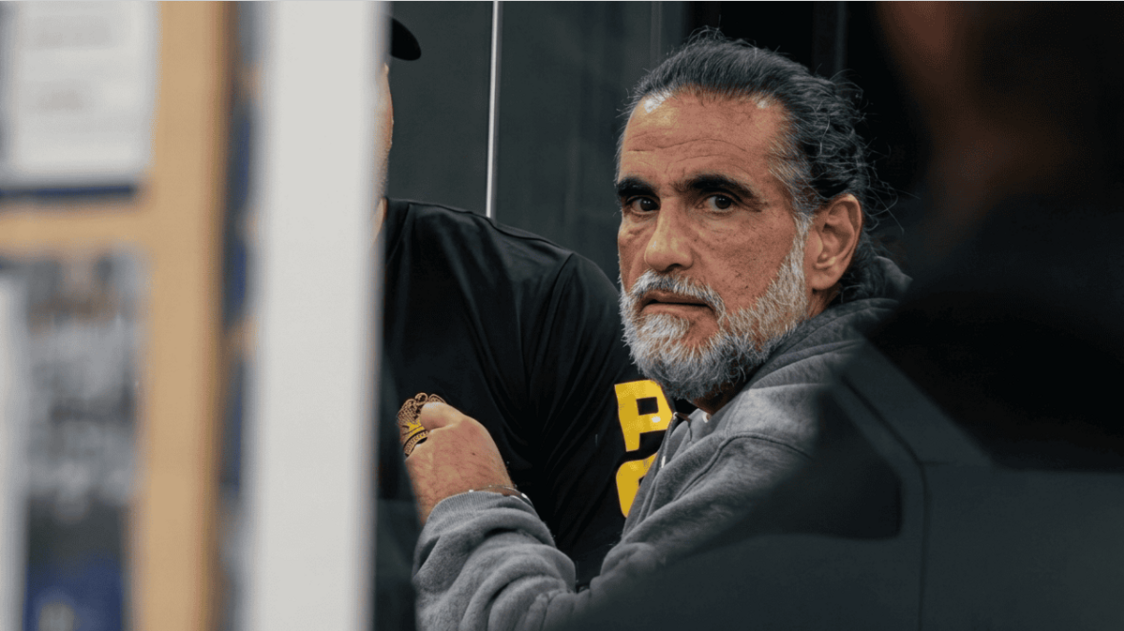
Saab after arriving in Miami on Saturday night. (Archive)

A Colombian-born businessman who later received Venezuelan citizenship, Saab was previously detained on US charges in 2020, during a plane refueling stop in Cape Verde while on a trip to Tehran to negotiate food and fuel imports amid shortages in Venezuela. He was charged with conspiracy to commit money laundering.

Saab’s arrest and subsequent forced departure to US soil saw the Nicolás Maduro administration launch a significant effort to denounce the “kidnapping” of a government diplomatic envoy and demand his release. The “Free Alex Saab” campaign saw Venezuelan authorities and international solidarity movements organize multiple demonstrations and digital campaigns demanding the envoy’s liberation from US custody.

In 2021, Venezuelan National Assembly President and lead negotiator Jorge Rodríguez suspended a dialogue process with the Venezuelan opposition in Mexico following what he described as “the brutal aggression against Saab’s diplomatic status,” insisting at the time that Venezuela would exhaust “all available legal and diplomatic resources” to secure his release.

The Maduro government secured Saab’s return in December 2023, with US President Joe Biden granting him a presidential pardon, as part of a prisoner exchange. Venezuelan authorities released 10 US citizens, including two former Green Berets who had taken part in a failed mercenary incursion. The Venezuelan government hailed Saab’s release as a “victory of truth and dignity.”

He was appointed president of the International Center for Productive Investment (CIIP) in January 2024 and minister of industry in October 2024. Acting President Delcy Rodríguez replaced him in both posts in January, three weeks after the US military strikes and kidnapping of President Maduro and First Lady Cilia Flores.

Saab’s wife, Camilla Fabri, was likewise removed from her government responsibilities as communications vice-minister and head of the “Return to the Homeland” migrant return program.

During his prior detention, Saab’s legal team argued that the Barranquilla-born businessman had acquired Venezuelan nationality and was entitled to diplomatic immunity as a government special envoy. His Venezuelan citizenship allowed him not only to serve as minister, but also to vote in the 2024 presidential elections. Under Article 69 of Venezuela’s Constitution, Venezuelan citizens cannot be extradited.

However, the SAIME communiqué refers to Saab exclusively as a Colombian citizen, without explaining the legal procedure for his removal from the country. Likewise, the statement frames the move as a “deportation” rather than an extradition, although Saab was immediately flown to US territory. At the time of writing, there has been no judicial sentence publicly issued to approve the surrender of the former minister to US authorities.

Edited by Ricardo Vaz in Caracas.


Source link

Who’s Next in Delcy’s Blacklist?

The plot has thickened. After having him removed from the Industry and National Production Ministry, sacking his trophy wife from government and keeping him in unpublicized captivity for three months, the Rodriguez administration completed a spectacular U-turn on Alex Saab. Madurismo’s shady financier and fixer is once again in US custody, two years after Maduro and the Rodríguez siblings celebrated his return through a prisoner swap brokered with the Biden administration.

Alex Saab became the centerpiece of a years-long propaganda campaign: billboards across the country hailed Venezuela’s heroic diplomat, leftwing influencers denounced the arrest of the man supposedly helping the nation overcome the siege of US sanctions, and embassies circulated the #FreeAlexSaab dossier among allied activists and journalists. 

The long-awaited extradition of Saab is evidently not the result of the Rodríguez siblings suddenly discovering he is a Colombian criminal, as the official Saime statement describes him, but rather part of Delcy’s cooperation with Washington DC whose agents were reportedly involved in his arrest in Caracas. New York prosecutors have recovered a key witness in the US vs Maduro et al case, whose next hearing is in six weeks, and will now use a close associate of both the DEA and the presidential couple against Nicolás and Cilia.

We’ll see what happens with Alex Saab’s new stint in the US. Developments might come sooner from the other Saab: Tarek William.

A new scapegoat?

Carmen Navas passed away on Sunday, a day after the conversation about Alex Saab and Delcy’s quagmire resurfaced. We’ve covered Navas and Victor Hugo Quero Navas, her 15-month search for information about an arrested son who dissolved into the cauldron of violence and injustice that emerged from the horrid events of 2024. Navas perished ten days after the State finally admitted her son had been dead for long. The pro-democracy movement is in shock. International media and foreign politicians are also reacting to the tragedy as well. There’s ample willingness to keep highlighting the responsibility of Venezuelan officials, so don’t expect pressure over the Quero case and other desaparecidos to wane anytime soon.

Enter Delcy Rodríguez, whose role in the Quero story is far less inconspicuous than official statements suggest. The Prisons Ministry admitted Quero was dead only because Delcy gave the green light. The Ombudsman’s Office agreed to take Carmen Navas’ testimony because Delcy deemed it acceptable. Now that the 82-year-old mother has finally succumbed to this blatant episode of administrative evil, the ball is in Delcy’s court. Not just to manage another wave of widespread indignation, but to go further in the narrative that the Rodríguez siblings can make chavismo move on from the so-called excesos e ineficiencias of their predecessors.

Jorge Rodriguez has introduced the regime’s idea of a clean break with the past, the mantra of the most ambitious transitional justice projects of the late 20th century. With that damning “get over it, forgive us, and come home” line, Jorge hoped the public could forget the last 26 years without nothing in return, not human rights trials, not a power-alternation agreement with political rivals.

Prosecutor Tarek reportedly vowed to make prisoner Tareck suffer during the scandal investigations: “You’re dead. The country hates you today, but I will make sure the whole universe hates you too.”

Unable or unwilling to go anywhere near that, the regime’s best bet would be to go against the most disposable elements of the coalition: those who combine public contempt with overt involvement in repression, and who now appear to be losing influence while their human rights dossiers grow thicker by the day.

Under the current circumstances, former Prosecutor General Tarek William Saab looks like an ideal scapegoat. Parallel developments are not helping him. 

El Aissami’s strange return

April marked the beginning of the trial of 63 individuals targeted in the 2023–2024 crackdown against Tareck El Aissami’s political clan. 

Without the January 3 events, the PDVSA-crypto case would be business as usual, perhaps a hefty sentence after a few remote hearings, perhaps no trial at all. But in 2026 Venezuela, hearings involving El Aissami, his US-sanctioned frontman Samark López, and PSUV figures like Hugbel Roa have become opportunities to expose the torture they endured and explain why they believe chavismo turned against them three years ago. 

Last week, TalCual obtained a court statement from former lawmaker Hugbel Roa. He claimed Tarek William Saab had him arrested in retaliation for a parliamentary inquiry into the dealings of Saab’s brother in Anzoátegui, reportedly a major PDVSA contractor in the region. Roa also accused Saab of judicial meddling to shield his brother, and said police assaulted both him and his wife at the behest of Tarek William Saab and prosecutor Farik Mora, who allegedly tried to force him into recording a confession about a fabricated coup conspiracy involving Leopoldo López. 

In a separate hearing on May 8, former vice president and oil czar Tarek El Aissami tried to implicate an entire chain of command responsible for the torture and cruel treatment he suffered, including spending eight months in a windowless room with a powerful floodlight turned on 24/7. El Aissami accused former DGCIM chiefs Iván Hernández Dala and Alejandro Marcano Tabata, along with prosecutors including Tarek William Saab and Farik Mora. He also claimed Saab buried corruption cases involving members of his inner circle, and personally threatened to link El Aissami to the killing of Venezuelan rapper Canserbero—a cold case Saab miraculously solved when Maduro needed an electoral boost ahead of the 2024 election.

Saab saw this coming and will use every card he holds. It’s hard to think of anyone with more sensitive information on the regime and their leaders than Tarek William Saab.

Prosecutor Tarek reportedly vowed to make prisoner Tareck suffer during the scandal investigations: “You’re dead. The country hates you today, but I will make sure the whole universe hates you too.” 

Saab’s behavior has also been a recurrent theme in the anti-chavista camp recently. Joel Garcia, a prominent lawyer for political prisoners, claimed he had direct knowledge of Saab filming dissidents being tortured and sending the footage to Nicolás Maduro. Former presidential candidate Freddy Superlano claimed the only reading material available in the infamous El Rodeo I prison consisted of Saab’s poetry books. La Gran Aldea also recounted a night in which Superlano and fellow political prisoners Biagio Pillieri and Perkins Rocha—the latter still under house arrest—were simultaneously taken to the Chief Prosecutor’s Office, where a deranged Saab personally pressured them to reveal the whereabouts of María Corina Machado and the vote tallies from the July 2024 election. 

Our last Political Risk Report was clear on this matter. If Delcy Rodríguez moves to charge Tarek William Saab, “it will signal something far deeper than a single prosecution: a purge serious enough to make everyone wonder whether this is a first step toward removing a far more dangerous piece from the Jenga tower. But it will not be easy.”

Saab saw this coming and will use every card he holds. It’s hard to think of anyone with more sensitive information on the regime and their leaders than Tarek William Saab. 

Roa’s court statement said Saab retains influence through his old influence among clerks and prosecutors. He even expressed having faith in Larry Devoe, Saab’s successor and an old ally of Delcy Rodriguez. Maybe the first move will come from him, as a first big demonstration that the Ministerio Público is his to govern, and to imprint Delcy’s own brand of justice.Saab’s case is shaping up to be a defining test of Delcy’s willingness—and ability—to push forward the transformation of the regime, confront the old guard, make a few sexy headlines abroad, and neutralize the potential spoilers of her rule. If she decides to go ahead, few cases better illustrate the Prosecutor’s Office’s connivance and negligence under Saab’s eight-year tenure than the Quero case. The legal record, and the trail left by Carmen Navas’ search, could hardly be more convenient.

Source link

Alex Saab and the Mutating Realities of Chavismo

Alex Saab was once presented by the Venezuelan state as a symbol of national sovereignty. Today, the same state refers to him simply as “the Colombian citizen Alex Naim Saab Morán.”

That contradiction is not a side detail in the Saab saga. It is the story.

For years, chavismo invested extraordinary political and symbolic capital into transforming Saab from a relatively obscure businessman into something much larger: diplomat, political prisoner, sanctions-era patriot, and eventually minister of commerce. When he was detained in Cape Verde in 2020 on U.S. money laundering charges, the Maduro government reacted as though a senior state official had been kidnapped by a hostile empire. State media launched nonstop campaigns demanding his release. Venezuelan diplomats lobbied internationally on his behalf. Officials presented copies of his Venezuelan passport in foreign courts. Delcy Rodríguez herself described him as an innocent Venezuelan diplomat persecuted by Washington.

The regime did not merely defend Saab. It fused his fate with the idea of Venezuelan sovereignty itself.

And yet today, after reports that Saab was quietly detained inside Venezuela for months before being surrendered to the United States, the same state apparatus appears eager to emphasize something entirely different: his Colombian nationality.

The legal logic is obvious enough. Venezuelan law generally prohibits the extradition of Venezuelan nationals. Saab’s status as a naturalized citizen may have provided the government with the legal flexibility needed to facilitate his transfer while preserving a veneer of constitutional procedure.

But politically, the reversal is extraordinary.

Until recently, Saab was not treated as a foreign intermediary operating on behalf of Venezuela. He was treated as Venezuela. Attacks on Saab were framed as attacks on the republic itself. His return from Cape Verde during the Biden-era prisoner exchange was celebrated as a geopolitical victory. In January, Delcy Rodríguez publicly thanked him for his “dedication and commitment to the homeland” while announcing he would assume “new responsibilities.”

Only months later, he became deportable.

The Saab affair exposes how late chavismo governed through mutable political realities rather than stable institutional principles.

What changed was not merely the regime’s opinion of Saab. The operative meaning of Saab himself changed according to political necessity. He was successively businessman, envoy, diplomat, patriot, minister, revolutionary symbol, and now effectively a legally manageable Colombian citizen. The categories surrounding him  (citizenship, sovereignty, legality, loyalty) were treated less as fixed institutional realities than as flexible political instruments.

This is what gives the entire saga its distinctly Orwellian quality.

The issue is not simply propaganda. All political systems engage in propaganda. The issue is the degree to which political reality itself became fluid. Yesterday’s indispensable patriot becomes today’s silent liability. Yesterday’s sovereign diplomat becomes today’s extraditable foreign national. The contradiction is not resolved so much as administratively absorbed.

For Venezuelans, this dynamic has become painfully familiar. Years of institutional improvisation, overlapping authorities, constitutional contortions, and contradictory official narratives have gradually normalized incoherence as a governing method. People learn not to ask whether political narratives are internally consistent, but whether they remain operationally useful.

The Saab saga condenses that evolution into a single character arc.

And yet this is not merely a story about narrative manipulation. It is also a story about how chavismo itself changed under the pressure of sanctions, isolation, and survival.

During the years of maximum international pressure, Saab’s networks reportedly became central to the regime’s economic adaptation. Food imports, opaque oil transactions, offshore procurement systems, sanctions workarounds, and parallel financial structures increasingly blurred the distinction between state policy and survival improvisation. Saab occupied a hybrid role inside that world: part businessman, part diplomat, part financial operator, part sovereign representative.

That ambiguity was not accidental. It reflected the logic of a state learning to survive siege conditions.

But survival systems often produce figures who become simultaneously indispensable and dangerous. The very people who help preserve a regime during periods of extreme pressure can later become liabilities once strategic priorities shift. As Venezuela moved from total isolation toward tentative normalization, figures associated with the sanctions-era architecture increasingly carried diplomatic, financial, and political costs.

The fall of Tareck El Aissami and the PDVSA crypto scandal had already hinted at this transition. Entire internal networks once tied to the regime’s survival mechanisms suddenly became objects of public investigation and selective purge. Saab’s extradition pushes that logic much further. Unlike the internal anti-corruption campaigns of previous years, this was not simply the revolution disciplining itself. It was the state externally relinquishing one of its own.

And perhaps that is why the Saab affair feels so psychologically significant inside chavismo itself.

For years, the movement functioned through implicit assumptions about loyalty and protection. Certain figures appeared untouchable because they embodied too much of the system’s operational history and symbolic legitimacy. Saab seemed to belong to that category. His sudden transformation from protected patriot to expendable liability suggests that the category itself may be disappearing.

That does not necessarily mean the regime is collapsing. Authoritarian systems can survive long after ideological coherence erodes. But it does suggest a deeper transformation underway: the gradual evolution of chavismo from revolutionary movement into survival-oriented governing apparatus.

Revolutionary systems rely on myths that are supposed to remain stable over time. Survival systems prioritize flexibility instead.

The Saab affair reveals what happens when that flexibility extends not only to policy, but to reality itself.

Source link