Russia-Ukraine Conflict

Arab News | Russian drone strike on a passenger bus in Ukraine kills 5 people and wounds at least 7 others

KYIV: A Russian drone struck a passenger bus in southern Ukraine early Wednesday, killing five people and wounding at least seven in the latest in a series of Russian strikes on civilian transportation.

Ukrainian President Volodymyr Zelensky called the attack an atrocity with no military purpose.

The strike occurred in the Nikopol district of Ukraine’s Dnipropetrovsk region, near the war’s southern front line. Oleksandr Hanzha, head of the regional military administration, said that all five were killed at the scene while the seven wounded were receiving medical care.

Zelensky described the vehicle as a minibus and said in an X post that the strike had “no military rationale” and that it was “just another atrocity.” He said the strike was connected to Russia’s targeting of logistics and critical infrastructure that has continued “unabated.”

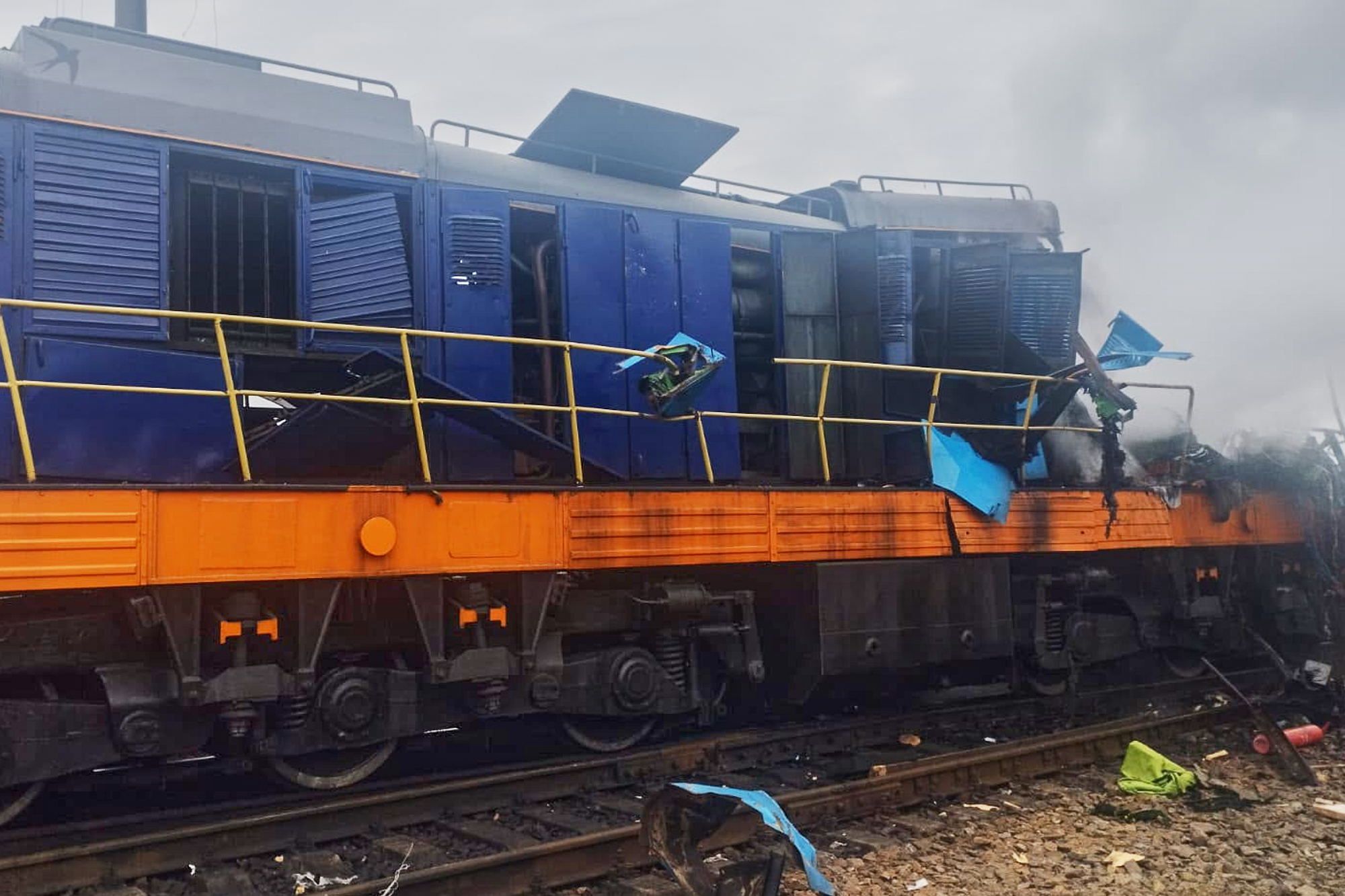
Zelensky said that a passenger train was also struck in the Mykolaiv region on Wednesday, damaging a railway station and a diesel locomotive. Nearly 170 passengers on board the train were evacuated before the strike. An electric locomotive in the northwestern city of Kovel was also struck, Zelensky said.

Ukraine requests locomotives from partners

Russian strikes on Ukraine’s rail network have resulted in more than 500 locomotives being damaged or completely destroyed since the beginning of the all-out war on Feb. 24, 2022, with more than half those strikes occurring this year, Ukrainian Foreign Minister Andrii Sybiha wrote on X on Tuesday.

Sybiha described such attacks as “systematic” and aimed at disrupting logistics across Ukraine. He said that Ukraine urgently needs replacements for damaged locomotives, and called on the country’s partners to assist in finding locomotives compatible with its 1,520-millimeter rail gauge and to assist in financing.

In another post on X on Wednesday, Sybiha said that Russian forces were striking passenger trains, locomotives, stations and railway routes “knowing exactly how essential they are for civilians, evacuations and Ukraine’s economy.”

“This is not collateral damage. It is a systematic hunt for people and an attempt to (paralyze) civilian life,” he wrote.

Zelensky says there is no truce on halting energy strikes

In an interview with CBS News on Tuesday, Zelensky pushed back against an earlier claim by US President Donald Trump that Ukraine and Russia had agreed to mutually cease attacks on each other’s energy infrastructure. Zelensky said that Ukraine was ready to enter such an agreement, if Russia stops striking Ukrainian energy facilities.

Trump said in a social media post Monday that such a truce had been reached, but didn’t offer details on the purported agreement. Previous efforts to broker even a partial ceasefire have repeatedly fallen apart within hours, with both sides accusing the other of violations.

In the CBS interview, Zelensky said that the possibility of an energy truce was discussed during a recent meeting in Kyiv with Trump’s representatives, Steve Witkoff and Jared Kushner, but that he had told them: “If the Russians are ready for an energy truce, that means there will be no attacks on energy facilities at all.”

Russia decorates ship captain who fired flares at Danish helicopter

Russia’s Defense Ministry said Wednesday that the captain of a Russian warship that fired two signal flares toward a Danish military helicopter on Monday, drawing ire from Denmark, has been awarded a medal for his “competent and resolute action.”

The ministry said in a statement that the Soobrazitelny corvette was on a mission in neutral waters in the Baltic Sea when its crew spotted the approaching helicopter, which failed to respond to calls made via the international communication channel.

“To prevent a provocation by the Danish helicopter, the corvette commander decided to fire two red signal flares, after which the helicopter left the area where the Russian warship was located,” the ministry said.

Russian Foreign Minister Sergey Lavrov said Wednesday that Moscow has no aggressive intentions toward Europe, but that if countries on the continent were to launch an attack on Russia, “it would be a completely different kind of war, and a very short one.”

Russian general killed in Ukrainian drone strike

The deputy head of the Russian armed forces’ military-political department, Lt. Gen. Apti Alaudinov, confirmed Wednesday that a decorated Russian general had been killed in the occupied Donetsk region.

Alaudinov, who didn’t provide details on the circumstances of Maj. Gen. Anton Grunis’ death, hailed the officer as “a hero” and “one of the most respected generals … a real man and officer and a great patriot.”

The confirmation of Grunis’ death came after Robert “Magyar” Brovdi, commander of Ukraine’s Unmanned Systems Forces, alleged on Wednesday that Grunis had been killed in occupied Donetsk by a Ukrainian drone while at a command post in the village of Kindrativka.

In July, Grunis reported to Russian President Vladimir Putin that his troops had captured the town of Kostiantynivka and he was later awarded the Hero of Russia medal. Ukraine has disputed that Kostiantynivka was fully taken by Russian forces.

Grunis had previously fought in Chechnya, a mainly Muslim republic whose bid for independence after the Soviet Union’s collapse led to years of war with Russian government forces. He also took part in Russia’s campaign in Syria.

In Ukraine, he commanded the 4th Guards Motorized Infantry Brigade.

Meanwhile, 17 other sites were damaged in Ukraine’s Kyiv region between Tuesday and Wednesday morning, according to the head of the Kyiv regional military administration, Tymur Tkachenko. Eight private homes, five vehicles, a municipal building, a hangar and a production facility were among the sites damaged, Tkachenko said on Telegram.

Zelensky said on X that the Kherson, Donetsk and Poltava regions had also come under attack.

In the northern city of Sumy, six people were injured in a Russian guided aerial bomb attack, including a 14-year-old girl, according to the head of the Sumy regional military administration Oleh Hryhorov. Two homes were destroyed and 10 others damaged in the strikes, along with damage to an educational facility, Hryhorov said, adding that two other men were hospitalized after a separate strike hit an industrial zone.

In the port city of Odesa, one person was killed in a Russian attack that sparked a fire at garages and damaged vehicles and private homes, Serhii Lysak, head of the city’s military administration, wrote on Telegram Wednesday.

Russia’s Defense Ministry said that its air defenses downed 71 Ukrainian drones overnight. In the Belgorod region, one person was killed and four others were wounded by Ukrainian strikes over the last 24 hours, according to acting governor Alexander Shuvayev.

Source link

Arab News | Poland, Ukraine slam Russian strikes near border as ‘escalation’

KYIV: Poland and Ukraine on Sunday denounced Russian strikes close to the Polish border, including on a Warsaw-bound train and near a frontier checkpoint — as an “escalation” in the war.

Ukraine’s rail operator said former British prime minister Boris Johnson and ex-US CIA director David Petraeus were at a border train station nearby around the time the train was hit.

But the strikes came as US President Donald Trump called on Ukraine’s President Volodymyr Zelensky to halt attacks on Russian refineries, saying it was causing a shortage of diesel fuel and “there are plenty of other targets”.

Ukraine has increasingly targeted Russian oil refineries in a bid to hurt Russia’s war effort.

Russia attacked western Ukraine with drones Sunday, just days after US envoys visited Kyiv and Moscow in a bid to revive talks to end Europe’s worst conflict since World War II. European nations are meanwhile worried by what they say is increased Russian-orchestrated sabotage acts on their soil.

Poland and Ukraine said a Kyiv-Warsaw passenger train was struck just two kilometers (1.2 miles) from the Polish border, but reported no casualties.

“Shortly before the locomotive was hit at the Ukrainian-Polish border, a diplomatic train was at Yagodyn station. There were, among others, security advisers from several EU member states and former European leaders on board, including former UK Prime Minister Boris Johnson,” said the Ukrzaliznytsia rail operator.

“In another train that was at Yagodyn station at the very moment of the attack was former CIA Director David Petraeus,” it added. The operator did not say how far the officials were from the train attacked.

Zelensky said Moscow had “deliberately” struck the locomotive.

“It is precisely to prevent these strikes from spreading further into Europe that Ukrainian men and women fight every day, give their lives, and do not allow the aggression to expand,” Zelensky said.

– Poland warns of possible more attacks –

Poland has been one of Ukraine’s main allies and, with Ukrainian airspace closed, trains to Poland have been one of the main routes out of the war-torn country, used by refugees.

Poland’s Prime Minister Donald Tusk chaired an emergency meeting in Warsaw following the strikes, warning he expected Russia to escalate the war “in the coming weeks”. He added: “We cannot exclude that the escalation will also affect our territory… I hope not.”

Russia said it had hit “railway infrastructure used to transport military cargo” from European countries.

– Russia ‘knocking at Europe’s door’ –

Speaking in Kyiv, Poland’s foreign minister Radoslaw Sikorski said the “escalation” should lead to allies to “double” their support for Ukraine.

“This was just a few hundred meters from the Polish border; this affects the safety of my countrymen,” Sikorski said.

“I understand that nobody died this morning in that particular attack, but it could easily have happened.”

Ukraine’s Foreign Minister Andriy Sybiga said President Vladimir Putin considered Russia was “de facto” at war with Europe.

“Europe may consider, or reassure itself, that it is not at war with Russia, but Russia does not see it that way. De facto, it is already at war with the Euro-Atlantic space, carrying out various hostile actions,” Sybiga said.

“Putin’s terror is literally knocking at the door of the European Union and NATO.”

Russian attacks killed at least two people on Sunday in the frontline city of Kramatorsk.

Twenty people, including two children, were also wounded in a second day of attacks on the southern port city of Odesa, Ukrainian officials said.

– Three-way talks –

The Kremlin, meanwhile, said negotiations with Ukraine and the United States on the war could take place in October.

“We do not rule out such a possibility; we are talking about the foreseeable future,” Kremlin spokesman Dmitry Peskov told journalists, cited by Russia’s Ria and Tass news agencies.

Several rounds of negotiations have failed, while US-led efforts stalled during the Middle East war.

In an interview released on Saturday, Zelensky said he would be willing to meet Putin at the G20 summit in Miami in December.

But Peskov said that was “impossible”, speaking to AFP in New Delhi on Saturday, repeating Moscow’s demand that a meeting could only take place in the Russian capital.


Source link

Arab News | Explosions, fire at Bulgarian ammunition storage site

SOFIA: An explosion and fire have hit an ammunition storage site in Bulgaria, police said Saturday, weeks after a blaze at another munitions facility in the country.

The latest incident happened late Friday at a warehouse operated by Bulgarian arms maker EMCO, whose munitions are used in Ukraine, near the central village of Gorni Varpishta.

No casualties were reported and workers were evacuated from the site.

Interior Minister Ivan Demerdzhiev said the blaze broke out at one warehouse at the facility, triggering explosions.

There was no danger of the fire spreading to other warehouses or beyond the storage complex, he told a press conference.

“All hypotheses are on the table and we are examining them carefully,” he said, adding the storage facilities had some shortcomings, including poor security.

The warehouse contained explosive materials, including around 100 munition rounds, the armaments company said.

The incident came about a month after a fire at an ammunition depot at another nearby EMCO plant in Bulgaria, a NATO member and supporter of Ukraine.

EMCO ruled out human error in that case, and prosecutors are investigating.

President Iliana Iotova said Saturday she was considering convening Bulgaria’s national security council, a presidential advisory body that brings together senior political, security and defense officials.

“Cases of explosions at ammunition depots have become more frequent,” she said.

EMCO is owned by Bulgarian defense executive Emilian Gebrev, who survived a poisoning attempt in 2015 together with his son and another company executive.

Bulgarian prosecutors have charged three Russian nationals over the poisoning.

Separately, six Russians have also been charged with terrorism over four explosions at arms facilities in the country between 2011 and 2020.

Prosecutors said the four blasts were remotely triggered and suspected the incidents were linked to efforts to disrupt arms supplies to Georgia and Ukraine.

Bulgaria has supported Ukraine since Russia’s full-scale invasion in 2022.

There have been a string of incidents at defense companies in European countries that support Ukraine in recent weeks.

Firebombs were thrown near defense company offices in the German city of Munich earlier this month and an ammunition factory near Rome operated by arms maker KNDS was hit by a blast in August.

No injuries were reported in either case.


Source link

Arab News | Zelensky urges US to sanction Russia ‘now’ over deadly strikes

KYIV: US President Donald Trump’s administration should impose new sanctions on Russia “now” over recent deadly strikes on Ukraine, Ukrainian President Volodymyr Zelensky said Friday.

“Sanctions need to be imposed now,” Zelensky told the Yalta European Strategy forum. “Honestly, I sometimes do not understand why decisions cannot be made quickly,” he added.


Source link

Arab News | Have both sides in Ukraine war run out of cards?

Russian President Vladimir Putin met with US envoys Steve Witkoff and Jared Kushner at the Kremlin on Saturday, before they headed to Kyiv for talks with Ukrainian President Volodymyr Velensky. Both sides agreed to pause all strikes on the other’s capital while the Americans were in town. Why now? Have we finally reached the point in the conflict where all parties are left without cards to play?

In August 2025, Donald Trump met Putin at a US military base in Anchorage. No Ukraine ceasefire occurred in the aftermath. After discussing the two states’ long history and their efforts in the Second World War, Putin mentioned there was an “agreement” but failed to offer more details. He stressed that the situation in Ukraine was associated with “fundamental threats to our national security.”

Declassified documents from the US National Security Archive noted discussions on NATO expansion during the administration of President Bill Clinton. They show that, in 1993, American officials led Russian President Boris Yeltsin to believe that the Partnership for Peace offered an alternative to NATO expansion, rather than being a precursor to it. By the fall of 1993, discussions between supporters of the expansion of the alliance and those who proposed a more cautious approach and cooperation with Russia and Ukraine led to the formation of a “double track” approach in Washington.

Kyiv has recently been striking more deeply inside Russian territory, bringing the conflict home to ordinary citizens

Dr. Diana Galeeva

On June 22, 1994, Russia joined the program. But on Dec. 1, NATO announced that it would begin considering the admission of new members. Yeltsin later accused the US and NATO of provoking a post-Cold War “cold peace.” Clinton met Putin in the summer of 2000 at the Kremlin. Putin said that Clinton called the idea of Russia joining NATO “interesting.” However, after a conversation with his team, the US leader apparently said that “it’s not possible now.”

Since 2022, the Russian president has repeatedly criticized the expansion of NATO, calling it a threat to his country’s security. In 2024, Putin announced Moscow’s conditions for a ceasefire, including the withdrawal of Ukrainian troops from the Donbas, Zaporizhzhia and Kherson regions and the recognition of these regions as being part of Russia, along with Crimea.

Zelensky appears open to returning to negotiations after CIA Director John Ratcliffe last month “secretly” visited Moscow and proposed a trilateral Trump-Putin-Zelensky meeting. Zelensky said any ceasefire is set to involve the US proposal for a free economic zone in Ukraine’s eastern Donbas region — to be administered by a third party. Earlier, Zelensky was pressured by Trump, who told him “you don’t have the cards.” But is it only Ukraine and Zelensky that ended up with no cards to play, or is it all sides involved?

Kyiv has recently been striking more deeply inside Russian territory, bringing the conflict home to ordinary citizens. It has been using Starlink-guided drones and hastily developed missiles, hitting bombers, oil refineries, air defenses and even retail warehouses.

The Ukraine war, just like the Second World War, has revealed that no party to conflict receives any benefits

Dr. Diana Galeeva

Europe was the first side to lose the Ukraine war. The war revealed a critical weakness at the heart of Europe’s energy system. Reuters reported that the energy shock Europe suffered in the early weeks of the war “revealed a hard truth,” with the crisis reaching the heart of all European capitals. The Iran war and the closure of the Strait of Hormuz contributed further to this dynamic, with prices climbing 13 percent at the start of July.

Putin suggested in November 2025 that Russia was ready to fight “until the last Ukrainian dies” if Zelensky does not surrender. But the Iran war has changed the game, with the Kiel Institute publishing a report in June titled “Endgame” that highlighted how Russia’s war economy had “hit its limits.” Russia last week downgraded its oil output forecast for this year to a 17-year low. In June, Putin announced that Russia was ready to discuss a settlement with Ukraine based on the agreements reached in Anchorage and in Istanbul in 2022.

Meanwhile, the US, which committed about $68.2 billion in defense support of Ukraine between February 2022 and June 2026, is unlikely to continue such spending as a result of the Iran war. Washington and Iran have been exchanging strikes since Feb. 28 and, as of June, Iranian attacks had damaged 20 US military sites in the region.

Domestic factors are also pressuring the White House to prioritize peace, as Trump’s approval rate was last month stuck at 33 percent, while some 71 percent of poll respondents disapproved of Trump’s handling of the cost of living.

Is all this surprising? No. The end of the conflict is inevitable, as all sides have ended up with no cards to play. The Ukraine war, just like the Second World War, has revealed that no party to conflict receives any benefits, only military and economic damage. Most importantly, nearly 2 million casualties have occurred since 2022. This war has again demonstrated that a wise government’s approach is always about prioritizing the success of its own nation. A peaceful future for Europe would be a win-win approach for all.

Dr. Diana Galeeva, a former visiting scholar to the Centre of Islamic Studies at the University of Cambridge, is the author of four books, most recently “Islam in Russia: Formations of Tolerance” (Routledge, 2024).


Source link

Arab News | Russia threatens to point nukes at Lithuania if it hosts allies’ weapons

MOSCOW: Russia said on Friday it would aim its nuclear warheads at Lithuania if the Baltic state hosted any weapons from the nuclear arsenals of its NATO allies on its territory.

Lithuania is moving to lift a constitutional ban on having nuclear weapons stored in the country, part of an effort to boost its security posture amid Russia’s offensive on Ukraine.

The decision is currently working its way through parliament — where it needs a two-thirds majority to pass and has the support of the president and major parties — and could come into force this winter.

It would be “a very serious turn in terms of escalating tensions”, Kremlin spokesman Dmitry Peskov told state TV when asked about the plan.

“If there are nuclear weapons on the territory that are aimed at us, accordingly, the territory of that country will fall into the crosshairs of our own nuclear weapons,” he said.

Lithuania’s President Gitanas Nauseda had announced the plans in July, saying his country wanted to be an “integral part of this nuclear deterrence”.

Source link

Arab News | Russia detains a Moldovan citizen suspected of shooting a military officer on orders from Ukraine

MOSCOW: Russian authorities said Tuesday they have detained a suspect in last week’s shooting that wounded a senior military officer, the latest in a series of attacks on personnel and figures linked to the war in Ukraine.

The Federal Security Service said a 21-year-old Moldovan national was detained for being allegedly “involved in an assassination attempt on a senior military officer of the Russian Defense Ministry” at the behest of Ukrainian intelligence services. He faced charges of attempted murder and illegal arms trafficking, it said.

The officer was shot at least six times on Sept. 3 in the Probuzhdenie settlement on the outskirts of Engels, a city in the Saratov region, said Svetlana Petrenko, a spokeswoman for Russia’s Investigative Committee, which is also involved in the case.

The region is home to a large air force base that hosts Russia’s strategic bombers and has carried out attacks on Ukraine.

The victim, who has not been identified by Russian authorities, survived the shooting and remains hospitalized.

The FSB alleged that the suspect was recruited by Ukrainian intelligence services in 2025 and arrived in Russia in June. He was detained in the southern Astrakhan region as he was trying to leave the country and return to Moldova, the agency said.

Petrenko said he was allegedly offered $70,000 for carrying out the attack.

There was no immediate comment from either Ukrainian or Moldovan officials. Ukrainian President Volodymyr Zelensky alluded to the attack on the day it happened, saying: “Wherever Russian criminals hide, they will be found, and today there is further confirmation of this fact – confirmation in the Saratov region.”

Last week’s attack follows a series of bombings in Russia targeting people involved in the 2022 full-scale invasion of Ukraine. Moscow has blamed Kyiv for some of the blasts.

In late August, a serviceman was killed and his wife was injured by a car bomb on the outskirts of St. Petersburg. Three weeks before that, the director of a factory supplying drones to the Russian military was badly injured and his driver was killed when their car exploded just outside Yekaterinburg, 1,400 kilometers (about 870 miles) east of Moscow.

In those cases, the authorities did not immediately say who they believed carried out the attacks.

Earlier this year, President Vladimir Putin directed the FSB and other agencies to tighten security around military and government officials.

Kyiv has claimed responsibility for some attacks inside Russia. Ukraine’s SBU security service said in 2024 that it had organized the killing of Lt. Gen. Igor Kirillov, who headed the Russian military’s nuclear, biological and chemical protection forces.

Kirillov was killed by a bomb hidden in a scooter outside his apartment building in Moscow, a day after Ukraine’s security service leveled criminal charges against him.


Source link