Russell

LOS ANGELES TIMES INTERVIEW : Newt Gingrich : The Politics of Polemics: Forging the GOP’s Vision By Walter Russell Mead

Walter Russell Mead is the author of “Mortal Splendor: The American Empire in Transition” (Houghton Mifflin). He interviewed Gingrich in the congressman’s Capitol Hill office

After a generation of comfortable Democratic majorities in the House, Republican congressmen seemed resigned to life in the minority–until Newt Gingrich (R-Ga.) and the Congressional Opportunity Society began using House rules to wage guerrilla war against the entrenched leadership.

Dismissed at first as gadflies and ideologues, the young Republicans gradually developed political muscles. Two landmark events marked their coming of age: the resignation of Speaker Jim Wright following Gingrich-backed charges of ethics violations, and the election of Gingrich as whip, the second-ranking post in the House minority leadership.

Gingrich’s rise to prominence coincided with a major change in Washington’s political climate. In the 1980s, Washington was a town with clearly marked ideological divides. Issues such as Nicaragua and abortion dominated the agenda; battle lines were clear. The 1990s look quite different. With communism in retreat, the old foreign-policy battles no longer seem so important. After 10 years of a GOP White House, conservatives seem less opposed to strong government, and liberals less committed to it.

In retrospect, Gingrich’s call for sanctions against South Africa’s minority-white government seems a turning point in the emergence of the still unsettled Washington picture. Here was a leading conservative taking a position closer to that of Jesse Jackson than Margaret Thatcher.

If Washington has changed as the result of Gingrich’s challenges, Gingrich is changing as he becomes part of the Washington Establishment he once scorned. Like many political challengers before him, Gingrich seems to be finding that Establishments aren’t so bad–once the club lets you in.

This shift may cause him trouble down the road–Hell hath no fury like a right-wing scorned–but for now Gingrich has the best of both worlds: the support of conservatives and, increasingly, the respect and even friendship of moderates and some liberals.

During a relaxed and casual meeting, Gingrich seemed eager to talk about history and ideas. At times he seemed more like a popular college history teacher–a job he once held–than a powerful member of the congressional leadership. He seems comfortable with himself and his ambitions; confident of making his mark and willing to run risks.

He also has a quality that is rarer in Washington than it should be. For all the huge egos in Washington, there are relatively few people who see themselves against the backdrop of history. Gingrich is one. Men like Theodore Roosevelt and Winston Churchill are often in his speech–perhaps this says something about the scale of his ambition. That both these men were mavericks who changed parties and allies during their careers says something else about Gingrich. He will be hard to pin down in the political battles of the future–his loyalty seems given more to a vision than to people or parties.

Question: What is your foreign-policy vision for the United States?

Answer: Well, I think first of all you have to start with the presumption that there are three huge changes under way. There’s the rise of the true world market, where competitiveness and the speed of information flow and ease of transportation means that you are beginning to be connected internationally in the sense that in the 19th Century you had a national economy.

Second, there is the spread of the technology of destruction in such ways that you’re going to have, by the end of the century, places like Iraq, Iran, Libya and Syria that are capable, at a minimum, of threatening European cities with ballistic missiles and chemical and nuclear warheads. By the year 2000 to 2010, they may be able to attack the United States directly. That is a whole level of combat and conflict that we are not used to.

Third, you are living through a fundamental change in the Soviet empire. This clearly destabilizes the whole planet in the sense that for 45 years we had a bipolar world, with a Western coalition containing the Soviets . . . .

You have to start with a fundamental reassessment of America’s role, as decisive in some ways as the late ‘30s decision to commit us to stopping Japan and Germany or as decisive as the late ‘40s decision to contain the Soviet empire.

But we’ve got to reformulate a new image of where the planet is going. What does America want in the world–and then what is America’s role in trying to get it?

Q: It’s interesting that you mentioned those two periods, the ‘30s and the ‘40s, as times of great change because in both those times the conservative movement tended to take a more isolationist stance.

A: If you go back before 1937 and 1938, conservatism, from say 1860 to 1928, was the internationalist movement. And it was the Democrats, the (William Jennings) Bryan wing of the Democratic Party that was isolationist . . . .

Then, beginning in the ‘20s, you had a role reversal. And as the conservatives became less the government and more oppositional, they also became less internationalist and more isolationist. What you had, beginning with Eisenhower, and Nixon in all fairness–Nixon was one of the people who voted for the Marshall Plan–you had the emergence of first, an internationalist anti-communist Republicanism and then under Reagan and Bush that has broadened . . . .

I think that today there is much more isolationism in the Democratic Party than in the Republican Party . . . (where) there’s much more internationalism and much more of a commitment to the world market . . . .

Q: How would you define the differences between your view and that of the Democratic Party?

A: Well, there’s a difference about the question of safety, a difference about the question of international competition and a difference about the speed of transition–if I can break them down like that.

First of all, safety. The liberal Democrats basically are myopically focused on Central Europe and on Gorbachev, and their basic theme is, since Gorbachev seems to be succeeding and Soviet power seems to receding from East Germany, the world is safer. Therefore, we can demilitarize.

I would argue that we’re caught in the tragic irony that the curve, if you will, of threat from Iraq, Iran and Syria is rising at a rate about as fast as–or faster than–the curve of Soviet threat is declining . . . .

Now the question I would pose is: Is the world still going to be dangerous–even if Gorbachev succeeds? My answer would be yes. In fact, the world’s going to be more dangerous than people think. Dictators are going to have higher-power weapons that are more sophisticated than people think. And some of these dictatorships are very big. The Syrian Army has more artillery than the American Army. So when you say, “Gee, we can shrink dramatically,” my answer is fine–if you’re willing to allow the Iraqis to threaten American cities without SDI. If you’re willing to allow the Iraqis and the Iranians to seize the oil fields, and if you’re willing to give up Israel . . . . And I think most of my Democratic friends on that are just sophomoric. I don’t think they’d even look at the data base, because it conflicts with their ideology.

And the second big question is the world market . . . . The bureaucratic welfare state and permissive attitudes are incapable of competing in the world market. The correct answer is to reform and revitalize America, not to retreat . . . .

And I think a lot of my Democratic friends, because they have to bear the burden of the public-school bureaucracy in the inner city, and they have to bear the burden of the big-city machines, and they have to bear the burden of union work rules–their reaction is to say, “Gee, we have to find ways to withdraw from the world market, and to somehow build a self-sustaining America.” I think that’s crazy and I think in the long run it means a lower standard of living and fewer jobs for Americans.

Lastly, there is the question of speed. I thought it was almost funny that George Mitchell and Dick Gephardt decided that George Bush wasn’t moving fast enough. If you look historically over the Bush Presidency and you look at the change in Panama, Nicaragua, East Germany, Hungary, Poland . . . this has been unbelievable . . . .

I say this: I’m a conservative and I’m willing to criticize George Bush, and I voted to override on the Chinese student veto, but I have to say overall that they get A-plus marks on managing a transition of unbelievable complexity. And getting freedom further in 18 months than anyone would have thought possible.

Q: Among the Soviet Republics, Lithuania is an easy call in that we never recognized the annexation, but then you start looking at other separatist movements–including Russia. Isn’t there a fear of a nuclear Lebanon in the Soviet Union?

A: You have a fear of the unknown there. You’ve also got to recognize objective realities. There’s an Indian reservation in northern Vermont that claims it’s not in the United States. Now what if Gorbachev decided next Thursday to recognize it? I mean, you’ve got to decide, all right, what are the ground rules here. The Soviet Union does exist . . . . I think it’s now an empire in transition, but it exists. And it is going to have to decide inside itself how it allows itself to dismember. If they adopt a rule that says if the Georgians vote 70% to secede, that is frankly a more open rule for withdrawal than we have in the United States . . . .

Of course, if Russia does declare itself independent or sovereign it will be the first time that the mother country declared herself free from the empire. So it would be a dramatic change. And I think our position is that all of these republics have the right of self-determination and we would certainly encourage the Soviet government to tolerate and negotiate with all of these republics.

Q: As an American Georgian, you would know that.

A: Yeah, that’s right. I mean, we Georgians, we’ve already had this argument. Now, you can make the argument in their case that it wasn’t a voluntary collection (of republics); it’s the late 19th Century empire. That’s a good argument. But you are seeing Gorbachev take what is, after all, a pretty radical position and saying, look, we’re going to figure out a legal formula for you to get out of here. Well, that’s pretty amazing . . . .

And I think it’s a little unfair to say yeah, he did all that, but boy now I have this new excuse to get mad at him. And as long as he doesn’t use military force, it seems to me that we owe him the opportunity to try to lead his own country to sort itself out . . . .

Q: How is the Administration responding?

A: Well I think that the decision by the Soviet government to open up some economic activity in Lithuania is a victory for Bush. And I think if he can continue to encourage and nudge Gorbachev in the direction of re-establishing economic patterns with Lithuania, I think it will be a very big plus for him.

Q: Earlier you remarked that, in talking to the President about Lithuania, you said we need Winston Churchill, not Stanley Baldwin. Does that still apply?

A: Well, I think the President convinced me that it wasn’t the same kind of situation; that who we may need is George Bush, and that, in fact, he is negotiating and maneuvering his way through a very complicated situation with considerable skill.

Q: OK, let’s talk now about some of the global economic issues, because I think it’s clear to all of us that they are going to be dominant. Some people think that the economic competition among the former Western allies may become very, very fierce. Do you?

A: Not necessarily fierce, but it will become intense. But . . . it’s not that we’re competing for the same pie. We’re competing to build bigger bakeries . . . . The world market is extraordinarily underdeveloped and there is an enormous amount of money to be made over the next century helping the entire planet achieve a high standard of living. So there ought to be intense competition for how we build the bigger bakery. But we don’t have to have any kind of competition over who gets bread, because everybody ought to be getting bread . . . .

Q: Do you think that the world economy is breaking up into blocs or that there is a danger of this?

A: There’s a permanent danger of breaking up into blocs, but I wouldn’t exaggerate that. I think there is much, much more to be gained in the long run by actively building global countries and global companies. We are much better off to have more IBMs and more General Motors and Fords and AT&Ts; that are able to be everywhere. And we’re much better off to have thousands of new, small businesses that compete everywhere a jet airplane goes, and anywhere a fax machine can receive their latest advertisement. And I think we want to encourage this, more than anybody else, because we are perfectly suited for the world economy.

Q: More than any other country?

A: More than any other country. I mean geographically, we can reach both Europe and Asia simultaneously and Latin America. And in terms of our own cultural background. We are the only universal country of the planet, the only country that has people from everywhere. And therefore, we ought to be the advocates of the widest global market.

Q: Does that suggest the possibility that other countries may not be as enthusiastic for this as we are–for example, Europe?

A: They may not be. I mean, the Europeans don’t even have a real concern about that. On the other hand, the Europeans need us to balance off the Germans . . . . The price of having a market of nations that really do compete with each other, is that you have got to be able to sit down for long negotiations, and you just have to go in and tough it out.

Q. This sounds a lot like what used to be called liberal internationalism in the 1940s. So is it true that the liberalism of today is the conservatism of tomorrow?

A. Could be. I think that it’s that and an ongoing sense of thesis, antithesis, synthesis to some of that . . . . But if you would have interviewed a Democrat back in 1948, he would have said, “Gee, this sounds like Theodore Roosevelt.” Theodore Roosevelt’s wing of the Republican Party has consistently been the dominant dynamic in American life for most of the last century.

Q: So would you say Theodore Roosevelt, Franklin Roosevelt, Newt Gingrich is the line of succession?

A: No . . . . To be honest, I’d say Roosevelt, Roosevelt, Reagan. It’s important to remember that Reagan was an FDR Democrat, and that when the Democratic Party moved to the left, Reagan left.

Source link

Dodgers’ top draft pick Bo Lowrance inspired by Freddie Freeman

Bo Lowrance models his game after Freddie Freeman. So, it’s fitting that the Dodgers selected the 6-foot-5, 200-pound high school infielder — ranked the No. 21 overall prospect by MLB.com — with the 40th pick in the MLB amateur draft on Saturday.

“He’s obviously a first baseman, and I’m on the left side, so defensively a little different,” Lowrance said of Freeman during a conference call with media. “But he’s still unbelievably athletic, and a big thing that I’ve watched for years is his approach and how he uses the whole field. … [Freeman is] somebody that I’m always trying to emulate.”

Lowrance hit .435 with 12 home runs last season at Christ Church Episcopal School in Greenville, S.C.

A left-handed batter and right-handed thrower like Freeman, Lowrance is expected to develop as a shortstop — noting former Dodger Corey Seager has a “super smooth” defense at 6-4 he hopes to replicate — with a potential role at third, depending on how the prep star grows into his frame.

“Yeah, definitely want to be a shortstop,” Lowrance said. “I believe I’m capable of it. I think I have the glove skills and the athleticism. I think it’s just going to turn into who I want to become at the plate in terms of my overall size and frame. Like, if I ultimately put on a bunch of weight and kind of grow out of the shortstop position, then maybe that’s where that’ll change.”

Lowrance hit it off with the Dodgers’ front office in June at the draft combine in Phoenix.

And even though the Dodgers didn’t exactly see the Freeman comparison Lowrance mentioned, they would be thrilled if he turned out anything like the 10-time All-Star.

“Bo was definitely our main target coming into the day,” Dodgers amateur scouting director Zach Fitzpatrick said. “Probably would have said there’s a pretty low chance we were able to acquire him, had you asked me in the morning. So as the picks start coming off the board and realizing there’s a little bit more opportunity to get him, our excitement level climbed. And then to actually be able to call his name was a home run for us.”

“I’ve been in communication with them for a while,” Lowrance added. “I’ve loved their scouting staff. I have a great relationship with them.”

The Dodgers entered the draft with the smallest bonus pool at $3,951,900; the White Sox had the most cash to work with, boasting $20,489,500.

Fitzpatrick, though, said the Dodgers’ strategy centered around taking the best player available.

The approach carried over into the Dodgers’ second and final pick on the day — Florida right-handed pitcher Russell Sandefer at No. 132.

Sandefer posted a 3-2 record as a junior in 2026 with a 4.42 ERA over 19 games and 12 starts. The Dodgers were intrigued by his repertoire and heat.

“As we dove into Russell throughout the spring, kind of all departments — from scouting and what we saw at the park to our player development group and our analytics group — kind of flagged Russell as very intriguing and then having a lot of upside left,” Fitzpatrick said.

“A starter at Florida, threw a lot of strikes; there’s obviously velocity, there’s a deep mix, and he performed and had some pretty stellar outings along the way that helped us believe in his upside and different ways we can help him access it more consistently.”

Lowrance was happy to be part of the Dodgers’ draft class.

“Just a whole wave of emotions,” he said. “I’m extremely grateful, first off, and couldn’t be more excited. I mean, yeah, I’ve said it already: It’s the best team in baseball, and nobody else that I want to be a part of.

“Couldn’t have drawn it up any better.”

Source link

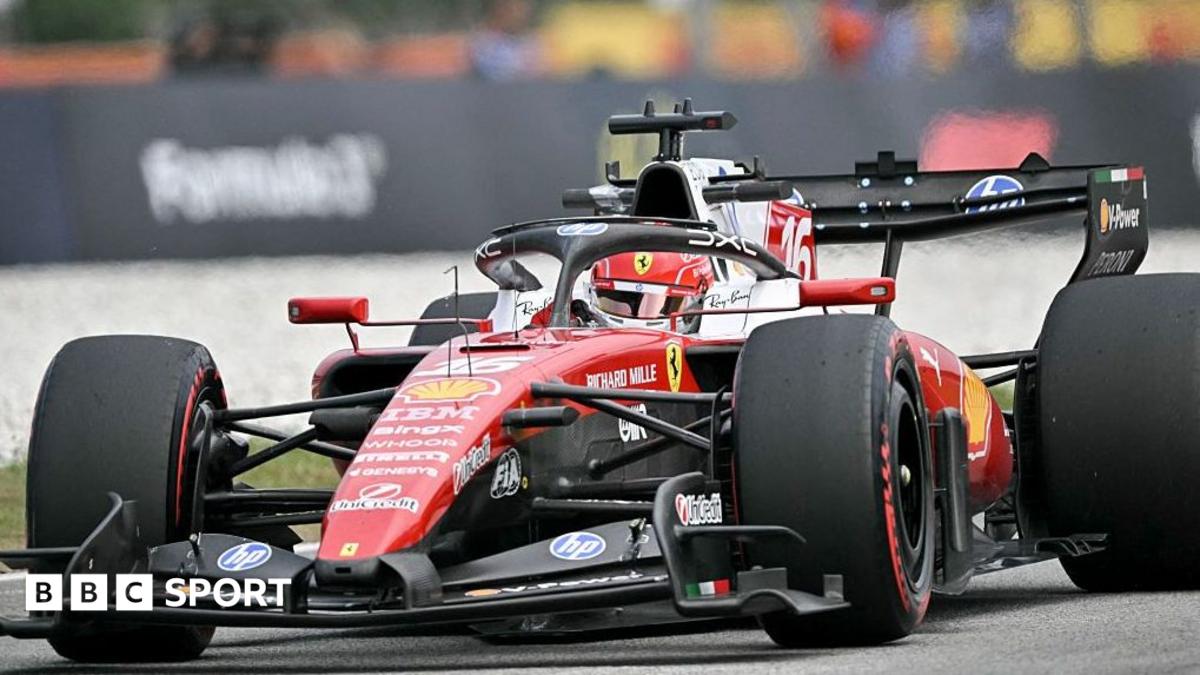
British Grand Prix result: Charles Leclerc wins dramatic race from George Russell and Lewis Hamilton

Leclerc now looked locked in for victory, but there was great doubt over second place.

Hamilton, who earlier had a five-second penalty for moving before the lights went out at the start, was 20 seconds back from his team-mate, but Verstappen was closing in and Russell was going with the Dutchman, having dropped back with a pit stop on lap 34 forced by a slow puncture.

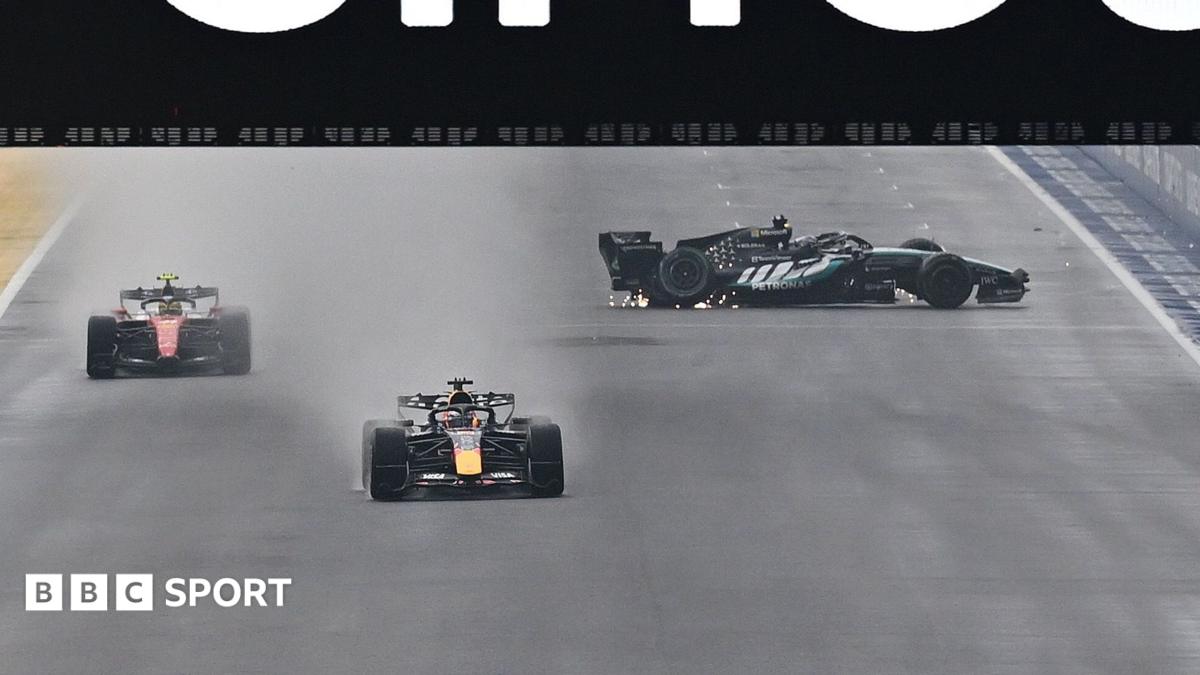
But on lap 48, Verstappen spun off at Stowe. Red Bull team principal Laurent Mekies said the rear wing did not close properly, meaning Verstappen had less downforce as he turned in, causing his loss of control.

Verstappen’s off brought out the safety car, and initially it looked as if there would be a short blast to the finish with the Ferrari drivers contesting victory on fresh tyres.

But Russell did not pit, so he would have taken any restart between them, which would have delayed Hamilton’s charge, even by a few seconds.

But Verstappen had crashed with only four laps to go, and there was doubt about whether the incident would be cleared in time.

As the cars came around to approach the start of the final lap, the timing screen initially said the safety car would pull in, but a few seconds later that message was replaced by another saying it would stay out.

The full post-race FIA statement said: “The safety-car period regulation states that one lap must be completed following the unlapping procedure.

“This process was followed by race operations. The ‘safety car in this lap’ message was displayed erroneously due to a software error.”

The safety-car finish guaranteed Leclerc’s first win since the 2024 US Grand Prix in Austin.

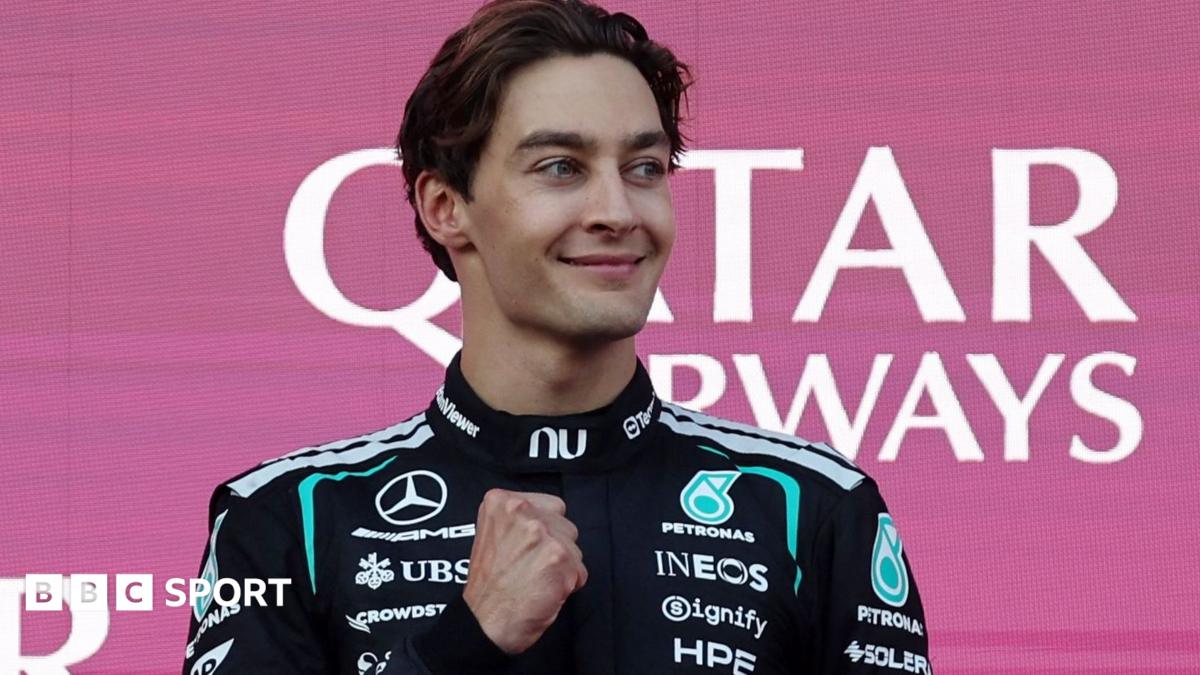
Russell’s podium was his first at his home race and he said: “Really pleased to be standing here, even though it was a very lucky race. I had the puncture but I was lucky to get the safety car at the end.”

Hamilton said: “I just didn’t have it today. I jumped the start, got a five-second penalty but Charles had the pace on me today. I struggled with the balance of the car. I gave it everything and I am grateful to be up here.”

Lando Norris took fourth for McLaren after a solid but quiet race as the world champions wait for upgrades due at the Hungarian Grand Prix this month.

Red Bull’s Isack Hadjar was fifth, followed by the Racing Bulls of Liam Lawson and 18-year-old British rookie Arvid Lindblad.

Norris’ team-mate Oscar Piastri dropped to the back after being involved in a first-lap incident and recovered to 11th, behind the Audi of Gabriel Bortoleto and Alpine’s Franco Colapinto and Pierre Gasly.

Source link

Nations Championship: No Finn Russell for Scotland against Argentina as Jonny Gray returns

Finn Russell will not feature in Scotland’s opening Nations Championship match of the summer series but could feature against South Africa, says head coach Gregor Townsend, who welcomes back Jonny Gray.

Fly-half Russell, 33, has not fully recovered from the calf injury that kept him out of the latter part of Bath’s domestic campaign and was not considered for the match at Estadio Mario Alberto Kempes in Cordoba on Saturday (20:10 BST). The Scots face the Springboks in Pretoria on 11 July then Fiji at Murrayfield on 18 July.

Tom Jordan starts at 10 in Russell’s absence, with Fergus Burke among the replacements.

Gray returns against the Pumas, having missed this year’s Six Nations, while fellow lock Scott Cummings, 29, and prop Pierre Schoeman, 32, will win their 50th caps.

“Great for [Jonny Gray] to be back in the squad,” said Townsend. “Since his move to Perpignan, he’s played very well so his form’s been rewarded with this opportunity. It’s nice obviously nice that him and Scott Cummings are playing together.

“Jonny was at Glasgow when Scott came through as an 18-year-old. It will be great to see them both back int he second row again.”

Overall, the XV in Cordoba shows eight personnel changes to the team that finished the Six Nations with defeat to Ireland in Dublin in mid-March.

Full-back Kyle Rowe, centre Rory Hutchinson, wing Jamie Dobie, fly-half Tom Jordan, hooker George Turner, prop Elliot Millar-Mills and Cummings are the players joining Gray in coming in to the side.

Kyle Steyn moves from left to right wing to accommodate Dobie. Prop Zander Fagerson and wing Darcy Graham, who started in Dublin, drop to the bench.

Gregor Hiddleston could make his Scotland debut off the bench.

“We’ll have to gel quickly,” Townsend said.

“It’s our first game since we played in Dublin. We’ve got a lot of evidence in the Six Nations and November that when we get our game in place in attack and defence, we can cause problems to any team in world rugby and do more than that, convert opportunities.

“I believe that our squad now is much deeper and we use that bench to continue what the starters are doing or actually raise the energy.”

Scotland: Rowe, Steyn, Hutchinson, Tuipulotu (capt), Dobie, Jordan, White; Schoeman, Ashman, Millar-Mills, Gray, Cummings, M Fagerson, Darge, Dempsey.

Replacements: Hiddleston, Sutherland, Z Fagerson, Samuel, Brown, Horne, Burke, Graham.

Source link

A look at the nine L.A. Dodgers managers before Dave Roberts

p]:text-cms-story-body-color-text clearfix”>

Dodgers manager Tommy Lasorda celebrates after the Dodgers beat the Montreal Expos to win the NL pennant in 1981.

Dodgers manager Tommy Lasorda celebrates after the Dodgers beat the Montreal Expos to win the NL pennant in 1981.

(Associated Press)

Years as manager: 1976-1996

Record: 1,599-1,439, .526 win pct

After serving as the team’s third base coach for four seasons, Lasorda took over as manager late in the 1976 season when Alston announced his retirement. He led the Dodgers to the National League pennant in his first two full seasons, losing both times to the Yankees in the World Series. He won his first World Series in 1981, knocking off the Yankees, and rallied his team to a surprise title in 1988 in which the Dodgers beat the heavily favored Athletics. Lasorda was inducted into the Baseball Hall of Fame in 1997, his first year of eligibility.

A fiery and vibrant presence who spent 71 years with the Dodgers, Lasorda managed nine players who won the NL rookie of the year award. The Dodgers also opened the Japanese player pipeline on his watch. Hideo Nomo, the first Japanese big leaguer to permanently relocate to the U.S., joined the Dodgers in 1995. Three decades later, the team features Shohei Ohtani and Yoshinobu Yamamoto on its star-studded roster.

Source link

Austrian Grand Prix: Harry Benjamin’s driver ratings as George Russell wins for Mercedes

Gabriel Bortoleto – 6/10

A tidy race to lead Audi home and finish just outside the points.

Nico Hulkenberg – 5.5/10

Solid enough but finishing behind Bortoleto takes the shine off it. He gained places from his lowly starting position, however.

Pierre Gasly – 5/10

Slipped down the order so a disappointing Sunday for Alpine who just looked short on pace.

Ollie Bearman – 4.5/10

A clean but anonymous afternoon for Bearman. Haas didn’t have much to fight with.

Franco Colapinto – 4.5/10

Not spectacular but a steady finish for Colapinto, who kept his Alpine out of trouble.

Esteban Ocon – 4/10

Finished behind team-mate Ollie Bearman again, which made for a poor return. Lost ground at the start and never looked like a points contender.

Alex Albon – 4/10

Williams had a tough race and Alex Albon finished two laps down. Unlike this team-mate Carlos Sainz, he at least got to the flag.

Fernando Alonso – 4.5/10

The final classified finisher. He gained places largely through others retiring, however his five-second penalty for speeding in the pit lane made this another race for Aston Martin to forget.

Lance Stroll – 3.5/10

Aston Martin driver retired after 45 laps, ending a difficult race from the back row.

Carlos Sainz – 4/10

Out after 23 laps when his car stopped on the pit straight. Led Williams once again in qualifying which is all that can be said.

Sergio Perez – 4/10

Only lasted a few laps for Cadillac. Out-qualified team-mate Valtteri Bottas but barely turned a wheel this weekend with several car issues in practice plaguing him during the race, too.

Valtteri Bottas – 3.5/10

The first retirement, after just two laps. There was almost no race to judge. Started behind his team-mate but Cadillac’s Sunday was over before it had begun.

Source link

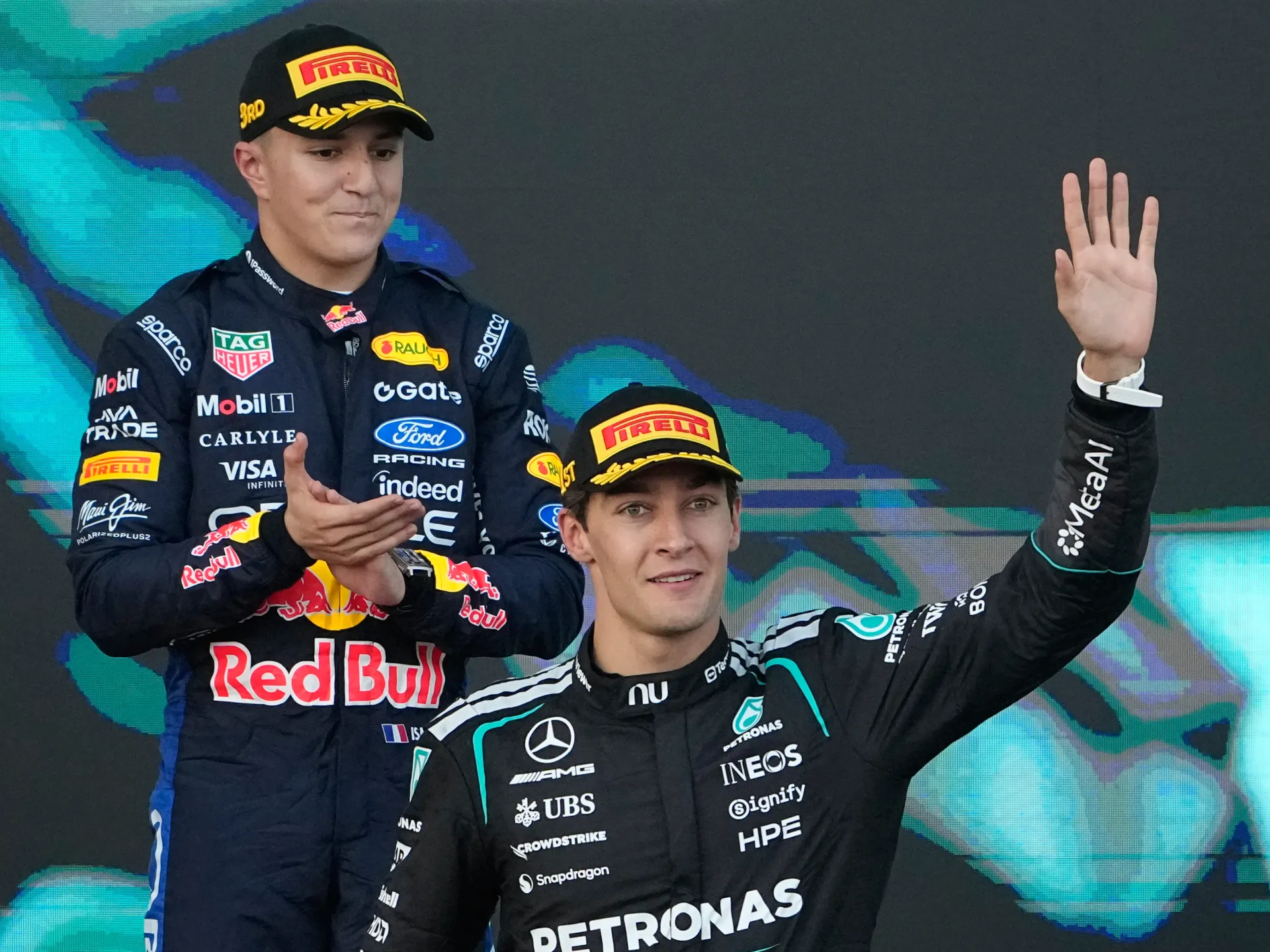
Russell beats Verstappen at Austrian Grand Prix to boost F1 title hopes | Motorsports News

George Russell’s victory over Max Verstappen further reduces teammate Kimi Antonelli’s lead in the drivers’ title race.

A thirsty George Russell won the Austrian Grand Prix from pole position on Sunday to trim Mercedes teammate Kimi Antonelli’s Formula One championship lead to 40 points.

Max Verstappen finished 1.6 seconds adrift, after crashing in qualifying and starting fifth, at his Red Bull team’s home circuit with Antonelli third and 0.3 behind after a thrilling chase to the line at scenic Spielberg.

Recommended Stories

list of 4 itemsend of list

The win was Russell’s second of the season, after he took the opener in Australia, his career seventh and Mercedes’ seventh in eight rounds so far.

Antonelli has 171 points to Russell’s 131 with Ferrari’s Lewis Hamilton, fifth on Sunday after running second and battling Verstappen wheel-to-wheel, dropping to third on 125.

In the constructors’ standings, Mercedes have 302 points to Ferrari’s 204.

“Incredible to be back on the top step. It’s been a little while, so I am definitely going to enjoy this one this evening,” said Russell, who can now head to his home British GP at Silverstone next weekend on a high.

He revealed over the radio after taking the chequered flag that his drinks system had failed during the race, the first of the season to be declared a “heat hazard”. “Nice race for it to do so, I’m a little bit thirsty,” he said.

Oscar Piastri was fourth for McLaren, ahead of Hamilton, with Isack Hadjar sixth for Red Bull.

Reigning champion Lando Norris, last year’s winner in Austria, was seventh with Ferrari’s Charles Leclerc eighth and Racing Bulls pair Liam Lawson and rookie Arvid Lindblad completing the top 10.

“I was having to push every single lap and when you push those boundaries there’s bound to be a small mistake or two,” said Russell.

“I knew how quick the guys were behind. Kimi has been extraordinarily quick this whole season, so every lap I was looking at the timing board.”

George Russell in action.
Russell wins the Austrian Grand Prix at the Red Bull Ring in Spielberg, June 28 [Darko Bandic/Pool via AFP]

Source link

Austrian Grand Prix: George Russell steals pole from Charles Leclerc after Max Verstappen crash

Mercedes driver George Russell controversially stole pole position at the Austrian Grand Prix from Ferrari’s Charles Leclerc with the last lap of the session.

The result came amid late drama as Russell set his lap, beating Leclerc and Lewis Hamilton, despite passing yellow flags for a crash by Red Bull’s Max Verstappen at the penultimate corner.

Russell’s team-mate Kimi Antonelli, who was running just ahead of the Briton, also passed the Verstappen incident, but did not improve his time and will line up fourth.

McLaren’s Lando Norris and Oscar Piastri were sixth and seventh behind Verstappen, who kept fifth despite his crash.

Russell insisted he had slowed sufficiently for the Verstappen incident, and claimed there was just a single yellow flag showing, rather than the double waved yellows which might have been expected for such a situation.

“I had a big lift,” Russell said. “I went into the corner 0.5secs up and I came out 0.25secs up. It was great to get that lap.

“I just spoke with Toto [Wolff, team principal] and he said everything is fine with the yellow flag. Big 100m lift before the corner. So that’s good to hear.”

The late drama was caused by a big crash for Verstappen, who lost control going into the high-speed downhill right-hander and spun across the gravel into the barrier.

Source link

Barcelona-Catalunya Grand Prix: George Russell beats Lewis Hamilton to pole

George Russell bounced back from the disappointments of the past few races to take pole position for the Barcelona-Catalunya Grand Prix.

Russell edged out Lewis Hamilton’s Ferrari by just 0.064 seconds as runaway championship leader Kimi Antonelli could manage only third place in the other Mercedes.

McLaren’s Lando Norris took fourth from Red Bull’s Max Verstappen and Isack Hadjar, while Hamilton’s team-mate Charles Leclerc crashed on his first lap in the final session and will start 10th.

Norris’ team-mate Oscar Piastri was seventh, from Racing Bulls’ Liam Lawson and Audi’s Nico Hulkenberg.

More to follow

Source link

‘Doctor Who’ Christmas special axed, Russell T Davies exits

“Doctor Who” is going through another major regeneration.

The BBC announced Wednesday that it is not moving forward with a previously announced “Doctor Who” Christmas special. Last year, the broadcaster teased a “spectacular” special episode written by showrunner Russell T Davies for the 2026 holiday.

“After careful consideration, the BBC, Russell T Davies and Bad Wolf have collectively decided not to go ahead with the previously announced Doctor Who Christmas episode,” the BBC wrote in its latest update. “This decision was not taken lightly, and we know it will be disappointing for fans, but in order to set the show up for future series, it was decided that rather than bridge the gap with a one off special, we are choosing to push forward to invest in the long-term future of the show which ensures that when the TARDIS lands once more, it does so in all its glory.”

Whovians know that the Christmas Day specials are a longstanding tradition for the sci-fi series. Previous holiday episodes have marked the first full appearance of David Tennant’s Tenth Doctor in 2005 as well as Ncuti Gatwa’s Fifteenth Doctor in 2023.

BBC’s plan now is to “put Doctor Who out to competitive tender” in order to “[secure] the next phase of the show for future generations” — meaning they are inviting potential producers to pitch their ideas for the next era of the long-running series. This also means Davies and producer Bad Wolf are parting ways with the franchise.

“And so GOODBYE from me to Doctor Who but HELLO to a big new future for the show,” Davies wrote in a Wednesday Instagram post, confirming his exit. “You’ll have to wait a bit longer for new Doctor Who… but you’ll be waiting for MORE Doctor Who than a one-off. So it’s worth it!”

Davies, who led the “Doctor Who” revival from its 2005 launch to 2010 before returning for his second stint in 2023, also said that he had not written a script for the previously planned Christmas special and “no actor was ever approached to play the next Doctor.”

“I’m as excited as anyone to see what comes next!” Davies added. “Will they keep the theme tune? Will they lose the blue box? Will they bring back the Drahvin?! It’s all up for grabs, which is so Doctor Who, exciting and unpredictable and new!”

Bad Wolf, which worked on the two seasons starring Gatwa as the Time Lord, also on Wednesday confirmed its exit on Instagram in a post thanking fans and those that joined them on this “incredible journey through Space and Time.”

“It has been a joy and a privilege to have been at the helm of the TARDIS alongside the brilliant Russell T Davies,” read the production company’s statement. “Doctor Who is – and always will be – a show that shines light into the darkness and it has been an absolute honour to have been its torch bearer for 26 episodes with the BBC and Disney+.”

The BBC in its announcement reiterated its commitment to “Doctor Who” and its future. It also shared that a previously announced animated “Doctor Who” series for CBeebies is currently in production.

This latest “Doctor Who” update comes during a tenuous time for the franchise. The series has faced low viewership, Disney+ exiting as the show’s co-producers and Gatwa ending his run as the Doctor. The most recent season concluded with a cliffhanger, with the Fifteenth Doctor regenerating into a form resembling Rose Tyler, the companion portrayed by Billie Piper.


Source link

Russell Crowe calls ‘clickbait’ on autograph seekers interaction

Russell Crowe has pushed back against TMZ’s coverage of his recent interactions with a crowd of autograph seekers.

“Clickbait,” the “Gladiator” actor wrote in a Monday post on X. “Everybody got their autograph and selfie, the passage to the hotel was kept free for guests, and I still got to the airport on time. One man, no security. Handled. What’s your problem ?”

Earlier that day, the outlet had posted a video of Crowe addressing a crowd of fans and autograph seekers outside of a Paris hotel before making his way to them to sign various memorabilia.

“If you needed a reminder that fans are not always priority No. 1 — turn to Russell Crowe — cause the guy was absolutely not having it outside of his Paris hotel,” TMZ wrote in its since-deleted X post sharing the video. The outlet also framed the video as Crowe “explod[ing] on Pushy Autograph Seekers” in its news story.

In the video, the Academy Award winner is shown giving clear directions to those gathered for his autograph or to snap a photo with him.

“Stay where you are, don’t f— push in on me, I’ll come to you,” Crowe says. “Give everybody space. As soon as somebody’s a d—, I’m gone.”

The actor then approaches the crowd to sign various items held out in front of him. The short clip ends soon after Crowe declines a request to also write “Maximus” — the name of his “Gladiator” character — next to his signature as he continues to sign other things.

Crowe’s temperament, blunt demeanor and distaste for certain aspects of “celebrity” have long been fodder for news coverage. In 2005, the actor made headlines for throwing a phone that hit a Manhattan hotel concierge.

“If I ever was going to torture somebody, I’d put them in a room where they can’t leave and have someone new come in every three minutes and ask the same question over a number of days and then weeks,” Crowe said in a 2010 interview with The Times, describing what happens at a movie press junket on the eve of embarking on one.

“Some people believe celebrity is a power that should be used. Ultimately, your dollars are more powerful,” Crowe said in that interview. “I’m famous for making movies. Celebrity just happens to be an unfortunate byproduct of what I do.”

Source link

Canadian Grand Prix 2026: George Russell takes pole for sprint race

George Russell bounced back after a difficult recent run to beat Mercedes team-mate Kimi Antonelli to sprint pole at the Canadian Grand Prix.

The Briton, who is 20 points adrift of the Italian after four races this season, headed Antonelli by 0.068 seconds after being fastest on both runs in final qualifying.

Lando Norris headed an all-McLaren second row, 0.315secs off pole and 0.019secs in front of team-mate Oscar Piastri.

Ferrari and Red Bull completed a two-by-two top eight with Lewis Hamilton ahead of Charles Leclerc and then Max Verstappen in front of Isack Hadjar.

Russell came to Montreal looking to turn around what he admitted had been a “turbulent” start to the season, in which Antonelli has won three of the four grands prix so far, and he has started the weekend off well.

“It feels great after a tough Miami but I never doubted myself,” said Russell. “I always knew what I could do. This is an amazing circuit, high grip, and feels like you’re driving a proper grand prix car.”

Mercedes have a major upgrade on their car for this race and Russell said it had made a significant difference.

“It’s definitely feeling great,” he said. “The team have done a great job to bring this forward. Pleased to have it on the car and pleased to be back in P1. It’s been a little while but still a big focus for tomorrow.”

Antonelli said he had started his lap with his tyres under temperature and described his session as “messy”.

McLaren also brought an upgrade to Montreal, their second in as many races, but while it kept them within range of Mercedes it was not enough to counterbalance the effect of Mercedes on this track, where the world champions have often struggled.

Norris said: “A good surprise. After this morning, we were a little bit worried about how far off we were. More just the lack of confidence in the car.

“But we changed some things on the car and seemed to make a good improvement. I could have got more out of it, but not enough to close the gap to the guys ahead.”

Hamilton was 0.361secs off pole and 0.084secs ahead of Leclerc on a circuit where he shares the record number of wins with Michael Schumacher.

The seven-time champion was pleased with his performance, saying his decision not to go into the Ferrari simulator before this race, because of a feeling it was leading to incorrect set-up choices, had paid off.

“Probably the best qualifying session we’ve had for some time,” said Hamilton. “Great work with the engineers.

“The car felt really fantastic from P1. We made just subtle changes going into qualifying. Q1 and Q2 was looking good and then I don’t know what the others are able to turn up a bit more, but I am just happy to be in the fight.

“I was having so much fun out there, and the fact I didn’t do the sim and it was the best I felt all year. I chose a set-up we’ve not used before and its transformed the car for me.”

And Verstappen, struggling with a car he said was “jumping” at the rear, was just 0.101secs clear of tea-mate Hadjar.

“My feeling in the car was not very good,” said Verstappen. “I was struggling a lot with the ride. All over the bumps I couldn’t put my foot down. Actually my feet were even flying off the pedals and it made it very difficult to be consistent.”

Source link

What time is the Preakness? Post time, betting odds and more

The Preakness Stakes at Laurel Park, Md., could feature a historic finish even if there is no chance to produce a Triple Crown winner this year.

The Preakness post time is 4:01 p.m. PDT. The race will air on NBC.

Kentucky Derby winner Golden Tempo isn’t running the Preakness. Cherie DeVaux, the first woman to train a Derby winner, said the schedule was too tight for Golden Tempo, with two weeks between races.

But trainer Brittany Russell has prepared Taj Mahal for the race and could follow up on DeVaux’s big win with one of her own. Russell would be the first female trainer to win the Preakness and could extend a potential female trainer Triple Crown bid in an industry long dominated by men.

“It would sort of feel like probably a fairy tale,” Russell said of a potential win. “ … It would mean an awful lot.”

Iron Honor in the ninth post position opened the day favored slightly at 9-2. Taj Mahal in post No. 1, Chip Honcho in post No. 6 and Incredibolt at post No. 12 were not far behind with 5-1 odds.

Taj Mahal has one other edge, winning three previous races at Laurel Park, home of the Preakness.

Source link