rule

Judge halts FEMA rule tying disaster funds to deportation data

Dec. 23 (UPI) — A judge in Oregon ruled Tuesday that the Trump administration cannot require states to account for how deportations have affected their populations in order to receive emergency or disaster preparedness funds.

U.S. Magistrate Judge Amy Potter’s ruling came in response to a lawsuit from 11 states challenging new requirements from the Federal Emergency Management Agency, which they argued created undue burdens on access to hundreds of millions of dollars that could be used to prepare for floods, storms, acts of terrorism and other potential catastrophes.

The ruling is a setback for President Donald Trump as he has sought to remake the federal agency that is central to responding to disasters after earlier calling for it to be dissolved.

The ruling concerned a new FEMA policy that shortened the duration of grants to states from three years to one. The agency argued that the shorter period would allow it to better gauge the effectiveness of how states were using the money.

FEMA also required states to provide updated figures on their populations to reflect the Trump administration’s aggressive deportation efforts. Population counts have traditionally been the responsibility of the U.S. Census Bureau.

A group of 11 states – including Michigan, Oregon, Arizona, Colorado, Hawaii, Maine, Maryland, Nevada, New Mexico, Wisconsin and Kentucky – sued in response to the new requirements.

They argued that the requirements violated the Administrative Procedures Act and imperiled funding used for outreach programs in Hawaii, the deployment of emergency management personnel in North Carolina during tropical storms and staff to respond to flash floods in Maryland.

“This abrupt change in policy is particularly harmful to local emergency management,” wrote Potter.

In Oregon, affected funds were used to help cover the expenses of local emergency managers across the state, she wrote.

Source link

Travel warning as new EU rule rollout causes airport chaos and three hour queues

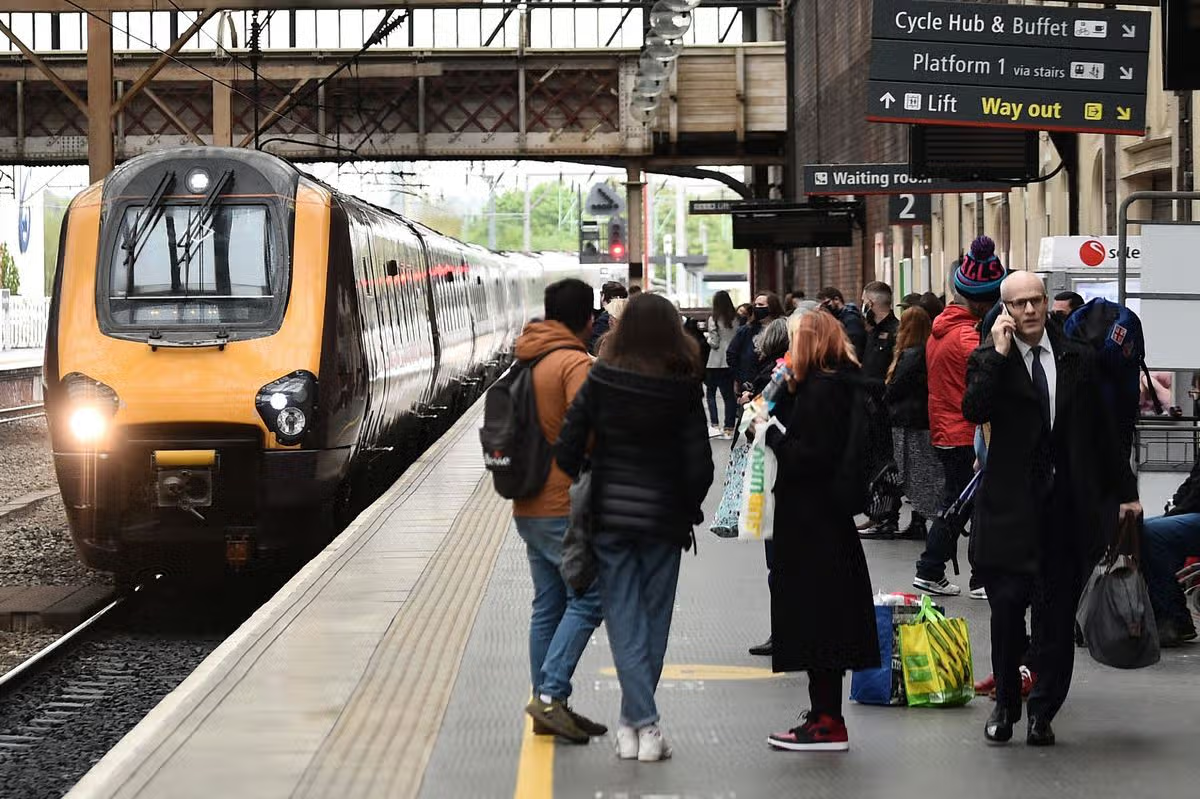
OFFICIALS have called for the new EES system to be urgently reviewed with some passengers facing three-hour queues at passport control.

The new Entry/Exit system is set to be up and running by April 10, 2026 for non-EU citizens entering the Schengen area – but there has been a concerns due to huge delays at the border.

New EES systems has caused delays of up to three hours for non-EU citizensCredit: Reuters
The system is set to be completely rolled out in April 2025Credit: Reuters

The new EES system started rolling out from October 12, 2025, in order to replace manual passport stamping with digital checks for non-EU travelers.

It was designed to eventually reduce airport wait times by automating border checks with biometrics.

But reports have recorded waiting times of up to three hours – and many travellers have taken to social media too.

On December 18, one person said about Lanzarote on X: “Landed at 14.30, over 2 hours later still at airport. This new EEs just is working. Hundreds of people in queue then they stamp passports. Ridiculous”.

STREET SMARTS

I visit New York 6 times a year – my expert budget guide including £1 pizzas


SNOW WAY

All the best Xmas days out under £10 including FREE ice skating & Santa’s grotto

On the same day, The Portugal Post reported three-hour queues in the arrivals hall at Lisbon’s Humberto Delgado Airport due to a glitch with the EES system.

It even added that “officials are now weighing whether to switch the system off altogether during Christmas”.

Earlier in the month, one traveller said: “The new EU Entry/Exit System is off to a great start at Prague Airport, with a 3+ hour queue wrapped around the entire terminal right now.”

The Airports Council International (ACI) in Brussels is calling for an urgent review of the entry-exit system (EES).

ACI has said that the capturing of biometric data from third-country nationals entering the Schengen area has resulted in border control processing times at airports increasing by up to 70 per cent.

It added that this has impacted the passenger experience especially in airports across France, Germany, Greece, Iceland, Italy, Portugal and Spain.

The ACI has called for a review of the systemCredit: Reuters

The ACI has said that multiple factors have resulted in delays which include regular EES outages.

It reported persistent EES configuration problems, “including the partial deployment or unavailability of self‑service kiosks used by travelers for registration and biometric data capture”.

There is continued unavailability of Automated Border Control (ABC) gates for EES processing at many airports, and the unavailability of an effective pre-registration app.

Another factor is an insufficient amount of border guards at airports.

Olivier Jankovec, Director General of ACI EUROPE warned: “Significant discomfort is already being inflicted upon travelers, and airport operations impacted with the current threshold for registering third country nationals set at only 10 per cent.”

Currently, one in 10 travellers has to go through the digital registration.

But by January 9, 2026, the percentage is due to be raised to 35 per cent.

Mr Jankovec has warned that unless the issues are resolved this “will inevitably result in much more severe congestion and systemic disruption for airports and airlines. This will possibly involve serious safety hazards”.

He added: “We fully understand and support the importance of the EES and remain fully committed to its implementation.

“But the EES cannot be about mayhem for travelers and chaos at our airports. If the current operational issues cannot be addressed and the system stabilised by early January, we will need swift action from the European Commission and Schengen Member States to allow additional flexibility in its roll‑out.”

For more on EES checks, here’s everything you need to know about them from a travel expert.

Plus, here’s all the worst travel chaos predicted for the UK over the Christmas period.

The new EES system has resulted in queues for up to three hours during peak travel timesCredit: Reuters

Source link

Gangs: The New Political Force in Los Angeles : Governance: Bloods-Crips unity is about who will rule South-Central. Those in authority now have abdicated any claim to leadership.

Luis J. Rodriguez, a former gang member, is author of “Always Running: A Memoir of La Vida Loca, Gang Days in Los Angeles (Curbstone). Cle (Bone) Sloan is a member of the Bloods, Kershaun (Little Monster) Scott of the Crips

The political terrain of the country has dramatically changed since the presidential nominating process began in February. The most significant development was the outbreak of violence in Los Angeles following the acquittal of four police officers accused of illegally beating Rodney G. King. New forces are arising in the land. They must be addressed.

A segment of the so-called marginalized and disenfranchised are stirring. In the past, they were written off as the “underclass,” the disadvantaged, even as “illegal.” They have been criminalized and dismissed. You could either feel sorry for them or hate them. The point was not to get near them.

They must now be reckoned with as a political force.

From the homeless to welfare mothers, from people with AIDS to the physically handicapped, thousands are flexing their organizational muscle, and using it on the streets, in pursuit of their economic and political interests. The unity in Los Angeles between the city’s two largest gangs, the Crips and Bloods, is expressive of this development.

The stirrings of “the bottom” of society aim toward certain goals: the end of scarcity in the midst of plenty; complete literacy; the ability to function competently at any chosen level of society; productive and livable employment; access to the most advanced health care in the world and a real voice in the policy decisions that affect their lives.

It is in this context that the Bloods and the Crips have come together to demand their place in the changing social fabric.

How is this possible when police and most of the media portray them as drug-dealing, inner-city terrorists?

It’s possible because these gangs are not monolithic. There is no single leadership. To be sure, there are gang members who care nothing about unity. For years, their violent acts dictated the lives and determined the deaths of thousands of young people in South-Central. Communities were pulled into the warfare.

Another group, less publicized, became politicized with every police beating, every inequity, every injustice. Years ago, these gang members, along with others in the community, began work on uniting the gangs. Until the April uprising, most of these efforts involved individuals. Since then, unity efforts have been carried out on a larger scale, with neighborhoods participating.

At the same time, gang members grew tired of the senseless killings. Many of these killings touched everyone, particularly when children were hit. This is why, in the aftermath of the uprising, graffiti appeared expressing such sentiments as “Mexicans & Crips & Bloods Together.” Police later erased most of the unity-related scrawl.

The gangs became political through observation and participation. Although many of the youth don’t read, they witness politics playing itself out every day. What the King beating did, what the uprising did, was help them cross the line of understanding what’s really going on.

The Bloods-Crips unity is about who will rule South-Central. A Los Angeles radio announcer recently estimated that there were some 640 liquor stores within a three-mile radius of South-Central, compared with no movie houses or community centers. Elsewhere, schools and streets are in disrepair. Manufacturing industries have been shuttered forever. Under these circumstances, you have to ask: Who really controls this community?

Not the community.

Although the people of South-Central share responsibility for their conditions–proportionately, more of them are in jail than any other community in the city–they don’t have any decisive control over their lives. This is a breakdown in the integration of responsibility and authority, a component of any democratic process. Those with the authority, including the police and city, county and state officials, fail to take any responsibility, thus abdicating any claim to leadership.
Yet it was precisely when the gangs came together that the police tried to break up as many “unity” rallies as they could, arresting gang leaders and inflaming the ire of residents of housing projects, where many of the rallies were held. The Los Angeles Police Department told the media that the gangs were going to turn on police officers, even ambush them. Yet no police officer in South-Central has been killed or severely hurt since April 29, the day the King-beating verdict came down.

Soon after the rebellion, local law enforcement circulated a flyer among themselves–and the media–that proclaimed the Crips and Bloods would “kill two cops for every gang member killed.” It was incendiary and a forgery. For example, most African-American gang leaders would never use the words “little black girl” to describe Latasha Harlins, who was slain by a Korean grocer last year. They know the flyer’s writing style was not even crudely close to the current street style. The flyer appeared to be yet another example of cartoon propaganda that has characterized previous allegations by police.

Meanwhile, the federal government has launched the largest investigation of its kind to destroy the gangs. Government officials are using the Racketeer Influenced Corrupt Organizations Act, the one used to put reputed crime boss John Gotti in jail, to go after every person associated with the Crips and the Bloods. It appears the FBI is targeting the L.A. gangs for political, not criminal, activity, since its efforts are directly related to the events beginning April 29.

This is not new, or surprising. After the 1965 Watts rebellion, several gangs united, some of them becoming the L.A. chapter of the Black Panthers. The federal government intervened, orchestrating the friction between the Black Panther Party and the United Slaves organization.

Last year, nearly 600 L.A. youth were killed in gang- or drug-related incidents. Yet only now has Washington decided to come in, when the rate of shootings and deaths has dramatically fallen.

Despite the array of local, state and federal forces currently poised against L.A. gangs, gang unity is going to last. The Bloods and Crips have undergone a 22-year-old war without declared terms. To think that in five or six months there will be total unity is unrealistic. There are still some individual disputes. But the attacks have diminished in scale and number. The war is essentially over. The government–and police–should stop undermining the truce, stop fanning the emotional flames that will only bring on more death and destruction.

The Bloods and Crips are not asking for anything from anybody. This is what they have to do for themselves. They have even bypassed certain so-called leaders, including Jesse Jackson. They are not asking for outsiders to step in and dictate the terms of peace.

Recently, a plan to rebuild L.A., presumed to be from the Bloods and Crips, was floated around. Regardless of its origin, the plan was in clear contrast to the “official” rebuilding group, whose members are mostly from outside South-Central. The plan does not call for re-establishing the taco stands, the liquor stores or exploitative markets that previously dotted South-Central. Instead, it calls for improved housing, infrastructure and sanitation, for more parks, community centers and health-care facilities. It includes a proposal for upgrading all schools. It ends with the statement: “Give us the hammers and the nails, we will rebuild the city.”

This embodies a vision, something many police and some government officials would like the public to believe the gangs are incapable of possessing. This is taking responsibility. And it is a demand for the authority to carry it out.

Despite great odds, the Bloods and Crips have found common ground, a unified aim, to end the violence. Whether society is ready for this or not, it is the only path not littered with hypocrisy and blame. Indeed, it is one of the few for peace and justice still viable in Los Angeles.

Source link

Peter Andre reveals strict parenting rule for his youngest kids as he insists ‘the dangers are so real’

PETER Andre has revealed a strict parenting rule for his youngest kids as he insists ‘the dangers are so real’.

The Mysterious Girl singer has five children; son Junior and daughter Princess with his first wife Katie Price, and younger children Amelia, Theo and Arabella with second wife, Emily.

Peter Andre has revealed the strict parenting rule he has regarding his younger three childrenCredit: Instagram
Peter’s eldest two children, Junior and Princess, have grown up in the spotlightCredit: Getty
Peter has three children with wife EmilyCredit: Instagram/@peterandre

While Junior, 20, and Princess, 18, have grown up in the spotlight both have large followings on social media, Peter and Emily have kept the lives of their younger children much more private, and don’t show their faces on social media.

So it may not come as a surprise to Peter’s fans that he agrees with Australia‘s decision to ban teenagers under the age of 16 from using social media.

Peter, who grew up in Australia and whose parents still live there, wrote in his latest New! Magazine column: “Australia has implemented their social media ban for under 16s, and it’s great.

“When people ask me if it’s a contradiction that I’ve had my kids on social media, we have to remember that when social media first started, we were all new to it. We didn’t know the pitfalls of it.

BIG CALL

Peter Andre’s wife Emily sparks parenting debate as she reveals VERY strict rule


NEXT CHAPTER

Peter Andre drops huge hint about new TV series with wife Emily

“Now, we’re seeing what AI can do; that’s why our youngest children are not on it.

“I fully support the ban. I know that’s not what kids under 16 want to hear, but it will do them so much good.”

He concluded: “I hope the rest of the world catches on. The dangers are so real.”

On December 10, the Australian Government required social media platforms to deactivate accounts of users under the age of 16.

The platforms – including Facebook, TikTok, Instagram and Snapchat among others – must then take “reasonable steps” to prevent people under 16 from holding an account or face a fine of up to $49.5m (£24.5m).

While Peter and Emily reside in the UK, they do visit his family in Australia, and if they lived there, the ban would apply to all three of their youngest children.

Meanwhile Princess recently opened up exclusively to The Sun about her ITV reality show, The Princess Diaries, which has landed a second series.

She said: “I feel like I’m stepping into adulthood now, and that’s what series two will be more about.

“It is still following my life and everything that I do and everything on there is natural and what my life really is like.

“I’m used to the cameras following me around now, and nothing will be guarded or held back, because there’s nothing that I need to hide.” 

Peter agrees with Australia’s social media ban for under 16s, which would apply to all three of his younger children if they lived thereCredit: instagram
Peter grew up in Australia and is very aware of the dangers of social mediaCredit: Getty

Source link

I went to France but post-Brexit rule caught me out on my way home

I travelled to Lille, France to explore its charming Christmas market, but when I tried to buy French cheese to bring home, I remembered UK restrictions on dairy products from the EU

In a bid for some festive cheer, I embarked on a day trip to France to experience their Christmas market and explore the local area. Travelling via Eurostar allowed me the liberty to bring back a few souvenirs, but there was one rule that tripped me up on my return journey.

My adventure started at London St Pancras International, where I hopped on the 9:01am Eurostar heading for Lille, France, a city nestled near the Belgian border. The Eurostar whisked me to the French city in just an hour and 23 minutes, so by 11.30am, I was stepping out of the train station, ready for exploration.

I spent the day meandering through Lille’s Christmas Village, which features an enchanting enclosed market brimming with an array of gifts and scrumptious treats, along with additional festive decorations scattered around the city. Later, I strolled through the charming cobbled streets lined with independent boutiques, bakeries, coffee houses and taprooms – a testament to their close ties with Belgium.

READ MORE: All the train travel changes you need to know before Christmas 2025

The day was well utilised, and after a seven-hour quick tour of Lille, I headed back to the train station to catch the 18.36 Eurostar home. But not without a detour to the local supermarket, Carrefour, conveniently situated next to the station.

Free from the baggage and liquid limitations that come with air travel, I reckoned it was the ideal chance to bring back some French treats to share with family over the festive period. After sampling some of the most delectable French cheese at the Christmas market, the rich dairy delights topped my must-buy list.

However, I then recalled an email I’d received from Eurostar prior to my journey. The correspondence bore the heading ‘Important: Temporary food entry restrictions in Great Britain’ and explained that holidaymakers visiting the EU are prohibited from bringing cheese, amongst other foodstuffs, back to the UK.

Clarifying the implications for Britons travelling to the EU, the email stated: “The UK has introduced temporary restrictions on milk, dairy products, and certain meats from the EU. This is to prevent the spread of foot and mouth disease following a rising number of cases across mainland Europe.Travellers can no longer bring the following meats and animal products from the EU into Great Britain for personal use:This also includes items like sandwiches, cheese, cured meats or raw meats. Please ensure you don’t take any of these products with you on your journey to London.Some exceptions apply to infant food and special food needed for medical reasons. Please check what you’re allowed to bring on GOV.UK.”

While I was thankful, remembering the email before purchasing any produce, I was slightly disappointed that I couldn’t bring back a selection of cheese for Christmas. However, I fully understood the reasons why.

READ MORE: Your refund rights if you face Christmas travel chaos as UK strikes loomREAD MORE: EasyJet currently has flights from £23.99 to heaps of winter sun hotspots for 2026

Swiftly abandoning that idea, I decided to focus on acquiring a few bottles of wine for the upcoming festive season. It seemed only fitting, given France’s renowned status as one of the world’s top wine-producing countries!

For those considering bringing home some vino, Eurostar provides guidance on their website: “We appreciate that passengers often want to bring a few bottles back from their trip and we are happy for customers to bring unopened bottles of alcohol to take on to their destination. Any passengers with large quantities will need to contact a courier service.”

They further stated: “Although you can bring alcohol with you and we serve alcohol on board, safety is our top priority. So, please drink in moderation. If you behave in an antisocial way which ruins the journey for other passengers or break any laws or by-laws, we might ask you to leave the train at the nearest station.”

Have you got a travel story you want to share with us? Email us at webtravel@reachplc.com

Source link

Oregon senator mounts a one-man crusade to reform filibuster

To say the U.S. Senate has grown dysfunctional is like suggesting water is wet or the nighttime sky is dark.

The institution that fancies itself “the world’s greatest deliberative body” is supposed to serve as a cooling saucer that tempers the more hotheaded House, applying weight and wisdom as it addresses the Great Issues of Our Time. Instead, it’s devolved into an unsightly mess of gridlock and partisan hackery.

Part of that is owing to the filibuster, one of the Senate’s most distinctive features, which over roughly the last decade has been abused and misused to a point it’s become, in the words of congressional scholar Norman J. Ornstein, a singular “weapon of mass obstruction.”

Democrat Jeff Merkley, the junior U.S. senator from Oregon, has spent years on a mostly one-man crusade aimed at reforming the filibuster and restoring a bit of sunlight and self-discipline to the chamber.

In 2022, Merkley and his allies came within two votes of modifying the filibuster for voting rights legislation. He continues scouring for support for a broader overhaul.

“This is essential for people to see what their representatives are debating and then have the opportunity to weigh in,” said Merkley, speaking from the Capitol after a vote on the Senate floor.

“Without the public being able to see the obstruction,” he said, “they [can’t] really respond to it.”

What follows is a discussion of congressional process, but before your eyes glaze over, you should understand that process is what determines the way many things are accomplished — or not — in Washington, D.C.

The filibuster, which has changed over time, involves how long senators are allowed to speak on the Senate floor. Unlike the House, which has rules limiting debate, the Senate has no restrictions, unless a vote is taken to specifically end discussion and bring a matter to resolution. More on that in a moment.

In the broadest sense, the filibuster is a way to protect the interests of a minority of senators, as well as their constituents, by allowing a small but determined number of lawmakers — or even a lone member — to prevent a vote by commanding the floor and talking nonstop.

Perhaps the most famous, and certainly the most romanticized, version of a filibuster took place in the film “Mr. Smith Goes to Washington.” The fictitious Sen. Jefferson Smith, played by James Stewart, talks to the point of exhausted collapse as a way of garnering national notice and exposing political corruption.

James Stewart as he appeared in the movie 'Mr. Smith Goes to Washington'

The filibustering James Stewart received an Oscar nomination for lead actor for his portrayal of Sen. Jefferson Smith in the 1939 classic “Mr. Smith Goes to Washington.”

(From the Academy of Motion Picture Arts and Sciences)

In the Frank Capra classic, the good guy wins. (It’s Hollywood, after all.) In real life, the filibuster has often been used for less noble purpose, most notably the decades-long thwarting of civil rights legislation.

A filibuster used to be a rare thing, its power holstered for all but the most important issues. But in recent years that’s changed, drastically. The filibuster — or, rather, the threat of a filibuster — has become almost routine.

In part, that’s because of how easy it’s become to gum up the Senate.

Members no longer need to hold the floor and talk nonstop, testing not just the power of their argument but their physical mettle and bladder control. These days it’s enough for a lawmaker to simply state their intention to filibuster. Typically, legislation is then laid aside as the Senate moves on to other business.

That pain-free approach has changed the very nature of the filibuster, Ornstein said, and transformed how the Senate operates, much to its detriment.

The burden is “supposed to be on the minority to really put itself … on the line to generate a larger debate” — a la the fictive Jefferson Smith — “and hope during the course of it that they can turn opinions around,” said Ornstein, an emeritus scholar at the American Enterprise Institute. “What’s happened is the burden has shifted to the majority [to break a filibuster], which is a bastardization of what the filibuster is supposed to be about.”

It takes 60 votes to end a filibuster, by invoking cloture, to use Senate terminology. That means the passage of legislation now effectively requires a supermajority of the 100-member Senate. (There are workarounds, which, for instance, allowed President Trump’s massive tax-and-spending bill to pass on a 51-50 vote, with Vice President JD Vance casting the tie-breaker.)

The filibuster gives outsized power to the minority.

To offer but two examples, there is strong public support for universal background checks for gun buyers and greater transparency in campaign finance. Both issues have majority backing in the Senate. No matter. Legislation to achieve each has repeatedly been filibustered to death.

That’s where Merkley would step in.

He would not eliminate the filibuster, a prerogative jealously guarded by members of both parties. (In a rare show of independence, Republican senators rejected President Trump’s call to scrap the filibuster to end the recent government shutdown.)

Rather, Merkley would eliminate what’s come to be called “the silent filibuster” and force lawmakers to actually take the floor and publicly press their case until they prevail, give up or physically give out. “My reform is based on the premise that the minority should have a voice,” he said, “but not a veto.”
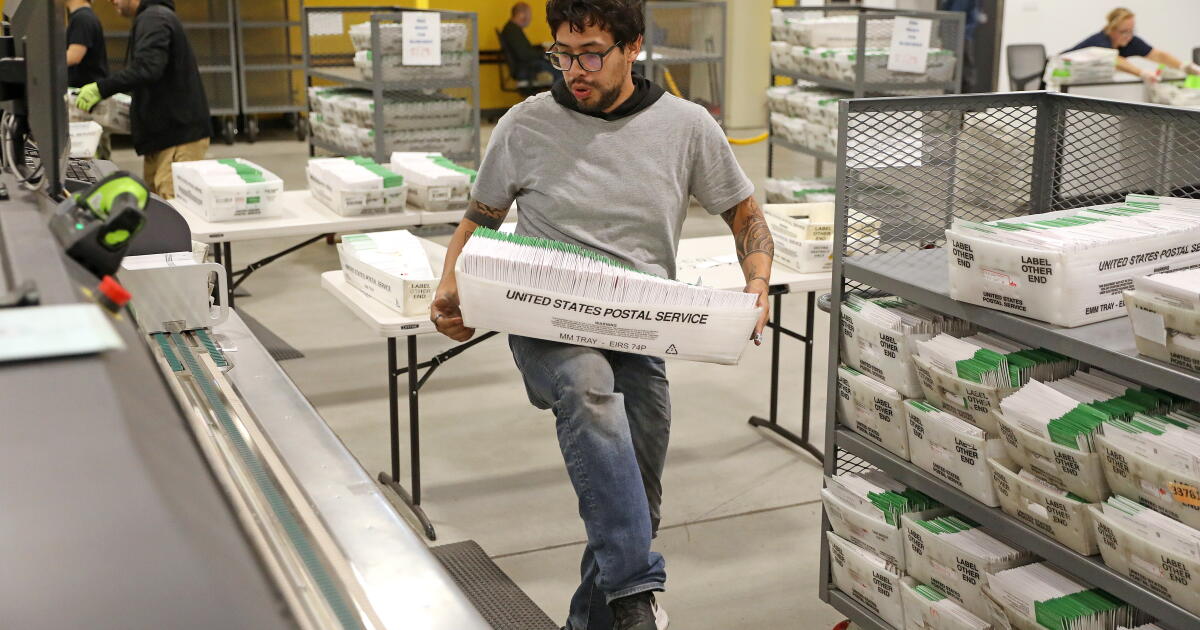
Forcing senators to stand and deliver would make it more difficult to filibuster, ending its promiscuous overuse, Merkley suggested, and — ideally— engaging the public in a way privately messaging fellow senators — I dissent! — does not.

“Because it’s so visible publicly,” Merkley said, “the American citizens get to weigh in, and there’s consequences. They may frame you as a hero for your obstruction, or a bum, and that has a reflection in the next election.”

The power to repair itself rests entirely within the Senate, where lawmakers set their own rules and can change them as they see fit. (Nice work, if you can get it.)

The filibuster has been tweaked before. In 1917, senators adopted the rule allowing cloture if a two-thirds majority voted to end debate. In 1975, the Senate reduced that number to three-fifths of the Senate, or 60 members.

More recently, Democrats changed the rules to prevent filibustering most presidential nominations. Republicans extended that to include Supreme Court nominees.

Reforming the filibuster is hardly a cure-all. The Senate has debased itself by ceding much of its authority and becoming little more than an arm of the Trump White House. Fixing that requires more than a procedural overhaul.

But forcing lawmakers to stand their ground, argue their case and seek to rally voters instead of lifting a pinkie and grinding the Senate to a halt? That’s something worth talking about.

Source link

MAFS UK stars expose huge show secrets including strict phone rule

Married At First Sight UK contestants Leigh and Davide have discussed behind-the-scenes secrets about phone use and restrictions

A star from Married At First Sight UK has opened up on a little-known secret about the show that might leave fans gobsmacked.

The tenth series of the popular E4 dating programme was full of drama and chaos, with a fresh batch of singletons hoping to meet their soulmate at the altar. For some, it was smooth sailing with immediate sparks flying, but for others, there were numerous hurdles to overcome.

This series had everything from shocking revelations to accusations of cheating. Despite several couples making it to the final vows and continuing their relationships outside the show, only one pair – Abi and John – are still together weeks after the series ended.

Post-show, a string of breakups were announced, including Rebecca and Bailey and Davide and Keye, as cast members continue to share their experiences from the show.

Now, one participant has unveiled a behind-the-scenes secret that could astonish some viewers, reports OK!

During an appearance on the Private Parts Podcast, a snippet of which was posted on Instagram, members Leigh and Davide were asked if they were allowed to use their personal mobile phones during filming. The answer, unsurprisingly, is no – they were given production phones.

But what fans might not know is that the production teams allegedly monitor their phones and don’t permit them to form groups of four outside of filming.

On the podcast, Leigh – who was paired with Leah on the programme, confessed it was “f***** chaos” behind the scenes when the cast went out for drinks, with Davide comparing it to “like being at uni again”.

Content cannot be displayed without consent

Davide, who was coupled with Keye on the series before they announced their separation, revealed: “We’re not supposed to be in more than groups of four, because they track your phones, the production phones they gave us, they track them.”

After confirming they weren’t permitted to use their personal mobiles, presenter Olivia questioned how participant Steven managed to access dating platform Hinge – following revelations he’d been active on the app.

Davide explained: “He got his phone back when he went home.”

Leigh chimed in: “This is the thing about this story right, I don’t think that this has ever been explained. So Nelly and Steven had got to a point where I think they both knew it wasn’t going to work.”

Taking to Instagram to respond, Steven posted: “We both had the conversation the day we came back together after partner swap about it being done. We were asked to leave it open so we could do the Dinner Party & Commitment ceremony & between partner swap and the last CC it was about 10 days wait… so we both knew it was done.”

Married At First Sight UK can be viewed on Channel 4

Source link