Rugby

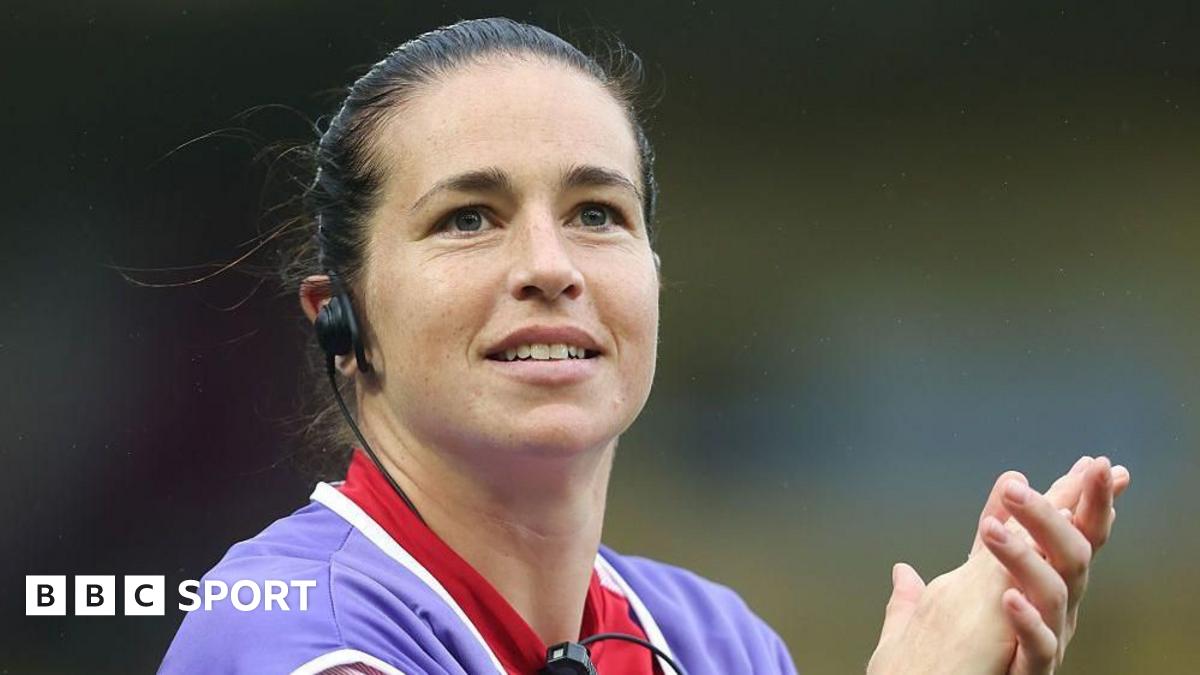
Female coaches ‘huge’ for women’s rugby – Emily Scarratt

In 2018, Hunter’s former England head coach Simon Middleton tipped his captain to take over his role one day.

Asked whether Scarratt or Hunter, who have a combined total of 260 international caps, have the capability to take over as head coach for the next World Cup in 2033, Mitchell said: “Most definitely. I will probably be an old man by then, in my 70s I think.”

He added: “They have been challenged for a long time in their careers and they are extremely curious.

“You don’t play over 100 Test matches or become the most-capped English women’s player in history if you don’t have a strong work rate.

“You have two wonderful people who are authentic, easy to work with and fun to work with.”

A challenge for Scarratt, which Hunter has already had to navigate, is coaching her former team-mates.

Scrum-half Natasha Hunt appears regularly on Scarratt’s podcast, ‘The Good, the Scaz and the Rugby’, and the pair were room-mates in camp.

Pre-recorded shows will still go out but Scarratt will be fully focused on coaching during the Six Nations.

“She [Hunt] tried [to still room with me], she tried pretty hard,” she joked.

“Mo [Hunt] is rooming with Marlie Packer. So for anyone who was concerned, she is safe and well looked after.

“There are certain things that I cannot talk to Mo about any more because there is an element where it is not appropriate for players to know certain things.

“Obviously they know who I am. I know who they are. There is no point trying to pretend like we [former team-mates] are not friends or that we can’t share a joke with one another. That would almost be weirder.”

Only three female head coaches were in charge at the last World Cup (France, Australia and Japan).

Scarratt said it is too early to consider one day taking on that role but she remains passionate about increasing opportunities for female coaches.

“Fundamentally, we need to do a better job – whether that is upskilling, making it more accessible or showing that it is visible – for more people to be in the game and to then move into those roles,” she added.

“There is still probably a shortage of people available to do that, aside from ex-players. It is very cool to see women in those roles.”
Source link

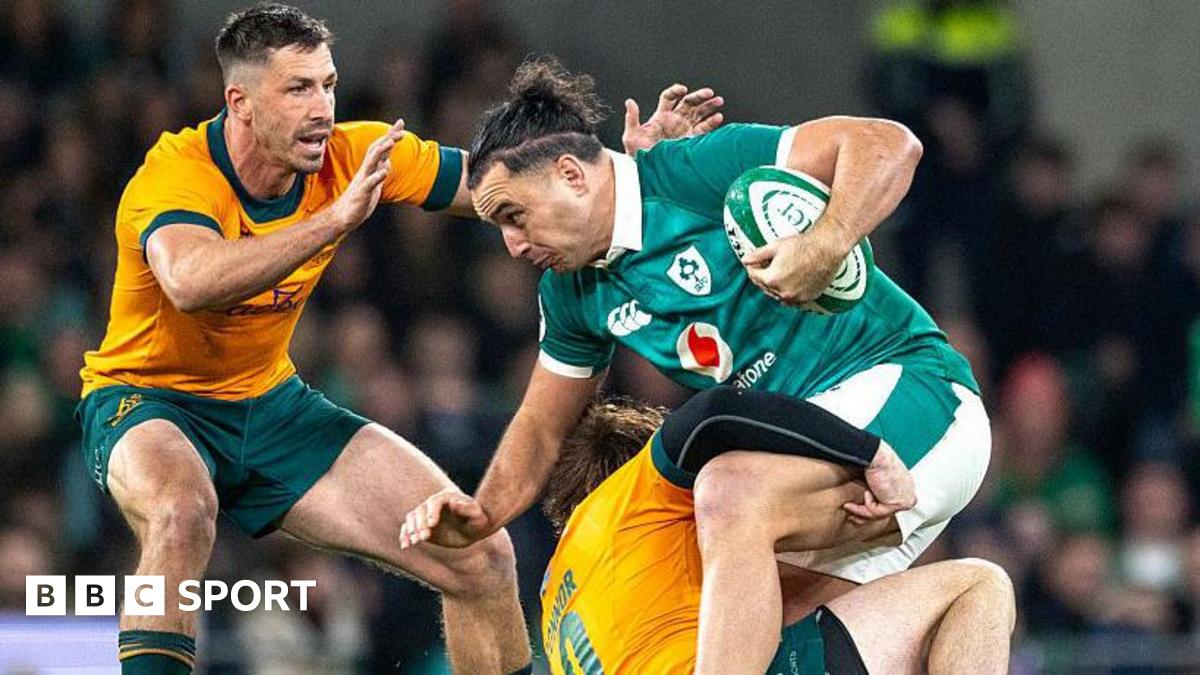
Rugby World Cup 2027: Canberra to host warm-up between Australia and Ireland

“The rugby community in Canberra is deeply passionate and holds a great appreciation for international touring teams, as we witnessed last year when the biggest GIO Stadium Canberra rugby crowd in 20 years packed the venue for the Brumbies’ thrilling match against the British & Irish Lions,” said Rugby Australia CEO Phil Waugh.

“The Wallabies are looking forward to playing their first Test match at GIO Stadium Canberra in 10 years – and their first ever against Ireland in Canberra – as both teams finalise their preparations for the eagerly-anticipated home Rugby World Cup.

“On behalf of Rugby Australia, I would like to extend my sincere thanks to ACT [Australian Capital Territory] Chief Minister Andrew Barr and Deputy Chief Minister Yvette Berry for their support of Test rugby during an incredibly exciting period for the game in our country.”

The sides will meet beforehand as Ireland make the trip to Sydney to begin their Nations Championship summer tour on Saturday, 4 July, before facing Japan one week later and rounding off in Auckland against New Zealand on 18 July.

Source link

United Rugby Championship: Ulster ‘have to look after the ball better’ – Murphy

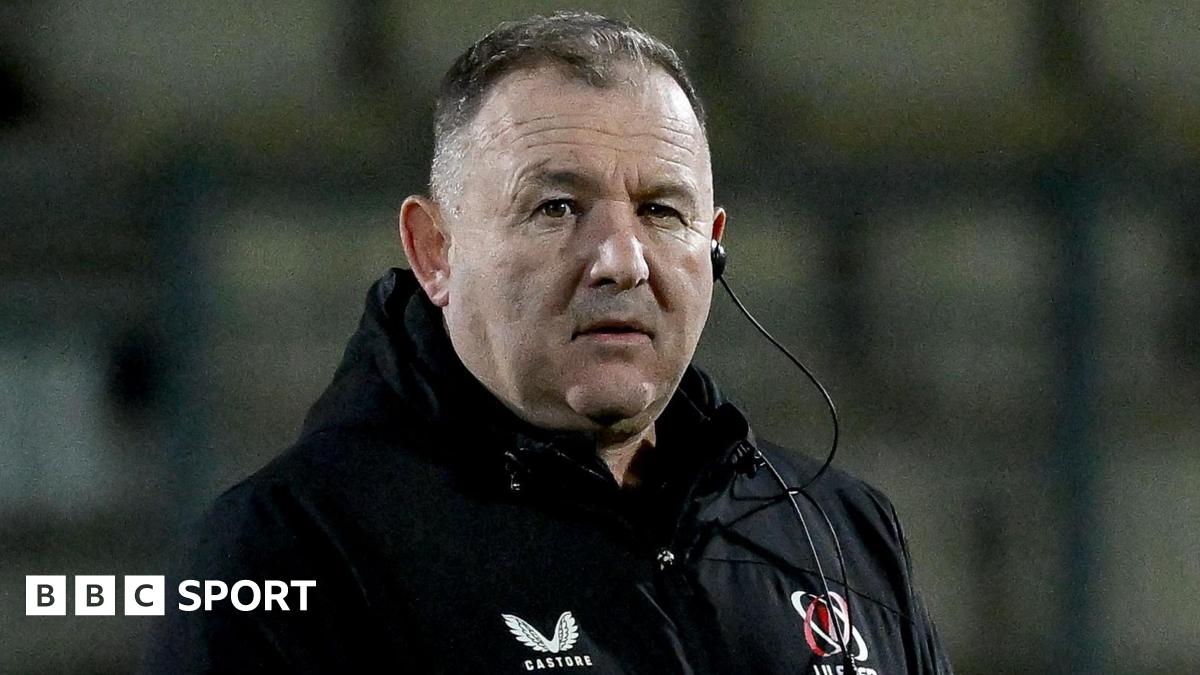
Ulster head coach Richie Murphy said his side “were a bit wasteful at times” during their 28-12 United Rugby Championship victory over Zebre in Parma.

Despite the home side being reduced to 14 men after Simone Gesi’s straight red card just before the half-hour mark, it was a tight and tense match.

The bonus-point win moves Murphy’s side up to third position in the URC table as they return to winning ways ahead of their Challenge Cup fixture against Ospreys at the Affidea Stadium.

“We expected it to be really physical over here and that is what we got,” Murphy said.

“I suppose the red card early in the game gave us a bit more of an advantage and I thought from our point of view, we have to look after the ball better as we were a bit wasteful at times.

“But very happy to get four tries. Coming over here is always very difficult.”

Player of the Match Werner Kok, who scored the bonus-point try, believed that the turning point in the game was the start of the second half.

Ulster scored three tries after the restart with Rob Herring, Zac Ward and Kok all able to cross the line.

“We stopped playing when they went down to 14 and we tried to regroup again and the boys stuck together and played as a team,” Kok said.

“I think the energy from the kick-off [in the second half] was the turning point. The boys stuck in there and that was the turning point for me.”

Source link

Prem Rugby: Salary floor to be introduced from next season

Prem clubs have agreed to introduce a ‘salary floor’ – a minimum amount each team must spend on players’ wages – from next season in an attempt to keep the top flight as closely fought as possible.

Each club will be obliged to spend £5.4m a season on talent.

The salary cap – a £6.4m limit on squad spending, albeit with ‘credits’ on offer for home-grown talent and other factors which stretch the restriction to £7.8m – will remain the same.

Failure to spend up to the salary floor will be punished by a fine equivalent to the difference between a club’s squad spend and the lower limit, incentivising clubs to invest in their squads.

Several clubs are likely to need to pay more to meet the new lower figure.

Last season, Bristol boss Pat Lam estimated that eventual champions and the Bears’ semi-final conquerors Bath spent “close to £3m more than we have on our squad”., external

While bottom side Newcastle have brought in a raft of new players since energy drink giant Red Bull took over in August, they are still thought to be well short of a £5.4m wage bill.

While such prescriptions over squad spending are rare in UK sport, they are more common overseas.

The NRL, Australia’s elite rugby league competition, requires its clubs to spend at least 95% of its salary cap figure. In American Football’s NFL, it is set at 90%.

Prem Rugby hopes that, with relegation to be formally scrapped next season, greater payroll parity will improve the competitive balance of the top flight.

A divide has opened up in the table this season with four teams – Newcastle Red Bulls, Harlequins, Gloucester and Sale – cut adrift of the play-off race with seven rounds of the season to go.

Sixth-placed Saracens, who are eight points off the top four, could have their hopes of extending their campaign all but ended this weekend if they lose to leaders Northampton.

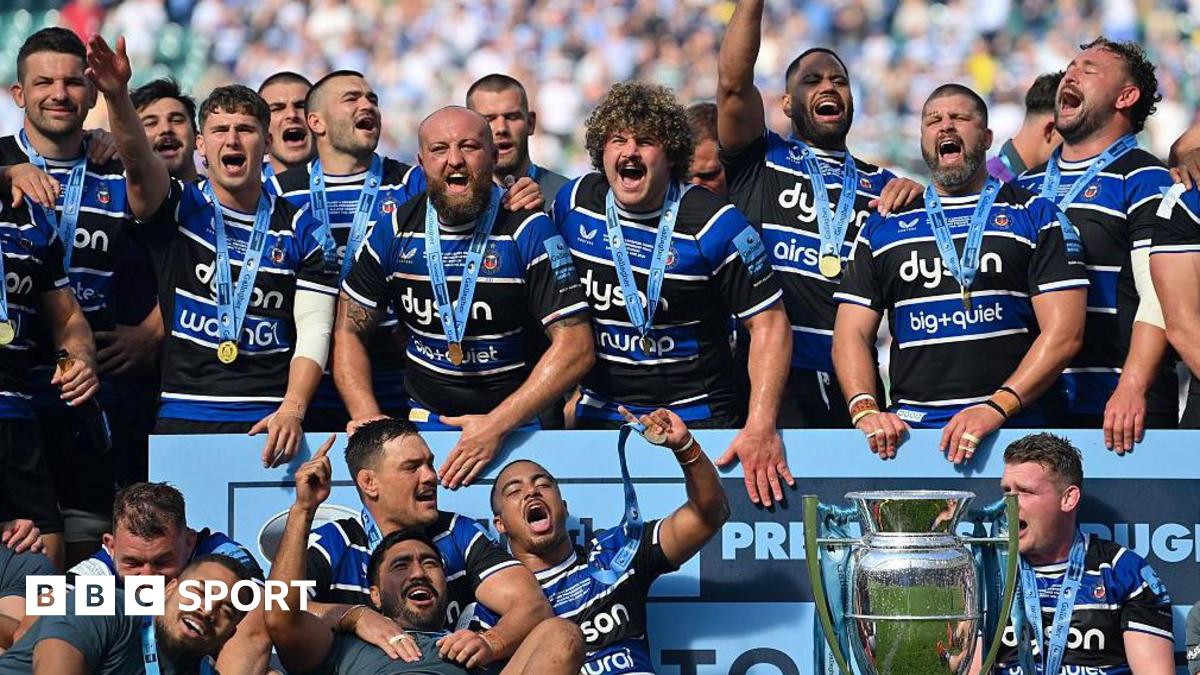
Introducing a salary floor is reflective of renewed confidence in the league’s future, with billionaire industrialist James Dyson having become co-owner of Bath this month and further investment in Prem clubs believed to be in the pipeline.

The league intends to add two teams to its current 10 in the 2029-30 season if a wrangle with the second-tier Champ can be smoothed out.

While it has been agreed that any new entrants to the Prem must complete a campaign in the Champ first, it is yet to be agreed how high a team would have to finish to demonstrate their on-field credentials, with Prem Rugby chief executive Simon Massie-Taylor believing a top-six finish and qualification for the Champ play-offs “would be the natural thing”.

Massie-Taylor is keen to build on this weekend’s ‘big game’ concept, with Everton’s new Hill Dickinson Stadium earmarked as a possible host for neutral-venue Prem semi-finals from 2029.

Saracens are staging Saturday’s match against Saints at the 63,000-capacity Tottenham Hotspur Stadium, while Gloucester are hosting Leicester at Villa Park and Bristol will take their match against Harlequins to Cardiff’s Principality Stadium on the same day.

Harlequins put on two of their regular-season fixtures at Twickenham’s Allianz Stadium, which also hosts June’s Prem final.

Source link

Schools rugby union: Northampton School for Boys – the state school at the top of English rugby

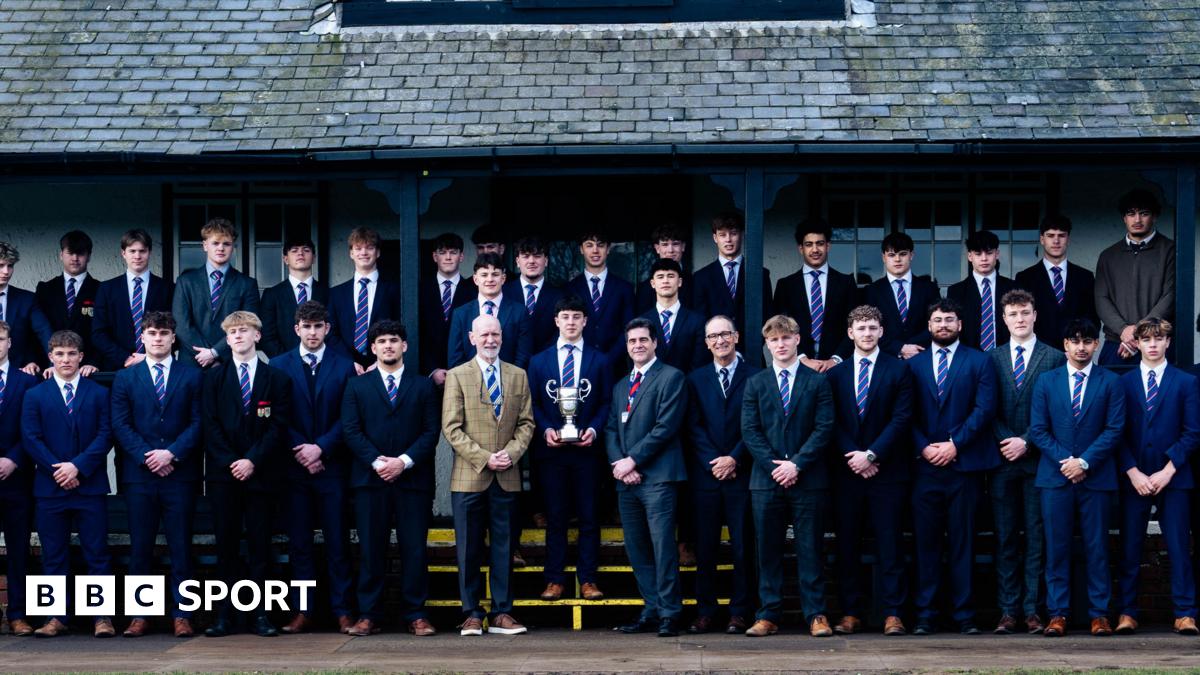
NSB are also an official partner school with Northampton Saints.

This year, they provided the most players from any school to Saints’ under-18s.

Four players will also be offered first-team academy contracts this year.

“The boys have to manage their time really well,” says assistant first team coach Adam Baker.

“When we get into sixth form and into that first-team setting, we will try and put them through a programme that matches up with an academy programme, so if they go into that pathway, they are fully aware and prepped as to what that day-to-day life looks like.”

However, NSB aren’t the only state school making an impact.

They beat Campion School from Essex in the Continental Tyres School Cup semi-finals.

It was a compelling contest which went down to the wire, with two state schools playing high-octane rugby in front of a passionate crowd of over a thousand people.

The Rugby Football Union has a network of rugby managers to try to embed the game in state schools.

Twenty-two of the best state schools compete in the ACE (Academy, Colleges and Education) League. England internationals George Martin, Joe Heyes and Harry Randall all came through that route.

The programme is designed to support players who may not attend traditional rugby-playing schools, providing daily coaching, competitive fixtures, and opportunities to train alongside academy players.

Northampton Saints have two state school partnerships which play in the ACE League: Moulton College in Northampton and Sigma Sixth Colchester, located at Philip Morant School and College.

“Growing state school rugby is a one step at a time process,” said Beaumont.

“This is over 10 years of hard work. But it can be done.

“My advice to other schools is find a way to get more numbers in training, organise a game.

“Put a tournament on, you don’t need posts. Make it a habit. Get kids playing.

“Rugby needs every state school to push and develop rugby. This is the perfect time. State school rugby could be really special.”

One of NSB’s biggest stars is their 18-year-old captain Jack Lewis, who plays in the back row.

He has been at NSB for the past two years and in the Saints academy since he was 14.

This year he made his debut for Northampton Saints. Now he’s preparing to lead his school for the final time in a Twickenham final.

“NSB taught me how to act, it’s the closest thing to a professional environment,” he said.

“A lot of people work hard behind the scenes, they sacrifice their time. It’s given me so much as a player and a student.

“I’ve never played at Twickenham, it would be a great achievement if we could lift the cup there. We want to show what NSB stands for.”

Source link