Rolled

Martha’s Rule rolled out across all A&E departments in England

Prof Aidan Fowler, national director of patient safety at NHS England, said the expansion of Martha’s Rule would give families and NHS staff “a critical new lifeline” to help improve care and save more lives.

Staff can themselves ask for a review from a different team if they are concerned the appropriate action is not being taken.

During the eight-month pilot at the seven trusts, 69 calls were made to dedicated Martha’s Rule phone numbers, including some calls relating to acute deterioration following an urgent clinical review. In some cases, it led to a patient having immediate surgery or being transferred to intensive care.

Prof Fowler said: “Early testing has shown that Martha’s Rule can work well in busy A&Es and builds on the evidence from our adult and children’s wards, where thousands of calls have been made by patients, families and staff to date, with many leading to changes in treatment and potentially life-saving interventions.”

Health minister Baroness Merron said the initiative was part of “wider efforts to put patient safety at the heart of the NHS.”

Actor Jason Watkins, whose two-and-a-half-year-old daughter Maude died from sepsis in 2011, praised the rollout, saying Martha’s rule “is making a difference on the wards”.

“It enables a parent to have a voice and if there is an issue, that is addressed,” he told BBC Breakfast, and urged parents: “if you’re at all worried when you go into A&E, ask for a second opinion.”

Watkins said the rollout of Martha’s law could benefit medical professionals too, explaining: “Those extremely dedicated medical practitioners, nurses, doctors and consultants, it gives them a pause and a thought ‘am I doing everything I can to assess this child accurately?'”.

Patients and their families can check with their local hospital or NHS trust where Martha’s Rule is available by visiting the trust’s website or asking hospital staff.

Scotland is beginning to use Martha’s Rule and Northern Ireland is considering using it, while Wales has a similar scheme called Call4Concern.

Source link

Travel warning for Brits jetting off on Europe holiday as new entry rules to be fully rolled out in days

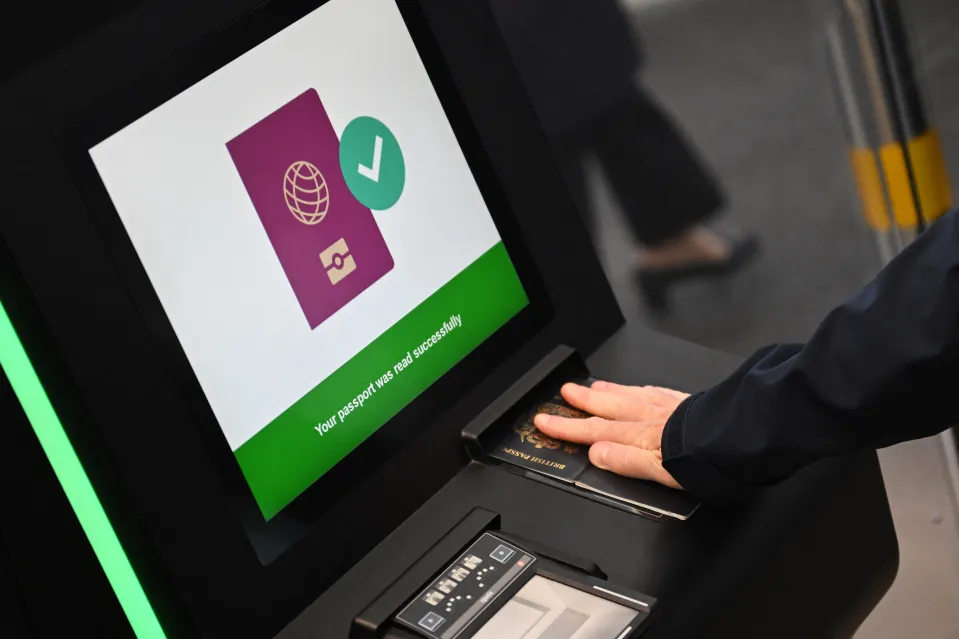
BRITS jetting off to countries including Spain and France should be aware of new entry rules which are set to be rolled out in full in just a matter of days.

The EU’s new Entry/Exit System (EES), which is an automated border check for non-EU nationals, comes into full force on September 7.

A person using an EU Entry-Exit System kiosk, pressing "Yes" to confirm they can provide fingerprints.
The EU’s new Entry/Exit System (EES), which is an automated border check for non-EU nationals, comes into full force on September 7. Credit: AFP

It involves people from third-party countries such as the UK having their fingerprints registered and photograph taken to enter the Schengen Area, which consists of 29 European countries, mainly in the EU.

This system first launched back in April, and was linked to lengthy queues and in some cases passengers missed their flights.

As it stands, EU member states are able to pause the checks in “exceptional circumstances”. This includes when queues get too long.

But come September 7, they will no longer be able to temporarily switch off the system at airports.

BEST BREAK

The holiday destinations where all-inclusive breaks are CHEAPER than B&B


BILLS BOOST

Brits can get money back on bills and restaurant spending with new bank offer 

It means the rules will be fully enforced with no exceptions, raising fears of even longer queues for British holidaymakers.

Popular holiday destinations including Greece, Spain and France have all used flexibility when needed.

Back in July, countries including Belgium, France, Germany, Greece, Italy, Malta, the Netherlands, Portugal and Switzerland wrote to Home Affairs Commissioner Magnus Brunner asking to keep the congestion EES opt-out, EuroWeekly News reported.

The countries backed a full roll out, but did not want to face a cliff edge before Christmas.

A decision has not yet been made on the extension, so travellers should prepare to use the EES machines on September 7.

It comes as the new system has caused huge problems for those holidaying abroad this summer.

Some Brits reported waiting for up to six hours in airports and others even missed their flight.

Source link

Travel warning for Brits heading to Europe as new entry rules to be fully rolled out this week

MORE travel chaos could be on the horizon for Brits as a change to the new Entry/Exit System (EES) is being introduced in a matter of days.

EES has already resulted in huge delays at airports, missed flights and these could get worse in a few weeks’ time.

EU states will no longer be able to turn off EES Credit: Alamy
The new system has caused long wait times and even missed flights Credit: Alamy

Currently, EU member states are allowed to pause EES checks in “exceptional circumstances”, which includes when queues get too long.

But from September 7, EU states will no longer be able to temporarily switch off the system at their airports.

Over the summer when the number of holidaymakers increased, countries were able to switch the system off for up to six hours.

With an influx of passengers, some countries that made use of this over the summer included France, Portugal and Greece.

RETRO RATES

Our fave childhood holidays that have stayed ridiculously CHEAP – from £9.50pp


CHECK IN

Sunny European city breaks cheaper than a night out… £14 flights & £3 JUGS of wine

At some airports, the machines had to be shut down and turned on again when they get overwhelmed, just to get them to work.

Air France-KLM told Politico: “When lines form during the busy summer  months, the system is shut off to ensure smooth transit at our hubs in Paris and Amsterdam.”

However, from September 7, EES will be fully enforced with no exceptions.

EES was first introduced in April and requires Brits to register biometrics upon any first entry to a Schengen country.

However, this registration process has been causing long queues and delays at border control across European airports.

Some Brits reported waiting for up to six hours in airports and others even missed their flight.

There have been some other issues as well including one woman who is an identical twin and faced a problem when she was mistaken for her sister.

And older passengers have faced a problem with ‘faded fingerprints’.

EES machines are replacing physical passport stamps Credit: Reuters


Source link