WASHINGTON — President Trump said Tuesday that he expects the United States to end its involvement in the war with Iran within three weeks, declaring there probably will be “no reason” for American forces to stay in the region even as top defense officials maintain Tehran’s military capabilities have not been fully eliminated.
Trump told reporters during an Oval Office event that he is confident the U.S. objectives in the conflict will be largely achieved by then, whether Iran makes a “deal” with the United States or not.
“If they come to the table that will be good, but it doesn’t matter whether they come or not,” Trump said. “We’ve set them back. It will take 15 to 20 years to rebuild what we have done to them.”
Trump added that he believes the threats to the Strait of Hormuz, a key oil route, will be “all cleared up” by the time the U.S. leaves the region. But if issues remain, he said, that will not be a problem for the United States.
“That’s not for us,” he said. “That will be for whoever is using the strait.”
Trump’s comments came hours after Defense Secretary Pete Hegseth said that, a month into the war, Iran still has the ability to launch offensive missiles, despite ongoing U.S. and Israeli efforts to weaken Tehran’s military capabilities and weapons programs.
“Yes, they will shoot some missiles, but we will shoot them down,” Hegseth told reporters at a Pentagon briefing, acknowledging the remaining threat.
The comment, made during the first public briefing on the conflict in nearly two weeks, underscored that despite weeks of intensive U.S. military operations and repeated assertions by Trump that Iran’s military has been “obliterated,” the threats posed by Iranian forces have not been fully eliminated.
Gen. Dan Caine, the chairman of the Joint Chiefs of Staff, told reporters at the briefing that the U.S. military remains focused on “interdicting and destroying” Iran’s weapons warehouses and facilities.
“We’ve continued to do the work against Iran’s missile, drone and naval production facilities,” Caine said.
Although air and naval strikes have been the primary focus so far, U.S. officials have not ruled out the possibility of ground operations as thousands of American soldiers and Marines have begun arriving in the Middle East.
Hegseth said it is up to Trump to determine whether ground operations in Iran will become the next phase in the conflict, which the president has said he is open to ending through diplomatic talks.
Trump repeated over the weekend that Iran is “begging to make a deal” to end the war, but on Monday, the president threatened to target Iran’s power-generating plans and oil wells and even desalination plants if a “deal is not shortly reached.”
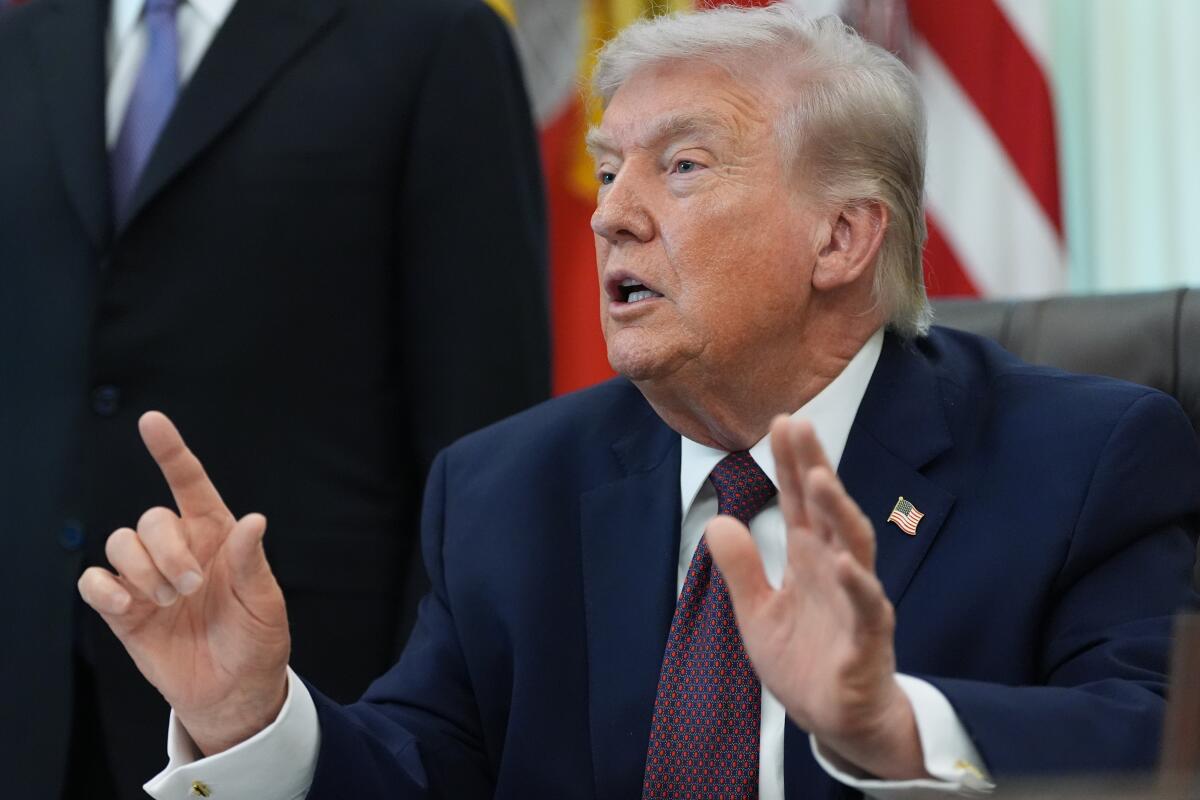
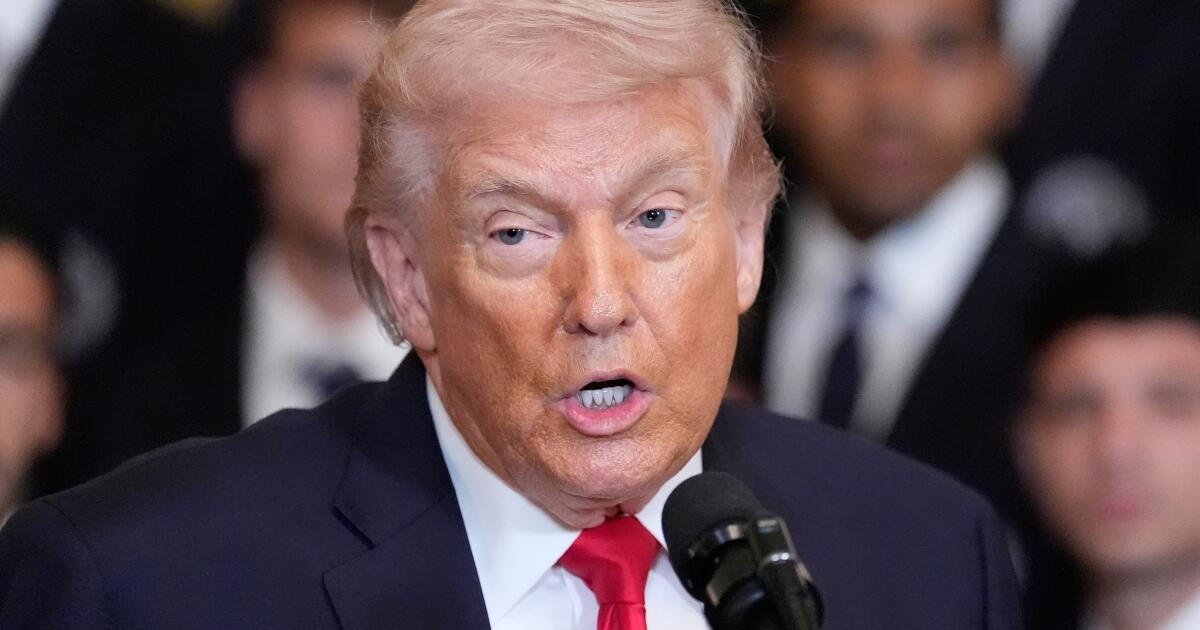
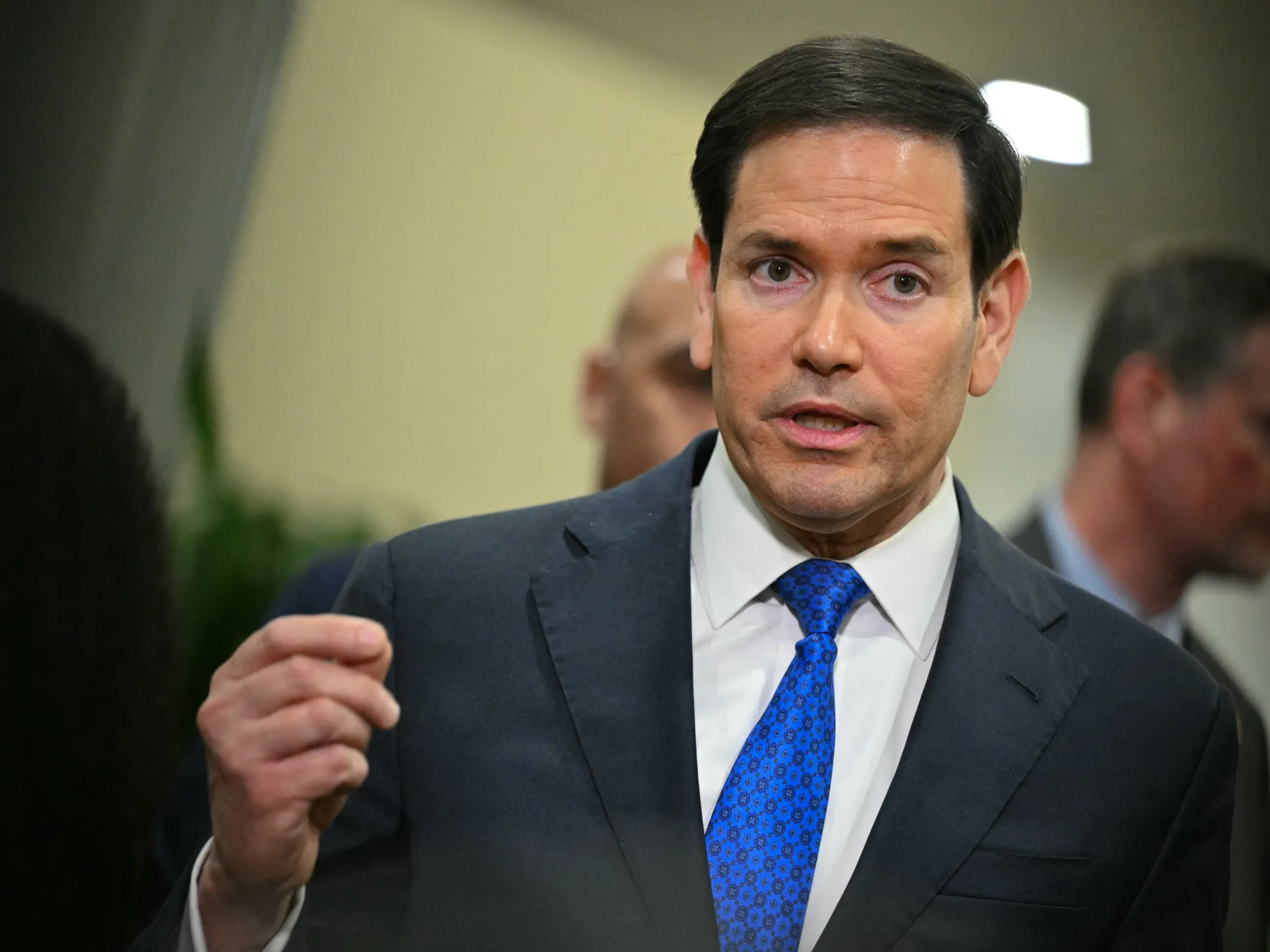
President Trump speaking Tuesday in the Oval Office.
(Alex Brandon / Associated Press)
White House Press Secretary Karoline Leavitt told reporters Monday that the administration will “operate within the confines of the law,” when asked about Trump’s threat to target infrastructure that would potentially harm civilians.
Caine told reporters Tuesday that the U.S. would only “strike lawful targets” when asked about American military considerations for civilian targets.
“We are always thinking about those considerations and developing options to be able to mitigate those risks,” Caine said.
Since the start of the war, Iranian officials have condemned a series of U.S. military attacks that have hit schools, including a Feb. 28 strike at an elementary school that killed at least 175 people, many of them children.
As Trump issues a new wave of threats on key infrastructure, he has at the same time touted ongoing diplomatic talks with Iran and reportedly told aides he’s willing to end the war without resolving Iran’s de facto blockade of the Strait of Hormuz that has rattled global energy markets.
Americans have also felt the financial pinch because of the war when it comes to energy prices. Gasoline prices in the United States reached an average of $4 a gallon Tuesday, a price that Trump says Americans are willing to pay to endure because “they are also feeling a lot safer.”
“All I have to do is leave Iran, and I will be doing that very soon and, [prices] will come tumbling down,” Trump said.
Hegseth, for example, said those diplomatic talks are “very real,” but stressed that the military pressure will continue alongside those negotiations and that ground operations remain an option.
“Our adversary right now thinks there are 15 different ways we can come at them with boots on the ground. And guess what? There are,” Hegseth said. “If we needed to, we could execute those options on behalf of the president of the United States and this department, or maybe we don’t have to use them at all. Maybe negotiations will work.”
He said the goal was to remain “unpredictable.” Caine added that the presence of U.S. ground forces in the region can serve as a “pressure point” as diplomatic efforts continue.
As the hostilities continued in the region on Tuesday, the State Department warned American citizens in Saudi Arabia that U.S. officials were “tracking reports of threats against locations where American citizens gather.
“We advise U.S. citizens that hotels and other gathering points including U.S. businesses and U.S. educational institutions may be potential targets,” officials wrote in a new warning.
And in Rome, Pope Leo XIV told reporters that he hopes Trump is “looking for an offramp” to end the war in Iran and made an appeal to “decrease the amount of violence,” according to the Associated Press.
Meanwhile, Trump administration officials have faced challenges in securing support from some U.S. allies, an issue that Hegseth and the president have publicly pointed out.
On Tuesday, Trump complained that countries have “refused to get involved” in the war and efforts to reopen the Strait of Hormuz.
U.S. allies’ access to oil has been affected by Iran’s chokehold on the key waterway as a result of the joint operation launched by U.S. and Israel. But now, Trump wants those countries to deal with the strait.
“All of those countries that can’t get jet fuel because of the Strait of Hormuz, like the United Kingdom, which refused to get involved in the decapitation of Iran, I have a suggestion for you: Number 1, buy from the U.S., we have plenty, and Number 2, build up some delayed courage, go to the Strait, and just TAKE IT,” Trump wrote on his social media website.
Trump added that countries will have to “start learning how to fight” for themselves.
“The U.S.A. won’t be there to help you anymore, just like you weren’t there for us,” Trump wrote. “Iran has been, essentially, decimated. The hard part is done. Go get your own oil!”
In a separate post, Trump singled out France for barring Israeli military planes from flying over its airspace.
“The USA will REMEMBER!!!” Trump posted on his social media website.
At the Pentagon, Hegseth acknowledged that the U.S. military has faced “roadblocks or hesitations” from U.S. allies when asking for assistance or use of their bases — and said the president is simply noting that “we don’t have much of an alliance.”
“A lot has been shown to the world about what our allies would be willing to do for the United States of America when we undertake an effort of this scope on behalf of the free world,” Hegseth said.
The ex-Made in Chelsea star is set to join Clare Balding and Ade Adepitan to host The CHANEL J12 Boat Race this Saturday (April 4).
Broadcasting live from the banks of the River Thames, they’ll be stationed in a fresh studio at the starting line in Putney.
Oxford University Boat Club and Cambridge University Boat Club will battle it out oar-to-oar in one of the globe’s oldest and most prestigious amateur sporting events.
Alex Jacques will helm lead commentary, with Olympic gold-medal winning rower Martin Cross and Olympic silver-medal winning rower Jess Eddie as co-commentators, while three-time Olympic gold medallist Pete Reed OBE will serve as pundit, reports OK!.
Broadcaster and mathematician Hannah Fry will also be present to delve into the science of rowing, as well as championing Cambridge Men and Women in her capacity as Professor of Public Understanding of Mathematics at the University of Cambridge.
Coverage of The Boat Race will air from 13:30 to 16:30 on Channel 4 and Channel 4 Streaming, where Oxford and Cambridge Men and Women will tackle the iconic Championship Course, a 4.25-mile stretch of tidal Thames from Putney to Mortlake.
In addition to broadcasting the historic races between the two universities, Channel 4 will also spotlight the Youth Boat Race for the first time on British TV.
The Youth Boat Race, backed by the Oxford and Cambridge Rowing Foundation, is scheduled for Friday 3 April, with coverage included in Saturday’s broadcast.
Discussing his new role, Jamie confessed he “can’t wait”, stating: “The Boat Race is always such a brilliant day, it’s London’s party by the river. Joining Clare, Ade and the team to present coverage of such an iconic occasion is a pure thrill.”
The presenter and podcaster further added: “I can’t wait to meet the incredible athletes taking part and get in amongst the action with the fans on the banks of the Thames and at the finish line to celebrate the amazing accomplishments of the crews.”
This news comes as Jamie and his wife Sophie Habboo prepare to offer their fans a sneak peek into their private life in a new reality show.
The couple, who got hitched in April 2023, are set to feature in a brand new series on Disney+, which is slated to premiere on Thursday (April 2).
The programme will track the reality star couple during Sophie’s pregnancy and the birth of their son Ziggy. Ahead of the three-part series’ release, fans have been given a preview of what they can anticipate from the show.
In a teaser clip, the pair are seen having a heated argument, with Sophie labelling her husband’s behaviour as “unacceptable”. Jaime is shown standing in the doorway as Sophie becomes tearful during the dispute.
He stated: “I’m stressed, I am tired.” Sophie could be heard retorting: “But you just go behind my back, that’s so unacceptable.”
Elsewhere the couple were dealt a “bad news” blow during a hospital visit. Jamie revealed: “Bad news is that the baby, his arm is through the cervix. She (Sophie) needs to have an emergency c-section.”
The smitten duo are seen tearfully supporting each other during the birth of their first child. Jamie tenderly kisses Sophie’s forehead, reassuring her with the words, “It’s alright you got this. You got this”
The CHANEL J12 Boat Race 2026 will air on Channel 4 on Saturday, April 4 from 1.30pm and Raising Chelsea is available to watch on Disney+ from Thursday, April 4
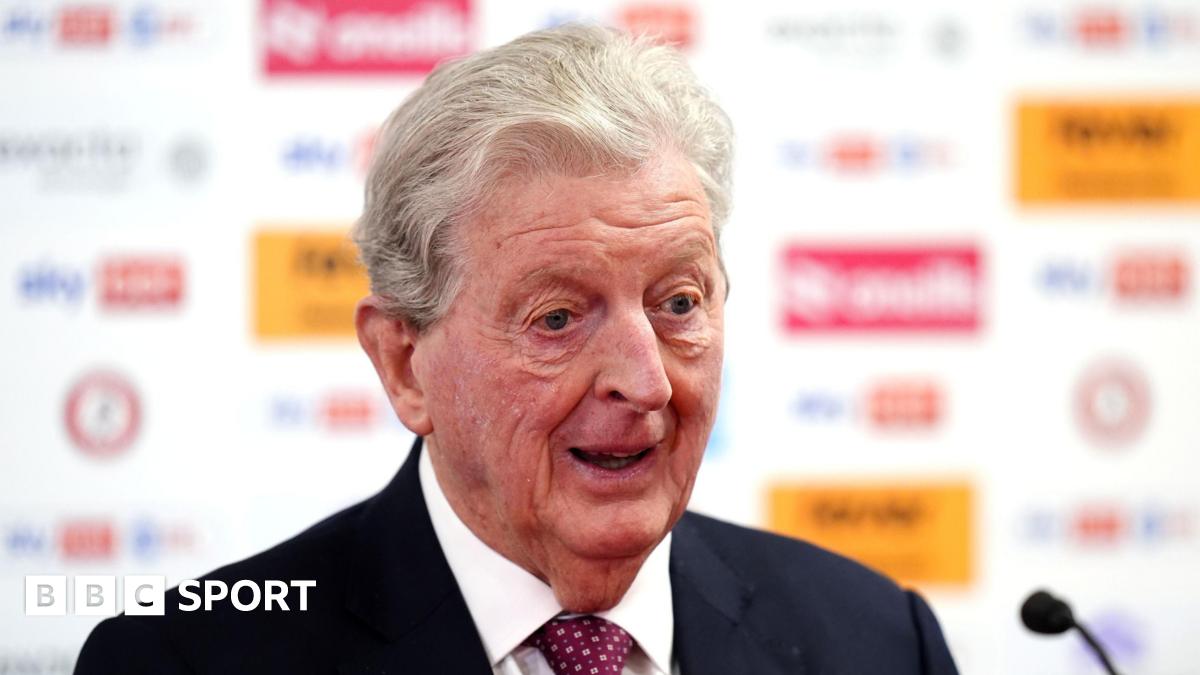
Roy Hodgson said there was much he missed about football after coming out of retirement to return to the dugout as caretaker manager of Bristol City.
The 78-year-old accepted the role at the Championship club until the end of the season following the sacking of Gerhard Struber on Friday.
The former England manager has not worked since leaving Crystal Palace in 2024 and confirmed he will only be in the position for City’s seven remaining games, insisting he was “too old” for a long-term position.
“You don’t work at top-level football at my age really very often,” Hodgson said.
“I’d come to terms with that quite well then something like this happens and you realise that there’s a lot I do miss.
“Having this opportunity to get a feel for that again, and have a chance to work with a good group of players – it seems from what I saw this morning – and to relive being on the grass and doing the coaching, which I’ve always been really keen to do, and with a group of players without necessarily having all the drawbacks.”
Hodgson returns to the club where he began his career in 1982, spending four months as Bristol City manager during a turbulent financial time when the club nearly went out of business.
“I’ve been perfectly happy in my retirement period – a little bit bored from time to time – but a challenge like this was hard to turn down,” Hodgson said.
“Plus the fact it is Bristol which is a lovely city and I do have fond memories of my time here, despite the fact I shouldn’t have fond memories – I should be having nightmares.”
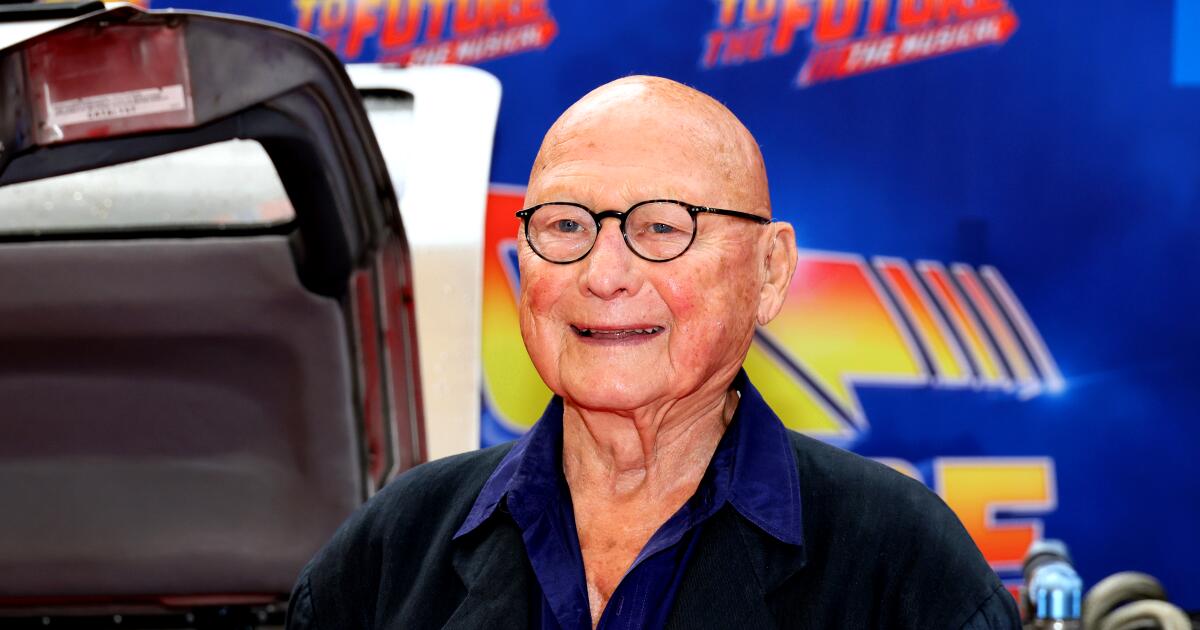
Actor James Tolkan, known for his role as the Hill Valley High principal in “Back to the Future” and the no-nonsense commanding officer in “Top Gun” has died. He was 94.
Tolkan died Thursday in Lake Placid, N.Y., where he lived, his booking agent, John Alcantar, told the Associated Press on Saturday.
In “Back to the Future,” Tolkan portrayed Vice Principal Gerald Strickland, who surveyed the school’s halls with a whistle around his neck and a tardy slip burning a hole in his pocket.
“You got a real attitude problem, McFly,” Tolkan’s character snaps at Michael J. Fox’s character, Marty McFly, in the cult classic 1985 film. “You’re a slacker. You remind me of your father when he went here. He was a slacker, too.”
The line became one of Tolkan’s most famous, and mega-fans would flock to Comic-Cons around the country to ask the star to call them a slacker, requests he typically obliged.
The actor had a number of film and television gigs through the 1960s and ’70s, but he was doing David Mement’s Broadway play “Glengarry Glen Ross” when he got the offer to play Strickland in “Back to the Future.”
“I always said, ‘I’m never going to Hollywood until they send for me,’ ” he told T.C. Restani during a 2015 interview. “And I said, OK, this is my chance. And of course, nobody realized that it was going to be such an important picture. But it was. It was one of those marvelous events where all the planets were aligned and ‘Back to the Future’ became this shooting star of a movie.”
Tolkan was also well known for drilling Maverick and Goose with swift reprimands and tough love between puffs of his cigar as their commanding officer, Tom “Stinger” Jardian, in the 1986 blockbuster “Top Gun.”
“That was very special, because when you make a movie you never know, but in ‘Top Gun,’ everybody felt like it was going to be a success,” Tolkan told Bob McCarthy during a 2016 Comic-Con interview. “ They just felt it, knew it right from the first day.”
Born June 20, 1931, in Calumet, Mich., Tolkan was the son of a cattle dealer — Ralph M. Tolkan. He moved around in his adolescence, spending time in Chicago and landing in Arizona after his parents’ divorce. It was there that his athletic skills got him noticed by the Eastern Arizona College football coach. Tolkan landed a scholarship to the college, but his academic career was short-lived, and he left to enlist in the U.S. Navy.
After a year of service during the Korean War, he was discharged due to a heart ailment, and with $75 to his name he set out for the Big Apple to try his hand at acting. In New York, Tolkan studied under Stella Adler and Lee Strasberg at the famed Actors Studio and started landing stage roles before working his way to the big screen.
Although his experience in the military informed the types of roles Tolkan would play — Army office, Air Force commander, police lieutenant, attorney — his work as an actor was his passion. “If you choose to be an actor, you have to choose to be an actor, and you have to stick with it through thick and thin,” he told a FanX audience member during a 2023 panel at the Salt Lake City pop-culture convention. “When things get tough, you can’t think about doing something else. You’ve got to say to yourself, ‘I’m gonna do this.’ ”
Other notable acting projects of Tolkan’s include the 1973 film “Serpico,” starring Al Pacino; the 1981 movie “Prince of the City”; the role of Napolean in Woody Allen’s 1975 film, “Love and Death”; and the 1983 film “WarGames,” in which he acted alongside Matthew Broderick.
Tolkan is survived by his wife of 54 years, Parmelee Welles.
After a wearying 24 hours at work in the midst of chaos over last week’s presidential election, an exhausted Florida Secretary of State Katherine Harris took a moment to reflect on her role in the process.
“I feel so historic,” she said. Little did she know.
By ruling Monday that all of Florida’s 67 counties would have to complete their ballot recounts by 5 p.m. EST today–a move backed by the campaign of GOP Texas Gov. George W. Bush–the 43-year-old Republican became an unlikely pivotal player in the closest balloting in America’s history.
Harris contended she had no discretion to extend the deadline, except in the case of a natural disaster. “But a close election, regardless of the identity of the candidate, is not such a circumstance,” she said.
This, from a woman who once told an interviewer that she didn’t like “gamesmanship” in politics. A multimillionaire whose state position is due to be eliminated in 2002, Harris has spent much of her time in office as an influential patron of the arts.
In taking her hard line against time-consuming hand recounts sought by the presidential campaign of Democratic Vice President Al Gore, Harris incurred the icy disdain of former Secretary of State Warren Christopher, who accused her Monday of a “move in the direction of partisan politics.”
Republicans say otherwise. Former Florida Secretary of State Sandra Mortham, who lost to Harris in a recent primary battle, insisted “she’s doing exactly what her constitutional duties require, no more, no less. To me, this isn’t a political issue. This is whether someone is doing her job.”
The job requires oversight of Florida’s arts, libraries, historical sites and international trade, and supervision of corporate registration, business licensing and elections. It has been largely ceremonial–until now.
“It’s an extraordinary responsibility,” Harris said of her mandate to oversee the recount. “I’m very anxious. The process is so important here.”
Harris has won high marks from both Republicans and Democrats for her support of the arts. There has been speculation in political circles here that Harris might win an ambassadorship or arts post in a Bush administration, whose candidacy she supported.
Harris campaigned for Bush in New Hampshire, was a Florida delegate to the Republican National Convention in Philadelphia and was one of eight co-chairs of his Florida campaign.
“She was a diligent member of the Florida Senate and has been a fairly active secretary of state, from both a cultural and arts perspective as well as a foreign trade perspective,” said Florida lobbyist Ron Book, a Democrat, who helped raise money for Harris when she ran for the statewide office.
Harris’ short term has not been without criticism. She has flown around the world to promote Florida trade, but critics note she has spent more money on travel than Florida Gov. Jeb Bush. “I’m not abusing anything,” she said last month. “I’m working my heart out for the state of Florida.”
Harris grew up in Bartow, a small rural Florida town not far from Tampa. Her grandfather was the late Ben Hill Griffin Jr., a citrus and cattle baron who served in the state Senate.
After graduating from Agnes Scott College in Decatur, Ga., and studying art in Spain and philosophy and religion in Switzerland, she went into business as a marketing executive for IBM, then sold commercial real estate in Sarasota. Later, she earned a master’s degree in international trade at Harvard.
After the late Democratic Florida Gov. Lawton Chiles appointed her to the board of trustees of the Ringling Museum of Art, she sought more state money for the institution.
Disgusted with Sarasota politicians who did not have her commitment to cultural issues, she ran for the state Senate in 1994, collecting more than $20,000 in campaign contributions from a Florida insurance company called Riscorp. The firm would later be indicted in federal court for making illegal contributions to 23 candidates for state and federal offices, Harris among them. Harris, who was not charged, said she felt unfairly tainted by the scandal.
“If somebody hands you counterfeit money, how are you supposed to know it’s counterfeit?” she said.
As a state senator, she sponsored a bill that would have required parental notification before girls under 18 could get an abortion. But it was vetoed by Chiles.
Dubbed one of Sarasota’s “most prominent bachelorettes” by the local newspaper, her marriage in December 1996 to businessman Sven Anders Axel Ebbeson made headlines. They married at the Charlotte County government center, where she made her first campaign appearance. Then they flew to Paris.
Harris is worth about $6.5 million, mostly from stock in her family’s agricultural interests–she used $23,000 of her own money to run for secretary of state.
After one term as a state senator, Harris decided to run for statewide office, raising more than $1.5 million.
Harris won the 1988 GOP primary after a hard fight, then defeated her Democratic opponent.
Her first term will be her last. Harris will be Florida’s last elected secretary of state. Voters approved a change in the state Constitution that eliminates the position in 2002.
Perhaps it was predictable that reality TV would become a pipeline into American politics. After all, political theater was the ultimate unscripted spectacle before reality TV became a genre unto itself.
Consider the raw drama of the first televised presidential debate, where a sweaty Richard Nixon and confident John F. Kennedy traded barbs. Or Anita Hill’s should-have-been-damning testimony against then-Supreme Court justice candidate Clarence Thomas during Senate Judiciary Committee hearings in 1991. Or President George W. Bush’s 2003 “mission accomplished” speech from a carrier off the coast of California, mere weeks into a war in Iraq that lasted years.
Modern programmed reality TV isn’t political theater, but it has become a springboard into modern politics for some stars of the genre. From President Trump to Dr. Oz, Caitlyn Jenner to Sean Duffy, campaigns and political offices are littered with the names of former cast members from reality series. Here’s a list of the most memorable jumps from trash TV to the smoldering dumpster of 21st century politics.
Donald Trump, president of the United States, ’The Apprentice’
Before he was a two-time president of the United States, Trump was one of America’s most recognizable make-believe bosses thanks to his 14-season run on NBC’s reality competition “The Apprentice,” created by reality TV kingmaker Mark Burnett. With his practiced executive scowl and scripted boardroom catchphrase, “You’re fired!,” the show burnished his image as a decisive billionaire dealmaker, even as his real-life business results were far less impressive. Off camera, Trump’s businesses filed for Chapter 11 bankruptcy protection six times between 1991 and 2014. Never mind. It was his knack for showmanship, and his undying need for attention, that proved the perfect entry into post-decorum politics. How does pretending to be in charge on a middling reality competition qualify anyone to safely and successfully run the most powerful nation on Earth? It doesn’t. Sleep tight.
Sean Duffy, Transportation secretary, ’The Real World’ and ‘Road Rules: All Stars’
Sean Duffy first appeared on MTV’s “The Real World: Boston,” where he was introduced as a flirtatious, conservative lumberjack/student hybrid. In short, he was a casting director’s dream. He later joined “Road Rules: All Stars,” where he met his future wife Rachel Campos-Duffy. Trading hot tub confessionals for courtrooms, Duffy became a Wisconsin district attorney and then a congressman. By 2025, he’d risen to secretary of Transportation under Trump, completing a career arc from staged arguments with pretend roommates to heated exchanges with the press about the effects of a government shutdown on airport safety. Dude.
After a fiery confirmation hearing, Mullin is now Trump’s second secretary of Homeland Security in the 2.0 administration, following the disastrous tenure of wannabe reality show star Kristi Noem. Mullin was not a reality star per se, but in his role as a professional mixed martial arts (MMA) fighter he performed in cages for live, streaming and pay-per-view cable audiences. As an early 2000s champ in the sport, Mullin boasted an undefeated 5-0 record and the Oklahoma chapter of the National Wrestling Hall of Fame inducted him in 2016. How do these MMA skills, or his former life running the family plumbing business qualify him to protect the national security of this great nation? It’s unclear, but his fighting instincts have already resulted in a viral moment out of a 2023 Senate hearing, when he challenged Teamsters President Sean O’Brien to a physical fight, offering to “finish it here.” Now he’ll be running the DHS. What could go wrong?
Omarosa Manigault Newman, former assistant to Trump and director of communications for the office of public liaison, ‘The Apprentice’
Newman became one of reality television’s more memorable villains thanks to her run on “The Apprentice,” where her Machiavellian ways and unapologetic ambition revolted viewers and impressed her fake boss. She would eventually parlay that dubious notoriety into more than one role in the first Trump White House. Her tenure was brief, ending in a high-profile departure and her accusation that Trump is a “racist, a bigot and a misogynist.” She then wrote a book, “Unhinged: An Insider‘s Account of the Trump White House.” Perhaps she’ll adapt her written account into a reality show, only to reignite her fame and win the White House. From there? She’d hire Trump, of course, then swiftly end his run on the show with two simple words: “You’re Fired!”
Spencer Pratt, Los Angeles mayoral candidate, ‘The Hills’
Best known as one-half of reality TV’s most polarizing couple on “The Hills,” Pratt built a reputation as a needling instigator, often leaning into the role of villain with annoying enthusiasm. After stints on other reality shows such as “Big Brother U.K.,” he began speaking out about local California issues, including wildfire recovery and environmental policy. Earlier this year Pratt, a Republican, announced that he would be running for mayor of Los Angeles in the upcoming mayoral election, challenging incumbent Karen Bass. Does he really want to govern the Left Coast, or is his candidacy a ploy for a new reality show? Let’s hope it’s the latter.
Caitlyn Jenner, California gubernatorial candidate, ‘Keeping Up With the Kardashians’
An Olympic gold medalist long before reality TV fame, Jenner reentered public consciousness through a show about nothing. The hit series relaunched her into the spotlight as a member of one of America’s most visible families. Using that fame, she ran as a Republican in 2021 in California’s gubernatorial recall election, positioning herself as a political outsider. Her campaign leaned heavily on her life story — from her athletic achievement to her personal reinvention — but she failed to keep up with the competition.
Clay Aiken, U.S. congressional candidate, ‘American Idol’
Aiken rose to fame as the earnest, vocally gifted runner-up on “American Idol” circa 2003. His polite demeanor, impressive vocal range and dramatic rendition of “Bridge Over Troubled Water” earned him a devoted fanbase known as the “Claymates.” Aiken went on to have a semi-successful music career before running for Congress in North Carolina as a Democrat in 2014. Aiken made the mistake of leaning into his strengths as a thoughtful, policy-oriented candidate rather than relying on his past achievement as a vapid reality show contestant. He lost, of course.
Jim Bob Duggar, Arkansas state House representative and state Senate candidate, ’19 Kids and Counting’
As the patriarch of TLC’s “19 Kids and Counting,” Jim Bob Duggar became synonymous with a conservative Christian lifestyle when the show aired in 2008; it garnered high ratings and ran for 10 seasons. He espoused many of the same ideals as an elected official in the Arkansas House of Representatives from 1999 to 2003, before leaving the political stage for reality TV. But the show was canceled in 2015 when the Duggars’ eldest son, Josh, admitted to molesting several girls, some of whom were his sisters. A conviction on child pornography charges followed. (More recently, his brother Joseph was charged with child sex abuse.) Jim Bob Duggar attempted a political comeback in 2021 when he ran for a vacated seat in the Arkansas state Senate, leaning on what he believed was his reputation as an upstanding family man. Reality bit back, and he lost.
Mehmet Oz, U.S. Senate candidate and administrator of Centers for Medicare & Medicaid Services, ‘The Dr. Oz Show’
Like so many questionable figures Americans came to trust in the 2000s, Dr. Oz got his start as a frequent guest on “The Oprah Winfrey Show.” He went on to launch “The Dr. Oz Show,” where he dispensed health advice to millions of viewers. His blend of seemingly measured medical guidance and on-camera charisma appealed to viewers who were tired of looking at egg-headed doctors, like the kind who practice real medicine off screen. He announced his candidacy for the U.S. Senate in Pennsylvania as a Republican in 2021, focusing on an anti-establishment platform. He lost the general election to Democrat John Fetterman, but the doctor is still in. Trump appointed him administrator of the Centers for Medicare & Medicaid Services.
Sarah Palin, former Alaska governor and vice presidential nominee, ‘Sarah Palin’s Alaska’
File this under “Folks who tried to reinvent themselves on reality TV after tanking in politics.” Sarah Palin served as the ninth governor of Alaska before being selected as Sen. John McCain‘s running mate ahead of the 2008 presidential election. After losing to Barack Obama and Joe Biden, she veered away from politics, a decision that probably had nothing to do with an ethics scandal dubbed Troopergate that involved Palin. Burnett saw an opportunity, producing the 2010 TLC reality series “Sarah Palin’s Alaska.” It followed the Palin family engaging in activities such as fishing, prospecting for gold and camping in the region. In short, it looked like a tourism ad for Alaska and was canceled after one season. It also failed to kickstart her political career. She lost her 2022 bid for Alaska’s U.S. House seat, failing in both a special election and her general election comeback attempt. Apparently it isn’t Sarah Palin’s Alaska, after all.
A CLIP of a ‘baby’ Louis Tomlinson on Waterloo Road, long before he was a global superstar, has tickled fans.
The BBC soap dug through the archives to unearth a blink-and-you’ll-miss-it cameo from former One Direction star Louis.
Sign up for the Showbiz newsletter
Thank you!
Louis Tomlinson has re-appeared in an old clip from soap Waterloo RoadCredit: BBCOne Direction star Louis can be seen in the resurfaced footageCredit: BBC
The clip shows a baby-faced Louis playing an extra during the show’s very first series in 2006.
In the footage, a concerned-looking Louis can be seen in the background of the school playground as fan-favourites Janeece Bryant (Chelsee Healey) and Donte Charles (Adam Thomas) get into a heated row.
To help fans catch the four-second appearance, the clip has been given the slow-motion treatment, asking: “Can you spot One Direction’s Louis Tomlinson in Waterloo Road?”
The Sun were the first to reveal at the start of the year that Zara and Louis had begun dating each other just weeks after she split from long-term partner, reality star Sam Thompson.
Singer-songwriter Louis is embarking on a world tourCredit: Getty
Disney has a new captain, and his eyes are on the stars.
Taking over the reins from Bob Iger on Wednesday, new chief executive Josh D’Amaro signaled a bold shift for the entertainment giant: a future where emotional storytelling remains the “North Star,” but cutting-edge technology provides the fuel.
From ESPN to the Magic Kingdom, D’Amaro said in his first letter to employees as the top boss that his mission is to turn a century of nostalgia into a more personal, high-tech reality for fans worldwide.
“Used thoughtfully, it can empower our storytellers, strengthen our capabilities, and help us create more immersive, interactive and personal ways for people to experience Disney,” he wrote in the Wednesday morning note.
D’Amaro also said he wants the sprawling company, which includes film and TV studios, a tourism division, streaming services and live sports programming, to operate as “one Disney,” saying the global businesses all play a role in deepening consumers’ relationship with the Mouse House.
That connection people have with Disney’s brand is key to the company’s future. Consumers have more film, TV and experiences to choose from than ever, meaning Disney needs to distinguish itself among competitors.
To do that, D’Amaro plans to focus on the emotions consumers feel when they encounter Disney. As an example, he reminisced about his own first visit to Disneyland more than 40 years ago.
He recalled the joy on his father’s face as the two rode Peter Pan’s Flight together. And when they soared over the miniature version of London on the ride, he remembered his father leaning in and saying, “See, I told you. It feels like we’re flying!”
“That feeling of flying I had on Peter Pan all those years ago is still real to me,” he wrote in the Wednesday morning note. “And today, I am honored to move forward with all of you — with ambition, optimism, and absolute confidence in what we can build together.”
That new era also included a goodbye to Bob Iger, who handed over the reins Wednesday and now moves into a senior advisory role for the rest of the year before his planned retirement.
The company paid tribute to Iger in a video during Disney’s annual shareholders meeting Wednesday morning.
With clips from his earliest public appearances as Disney’s CEO, a highlight reel of the acquisitions the company made under his tenure and even a nod to his previous career behind the anchor desk, the video highlighted Iger’s legacy at the company and the role he played in bulking up Disney’s franchises, global theme parks, sports and streaming platforms.
When asked in the video about where he’ll go from here, Iger laughed and replied, “To Disneyland.”
In a pre-recorded speech, Iger said his time at Disney has spanned much of his life and that he never expected to become CEO of the company — much less twice.
“Over the years, we experienced extraordinary change and faced real challenges that were particularly profound in the last three years,” Iger said. “It was daunting at times, but through it all, what sustained me was the passion I saw every day from great storytellers, innovators, leaders and people around the world.”
In his parting remarks during that speech, he expressed confidence in the new leadership team of D’Amaro and Dana Walden, who is now president and chief creative officer of the company.
“I will be cheering on Josh, Dana and all of you as I sail off into the sunset,” he said. “So thank you for the trust you placed in me, for the memories we created together, and for allowing me the honor of serving. It has meant more to me than I can say.”
The actor portrays John Worboys – dubbed the “black cab rapist” – in the upcoming series
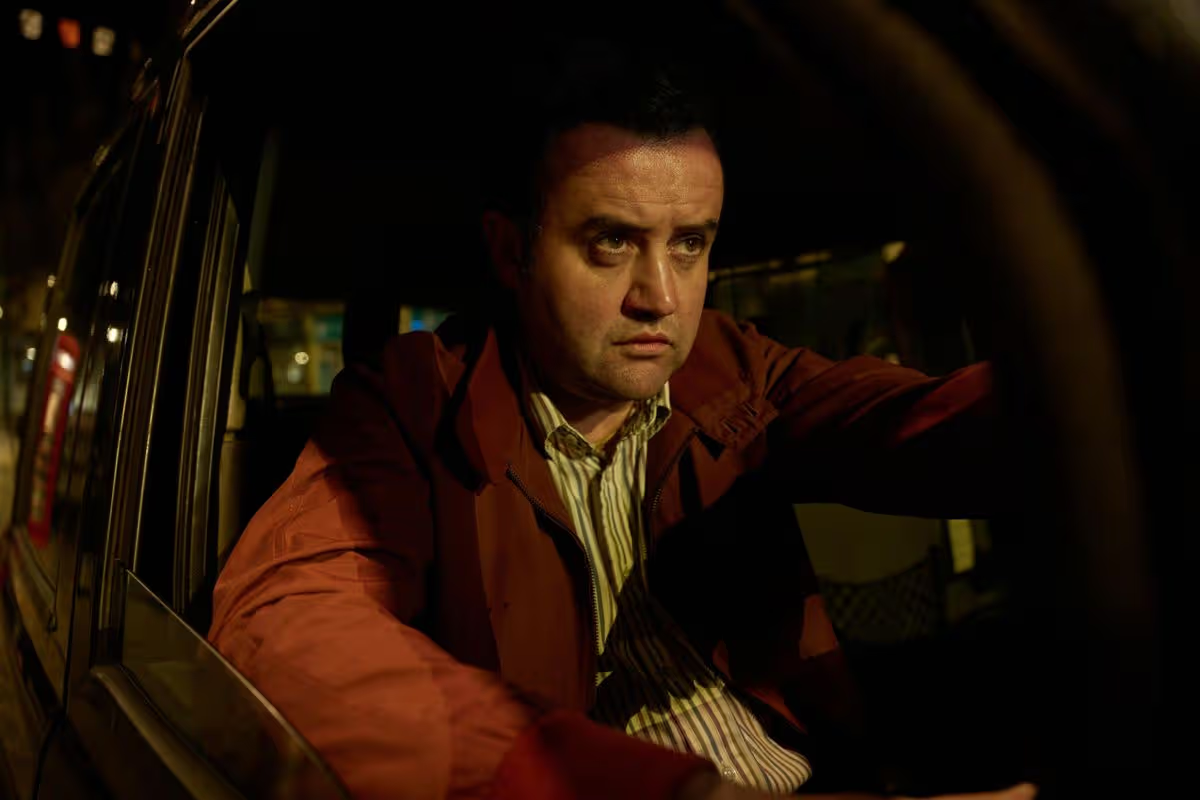
Daniel Mays plays John Worboys in Believe Me(Image: ITV)
Daniel Mays has admitted he was “absolutely terrified” when he read the script of his new ITV drama Believe Me.
The actor plays convicted offender John Worboys – who was dubbed the ‘black cab rapist’ after preying on women under the cover of being a licensed taxi-cab driver.
He was convicted in 2009 for crimes including sexual assault and drugging with intent against 12 women.
“I actually underestimated how much it was going to affect me,” Daniel said as a first look image of him as Worboys was released.
“I’ve been a professional actor for 26 years, so I’ve done a lot of true crime and played a lot of wrong ‘uns. When I got these scripts, it absolutely terrified me, because I’m a father myself.
“My head immediately went to my 13-year-old daughter Dixie. She’s venturing out, going on trains, and before long, no doubt she’ll be in the back of a taxi. So as a father, I found it an incredibly disturbing and terrifying read.”
He continued: “It was a difficult thing to have rolling around in my head before filming.
“It was a very isolating character to play, by its very nature. When I was announced to play him, I got this tirade from family and friends and work colleagues who can’t quite believe it, going, ‘Why would you want to play something like that?’ So, the challenge was to humanise him, really, and that was a very difficult and unsettling thing to take on.”
The four-part series, filmed in Cardiff, focuses on the ordeal of Sarah (played by Peaky Blinders’ Aimée-Ffion Edwards) and Laila (played by Raised By Wolves’ Aasiya Shah), who reported sexual assaults by Worboys, and how their allegations were not thoroughly investigated.
ITV said it “tells the story of how the victims of one of the most prolific sex attackers in British history were failed by the system”.
Danny, known for Des and A Thousand Blows, said there’s “always a huge responsibility” playing a real person on screen, but that this was “a whole other level”.
He explained: “This is told from the perspective of the victims, and for them to tell their truth, have their stories told – the ordeals that they went through and the fight they took on against the Metropolitan Police and the court systems.
“So, when you’re dealing with that, the onus was on me to get it absolutely 110% right. That was paramount to me.”
Believe Me is coming soon to ITV1
If you or somebody you know has been affected by this story, contact Victim Support for free, confidential advice on 08 08 16 89 111 or visit their website, http://www.victimsupport.org.uk.
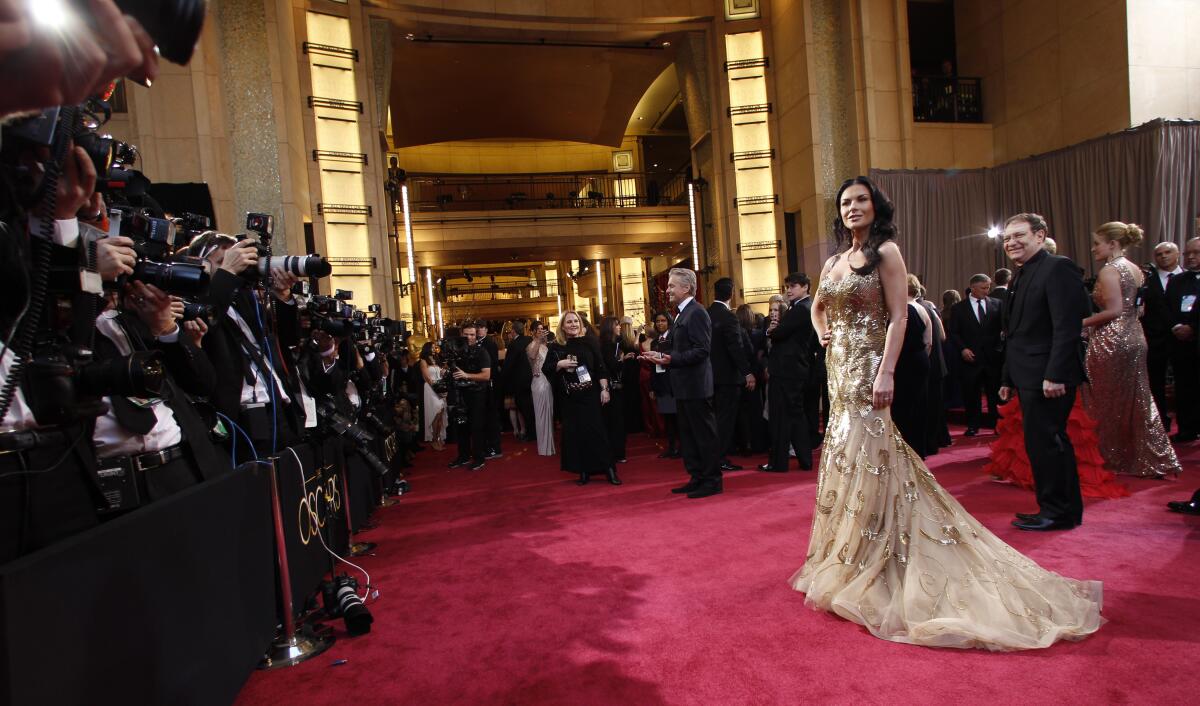
Catherine Zeta-Jones arrives on the red carpet at the 85th Academy Awards in 2013.
(Wally Skalij / Los Angeles Times)
The red carpet at the Oscars is the epitome of Hollywood glitz and glamour. We combed through our archives for photos of the Academy Awards since 2000 — from arrivals of the biggest stars to backstage candids to winners clutching their awards — to compile this trip down the Oscars’ memory lane.
So what do winners wear? Take a look at our collection below and you’ll see some of the best dressed stars through the years, including Lupita Nyong’o’s custom pale blue Prada gown in 2014 and Emma Stone’s gold Givenchy flapper-style dress in 2017. Around the dawn of the millennium, Halle Berry made a statement with an Elie Saab dress that had a sheer top with embroidered flowers when she won in 2002 while Reese Witherspoon went vintage with a beaded dress from Dior in 2006.
As we wait to see what the stars are wearing Sunday on the 98th Oscars red carpet, take a look at how Oscar fashion has evolved in the 21st century with photos of those who took home trophies for lead actress, lead actor, supporting actress and supporting actor.
2025
Mikey Madison shows off her leading actress Oscar for her role in “Anora” at the 97th Academy Awards.
(Jason Armond / Los Angeles Times)
Adrien Brody walks the red carpet at the 97th Academy Awards. He won the leading actor Oscar for “The Brutalist.”
(Allen J. Schaben / Los Angeles Times)
Zoe Saldaña accepts the supporting actress Oscar at the 2025 Academy Awards for “Emilia Perez.”
(Myung J. Chun / Los Angeles Times)
Kieran Culkin poses with his Oscar for “A Real Pain” at the 97th Academy Awards.
(Jason Armond / Los Angeles Times)
2024
Emma Stone won her second leading actress Oscar, for “Poor Things,” at the 96th Academy Awards.
(Myung J. Chun / Los Angeles Times)
Cillian Murphy accepts the leading actor Oscar for “Oppenheimer” at the 96th Academy Awards.
(Myung J. Chun / Los Angeles Times)
Da’Vine Joy Randolph won the supporting actress Oscar at the 96th Academy Awards.
(Myung J. Chun / Los Angeles Times)
Robert Downey Jr. poses on the red carpet at the 96th Academy Awards before winning the supporting actor Oscar for “Oppenheimer.”
(Christina House / Los Angeles Times)
2023
Michelle Yeoh, who won the leading actress Oscar for “Everything Everywhere All at Once,” arrives at the Governors Ball following the 95th Academy Awards.
(Jay L. Clendenin / Los Angeles Times)
Brendan Fraser clutches his Oscar backstage at the 95th Academy Awards at the Dolby Theatre.
(Robert Gauthier / Los Angeles Times)
Jamie Lee Curtis, the supporting actress winner for “Everything Everywhere All at Once,” cries as she holds her Oscar backstage.
(Robert Gauthier / Los Angeles Times)
Ke Huy Quan stands atop the engraving station after getting his Oscar for supporting actor engraved.
(Jay L. Clendenin / Los Angeles Times)
2022
Jessica Chastain arrives at the 94th Academy Awards before winning the Oscar for lead actress.
(Jay L. Clendenin / Los Angeles Times)
Will Smith and Jada Pinkett Smith pose on the red carpet at the 2022 Oscars. Smith won the leading actor award later that night after slapping Chris Rock during the show.
(Jay L. Clendenin / Los Angeles Times)
Ariana DeBose holds her Oscar for supporting actress backstage.
(Robert Gauthier/Los Angeles Times)
Troy Kotsur accepts the supporting actor award for “CODA” from Youn Yuh-jung.
(Myung Chun / Los Angeles Times)
2021
The 2021 Oscars had a modified format without a red carpet due to the COVID-19 pandemic.
2020
Renée Zellweger shows off her Oscar for lead actress for “Judy.”
(Allen J. Schaben / Los Angeles Times)
Joaquin Phoenix arrives at the 92nd Academy Awards. He won for lead actor for his role in “Joker.”
(Jay L. Clendenin / Los Angeles Times)
Laura Dern, winner of the supporting actress Oscar for “Marriage Story,” shows off her hardware.
(Allen J. Schaben / Los Angeles Times)
Brad Pitt wins the supporting actor Oscar for his role as Cliff Booth in “Once Upon a Time … in Hollywood.”
(Allen J. Schaben / Los Angeles Times)
2019
Olivia Colman wins the lead actress Oscar for “The Favourite.”
(Robert Gauthier / Los Angeles Times)
Rami Malek, winner for lead actor for “Bohemian Rhapsody,” poses in the photo room at the 91st Academy Awards.
(Allen J. Schaben / Los Angeles Times)
Regina King arrives at the Academy Awards, where she won for supporting actress in “If Beale Street Could Talk.”
(Jay L. Clendenin / Los Angeles Times)
Amatus Sami-Karim and Mahershala Ali pose at the 91st Academy Awards, where Ali won the supporting actor Oscar for “Green Book.”
(Jay L. Clendenin / Los Angeles Times)
2018
Frances McDormand was victorious for her role in “Three Billboards Outside Ebbing, Missouri.”
( Allen J. Schaben / Los Angeles Times)
Gary Oldman tightly grips his Oscar for lead actor.
(Allen J. Schaben / Los Angeles Times)
Allison Janney, winner of the supporting actress Oscar for “I, Tonya,” poses for photos.
(Allen J. Schaben / Los Angeles Times)
Sam Rockwell and Leslie Bibb pose on the red carpet at the 90th Academy Awards. Rockwell won for his role as troubled police officer Jason Dixon in “Three Billboards Outside Ebbing, Missouri.”
(Jay L. Clendenin / Los Angeles Times)
2017
Emma Stone delivers a touching acceptance speech after winning lead actress for her role in “La La Land.”
(Al Seib / Los Angeles Times)
Casey Affleck holds up his Oscar for lead actor for “Manchester by the Sea.”
(Marcus Yam / Los Angeles Times)
Viola Davis smiles backstage after winning the Oscar for supporting actress for “Fences.”
(Al Seib / Los Angeles Times)
Mahershala Ali arrives at the Oscars, where he won for his performance in “Moonlight.”
(Allen J. Schaben / Los Angeles Times)
2016
Brie Larson won the lead actress Oscar for her role in the drama “Room.”
(Jay L. Clendenin / Los Angeles Times)
Leonardo DiCaprio wins his first Oscar ever for “The Revenant.”
(Robert Gauthier / Los Angeles Times)
Alicia Vikander is Belle of the ball at the Oscars, where she won for supporting actress in “The Danish Girl.”
(Jay L. Clendenin / Los Angeles Times)
Mark Rylance walks backstage after picking up the supporting actor Oscar for “Bridge of Spies.”
(Al Seib / Los Angeles Times)
2015
Julianne Moore shows off her lead actress trophy.
(Allen J. Schaben / Los Angeles Times)
Eddie Redmayne arrives at the 87th Academy Awards, where he won gold for “The Theory of Everything.”
(Jay L. Clendenin / Los Angeles Times)
Patricia Arquette poses on the red carpet. The actress won an Oscar for her role in “Boyhood.”
(Jay L. Clendenin / Los Angeles Times)
J.K. Simmons holds his supporting actor Oscar for the movie “Whiplash.”
(Allen J. Schaben / Los Angeles Times)
2014
Matthew McConaughey accepts the lead actor award for “Dallas Buyers Club.”
(Robert Gauthier / Los Angeles Times)
Cate Blanchett stuns on the red carpet before picking up the lead actress Oscar for “Blue Jasmine.”
(Wally Skalij / Los Angeles Times)
Jared Leto arrives at the 86th Academy Awards, where he won for his role in “Dallas Buyers Club.”
(Jay L. Clendenin / Los Angeles Times)
Lupita Nyong’o twirls her dress on the red carpet at the Oscars, where she won for her feature film debut in “12 Years a Slave.”
(Wally Skalij / Los Angeles Times)
2013
Daniel Day-Lewis and Meryl Streep walk offstage at the 85th Academy Awards after Day-Lewis’ lead actor win.
(Al Seib / Los Angeles Times)
Jennifer Lawrence holds up her Oscar after her win for “Silver Linings Playbook.”
(Lawrence K. Ho / Los Angeles Times)
Christoph Waltz gives an acceptance speech after winning for supporting actor.
(Robert Gauthier / Los Angeles Times)
Anne Hathaway wins for supporting actress at the 85th Academy Awards.
(Robert Gauthier / Los Angeles Times)
2012
Jean Dujardin cheers after his Oscar win for lead actor at the 84th Academy Awards.
(Robert Gauthier / Los Angeles Times)
Meryl Streep holds up her Oscar for lead actress for “The Iron Lady.”
(Allen J. Schaben / Los Angeles Times)
Christopher Plummer examines his Oscar for supporting actor.
(Al Seib / Los Angeles Times)
Octavia Spencer cries as she accepts her Oscar for supporting actress.
(Robert Gauthier / Los Angeles Times)
2011
Colin Firth is photographed with his Oscar at the Governors Ball following his win for “The King’s Speech.”
(Gary Friedman / Los Angeles Times)
Natalie Portman arrives in style to the Oscars, where she won for her role in “Black Swan.”
(Liz O. Baylen / Los Angeles Times)
Christian Bale accepts his award for supporting actor during the 83rd Academy Awards.
(Robert Gauthier / Los Angeles Times)
Melissa Leo poses on the red carpet before her win for supporting actress.
(Kirk McKoy / Los Angeles Times)
2010
Jeff Bridges cheers after receiving the lead actor Oscar.
(Robert Gauthier / Los Angeles Times)
Sandra Bullock arrives at the 82nd Annual Academy Awards before winning an Oscar for her role in “The Blind Side.”
(Kirk McKoy / Los Angeles Times)
Mo’Nique receives an Oscar for her role in “Precious” during the 82nd Annual Academy Awards.
(Robert Gauthier / Los Angeles Times)
Christoph Waltz accepts his award for supporting actor during the 82nd Academy Awards.
(Robert Gauthier / Los Angeles Times)
2009
Sean Penn accepts the lead actor Oscar for his role in “Milk” during the 81st Academy Awards.
(Mark Boster / Los Angeles Times)
Kate Winslet stands backstage after her win for lead actress at the 81st Academy Awards.
(Al Seib / Los Angeles Times)
Sally Bell, Kim and Kate Ledger accept the Oscar for supporting actor awarded to Heath Ledger at the 81st Academy Awards.
(Mark Boster/Los Angeles Times)
Penelope Cruz receives her Oscar at the 81st Academy Awards for her role in “Vicky Cristina Barcelona.”
(Mark Boster / Los Angeles Times)
2008
Forest Whitaker escorts Marion Cotillard off stage after presenting her with the Oscar for lead actress at the 80th Academy Awards.
(Al Seib / Los Angeles Times)
Presenter Helen Mirren joins Daniel Day–Lewis backstage after his win for lead actor at the 80th Academy Awards.
(Lawrence K. Ho / Los Angeles Times)
Tilda Swinton accepts the supporting actress Oscar for her role in “Michael Clayton” at the 80th Academy Awards.
(Al Seib / Los Angeles Times)
Javier Bardem celebrates with the cast of “No Country for Old Men” after the film’s win for best picture and his victory for lead actor.
(Wally Skalij / Los Angeles Times)
2007
Helen Mirren accepts the Oscar for lead actress for her role in “The Queen.”
(Al Seib / Los Angeles Times)
Forest Whitaker accepts the leading actor Oscar for his role in “The Last King of Scotland.”
(Al Seib / Los Angeles Times)
Jennifer Hudson exits the stage with her Oscar after winning for supporting actress during the 79th Academy Awards.
(Al Seib / Los Angeles Times)
Rachel Weisz wipes lipstick off of supporting actor winner Alan Arkin’s cheek while walking offstage.
(Al Seib / Los Angeles Times)
2006
Reese Witherspoon arrives at the 78th Academy Awards, where she took home an Oscar for lead actress in “Walk the Line.”
(Al Seib / Los Angeles Times)
Philip Seymour Hoffman accepts the Oscar for lead actor for his role in “Capote” at the 78th Academy Awards.
(Mark Boster / Los Angeles Times)
Rachel Weisz accepts the supporting actress Oscar for her role in “The Constant Gardener.”
(Mark Boster / Los Angeles Times)
George Clooney greets fans at the 78th Academy Awards, where he took home the supporting actor Oscar.
(Al Seib / Los Angeles Times)
2005
Morgan Freeman, Cate Blanchett, Hilary Swank and Jamie Foxx pose with Oscar statuettes at the 77th Academy Awards.
(Ken Hively / Los Angeles Times)
Jamie Foxx and daughter Corinne arrive at the 77th Academy Awards.
(Béatrice de Géa / Los Angeles Times)
Hilary Swank arrives at the 77th Academy Awards, where she would win an Oscar for lead actress in “Million Dollar Baby.”
(Robert Gauthier / Los Angeles Times)
Morgan Freeman arrives at the 77th Academy Awards with his daughter, Morgana.
(Robert Gauthier / Los Angeles Times)
Cate Blanchett arrives at the Academy Awards, where she won an Oscar for her role in “The Aviator.”
(Béatrice de Géa / Los Angeles Times)
2004
Charlize Theron, Sean Penn, Rénee Zellweger and Tim Robbins pose with their Oscars at the 76th Academy Awards.
(Francine Orr / Los Angeles Times)
Charlize Theron, wearing Tom Ford for Gucci, arrives at the 76th Academy Awards.
(Myung J. Chun / Los Angeles Times)
Sean Penn accepts the leading actor Oscar for his role in “Mystic River.”
(Brian van der Brug / Los Angeles Times)
Actress Renée Zellweger poses with her Oscar for supporting actress for her role in “Cold Mountain” at the 76th Academy Awards.
(Francine Orr / Los Angeles Times)
Tim Robbins, his then-partner Susan Sarandon and their son flash peace signs as they arrive at the 75th Academy Awards.
(Robert Gauthier / Los Angeles Times)
2003
Adrien Brody, Nicole Kidman, Catherine Zeta-Jones and Chris Cooper prepare to pose with their Oscars at the 75th Academy Awards.
(Richard Hartog / Los Angeles Times)
Adrien Brody reacts to his Oscar win for “The Pianist.”
(Brian van der Brug / Los Angeles Times)
Nicole Kidman accepts the leading actress Oscar at the 75th Academy Awards.
(Brian van der Brug / Los Angeles Times)
Chris Cooper points to the camera after winning an Oscar for supporting actor for “Adaptation.”
(Anacleto Rapping / Los Angeles Times)
Catherine Zeta–Jones accepts the leading actress award at the 75th Academy Awards.
(Brian van der Brug / Los Angeles Times)
2002
Denzel Washington wins the leading actor Oscar for his role in “Training Day.”
(Ken Hively / Los Angeles Times)
Halle Berry arrives at the 74th Academy Awards, where she won an Oscar for her role in “Monster’s Ball.”
(Kevin P. Casey / Los Angeles Times)
Supporting actress Jennifer Connelly and supporting actor Jim Broadbent smile at the 74th Academy Awards.
(Don Kelsen / Los Angeles Times)
Jennifer Connelly accepts her Oscar for her role in “A Beautiful Mind.”
(Ken Hively / Los Angeles Times)
2001
Benicio del Toro, Marcia Gay Harden, Julia Roberts and Russell Crowe pose with their Oscars during the 73rd Academy Awards.
(Ken Hively / Los Angeles Times)
Russell Crowe wins an Oscar for his work on the film “Gladiator” during the 73rd annual Academy Awards.
(Al Seib / Los Angeles Times)
Julia Roberts celebrates after winning the leading actress Oscar at the 73rd Academy Awards.
(Al Seib / Los Angeles Times)
Benicio Del Toro clinches his fist after accepting the supporting actor Oscar for his role in “Traffic.”
(Al Seib / Los Angeles Times)
Marcia Gay Harden accepts her supporting actress Oscar at the 73rd Academy Awards.
(Al Seib / Los Angeles Times)
2000
Michael Caine, Angelina Jolie, Hilary Swank and Kevin Spacey smile backstage at the 72nd Academy Awards.
(Ken Hively / Los Angeles Times)
Kevin Spacey poses with his leading actor award for his role in “American Beauty.”
(Ken Hively / Los Angeles Times)
Hilary Swank accepts her Oscar for her role in “Boys Don’t Cry.”
(Robert Gauthier / Los Angeles Times)
Michael Caine accepts the Oscar for supporting actor during the 72nd Academy Awards.
(Robert Gauthier/ Los Angeles Times)
Angelina Jolie kisses her Oscar for supporting actress during the 72nd Academy Awards.
AN unexpected Brit name has been thrown into the ring to play the next James Bond.
Bookmaker Coral has announced the surprising news about who is currently in the lead to scoop the iconic role.
Sign up for the Showbiz newsletter
Thank you!
Daniel Craig’s role as the MI5 agent is up for grabsCredit: RexBack To Black star Jack O’Connell is the current frontrunnerCredit: Alamy
It has been revealed that Jack O’Connell’s name is flying high after seeing support rise over the last 48 hours.
The SAS: Rogue Heroes star is a big contender to jump into James Bond‘s boots with odds to 8-1 (from 33-1).
“Jack O’Connell’s next James Bond odds have collapsed over the last couple of days, with the British actor now just single figures in our betting for the iconic role,” said Coral’s John Hill.
The new movie will be written by Oscar-nominated filmmaker Steven Knight – who was behind iconic TV show Peaky Blinders.
The 28 Years Later actor has come a long way since his days in the Skins cast.
O’Connell has played a variety of roles since he starred in the TV teen drama as James Cook from 2009 to 2010 – and for the show’s final season in 2013.
Ever since Daniel Craig said goodbye to the role in 2021 release No Time To Die, the role of super spy 007 has been up for grabs, with speculation rife over who should take over.
Coral stated the odds: 4-5 Callum Turner, 3-1 Aaron Taylor-Johnson, 3-1 Theo James, 6-1 Henry Cavill, 8-1 Jack O’Connell, 10-1 Anthony Boyle, 12-1 Harris Dickinson, 16-1 Jack Lowden, 16-1 James Norton.
Jack as James Cook in E4s Skins from 2009-2010Credit: E4Jack starred in movie SAS: Rogue HeroesCredit: BBCCould Callum Turner be the next 007?Credit: AlamyJacob Elordi of Wuthering Heights fame is a favouriteCredit: AlamyPeaky Blinders boss Steven Knight will be behind the movie and has worked with JackCredit: Getty
Who will be the next James Bond?
Names in the mix to play 007 include:
Tom Holland
Fans have come up with a theory that Hollywood producer Amy Pascal – who has worked with Tom for years – could be involved in casting the new 007 film.
Henry Cavill
After playing legend Superman, Henry Cavill is now being tipped to be the next James Bond.
The former superhero would step into the role with ease.
James Nelson-Joyce
The actor first impressed audiences with his acting skills when he starred in Little Boy Blue alongside the legendary Stephen Graham.
After the release of his new flick, Jacob is now said to hold high odds.
Callum Turner
The London-born star was top of the list and has previously dodged questions on whether he’d take on the role.
Harris Dickinson
The newcomer actor’s stock has risen greatly over the past few years with appearances in Where The Crawdads Sing and steamy flick Babygirl, opposite Nicole Kidman.
Ella Bruccoleri looks unrecognisable from her days at Nonnatus House as she takes on the leading role in new BBC period drama
Ella played Sister Frances in BBC period drama Call the Midwife(Image: BBC/Nealstreet Productions/Matt Towers)
Call the Midwife star Ella Bruccoleri has landed the leading role in new BBC period drama The Other Bennet Sister.
The 10-episode series, which is based on Janice Hadlow’s novel of the same name, follows the “overlooked” character of Mary Bennet, played by Ella, who looks unrecognisable from her days at Nonnatus House, where she featured as Sister Frances until 2022.
The series begins at Longbourn, where the Bennet family’s five unmarried daughters navigate the rigid expectations of Regency society.
“Her journey sees her leave her family home for the soirées of Regency London and the peaks and vales of the Lake District, all in search of independence, self-love, and reinvention,” the synopsis says.
“The series follows Mary as she steps out of her sisters’ shadows in search of her own identity and purpose, finding herself in the middle of an epic love story along the way,” it goes on.
Speaking to the BBC about her new role, Ella explained: “Mary’s not your typical period drama heroine.
“She lives in a world where, particularly for women, appearance is everything, and she doesn’t understand that value system at all.
“Instead, she turns to literature that offers a different viewpoint. Her favourite book is Fordyce’s Sermons to Young Women, because it argues that women shouldn’t have to be beautiful — they should be intelligent and pious.”
Giving fans further insight on her character, she added: “Mary Bennet has been written off by many members of her family, and as a result she’s written herself off too. When we meet her at the beginning of the series, she’s living with her family in a small village and has never really left that world.
“These are the only people she knows, and she understands herself through the values they impose on her. We know these characters from Pride and Prejudice, but it’s fascinating to see the impact they have on someone like Mary.”
Giving her thoughts on the new adaptation, the star said: “When I read Jane Austen, I’m always struck by how witty it is so witty, with humour in every line.
“Sarah Quintrell really brings that into the scripts, and Janice Hadlow’s book does the same. The novel is very different in style from Austen, but it feels like a genuine extension of Pride and Prejudice.
“Sarah’s scripts tread the line between comedy and drama better than anything I’ve ever read. It feels like a tragicomedy – it doesn’t take itself too seriously, but it’s also not afraid to delve into emotionally weighty material. That feels very true to Jane Austen.”
The Other Bennet Sister debuts on BBC One and iPlayer on Sunday (March 15) at 8pm
For the latest showbiz, TV, movie and streaming news, go to the new **Everything Gossip** website.
Naledi Raptou has joined Channel 4 soap Hollyoaks as Kathleen-Angel McQueen replacing actress Kiara Mellor
Dan Laurie Deputy Editor of Screen Time
00:01, 10 Mar 2026
Naledi Raptou has taken over the role of Kathleen-Angel McQueen in Hollyoaks
A Hollyoaks teenager is set to played by a new actress.
Naledi Raptou has joined the cast of the Channel 4 soap and has been already filming with Jorgie Porter and Danny Mac as she takes on the role of Kathleen-Angel McQueen, the daughter of Theresa McQueen and the late Calvin Valentine.
In the coming weeks, Theresa (Jorgie Porter) will find herself navigating the realities of raising a rapidly maturing teenager when her sixteen-year-old daughter Kathleen-Angel has unprotected sex with her Ant Hutchinson (Brook Debio).
Naledi’s first episode on Hollyoaks will air on Tuesday (March 17). Actress Kiara Mellor had previously played the role since 2021. Theresa also shares a daughter, Myra-Pocahontas, with now boyfriend Dodger Savage (Danny Mac).
Talking about joining Hollyoaks, Naledi said “I’m really grateful for the opportunity to join the cast of Hollyoaks, it’s a great place to work and a very nurturing environment to grow.
“It’s been a pleasure to play Kathleen-Angel as she develops into a young adult. We’re learning new things about her and I’m excited to be able to present a different side of her.”
Naledi has previously appeared in an episode of ITV’s Significant Other as Chloe in 2023.
Hollyoaks spoilers for next week reveal the Hutchinson teens decide to bunk off school for the day in upcoming scenes.
Kathleen-Angel decides to join them but she’s caught sneaking out by Dodger who ends up covering for her.
At the park, Kathleen-Angel tries to find out if Ant still likes classmate Trina (Sadie Williams) but berates him in the process and he leaves.
Back at the flat, Ant is playing computer games when Kathleen-Angel arrives. Tension rises between the teens when they both call out each other’s behaviour. Ant tells Kathleen-Angel to leave if he’s such an awful person but she refuses.
Uncle Dom Reilly (John Pickard), who is looking after the kids while Tony and Diane Hutchinson are in London seeking a second opinion following her cancer diagnosis, later learns the teens have bunked off school.
He finds Ant at home who claims he is unwell and admits Ro and Dee Dee are at the park. As Dom leaves, Kathleen-Angel emerges from the bedroom and it’s revealed the pair discover they have slept together.
The following day, In need of the morning after pill, Kathleen-Angel goes to text Dee Dee Hutchinson (Chloe Atkinson) for help but startled when Ant comes up behind her and she accidentally sends it Dodger.
Not wanting her mum to find out, Kathleen-Angel returns home and tries to delete the text from Dodger’s phone but he catches her and reveals he’s already read the text.
The teen pleads with him not to tell her mum and Dodger says he won’t because she must. Coming into the room, Theresa catches the end of the conversation.
Theresa is devastated to learn that her daughter has slept with someone and Kathleen-Angel pleads with her mum not to make a scene as she really likes Ant.
The mum is horrified to learn who her daughter slept with given his past behaviour but Dodger encourages Theresa to listen to her daughter.
Hollyoaks airs Monday to Wednesday on E4 at 7pm and first look episodes can be streamed Channel 4 from 7am
For the latest showbiz, TV, movie and streaming news, go to the new **Everything Gossip** website.
SELMA, Ala. — Sixty-one years after state troopers attacked civil rights marchers on the Edmund Pettus Bridge in Selma, thousands gathered in the Alabama city this weekend amid new concerns about the future of the Voting Rights Act.
The March 7, 1965, violence that became known as “Bloody Sunday” shocked the nation and helped spur passage of the landmark legislation that dismantled barriers to voting for Black Americans in the Jim Crow South.
But this year’s anniversary celebrations — events ran all weekend, including a commemorative march across the bridge Sunday — come as the U.S. Supreme Court considers a case that could limit a provision of the Voting Rights Act that has helped ensure some congressional and local districts are drawn so minority voters have a chance to elect their candidate of choice.
“I’m concerned that all of the advances that we made for the last 61 years are going to be eradicated,” said Charles Mauldin, 78, one of the marchers who was beaten that day alongside civil rights icon John Lewis and others.
Justices are expected to rule soon on a Louisiana case regarding the role of race in drawing congressional districts. A ruling prohibiting or limiting that role could have sweeping consequences, potentially opening the door for Republican-controlled states to redistrict and roll back majority Black and Latino districts that tend to favor Democrats.
Democratic officeholders, civil rights leaders and others have descended on the Southern city to pay homage to the pivotal moment of the civil rights movement and to issue calls to action. Like the marchers 61 years ago, they must keep pressing forward, organizers said.
Former Alabama state Sen. Hank Sanders, who helped start the annual commemoration, said the 1965 events in Selma marked a turning point in the nation and helped push the United States closer to becoming a true democracy.
“The feeling is a profound fear that we will be taken back — a greater fear than at any time since 1965,” Sanders said.
U.S. Rep. Shomari Figures won election in 2024 to an Alabama district that was redrawn by the federal court. He said what happened in Selma and the subsequent passage of the Voting Rights Act were “monumental in shaping what America looks like and how America is represented in Congress.”
“I think coming to Selma is a refreshing reminder every single year that the progress that we got from the civil rights movement is not perpetual. It’s been under consistent attacks almost since we’ve gotten those rights,” said Figures, a Democrat.
In 1965, the Bloody Sunday marchers led by Lewis and Hosea Williams walked in pairs across the Selma bridge headed toward Montgomery. Mauldin, then 17, was part of the third pair behind Williams and Lewis.
At the apex of the bridge, they could see a sea of law enforcement officers, some on horseback, waiting for them. But they kept going. “Being fearful was not an option. And it wasn’t that we didn’t have fear, it’s that we chose courage over fear,” Mauldin recalled in a telephone interview.
“We were all hit. We were trampled. We were tear-gassed. And we were brutalized by the state of Alabama,” Mauldin said.
The tumult continues at the John F. Kennedy Center for the Performing Arts as the National Symphony Orchestra’s executive director, Jean Davidson, steps down from her role to become executive director and chief executive of the Wallis Annenberg Center for the Performing Arts. Davidson will assume her new position May 4, the Wallis announced Friday.
“I’ve learned a lot in the last three years, and I think it’s no secret that it’s been a hard year,” Davidson told The Times, adding that the politicization of the Kennedy Center was a factor in her decision-making. “I had intended to stay through the [orchestra’s] 100th anniversary in 2031, but found it more and more difficult to achieve the goals that we had set out to achieve given the external forces that are at work that are just so far beyond my control.”
It seemed like “I had reached a natural ending point,” she said.
With the imminent closure of the Kennedy Center, speculation has swirled around the NSO’s future, especially in light of the Washington National Opera’s decision in January to cut ties with the storied venue, which has been its home since 1971. The Kennedy Center’s Trump-appointed leadership, however, made it clear that it intended to support the NSO in the long term, and the orchestra’s board chair assured musicians that the orchestra and its staff would remain intact.
Davidson said the NSO is in the process of identifying venues for the next two years, and that the orchestra has been told by the Kennedy Center that its financial support is not in question.
“Many venue operators in the D.C. area have been very generously reaching out to us, asking how they can help,” she said. “Of course, we plan our seasons years in advance, and so next season was already planned. We already have conductors and soloists and all of that, and so it’s a bit of a jigsaw puzzle aligning our existing programming and obligations to those artists with venues that are appropriate for those programs.”
It will take several more weeks to come up with a cohesive plan and it will probably include several venues, “but we will have a season,” Davidson said. “And we hope that everybody will come.”
In many ways, Davidson said, the NSO is stronger than it has been in quite some time. During her tenure, Davidson helped reboot the orchestra’s international and domestic touring, which includes upcoming shows at New York’s Carnegie Hall in May and at the Hollywood Bowl in August. The orchestra also extended acclaimed music director Gianandrea Noseda’s contract through 2031.
“The orchestra is just playing at such a high level and they really have never sounded so good,” said Davidson, echoing what notable critics have also been saying. “We’re still welcoming many new players after our audition process, and I think that’s all very positive for the NSO.”
Davidson knows that leaving her role will be difficult for the orchestra, but she believes it will emerge stronger.
“I care deeply about the NSO and I am so proud of everything that we’ve accomplished together. I think the world of Gianandrea, of [principal conductor] Steven Reineke, our musicians, our staff and board — it’s a great community of people,” said Davidson.
Davidson also believes that the upcoming renovations to the Kennedy Center will ultimately result in a better experience for audiences and artists. She just wishes there had been much more advance notice.
“Usually orchestras will plan for being out of their hall years in advance, and we only have months to do that, so it is causing a bit of strain,” she said. “I think the most important thing is that our audiences and donors continue to support the NSO during this transition period.”
Davidson will now embark on her own transition as she moves from D.C. to L.A., rejoining her husband who has stayed in the area as a music professor at UC Irvine.
“This is an opportunity that’s been on my bucket list of things that I want to do in my life and it seems like the right time,” said Davidson of her new role at the Wallis in Beverly Hills.
Compared with the NSO, the Wallis is practically brand new, having opened in 2013.
Davidson is excited that there is lots of room for growth, and that the Wallis has evolved into one of the region’s most exciting multidisciplinary performing arts presenters and home base to a variety of local arts groups.
“I think anytime you’re starting a new role, there’s a lot of learning that needs to occur,” Davidson said. “And I’m not somebody that is prone to walking in with a big vision that’s going to suddenly change course. I think they’ve been doing a lot of great work and so I’m looking forward to collaborating with the team that’s there — to learn and to create a shared vision for the future.”
It’s an exciting time to be in Los Angeles, Davidson said.
“The last decade or so has seen a lot of growth in the art sector, and there are so many talented artists and organizations in L.A. that need a place to perform.”
WASHINGTON — President Trump said Friday that the United States would accept nothing short of Iran’s “unconditional surrender,” signaling that the possibility of regime change may be emerging as an objective as the expanding war in the Middle East entered its seventh day.
In a post on Truth Social, Trump said negotiations with Iran were off the table and that he wants to have a say on who will be Iran’s next leader once they capitulate.
“After that, and the selection of a GREAT & ACCEPTABLE Leader(s), we, and many of our wonderful and very brave allies and partners, will work tirelessly to bring Iran back from the brink of destruction, making it economically bigger, better, and stronger than ever before,” Trump wrote.
The comments mark one of the clearest indications yet that Trump is contemplating regime change inside Iran even as administration officials have said that is not a goal of the war.
Mojtaba Khamenei — the son of the former leader Ayatollah Ali Khamenei — has emerged as a leading candidate to succeed his father. But Trump has said he would be an “unacceptable” choice, and in an interview with Politico, the president said he expects his administration will “work with them to help them make the proper choice.”
The comments come as the war continued to escalate across the region, with Israeli forces carrying out attacks on targets in Tehran and in Beirut and Iranian forces launching missile and drone attacks against Israel and Gulf countries. The Israeli military also said it hit an area in Tehran where it said Iran had secretly moved some nuclear activities to underground bunkers.
As the fighting intensified, the White House paired its policy statement on the war with an unusual online messaging campaign that featured Hollywood movies and video games to promote Trump’s war efforts.
In a 31-second video posted on the official White House account on X, a series of clips featured Russell Crowe in “Gladiator,” Mel Gibson in “Braveheart” and Tom Cruise in “Top Gun” with the caption: “JUSTICE AMERICAN WAY” with an American flag and fire emojis.
Another video montage to market the administration’s efforts in Iran used clips from the video game “Grand Theft Auto” with one of its characters saying: “Oh s—, here we go again.”
The tone of the social media campaign highlights the administration’s effort to frame the conflict in dramatic and patriotic terms as questions grow about its potential human toll.
In an interview with Time, Trump once again acknowledged the possibility of U.S. casualties — not just abroad but at home.
Asked whether Americans should be worried about retaliatory attacks at home, Trump said “I guess.”
“You know, we expect some things,”Trump said. “Like I said, some people will die. When you go to war, some people will die.”
Trump’s response drew swift criticism from congressional Democrats, a majority of whom have tried to rein in Trump’s efforts through legislative action to no avail in the Republican-controlled Congress.
Sen. Chris Murphy (D-Conn.), a member of the Senate Foreign Relations Committee, was offended by the president’s “I guess” retort to the question of domestic attacks.
“You’ve got to be kidding me. We have totally unserious, completely incompetent people taking us into mindless deadly war,” Murphy said.
By my count, Philip Glass has written 28 operas, the same number as Verdi. The count is iffy because Glass pushes the boundaries between what we tend to call opera and the fuzzier idea of music theater. His first, “Einstein on the Beach” in 1976 — a collaboration between the composer and the late, innovative theater maker Robert Wilson — is a non-narrative effusion of imagery, movement, music and text, each a brilliantly independent entity that somehow excites a hard-to-pin-down purpose.
His latest (and probably his last, Glass turns 90 this year) is “Circus Days and Nights” — a touching and thrilling opera for a circus and staged at a circus in Mälmo, Sweden, in 2021 — caps a wondrous 45 years of operatic advancement. You would have to go back to Handel’s 42 operas, Mozart’s 22 or Verdi’s oeuvre for operatic equivalence.
Glass’ subject matter varies widely in epochs and ethoses, from ancient Egypt to Walt Disney’s Hollywood. Taken as a whole, these 28 operas reveal how we got to be who we are historically, artistically, spiritually, politically and fancifully, often including more than one of those categories, as in his third opera, “Akhnaten,” which Los Angeles Opera has now remounted at the Dorothy Chandler Pavilion. The instantly recognizable musical style has remained, over the years, consistently abstract and refreshing. It doesn’t tell you how to think, how to feel, even how to understand. It simply grabs your attention; you do the interpreting.
Still, America knows little of Glass’ operatic enormity. The early “portrait” operas — “Einstein,” “Satyagraha” (about Gandhi) and “Akhnaten” (the 14th century BC Egyptian pharaoh) — appear in repertory here and there (meaning mostly in Europe) as do a trio of operas based on Jean Cocteau films. The rest remain little mounted, while several but not all have been recorded. The Metropolitan Opera, for instance, commissioned “The Voyage” in 1992 to celebrate the 500th anniversary of Columbus’ arrival in the Americas, but the epic opera is nowhere to be found in our semisesquicentennial year. It is sadly no longer even thinkable that “Appomattox,” Glass’ revelatory reminder of an America that once honored goodwill negotiation over political self-interest, return to the Kennedy Center, where its final version had its premiere 11 years ago.
L.A. Opera has been better than most American companies in its attention to Glass. It has excellently presented the three portrait operas on its main stage, beginning with “Einstein” in the final and most brilliant revival of the original Wilson staging. The “Satyagraha” and “Akhnaten” revivals have been the designed-to-dazzle inventions of quirky director Phelim McDermott, a co-founder of Impossible, an eccentric British theater company. When new in the last decade, they felt the most arresting productions of these operas since Achim Freyer’s in Stuttgart, Germany, in the early 1980s. Almost every performance at the Dorothy Chandler Pavilion has sold out.
John Holiday as the titular ruler in Philip Glass’ “Akhnaten” at the Dorothy Chandler Pavilion.
(Ariana Drehsler / For The Times)
McDermott’s “Akhnaten” got the most attention thanks to breathtaking jugglers and lavish costumes, along with a touch of full-frontal novelty as Akhnaten gets clothed in his kitschy, glittery getup for his inauguration. Glass had chosen the pharaoh because he is thought to have been the first monotheistic ruler.
Akhnaten is revealed in episodes of his life that are not fleshed out but presented as ritual, including the ravishing love duet with his wife, Nefertiti. The revolutionary pharoah builds a great city and reduces spiritual chaos by focusing on a single-minded form of worship. He looks androgenous in portraits, which led Glass to create the role for countertenor.
The sung texts are in ancient languages, and there are no projected song titles. Instead, a narrator gives a somewhat notion of what’s what in the language of the audience, as is Akhnaten’s great aria, a hymn to Aten (god of the sun).
Ultimately, the pharaoh’s prescient spiritual optimism comes in conflict with the all-powerful establishment priests, who kill Akhnaten and Nefertiti. The opera ends with Akhnaten’s son, presumably Tutankhamun, restoring polytheism, and then, once the staging jumps millennia into the future, it’s rediscovered by modern-day tourists. The currency couldn’t be missed Saturday, the Shia cleric and Iran’s supreme leader Ali Khamenei having just been assassinated along with his wife at the start of America’s and Israel’s Iran war.
Sun-Ly Pierce as Nefertiti and John Holiday as Akhnaten in Philip Glass’ “Akhnaten” at the Dorothy Chandler Pavilion.
(Ariana Drehsler / For The Times)
In the opera, it so happens, the ghosts of Akhnaten, his wife and mother, have the last word in a glorious trio.
When first performed at L.A. Opera a decade ago, the lavish production, co-produced with English National Opera, helped recover a neglected opera. In the meantime, “Akhnaten” has gone practically mainstream. The Metropolitan Opera, which also mounted McDermott’s production, released it on CD and DVD, winning a Grammy for best opera recording.
Since then, the choreographer Lucinda Childs, veteran of “Einstein on the Beach,” has staged a stunningly chic “Akhnaten” in Nice, France, that is available on YouTube. Last year, director Barrie Kosky created a sensation with his staging at Komische Oper Berlin, which starred American countertenor John Holiday.
Holiday happens to be the Akhnaten in the L.A. Opera revival, and he is magnificent. McDermott had built his production around the gracefully emotive Anthony Roth Costanzo, slight and luminous in voice and build and game for nudity. If Costanzo’s disarming enthusiasm for the role has been significant in mainstreaming “Akhnaten,” Holiday, who is a very different presence, may be the next step.
Although he can be a popularly gregarious crossover performer, here he suggests a ruler of profound, unflappable dignity, rather than vulnerability. His hymn to Aten is an exercise in majesty, an ode not just to the sun but to the expanses in which our solar system circulates.
In general, the singers class up the production. Sun-Ly Pierce as Nefertiti and So Young Park as Queen Tye add allure. The large cast of smaller roles and chorus is excellent. Zachary James returns as both Amenhotep III, Akhnaten’s father, and the engaging narrator who occasionally threatens to get carried away. McDermott had perfectly employed James as the droll animatronic Disneyland Lincoln in his animation-friendly, slightly goofy production of “Perfect American” in Madrid, where the opera premiered. Here McDermott’s inspired staging demonstrated that Glass’ forgiving personal portrait of Walt Disney makes it the quintessential Hollywood opera that no one dares bring to squeamish Hollywood.
Zachary James as Amenhotep III in Philip Glass’ “Akhnaten” at the Dorothy Chandler Pavilion.
(Ariana Drehsler / For The Times)
Hollywood, however, is hardly squeamish when it comes to synchronized jugglers. For McDermott, they suggest somber ritual and were, in fact, known in Akhnaten’s Egypt. For the audience, they are a thrill a minute. For Glass, they may take on deeper meaning now that the circus is where he landed 26 operas later.
As for Finnish conductor Dalia Stasevska, making her L.A. opera debut, she keenly keeps score and bounding balls together with cinematic flair. Glass removed violins from the orchestra to achieve a dark, primordial orchestral sound along with pounding percussion. Stasevska finds light, color and action. She conducts for the moment. Picturesque wind instruments suddenly burst forth as if a flock of birds were flying over the pyramids. Solo brass can sound momentous. The percussion pounds like nobody’s business, opening the score up to all the implied emotion and glitter on an over-stuffed stage.
Childs’ exalted use of dance and Kosky’s dazzling theatrical imagination may have moved us into a sleeker, more sophisticated and paradisal Glassian realm, but the sheer passion McDermott and Stasevska bring continues its own attraction.
In the meantime, McDermott has worked with Glass on a theatrical show, “The Tao of Glass,” that has been seen in New York and will run throughout much of the summer in London. In a better world of Glass, it would be running alongside “Akhnaten” at the Ahmanson. But the Labèque sisters will be at Walt Disney Concert Hall at the end of the month with a two-piano program based on Glass’ operatic Cocteau trilogy. Also check out L.A. Opera’s several excellent podcasts on “Ahkhnaten” — the company has quietly become a leader in the medium.
‘Akhnaten’
Where: Dorothy Chandler Pavilion, 135 Grand Ave., L.A.
When: Through March 22
Tickets: $33.50-$415
Running time: About 3 hours, 40 minutes, with 2 intermissions.
Canadian leader also said the US-Israeli attacks on Iran appear to be ‘inconsistent with international law’.
Published On 5 Mar 20265 Mar 2026
Share
Canadian Prime Minister Mark Carney said that he could not rule out his country’s military participation in the escalating war in the Middle East, after earlier saying that the US-Israeli strikes on Iran were “inconsistent with international law”.
Speaking alongside Australia’s Prime Minister Anthony Albanese in Canberra on Thursday, Carney was asked whether there was a situation in which Canada would get involved.
Recommended Stories
list of 4 itemsend of list
“One can never categorically rule out participation,” Carney said, noting the question was “hypothetical”.
“We will stand by our allies,” he said, adding that “we will always defend Canadians”.
Carney said earlier that he supported the strikes on Iran “with some regret” as they represented an extreme example of a rupturing world order.
The Canadian prime minister also stressed that his country was not informed in advance of the US-Israeli attack on Iran, in his first remarks since the war was launched on Saturday.
“We were not informed in advance, we were not asked to participate,” Carney told reporters travelling with him in Australia on Wednesday.
“Prima facie, it appears that these actions are inconsistent with international law,” he said.
“The United States and Israel have acted without engaging the United Nations or consulting with allies, including Canada,” he added, according to Australia’s SBS News, while also condemning strikes on civilians in Iran and calling for “all parties … to respect the rules of international engagement”.
Whether the US and Israeli attacks on Iran had broken international law was “a judgement for others to make”, he added.
Canada’s Foreign Affairs Minister Anita Anand said on Wednesday that efforts were under way to help more than 2,000 Canadians who have requested assistance from the government to leave the Middle East region since the war broke out on Saturday.
Anand said about half of all inquiries for help were from Canadians in the United Arab Emirates, more than 230 from Qatar, at least 160 from Lebanon, more than 90 from Israel and 74 from Iran.
Canada’s Foreign Ministry has been instructed to contract charter flights out of the UAE in the coming days, contingent on approval from the UAE government to use its airspace, the minister said.
Commercial air traffic remains largely absent across much of the region, with major Gulf hubs – including Dubai, the world’s busiest airport for international passengers – largely shut amid the conflict, in the biggest travel disruption since the COVID pandemic.
Repatriation flights chartered by foreign governments, including Britain and France, were due to leave on Wednesday and Thursday, while the UAE opened safe air corridors to allow some citizens to return home.
Under normal circumstances, thousands of commercial flights would depart the region each day.
LIFE Film Festival (Latina Independent Film Extravaganza) returns to Los Angeles this week for its 13th year. Founded by “Real Women Have Curves” playwright Josefina López, the festival will screen over 60 short films and four feature movies at Casa 0101 in Boyle Heights, and for the first time at Cinépolis in Pico Rivera.
From Thursday to Sunday, LIFE Film Festival will offer a series of workshops and networking opportunities where aspiring filmmakers will have a chance to learn from Latinas in Hollywood, like Emmy Award-winning editor Michelle Tesoro, who worked on Netflix’s “The Queen’s Gambit” and the 2023 film “Maestro.”
Since López founded LIFE Film Festival in 2013, her commitment remains the same: to celebrate Latino stories in cinema and empower the next generation of Latina filmmakers.
As a Chicana screenwriter and producer for over 30 years, López knows firsthand the underrepresentation of Latinos in Hollywood films. “Latinos are the majority here in California, and we’re still rendered invisible, even though the industry is right in our backyard,” López said. “They just really don’t want to invest in our stories.”
According to UCLA’s 2025 Hollywood Diversity Report, which looked at the 104 top-performing English-language movies released in 2024, only 1% of leading roles went to Latinos; less than 5% of directors were Latino; and approximately 2% of writers were Latino in last year’s top movies. Latinos make up nearly 20% of the U.S. population.
When it comes to gender, the disparities were even more glaring. There were zero Latina directors and screenwriters in the top theatrical movie releases of 2024. In front of the camera, the numbers weren’t that much better. Less than 1 in 50 movie roles went to Latinas.
“I never knew anybody in my family who was a screenwriter, and now I’m a WGA screenwriter and I’m giving back to my community,” LIFE Film Festival co-director Cristina Nava said. “I could be the tia [to] one of these filmmakers.”
López’s response to underrepresentation extends beyond opening doors. With LIFE, she says she wants to support storytellers who are challenging Latino stereotypes. “There are all sorts of Latinos,” López said. “Yes, we are the immigrants, the servants, but we’re more than that.”
Every year, LIFE recognizes a Latina moviemaker whose work has reshaped representation within the entertainment industry, with the Lupe Ontiveros Award.
Created by López to honor the legendary Mexican American actress, the award is bestowed to a filmmaker whose work amplifies Latino voices. This year’s honoree is “Encanto” Oscar-winning producer Yvett Merino.
In her 35 year-long career, Ontiveros played the role of maids and housekeepers over 150 times. López believed that Hollywood was wasting her friend’s talents and promised to cast her as a more complex and interesting character.
López kept her word, casting Ontiveros as Carmen, the hardworking, hysterical mother in “Real Women Have Curves.” “We have to keep telling stories so that all these talented Latino actors have better opportunities than to play stereotypes,” she said.
Gayle King, the most high-profile star at CBS News, has signed a new deal with the network.
A CBS News representative said Wednesday the division reached an agreement with King, 71, to continue as co-host of “CBS Mornings” co-host but did not reveal the length or the terms. Her current deal was set to end in May.
King’s future at the program came into question last fall after the arrival of CBS News Editor-in-chief Bari Weiss. There were leaks to the trades and tabloid press that parent company Paramount was looking to trim King’s salary or reduce her role at the network as a means to cut costs.
“Rumors of my demise were inaccurate and greatly exaggerated,” King said in a statement. “CBS News is my longtime home, and I am committed to our mission. I’m excited about continuing at CBS Mornings. As always, I’m open to new adventures here and ready to go. It took a minute, but we got there. And now that we are here, I am all in.”
King is the highest paid on-air talent at CBS News, earning an annual eight-figure salary.
Known for her effusive charm, King apparently won Weiss over.
“There is only one Gayle King,” Weiss said in a statement. “We’re so proud that she’ll continue to call CBS home. We’re thrilled to have her on in the morning—and equally excited to work with her on new, enterprising projects that bring her talents to new audiences.”
While King is locked in for at least another year, there is a search underway for at least one new co-host on the program.
King’s current co-host is Nate Burleson, who is also an analyst for CBS Sports. The network has not permanently replaced Tony Dokoupil, who left “CBS Mornings” in January to take over as anchor of the “CBS Evening News.”
King joined CBS News in 2012, when she joined “CBS This Morning.” As co-hosts alongside Charlie Rose and Norah O’Donnell, the program experienced five consecutive years of ratings growth.
“CBS This Morning” was adrift after Rose — a major audience draw — was ousted over sexual harassment allegations. In 2021, it was renamed “CBS Mornings,” with King taking a more prominent role.
“CBS Mornings” ranks third in ratings behind NBC’s “Today” and ABC’s “Good Morning America,” but remains a significant revenue generator for CBS News.
Washington, DC – On Monday, Secretary of State Marco Rubio provided a looping justification for the US launching a war against Iran: Israel was planning to strike Iran, which would have prompted Tehran to strike the US assets in the region, requiring Washington to launch preemptive strikes on Iran.
Even as the administration of US President Donald Trump has sought to roll back claims made by several officials in recent days, they have continued to spark dismay across the political spectrum.
Recommended Stories
list of 3 itemsend of list
Rubio’s statement was particularly notable, given the assessment by many Iran analysts that the US-Israel war, which has led to regional retaliation from Iran, serves the interests not of Washington, but of Israeli Prime Minister Benjamin Netanyahu.
Washington is seen as having outsized leverage over Israel, to which it has provided more than $300bn in military aid since 1948, including $21bn during Israel’s genocide in Gaza.
Trump, when asked about Rubio’s statement on Tuesday, appeared to offer a different characterisation, saying he launched the war because he “thought we were going to have a situation where we were going to be attacked”.
“They [Iran] were getting ready to attack Israel. They were gonna attack others,” he said.
The US president has spent the days since launching the initial strikes on Saturday arguing that the holistic threat posed by Iran justified the US-Israeli strikes, a position that experts say likely stands in contravention of both US and international law. The administration has provided scant evidence of a planned attack on US assets or that either Iran’s nuclear or ballistic programmes offered an immediate threat.
Rubio on Monday also sought to distance himself from his statements, claiming his words had been taken out of context.
Rubio had, in earlier comments, pointed to the broader threat posed by Iran, including its ballistic missile and drone capacity. But then he turned to what he called the question of “why now?”
“We knew that there was going to be an Israeli action,” he told reporters. “We knew that that would precipitate an attack against American forces, and we knew that if we didn’t preemptively go after them before they launched those attacks, we would suffer higher casualties.”
‘Stunning admission’
The shifting messaging on Tuesday was unlikely to allay the condemnation from Trump critics and supporters alike, including several influential figures within Trump’s Make America Great Again (MAGA) base.
Kelly Grieco, a senior fellow at the Stimson Center, told Al Jazeera that “what he’s basically publicly acknowledging would be that the United States was entrapped by the Israelis”.
“The notion that the Israelis were going to do it anyway, and so we had to do it as well – if that’s the case, then there’s a really serious conversation to be had here in the United States about US and Israeli interests, and where those are aligned and where they diverge,” Grieco said.
Kenneth Roth, a former executive director of Human Rights Watch, in a post on X, questioned: “Why is it in America’s interest to arm and fund Israel to draw America into an unnecessary war?”
In an earlier post, he said Rubio’s logic “isn’t even close to a legal rationale” for launching the war.
The Council on American-Islamic Relations (CAIR), meanwhile, called Rubio’s words on Monday a “stunning admission”.
In a statement, it said Rubio had revealed “what was clear from the start: the United States did not attack Iran because Iran posed an imminent threat to our nation. We attacked under pressure from Israel for Israel’s benefit”.
The organisation called on Congress to pass war powers resolutions to rein in Trump’s ability to wage war.
Looming war powers vote
Lawmakers have pledged to introduce the legislation in both the House of Representatives and Senate this week, although it is likely to face an uphill battle amid Republican opposition.
Trump’s party maintains razor-thin majorities in both chambers, and most Republican lawmakers have rallied behind the war and the reasons the administration has given for launching attacks.
War powers resolutions would require a two-thirds majority in both chambers to override a presidential veto, although advocates have long argued they offer an opportunity for lawmakers to put their stance on the record.
In a statement on Tuesday, progressive US Senator Bernie Sanders was among the lawmakers condemning the administration’s war.
“Netanyahu wanted war with Iran. Trump just gave it to him,” Sanders said.
The Israeli prime minister has, for more than two decades, called for the toppling of Iran’s government, and has been a leading opponent to diplomacy related to Iran’s nuclear programme.
During that time, Netanyahu has repeatedly pushed claims that Iran was on the immediate precipice of developing a nuclear weapon.
“American foreign and military policy must be determined by the American people,” Sanders wrote. “Not the right-wing extremist Netanyahu government.”
Thomas Massie, a Republican representative who has spearheaded the war powers push, connected Rubio’s statement to Trump’s “America First” pledges to prioritise domestic issues in the US.
“Before it’s over, the price of gas, groceries, and virtually everything else is going to go up,” Massie posted on X. “The only winners in [the US] are defence company shareholders.”
‘Worst possible thing he could have said’
Several influential figures in Trump’s MAGA base said Rubio’s statements were further inflaming the growing discontent over the war.
Daily Wire podcaster Matt Walsh said Rubio was “flat out telling us that we’re in a war with Iran because Israel forced our hand. This is basically the worst possible thing he could have said.”
Responding to Republican House Speaker Mike Johnson’s reiteration of Rubio’s claims, former congressman and Trump attorney general nominee Matt Gaetz said: “In making these statements, which are undeniably true, America looks like such a supplicant.”
Pro-Trump brothers Keith and Kevin Hodge, who run the influential pro-Trump X account HodgeTwins, with 3.5 million followers, also decried the administration’s actions.
“We did not vote for send[ing] Americans to die for Israel’s wars,” they posted on Tuesday. “We won’t stay silent about this.”