riverside

Ballot seizure by Riverside County sheriff was ‘unlawful,’ California Supreme Court rules

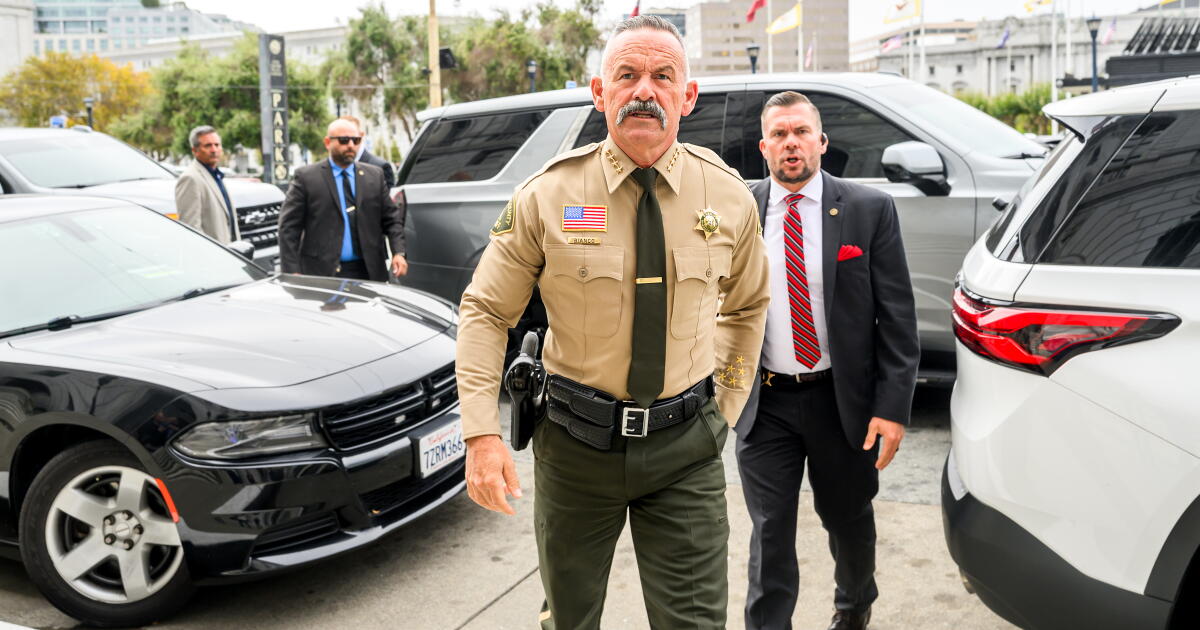
The California Supreme Court excoriated Riverside County Sheriff Chad Bianco over his seizure of hundreds of thousands of Proposition 50 ballots earlier this year, ordering the former gubernatorial candidate to immediately hand over all remaining material in a pair of scathing decisions on Thursday.

“We hold that the seizure of the ballots was unlawful,” wrote Chief Justice Patricia Guerrero. “While allegations of election improprieties are a very serious matter, our Elections Code contains numerous established mechanisms for investigating and proving misconduct that do not compromise the integrity of voted ballots — contrary to the means employed here.”

The ruling comes less than two weeks before Californians will start casting ballots in the race for governor and a handful of hotly contested congressional midterms — nationally watched elections that would be vulnerable to similar interference unless the court gave clear orders, advocates warned at oral arguments last month.

“It’s bound to be repeated again,” said Chad W. Dunn of the UCLA Voting Rights Project, which led the first of two election interference suits against Bianco, a popular MAGA personality and former Republican candidate for governor.

Bianco has long flirted with President Trump’s election fraud conspiracy movement. Though the ballot seizures in February were widely seen as a campaign stunt, the legal theory behind them — that local lawmen can commandeer voter materials from elections officials, and that sheriffs are unanswerable to officials who outrank them, including attorneys general — belongs to a larger “constitutional sheriffs” ideology.

California‘s seven Supreme Court justices appeared by turns perplexed by and incredulous of those theories during oral arguments last month.

“You are walking into a very dense thicket of very specific laws that govern elections in particular and I think it’s a very established cannon of interpretation that the specific trumps the general,” Justice Goodwin H. Liu said.

The ballot battle emerged from a Riverside County pilot program meant to boost voter confidence, a handwritten tally that ultimately fell about 46,000 votes short of the official count, sparking claims of fraud.

Riverside County Registrar of Voters Art Tinoco met with the county board of supervisors and the citizens’ group behind the claim and carefully explained how the discrepancy emerged. Yet, Bianco pursued warrants to seize more than 650,000 ballots, alleging they were evidence in an investigation of wide-ranging election fraud.

When he learned of the warrants, California Atty. Gen. Rob Bonta ordered Bianco to stand down. Instead, the sheriff accelerated his plans, dispatching armed deputies from Riverside County’s Special Investigations Bureau, Emergency Response Team and SWAT unit to sweep up the votes.

Later, Bianco directed his underlings to begin counting those ballots by hand — a potential felony under state law, which forbids anyone other than an election official from so much as touching a ballot container.

When Bonta again ordered him to stop, Bianco argued the attorney general had no authority to command him, later claiming in court that the law conferred only an “advise and consent” role.

In fact, California courts have spent more than a century delineating power between the state’s attorney general and local sheriffs and prosecutors. Voters took the matter a step further in 1934, endorsing a ballot initiative that clearly named the attorney general as California’s top law enforcement official, and put the state’s other lawmen beneath him.

In a footnote, justices also took a swipe at Bianco’s initial effort to have the case tossed for lack of standing — a move apparently undertaken on the legal advice of an elaborate artificial intelligence hallucination.

“In his preliminary briefing, Bianco challenged petitioners’ standing based on misquoted passages from, and an incorrect recitation of our holding in, Common Cause v. Board of Supervisors,” Guerrero wrote. “We disapprove of the improper use of artificial intelligence tools, which apparently contributed to the significant error that occurred here and remind counsel of attorneys’ professional duties of competence and candor to the court.”

Source link

‘What is sacred to you?’ This transgender Chicana artist invites guests to confess at Riverside Museum of Art

Inside the Universalist Unitarian Church of Riverside, a line of masked people filed into the red-lighted chapel, one by one, to take part in the rite of confession.

The private booth was framed in flowers, and rather than a priest listening inside, it was a microphone recording their confessions, to be played at an upcoming art exhibition. The brick triangle-roofed church that held the booth has stood since opening in 1892; that night, it was the site of a masquerade, or as Riverside artist Perry Picasshoe called it, the “Masqueerade.”

Picasshoe, whose real name is Neveah Marquez, hosted the event, which had an entirely LGBTQ+ guest list and one requirement: Bring a mask, whatever that looks like to you.

Marquez, a 26-year-old transgender woman robed entirely in red, stood at the pews and danced to the experimental electronic DJ sets and drag performances as guests entered in masks that ranged from papier-mâché deer antlers to collaged photos of eyes and lips.

The event came as a celebration ahead of the Riverside native’s first solo exhibition, “SagradX,” which will open Saturday at Riverside Art Museum and remain through Jan. 31.

The recorded confessions, layered over one another until they become an unintelligible cacophony, represent just one piece of the 25 paintings, photographs and interactive displays in the exhibition. The show explores the meaning of “sacred” as Marquez documents her most private places and experiences, and asks viewers to consider what they hold sacred.

The exhibition, she says, began with heartbreak.

Neveah Marquez (Perry Picasshoe), 26, stands inside the Riverside Art Museum where her exhibition SagradX will be held.

Neveah Marquez (Perry Picasshoe), 26, sits inside the Riverside Art Museum.

(Carlin Stiehl / For De Los)

“The first time I started thinking about sacredness … was when my ex-partner brought somebody into our bed,” said Marquez.

“I was crying, distraught, and drove over to these hills over Lake Mathews [in Riverside] and I realized: The bedroom was sacred to me. That’s why it hurt so much. And I started thinking, if it wasn’t sacred to them, how do we decide what is sacred to each of us?”

The very headboard of that bed sits in the exhibition; on it, Marquez painted fairy-tale creatures representing the lovers gallivanting across the woods.

While Marquez’s experience with betrayal sparked the idea, the exhibition explores sanctity in many different scenarios: In one, the artist plays with the concept of the digital safe space by inviting guests to look through her phone as she is tied on a handmade iron-wrought cross. Inside the exhibition space, she uses a small painter’s brush to slowly paint the white walls red over the course of the show.

In curating the exhibition, Marquez began to look inward, painting and photographing herself in ways she never had before: through the lens of femininity. She lived the previous 26 years of her life as a man, growing up religious to the point that she once considered becoming a priest. The paintings serve as portals into a part of her that she long held inside.

“I describe it like having blurry vision your whole life and not realizing how clearly you can see, until you put glasses on,” Marquez said. “That’s how painting myself as a woman felt.”

Neveah Marquez (Perry Picasshoe), 26, stands inside the Riverside Art Museum where her exhibition SagradX will be held.

Neveah Marquez (Perry Picasshoe) considers what is sacred.

(Carlin Stiehl / For De Los)

Though she initially identified with her male birth name, the more she painted herself in Venus-like, feminine poses and with longer hair, her understanding of her identity shifted. Illuminated by her signature scarlet red clothing and tastefully shrouded in sheets, the soft expression on her face was inspired by Raphael’s “La Fornarina.”

“I wasn’t thinking much of it in the moment, but as I kept painting these portraits, I was thinking a lot about myself and thinking about gender and my identity,” Marquez said. “Through my art process, I realized: ‘Maybe I would be a pretty woman.’ That’s what scared me the most from transitioning, was not feeling like I would be beautiful enough.”

In “SagradX,” Marquez’s body is documented vulnerably; easing into her own identity becoming a painfully honest artistic process, which the audience is now invited to watch.

“I feel like I don’t paint very often because when I do, it’s just so emotionally intense. Like when Olivia Rodrigo wrote that she’s scared of her guitar because she couldn’t lie to it, that’s how I feel about painting,” Marquez said. “I can’t lie to my painting.”

Neveah Marquez (Perry Picasshoe), 26, stands inside the Riverside Art Museum where her exhibition SagradX will be held.

Neveah Marquez (Perry Picasshoe) wears long, flowing red clothes.

(Carlin Stiehl / For De Los)

Aside from her self-portraits, Marquez includes photographs of her ice blocks project, in which she placed 25-pound blocks where immigration enforcement raids took place in the Inland Empire last year. These were once safe places that she says have been “desecrated with fear.”

Marquez’s personal journal, which documented her inner joys and struggles over the last year, is also open on a table in the exhibition for guests to read through, draw over, or tear. For Marquez, “SagradX” was the catalyst to “let everything out.”

“If the show is about vulnerability, I need to practice that for myself as well. Otherwise, you would see in the work that there’s a blockage, you can sense when artists aren’t fully honest,” Marquez said. “I want people to question, ‘What is sacred to you?’ If I give you access to something sacred to me, what will you do with that?”


Source link