risky

Foreign Office’s latest ‘do not travel’ list warns 14 countries are too risky to visit

The Foreign, Commonwealth and Development Office (FCDO) has been refreshing its travel advice for nations across the globe amid ongoing conflict in the Middle East, continuing to wreak havoc on international movement.

Beyond severely disrupting travel plans, the ongoing crisis is set to have far-reaching consequences for inflation, interest rates and commodity markets. British citizens have already been airlifted from Oman, the United Arab Emirates, and neighbouring regions, with Whitehall organising charter flights to repatriate nationals safely.

Those most at risk will receive priority booking on these evacuation flights, with the Foreign Office pledging to reach out to anyone who has registered their whereabouts in the affected zone, reports the Liverpool Echo.

In its guidance covering numerous Middle Eastern nations, the Foreign Office said: “Regional escalation poses significant security risks and has led to travel disruption. Stay away from areas around security or military facilities. Follow the instructions of the local authorities and monitor local and international media for the latest information.”

The advice went on: “If local authorities advise you to take shelter, stay indoors or move to the nearest safe building immediately. The greatest risk is from falling debris caused by intercepts, and you are safest inside a secure structure.

“Choose an interior stairwell or a room with as few external walls or windows as possible for additional protection.”

Political strife, natural calamities and safety issues are among the factors leading the UK Foreign Office to advise Brits against travelling to certain locations.

Afghanistan

Travel to Afghanistan is strongly discouraged. The security climate is unpredictable, with previous tensions between Afghanistan and Pakistan resulting in violent skirmishes in border areas.

Travelling across Afghanistan poses extreme risks, and several border crossings are currently closed.

The likelihood of British nationals being detained in Afghanistan is significantly high. If you’re a Brit and find yourself detained in Afghanistan, you could be looking at a lengthy prison sentence spanning months or even years.

The FCDO’s capacity to assist you is severely restricted, and in-person support in Afghanistan is not feasible.

Belarus

The FCDO strongly advises against all travel to Belarus. If you’ve ever participated in activities now deemed illegal by the Belarusian regime, you run a substantial risk of arrest.

There’s also a minor risk that direct conflict related to the war in Ukraine could spill over into Belarus.

In the unlikely event of conflict breaking out, the FCDO’s ability to aid British nationals will be drastically limited. Ignoring advice from the FCDO could invalidate your travel insurance.

Burkina Faso

The FCDO advises against all travel to Burkina Faso due to the threat of terrorist attacks and kidnappings, coupled with the country’s unstable political situation.

There is no British Embassy in Burkina Faso and all consular support is provided from the British Embassy in Accra, Ghana. They cannot provide in-person assistance.

If there is serious violence, unrest or a deterioration in the security situation, it could be difficult to leave safely.

Haiti

The FCDO advises against all travel to Haiti owing to the unstable security situation. There are currently no British consular officials in Haiti and its ability to provide consular assistance is severely limited and cannot be delivered in person in Haiti.

If you choose to travel to or remain in Haiti against FCDO advice, attempt to avoid all crowds and public events, and take appropriate security precautions.

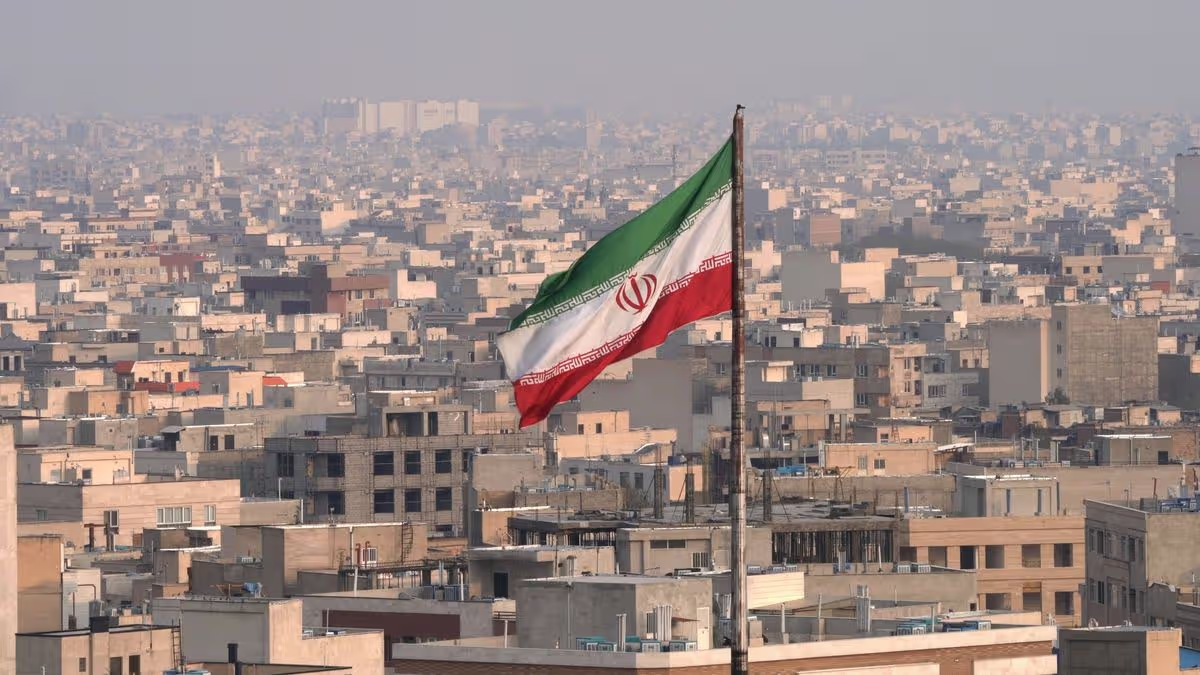
Iran

The FCDO advises against all travel to Iran. If you are a British national already in Iran, either resident or visitor, the Foreign Office said: “carefully consider your presence there and the risks you take by staying”.

British and British-Iranian dual nationals face significant risk of arrest, questioning or detention. Possessing a British passport or links to the UK can be reason enough for the Iranian authorities to detain you.

Iraq

The FCDO advises against all travel to Federal Iraq and the Kurdistan Region of Iraq. This is due to recent escalation in regional conflict.

There is significant risk of further escalation, and events are fast-moving and unpredictable. The Foreign Office said: “Regional escalation poses significant security risks and has led to travel disruption. The border crossing from Iraq into Kuwait is closed.

“British nationals wishing to cross into Kuwait must contact the British Embassy in Kuwait 24 hours in advance. The British Embassy will share names and passport details with the Ministry of Foreign Affairs who will determine entry.”

Israel

The FCDO advises against all travel to Israel and Palestine: “Regional escalation poses significant security risks and has led to travel disruption. Stay away from areas around security or military facilities.”

Britons should inform the UK government of their presence in Israel, and register if they’re in the region for ongoing updates. You should adhere to instructions from local authorities and keep abreast of local and international media for the most current information.

Mali

The FCDO advises against all travel to Mali in its entirety owing to volatile security conditions. If you’re currently in Mali, you should depart “immediately” via commercial flight if you deem it safe to do so.

“The international airport in Bamako is open, and commercial flights are available. Do not try to leave Mali by overland routes to neighbouring countries as this is too dangerous. This is due to terrorist attacks along national highways.”

There remains a significant threat of abduction and criminal behaviour throughout Mali, including within the capital city of Bamako.

The Foreign Office warned: “If you choose to remain in Mali, you do so at your own risk. You should have a personal emergency plan that does not rely on the UK government.”

Niger

The FCDO advises against all travel to Niger. Officials said: “This is due to the rise of reported terrorist and criminal kidnappings of foreign nationals which have taken place this year in Niger. There is an ongoing risk of terrorist attacks throughout Niger including in the capital, Niamey.”

Support for British nationals is extremely limited in Niger. Assistance is delivered remotely from the British Deputy High Commission in Lagos.

Face-to-face help is unavailable. Should serious violence, civil unrest or a worsening security situation occur, departing safely could prove challenging.

Palestine

The FCDO advises against all travel to Israel and Palestine. UK citizens currently in the region should inform the Government of their whereabouts in Palestine and register their presence to receive ongoing updates.

Should you determine it’s safe to proceed and intend to use commercial departure options, verify the latest information from your airline or tour operator, alongside guidance from local authorities and the status of border crossings prior to travelling.

The Foreign Office cautioned: “The situation could escalate quickly and poses significant risks. Regional tensions may cause international borders (air and land) to close.”

Russia

The FCDO warns against all travel to Russia owing to the dangers and threats stemming from its ongoing invasion of Ukraine, including security incidents such as drone strikes and Russian air defence operations, a shortage of flights back to the UK, and restricted capacity for the UK government to offer assistance.

The Foreign Office said: “There is an increased risk of British nationals being detained in Russia, including if the Russian authorities suspect you of engaging in or supporting activities against Russian law, even if activities took place outside Russia.”

South Sudan

The FCDO warns against all travel to South Sudan due to the threat of armed violence and criminal activity.

“The political and security situation remains unpredictable. Political tensions are high and the security situation across the country could deteriorate rapidly and unpredictably.

“If the unstable security situation deteriorates, routes into and out of South Sudan may be blocked. Juba airport may close or be inaccessible. Flights may be cancelled at short notice.”

Syria

The FCDO warns against all travel to Syria owing to volatile security conditions and the risk of terrorist attacks. Consular support is unavailable from the British government within Syria.

The FCDO may learn of assistance offered by other organisations which can be shared with British nationals. Should you require help, contact the FCDO in London on +44 (0)20 7008 5000.

Yemen

The FCDO warns against all travel to Yemen in its entirety owing to unpredictable security conditions. The guidance states: “If you’re in Yemen, you should leave immediately.”

Assistance for British nationals is extremely restricted in Yemen. The British Embassy in Sana’a has suspended operations, with all diplomatic and consular personnel evacuated.

The UK government is unable to assist British citizens departing Yemen. No evacuation arrangements are currently in place.

Should you decide to stay in Yemen, you ought to keep movement around the country and within urban areas to a minimum, stay informed about changes in the local security landscape and observe other safety measures.
Source link

Commando Raid To Secure Iran’s Enriched Uranium May Become A Very Risky Necessity

U.S. and Israeli authorities have reportedly been considering a special operations ground raid to extract or otherwise neutralize Iran’s stockpile of enriched uranium. TWZ previously explored this exact scenario, given that this nuclear material is understood to be stored in deep underground bunkers, presenting challenges for attempting to achieve this objective from the air alone. U.S. and Israeli special operations forces have actively trained for these kinds of missions for decades, and Israel has demonstrated its ability and willingness to carry out complex raids on subterranean facilities, but any such operation would still face immense risks and uncertainties.

Multiple outlets have now reported on deliberations within the U.S. and Israeli governments over a ground raid targeting Iran’s enriched uranium stocks this past weekend, citing unnamed sources. It is unclear whether the mission being considered would be carried out by U.S. or Israeli forces, or be conducted jointly by both parties.

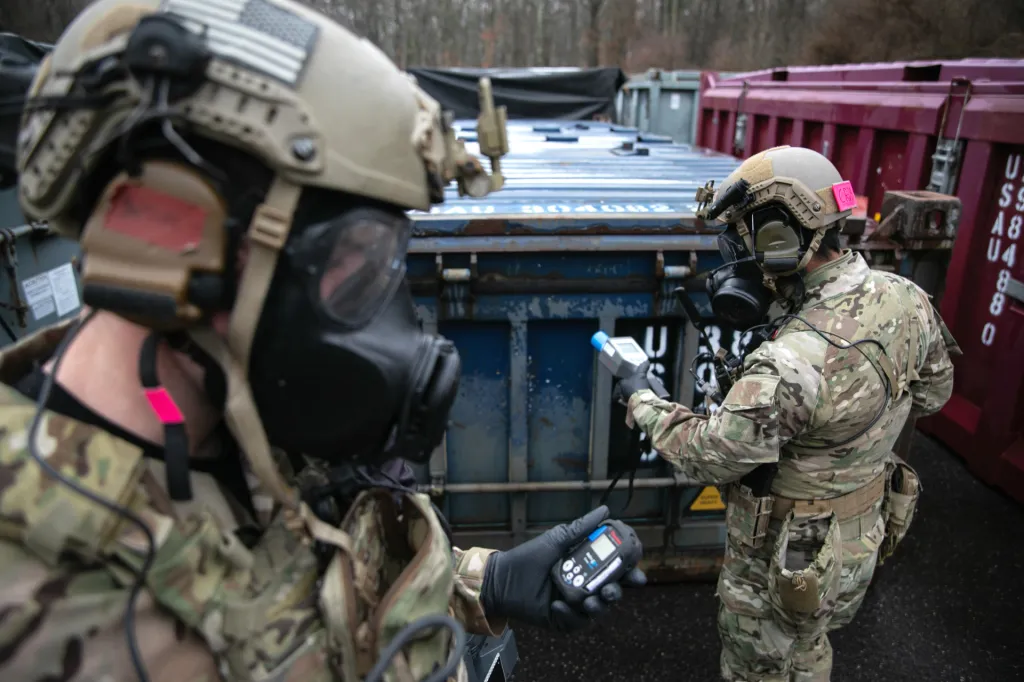
Members of the US Army seen using nuclear material detection tools during an exercise. US Army

“People are going to have to go and get it,” Secretary of State and acting National Security Advisor Marco Rubio said at a congressional briefing back on March 3 in response to a question about securing Iran’s enriched uranium, according to a report from Axios on Saturday.

“We’re going to find out about that. We haven’t talked about it, but it was a total obliteration. They haven’t been able to get to it. And at some point, maybe we will,” President Donald Trump also told reporters on Air Force One on Saturday. “You know, that’d be a great thing, but right now we’re just decimating them. We haven’t gone after it, but it’s something we can do later on. We wouldn’t do it now. Maybe we’d do it later.”

Reporter: Mr. President, don’t you need ground troops to secure the enriched uranium at the nuclear sites?

Trump: We’re going to find out about that. We haven’t talked about it, but it was a total obliteration. They haven’t been able to get to it. And at some point, maybe we… pic.twitter.com/f9LR6BzIdn

— Acyn (@Acyn) March 7, 2026

NBC News reported last week that President Trump had “privately expressed serious interest” in sending “a small contingent of U.S. troops that would be used for specific strategic purposes” into Iran.

The U.S. government says that preventing Iran from developing a nuclear weapon is a core goal of its current operations targeting the country. If the Iranian government were to collapse, and do so suddenly, there would be additional concerns about the proliferation of the country’s nuclear material, including to regional proxies and terrorist groups, as well as other potential buyers on the black market.

What we know about Iran’s enriched uranium stockpile

By its last firm estimate, as of June 2025, the International Atomic Energy Agency (IAEA) assessed that Iran had just over 972 pounds (just under 441 kilograms) of uranium enriched to 60 percent purity. This stockpile has long been a proliferation concern and evidence of Iranian authorities maintaining the option of rapidly pursuing a nuclear weapon even in the absence of an active development program.

It is understood to be a relatively quick process, in technical terms, to get uranium from 60 percent to 90 percent purity, at which point it is considered highly enriched or weapons-grade. Per the IAEA, 92.5 pounds of 60 percent uranium is sufficient to be enriched into enough 90 percent material for one nuclear bomb. Using this metric, Iran’s declared stockpile of enriched uranium is enough for at least 10 bombs.

“In that first meeting, both of the Iranian negotiators said to us directly, with no shame, that they controlled 460 kilograms of 60 percent, and they were aware that that could make 11 nuclear bombs,” Steve Witkoff, U.S. Special Envoy to the Middle East, who had been leading talks with Iranian officials head of the current conflict, said in an interview with Fox News’ Sean Hannity on March 2. “They have 10,000, roughly, kilograms of fissionable material. That’s broken up into roughly 460 kilograms of 60 percent enriched uranium, another thousand kilograms of 20 percent enriched uranium, and the balance is at 3.67 [percent purity].” 

Steve Witkoff, U.S. Special Envoy to the Middle East, at left, shakes hands with Israeli Prime Minister Benjamin Netanyahu at the White House in 2025. White House

Uranium that is not pure enough for a nuclear weapon could still be fashioned into a so-called ‘dirty bomb’ designed just to spread radioactive contamination across an area. Even if the immediate impacts of the detonation of such a device are minimal, it could cause widespread panic and would require significant effort to clean up. This is a threat that has also often been associated with non-state actors in the past.

Iran’s underground nuclear site at Isfahan has long been understood to be the primary storehouse for its stockpile of enriched uranium. That facility was among those targeted in U.S. strikes last June, dubbed Operation Midnight Hammer. Though access to any uranium there was subsequently curtailed, the U.S. Intelligence Community has more recently assessed that Iranian authorities have regained entry, at least to a degree, according to a report from The New York Times over the weekend.

As an aside, in the weeks leading up to the current conflict, satellite imagery showed Iran taking steps to seal off Isfahan, as well as other key facilities, which would help hamper any potential ground raids. TWZ highlighted similar activity at Iranian nuclear sites ahead of Operation Midnight Hammer.

NEW: High resolution satellite imagery taken yesterday shows the extent to which Iran has covered the tunnel entrances at the Esfahan nuclear complex with soil. The middle and southern entrances are unrecognizable and fully covered in soil. The northernmost tunnel entrance which… pic.twitter.com/baYI2zCuN0

— Inst for Science (@TheGoodISIS) February 9, 2026

NEW: Satellite imagery of the Esfahan nuclear site taken today shows new activity at the tunnel entrances. As of today, Iran has re-buried the middle entrance with soil and is adding more fresh soil to the southernmost entrance. The northernmost entrance, which was reworked after… pic.twitter.com/7ujiku8VRg

— Inst for Science (@TheGoodISIS) January 29, 2026

There are lingering questions about the degree to which Iran may have dispersed its enriched uranium beyond Isfahan. The day before the current conflict erupted, the AP reported that the IAEA had been circulating a report saying that it could not “verify whether Iran has suspended all enrichment-related activities” or the “size of Iran’s uranium stockpile at the affected nuclear facilities,” and was unable to “provide any information on the current size, composition or whereabouts of the stockpile of enriched uranium in Iran.”

“Publicly, U.S. officials have projected confidence that they know where the uranium is stored. Privately, there is said to be less certainty,” according to a report from Bloomberg today.

Options for a ground raid

In terms of the specifics of how a ground raid would neutralize Iran’s enriched uranium stockpile, multiple options are reportedly being considered.

“The first question is, where is it? The second question is, how do we get to it and how do we get physical control?” a U.S. official said, according to Axios. “And then, it would be a decision of the president and the Department of War, CIA, as to whether we wanted to physically transport it or dilute it on premises.”

“The mission would likely involve special operators alongside scientists, possibly from the International Atomic Energy Agency (IAEA),” Axios‘ report added.

U.S. Army soldiers with the 128th Chemical Company, 337th Engineer Battalion, conduct site reconnaissance in an underground tunnel during the Engineer Thunder 2025 exercise in Lithuania. US Army/Pfc. Gabriel Martinez

TWZ had outlined exactly these possibilities when discussing the prospect of a ground raid targeting Iran’s nuclear program, and one potentially involving U.S. forces, in the midst of last year’s 12 Day War. As we wrote at that time:

“U.S. special operations units are ideally suited to rapidly and discreetly infiltrate into a target area to extract items of interest from an objective like a nuclear facility in Iran. If the items in question are too large to be moved by the special operations force, depending on what they are, they could then be destroyed in place or secured until a larger follow-on force arrives. Conventional supporting forces and interagency elements offering unique capabilities could accompany special operations forces on initial raids, as well.”

“Special operations forces are also well-positioned to help intercept high-value targets on the move, including nuclear material that might make its way out of Iran, or threaten to do so, as the conflict with Israel continues. This could potentially include operations on land or at sea.”

U.S. special operations forces, especially so-called “tier one” units like the U.S. Army’s Delta Force and the U.S. Navy’s SEAL Team Six, train regularly to conduct exercises centering on counter-weapons of mass destruction (WMD) scenarios and others involving chemical, biological, nuclear, and radiological hazards. U.S. Special Operations Command (SOCOM) was formally designated the lead entity for the Counter Weapons of Mass Destruction (CWMD) mission set in 2016. An array of specialized conventional U.S. military units, as well as personnel from other ends of the U.S. government, such as the Department of Energy, are also expected to take part in these operations and are often integrated directly into relevant training events alongside special operations elements. You can read more about all of this here.

Members of the US Army’s Nuclear Disarmament Team 1 (NDT 1), a conventional unit specializing in neutralizing nuclear and radiological threats, seen in the control room of a nuclear power plant during an exercise that also involved Green Berets. US Army

Israel has its own long history of spectacular air and ground raids, as well as covert or clandestine intelligence operations, which have often targeted nuclear programs in hostile countries, especially in Iran. Operations of this kind have also been launched against conventional weapons capabilities deemed to present particular threats.

As one particularly spectacular example, in 2024, Israeli forces destroyed an underground ballistic missile factory in Syria, which had been built with Iranian assistance. The raiding party was on the ground for approximately two and a half hours, during which time 660 pounds of explosives were rigged throughout the site. “A planetary mixer, numerous weapons, and intelligence documents,” were also extracted, according to the Israel Defense Forces (IDF). TWZ noted at the time that this operation sent a clear signal to Iran that its underground facilities were not untouchable.

100 Shaldag soldiers raid and dismantle Syrian missile factory in secret operation


There is the potential that Israel might have launched ground raids against Iran’s nuclear sites at Fordow, Natanz, and/or Isfahan unilaterally last year if the U.S. military had not conducted Operation Midnight Hammer. There would have been few, if any other options for Israel to have gone after those underground facilities. This, in turn, raises the possibility that Israeli forces may have prepared more explicitly to execute these operations just in the past year.

Risk and complexities

Executing any special operations raid targeting Iran’s stockpile of enriched uranium, wherever it might be held, would not be without immense challenges.

For one, there are real questions about what it would take to move nearly 1,000 pounds of enriched uranium out of Iran, even if it is largely located at one site. The material would be even heavier and bulkier when taking into account the secure containers it is likely to be stored in.

Similar questions have been raised about the feasibility of neutralizing the stockpile in place if it is determined to be impractical to move it. Experts and observers have highlighted the immense time and resources that would be required to try to dilute the purity of any nuclear material on-site, processes that typically require industrial machinery under normal conditions.

A picture showing work within a processing unit at the Isfahan Uranium Conversion Facility in Iran back in 2005. Getty Images / Stringer

Unlike conventional weapons, or even other key aspects of Iran’s nuclear program, like centrifuges, fissile material cannot simply be blown up to destroy it in place, either.

Having to carry out any such operation, however long it might take, in an active conflict zone and likely under enemy fire, would only add to the complexities of a ground raid. As already noted, Iran looks to have taken steps to physically hamper access to Isfahan and other sites, adding to the time it would take friendly forces to gain entry to their objectives in the first place. Heavy machinery could be required to dig into these facilities.

The longer friendly forces are on the ground, the more time Iran has to put together a response. Airpower can help keep hostile forces at bay, but Iranian security forces could eventually muster significant firepower, including artillery. Keeping nuclear facilities safe from attack has been a top priority for the regime in Tehran, and Iranian security forces will have reaction plans in place.

There is also simply the matter of getting the raiding force to and from the objective. As has been established, we are talking about what would have to be a relatively large contingent, burdened with specialized equipment, along with a typical array of weaponry and other gear.

Members of the US Army and South Korean Army in chemical, biological, nuclear, and radiological protective gear seen during a training exercise in a mock underground facility. US Army

The U.S. military, specifically, has a very complicated relationship with these kinds of operations, dating back to the failed attempt to rescue hostages being held in the American embassy in Tehran following the revolution that put the current Iranian regime into power in the first place. That operation exposed deficiencies that did lead to the development of new capabilities, as well as tactics, techniques, and procedures, and continues to be a key case study in special operations planning today.

We did get to see a demonstration of the U.S. military’s current capability and capacity to launch a major special operations raid in January with Operation Absolute Resolve, which resulted in the capture of Venezuelan dictator Nicolas Maduro from the middle of a fortress-like military facility. At the same time, it also showed the immense resources required to ensure the success of a mission like that, with hundreds of aircraft, ships offshore, and an array of other assets involved. The main raiding force consisted of 200 special operators. You can read more about what is known about the extensive preparations for the mission, including having forces specifically poised to destroy three airfields if it looked like Venezuelan Air Force fighters were attempting to scramble, here.

In addition, the Venezuela operation had the benefit of surprise, rather than coming in the middle of already ongoing major combat operations against an enemy that says it is actively prepared to respond to any kind of ground incursion. Iran’s military capabilities and overall capacity have been seriously degraded by U.S. and Israeli strikes in the past week, but significant threats remain, as TWZ regularly stresses.

A satellite image showing Fort Tiuna (Fuerte Tiuna) and the surrounding area in Venezuela’s capital Caracas following Operation Absolute Resolve on January 3, 2026. Satellite image ©2026 Vantor

Even under the most optimal conditions, launching a major special operations raid into Iran amid the ongoing hostilities would be extremely risky.

A question of timing and alternatives

Axios‘ report notably said a special operations raid against Iran’s enriched uranium stockpile “would likely only take place after both countries [the United States and Israel] are confident Iran’s military can no longer mount a serious threat to the forces involved.” This would also align with President Trump’s comments on Saturday.

However, other factors could still influence that decision-making process. As has been made clear, there are already serious questions about where all of Iran’s enriched uranium may be hidden away now. This is compounded by the reports that the Iranians may have regained access to where material was being stored in Isfahan, which could then allow them to move it elsewhere.

Even if persistent surveillance gives a good sense of where the material is being moved, dispersal can only increase the total number of sites that would have to be secured. It would also reduce any guarantees of neutralizing even the majority of the stockpile in one fell swoop.

Members of the US Army’s 75th Ranger Regiment and conventional supporting forces seen during a training exercise in 2024 involving a mock raid on a nuclear facility. US Army

As mentioned earlier, interdicting nuclear shipments on the move would still require a ground force of some kind to secure the material. Simply kinetically targeting vehicles carrying enriched uranium from the air would not be sufficient and would risk scattering nuclear material in an uncontrolled manner, making such a strike an absolute last resort option.

As pointed out earlier, there could also be a concern that regional proxies, terrorists, or other third parties might attempt to exploit the current conflict to spirit away a portion of Iran’s stockpile from Isfahan or sites for their own nefarious uses. This, in turn, could further drive a demand for action to secure that material on a timetable that does not allow for waiting for ideal conditions to emerge.

In the meantime, the United States and Israel could seek to carry out new strikes to try to seal entrances to underground facilities at Isfahan and other locations. Strikes last week on Iran’s nuclear site at Natanz look to have been intended to do just this. Those sites could then be surveilled to watch for any further attempts on the part of the Iranians to dig them out. Additional action, including more strikes or launching a ground raid, could then be taken, as necessary.

We have prepared an overview slide summarizing the visible damage at the Natanz uranium enrichment site from the recent attack, pulling together multiple images showing before and after satellite images of the two personnel entrances and the sole vehicle entrance with comparable… pic.twitter.com/mMGvOyHgkQ

— Inst for Science (@TheGoodISIS) March 3, 2026

On top of everything else, not being able to definitely find, fix, and secure Iran’s stockpile of enriched uranium would make it difficult for the U.S. government to say it has achieved its core objective of preventing the country from building a nuclear weapon. Inversely, doing so could be seen as essential, especially by the Trump administration, for creating the conditions necessary to end the current conflict.

Altogether, it remains to be seen whether or not the United States and Israel decide that mounting a major special operation targeting Iran’s enriched uranium outweighs the risks.

Contact the author: joe@twz.com

Joseph has been a member of The War Zone team since early 2017. Prior to that, he was an Associate Editor at War Is Boring, and his byline has appeared in other publications, including Small Arms Review, Small Arms Defense Journal, Reuters, We Are the Mighty, and Task & Purpose.


Source link

Gore on ‘Letterman’? It’s No Joke : Media: Although he gets off his share of quips, the vice president has a policy aim. Some analysts consider it a risky strategy.

Politicians going on entertainment shows is hardly new, but Vice President Al Gore’s appearance on “Late Show With David Letterman” Wednesday took the use of popular culture further than before.

Politicians, classically, have used popular culture programs two ways: First, to repair and humanize their image, as Richard Nixon did playing the piano on the Jack Paar show in 1960 or appearing on “Laugh-In” in 1968, or as Bob Dole recently did appearing with Jay Leno on “The Tonight Show” to tell self-deprecating jokes and demonstrate that he is more than just a mean guy.

Second, politicians have used popular culture to reach out to new audiences, as President Clinton did during the campaign last year, appearing on Arsenio Hall’s show and on MTV.

“The important thing about going on MTV was not what he said, but the fact that he was there, reaching out to young people on their channel, welcoming them into the process,” Clinton media adviser Mandy Grunwald explained.

Gore’s appearance on Letterman’s new CBS show was slightly different. He did crack jokes with Letterman about his stiff image and the job of being vice president–even reading his own Top 10 list of good things about the office, including “After they sign a bill, there’s a lot of free pens.” But the vice president actually wanted to build support for a substantive public policy, his plan for reinventing government.

He demonstrated the government’s method of safety-testing an ash tray, or “ash receiver, tobacco (desk type).” Gore and Letterman donned safety goggles and smashed the ash tray with a hammer on a U.S.-mandated maple plank.

“This is a step beyond the talk shows,” or playing the saxophone in dark sunglasses, said Kathleen Hall Jamieson, the dean of the Annenberg School of Communications at the University of Pennsylvania.

And that made it risky too.

In effect, the Clinton Administration “has embraced popular culture as part of a general strategy, to use it to get their message out,” said Robert Lichter, director of the Center for Media and Public Affairs, a research group in Washington that studies TV.

“The danger is you can be used up by popular culture,” since the entertainment world does not operate by the same rules as the world of politics and journalism.

Politicians cannot demand equal time. And a politician with real power can look foolish tangling with an entertainer.

Vice President Dan Quayle discovered the risks after he criticized the fictional TV character Murphy Brown for her decision to have a child out of wedlock.

Not only did “Murphy Brown’s” producers retaliate with a program that denounced Quayle’s ideas in a way that was unadorned and quite serious political rhetoric, but the 1992 Emmy Awards show was converted into a diatribe against Quayle and the Republican Party for its criticism of Hollywood’s values.

According to Lichter’s Center, which monitors political humor on late-night shows, Leno, Letterman et al. are more focused on politics than ever.

In his first six months in office, Clinton has been the brunt of nearly 400 late-night jokes. George Bush, after six months, had been the brunt of about 60.

Gore, meanwhile, has been the brunt of as many jokes as Quayle was in his first six months as the First Sidekick.

“Let me give you an idea of just how boring our new vice president is,” Letterman had said of Gore on an earlier night. “Al Gore’s Secret Service code name is Al Gore.”

Source link