
retro

The ‘retro futuristic’ seaside town in Europe with pyramid-like buildings and miles of golden beaches

FORGET Victorian arcades or historic promenades – a seaside resort in Europe looks more like something from the future.

La Grande-Motte is a popular holiday destination with French locals.

La Grande-Motte in the south of France is a pretty seaside resort Source: Alamy
The resort was built back in the 1960s Source: Alamy

The purpose-built seaside resort is futuristic-looking with unusual modernist buildings that look more like pyramids – in fact one is called The Great Pyramid.

It was designed by French architect Jean Balladur and constructed throughout the 1960s and 70s.

It’s considered one of Europe’s greenest resort towns, with more than 70 per cent of its area made up of trees, parks and gardens.

The triangular- shaped buildings which are a landmark of the resort are mostly residential now.

HAPPY HOLLY-DAYS

The 8 UK holiday parks opening for Christmas this year with £6.62pp stays


STAY CHEAP

Bargains at Butlins & manor stays… incredible value UK hols from £2.50pp a night

But the area in Occitanie itself welcomes around two million tourists each year thanks to there being plenty to do.

During the summer, most visitors will flock to its coastline and La Grande-Motte has four miles of sandy beaches.

One that families will like is Plage du Point Zéro which is in the centre of the resort right by the 1960s modernist pyramid buildings.

Plage du Grand Travers is best for those looking for a more wild beach, it has sand but is backed by pine trees.

The huge 280-hectare lake called Étang du Ponant is ideal for water sports like water skiing, stand-up paddleboarding, jet skiing, parasailing and tubing.

There’s a large marina filled with sailboats, yachts and lined with pretty cafes, ice cream parlours and shops.

The designs have been called retro futuristic Source: Alamy
The purpose built La Grande-Motte has pyramid-shaped buildings on the waterfront Source: Alamy

For those wanting to take to the water, catamaran cruises and coastal sailing trips can travel across to the Bay of Camargue.

The Camargue wetlands are known for their flamingos, white horses, and black bulls.

There’s a waterpark too called Espace Grand Bleu with both indoor and outdoor pools.

If the kids need entertaining, head to Ponant Aventure Park with a Tree-Top adventure course, zip-lining, play trails and playground.

The Camargue Wetlands are known for their flamingos and white horses Source: Alamy
The closest airport in in the city of Montpellier Source: Alamy

At the seaside town are plenty of places to stay from five-star hotels, to family-friendly resorts and campsites.

One of the hotels called Hôtel Mercure La Grande Motte Port and rates start from £81.

Or the Golf Hotel from £89 which has an outdoor swimming pool, two hot tubs and a garden.

If camping is what you’d rather do then check out Maïana Resort Eurocamp with everything from swimming pools to kids clubs.

For seven-nights, this starts from £356.02 per party or £8.48pppn.

The easiest way for Brits to get to La Grande-Motte is to fly to Montpellier which can be done in less than two hours.

Fom there it’s a 40-minute drive to La Grande-Motte.


Source link

‘Retro ChatGPT’: How poet Brian Sonia-Wallace brings poetry to LAX

On a Wednesday morning in Terminal 1 at LAX, traveler Nikki Hexum found herself in tears. Crying, on its face, is not an unusual occurrence at LAX. The notorious airport is a tender spot for Angelenos and tourists. Nearby, a displeased lawyer squabbles about a case into his phone. Flight attendants whisk by in pressed uniforms. A delay is announced over a speaker.

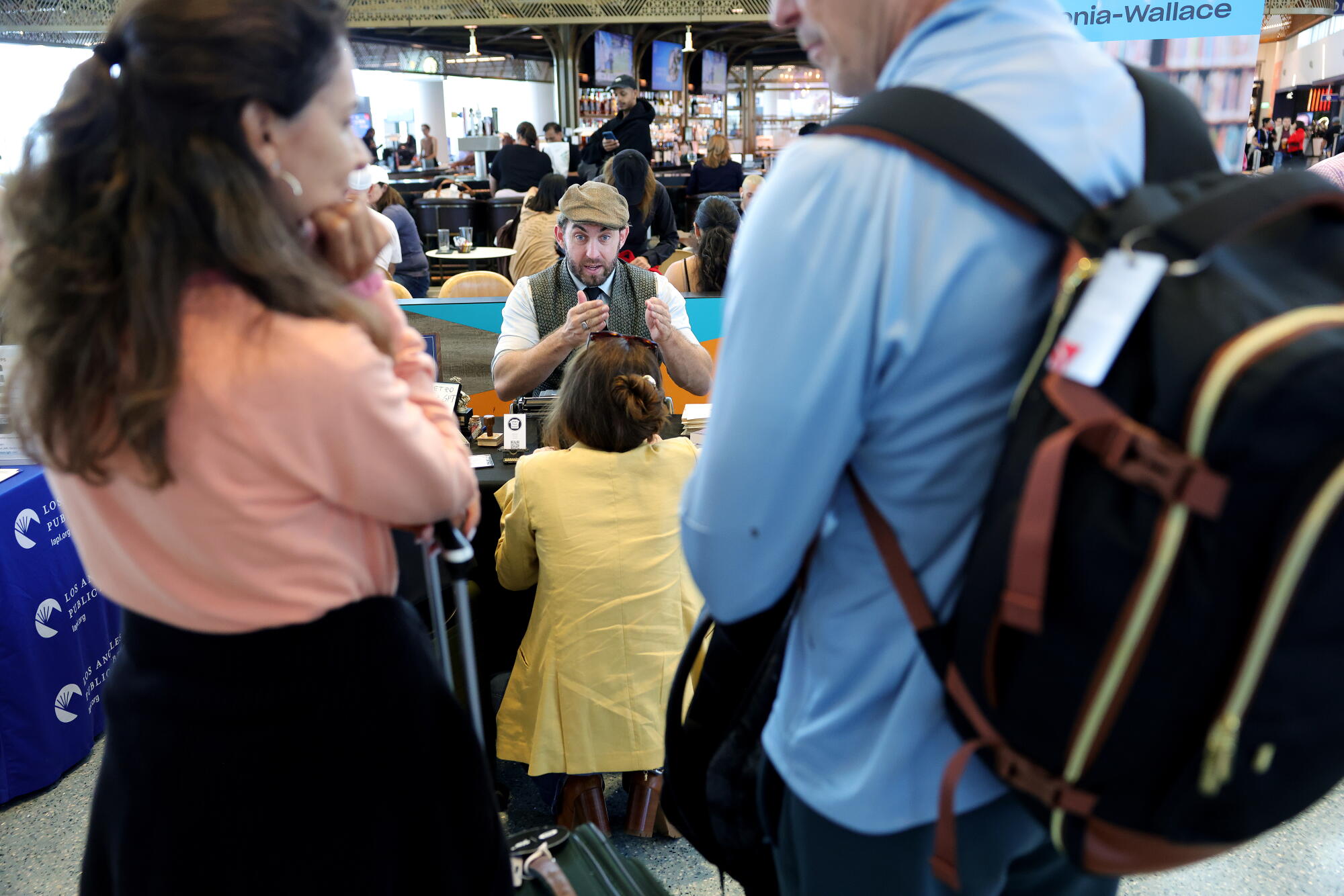
Today, an unexpected brush with poetry brought Hexum to tears. She was about to board a flight to Nashville, where she would discuss AI regulation at a film festival for her job, when she stumbled upon Brian Sonia-Wallace, the poet laureate of Los Angeles, sitting at a 1940s-model Underwood typewriter writing custom poems for passing travelers. As Hexum told him about her trip, he began to type, the clacking of the keys echoing through the terminal. When he finished, he read the poem aloud. Hexum’s eyes began to well.

“I sat in something where there was discomfort, but at the end of it, it became something amazing,” Hexum says. The encounter affirmed something for Hexum: the importance of spontaneous human interactions in a world where communication is increasingly relegated to AI. “I think we lost that ability to do that a lot,” she says as she wipes her eyes.

Hexum was one of dozens of travelers who received a custom poem from Sonia-Wallace as they waited to board their flights. Some were traveling to funerals, weddings and family reunions that the poet laureate commemorated in a poem written in minutes. Even flight attendants confided in Sonia-Wallace about their love of travel, which he honored in a poem. Soon, a line of eager travelers began to form.

The poet laureate Brian Sonia-Wallace, center, chats with traveler Nikki Hexum.

Poet Brian Sonia-Wallace, center, chats with a traveler as others wait their turn for their own personalized poem in Terminal 1 at LAX.

“We had a couple of criers today,” says Sonia-Wallace. “There’s something about the typewriter and poetry that brings out the best in people.” On the table beside the typewriter, a placard reads: “Retro Chat GPT.” Behind the poet, a banner reads: “Everyone deserves a poem.”

Traveler Silvia Portillo was waiting to board a flight to Colorado. She was heading to her hometown of Glenwood Springs, Colo., to attend her sister’s wedding when she encountered Sonia-Wallace and his typewriter. She asked for a poem dedicated to her sister’s wedding, which she plans to present on the big day. “I thought it would be really cool if he made a personalized one for her, a little extra wedding gift,” Portillo says.

Waiting for a delayed flight, traveler Cassie Feldman tells the poet that she’s looking to shed old patterns before boarding a flight to St. Louis for a family gathering. He begins to read her the poem: “We gather with our old new selves.”

Feldman is delighted. “It was really cool,” she says. “It was an experience you don’t really get, especially at the airport.”

Los Angeles Poet Laureate Brian Sonia-Wallace dubs his pop-up poetry project as "Retro Chat GPT."

Los Angeles Poet Laureate Brian Sonia-Wallace dubs his pop-up poetry project as “Retro Chat GPT.”

Sarah Cifarelli, the LAX arts program director, was thrilled when Sonia-Wallace reached out about doing an installation at the airport. “Airports can feel very transactional with lots of logistics and very functional. Being able to engage with someone like Brian brings more humanity to that journey,” says Cifarelli. She works on programming art and installations at LAX that showcase the city’s vibrant arts scene, including its literary merits. “I think this helps us recalibrate our brains … to connect with others and take notice of what’s going on around us.”

The interactions between subject and poet can be surprisingly intimate. Travelers described lost loved ones, personal tragedies and battles with insecurity, regret and doubts. “My favorite people will be like, ‘I didn’t know this was going to be therapy,’” says Sonia-Wallace. “It’s whatever you want to use it for.”

Over the last decade, Sonia-Wallace has made it a habit to bring poetry to unexpected places like the Los Angeles airport. Since being announced as the poet laureate of Los Angeles in April, he has hit the ground running — delivering poetry to civic spaces like the L.A. Zoo and animal services. “What a poet can do is create pause,” he says. “Like, ‘hold on, what am I thinking? What am I feeling?’”

Poet Brian Sonia-Wallace's beloved 1940s-model Underwood typewriter.

Poet Brian Sonia-Wallace’s beloved 1940s-model Underwood typewriter.

Sonia-Wallace describes the clacking of the typewriter as his siren song. The inherent theater of it lures a crowd. “If you see someone with a notebook or a laptop, that person wants to be left alone. If you see someone with a typewriter, there’s something happening here,” says the poet. He’s become something of a collector, with 10 typewriters stored in the trunk of his car because he’s run out of room in his studio apartment, even storing one in his bathroom.

Clad in a newsboy hat, Sonia-Wallace sees his practice as being as much about performance as the poetry, comparing his work to that of a pastor or tarot reader. “I was really into [the performance artist] Marina Abramovic, and this idea of the artist is present, and how does the presence of someone making something influence how we think about art,” he says.

The collision of LAX pandemonium and poetry intrigues Sonia-Wallace. The poetry softens people even in the throes of a hectic travel day, he argues. “I love the element of surprise. If someone comes to a poetry event, they’re expecting that. If someone’s just in the airport, and then there’s poetry there. All of a sudden, poetry becomes more interesting,” he says.

The practice began in 2010 when Sonia-Wallace wrote custom poetry for travelers at a Metro line opening on a borrowed typewriter. In 2014, when he got laid off, Sonia-Wallace experimented with making a living from poetry by writing at farmers markets, festivals and the Venice Beach boardwalk — and accepting tips. “I just popped up wherever I could,” he explains. Eventually, the poet began writing custom poetry at private events like weddings and corporate parties before he partnered with the city of Los Angeles.

The poet laureate Brian Sonia-Wallace, right, hands a custom poem he wrote for traveler Silvia Portillo

Traveler Silvia Portillo, center, in Terminal 1 at LAX, accepts her freshly written poem.

The poet hopes to humanize bureaucratic spaces like the airport, a thorny subject for many disgruntled travelers. “I think about using poetry as a stand-in for arts and culture more generally to humanize bureaucratic spaces and create an experience for people that’s a little more personal.”

Cifarelli plans to bring Sonia-Wallace and his typewriter back to LAX in the coming months, and to invite a piano and other poets along.

Hexum prepared to board the plane to Nashville with her freshly inked poem in hand. “I’m gonna treasure this forever,” she says, gripping the poem as she floats toward her gate, and soon, into the sky.

Upcoming poetry pop-ups with the poet laureate of Los Angeles:

  • Nov. 21 — Poets in the Wild at the Los Angeles Zoo
  • Dec. 7 — Terminal 3 at LAX, a three-poet activation marking National Letter Writing Day.
  • Feb. 11 — Tom Bradley International Terminal at LAX, West Gates, a full performance activation with multiple poets and a pianist, ahead of Valentine’s Day.

Connors is a culture journalist in L.A. She covers books, food, entertainment and offbeat Los Angeles. She’s currently at work on a book of essays about tourism in all its forms.


Source link

Step inside the ‘time capsule’ UK village with a retro chippy and limited signal

This location is a living slice of British history, featuring one of the last chippies in the world still cooking in beef dripping over coal-fired 1950s fryers

If you are sick of endless notifications and modern life, this sprawling northern village offers the ultimate escape – complete with a legendary, coal-fired chippy.

A quaint northern location has been heavily praised online for its “insane” chip shop and its unique ability to take visitors on a genuine journey back in time.

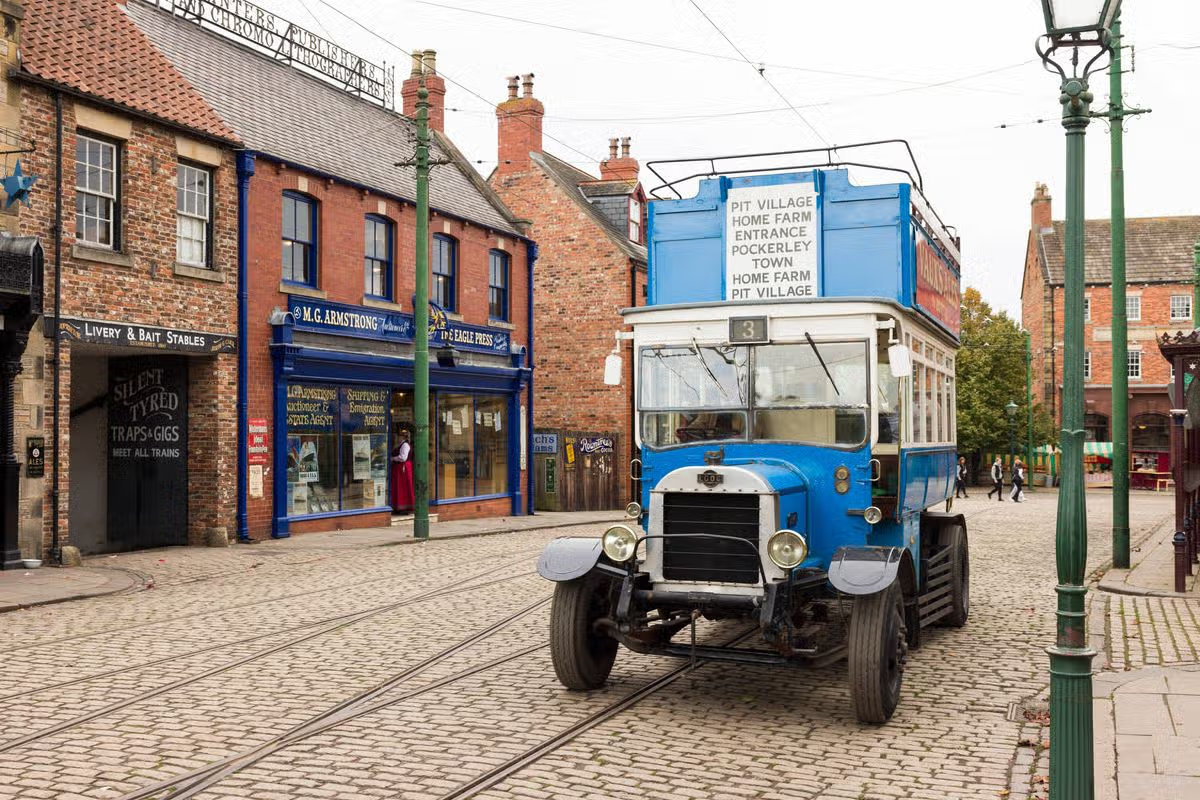
Beamish, a sprawling, 350-acre open-air museum nestled in the County Durham countryside. Designed to offer an authentic window into northern England’s past, the “living” museum is packed with period-accurate shops, traditional eateries, Georgian gardens, and vintage transport, drawing hundreds of thousands of eager tourists every single year.

According to the official Beamish website, the world-famous attraction brings history to life across several dedicated exhibits, including an 1820s Pockerley setup, a 1900s Town and Pit Village, and 1950s farm areas.

To keep the historical illusion absolutely bulletproof, you will never catch any of the in-character actors sneaking a glance at a smartphone, either.

Combined with the notoriously patchy mobile signal across the sprawling site, visitors agree this enforced digital detox is actually a massive bonus, allowing them to completely unplug and fully immerse themselves in the Edwardian experience.

Using a clever combination of authentic reconstructions and meticulously relocated historical structures, visitors can fully immerse themselves in the past – right down to the food.

There’s a vintage sweet shop that attracts long lines, as well as a legendary chip shop that guests can’t get enough of.

Ensure our latest headlines always appear at the top of your Google Search by making us a Preferred Source. Click here to activate or add us as Preferred Source in your Google search settings

Inside Davy’s Fried Fish Shop

Content cannot be displayed without consent

Food content creator Robbie Thompson made the trip to the preserved settlement to try the local grub. During his visit, he stopped by the celebrated Davy’s Fried Fish Shop, which is widely recognised for its fiercely traditional cooking techniques.

Nestled in the attraction’s 1900s Pit Village, the beloved chippy operates exactly as a traditional Edwardian takeaway would. There are no modern fryers or cheap vegetable oils in sight.

Instead, staff in period dress serve up piping-hot, golden-battered fish and chunky chips cooked the old-fashioned way – bubbling away in rich beef dripping over authentic, coal-fired ranges.

The intensely flavoursome, crispy results routinely draw massive queues of hungry tourists, and Robbie was quick to sing its praises.

In a video tour of the chippy and the surrounding town, the TikToker told his followers: “This is the fish and chip shop trapped in time – one of the last in the world that uses coal to heat the original 1950s fryers, with fish and chips cooked in beef dripping.”

Praising the wider village, he continued: “The sweet shop makes candy by hand, the bakery makes the same cakes as a century ago. There’s no mobile phone reception up here, so people actually have to talk to each other. A slice of England unchanged. It’s one of the most incredible fish and chips, it’s Davy’s in Beamish.”

Captioning the viral clip, he added: “Insane chippy stuck in history. Absolute scenes.”

“The best you will ever eat”

TikTok users were swift to flood the comments with their own rave reviews of the living museum and its famous food.

One gushed: “Beamish museum – if you’ve not yet been then go, it’s brilliant, them chips and fish best ever.”

Another agreed: crowning the meal the “best fish and chips [they] have ever had.”

A third nostalgic viewer reminisced: “We went on a school trip to Beamish when I was about 10. Loved it! I’m 57 now.”

Others were heavily drawn to the village’s lack of signal. One said: “Wonder if no mobile reception is a specific tactic. What a world with no mobiles and social media.”

The overall vibe of the historic settlement left many viewers wanting to pack their bags for good, with one begging: “Make the WHOLE of the UK like this.”

Another joked: “Not me Googling if people live here, in an attempt to escape modern society.”

Source link