Novac Djokovic won 102nd match of his career, while ATP 500 tournament victory was Carlos Alcaraz’s third of the year.
Published On 6 Oct 20266 Oct 2026
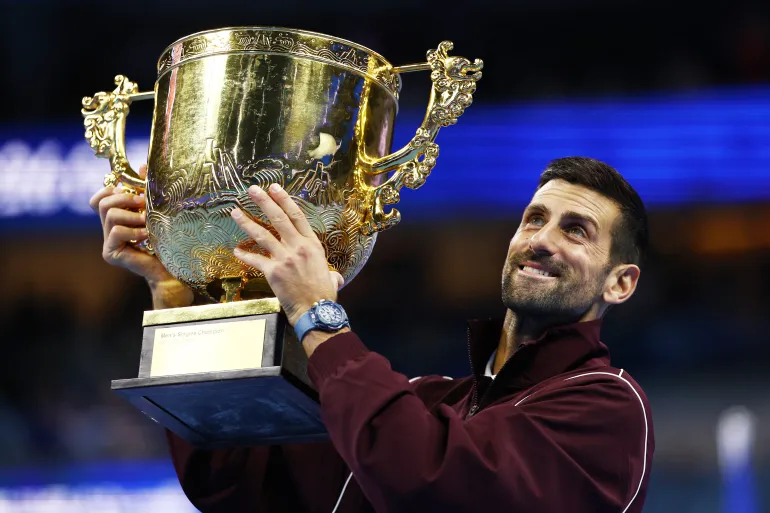
Novak Djokovic won the China Open after his opponent Alex de Minaur retired from the final with injury, while Spaniard Carlos Alcaraz retained his Japan Open crown to continue his resurgence after a lengthy wrist injury layoff.
The 39-year-old Serbian won the first set in the tie-break 7-6 (7-3) and was down a game in the second set when the Australian ended the match with retirement on Tuesday.
Recommended Stories
list of 4 itemsend of list
Djokovic extended an astonishing unbeaten streak in Beijing and winning the 102nd title of his career.
De Minaur left the court for a medical timeout after losing the first-set tie break but played on with his left thigh heavily bandaged. However, he had to stop after winning the first game of the second set, leaving him trailing 7-6(3) 0-1.
“I don’t feel great … I want to say sorry to all the amazing fans,” de Minaur said at the trophy presentation.
“I didn’t want to finish like this … hopefully see you next year,” added the 27-year-old fifth seed.
The win in China was Novak Djokovic’s 102nd of his career [Tingshu Wang/Reuters]
Alcaraz retains Japan Open crown
Alcaraz made another slow start before cruising past unseeded Czech Jiri Lehecka 7-6(4) 6-4 in the Japan Open final on Tuesday.
The ATP 500 tournament victory is Alcaraz’s third of the year after the Australian Open and Qatar Open, before the 23-year-old was sidelined by an injury for nearly five months and returned at the US Open in late August.
“I’m really happy to be able to lift a trophy again,” Alcaraz said. “It’s been a while and obviously it’s extra special after my injury and my comeback, in the second tournament that I’m playing.
“It was a really tough week and I didn’t play my best tennis and my best level but I did find good solutions and that’s what matters in the end.”
Alcaraz became the first man to go back-to-back in Tokyo since American Pete Sampras won the men’s title in both 1993 and 1994.
The world number three started shakily, dropping serve in the first game, but soon recovered and dialled up the intensity to break world number 19 Lehecka’s serve with a scorching backhand to level at 3-3.
More uncharacteristic errors from Alcaraz gave Lehecka hope in the tiebreak, but the Spaniard unleashed a sublime drop-shot en route to clinching the opening set to lay the platform for his 27th title overall.
Alcaraz says he ‘trusted’ himself
The seven-time Grand Slam champion took control midway through the second set, breaking to claim a 4-3 lead before sealing victory by forcing an error on match point and then celebrating wildly with his team courtside.
Alcaraz said his triumph helped erase the doubts that he faced during his injury break.
“A lot of negative thoughts come to your mind,” Alcaraz added: “If you’re going to come back healthy, if you’re going to come back the same as you were before, if I will be able to hit the ball normally without pain. I trusted myself and it worked out.”
Alcaraz will return to action at the Shanghai Masters where he will take on Argentina’s Juan Manuel Cerundolo or a qualifier first. The main draw of the ATP 1000 event begins on Wednesday.
Today marks the end of an era. Mark Swed — the last full-time classical music critic at a major American newspaper — has retired. On Thursday, members of The Times editorial staff gathered to celebrate Swed, but the mood was somewhat somber. Although we were glad for our beloved colleague, this was not a happy milestone for journalism — or classical music.
Swed is the rarest of writers: a critic with deep empathy and encyclopedic knowledge who can turn the sonic details of an orchestra playing Mahler’s Seventh Symphony into an epic journey for readers. At a time when orchestra leaders struggle to find new audiences for the art form, Swed’s writing did the job for them.
And in an era when everybody is an expert on TikTok, Swed’s informed criticism was a life raft in a sea of slop. He told us why the music mattered — in its historical context, as it related to the modern landscape, and what it meant to him personally. He made us better listeners, and most importantly, he made us curious. After reading his take, we wanted to run out to a concert, an opera or a new music festival.
That this particular kind of writing — and of seeing and explaining the world to readers — is going away with Swed, is truly a tragedy. Thankfully he is leaving of his own accord, and will hopefully continue to write a monthly column, but his loss still stings.
Like many, I watched with sorrow in February as the Washington Post slashed its staff, including its classical music critic, Michael Andor Brodeur. That blow came a little less than a year after the New York Times shook up its culture desk and reassigned its classical music critic, Zachary Woolfe, to serve as the obituaries editor. (The paper is now actively searching for a new classical music critic.)
A number of staffers spoke at Swed’s retirement lunch, and deputy A1 editor John Penner was among them. In his touching speech, Penner noted that Swed was the last of his kind, adding, “with no full-time critic writing anywhere in any newspaper about classical music, American journalism will be poorer, and its readers less informed, inspired and enlightened.”
Penner continued, saying what all of us gathered in that conference room knew to be true, “Mark’s 30 years at The Times coincided with this city’s Golden Age of classical music — the era of Salonen and Dudamel and Disney Hall. L.A. has been the most important and exciting music capital in the country, if not the world. (Why else would New York be stealing Gustavo from us now?) And central to that excitement and importance has been Mark’s writing and criticism. For my money, even when there were many music critics writing for many publications, Mark set the standard for classical music criticism, while opening our ears to new and under-appreciated music.”
Hear, hear.
I’m Arts editor Jessica Gelt wishing Swed a happy retirement and humbly asking him to come back to us now and again. This is your arts and culture news for the week.
You’re reading Essential Arts
Our critics and reporters guide you through events and happenings in the SoCal arts scene. In your inbox every Friday.
By continuing, you agree to our Terms of Service, which include arbitration and a class action waiver. You agree that we and our third-party vendors may collect and use your information, including through cookies, pixels and similar technologies, for the purposes set forth in our Privacy Policy such as personalizing your experience and ads.
The week ahead: A curated calendar
FRIDAY
Demand To Be Heard Festival The Sunflower Project presents a celebration centering the voices of survivors of abuse beginning with a screening of the film “Break The Silence: The Gabby Petito Story,” followed by a panel discussion with the Gabby Petito Foundation. Saturday and Sunday is the Resident Artist Showcase, featuring the work of six survivor/artists. Also Saturday are three three arts workshops focusing on music, candle making and body movement, respectively. Film screening, 6 p.m. Friday; 6:30 p.m. Saturday-Sunday, Resident Artist Showcase. Wisteria Theater, 7061 Vineland Ave., North Hollywood. Arts workshops, 11:30 a.m., 1 and 2:30 p.m. Art Share L.A. 801 East 4th Place, downtown L.A. towardsthesun.org
Jonah Elijah: Ambiguously Free The first U.S. museum solo exhibition by the L.A.-based contemporary painter and mixed-media artist features work that blends personal memories with broader mythologies, religion and history to explore Black culture. On view through December 16. Xela Institute of Art, 2176 Pacific Avenue, Long Beach. xela.art
Joshua Redman Quartet: Words Fall Short The saxophonist performs a new program of music with his ensemble — pianist Paul Cornish, bassist Philip Norris and drummer Nazir Ebo, plus special guest Skylar Tang, an up-and-coming Bay Area-born trumpeter and composer. 7:30 p.m. The Wallis, 9390 N. Santa Monica Blvd., Beverly Hills.thewallis.org
Melrose Gallery Walk Gallery spaces, including Hostler Burrows, Lawson-Fenning, Meg Turner, Object, Seventh House, The Window and 22RE, open their doors to celebrate the local design community. Free and open to the public. 5-8 p.m. Hostler Burrows, 6819 Melrose Ave. hostlerburrows.com
SATURDAY
Midterms: This Will Hurt Someone Brightwork newmusic performs a program of contemporary works inspired by civic life and social change, including Ted Hearne’s “Bye Bye Huey,” Natalie Dietterich’s “Philosophy of Furniture,” Ian Dicke’s “Get Rich Quick” (with video), Matt Marks’ “This Will Hurt Someone,” Hesam Abedini’s “What Remains” and “Frederic Rzewsk’s “Coming Together” (with video). 8 p.m. Sierra Madre Playhouse, 87 W. Sierra Madre Blvd. sierramadreplayhouse.org
Aperghis Trilogy Long Beach Opera performs three works by experimental composer Georges Aperghis: “Le corps à corps”,” Les Sept Crimes de l’amour,” “Récitations.” Directed by James Darrah Black. Christopher Rountree conducts. 7:30 p.m. The Queen Mary, 1126 Queen’s Way, Long Beach. longbeachopera.org
The Horror Show An immersive deep dive into the movie genre presented in six themed galleries: Gothic, Psychological, Science, Slasher, Religion and Ghosts, with behind-the-scenes looks at a range of titles that includes everything from Oscar winners to drive-in classics. But first, you must pass through “The Hallway,” bwahahaha. 10 a.m.–6 p.m. Wednesday–Monday, on view through July 25, 2027. Academy Museum, 6067 Wilshire Blvd. academymuseum.org
Senon Williams: here now, now gone, gone here A solo exhibition of the artist’s work, in which he collects materials such as nails, slips of paper, fragments of language and industrial remnants, then uses assemblage to rearrange them and discover deeper meaning. Noon-6 p.m. Tuesday-Friday, on view through Nov. 15. The Philosophical Research Society, 3910 Los Feliz Blvd. prs.org
Promised Lands: California’s Unratified Treaties and Native Resilience Archival materials, contemporary objects, images and voices from local tribal communities relate the complex history of the state with its indigenous people. 10 a.m.-4 p.m. Tuesday-Friday, 10 a.m.-5 p.m. Saturday-Sunday. Autry Museum of the American West, 4700 Western Heritage Way, Griffith Park. theautry.org
Rodgers & Hammerstein’s The Sound of Music Sing-A-Long Actor and comedian Melissa Peterman hosts the annual screening of the 1965 Oscar winner for best picture complete with a costume contest and more than a few of your favorite songs. 7:30 p.m. Hollywood Bowl, 2301 N Highland Ave. hollywoodbowl.com
Daymé Arocena’s Alkemi The Grammy nominee and Juno Award–winner blends Afro-Cuban beats with neo-soul, jazz and contemporary Latin pop. 7:30 p.m. The Wallis, 9390 N. Santa Monica Blvd., Beverly Hills. thewallis.org
San Pedro Festival of the Arts The 20th annual event, presented by Los Angeles Choreographers & Dancers, features 20 dance companies demonstrating a variety of styles and cultural traditions. 1-4:30 p.m. Peck Park, Upper Green near the Community Center, 560 N. Western Ave. triartsp.com
Tokio Ueyama: The Hollows Between Mountains The first museum exhibition in California of the Little Tokyo-based Japanese artist (1889–1954) features his drawings, prints, photographs and paintings as well as artists he was associated with, including Diego Rivera, Tōyō Miyatake, Edward Weston and Henrietta Shore. 11 a.m.-6 p.m. Wednesday–Sunday, on view through Feb. 28, 2027. UC Irvine Langson Orange County Museum of Art, 3333 Avenue of the Arts, Costa Mesa. langson.uci.edu
SUNDAY
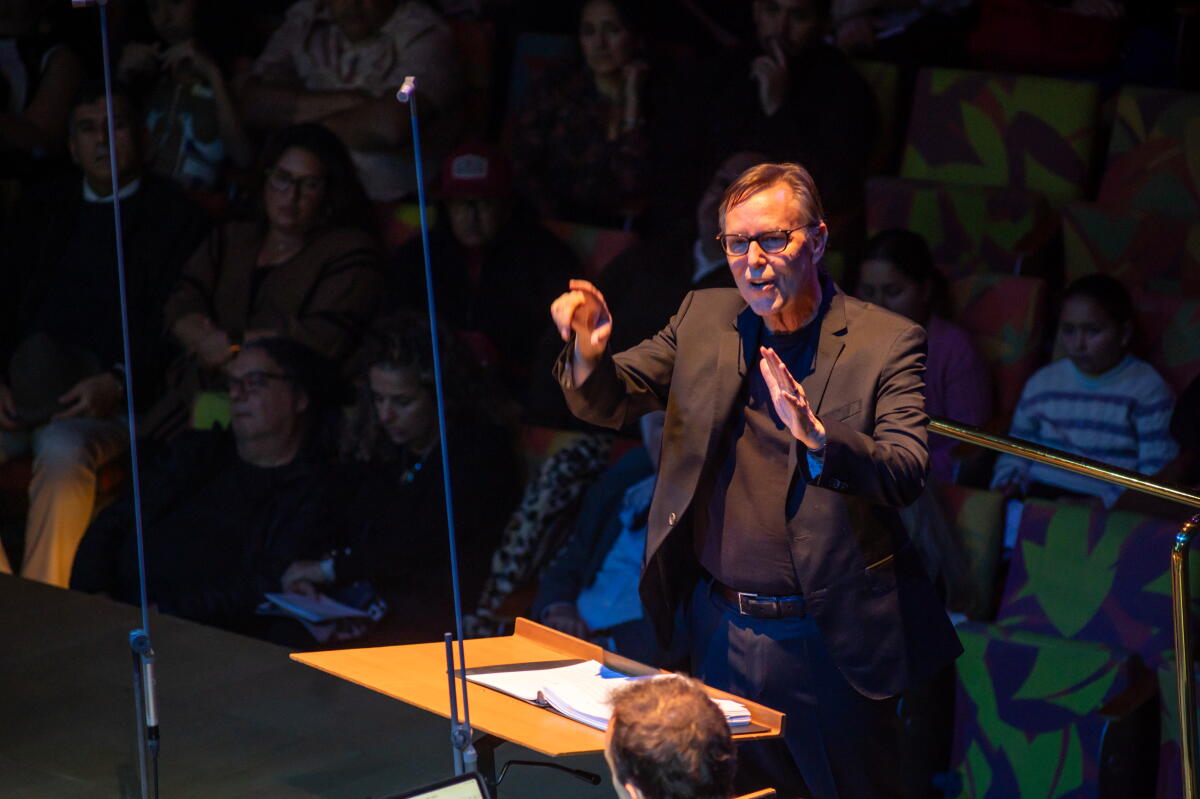
Grant Gershon conducts the Los Angeles Master Chorale at Walt Disney Hall, Nov. 16, 2025.
(David Butow/For the Times)
Brahms’ Requiem The Los Angeles Master Chorale, led by Grant Gershon, opens its silver anniversary season with a program that also includes Bruckner’s “Te Deum.” 7:30 p.m. Walt Disney Concert Hall, 111 S. Grand Ave., downtown L.A. lamasterchorale.org
WEDNESDAY
Rubén Blades & Roberto Delgado Big Band: Fotografías Tour The Panamanian salsa greats perform classic Afro-Cuban music flavored with rock, jazz and Latin American influences. Silvana Estrada opens. 8 p.m. Hollywood Bowl, 2301 N Highland Ave. hollywoodbowl.com
Menopause The Musical: 25th Anniversary Tour Four women at a lingerie sale share their experiences with “the change” through parody songs of pop hits. 7:30 p.m. Bank of America Performing Arts Center, 2100 E. Thousand Oaks Blvd., Thousand Oaks. bapacthousandoaks.com
The Broadway production of “The Outsiders.”
(Matthew Murphy)
The Outsiders The Tony Award-winning musical adaptation of S.E. Hinton’s coming-of age-novel set in 1960s Tulsa arrives with Ponyboy Curtis and his fellow greasers facing off against the upper-class Socs. Through Oct. 18. Hollywood Pantages Theatre, 6233 Hollywood Blvd., Hollywood. Oct. 20-Nov. 1. Segerstrom Center for the Arts, 600 Town Center Drive, Costa Mesa. tour.outsidersmusical.com
THURSDAY
Laura Benanti: Nobody Cares The Broadway star sings original songs and shares stories with her trademark wit in this one-woman show. Directed by Annie Tippe. 7:30 p.m. Thursday-Saturday. 2 p.m. Saturday-Sunday. The Wallis, 9390 N. Santa Monica Blvd., Beverly Hills.thewallis.org
The Dance and the Railroad Asian American theater collective Artists at Play and Latino Theater Company team up for a rare revival of an early David Henry Hwang play set during the 1867 Chinese railroad workers’ strike. Directed by Katherine Chou. Previews, 8 p.m. Thursday and Oct. 2. 8 p.m. Thursday-Saturdays, 2 p.m. Sundays, through Nov. 1. Los Angeles Theatre Center, 514 S. Spring Street, downtown L.A. latinotheaterco.org
Mahler’s Symphony No. 2: Resurrection Alexander Shelley conducts the Pacific Symphony with soprano Miah Persson, mezzo-soprano Dame Sarah Connolly and the Pacific Chorale. 8 p.m. Thursday-Oct. 2. Segerstrom Center for the Arts, 600 Town Center Drive, Costa Mesa. pacificsymphony.org
The SoCal scene
Gov. Gavin Newsom mingles with guests at the Lucas Museum of Narrative Art opening party.
(Carlin Stiehl/For The Times)
I spent my Saturday night at the Lucas Museum opening party where I got to stand in the lobby by the nifty elevators watching Gov. Gavin Newsom talk to Kim Kardashian. Later, I went to Skywalker Grill and saw U.S. Rep. Nancy Pelosi sitting at a table next to Leonardo DiCaprio and his entourage. It would be an understatement to say that the night was both bizarre and memorable.
Times theater critic Charles McNulty (the paper’s only remaining arts critic) has kept exceptionally busy this fall season. Late last week he wrote a review of “The Ford/Hill Project” At REDCAT, which transforms Senate testimony from Anita Hill and Christine Blasey Ford into a docu-play that explores the details of two of history’s most consequential Supreme Court confirmation hearings. “The restraint imposed by the production adds to its power. There’s no need to editorialize. The proceedings skewer themselves,” McNulty writes.
Huguette Caland in Stone Doorway, France, 1970.
(Huguette Caland Estate)
McNulty also drove to San Diego to see the Old Globe’s world-premiere musical adaptation of John Carney’s “Begin Again,” which explores the stories of two music-industry vets who embark on a grassroots recording project. The show features a score by rocker Pat Monahan and Train. “‘Heartwarming’ is a cliche of theater reviewing that I have studiously tried to avoid, but I’m tempted to use the word in my review of ‘Begin Again’,” McNulty writes.
McNulty penned one of his harshest reviews since last year’s take down of “Hamlet” after he went to Atwater Village Theatre to see Echo Theater Company’s world premiere production of “The Peterson Show,” by Janine Nabers. “Unfortunately, the production is hamstrung by fundamental problems in the writing, directing and acting, all pointing to a failure of control. Control of the story, control of the tone and control of the cast,” McNulty wrote of the show, which is about the impact of disgraced Bill Cosby-like star on his TV family.
Meanwhile contributor Tara Anne Dalbow wrote a beautiful story about the late, great artist Huguette Caland in advance of the largest U.S. retrospective of her work, opening Sunday at the Hammer Museum.
Ernest “Ernie” Wolfe III, owner of an eponymous gallery on Sawtelle, is dying of a traumatic brain injury and his family is looking for homes for his 15,000 pieces of African Art. Contributor Jane Horowitz writes about Wolfe‘s legacy and the (sometimes controversial) origins of his collection.
As one chapter closes with Swed’s retirement, a new one begins as we welcome our new entertainment and arts reporter, Laura Zornosa, who hit the ground running by writing three great arts stories: The first is about the private art collection of Armand Hammer (including Mary Cassatt’s “Summertime,”) coming up for auction at Sotheby’s; the second, covering opening day at the Lucas Museum where Zornosa interviewed guests on their thoughts about the place; and the third is a fun news brief about how Los Angeles Chamber Orchestra commissioned fanfares from half a dozen film composers, including John Williams and Ludwig Göransson, curated by “none other than Seth MacFarlane (best known as the creator and star of “Family Guy”).”
Enjoying this newsletter? Consider subscribing to the Los Angeles Times
Coy Middlebrook has been named the new artistic director of the Wallis.
(Jeff Lorch / The Wallis)
The Wallis Annenberg Center for the Performing Arts announced the appointment of longtime creative staffer Coy Middlebrook as its new artistic director. “Coy brings an extraordinary depth of knowledge about The Wallis and its audiences, along with deep relationships throughout the performing arts nationally and internationally. He understands both the artistic possibilities of this institution and the importance of its relationship to our community. I am excited to work with him as we build a future that is artistically ambitious, deeply connected and open to everyone,” said Wallis Executive Director and Chief Executive, Jean Davidson, in a news release.
Meanwhile Theatre Commons LA (TCLA), the nonprofit organization created and launched a year ago as part of a concerted effort by some of the city’s most prominent theater leaders to unify the city’s sprawling theater scene, has announced its first Executive Director, David E. Shane. Shane previously served as director of program services at the Alliance of Resident Theatres/New York where, according to a news release, “he set the strategic vision and goals for a robust suite of programs serving over 450 of New York’s nonprofit theaters.” He is tasked with doing the same thing in L.A. and we wish him the best of luck.
— Jessica Gelt
And last but not least
The Getty Museum has acquired the recently rediscovered 17th-century painting “Portrait of the Count-Duke of Olivares” by Spanish artist Diego Velázquez (1599-1660). It will be displayed in the museum’s East Pavilion this fall. According to ArtNews, “The acquisition means a Velázquez painting will for the first time be represented in the collection of a West Coast museum.”
Sean Gunn has no plans to continue his motion capture role for “Guardians of the Galaxy” character Rocket raccoon.
The physical demands involved in creating Marvel Cinematic Universe’s masked bandit often included the 52-year-old actor being in a catcher’s crouch position, which hurt his ankles and feet due to constant pivoting, Gunn revealed in an interview on “The Brandon Davis Show.”
“I think it had a little bit of an effect on my physiology. My knees are fine, but since I turned 50 a couple years ago, I am retired from playing Rocket,” Gunn said in the podcast episode published Monday. “I don’t think I can do the motion reference anymore for Rocket. I think I’m too old.”
The veteran actor is now ready to pass on his deadly laser cannon to another rising star. Rocket’s creators should “give a younger actor a shot at it, right?” he said.
While actor Bradley Cooper has voiced the small, sharp-tongued creature since the first “Guardians of the Galaxy” film in 2014, Gunn has worked alongside animators behind the scenes to capture the subtle actions with motion capture technology, or mocap, which animates 2D or 3D computer characters using the actor’s physical movements.
Gunn described the process as a relay race in a 2024 interview with Adam Lupis; once a script is handed to him, he passes the baton to the visual effects team, who then tie it all together with Cooper’s voice acting.
“Rocket is sort of a character by committee in that way. I think he’s a good microcosm for movies where they get this whole community of people coming to make something with love and care,” Gunn shared in the interview with Lupis. “It’s been a crazy process.”
Alongside his role as on-set Rocket, Gunn also portrayed Ravager Clan space pirate Kraglin Obfonteri in “Guardians of the Galaxy”; its two sequels, “Vol. 2” and “Vol. 3”; “Avengers: Endgame”; and “Thor: Love and Thunder.” Rocket also appeared in 2018’s “Avengers: Infinity War.”
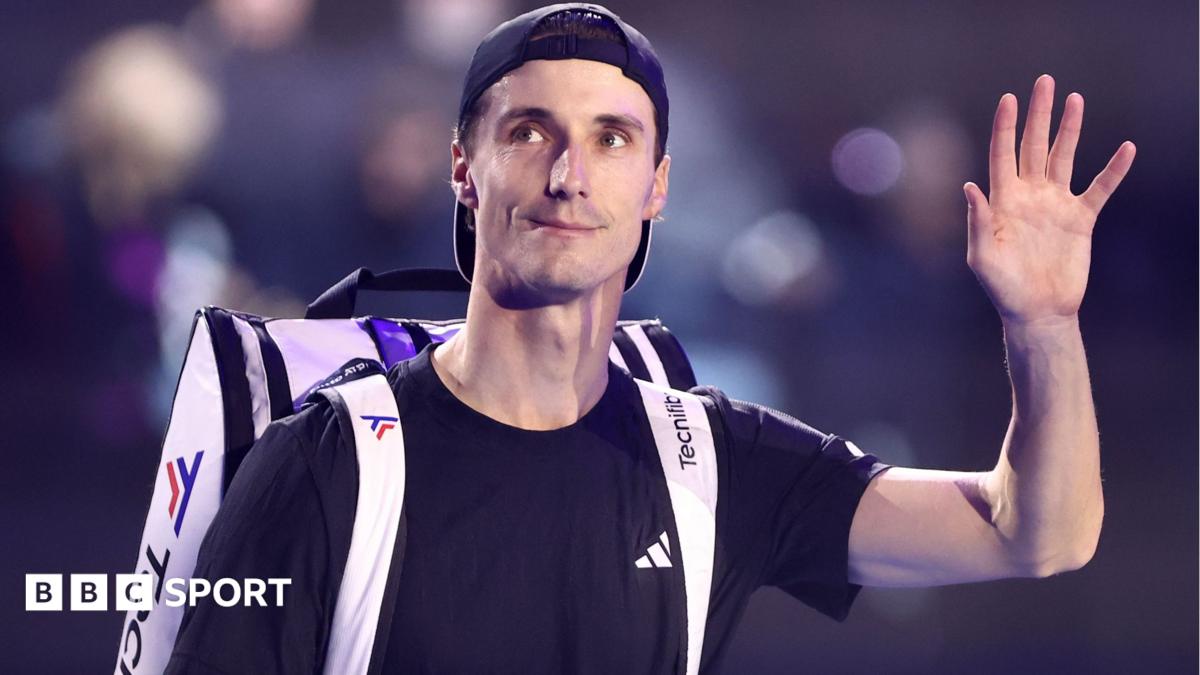
Former world number one doubles player and six-time Grand Slam doubles champion Joe Salisbury has retired from professional tennis.
Londoner Salisbury chose this month’s US Open as his final event and reached the semi-finals with his long-time partner Rajeev Ram, who had also decided to retire.
The venue was fitting, as in 2023 Salisbury and Ram became the first pair in history to win three consecutive US Open men’s doubles titles.
Salisbury is Britain’s most successful men’s doubles player of the Open era. He also won the 2020 Australian Open with Ram, and two mixed doubles titles with Desirae Krawczyk.
The 34-year-old says he has been thinking about his future for a while, and is now “very happy with the decision”.
“Tennis has been my life for as long as I can remember and I have been incredibly fortunate to have had all the opportunities, experiences and success that I have,” he posted on Instagram.
“To be able to travel the world and call playing tennis my job has been a dream come true and I never believed I could have lived the life and had the career that I have.
“I gave it my all and know I can be proud and look back with no regrets.”
Salisbury took a three-month break at the start of this year, having told BBC Sport about the anxiety which had been affecting him on tour.
While he did not think it affected his tennis very much, he said it left him with a “feeling of dread” which made life on the road far less enjoyable.
“I had some time off for a few months earlier on in the year – I wasn’t really enjoying being on tour for a few reasons,” he told BBC Radio 5 Live.
“I came back and I didn’t really have a successful year. Then I teamed back up with my partner, Rajeev Ram, who I had all my success in Grand Slam titles [with] so it was great playing with him again and he was retiring at the US Open this year.
“I thought I could go on [until the] end of this year, maybe next year but I felt like it was nice to finish my career playing with him at the US Open where we had our success, and we had a good run making the semi-finals to finish.”
Salisbury finishes his career with 17 tour level titles, including the season-ending ATP Finals of 2022 and 2023.