resume

Lula, Trump to resume talks over U.S. tariffs on Brazil

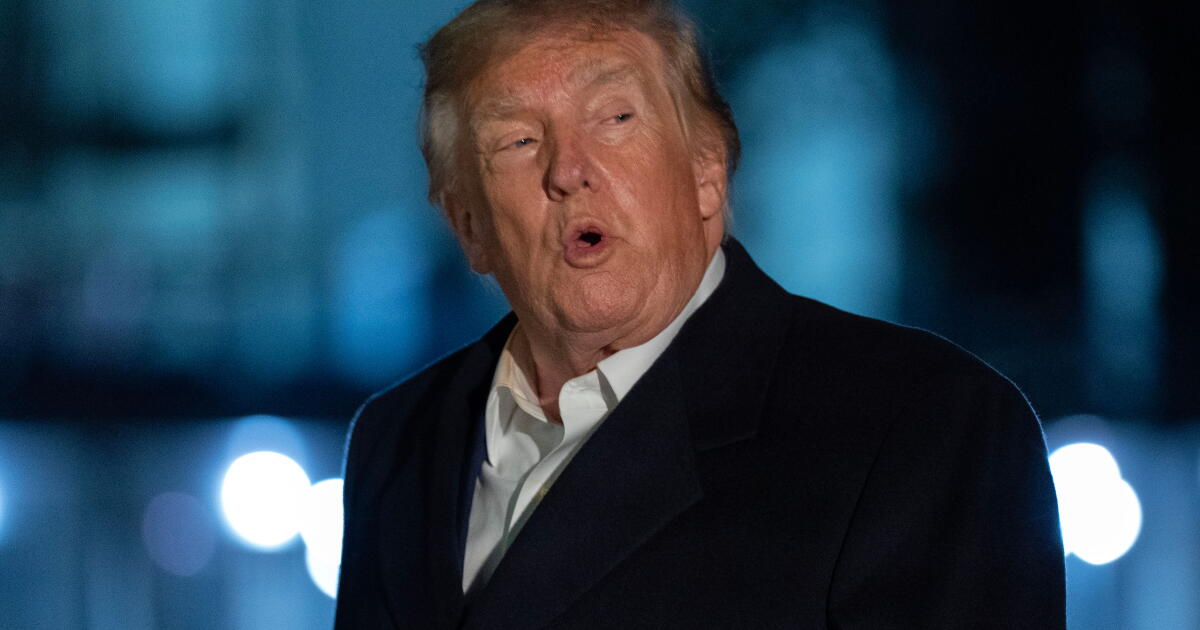
Brazilian President Luiz Inacio Lula da Silva rejected the U.S. justifications for imposing new tariffs, calling them “unfounded” in a phone call with U.S. President Donald Trump on Friday. Photo by Andre Borges/EPA

Aug. 21 (UPI) — Brazilian President Luiz Inácio Lula da Silva said he spoke by phone with President Donald Trump on Friday to push for resuming bilateral trade negotiations and discuss efforts to contain international conflicts.

According to Brazil’s presidential office, the 80-minute conversation resulted in an agreement for representatives of both governments to resume talks aimed at resolving the trade dispute, Agência Brasil reported.

During what the Brazilian government described as a “friendly and cordial” conversation, Lula rejected the U.S. justifications for imposing new tariffs, calling them “unfounded.”

The recent trade barriers imposed by the Office of the U.S. Trade Representative include an additional 25% tariff over alleged unfair practices and another 12.5% tariff linked to alleged shortcomings in efforts to combat forced labor.

The White House based the measures on a series of regulatory and political concerns involving issues including Brazil’s Pix instant payment system, anti-corruption efforts, the ethanol market and efforts to curb deforestation.

Lula argued that the trade restrictions lack a factual basis and cause direct economic harm to both countries.

The Brazilian president said diplomacy is the appropriate path forward and called for bilateral dialogue to remain open.

According to the statement, Trump was receptive to the need to preserve strategic trade ties and proposed that technical delegations from both governments resume meetings as soon as possible.

On security, Lula reiterated Brazil’s interest in cooperating with the United States in the fight against organized crime. He said criminal groups terrorize the country’s poorest communities on a daily basis but should not be confused with terrorist organizations.

Lula outlined progress in his government’s strategy to financially weaken criminal groups, citing seizures worth millions, and detailed the creation of maximum-security prisons.

Trump expressed willingness to deepen cooperation on border security and high-level intelligence sharing, according to the Brazilian government.

The two presidents concluded the call by discussing the need to pursue negotiated peace efforts to address the conflicts in Ukraine and the Middle East.

Source link

Trump asks Supreme Court to let White House resume ballroom construction during appeal

President Trump’s administration has asked the U.S. Supreme Court to allow the White House to resume construction on its $400 million ballroom project while it appeals a lower court’s order to halt the work.

Trump’s solicitor general on Friday petitioned the high court to suspend last week’s decision by a three-judge panel from the U.S. Court of Appeals for the District of Columbia Circuit.

The divided panel ruled last week Trump must stop the White House ballroom’s construction because Congress has not approved the project. The panel’s majority said Trump doesn’t have the unilateral authority to build a 90,000-square-foot ballroom where the White House’s East Wing stood before he ordered its demolition last fall.

The lower court suspended its own ruling for two weeks to give Trump’s Republican administration time to appeal to the Supreme Court. The solicitor general asked the Supreme Court to rule on its stay petition before the appeals court panel’s decision takes effect on Aug. 21.

“This case involves an extraordinary and unlawful injunction that will halt the ongoing construction of the integrated military complex, including a totally secure ballroom space, at the East Wing of the White House, which is vitally required by national security,” the solicitor general wrote.

The lower court’s 2-1 decision sided with historic preservationists who sued to stop construction of the ballroom.

The administration argues that the president, not Congress or the courts, has unimpeded authority to renovate the White House. The current state of the project, essentially an open construction site, makes it harder to protect the White House, the Justice Department contends.

The administration also says the National Trust for Historic Preservation does not have the legal right, or standing, to sue over the ballroom.

During an appeals court hearing in early June, an administration lawyer defended a broad view of presidential control over iconic public facilities.

The government could bulldoze the Statue of Liberty and the White House, Justice Department lawyer Yaakov Roth said in response to a hypothetical question, and the descendants of immigrants who came through Ellis Island and the enslaved people who built the White House would not have standing to sue.

Kunzelman writes for the Associated Press.

Source link

Trump says negotiations with Iran to resume Monday

Aug. 2 (UPI) — President Donald Trump said Sunday night that negotiations with Iran toward ending the war will resume Monday, about a month after formal talks between the two unraveled and preceded a return to open conflict.

Speaking to reporters aboard Air Force One en route to Washington after spending a weekend at his Bedminster, N.J., golf club, Trump said talks with Iran will begin Monday afternoon, claiming, as he has repeatedly throughout the war, that Iran wants “to make a deal.”

“We’ll see if it’s true,” he said. “I’d love to do that. Save a lot of lives. Save a lot of unnecessary power, to be honest with you.”

Trump had called off what he advertised as a massive attack on Iran over the weekend, stating it was at the request of allies and Tehran, which he said had agreed to “the parameters of a deal.”

Aboard his plane, he identified Saudi Arabia, the United Arab Emirates and Qatar as the nations that had asked him to hold off.

“It would have been a massive attack. We were all set to go. But when the allies ask to call it off, you go to sort of say, ‘well, let’s see,'” he said. “And the reason they asked they think there’s a deal.”

Trump has long sought a deal with Iran to constrain its nuclear program, going back to his first administration when in 2018 he unilaterally pulled the United States from an Obama-era multinational accord in order to fashion a new one, and imposed sanctions on Tehran to force it to the negotiating table.

In late February, the United States and Israel attacked Iran with the aims of destroying its remaining nuclear capabilities and inciting regime change, instead igniting the five-month-long war, during which Tehran has laid military claims to the vital Strait of Hormuz.

An April cease-fire created conditions for a memorandum of understanding to be signed in mid-June that was to lay the foundation for ending the war. Amid negotiations on implementing the MOU, disagreements arose over its stance on the vital energy route, which led to a resumption in fighting last month.

Monday’s negotiations would be the first publicly acknowledged since early last month. Trump said the discussions will concern the Strait of Hormuz and led into nuclear talks.

He said that the three allies believe “a deal is imminent.”

Trump called off the attack after speaking with Saudi Crown Prince Mohammad bin Salman over the phone. Trump said Sunday that bin Salman warned him that the consequences of the attack would be unpredictable.

“I mean, will they be flooded with people pouring into their country,” he said. “A lot of bad things can happen.”

Trump said it would have been “the biggest attack since World War II” and “disastrous” for Iran.

The United States is seeking to restore freedom of navigation through the strait, while Iran is trying to maintain some form of control over commercial vessels that pass through it.

According to the nonpartisan, Washington-based Institute for the Study of War, Iranian negotiators may be willing to make what it called “limited compromises” with the United States over Tehran’s control of the strait, though what those concessions may be were not entirely clear.

Source link

Wimbledon 2026: Aryna Sabalenka and Jannik Sinner among players to resume full media duties after prize money protest

Australian sixth seed Alex de Minaur was involved in the protests at last month’s French Open but decided he did not want to take part at Wimbledon.

“I think the sense that we had at Roland Garros was everyone was on board, even though we didn’t, as a collective, achieve the numbers that we were looking for,” he said.

“I thought that Wimbledon made a big step in the right direction, and something that should be noted. So this is for me to acknowledge their big step.”

Germany’s Alexander Zverev, who claimed his first major win in Paris earlier this month, also decided to step back.

“I still want to be part of the players’ movement, but also I realised the media can’t really do anything about it, or can’t really change it,” said Zverev, who represented the players in talks with the Grand Slams at Wimbledon last year.

“It’s not good to take it [out] on someone that doesn’t have the power of control, so I’m doing half an hour [of media]. But I still hope for some change in tennis, for sure.”

This year’s Wimbledon singles champions will each take home £3.6m, up from £3m last year, while first-round losers will earn £80,000.

Source link

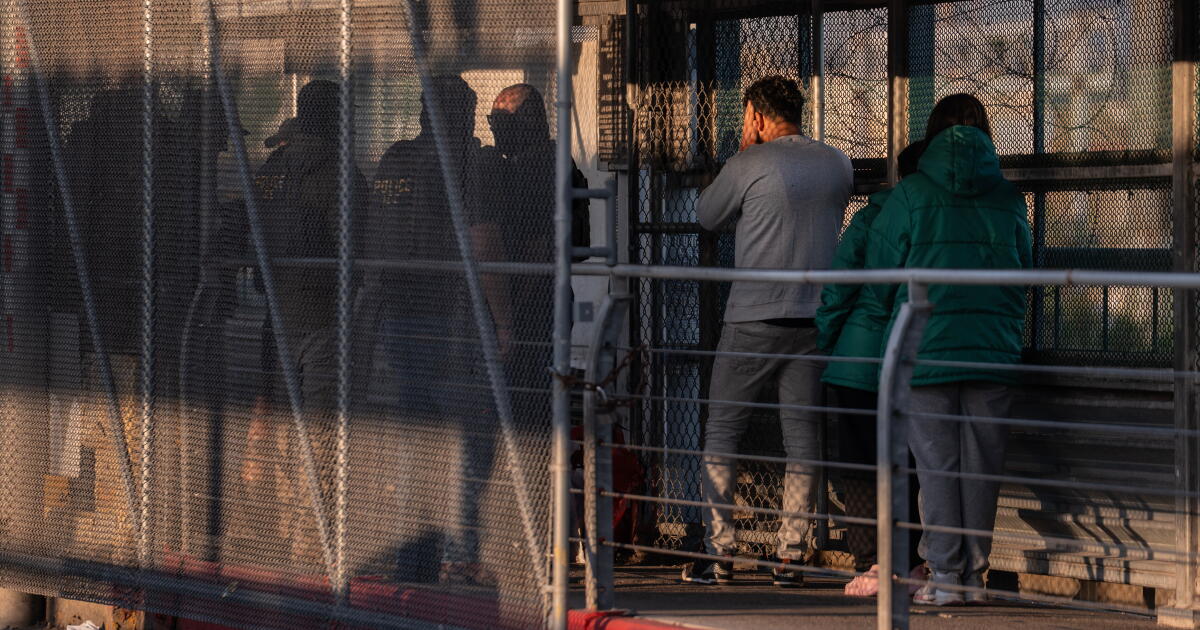
Federal appeals court allows the Trump administration to resume expanded use of speedy deportations

A federal appeals court on Tuesday allowed the Trump administration to resume carrying out speedy deportations of undocumented migrants throughout the United States, not just near the border.

A divided three-judge panel of the U.S. Court of Appeals for the District of Columbia Circuit threw out a lower court ruling that temporarily blocked President Trump’s expanded use of expedited removal. The ruling was a big victory for the Republican administration, which views the expansion of so-called expedited removal as a key tool for carrying out its mass deportation policy.

An attorney for the plaintiffs said the ruling “undermines the fundamental principle that people receive due process when the government seeks to deport them.”

“The Trump administration’s push for fast-track deportations will subject people to an unfair and error-prone system,” Anand Balakrishnan, senior staff attorney with the ACLU’s Immigrants’ Rights Project, said in a statement.

Trump appointed the two judges in the majority in Tuesday’s decision. The third was appointed by President Obama, a Democrat.

The plaintiffs had not “shown that the expedited-removal process denies its members notice and an opportunity to be heard,” Judge Justin R. Walker, one of the Trump appointees, wrote.

Expedited removal — quick deportation without a chance to appear before a judge — has previously been applied to migrants arriving by sea or caught at or near the border shortly after crossing.

In January, Trump expanded its use to undocumented migrants all over the U.S. Immigration agents began whisking migrants away from courthouses where they had gone for immigration proceedings and then removing them from the country within days.

U.S. District Judge Jia Cobb ruled in August that plaintiffs challenging the expansion had made a “strong showing” that it was trampling on people’s due-process rights, and she issued a stay order putting the policy on hold. Cobb was appointed to the federal bench by President Biden, a Democrat.

Many migrants living deep in the U.S. have been in the country for more than two years, making them ineligible for expedited removal under federal law. Cobb said the administration had not developed procedures to ensure they and other groups of migrants were not wrongly deported under the expedited process.

The plaintiffs had put forward “substantial evidence” that the expedited removal process, on the contrary, carried a high risk of error when applied more broadly, Cobb said. The ruling cited examples of people who had lived in the U.S. for far longer than two years but were still ordered to be removed in expedited proceedings.

The Trump administration appealed, arguing in a court filing that its expansion was legal, and protections were in place to prevent arbitrary removal.

Cobb’s ruling was an “egregious error” that was depriving the administration of an “essential tool to combat the unprecedented surge of illegal immigration over the past few years” and efficiently deport potentially millions of people, Justice Department attorneys argued in the October filing.

Thanawala writes for the Associated Press.

Source link