result

Miami Grand Prix result: Kimi Antonelli wins from Lando Norris to extend title lead

Norris was left to rue the pit stop decision – “How did we not win this?” he said over the radio. “We can make it easier for ourselves.”

But this was a strong showing from McLaren, who introduced a major upgrade package this weekend, which brought them right into the fight with Mercedes.

Leclerc was brought in on lap 21 for his stop, and complained over the radio that he had not been consulted.

The decision did drop him down the field and force him to fight past slower cars. He regained third, but then lost it again to Norris’ team-mate Piastri on the penultimate lap as he began to struggle for grip.

Leclerc then spun on his own on the last lap, shortly after Piastri had overtaken him, and he lost two further positions into and out of the final corner, as first Russell and then Verstappen came past him.

Verstappen pitted under the safety car for his fresh tyres, hoping the gamble would pay off. It dropped him to the back, but with some aggressive overtaking and the others pitting in front of him, it put him in the lead mid-race.

But he was never going to hold on with his worn tyres, and he slipped down. Still, fifth was a decent result after his early error, which was followed by some very aggressive racing that prompted complaints from some of his rivals.

Leclerc slipped back to sixth, ahead of team-mate Lewis Hamilton, whose car was damaged in a first-lap clash with Alpine’s Franco Colapinto.

The Argentine took eighth, ahead of the Williams cars of Carlos Sainz and Alex Albon.

Verstappen faces an investigation from the stewards for crossing the white line on pit exit, while a collision between Russell and Verstappen while they were racing in the closing stages and in which the Mercedes’ front wing was damaged is also under consideration.

Source link

How to vote in California’s June 2026 primary election

p]:text-cms-story-body-color-text clearfix”>

Vote-by-mail ballots will not be forwarded to a new address, so your ballot will be returned to your local county election office if you haven’t updated your voter registration.

The Los Angeles Registrar-Recorder/County Clerk recommends voters who have been impacted or displaced by wildfires update their mailing address or request a replacement ballot be sent to their temporary address or new permanent address. Los Angeles County residents can follow a guide created for Pacific Palisades and Altadena fire survivors online. Residents can also make updates by phone by calling the Registrar-Recorder/County Clerk’s office at (800) 815-2666, Option 2.

You also can update your mailing address by re-registering to vote online. In the “residential address” section, enter your former place of residence and in the “mailing address” section, check the box that says your mailing address is different from your home address and then enter your temporary mailing address.

Source link

Louisiana congressional primaries are suspended as a result of Supreme Court ruling

Louisiana’s congressional primaries won’t be going forward as scheduled in May, as a result of a U.S. Supreme Court ruling that struck down a majority-Black congressional district, the state’s top elected officials said Thursday.

Gov. Jeff Landry and Atty. Gen. Liz Murrill, both Republicans, said in a joint statement that Wednesday’s high court ruling effectively prohibits the state from carrying out the primaries under the current districts. Early voting had been scheduled to begin Saturday in advance of the May 16 primary.

“The State is currently enjoined from carrying out congressional elections under the current map,” Landry and Murrill said in the statement posted to social media. “We are working together with the Legislature and the Secretary of State’s office to develop a path forward.”

That path is likely to lead to a new U.S. House map benefiting Republican candidates in Louisiana.

President Trump, in a series of social media posts Thursday, praised Landry for moving quickly to revise the state’s congressional districts and urged Republican Tennessee Gov. Bill Lee to do likewise in light of the Supreme Court’s decision.

While civil rights activists denounced the potential for diminished minority representation in Congress, top Republicans cited the Supreme Court’s decision as justification to spur an already intense national redistricting battle among states before the November elections.

“I think all states who have unconstitutional maps should look at that very carefully, and I think they should do it before the midterm,” House Speaker Mike Johnson told reporters in Washington.

Questions persist about election postponement

Louisiana’s election suspension was denounced by some Democrats and questioned by some legal experts.

“This is going to cause mass confusion among voters — Democrats, Republicans, white, Black, everybody,” said Louisiana state Sen. Royce Duplessis, a Democrat who represents the New Orleans area. “What they’re effectively doing is changing the rules of the game in the middle of the game. It’s rigging the system.”

Although Louisiana officials may legally be able to move the primary, it’s not accurate to assert that it was blocked by the Supreme Court’s decision, said Ruth Greenwood, director of the Election Law Clinic at Harvard Law School.

State Rep. Kyle Green, a former assistant state attorney general who is chair of the House Democratic caucus, also cast doubt on the legal justification for postponing the congressional primary.

“The Court’s decision does not halt the election process on its own,” Green said. “And any attempt to suspend or disrupt an ongoing election at this stage would raise serious constitutional concerns.”

Delaying an election is unusual but not unprecedented.

During the onset of the COVID-19 pandemic in 2020, several states pushed back elections because of health concerns. Democratic Gov. John Bel Edwards, who led Louisiana at the time, postponed Louisiana’s April 4 presidential primary three weeks before it was supposed to occur — then delayed it again until July 11.

Louisiana could join a national redistricting wave

Louisiana currently is represented in the U.S. House by four Republicans and two Democrats. A revised map could give Republicans a chance to pick up at least one more seat in the November midterms — adding to Republican gains elsewhere from redistricting.

Voting districts typically are redrawn once a decade, after each census. But Trump last year urged Texas Republicans to redraw House districts to give the GOP an edge in the midterms. California Democrats reciprocated, and redistricting efforts soon cascaded across states.

On Wednesday, Florida became the latest state to redraw its U.S. House districts, adopting a new map backed by Republican Gov. Ron DeSantis that could give the GOP a chance at winning several additional seats.

The Florida vote occurred just hours after the U.S. Supreme Court’s conservative majority issued a ruling that significantly weakened minority protections under the federal Voting Rights Act. The court said Louisiana officials had relied too heavily on race when drawing a congressional district that is represented by Democrat Cleo Fields.

Trump wants Tennessee to also take up redistricting in response to the court’s ruling. The president posted on social media that he had spoken with Lee, who he said would work hard for a new map that could help Republicans gain an additional seat. Democrats currently hold only one of the state’s nine House seats — a district centered in Memphis, which is majority-Black.

Tennessee House Speaker Cameron Sexton, a Republican, said he is in conversations with the White House and others while reviewing the court’s decision.

Louisiana has a history of redistricting challenges

After the 2020 census, Louisiana officials had drawn House voting district boundaries that maintained one Black-majority district and five mostly white districts, in a state with a population that is about one-third Black.

A federal judge later struck down the map for violating the Voting Rights Act. And the following year the Supreme Court found that Alabama had to create its own second majority-Black congressional district.

In response, Louisiana’s Legislature and governor adopted a new House map in 2024 that created a second Black-majority district. But that map also was subsequently challenged in court, leading to the most recent Supreme Court ruling.

After the ruling, Landry called U.S. House candidates on Wednesday and told them that primaries would probably be stalled, according to Misti Cordell, a Republican running in a crowded race to fill U.S. Rep. Julia Letlow’s vacated seat.

“It’s an inconvenience for a candidate for sure, but you know they want to do it right versus having to go through all this again,” Cordell said. She added that she appreciated the heads-up before she and other candidates began “spending their war chest” during the final weeks leading up to election day.

Republican state lawmakers are reviewing which pending bills could be used to alter primaries and reconfigure congressional maps, said Louisiana state Rep. Beau Beaullieu, chair of the House committee overseeing redistricting efforts.

Cline, Brook and Lieb write for the Associated Press. Brook reported from New Orleans and Lieb reported from Jefferson City, Mo. AP reporter Travis Loller contributed to this report from Nashville.

Source link

Dodgers’ Edwin Díaz knew about ‘loose bodies’ in elbow in 2012

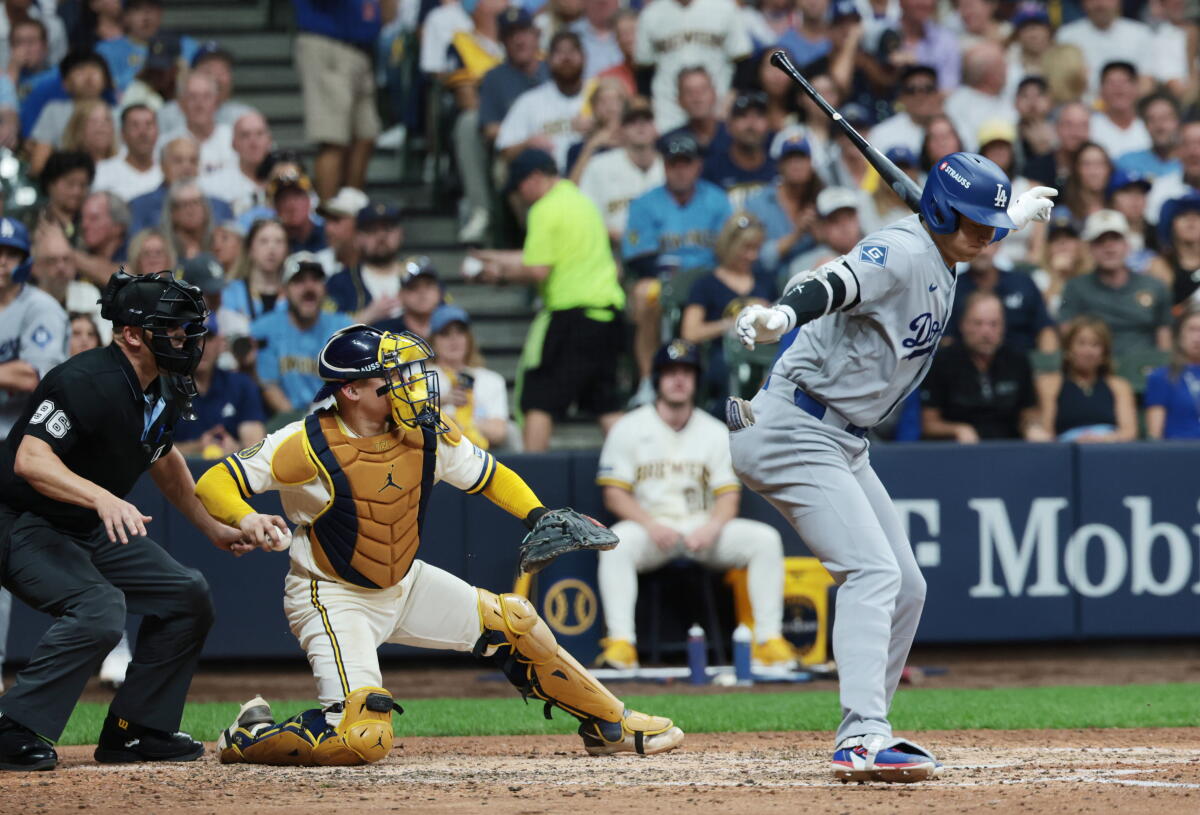
Dodgers closer Edwin Díaz said Monday that he’s known about the five loose bodies in his elbow — which were removed in an operation Wednesday — since he was drafted in 2012.

Last week in Colorado was the first time it affected him. He gave up three runs without recording an out on April 19. And the next day, he told the team his arm felt “weird.”

On Monday, he described the feeling as “tired and tight.”

Before his arm started giving him problems, Díaz was unavailable for four straight games because of fatigue in his knee. His legs felt “good” in Colorado, Díaz said.

Results from an MRI scan suggested that the loose bodies in his elbow were to blame for the discomfort in his arm. Díaz said he was confident the operation would resolve the problem.

“The tightness and the soreness was where the loose body was,” Díaz said. “So that’s why we ended up getting the surgery because it was in the same spot I’ve always had them.”

He’s hoping to return after the All-Star break. So, the Dodgers will have to come up with an alternate ninth-inning plan for the next two-and-a-half months.

“That sucks to miss the first half with the team,” Díaz said. “I’m new with this team. But that’s something I can’t control. Everyone here is supporting me. All of my teammates they’re supporting me, they’re happy that I’m doing way better than before. They just can’t wait to see me on the mound in the second half.

“They say, take your time, we need you in October. But I want to come back as soon as possible and help this team to win games.”

Díaz is still waiting to have his stitches removed, but he expects to start playing catch in a couple weeks.

“My arm is feeling way better than it did on Sunday,” he said. “That’s a good sign. Right now, just a couple days after surgery, I can move my arm really good. My range of motion is coming back to normal. So that’s something I like. And just get stronger and be ready for the second half.”

Source link

Here’s how the GOP could scheme to keep control of the House

For Democrats or, for that matter, anyone who believes in checks and balances, things are starting to look up.

President Trump’s days of untrammeled war-making, law-breaking and generally doing whatever he damn well pleases may finally be drawing to a close. Public opinion, history and, especially, the surging price of gasoline and groceries, all point to a Democratic takeover of the House in November’s midterm election.

There’s a direct correlation between a president’s approval rating and the way his party performs at the midpoint of his term. Anything below 50% favorability portends political trouble; right now Trump’s positive standing in polls hovers around a dismal 40%.

Then there’s the history part. Since World War II, the party out of the White House has gained an average of more than two dozen House seats in midterm elections. Democrats need to pick up just three to take control beginning in January.

(While the Republican grip on the Senate seems weaker than just a few months ago, the GOP is still favored to hang onto the chamber in November.)

There is, however, a looming threat causing nervousness among Democrats and their allies as they contemplate a celebratory fall, a landmine of sorts buried deep in the congressional election process.

Let’s acquaint ourselves with Article 1, Section 5 of the Constitution.

The pertinent language written by the Framers states, “Each House shall be the Judge of the Elections, Returns and Qualifications of its own Members.” In other words, it’s up to the House and Senate to acknowledge and abide by the will of voters as expressed in the election returns.

What could possibly go wrong?

Well, if you let your paranoia run wild, quite a lot. If the election outcome is close — and probably it would have to be very close — Republican lawmakers could theoretically seize on phony claims of fraud and effectively nullify the results of enough contests to deny Democrats control of the House.

There’s plenty of skepticism that would or could ever take place. But if it were to happen, hello, national crisis!

Normally, we could count on the occupant of the White House to humbly submit to the election returns, even if it’s a “shellacking” as President Obama called his walloping in the 2010 midterm election, or a “thumpin’ ” as President George W. Bush described his electoral spanking in 2006.

Not Trump.

This president has amply demonstrated the lengths to which he’ll go to overturn an honest election, siccing a violent mob on lawmakers certifying his 2020 defeat, telling endless lies and using the Justice Department to confiscate ballots and intimidate innocent election officials and others Trump deems his enemies.

He strong-armed Texas into a highly unusual, highly partisan redrawing of its congressional boundaries, an effort to net five seats and lengthen the odds against a Democratic takeover.

The move appears to have backfired, spurring voters in California and, last week, Virginia to redraw their state’s political maps to more than offset Texas and boost Democrats in November. (The Virginia results are being contested in court.)

A gathering of Virginia voters in front of television screens

Voters attend an Arlington Democrats redistricting vote watch party during a special election Tuesday in Virginia. A measure to redraw the state’s congressional map was narrowly approved.

(Valerie Plesch/Bloomberg via Getty Images)

That failure doesn’t take away Trump’s malign intent. And in the supine Speaker Mike Johnson, he has the perfect handmaiden to undermine the midterm vote.

In 2020, Johnson was the lead author of a Supreme Court brief seeking to overturn the results in four states that Joe Biden had indisputably won. That speaks to Johnson’s probity and integrity.

How would subversion of November’s election take place?

One theory goes like this: When the balloting is over, Johnson could appoint a House committee packed with Trump’s acolytes to investigate alleged voting irregularities. (And if you think Trump won’t be bellowing the words “rigged” and “fraud” in the face of defeat, you’ve either been in a coma or living on another planet for the last decade.)

Those hearings and the “evidence” they turn up could then be cited by election officials in key states — collaborators, if you will — as a reason to delay the certification of election results and block the seating of majority-making Democrats in the next Congress. In their place, the theory goes, Republicans could vote to fill those seats with GOP candidates who lost at the polls, keeping themselves in control.

Derek Muller, an election law expert, suggests that scenario is little more than a fever dream of doomsday devotees and overly nervous Nellies.

He said he’d be very surprised if all the election results weren’t certified by Jan. 3, when the new Congress convenes, given the legal remedies available to prevent stalling and undue delay. And, Muller said, there is no assurance Republicans would march in lockstep behind a plan to prevent the seating of Democrats.

Thwarting a duly elected Democratic majority “involves extraordinary coordination and precedents that have never occurred, with a unique convergence of factors,” said Muller, who teaches law at Notre Dame — though, he added, if control of the House came down to, say, a single seat “all bets are off.”

Far-fetched? Perhaps. Some of the spun-up theories surrounding November’s election do sound a bit like a product of political science fiction.

But what kind of president picks a fight with the pope? Plunges the world into crisis by unilaterally going to war with Iran with no exit plan? Demolishes the East Wing of the White House on an egotistical whim?

If Trump, an inveterate norm-buster, sees a way to keep his grip on unchecked power, don’t put anything past him.

Source link

How the Kings got to the brink of another first-round playoff exit

Kings coach D.J. Smith gave his team the day off Friday, but he sent his players home with a message: if they don’t show up for work Sunday, they’ll have the rest of the spring and summer off, too.

Players don’t like to call any game a “must-win” because of the pressure it brings, but there’s no other way to look at Sunday’s game for the Kings. After losing the first three games of their best-of-seven playoff series with the Colorado Avalanche, the Kings are one loss away from being eliminating in the first round for a fifth consecutive season.

“Must-win game,” agreed defenseman Drew Doughty, who hasn’t played on a winning team in a playoff series since the Kings last won the Stanley Cup in 2014. “Everyone’s going to give everything and we’ve got to win that one. And then hopefully go back to Denver.”

The most recent loss came Thursday when the Avs scored two fluky goals on pucks that bounced in off the skates of Kings players and put another one into an empty net in a 4-2 victory that pushed the Kings to the brink of elimination once again.

“You don’t like the result,” Smith said. “And it’s tough to swallow.”

For Colorado, the best team in the NHL during the regular season, it hasn’t been the most stylish of postseasons. But after a pair of hard-fought 2-1 wins at home, the Avs have a chance to sweep a playoff series for the first time since 2022, when they won their last Stanley Cup.

“All the games have been tight. We’re right there,” forward Quinton Byfield said. “Each guy, including myself, we just have to give a little bit more.

“We’re doing the right things, we just have to dig in a little bit more.”

It’s hard to say how. The Kings’ power play has been good, scoring a goal in each of the three games, and their penalty kill even better, shutting out the top-scoring team in the NHL on nine tries with a man advantage.

The Kings have been physical and fast and goaltender Anton Forsberg has been brilliant in his first career playoff series, making 90 saves in the three games. Yet none of that has paid off with a win.

“Sometimes you play real well for stretches and you don’t get the results. And then you’ll win a game you don’t deserve to win,” Smith said. “Maybe we didn’t stay with it long enough.”

“Those games are over with,” a frustrated Byfield added. “You can’t look back at those games. It’s just on to the next one, that’s our focus.”

Doughty said the Kings need to wear down the Avalanche, something they clearly couldn’t do in the two games played in Denver’s mile-high altitude. They might have a better chance Sunday at sea level.

“I don’t think we’re creating enough Grade A chances,” he said. “They’re statistically one of the best teams in the neutral zone. So for us to beat them, we’ve got to wear them down in the D zone, make them tired and score goals that way. We haven’t done that enough.”

Every team has its kryptonite and the for the Kings that appears to be the first round of the playoffs. Over the past dozen seasons, the team has gone 9-27 in the postseason, taking a series to a seventh game just once in six tries. Along the way they’ve changed general mangers twice, changed head coaches five times and even changed their opponents, facing the Avs this year after losing four straight series to the Edmonton Oilers.

None of that has changed the results.

Smith, in fact, is an interim coach, having taken over for Jim Hiller with 23 games left in the regular season. He figures to be coaching for his future Sunday since a playoff sweep won’t look good at his resume.

“There’s no quit in there,” Smith said of the Kings’ locker room. “We’ll get reset with practice [Saturday] and I think you’re going to see our best effort.

“Now we’ve got to make a few changes and see if we can spark something.”

If that works, the Kings will be heading back to Denver. If it doesn’t, they’ll be heading home for another long summer.

Source link