restructuring

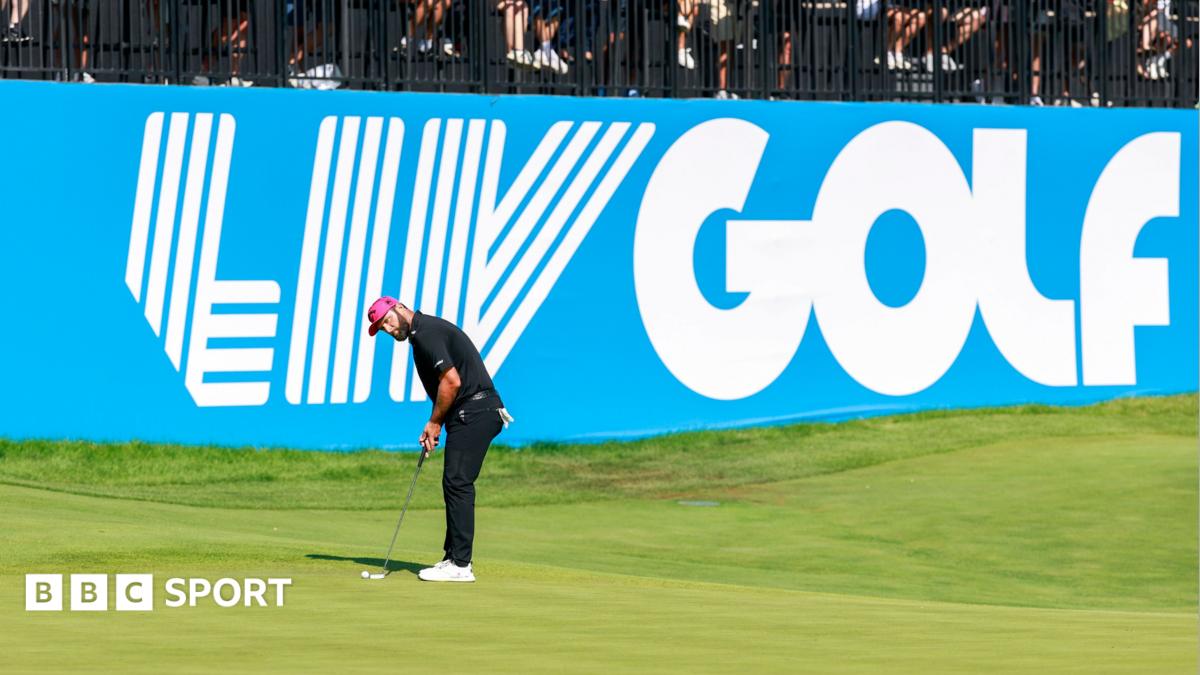
BP puts North Sea oil fields up for sale as part of restructuring

British oil giant BP announced plans Friday to sell off its North Sea business ending six decades of exploration and extraction on the U.K. Continental Shelf since the company first struck gas there in 1964. File photo by Neil Hall/EPA

July 31 (UPI) — British oil giant BP announced plans Friday to sell off its North Sea business, ending six decades of exploration and extraction in the U.K. Continental Shelf since the company first struck gas there in 1964.

The firm said that nothing would change for the time being while a buyer was found, vowing in a news release that it was fully committed to continuing to run its operations, prioritizing safety and dependability, while delivering for its customers, partners and investors.

The outcome of a review of its portfolio, BP said the goal was to enhance the value of the company by making it simpler and stronger through adhering to its approach of allocating capital in a rigorous fashion.

“The North Sea remains integral to the U.K.’s energy system. However, as we focus our portfolio and direct capital to our highest-value opportunities, we believe our North Sea business will be better positioned as part of another company. It has world-class people, resilient assets and a proud heritage, and it is precisely these qualities that can attract an owner ready to back its next chapter,” said BP.

“We are seeking an outcome that recognizes that value.”

CEO Meg O’Neill stressed that Britain would remain of key importance to the company going forward, saying BP was proud of the employment it generated, its input to the economy and its role in keeping energy flowing every day.

As recently as May, O’Neill described the North Sea basin as one of “untapped potential.”

The share price gained slightly on the news, rising a little more than 1% to $7.36 in mid afternoon trade on the London Stock Exchange on Friday.

BP has 24 fields across five main nodes in the North Sea, including its key Clair Ridge and Schielhallion fields of the Shetland Islands, with 1,100 workers pumping a little under 100,000 barrels of gas and oil daily.

Energy consultant Rystad, which estimates the North Sea business was worth $2.6 billion, told the Financial Times that it believed that the TotalEnergies-HitecVision-Repsol joint venture Neo Next +, Delek Group of Israel or Eni of Italy were in the running to buy it.

Source link

Under new owner Byron Allen, BuzzFeed slashes workforce by 35%

BuzzFeed is cutting roughly 35% of its workforce in its first major restructuring since media mogul Byron Allen bought a majority stake in the firm two months ago.

The layoffs, outlined in a Securities and Exchange Commission filing on Monday, will affect about 180 staff and contract positions across BuzzFeed and its sister brands HuffPost and Tasty.

“We’ve been actively managing costs for some time, working through scenarios to save as many jobs as possible,” BuzzFeed’s leadership team said in the memo. “Unfortunately, the elimination of certain roles is still required.”

The company, which maintains a Hollywood office, said the changes are necessary to “put our business on a path to profitable and sustainable growth.”

This restructuring comes after the millennial-focused media company, best known for quirky video content and online quizzes, sold a majority stake to Allen in May in exchange for $20 million in cash and a $100 million promissory note. Allen also became chairman and chief executive of the company.

Through the restructuring, BuzzFeed’s leaders said, the company will aim to grow its audience and bolster its positon in free streaming content.

The BuzzFeed purchase is the latest in a series of business moves Allen has made in recent years to build his entertainment empire. The former stand-up comedian recently purchased a portion of CBS’s late-night block earlier this year, taking over the time slot for the 2026-2027 season. The slot once belonged to “The Late Show with Stephen Colbert,” which was canceled last year and aired its final episode in May.

Allen’s company holds a slate of network-affiliate stations and owns the Weather Channel network. The company bought a 10.7% stake in cable channel Starz for $25 million in March.

Allen could not be reached for a comment on the new layoffs at BuzzFeed.

In its own statement, BuzzFeed said “We are extremely fortunate that Byron has enormous confidence in our management team and moved very quickly to reposition this company and unlock its value.”

BuzzFeed was founded in 2006. The website became known as a pop culture hub, where readers could indulge in the latest celebrity gossip or discover a unique cooking recipe. But over the years, the company has declined and faced mounting financial struggles. BuzzFeed reported a $15-million net loss in the first quarter of the year. The company generated $31.6 million in revenue, a 12.4% decline compared to the year-ago period. Ad revenue fell nearly 20% year-over-year to $17.1 million. However, content revenue grew roughly 69% to $7.5 million. The company is expected to release its second-quarter results Aug. 4.

Times Staff Writers Meg James and Stacy Perman contributed to this report.

Source link

Volkswagen joins other German carmakers with job cuts, restructuring

June 27 (UPI) — Volkswagen is set to cut as many as 100,000 jobs, and end production at four of its plants, as part of a restructuring to better counter Chinese rivals in Europe.

The company is one of several German automakers that is making cuts as Chinese companies gain ground in both Germany and the rest of Europe, The Financial Times and Wall Street Journal reported.

BMW and Mercedes-Benz, as well as Stellantis and Renault, have lost market share in Europe as BYD, Chery and other Chinese brands have surpassed 10% of car sales on the continent after years of slow growth.

Volkswagen already had agreed with its employee’s unions to cut 50,000 jobs in Germany by the end of 2030 as part of making it “more efficient and leaner,” but some experts have questioned whether the increased moves will have their intended effect, the reports said.

“Every European player is losing today,” Thomas Besson, an auto market analyst at Kepler Cheuvreux, told The Times.

“This is a highly challenging situation for European carmakers,” Besson said, “because Chinese [manufacturers] are progressing [in Europe] at a much faster pace than expected, while [European manufacturers] continue to lose volumes in China and face very adverse conditions in the United States, notably due to tariffs.”

Volkswagen, which is Europe’s largest carmaker, would be dropping about 15% of its 660,000-person workforce, in addition to ending production at three Volkswagen plants and one Audi plant, CNBC reported.

The company also plans to reduce investments by about 15% — roughly $148 billion — over the next five years, while also launching new efforts at selling its products to compete with the Chinese companies.

“The entire [Volkswagen] group — including its brands and subsidiaries — must undergo profound change,” a company spokesperson told CNBC.

White House Border Czar Tom Homan speaks during the Faith and Freedom Coalition 2026 Road to Majority Policy Conference at the Washington Hilton on Friday. Photo by Bonnie Cash/UPI | License Photo

Source link

JTBC, four affiliates seek court-led restructuring

JoongAng Group Vice Chairman Hong Jeong-do bows in apology during a news conference at the JoongAng Ilbo building in Seoul on Monday after JTBC and other group affiliates filed for court-led rehabilitation amid a liquidity crisis. Photo by Yonhap News Agency

June 15 (Asia Today) — South Korean broadcaster JTBC and four other companies affiliated with JoongAng Group filed for court-led rehabilitation Monday, two days after the television network defaulted on 20.6 billion won, or about $13.6 million, in debt.

The applications could lead to restructuring, asset sales and efforts to attract new investment if the court approves the rehabilitation proceedings.

The five applicants are JTBC, Contentree JoongAng, Megabox JoongAng, JoongAng Holdings and JoongAng P&I.

JoongAng Group Vice Chairman Hong Jeong-do apologized during a news conference at the JoongAng Ilbo building in western Seoul.

“As a senior executive of JoongAng Group, I sincerely apologize to our employees,” Hong said.

“Management has explored every possible option to overcome the credit crunch and liquidity crisis and maintain the group’s operational stability,” he said. “However, accumulated financial burdens and the prolonged contraction of the capital market have left us with no choice but to file for rehabilitation proceedings.”

JTBC declared a payment default Friday after failing to repay 20.6 billion won in securitized borrowings at maturity.

South Korean credit-rating agencies subsequently downgraded the credit ratings of JTBC and other major group companies.

NICE Investors Service cut JTBC’s unsecured bond rating from BBB with a negative outlook to CCC. A CCC rating indicates a substantial risk of default and generally makes it difficult for a company to raise funds through conventional financial markets.

The agency also downgraded JoongAng Ilbo’s long-term credit rating from BBB with a negative outlook to BB- and lowered its short-term rating from A3 to B-.

Korea Ratings lowered JTBC’s unsecured bond rating from BBB with a negative outlook to BB under negative review. It also downgraded the broadcaster’s commercial paper and electronic short-term bond ratings from A3 to B under negative review.

The group’s financial difficulties have been attributed partly to a sharp decline in television advertising as audiences and advertisers move toward digital platforms and streaming services.

Heavy investment in sports broadcasting rights has also placed pressure on the group’s finances.

JTBC acquired exclusive South Korean broadcasting rights for the FIFA World Cup through Phoenix Sports, an affiliate of JoongAng Group.

Contentree JoongAng, the parent company of Phoenix Sports, reportedly invested $125 million, or about 190 billion won, to secure World Cup rights.

The group also reportedly committed about $500 million for rights to broadcast the Olympic Games from 2026 through 2032 and FIFA World Cup tournaments through 2030.

JTBC failed in February to resell Winter Olympics broadcasting rights to South Korea’s three terrestrial television networks, contributing to substantial losses.

For the 2026 World Cup, JTBC sold some broadcasting rights to public broadcaster KBS for 14 billion won, or about $9.2 million, but did not reach agreements with MBC or SBS.

If the court approves the applications, the companies are expected to consider workforce and business restructuring, asset sales and outside investment as part of a financial recovery plan.

The Seoul Bankruptcy Court assigned the cases involving the JoongAng Group companies and subsidiaries to its Rehabilitation Division 2.

The court will review financial records and other documents submitted by the companies before deciding whether to formally begin the proceedings. Such decisions are generally made within about a month.

— Reported by Asia Today; translated by UPI

© Asia Today. Unauthorized reproduction or redistribution prohibited.

Original Korean report: https://www.asiatoday.co.kr/kn/view.php?key=20260616010005214

Source link

Venezuelan Gov’t Delegation Meets IMF amid Debt Restructuring Plans

Venezuelan leaders have held talks with both the IMF and the World Bank in recent weeks. (Archive)

Caracas, June 1, 2026 (venezuelanalysis.com) – A Venezuelan delegation representing the acting Delcy Rodríguez administration held talks with the International Monetary Fund leadership on Saturday in Washington, DC.

The Venezuelan team was led by Economy Vice President Calixto Ortega alongside Central Bank (BCV) President Luis Pérez and other finance officials. In a statement, Caracas called the meeting “productive,” focused on “technical assistance mechanisms” and the Caribbean nation’s efforts to “recover funds” to boost economic recovery.

“With these kinds of meetings, Venezuela ratifies its disposition for dialogue and international cooperation, with independence and self-determination,” the communiqué read. Venezuelan authorities emphasized the country’s “new stage of stability and growth” alongside a commitment to “reestablish ties with multilateral organizations.”

For her part, IMF Managing Director Kristalina Georgieva also classified the meeting as “productive” and reiterated the US-based institution’s disposition to “support efforts to strengthen macroeconomic stability.”

Venezuela reestablished ties with the IMF and the World Bank in April after a seven-year hiatus. The move followed the Trump administration’s recognition of Rodríguez as the South American country’s “sole leader” as part of a fast-tracked diplomatic rapprochement between Washington and Caracas.

The acting president hosted a World Bank delegation on May 15 and emphasized “technical cooperation” prospects.

Though Venezuela has been a member of the IMF and the World Bank since 1946, former President Hugo Chávez effectively disengaged from both bodies in the 2000s, labeling them “instruments of US imperialism” and seeking to create Global South integration and lending alternatives.

The Rodríguez government’s IMF meeting came amid announced plans to execute a “comprehensive and orderly” restructuring of the country’s foreign debt, estimated to be as high as US $170 billion.

Caracas’ liabilities stem from a combination of defaulted bonds and loans, international arbitration awards, and accrued interest. Venezuela began to default on its debts in 2017 as US sanctions heavily aggravated the Caribbean nation’s economic crisis and blocked payments. The restructuring process may be one of the largest in history, surpassing Russia (1998) and Argentina (2001).

The acting Rodríguez government is scheduled to present its macroeconomic framework and public debt sustainability analysis to the international finance community this month. The Trump administration issued a license allowing Venezuela to contract financial and advisory services, but direct negotiations with creditors remain prohibited.

The Venezuelan executive hired Centerview Partners as financial advisor for the debt restructuring process. According to Reuters, the decision was taken without a thorough selection process and on the recommendation of Mauricio Claver-Carone, a former Trump administration official and close associate of Secretary of State Marco Rubio.

Multiple reports in recent days have documented Claver-Carone’s role as a “gatekeeper” for businesses interested in investing in Venezuela as well as a conduit between Rodríguez and the Trump White House.

Venezuelan bonds have risen significantly in recent months as investors expect a windfall after purchasing the defaulted bonds at highly depreciated levels.

Venezuelan authorities have stated that there are “no plans” to take on IMF loans, instead prioritizing access to around $5 billion in Special Drawing Rights (SDR) to address infrastructure and public services needs. The IMF issued the SDRs to help countries deal with a liquidity crunch during the Covid-19 pandemic, but its non-recognition of the Nicolás Maduro government barred Venezuela from accessing its share.

For her part, Georgieva has previously stated that Venezuela “desperately needs help” and that the fund would support a loan program, but that prior steps, including clarity on macroeconomic data, are necessary.

Since the January 3 US military strikes and kidnapping of President Maduro, the Trump administration has extracted significant concessions from the Venezuelan government, including pro-business oil and mining reforms, lucrative deals for Western corporations, and external auditing of the Central Bank. The White House has also seized control of Venezuela’s oil export revenues.

Acting President Rodríguez has additionally installed a commission to evaluate the “strategic” value of Venezuelan state assets and possible privatizations. Plans to reform the country’s tax, labor, and pension laws are likewise underway.

Edited by Lucas Koerner in Caracas.

Source link