WHEN it comes to the best foodie spots in the UK, it’s safe to say Michelin-star chef Tom Kerridge knows his stuff.
Talking to Sun Travel, Tom revealed that he doesn’t always go for fine food – with a popular high street chain being one of his favourites.
Tom Kerridge spoke to Sun Travel about his top foodie destinations in the UKCredit: We Are SocialOne of Tom’s favourite spots for seafood is Whitstable in KentCredit: Alamy
“As far as chain restaurants go, it’s good value for money, and you can make it healthy – then cover it in hot sauce, as I like to.
“If I’m with my son, we’ll do a whole chicken and share one of those, then for sides, we love the Peri-Peri salt chips, and the Macho peas.”
You can even get meals for under £10 in Nando’s – the grilled chicken burger served in a soft roll with tomato relish, mayo, lettuce and tomato comes in at £8.75.
A variety of the salads come in at £9.50, or if you fancy some sides, get a quarter of a chicken and add two sides for just £12.45.
Another British staple is of course fish and chips, and Tom reveals exactly where he likes to go for the seaside favourite.
He said: “The north coast of Kent is just brilliant, and there are a couple of great chippies in Whitstable.
“The town actually ahs an incredible fish scene in general – it’s still a fishing port and you can see the boats coming in and out everyday.
“One of my favourites spots is actually Whitstable Oyster Company, and there’s Wheelers which is fantastic for shellfish – especially if you like a crab sandwich.”
British and his son love a pre-cinema trip to Nando’sCredit: Tom Kerridge
He added: “And the best part is that it’s all along the seafront – I’m a believer in flavour being wrapped up in a setting.
“You’ve got to go and eat on the sea wall with seagulls flying overhead. It’s magic, and that’s what makes things taste great – especially along the north Kent coast.”
When it comes to the Great British pub, there’s one spot that sticks out in Tom’s mind, and you’ll find it in Yorkshire.
He explained : “One of the best in the UK is in a sweet little village called Harome.
“The Star Inn is run by Andrew Pern and it’s an amazing, brilliant pub with Michelin-star food.
“It’s homely, hearty and everything you’d expect from a Yorkshire pub like an open fireplace, Wellington boots. It’s a lovely, lovely place.”
A few years ago, The Star Inn was named one of the best pubs in the country – it’s inside a 14th century thatched cottage with exposed wooden beams.
Lots of visitors have praised it for being “charming” and having “incredible food for a fair price”.
Whitstable has an incredible fish scene – like at WheelersCredit: AlamyThe Star Inn is one of Tom’s most-recommended country pubsCredit: Alamy
They cook up a storm too from plum-glazed duck to roast lamb, pan-roasted halibut and for dessert baked-apricot soufflé to savoury frangipane.
And while Tom raves about the major cities as a place to eat fantastic food – praising Manchester for its street food and bars, along with Bristol for its vegetarian restaurant – there is a much smaller island he said is amazing as well.
He said: “When I was a child, I used to go on holiday to the Isle of Wight all the time.
“It was to a Butlin’s-style caravan park, and now I’m at the point where my son is 10 and he loves the idea of camping and doing adventure stuff – so I’m looking forward to getting back into it.
Marlow is considered one of Buckinghamshire’s prettiest townsCredit: AlamyOne of Tom’s three pubs in Marlow is The Butcher’s TapCredit: Tom Kerridge
“I actually went back to the Isle of Wight earlier this year to film something, and I love going back.
“It’s so small that you can go all over – the coast is very special.
“The Isle of Wight has quite an old-school feel, it’s like going back to the 50s or childlike England. It would be cool to take my son there and go camping.”
Tom is based in Marlow, where he has lived for 21 years, and it’s where he’s set up his three pubs; The Coach, The Hand & Flowers and The Butcher’s Tap.
In October 2017, Tom’s pub, The Coach was awarded its first Michelin starCredit: AlamyRock village in Cornwall is where Tom and his family love going on holidayCredit: Alamy Stock Photo
Chase bank has partnered with Tom Kerridge to celebrate the UK’s world class dining scene.
This comes as new research from Chase reveals that Brits are willing to travel far and wide for a good meal, to the tune of 57 miles on average – the same distance as from London to Oxford.
With Chase, customers can earn 2 per cent cashback – up to £20 a month – when you use your debit or credit card in the UK and Channel Islands across:
Groceries – e.g. at grocery stores, supermarkets, miscellaneous food stores, convenience stores and specialty markets
Everyday transport – e.g. local and suburban commuter passenger transportation (including ferries), bus lines (including charter/tour buses), railroads and passenger rail (trains)
Fuel – e.g. service stations (with or without ancillary services), automated fuel dispensers and public electric vehicle charging points
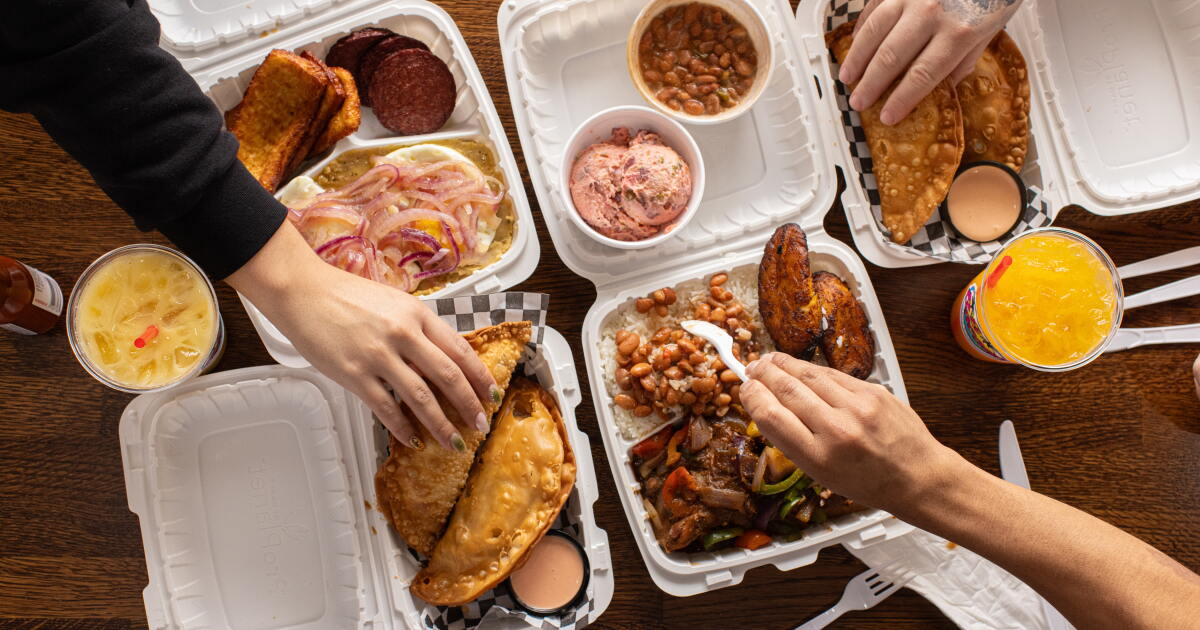
The line at Holbox during the midweek lunch hour has become a cultural sensation, a queue of locals and visitors trailing past the automatic doors and around the parking lot like devotees angling for the latest iPhone series or limited-release sneakers. Believe the lauds, including ours when we named Holbox as The Times’ 2023 Restaurant of the Year. Gilberto Cetina’s command of mariscos is unmatched in Southern California — his ceviches, aguachiles and tostadas revolutionary in their freshness and jigsaw-intricate flavors. The smoked kanpachi taco alone — clinched with queso Chihuahua and finished with salsa cruda, avocado and drizzles of peanut salsa macha — is one of the most sophisticated things to eat in Los Angeles.
Holbox could be considered for the top ranking on its own strength. But in a year when disasters tore at our city, honoring the power of community feels more urgent than ever. Cetina’s seafood counter doesn’t thrive in a vacuum. Holbox resides inside the Mercado La Paloma in South L.A. The mercado is the economic-development arm of the Esperanza Community Housing Corp., a nonprofit organization founded in 1989 that counts affordable housing and equitable healthcare among its core missions. When the mercado was in the incubation stage, Esperanza’s executive director Nancy Ibrahim interviewed would-be restaurateurs about their challenges and hopes in starting a business. Among the candidates was Cetina’s father, Gilberto Sr., who proposed a stall serving his family’s regionally specific dishes from the Yucatán. Their venture, Chichén Itzá,was among the eight startups when the mercado opened in a former garment factory nearly 25 years ago, in February 2001.
Step into the 35,000-square-foot market today, and the smell of corn warms the senses. Fátima Juárez chose masa as her medium when she began working with Cetina at Holbox in 2017. Komal, the venue she opened last year with her husband, Conrado Rivera, is the only molino in L.A. grinding and nixtamalizing heirloom corn varieties daily. Among her deceptively spare menu of mostly quesadillas and tacos, start with the extraordinary quesadilla de flor de calabaza, a creased blue corn tortilla, bound by melted quesillo, arrayed with squash blossoms radiating like sunbeams.
Wander farther, past the communal sea of tiled tables between Holbox and Komal, to find jewels that first-timers or even regular visitors might overlook.
Taqueria Vista Hermosa, run by Raul Morales and his family, is the other remaining original tenant. Order an al pastor taco, or Morales’ specialty of Michoacan-style fish empapelado smothered in vegetables and wrapped in banana leaf. The lush, orange-scented cochinita pibil is the obvious choice next door at still-flourishing Chichén Itzá, but don’t overlook crackling kibi and the brunchy huevos motuleños over ham and black bean puree. The weekends-only tacos de barbacoa de chivo are our favorites at the stand called Oaxacalifornia, though we swing through any time for the piloncillo-sweetened café de olla and a scoop of smoked milk ice cream from its sibling juice and snack bar in the market’s center. Looking for the comfort of noodles? Try the pad see ew at Thai Corner Food Express in the far back.
The everyday and the exquisite; the fast and the formal (just try to score a reservation for Holbox’s twice-a-week tasting menu); a food hall and sanctuary for us all. Mercado La Paloma embodies the Los Angeles we love.
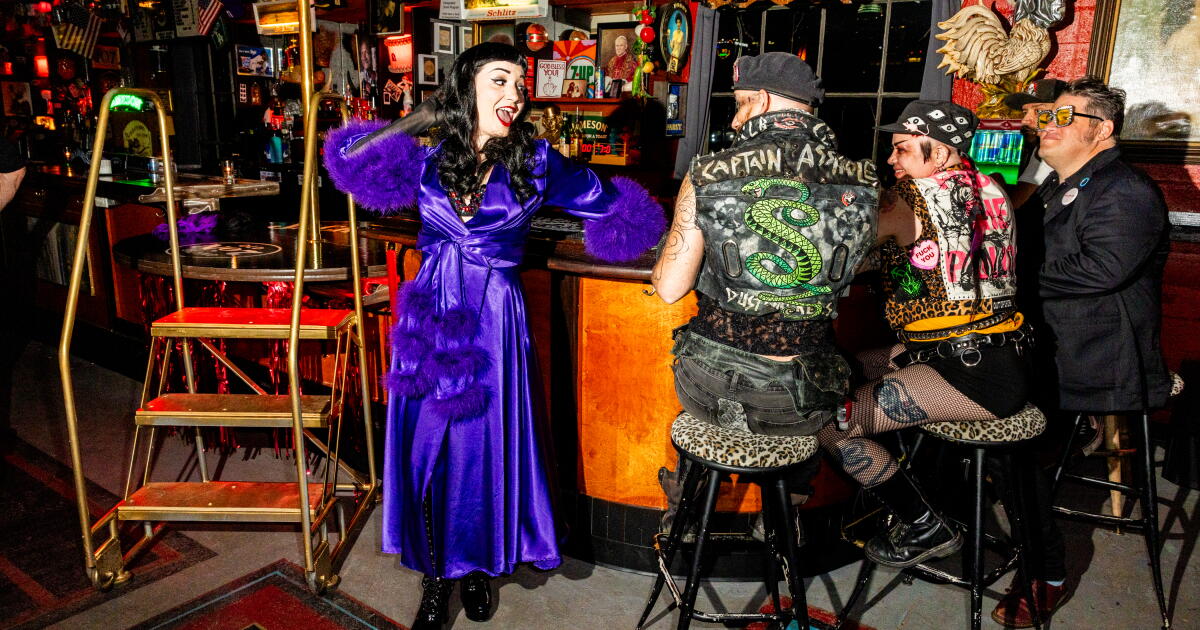
There’s a cross on the roof, stained glass in the windows and a choir loft upstairs, but this whitewashed three-level building near Sunset Boulevard in Silver Lake is no longer a house of worship.
It’s the Hotel Lucile, a 25-room boutique lodging that opens Sept. 14 with a restaurant and bar in the high-ceilinged sanctuary where churchgoers once gathered. This opening follows more than a decade of controversy and transformation, including a community debate, bankruptcy and the arrival of a new hotelier in 2020.
The new hotelier is Los Angeles-based Casetta Group, which specializes in adapting older structures and has six properties in California and New Mexico, including the Surfrider Hotel in Malibu and Casa Cody in Palm Springs.
When guests arrive at Hotel Lucile, they will find many reminders that the building was constructed as Bethany Presbyterian Church in 1931. But those guests will also see plenty of updates, including 25 guest rooms in the space that once held a church school; a small pool (about 15 feet square); and a rotating display of more than 100 contemporary artworks (many for sale). The organ loft is now a meeting space. The choir loft is retooled as a zone for coffee and drinks. The rooftop is a lounge with downtown views.
1.Bathroom inside a suite.2.Desk inside a premium king room.3.Sitting area inside a suite.(Myung J. Chun / Los Angeles Times)
“The building has lived several lives,” Hotel Lucile general manager Anthony Gutierrez said in an email. “It has always been a place for people to gather.”
The establishment fell idle as developer Dana Hollister took over the lease and sought city permits to convert it into a hotel with alcohol and dancing. Despite opposition from many neighboring homeowners and businesses alarmed by possible traffic impacts, those permits were approved in 2014.
But Hollister declared bankruptcy in 2018 and sold her interest in the property in 2020. That’s when the Casetta Group took over Hollister’s long-term lease from the Presbytery of the Pacific, which owns the property.
This church-to-commerce transition isn’t entirely unique. Across the city and the country, declining attendance has idled many religious buildings, often leading to conversions. In DTLA, the restaurant and event space known as Redbird + Vibiana was previously St. Vibiana’s Cathedral, deconsecrated by the Catholic Church after suffering damages in the 1994 Northridge earthquake. In Beachwood Canyon, the Monastery of the Angels was built as a private mansion and rebuilt by the Catholic Church in 1948 as a monastery. In early 2026, Homeboy Industries bought it from the church and began remaking it into Home of the Angels, a “recovery campus” for people impacted by trauma, substance use disorders and involvement in the justice system.
More church conversions may follow, thanks to California law SB4, passed in 2023 to allow faith-based groups and nonprofit colleges to avoid some local restrictions when converting buildings into affordable housing.
Meanwhile, the Hotel Lucile begins a new chapter, retaining interior arches, masonry, woodwork details and a rooftop cross that the hotel will keep alight at night. (The old church bell, however, will remain silent.)
Because the hotel has no on-site parking, it will rely upon valets and street parking (already tight in the neighborhood) to accommodate the cars of overnight guests and restaurant diners.
The rates begin at $441 nightly, plus a $50 amenity fee. To start, management is offering a “locals rate” of 15% off for guests who can show a California state ID.
“We did preserve as much as we could of the original beams and stained glass,” said Laney Langenstein, who oversees strategy and marketing for Casetta. Though guest rooms have minibars (curated by Erewhon and other partners), Langenstein noted that hotel staffers will also push a martini cart that will “go through the hallways and see if anybody thinks it’s cocktail hour.”
The dinner-only restaurant, Sous Sous, will draw upon cooking traditions of southern France and the American South, seating up to about 120, with occasional live music on the room’s stage. A hotel cafe will be open to guests for breakfast and lunch.
The new look of the hotel was produced by Casetta Hotels and design firm Electric Bowery. Children are permitted at the hotel, but not encouraged by the layout. (Of 25 rooms, 24 have a single king bed and one has two queens. Most rooms have showers, not tubs. There is one suite, which has its own courtyard patio and fountain.)
With an eye to potential expansion later, hotel management has also bought up one of the three immediately neighboring properties.
Meanwhile, now that the hotel is about to open, feelings among neighbors are mixed.
A booth at Sous Sous restaurant.
“When they tried to get a permit for the hotel, we all went to speak against it. But they got the permit,” said Jin Chang, longtime owner of nearby Big Mac’s Liquor on Sunset. Now, Chang said, he’s neutral about the hotel opening and relieved that his mini-mall has its own parking lot.
“What’s the definition of progress?” asked VJ Kesh, a longtime neighborhood resident. “Is this hotel a reflection of Silver Lake? Hell, yes. So I’m in favor.”
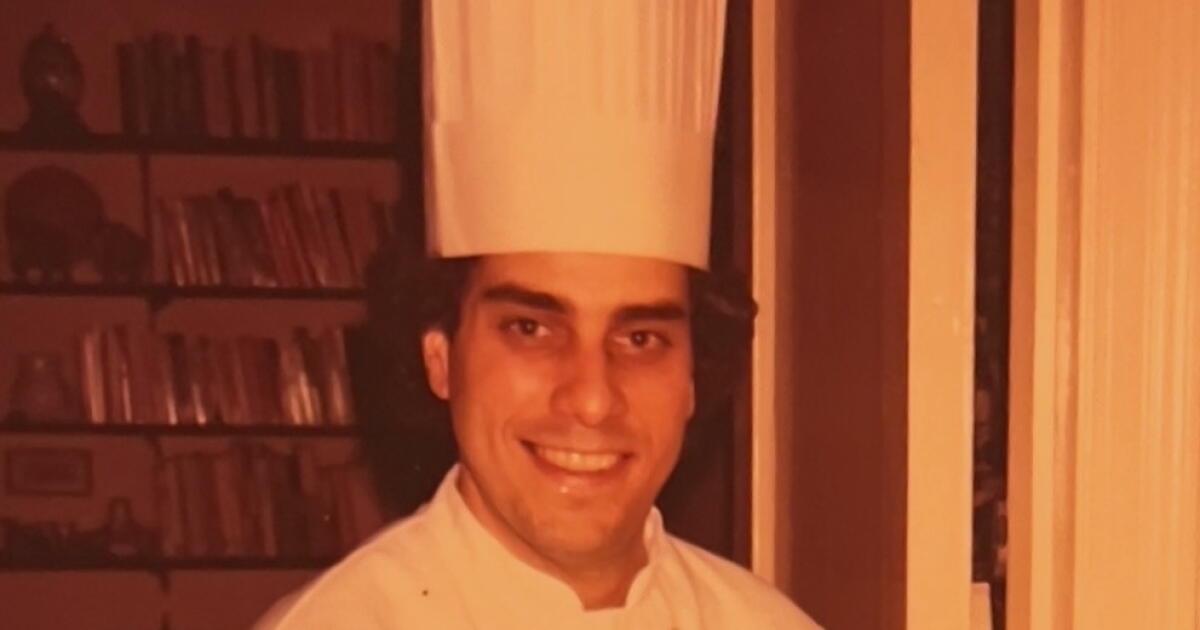
Michael Lomonaco can account for every minute of the morning of Sept. 11, 2001 — including the small decision that saved his life.
Lomonaco, the executive chef who ran Windows on the World on the 106th and 107th floors of the North Tower of the World Trade Center, was on his way up to his office when he stopped at an optometrist shop on the ground level to have his eyeglass frames adjusted.
He was still inside when American Airlines Flight 11 hit the tower above him at 8:46 a.m.
“I felt the buidling shake,” he recalled in the new CNN Films documentary “Top of the World.” “And I thought that can’t be the subway. That’s impossible.”
Lomonaco was evacuated. From the street, he watched employees of his own restaurant wave a white tablecloth from a window more than 100 floors up. Seventy-nine Windows on the World employees and 91 guests died that morning in the gastronomic soul of the Twin Towers — the one part of the complex that belonged to New Yorkers who didn’t work there, and to visitors from everywhere else.
“Top of the World” premieres Monday at 8 p.m. ET/PT on CNN and begins streaming the following day on the network’s subscription streaming platforms. The documentary short arrives on a double anniversary: 25 years since the attacks, and 50 years since Windows on the World opened on April 19, 1976.
It is the work of producer-director team Betsy West and Julie Cohen, who made “RBG,” the Oscar-nominated portrait of the late Supreme Court Justice Ruth Bader Ginsburg. The film is a production of CNN Films, TIME Studios and Tribeca Studios, in association with Montalto Pictures and Storyville Films, and was inspired by Tom Roston’s book “The Most Spectacular Restaurant in the World.” Actor Denis Leary voices the restaurant’s creator, Joe Baum, drawn from decades of archival recordings.
West and Cohen were reluctant to take it on. Both were working in network television news in 2001.
“There’s like a part of you that doesn’t want to go back there,” Cohen said in a recent interview. “But when we read this book and met some of the amazing people who had worked at Windows over its 25-year history, we realized this was actually a really good way into remembering there was a lot of beautiful stuff in the Twin Towers and like we shouldn’t let that disappear just because it ended so painfully.”
What emerges is a history of how a restaurant transformed the reputation of the monolithic Twin Towers, which received little respect from architecture critics and bafflement from a public that wondered why it was built in the 1970s by the Port Authority of New York and New Jersey as the city was fighting off financial collapse.
“This film tells a story of a restaurant that was very special to New York a time when New York was getting kicked in the teeth,” the Brooklyn-born Lomonaco said in a recent interview.
The World Trade Center operators turned to restaurant impresario Joe Baum to create a dining experience that would draw people to the Manhattan neighborhood largely known for its blocks of stores that sold radios and electronic parts. Baum was known for such New York dining landmarks as the Four Seasons and Tavern on the Green, and his new creation became an immediate hit after it opened in 1976, becoming a magnet for tourists and celebrities alike who came for the eye-popping views through the floor-to-ceiling windows.
At the time of the 9/11 attack, the World was the highest-revenue-generating privately owned restaurant in the U.S.
West noted another draw to the story was the stories of the many immigrants who worked at Windows, which proudly called itself “the U.N. of restaurants.” The film’s focus on the contribution of the foreign-born population to the restaurant industry stands in stark contrast to the image of immigrants conveyed by the Trump White House to justify its deportation efforts.
“Immigrants continue to make a contribution to our country and to the economy,” West said. “This was an opportunity to tell that positive story as opposed to what’s going on in our country now.”
Cohen and West scoured the Windows on the World Facebook page to find surviving former employees to help tell the story. Nathalie Tolentino was a hostess whose family came to the U.S. to escape political upheaval in Peru. Sekou Siby was a line cook from the Ivory Coast, who swapped shifts with one of the workers who died during a morning breakfast held in the restaurant on 9/11. Both talk about how the restaurant changed their lives.
Lomonaco is a central character in the “Top of the World,” as his arrival as the executive chef of Windows in 1997 boosted the restaurant’s culinary reputation. A hot chef who oversaw a turnaround at the 21 Club, another legendary New York dining spot, Lomonaco turned Windows into a destination for American cuisine along with the breathtaking views.
Lomonaco arrived after the restaurant was closed for three years following the first terrorist bombing of the World Trade Center in 1993 that killed six people and injured more than 1,000 but left the towers intact.
Once Windows on the World was gone, Lomonaco was offered high-profile restaurant jobs in other parts of the country. But he had unfinished business in New York.
“I didn’t want to abandon my city,” he said.
In the first days after the attacks, Lomonaco said, he read nothing about Windows on the World; coverage centered on the massive loss of life among the first responders and at the financial firms inside the World Trade Center. But over time, he got attention and support for the families of the employees who lost their lives that day.
Lomonaco and the restaurant’s owners formed Windows of Hope, a charitable foundation that raised more than $22 million to pay for healthcare and tuition costs for the children of the victims. “We were giving checks to people to pay their rent before federal funds came through,” he said.
Lomonaco said he still meets patrons who give him a matchbook or coaster from their visit to Windows. “They feel like they have to give me or send me these little artifacts,” he said. “That’s what has touched me the most.”
WE ALL love a Maccies, but instead of you bog standard local, you could head into one where there are dining train carriages.
Along one of America’s most iconic roads, Route 66, you will find a McDonalds like no other.
There’s a McDonald’s in California that is formed of train carriagesCredit: TripAdvisorGuests can dine in the carriages which have classic-style boothsCredit: TripAdvisor
Barstow McDonalds in California is made from renovated train carriages and sits roughly halfway between Los Angeles and Las Vegas.
The restaurant opened back in 1960 and soon became such a popular spot that it needed to be expanded.
Sign up for the Travel newsletter
Thank you!
The destination then became Barstow Station, where several buildings are attached by several train cars.
Currently there are 17 train cars that make up the Barstow Station complex, four of which are now McDonald’s Dining Cars.