THE best hotels and resorts in Europe have been revealed and two in the UK have made the cut.
The annual World Travel Awards has named everything from beach resorts to city stays.
The Chancery Rosewood in London has been named Europe’s Leading New Hotel 2026Credit: Booking.comIt opened in September last year and has an underground swimming poolCredit: Booking.com
The good news for us Brits is that there are two in the UK – one in London and the second is a floating hotel in Edinburgh.
The Chancery Rosewood in London which opened its doors in September last year has been named Europe’s Leading New Hotel 2026.
Sign up for the Travel newsletter
Thank you!
The Grade II listed building is on Grosvenor Square and is considered one of the most expensive hotels in the country.
It has 144 suites, some of which even have steam rooms and two-person bathtubs.
On the roof are the two penthouses named Elizabeth and Charles which are 350sqm in size, and even come with private butler.
Start saving – they can cost £20,000 a night.
Otherwise the hotel has a whopping eight restaurants and bars, 24-hour in-room dining and a spa with a 25metre long swimmingpool and fitness studio.
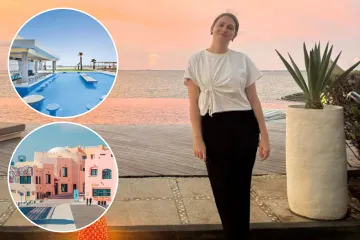
The other hotel mentioned on the list is Fingal Hotel in Scotland which was named Europe’s Leading Boutique Hotel.
It’s unlike most others as the hotel is inside the Northern Lighthouse Board ship that is permanently docked in the Port of Leith.
It has 23 custom- designed cabins onboard with super-king beds, tartan textiles,and Art Deco styling with a sun terrace, restaurant and bar.
The Fingal Hotel in Scotland is onboard the Northern Lighthouse Board shipCredit: Booking.com
A one-night stay for two adults starts from £279.
When it comes to hotels abroad, Ikos Odisia in Greece is one to talk about – it’s won Europe’s Leading All-Inclusive Resort at the World Travel Awards for three years in a row.
The hotel in Corfu sits on the edge of Dasia Bay – it has Mediterranean-style rooms, 10 swimming pools and a private beach.
With its ‘All Inclusive Plus’ package, guests have unlimited access to all restaurants and bars, as well as beach and pool food and beverage service with drinks, cocktails and snacks.
There’s 24-hour complimentary room service, guests can also use the Local Discovery programme which includes the use of a Tesla for one full day during the stay.
It also includes free museum tickets (one museum ticket per person, per stay) and 30-minute complimentary beachside childcare for children four and up.
The Cullinan Belek in Turkey is the Leading Luxury All-Inclusive Resort this yearCredit: Booking.comIkos Osidia has a generous all-inclusive package including use of a TeslaCredit: Booking.com
Named as Europe’s Leading Luxury All-Inclusive Resort is Cullinan Belek in Turkey.
It’s been described as having true ‘glitz and glamour’ with 600 rooms in total some of which are private family villas or rooftop suites with Jacuzzis.
When one Sun Writer checked into the Cullinan Belek, she found her room came with its own pillow menu.
Her Superior Duplex room also had “top-of-the-range tech to control lights, curtains and air, plus divine Bvlgari toiletries in the two bathrooms.”
She added: “But the real treat is the swim-up infinity pool which lapped my second-floor terrace, overlooking the main resort.”
There’s a gym with a Pilates reformer stand, yoga room, Hyrox zone and the hotel has its own golf course.
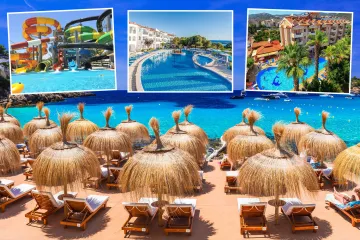
Almar Lido Jesolo in Italy is right on the beach with incredible views from the roomsCredit: Booking.com Elounda Beach Hotel & Villas has won Europe’s Leading Beach ResortCredit: Unknown
Meanwhile, Almar Lido Jesolo in Italy has been named Europe’s Leading Beach Hotel.
Fifty minutes away from Venice, the hotel has 184 rooms as well as a 70metre pool heated to three different temperatures.
Even the gym overlooks the sea, otherwise head to the ocean as there is a path down to the private beach.
Another beach hotel that made it onto the award winners list is Elounda Beach Hotel & Villas which won Europe’s Leading Beach Resort.
It’s considered one of the most luxurious in Crete – the five-star resort has everything from five tenniscourts and a scuba diving centre, to a swimming pool and two private beaches.
There are lots of rooms to choose from but one of the most impressive is the Island Bungalow Waterfront which has direct access to the water.
When it comes to Europe’s Leading New Boutique Hotel, the Avali by Mar-Bella Collection in Corfu has been named the best.
The hotel is on the smaller side with 76 rooms and suites, some of which have private rooftop pools.
There’s an option to go all-inclusive (which comes with unlimited ice cream) as well as 30-minutes free use of a canoe and pedalo.
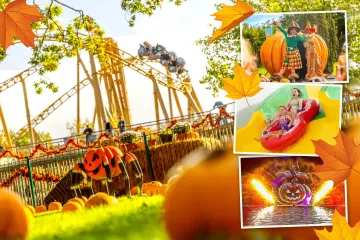
It’s not all about relaxing though, the awards even highlighted the best Theme Park Hotel in Europe which went to The Land Of Legends Kingdom Hotel in Turkey.
Avali by Mar-Bella Collection in Corfu is Europe’s Leading New Boutique HotelCredit: TUI Guests at the Kingdom Hotel get unlimited access to the Land of Legends theme parkCredit: Unknown
For any fan of the theme park its ideal as guests of the hotel get included and unlimited access to the attraction.
This includes its rollercoasters and Aqua Land waterpark, and a complimentary shuttle bus and access to the private beachfront.
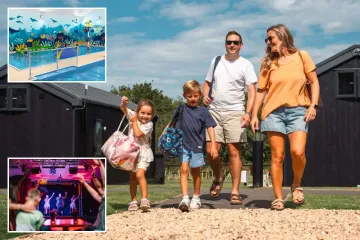
Next door is the newly opened Nickelodeon Hotel which opened just last year – it has character meet-and-greets throughout the day with free gaming stations and a kids’ club.
Here are all the hotels and resorts in the Winners 2026 list…
Europe’s Leading Airport Hotel 2026 – NH Lyon Airport, France
Europe’s Leading All-Suite Hotel 2026 – THE VIEW Lugano, Switzerland
Europe’s Leading All-Inclusive Resort 2026 – Ikos Odisia, Greece
Europe’s Leading Beach Hotel 2026 – Almar Lido Jesolo, Italy
Europe’s Leading Beach Resort 2026 – Elounda Beach Hotel & Villas, Greece
Europe’s Leading Boutique Hotel 2026 – Fingal Hotel, Scotland
Europe’s Leading Boutique Resort 2026 – Collegio alla Querce, Auberge Resorts Collection, Italy
Europe’s Leading Casino Resort 2026 – City of Dreams Mediterranean, Cyprus
Europe’s Leading City Hotel 2026 – Conrad Istanbul Bosphorus, Türkiye
Europe’s Leading Design Hotel 2026 – 1908 Lisboa Hotel, Portugal
Europe’s Leading Entertainment Hotel 2026 – Seven Visions Resort & Places, The Dvin, Armenia
Europe’s Leading Family Resort 2026 – Sani Resort, Greece
Europe’s Leading Heritage Hotel 2026 – Párisi Udvar Hotel Budapest
Europe’s Leading Hotel 2026 – Estoril Vintage Hotel, Portugal
Europe’s Leading Hotel & Spa 2026 – Almar Timi Ama Villasimius, Italy
Europe’s Leading Island Resort 2026 – Inchydoney Island Lodge & Spa, Ireland
Europe’s Leading Landmark Hotel 2026 – The Phoenicia Malta
Europe’s Leading Leisure Resort 2026 – Domes Zeen Chania, a Luxury Collection Resort, Greece
Europe’s Leading Lifestyle Hotel 2026 – Hyatt Regency Vilamoura Algarve, Portugal
THE spooks and the ghouls are gathering, and this half-term is gearing up to be spine-chillingly fang-tastic.
Superb Halloween events for all the family are being held across the UK, including in city centres, holiday parks, castles and lots of amazing attractions.
The spooks and the ghouls are gathering, and this half-term is gearing up to be spine-chillingly fang-tasticTeenage monsters will love screaming their way through horror mazes at Blackpool Pleasure Beach
Here, Trisha Harbord shares her selection of 13 of the most magical and monstrous activities taking place in the coming weeks.
MAZE MADNESS
DO you have teenage monsters? They’ll love screaming their way through horror mazes at Blackpool Pleasure Beach.
Sign up for the Travel newsletter
Thank you!
The attraction’s Journey To Hell features three new mazes: Eternal Abyss, a network of tunnels; The Veil, a house steeped in grief; and Deadline, with its nightmarish corridors.
Other frightening encounters include riding ICON: Into The Void blindfolded, and a ghost train.
Screamfest at Staffordshire’s National Forest Adventure Farm is celebrating 15 years with its most terrifying attraction. Cortex 17 is a psychic trial set in a 1960s hospital, featuring 20 weird actors.
It’s among seven chilling experiences with thrill rides and roaming characters until October 31, from £34pp. See screamfest.co.uk.
HOLIDAY PARK HELL
HOLIDAY parks across the UK have cut-price half-term deals. Butlin’s Spooktober is landing at Bognor Regis, Minehead and Skegness, with discounted three-night breaks from £66 per person.
Fairgrounds have become scaregrounds and there are special Halloween shows, eerie silent discos and crafts as well as Splash Waterworld, TV’s The Masked Singer and Maximum Pro Wrestling. See butlins.com.
If you’re in Scotland or the north of England, Verdant Parks has 11 sites in beautiful coastal and countryside locations where Halloween is being celebrated, with three-night family stays from £259.
You could choose Riverside, on the banks of Wooler Water in Northumberland, which has a pool, wellness area, soft play, arcade, entertainment, bar and restaurant.
Kids can get involved in pumpkin carving and zombie battles. See verdantparks.co.uk.
MONSTER MAYHEM
Manchester’s MCR Monsters are back for their tenth anniversaryCredit: Carl Sukonik
MANCHESTER’s MCR Monsters are back for their tenth anniversary. The giant, inflatable creatures will appear on famous buildings and landmarks such as The Royal Exchange and Corn Exchange from October 24 to 31.
On the first weekend, the free event features real-life characters roaming the streets, plus party games and DJs.
There’s also a new Paul Horror-wood Monster Bake-Off on New Cathedral Street, where you can win a “handshake” and pick up free party bags of sweets. Kids will love the spooky storytelling at the monsters’ library in the Arndale, too.
Dancing puppets, stilt walkers and a brass band will lead a procession to the city centre for a spectacular anniversary party.
All week, the Science And Industry Museum is holding interactive activities about Halloween aliens. See halloweenmcr.com.
GET your wellies on and hitch a ride on a tractor-trailer to pick your own pumpkin. This year, Stockeld Park near Wetherby, Yorkshire, has grown their own to add to their half-term activities from October 24 to November 1.
Enter Halloween fancy dress competitions, complete a forest trail with the help of woodland witches who will share their mischievous skills, explore the Mummy Maze, with a few surprises along the way, and battle it out in the Laser Zombie Experience.
Stockeld also has six playgrounds, a multi-storey playhouse and tree climbing. Tickets from £28pp. See stockeldpark.co.uk.
Still not had enough? There are pumpkins galore – hundreds of thousands to be precise – to be collected at Rougham Estate near Bury St Edmunds, Suffolk. You’ll also find food trucks, face painting, pedal tractors and ice cream, too! See roughamestate.com.
CHOCCIE HORROR SHOW
HALLOWEEN comes with a sweet twist at Cadbury World. The Birmingham attraction has a new gameshow-style challenge where visitors must guess the characters hiding behind a Trick Or Treat door.
And there’s Freddo’s Spooktacular, with games, songs, magic and chilling surprises, as well as chocolate pumpkins and afternoon tea. Explore 14 zones with activities and a 4D movie. Runs until November 1, tickets from £24. See cadburyworld.co.uk.
Until November 1 at Sea Life Birmingham, sea witch Serafina asks kids to become ocean defenders by following a spellbinding trail. They will tackle challenges, solve puzzles and complete Serafina’s missions to discover life under the sea.
Walk through the UK’s only 360-degree ocean tunnel to see turtles, sharks, rays and hundreds of tropical fish. From £19. See visitsealife.com.
HIGH-SPEED THRILLS
TEENS’ hearts will be racing when they get to ride their favourite rollercoasters after dark at Alton Towers.
And new scare maze Final Exhibit will have visitors running for their lives to avoid becoming part of a creepy display.
Younger thrill-seekers will prefer a visit to Trick O’ Treat Town and Amigos In The Afterlife, where they’ll meet friendlier characters.
Scarefest runs until November 1 on selected dates, and tickets cost from £37 for day entry or £80 including all four scare mazes. See altontowers.com.
If after-dark thrills are more your thing, Thorpe Park is celebrating the 25th anniversary of its Fright Nights with more spine tingles than ever before. Its new scare maze Tenement will have adrenaline junkies looking for the exit in the pitch black. Entry from £39. See thorpepark.com.
SPOOKY WOOKEY
GET your best Halloween togs on and you could win a year of magical adventures.
The show caves at Wookey Hole, near Wells in Somerset, have been transformed into a spellbinding world of pumpkins, monsters, magic and family fun.
Every family in fancy dress who take a photo there will be entered into a draw to win a year’s membership to the attraction, including access to the new Winter Wonderland.
The Halloween event, which runs until November 1, includes a journey through the caves, where immersive projections bring the story of the Witch of Wookey Hall to life.
Vampires and monsters are taking over the circus, there’s a spooky 4D film, a pumpkin trail and surprises. Adult tickets cost from £24.64, child tickets from £19.54. See wookey.co.uk.
CASTLES IN THE SCARE
STAY in a castle and seek out characters from Horrible Histories. Performers will bring the gruesome stories from the kids’ books to life at Leeds Castle near Maidstone, Kent, until November 1.
Follow a ghost-getter’s trail, uncovering tales of royal spirits, witch trials and strange superstitions. Two nights’ B&B for a family of four in a castle bedroom costs £500, including tickets and free evening meals for kids. See leeds-castle.com.
Warwick Castle will also be full of family frights, including haunted hollows and lurking goblins from October 24 to November 1. But on selected nights, the scares are turned up a notch – with spine-tingling sleepovers including three terrifying ghostly experiences, circus acts and a silent disco. B&B and tickets cost from £85pp. See warwick-castle.com.
HOWLS AND OWLS
The Welsh School Of Witchcraft And Wizardry can be found at the British Bird Of Prey Centre, in CarmarthenshireCredit: Gareth Danks
WANNABE Harry Potters can learn spells and meet some owls at The Welsh School Of Witchcraft And Wizardry.
It can be found at the British Bird Of Prey Centre, in Carmarthenshire, which has been transformed for a week of mischief from October 26.
Kids are encouraged to wear magical costumes for classes including wand-making, creating potions and spells. Then, they can try being a falconer and fly an owl or a red kite.
Tickets cost from £14 per adult and £8.50 per child. Flying sessions are from £10. See british birdofpreycentre.co.uk.
If you’re further south, a wizard school is also being held at Southampton’s Tudor House on October 26 and 27, costing £8. The house has a free Halloween open day on October 30, with crafts, facepainting, haunted tales and guided ghost tours. See visitsouthampton.co.uk.
THE HAUNTED WOODS
THINGS aren’t just going bump in the night down at BeWILDerwood outdoor family adventure parks in Norfolk, Cheshire and the Lake District.
There’s a whole host of spooky events in the daytime, too. The woodland attractions are asking young visitors to don their scariest outfits to enjoy the play trails and whoosh along zipwires.
There’s also a Twig Or Treat trail until November 1 – where youngsters will be tasked with uncovering characters and collecting letters to discover the scrambled word and claim their prize.
Then, stick around until nightfall to see the Glowing Light Trail twinkle. Tickets cost from £26.50 per adult and £24.50 per child over 92cm. Families can bag 12.5 per cent off when they book online in advance. See bewilderwood.co.uk.
CREEPY CAPITAL
Halloween characters, the stilt-wearing Peculiar Sisters, are trailing around spookily-decorated shops and houses on Kensington High Street from October 23 to 31Credit: Mark Weeks
LONDON is crawling with creepies this half-term. Halloween characters, including the stilt-wearing Peculiar Sisters, are trailing around spookily-decorated shops and houses on Kensington High Street from October 23 to 31.
And on the last day, Holland Park will be transformed into The Playful Park Of Peculiar with live entertainment. See highstreetkensington.co.uk.
London Dungeon has the three-part immersive show Curse Of The Mummy until November 1. From £29 per adult and £23.50 per child. See thedungeons.com.
The dungeon is included in National Rail’s discounted entries to attractions, saving a third off the price. Other offers include Ghosts And Legends at the Tower of London and the Haunted Halls Of Hampton Court Palace. See daysoutguide.co.uk.
BRICK OR TREAT
LEGOLAND Discovery Centres in Birmingham and Manchester have been overtaken by minifigure monsters this Halloween.
Until November 1, budding builders can join creative workshops, bringing their own creations to the Brick Or Treat mosaic boards and testing their skills with glow-in-the-dark Lego bricks.
There are also scavenger hunts, pumpkin carving and dance parties. Tickets cost £19pp or £51 per family of four. See legolanddiscoverycentre.com.
And at Legoland Windsor, half-term sees Lord Vampyre’s Creepy Crypt Trail promising treats across the park, as well as new a harbour show, Monster Rocker’s Pumpkin Trail and the Haunted House Halloween Monster Party. Tickets from £39pp at legoland.co.uk.
LORDS OF THE MANOR
Grab yourselves a bit of luxury at the five-star Celtic Manor Resort in Newport, WalesCredit: Supplied
GRAB yourselves a bit of luxury. Kids under 13 can stay at the five-star Celtic Manor Resort in Newport, Wales, for free.
It costs from £123 per night for a family of four, Monday to Thursday, until October 31 – and that includes use of the health club and spa. There are free Halloween crafts and games, while other activities, such as pottery painting and cupcake decorating, can be booked.
If you’re not into spooks, kids are still entertained – there’s archery, laser combat, high ropes, adventure golf, axe-throwing and swimming. And there’s lots of space for biking or walking. The resort has 2,000 acres of grounds and woodland trails.
Larger families can book self-catering Hunter Lodges, with hot tubs and saunas, sleeping up to eight adults and two children. See celtic-manor.com.
COMBINE fantastic campsites that feel more like holiday resorts with bargain prices, and you have Eurocamp.
With more than 400 parks in Europe, there are three brand new ones opening in the UK next year – here are the ones to book ready for summer 2027.
Camping l’Ardéchois, France
There are some very exciting new Eurocamp resorts opening next yearCredit: EurocampMost of them have huge private pools and splash zonesCredit: Eurocamp
New to Eurocamp will be Camping l’Ardéchois – Vallon-Pont-d’Arc, although the resort isn’t new itself.
This is one made for toddlers, with a massive outdoor playground and kids paddling pool, along with a kids club.
Sign up for the Travel newsletter
Thank you!
That’s not to say there isn’t enough for adults, with two huge pools and a spa area too, completely with saunas and hammams.
Otherwise expect on-site restaurants, live evening shows and even it own nautical centre.
It’s from here you can go on a ‘canoe safari’ on the riverside beach, otherwise go for some yoga, tennis and padel.
On-site are 230 pitches, making it one of the smaller, more manageable resorts.
Choose from standard two-bedroom cabins (sleeping five), or premium, three-bedroom holiday homes that are slightly bigger.
It is set to open on April 23, 2027, and will be open all summer until September. Prices start from £416 – working out to just around £11.80 each a night.
Delta Open Air Resort, Italy
Delta Open Air Resort is a brand new resort in ItalyCredit: EurocampThere are both indoor and outdoor poolsCredit: Eurocamp
A brand new resort in Italy, Delta Open Air Resort is right on the Adriatic.
You won’t want to leave – it has a huge 4,000sqm aqua park with pools and splash zones for kids.
There are two restaurants (expect fantastic Italian food) as well as a bar and gelato store. Or you can head to the supermarket to buy your own stuff.
Cycle paths along the coast are one for the sport-goers, along with loads of sports facilities on-site too.
Lots of the resort has huge floor to ceiling glass wallsCredit: EurocampPalm trees and sunloungers will transport you to tropical climesCredit: Eurocamp
Otherwise you can head straight to the nearby beach for some sunbathing time.
It is by some gorgeous Italian towns too if you want to explore the area.
This resort is considered “extra large” with a whopping 1,20 pitches ranging from cabins to premium holiday homes.
The park opens on May 22, 2027 and will be open until October. Prices start from £410, or £11.60 each a night.
hu Eraclea Mare, Italy
Hu Eraclea Mare Campsite is right by the beachCredit: EurocampThe campsite has more than enough pool space for everyoneCredit: Eurocamp
Also a brand new resort, hu Eraclea Mare is on the Venetian Coast which is expected to be one of their five-star resorts.
The on-site waterpark is the star of the show – it has 15,000sqm of lagoons, indoor pools, Olympic pools, waterslides and even a solarium.
Even outside of this, there is an insane amount of things to do, from tennis, football and volleyball to yoga, pedalos and canoeing.
How about a game of paintball, or even a few hits on the 18-hole minigolf?
Expect live shows for kidsCredit: EurocampAdults can make the most of the fitness and wellness facilitiesCredit: Eurocamp
Then there is the tree experience and zip line – which they claim is the biggest ever built at a holiday village.
Evenings come in the form of 30 food and drink spots, and a 1,500 seat outdoor theatre.
It is right on the beach, and it’s Blue Flag, to expect clean, safe sands and waters.
This is the biggest resort on the list, with 3,000 pitches ranging from two to four bedroom properties.
The resort opens May 5, 2027, and stays open until September.
Prices start from £313, which is £8.80 each – the biggest bargain on the list.
TORN on where to go on holiday next year? You’re in luck – the cool new places have been revealed.
Skyscanner’s Travel Trends 2027 report has looked at which destinations are seeing the biggest year-on-year searches.
This means these are the destinations which are seeing a boom in interest in demand, and much higher than the year before.
Skyscanner boss Bryan Batista said: “Travel is entering a new era.
Sign up for the Travel newsletter
Thank you!
“As people become more intentional about how they spend their time and money, they’re making different choices about where they go, how they book and what creates lasting value.”
So here are the top 10 destinations set to be the next big thing for Brits next year.
Yet the beach city of Da Nang has seen searches increase by 68 per cent according to Skyscanner (just after it was named a top 2027 holiday destination by Lonely Planet too).
There’s white sand beaches, but it is also, bizarrely, famous for its two beaches – Golden Beach, which is held between two huge stone hands, or Dragon Bridge which is shaped like the creature itself.
To get there, it is best to fly via places like Singapore or Bangkok, or a short domestic flight from other cities in Vietnam.
8. Sal, Cape Verde
Cape Verde’s Sal is great for no jet lag but hot wintersCredit: Alamy
Cape Verde remains a popular winter sun destination for Brits.
And a 67 per cent increase in searches to Sal means it is getting even more popular.
Hot weather all year round, no jet lag and short direct flights – all you’d need from a warm break from the UK
Flights to the African island are direct, with tour operators like TUI offering affordable package holidays.
9. Kittilä, Finland
Lapland is the best in Christmas, so try KittilaCredit: Alamy
If you want the ideal Christmas break, where better than Lapaland?
With searches up 65 per cent, Kittilä in Finland has it all husky sledding, reindeer safaris and and Northern Lights.
You an even head over to Levi for some fantastic skiing too.
EasyJet fly direct, and they start from £28.99.
10. Guatemala City, Guatemala
Volcanoes and fantastic food is all you need in Guatemala CityCredit: Alamy
The last trending destination on the list is Guatemala City which has seen searches increase 63 per cent.
It is actually the biggest capital in Central America, with everything you could want – fantastic coffee scene and historic museums.
The scenery is pretty stunning two, with a number of volcanoes being the backdrop.
Guatemala’s tourism minister suggested earlier this year that more flights from Europe could connect to the city – but until then, you’ll have to fly via Madrid with Iberia.
“Looking back at fiscal 2026, while it was an exceptionally challenging weather year, it also demonstrated the resilience of our business model” (CEO & Executive Chairman Robert Katz) and “our advanced commitment strategy and resource efficiency transformation
Seeking Alpha’s Disclaimer:This article was automatically generated by an AI tool based on content available on the Seeking Alpha website, and has not been curated or reviewed by humans. Due to inherent limitations in using AI-based tools, the accuracy, completeness, or timeliness of such articles cannot be guaranteed. This article is intended for informational purposes only. Seeking Alpha does not take account of your objectives or your financial situation and does not offer any personalized investment advice. Seeking Alpha is not a licensed securities dealer, broker or US investment adviser or investment bank.
THE weather might be about to turn in the UK but in Europe there’s still time to enjoy the sunshine.
So for affordable yet full-of-activity stays, we’ve rounded up 10 best Eurocamp resorts from Croatia to Italy where temperatures are still about 20C in autumn – and stays can be as cheap as £6 per night.
There are plenty of Eurpcamps where temperatures will still be over 20C in autumnCredit: Jaume DevesaEurocamp in Tuscany has six swimming pools and waterslidesCredit: Paul-N. Dubuisson
hu Park Albatros Village, Tuscany, Italy
Tuscany still has temperatures of up to 22C during the autumn, so families can make great use of its six swimming pools, waterslides.
Make sure to try out its treetop adventure course and mini golf too.
Sign up for the Travel newsletter
Thank you!
The new entertainment complex overlooks the beach – it also has a restaurant, pizzeria, ice cream kiosk and there’s a free kids’ club for ages 4-17.
Seven nights from September 28 staying in a Comfort three bedroom holiday home that sleeps up to six guests starts from £236.20 per party – or £35.62pppn.
Holacamp Albufeira has a stretching sandy beach five minutes awayCredit: Unknown
Holacamp Albufeira is perfect for those wanting to blend beach and camping.
As the stretching sandy beach is five-minute drive away and with highs of 22C you can enjoy it well into autumn.
On-site are three swimming pools to splash about in, along with space to sunbathe and don’t forget to try out some watersports or a friendly game of padel.
Alannia Costa Blanca has a beautiful palm-tree lined swimming poolCredit: Jaume Devesa
Just a few hours away in on the Costa Blanca, this Eurocamp has enormous palm-tree lined swimming pools.
There’s also a splash zone for little kids and a spa with sauna and steam room.
When it comes to activities try out tennis, archery, padel tennis, mini golf and there’s a soft play area for the little ones too.
Seven nights from September 28 staying in a Premium two bedroom holiday home that sleeps up to five guests starts from £642.17 per party – or £18.34pppn.
Camping Fabulous Village, Rome, Italy
This Eurocamp is a 30-minute drive outside of central RomeCredit: Paul-N. Dubuisson
When in Rome, head to Camping Fabulous Village – kids will love the swimming pools.
Make sure to head to the on-site restaurant for classic Italian dishes.
The park is a 30-minute drive from Rome too so it’s easy to go sightseeing and book excursions to Ostia Antica, Tivoli, Pompeii and Naples through the parc.
Seven nights from September 28 staying in a Classic two bedroom holiday home that sleeps up to six guests starts from £200.85 per party – or £6.78pppn.
Saint-Aygulf Plage, Riviera, France
For a huge waterplay tower and lots of sports, head to Saint-Aygulf PlageCredit: Eurocamp
Along the French Riviera is this impressive Eurocamp with views across the water. It also has a lagoon-style pool.
The towering waterplay area with tipping buckets and slides actually looks over the Mediterranean Sea.
There are plenty of sporting activities to try out like basketball, volleyball, archery and football – not to mention there’s direct access to the beach where guests can try kayaking and high-octane jet skiing.
Seven nights from September 28 staying in a Comfort two bedroom holiday home that sleeps up to four guests starts from £274.10 per party – or £9.78pppn.
Camping Village Simuni, Dalmatia, Croatia
On the Dalmatian Coast this Eurocamp is by six beaches – one has a huge inflatableCredit: Paul-N. Dubuisson
The Dalmatian Coast can bask in temperatures between 22C and 25C between September and October.
So it’s easy to take advantage of the fact that Camping Village Simuni has access to six beaches – one even has an inflatable obstacle course.
It has four restaurants including Pescaria which serves fresh seafood and Mali Raj where traditional Croatian dishes are cooked right in front of you.
Seven nights from September 28 staying in a Classic three bedroom holiday home that sleeps up to six guests starts from £350 per party – or £8.33pppn.
La Masseria, Puglia, Italy
On the Puglia coastline, La Masseria has an outdoor pool, paddling pool and two JacuzzisCredit: Eurocamp
This Eurocamp is on the Puglia coast – it has a huge swimming complex with an impressive an outdoor pool, paddling pool.
There are also two Jacuzzis, diving boards and the private beach is minutes away on foot.
There are three restaurants on-site and adults can try out wine tours and tastings at the on-parc vineyard.
Seven nights from September 28 staying in a Comfort three bedroom holiday home that sleeps up to six guests starts from £229.30 per party – or £5.45pppn.
El Garrofer, Costa Dorada, Spain
The centre of Barcelona is only a 40-minute drive away from El GarroferCredit: Paul-N. Dubuisson
Described as having an “air of quiet” this resort is much quieter than other Eurocamp sitse.
But it still has swimming pools, waterslides, kids’ clubs and plenty of sport activities to try out.
If you want to see the sights of Barcelona, the city is only a 40-minute drive away so it’s perfect distance for a daytrip.
Seven nights from September 28 staying in a Comfort three bedroom holiday home that sleeps up to five guests starts from £449.95 per party – or £12.85pppn.
Les Dunes, Roussillon, France
Les Dunes has plenty of waterslides and activities throughout autumn for kidsCredit: Paul-N. Dubuisson
This Eurocamp has all you need from a holiday – swimming pools, watersides, restaurants, snack bars all just metres from the beach.
If you visit during September, the parc will be hosting new activities for babies and toddlers.
During October, there will be ‘Day of the Dead’ themed activities like mask-making, games and mini-discos.
Seven nights from September 28 staying in a Classic two bedroom holiday home that sleeps up to four guests starts from £223.23 per party – or £7.97pppn.
Bella Italia, Lake Garda, Italy
If you fancy a visit to Lake Garda had to Eurocamp Bella ItaliaCredit: Paul-N. Dubuisson
On the very tip of Lake Garda is the Bella Italia Eurocamp which has access to the lakeside beach where guests can try out parasailing, para-flying and banana-boat riding.
The resort has four swimming pools with features like waterslides and mushroom fountains.
Not to mention it’s a 10-minute drive away from family-friendly theme park, Gardaland.
Seven nights from September 28, staying in a Classic two bedroom holiday home that sleeps up to six guests starts from £318.07 per party – or £7.57pppn.