LAS VEGAS — Five days after settling back into the White House, President Trump embarked on a political victory lap that took him to a rally in downtown Las Vegas.
Joined by Nevada’s Republican governor, Joe Lombardo, Trump told boisterous supporters that, as a first order of business, he’d directed every member of his Cabinet “to marshal all powers at their disposal to defeat inflation and bring down the cost of daily life.”
That hasn’t happened — not even close — and that failure is one big reason that Nevada’s governor is fighting for his political life.
With just over a week to go — and with more than 335,000 ballots already cast — the contest could go either way.
After a career in law enforcement and eight years as sheriff of Clark County — home to Las Vegas — Lombardo made the leap to governor in 2022 in a pandemic-fueled backlash against Democratic incumbent Steve Sisolak.
Reserved by nature and a political civilian most of his life, Lombardo has spent the last four years focused on the basics — crime, education, job growth, economic development — and largely steered clear of the country’s incendiary culture wars.
Unlike other Republican lawmakers, Lombardo has also shied away from the provocations and flamboyant pugilism of the MAGA movement.
Still, Trump hangs like an anvil around Lombardo’s neck — a fact his Democratic opponent, Aaron Ford, exploits at every turn.
“And where,” Ford asked rhetorically, as traffic whooshed past, “is our current governor? As usual, he’s at Trump’s feet, serving as his doormat.”
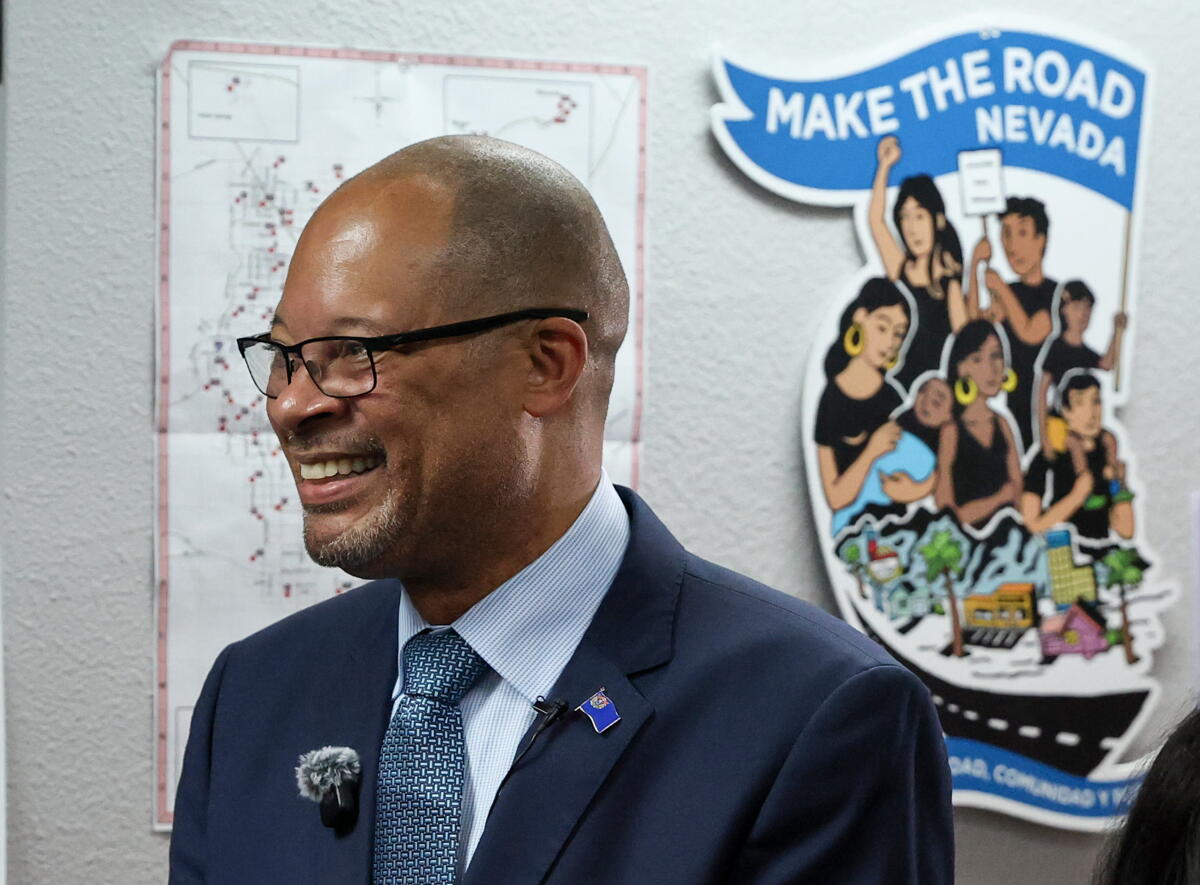
Nevada Democratic gubernatorial candidate and current Nevada Atty. Gen. Aaron D. Ford arrives at a get-out-the-vote event on Oct. 7 in Las Vegas.
(Ethan Miller / Getty Images)
Ford, who’s bidding to become Nevada’s first Black governor, has one of those up-by-the-bootstraps biographies that campaign consultants see as spun gold.
He grew up in Dallas in a family that struggled to stay above water and, as a single father in his early 20s, relied on Medicaid and food stamps to get by. He worked as a waiter and a teacher to pay for law school and a Ph.D. in education before moving to Nevada in 2007. After six years in the state Senate, Ford was elected in 2018 to the first of two terms as the state’s attorney general.
Standing on the sidewalk outside a Circle K — where regular was going for $5.35 a gallon — Ford squatted to sign a blown-up copy of a “letter” to Trump demanding a $2,000 “pain-at-the-pump” rebate for every Nevada household. A line was provided, obligingly but obviously unnecessarily, for Lombardo’s signature.
Four years ago, Ford noted, when gas was around $4.68 a gallon, his Republican rival wrote on social media that hard-pressed Nevadans needed “leadership that ensures our families and businesses are protected from these disastrous policies.”
“But once he got in office,” Ford said, Lombardo “stopped fighting for us in Nevada and he started working for Trump full time.”
A few hours later, at a country-themed nightclub in northwest Las Vegas, the governor took to the stage to extol his performance these last four years.
Small-business creation and job growth are up, he told a crowd of supporters gathered on the dance floor. Teachers are better paid and more people are working in Nevada than ever before. “Kicking butt,” he said, referring to either himself, Nevada or both; it wasn’t clear which. “Kicking butt.”
Also, Lombardo added, Nevada’s crime rate has fallen for both violent and property crimes — “without any help from the attorney general.”
Lombardo has had a somewhat mixed relationship with the president.
He kept his distance during the 2024 campaign and has occasionally, selectively, taken issue with the administration since Trump returned to office. The governor, for instance, spoke out against cuts to Medicaid as well as the shuttering of wind and solar projects in Nevada. . But Lombardo didn’t help himself in the least when Trump came to town in August for another rally, this one at the Red Rock Casino. He heaped praise on the president and defended, of all things, the care and feeding of Trump’s plutocratic pals.
“Quite often when the press and the media runs him down, they think about, you know, he’s taking care of his billionaire friends,” Lombardo said. “Those billionaire friends provide jobs. Unless you take care of them, those jobs are absent.”
Naturally, the moment showed up in a campaign ad, showing the grinning governor alongside a smirking Trump and ending with the tagline: “Joe Lombardo. For Trump, Not Nevada.”
For his part, the governor has portrayed Ford as feckless and borderline corrupt.
He’s seized on the attorney general’s abundant out-of-state travel — for official business, Ford says — to portray him as a high-flier beholden to the special interests that financed his jaunts.
Lombardo has also accused Ford of being weak on crime, citing, in particular, the case of a Nevada inmate convicted of manslaughter in the killing of a pregnant woman. Ford placed the inmate’s bid for clemency on the agenda of the state pardons board — an example, Lombardo claims, of the way Ford treats criminals.
The Democrat said he was merely following procedure and would have opposed the clemency request had he not missed the board’s meeting due to an unspecified family emergency.
With a big financial advantage and the benefit of a highly practiced campaign team, Lombardo has kept the race close despite the rough political climate. But to a considerable degree, his fate is beyond anything that Lombardo can control. The key question is how big the Democratic wave is on Nov. 3 and how strong the Trump undertow.
Those forces of red and blue — more than anything either candidate says or does — will determine the winner in this most purple of states.
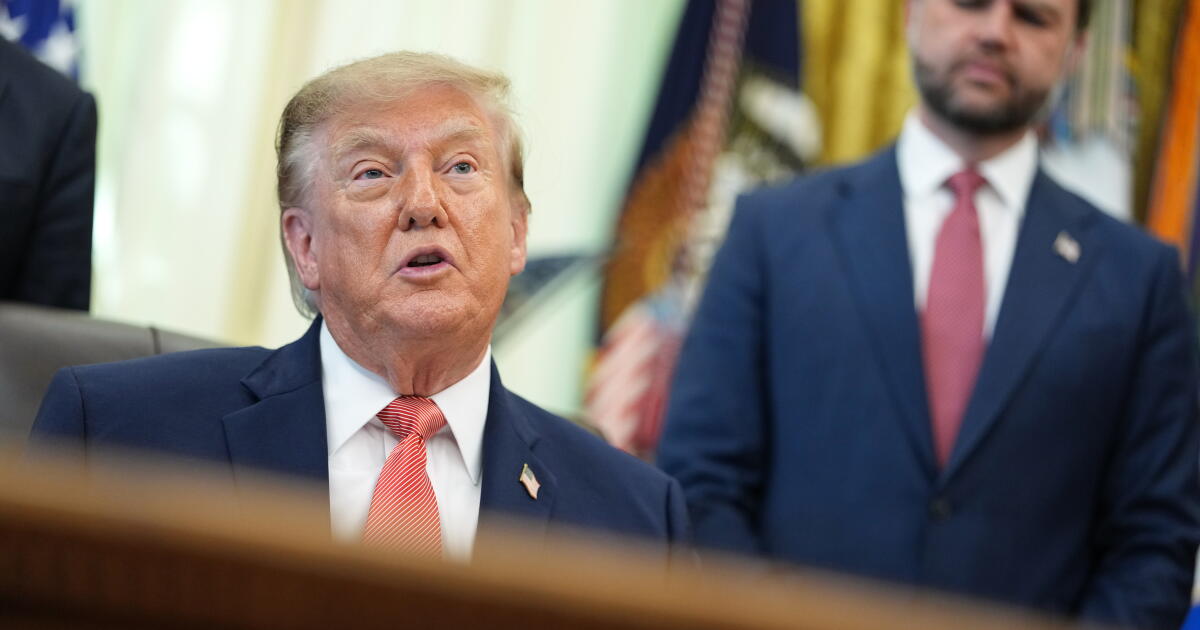
WASHINGTON — President Clinton famously said he could feel voters’ pain over the economy. But these days, when it comes to questions about high prices, President Trump insists that the pain is his.
“They hit me with affordability, and that’s the first time I ever heard the word used,” he complained in Nebraska earlier this month.
The White House leaves Vice President JD Vance to use a softer touch. Last month in Texas, he admitted “there are people out there who are frustrated by the pace of progress.” And during a CBS News town hall on Saturday, Vance said, “I recognize that gas prices are too high right now” and “we’re working on it.”
Depending on which Republican is speaking, Americans are getting a different perspective on how bad things are with the economy. Trump says “the golden age of America is upon us.” Vance walks a tightrope to show that he knows voters are feeling an economic pinch while still selling them on Trump’s agenda.
The disconnect comes as Americans’ confidence in the economy sank to the lowest level in more than a decade this month, the average long-term U.S. mortgage rate jumped this month to its highest level in nearly three years and the unemployment rate ticked up last month.
Recent economic data released this month shows that high gasoline prices are intensifying inflation and more expensive oil and gas have begun to push prices up in other parts of the economy.
While most of Trump’s supporters don’t hold him at fault, some acknowledge that the president’s penchant for salesmanship may not hit the mark.
“I think he talks it up,” said Conda Little, a 76-year-old retiree who went to see Trump in Dalton, Ga., on Friday. “I think Vance is more real.”
Little takes the president at his word that he will achieve a victory over Iran in a way that benefits U.S. consumers back home. But she said it’s impossible to deny the fallout from the conflict.
“Everybody’s real upset about the gas” and “groceries are out of sight,” she said. “It’s hard. It’s really hard,” she said, adding that, “I think that people need to hear the truth.”
‘We need to do more’
Trump is loath to acknowledge concerns. He told reporters earlier this month that he gives himself “an A+ on the government, on economics, on everything.” He has dismissed concerns about high costs, arguing that concerns about affordability are a “hoax.”
“We’re in the golden age of America. So our nation is doing better now than ever before,” he told a crowd in Kentucky on Saturday while campaigning for Republican candidates.
Trump has occasionally acknowledged that gas prices are high, but has called it “a small price to pay” for keeping the country and the world safe with the Iran war.
Trump’s discordant message with one of the top concerns voters are voicing ahead of the midterm elections has seemed heightened by his fixation on beautifying Washington and building a large ballroom at the White House.
During a visit this month to an economically struggling corner of Arizona, he regaled the crowd with the story about how he ended up with a luxury jet gifted by Qatar to use as Air Force One.
Vance, as he crisscrosses the country, is quick to say that the administration has more work to do.
To cast blame, the vice president often says that his administration’s Democratic predecessors put the country in such a deep hole that they need more time to climb out.
To show empathy, he often references his own experience growing up in a working-class family in a Rust Belt town. That’s far different from Trump, who comes from a wealthy family, is a billionaire and even joked during his speeches on Friday and Saturday that if people have lunch at his Mar-a-Lago club, “for $5,000, you’ll get one hamburger and a small dessert.”
Vance, during a CBS News town hall that aired on Saturday, said: “I grew up in a working-class family. When gas prices were high, I know that it made my grandmother suffer, and I’m sure that you’re struggling with it in a variety of ways.”
When asked by the moderator about the mixed message he and Trump are giving on the economy, Vance said Trump was speaking about new investments coming into the country, but said the changes take time.
“We need to do more, and we can certainly do better,” he acknowledged.
Many Trump supporters trust his pitch
Some voters said Trump’s rosy view on the economy turns them away, like Santiago Rodriguez, a 19-year-old Texas college student who will be voting for the first time this year.
Rodriguez, who attended a campaign rally last week for Democratic Senate candidate James Talarico, said he would consider voting for a Republican but not while Trump is in charge because he doesn’t grasp the high cost of living for Americans.
“I think he’s out of touch, I think he’s never seen what a true day as a Texan or anybody in general who is in the working class,” Rodriguez said.
Trump’s most loyal supporters aren’t interested in blaming high prices on anything the president has done.
Cindy Massengill, a 67-year-old who came to see Trump in Dalton, Ga., said she felt he’s doing the best he can.
“I’m positive that he’s got done more than any other president after the mess we were left with Obama and Biden,” she said.
Mary Bunker, a 67-year-old Republican who attended Trump’s Monday rally near Wichita, Kan., said she works multiple jobs, including as a waitress and DoorDash driver.
She feels the pressure of high gas prices, but she likes the tax breaks that Trump signed into law last year and she doesn’t fault the way he speaks about economic concerns.
“I think he’s a very good businessman,” Bunker said. “He’s been in business a long time, so I think he knows what he’s talking about.”
Price writes for the Associated Press. AP writers Bill Barrow in Dalton, Ga., Jesse Bedayn in San Marcos, Texas, and Nicholas Ingram in Park City, Kan., contributed to this report.
Barbara Leaf, former US Assistant Secretary of State for Near Eastern Affairs, tells Al Jazeera that public opposition to the war with Iran could threaten Republican control of Congress, as economic fallout fuels voter anger.
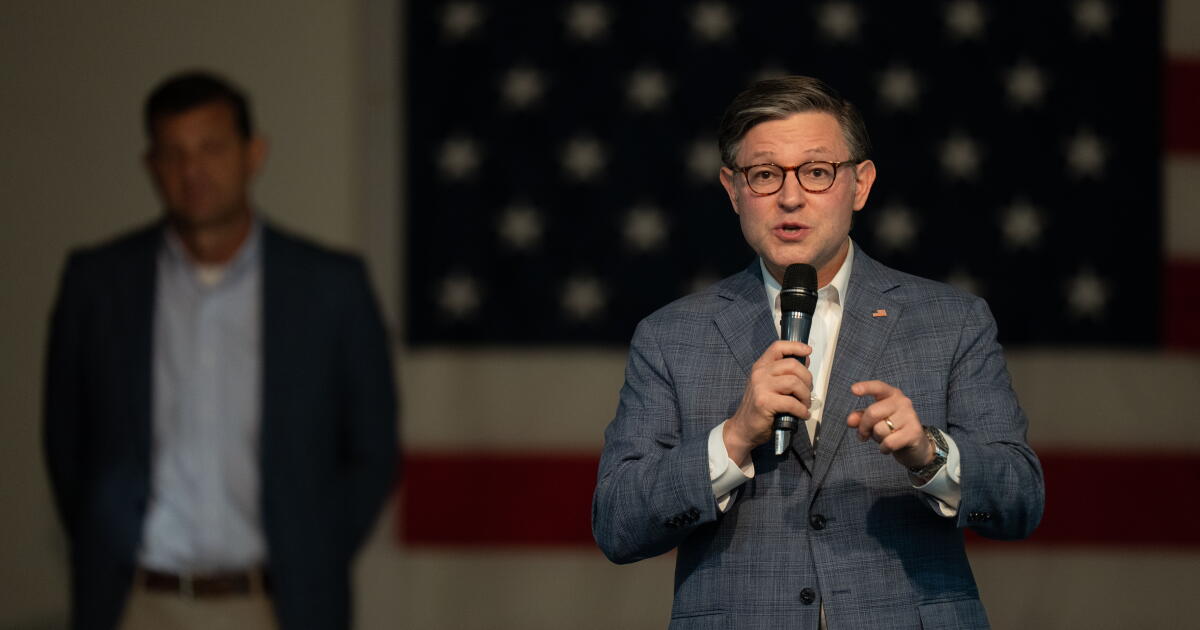
BANGOR, Maine — Ever the optimist, Speaker Mike Johnson said he believes Republicans will hold on to their U.S. House majority, defying a surge of Democratic momentum in the final stretch of the midterm elections that will determine control of Congress.
It’s the crowds he says he’s seeing as he crosses the country campaigning for GOP candidates. The caliber of recruits and incumbents he calls workhorses, not show horses. And the nearly half a billion he has raised for House Republicans.
He also has faith.
“We run to win, and that’s biblical: You run to win,” he told the Associated Press during a campaign stop in Maine.
“And I believe that we will.”
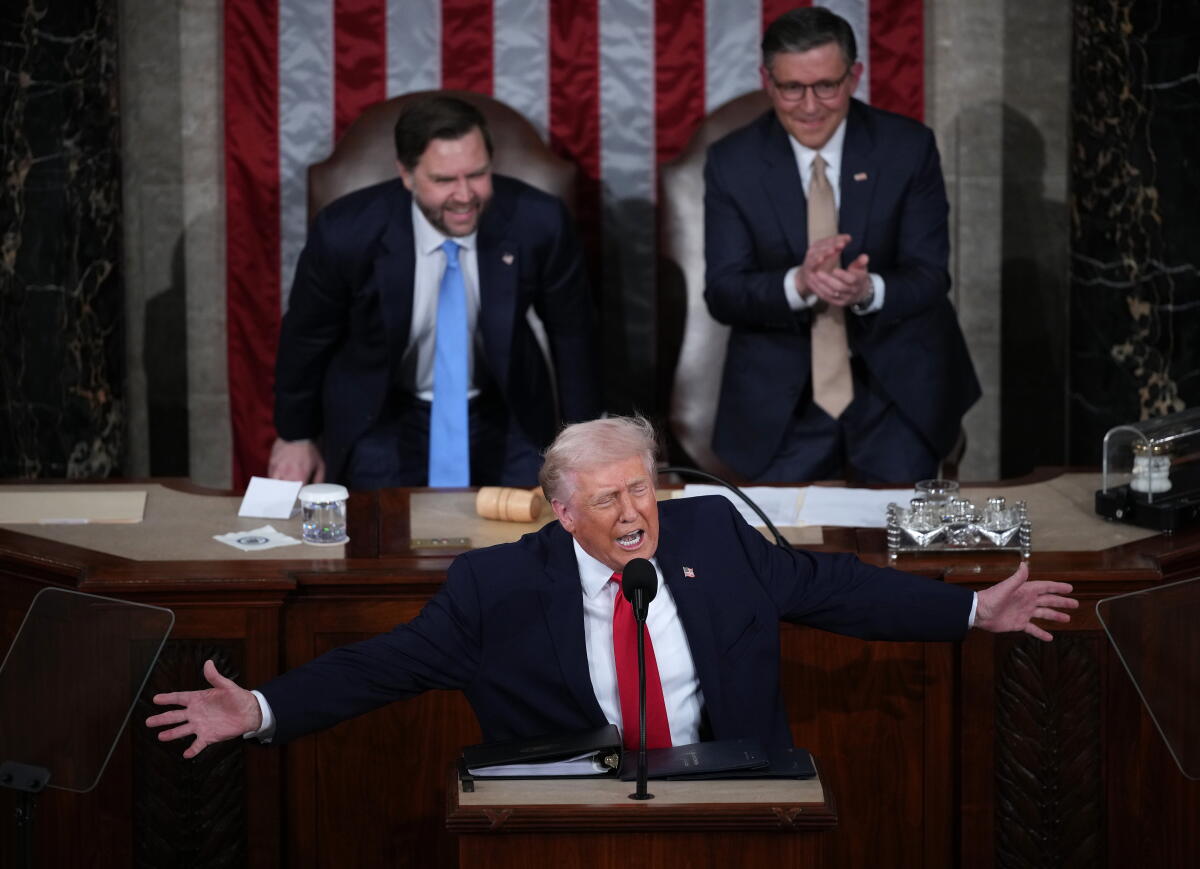
House Speaker Mike Johnson, right, applauds along with President JD Vance as President Trump delivers his State of the Union address during a joint session of Congress in February in Washington.
(Andrew Harnik / Getty Images)
The speaker of the House is one of the most consequential elected officials in the United States, second in line of succession to the president. While Johnson quipped to Fox News recently that he may return to his hometown of Shreveport, La., to start a lawn care business if Republicans lose power on Nov. 3, he fully expects to buck an American midterm tradition that often sees the president’s party dumped in Congress.
It can be said that Johnson, who has drawn so close to President Trump that he routinely fields 1 a.m. calls — they spoke the night before as Trump rallied in Alaska — walks on the sunny side of the street. That’s despite voter frustration over high prices and the Iran war, and his own challenge of leading one of narrowest House majorities in modern times.
In his three years as speaker, Johnson has pushed past the doubters and naysayers, holding his thread-thin GOP majority together to deliver Trump’s agenda. He notably led passage of the big tax breaks and social service cuts bill. Most days he does not have a single vote to spare.
“So many times everybody had written off, there was no way he was going to be able to pull off a particular vote,” said Republican Rep. Mark Harris of North Carolina, who joined the speaker on the campaign swing. “Yet he always seems to pull out the win in the end.”
In the interview, Johnson did not speak brashly about expanding the House majority on election day, as he has in the past. But on track to visit more than 20 states and 40 congressional districts though November, he said the political mood reminds him of the 2024 election that swept Republicans to control of Congress and the White House.
“It’s not going to be a giant majority,” he said. “But I genuinely believe that we will have a working majority.”
Emboldened by Trump
Johnson first fell into the speaker’s job almost by accident, a desperate choice by his GOP colleagues after a contingent of renegade Republicans ousted his predecessor, then-Rep. Kevin McCarthy of California in 2023.
Johnson had been a lower-level member of House leadership, but distinguished himself before the Jan. 6, 2021, attack on the Capitol by organizing support for Trump’s false claims of widespread fraud in the election that he lost to Democrat Joe Biden.
In the time since, Johnson has secured proximity to Trump’s power. He joined Trump at a UFC fight in New York and once gifted the president a speaker’s gavel as Trump signed the “One Big Beautiful Bill” into law. It was a symbolic act, but one that critics saw as giving away the authority of a coequal branch of government.
More recently, Johnson abruptly sent lawmakers home early rather than face a vote forced by Republican Rep. Thomas Massie of Kentucky to impeach Defense Secretary Pete Hegseth as lawmakers tried to halt the Iran war, which has not been authorized by Congress.
Over coffee in Bangor, after rallying for House candidate Paul LePage, a former governor, Johnson brushed back criticism that Congress has eroded under his watch as Trump works to amass executive power.
“Absolute nonsense,” Johnson said.
“We did not yield Article 1 authority to the president,” he said, referring to the powers spelled out in the Constitution. “We used our own,” he said, to muscle GOP priorities past Democratic opposition.
Trump agenda at risk
Johnson has focused the election on Democrats he portrays as “communists.” A handful of far-left liberals, backed by the Democratic Socialists of America, are on the ballot.
Rep. Hakeem Jeffries of New York, the House Democratic leader who is in line for the speaker’s gavel if his party sweeps to power, is preparing a first-100 days agenda for when the new Congress convenes in January, if there is a change in control.
What the Republicans will do if they retain power is less defined.
“Lots of plans,” Johnson said, “along the same course of what we’ve been doing — less taxes, less regulation.”
Trump “wants to go big for his legacy,” he said. “We have big things on the horizon that we can do.”
The president has essentially purged the House GOP ranks of those perceived to be disloyal. Among them are Massie, who lost his primary, and Marjorie Taylor Greene of Georgia, who retired early after breaking with Trump over release of the Jeffrey Epstein files.
Pressed how he would keep Republicans in line, Johnson said he is preparing to change the House rules if he returns as speaker.
“There’s going to be some changes that are going to make the machinery work smoother,” he said.
Praying for the speaker, and the country
Faith has often been strong among House leaders. Two former speakers, Nancy Pelosi and Newt Gingrich are Catholics, as is John Boehner, who invited Pope Francis to address Congress.
Johnson, a former constitutional lawyer who was first elected alongside Trump in 2016, is expected to win his own reelection next month.
“My faith is a huge component of how I think and how I act and what I do,” said Johnson, who led a public prayer on the National Mall as part of the nation’s 250th anniversary.
He is drinking lots of coffee these days, he said, cutting back on the Celsius, and still has 1,413 unread text messages, a slight dip from the frightful number reported a few months ago by the Wall Street Journal.
One text is from someone praying for him.
Johnson said he is grateful for the outpouring of prayers he receives, for him and the country.
“I pray for God’s will. And I believe God’s will is for us — and not the communists — to be in charge of America,” Johnson said.
“And it does say in the New Testament, you run the race to win,” he said, citing 1 Corinthians 9:24. “This is a biblical admonition. So we will.”
The barrage of spending comes as Republicans fight to overcome Trump’s declining popularity and cost of living concerns.
By Reuters and The Associated Press
Published On 12 Oct 202612 Oct 2026
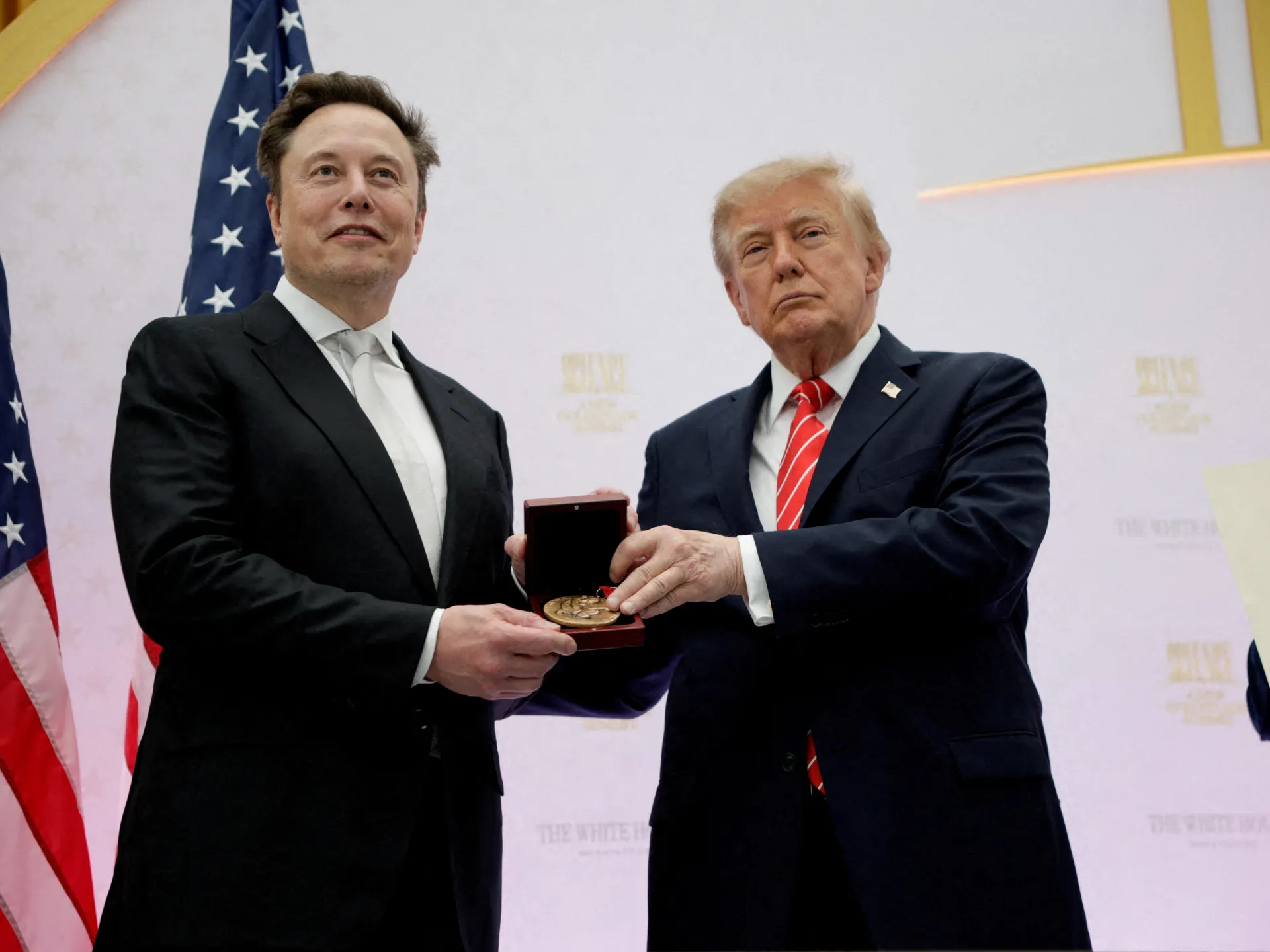
Elon Musk, the trillionaire tech mogul and backer of far-right causes, has reportedly spent $366m since last year to buoy the Republican Party in the United States midterm elections.
The New York Times first reported on Monday that Musk has spent $276m since July alone, including $158m for a super PAC focused on Republican Senate candidates, making him the largest single donor this year.
Recommended Stories
list of 3 itemsend of list
Musk is considered a close ally of President Donald Trump, the leader of the Republican Party, and was a special government adviser to the White House last year.
Musk’s political action committee, America PAC, has confirmed the spending totals. In a statement to The New York Times, a spokesperson framed the record amount as necessary to defend Congress from a Democratic takeover during the midterm races.
“These robust investments have allowed the GOP apparatus to get its message out so Republicans can have a fighting chance to defy history,” America PAC spokesman Andrew Romeo told the Times.
The barrage of spending by Musk comes as Republican candidates are fighting to overcome Trump’s low popularity and rising concerns about the cost of living among US voters.
Democrats are hoping to capitalise on voter dissatisfaction with Trump’s tenure to seize control of Congress, where Republicans currently hold majorities in both the House of Representatives and the Senate.
The influence of wealthy donors and PACs has long been the subject of criticism. Opponents argue that such spending distorts US politics in favour of powerful interests.
Musk became the world’s first trillionaire in June, when his aerospace company SpaceX made its initial public offering (IPO) on the Nasdaq stock exchange.
The tech entrepreneur had previously said that he planned to step back from his involvement in US politics, stating in May that he had “done enough” and did not have plans for large spending efforts.
Still, Musk has leveraged his tech holdings and wealth to support right-wing groups around the world.
Last year, for instance, politicians in Germany accused Musk of trying to meddle in the national election. Musk has been a vocal backer of the Alternative for Germany (AfD) party, which has been accused of adopting a discriminatory stance on immigration and other issues.
Voters in the US will head to the polls on November 3 to cast their ballots in the midterms, which will decide key state and local races, as well as congressional majorities.
The Republican Party is considered to have a sizeable financial advantage over the Democrats ahead of the race, with heavy spending from groups such as MAGA Inc, a pro-Trump super PAC named for the president’s “Make America Great Again” movement.
As of August, MAGA Inc reportedly had $416m in its coffers. The tracking site AdImpact found that it had spent $22m over the past month alone on the tight race unfolding for the open Senate seat in Texas.
Trump has also increased his campaign activities, hosting a string of rallies in the final weeks before the election to help Republicans push their message.
But Democrats appear confident that the Republicans’ spending advantage will not be enough to counter the effects of growing dissatisfaction with Trump.
“Republicans are hoping to buy these elections, injecting tens of millions into races to try and outrun their unpopular candidates, unpopular president and unpopular economy,” said Lauren French, a spokesperson for Democrats’ Senate Majority PAC.
In rural Modoc County, in California’s remote northeast corner, Republican gubernatorial candidate Steve Hilton donned a beige cowboy hat and climbed atop a horse.
Riding through a grassy field, with his dress shoes in the stirrups, Hilton lamented to a camera that California was “completely being ruined by killjoy bureaucrats” who put too many rules on fun stuff like beach fire pits and bars that stay open extra late.
In coastal San Luis Obispo County, Hilton boarded a bright yellow dune buggy at the Oceano Dunes State Vehicular Recreation Area and called the California Coastal Commission “idiots” for trying to end off-road beach driving.
And in the Central Valley, he waved the ceremonial green flag at a stock car race at the Madera Speedway, where he was named grand marshal of the annual Harvest Classic. (The designation caused a minor uproar, prompting the operator of the racetrack to make a fake online concession menu that offered a hot dog and soda for $6 for Republicans and $17.50 for Democrats.)
If it seems like Hilton — the British immigrant and former Fox News talk show host — is just about everywhere, taking just about every media interview that comes his way, well, that’s the point, he says.
He has logged thousands of miles on the proverbial campaign trail, visiting all 58 counties in his quest to lead the nation’s most populous state, where no Republican has been elected to statewide office in 20 years.
Meanwhile, his heavily favored — and far more staid — opponent, Democrat Xavier Becerra, has kept a comparatively low profile, agreeing to just one debate with Hilton and holding few public events, mostly in urban areas.
In a phone interview while driving through Los Angeles, Hilton said: “Whether I’m in Humboldt or Del Norte or Siskiyou County, my joke is, when people say, ‘Where do you live?’ I say I live in the Hampton Inn somewhere in California because we’re basically in a different place every night.”
The odds are against him.
Sure, California produced GOP presidents Richard Nixon and Ronald Reagan. But today, Democrats outnumber Republicans nearly 2 to 1 in the state, and the current White House occupant shares a mutual disdain with the vast majority of Golden State voters.
Hilton was endorsed during the primary by President Trump, who suggested at a campaign rally this month that Iran could “take out” Los Angeles and San Diego, drawing swift outrage from both Democrats and Republicans.
Hilton has tried to walk a fine line, appealing to the 6 million Californians who voted for the president in 2024 while simultaneously downplaying Trump’s support.
This summer, Hilton took out full-page ads in The Times and the San Francisco Chronicle asking: “Can you be anti-Trump and still vote for me?”
“Yes, I’m the Republican,” it said. “The ‘Fox News guy.’ Endorsed by Trump. But this election is not about who you hate in Washington. It’s about what you love here.”
Corrin Rankin, chairwoman of the California Republican Party, said that 16 years after the state’s last Republican governor, Arnold Schwarzenegger, left office, “it’s safe to say Democrats own all the problems in California.”
“You can’t blame Trump for what’s going on here in California,” she said. “We feel really good about Steve Hilton’s campaign. He is working so hard, up and down the state.”
Hilton has blasted California Democrats as entitled, saying they assume Becerra will cruise to victory in the race to replace termed-out Gov. Gavin Newsom simply because he has a “D” beside his name on the Nov. 3 ballot.
Hilton frequently quotes a September podcast interview by Los Angeles’ Democratic mayor, Karen Bass, who mocked his British accent and said: “The governor’s race right now is over. Our governor’s name is Xavier Becerra. You don’t need an election on Nov. 3. A Republican cannot win in this state.”
Hilton told The Times that Democrats “feel they don’t have to earn your vote. … They can deliver results that are bad as ever, and they don’t need to work hard to deliver results for people or earn their support. And I think it’s that attitude that is going to be their downfall.”
Steve Hilton has the support of 33% of likely California voters, according to a recent poll, while rival Xavier Becerra has 58%.
(Jason Armond / Los Angeles Times)
Becerra is a former member of Congress who represented Los Angeles, and he was the California attorney general and U.S. Health and Human Services secretary under President Biden. He has the backing of 58% of likely California voters, compared with 33% who support Hilton, according to a poll released late last month by the UC Berkeley Institute of Governmental Studies and co-sponsored by The Times.
The poll showed that voters’ top concern was reducing the state’s high cost of living — followed by fighting Trump administration policies.
“Hilton is trying to win an election, so he tries to frame himself as someone who can appeal to the broader electorate,” Underland said. “But at the end of the day, he has the albatross around his neck, which is Trump, who is openly hostile to California.”
Hilton cuts a colorful and pugnacious figure on the campaign trail. He eschews ties and jackets, favoring T-shirts with punchy phrases like, “$ave With Steve” and “WAKE UP” superimposed on a California license plate — a reference to his proposal to eliminate the state’s Department of Motor Vehicles and slash vehicle registration fees, which would cut billions in state revenue.
He wears one bracelet with the name of slain right-wing activist Charlie Kirk, whom he called an “incredibly close friend.” Another reads, “Save Girls’ Sports,” calling back to this spring, when he traveled to the state high school track and field championship in Clovis to protest the participation of a transgender athlete.
Republican nominee Steve Hilton protests transgender athletes’ participation in girls’ sports during a May 29 news conference in Clovis, Calif.
(Tomas Ovalle / For The Times)
Hilton, 57, was born in London to parents who fled conflict in their native Hungary during the 1956 uprising against the Soviet-controlled communist government and later anglicized their surname, Hircsák, to Hilton.
He was a senior advisor to British Prime Minister David Cameron, a member of the Conservative Party, though the men’s once-close friendship never recovered from Brexit, Britain’s withdrawal from the European Union. Hilton supported it; Cameron did not.
Hilton earned a reputation as eccentric but savvy, pushing the Conservative Party to embrace same-sex marriage and more climate-friendly policies. Dubbed “the barefoot revolutionary” for his refusal to wear shoes, Hilton was satirized on the BBC political sitcom “The Thick of It” as Stewart Pearson, the Tories’ “eco-friendly, media-savvy, blue-sky-thinking” communications director.
He and his family moved to California in 2012 after his wife, Rachel Whetstone, was promoted to lead global communications at Google. For six years, he hosted “The Next Revolution,” a weekly Fox News show from which Trump regularly tweeted clips.
In 2015, the couple purchased their home in the Silicon Valley city of Atherton, one of the wealthiest ZIP Codes in the U.S., for $12.5 million, property records show.
Whetstone now leads communications for Sierra, an AI startup founded by OpenAI board Chairman Bret Taylor and Clay Bavor, who met while working at Google. Hilton and Whetstone’s 2024 tax returns show they had a combined household income of $7.5 million, which included his reported earnings of $250,000 from Fox News and her $6.7 million from her then-employer, Netflix.
Hilton became a U.S. citizen in 2021 and last year renounced his British citizenship.
He finished second in the June 2 primary behind Becerra. Under California’s top-two primary system, the first- and second-place finishers, regardless of party, advance to the general election.
The pack of Democratic candidates was so large that party leaders initially urged struggling candidates — including Becerra — to drop out to avoid splitting the vote. Becerra shot to the top of the polls when then-Rep. Eric Swalwell, a front-runner at the time, dropped out of the race after he was accused of sexual assault and misconduct.
Republicans coalesced around Hilton after the president endorsed him over his GOP rival, Riverside County Sheriff Chad Bianco, a staunch Trump supporter who later said the endorsement made Hilton unelectable.
Kim Nalder, director of the Project for an Informed Electorate at Sacramento State, said it is exceedingly difficult for Hilton to distance himself from Trump and the Fox News brand.
“If you had a different brand of Republican they might have a shot,” given the discontent in the state over myriad issues, she said. “But Trump is so politically radioactive in California right now that it is an effective technique to tie this particular candidate to him.”
California’s population growth is stagnant after years of pandemic-era losses, with immigration lagging amid the Trump administration’s crackdown and many residents leaving the state for more affordable parts of the country.
Greg Perrone, past president of the conservative Greater Bakersfield Republican Assembly, said he was impressed with Hilton’s policy knowledge and the amount of detail in his economic plans.
Steve Hilton, right, chats with Sir Richard Branson before a White House dinner with then-British Prime Minister Cameron and President Obama in 2012. Hilton was an advisor to Cameron.
(Susan Walsh / Associated Press)
“There’s a real concern that the current state of the economy is worse than people expected,” Perrone said. “A lot of people hung their hat on Donald Trump saying he was going to bring down prices, and that just has not happened. There’s a lot of angst.”
Perrone said he remains a Trump supporter, though he has been frustrated by the frenetic roll-out of tariffs that, he said, hurt many businesses. While he has been annoyed that Becerra, in his view, has focused more on the president than laying out his own detailed economic plans, he acknowledged that the strategy plays well in blue California.
Christopher Cole, former chairman of the Lassen County Republican Party, said that in his rural corner of the state, he has seen Trump banners that have hung since 2016 start to come down because people are angry about the Iran war, the high cost of fuel and the economy.
“When Trump stupidly endorsed Hilton, it was the kiss of death for any down-ticket Republican,” said Cole, whose county voted for Trump on 76% of the ballots in 2024, the highest percentage in the state, and was the only one to support Bianco in this year’s primary.
“Hilton is a carnival barker and a very wealthy man,” said Cole, who supported Bianco. “You can’t run a multimillionaire when people are struggling to put food on the table.”
Hilton has made a slew of campaign promises to lower the cost of living, including having no taxes on income below $150,000, lowering energy bills by slashing climate-friendly regulations imposed by Democrats, and having $3 gasoline (though governors cannot directly set the price at the pump, which is driven largely by global crude oil supply and demand).
He has tried to channel the state’s discontent into persuading voters to “try something different” by voting Republican.
During the gubernatorial race debate on CNN last month, Hilton quoted a former Biden domestic policy advisor who reportedly called Becerra a “bitch-ass,” and his campaign promptly launched a website, bitchassbecerra.com, outlining alleged failures of the politician known for his calm demeanor and decades of government experience.
“I think Hilton got dealt a bad card with Becerra making the runoff,” said Rob Stutzman, a Republican strategist who was Schwarzenegger’s spokesman. “It’s difficult to get anyone outraged about Becerra because he is perfectly boring. He worked for Joe Biden — maybe that upsets some people? — but you can’t associate him with any bizarre, woke policies like you could Kamala Harris or Gavin Newsom.”
Hilton’s campaign this month released a provocative, sexually suggestive ad titled “Just Try It!” in which two young women sit on a bed in a candlelit room. An LGBTQ+ pride flag hangs on the wall, and they’re seemingly talking through one’s first romantic encounter with another female.
In a recent poll, voters rated California’s high cost of living as their top concern, followed by fighting Trump administration policies. Above, people gather in North Hollywood to watch the Sept. 30 gubernatorial debate.
(Jason Armond / Los Angeles Times)
Wearing a T-shirt that says, “RESIST,” the anti-MAGA mantra, the first-timer nervously says: “I’ve just never done anything like this before. Like, what if my dad finds out?”
The other woman holds her hand as she fills out a ballot for Hilton then says, “Now lick it,” referring to the mail ballot envelope.
Some conservatives condemned the ad, saying it promoted lesbianism. Liberals criticized it, too, saying it was insensitive to the LGBTQ+ community.
The day the ad launched, he told The Times: “I think there’s a very strong sense that things aren’t working in California, and my argument is: ‘OK, let’s try something different.’”
Later, he said he never meant to offend anyone with the risqué ad, which did, after all, do its job in racking up millions of views online — coveted and invaluable publicity for a long-shot California Republican.
ATLANTA — Not long ago, Georgia gubernatorial nominee Rick Jackson eagerly compared himself to his fellow billionaire in the Oval Office. He promised to be Donald Trump “with a Southern tone.” And sharing a summer rally stage, Jackson pointed at the president and declared, “I’m going to be this man’s favorite governor.”
On the debate stage this week with his Democratic opponent, however, Jackson discussed Trump only when Keisha Lance Bottoms brought him up. And he assured his audience that he’d “stand up to anybody.”
Jackson is not alone in his recalibration: Republican nominees for Senate, the U.S. House and governor’s offices across the country are sidestepping President Trump or openly distancing themselves as they debate before Election Day.
Those tactics, not unlike Republicans scrubbing Trump from their campaign websites, are the latest signs of how much Trump’s standing has fallen because of voters’ frustration with inflation, the Iran war and other matters. And the dynamics highlight the perilous options many Republicans face as they try to stitch together winning coalitions that go beyond Trump’s core supporters.
“Republicans right now are facing a voter turnout problem” in their own party, said GOP pollster Paul Shumaker, and must win “unaffiliated voters” who care most about the economy.
“You have to have something significant to change this narrative,” Shumaker said. But, he explained, that means “a significant victory in Iran” and seismic economic improvements — not something any Republican midterm candidate can force from behind a debate podium.
There’s a Trump tightrope on Iran, tariffs and rhetoric
Some Republicans are taking specific positions at odds with the president.
Michigan Senate candidate Mike Rogers said in his debate Thursday with Democrat Abdul El-Sayed that he’d urged the White House privately to reach a trade deal with Canada and end the president’s tariffs. Canada is Michigan’s largest trading partner, as it is for many Great Lakes and Midwestern states.
Days before, Rogers unveiled a new ad in which he said, “We know that Canada is not our enemy. We need to end the tariff war — now.”
That’s a noticeable departure from Rogers’ earlier, less specific statements praising Trump’s “America First” economic agenda while saying tariffs are not a “one-size-fits-all” solution.
Another Michigan Republican, Rep. Tom Barrett, already had bucked the president by voting for a war powers resolution intended to assert congressional authority over military actions in Iran. But debating Democrat Will Lawrence in their central Michigan district, Barrett added a criticism of Trump’s rhetoric Monday in Nebraska, where he floated the possibility of Iran attacking San Diego and Los Angeles.
The president mentioned those cities as part of his argument that higher gas prices because of his Iran war are a “small price to pay” to keep the country safe. But Democrats seized on the remarks, some insisting that Trump was calling for Iran to attack U.S. cities.
Barrett was asked whether Trump’s words were acceptable. Given the opportunity to echo the White House explanation that Trump was offhandedly mentioning a worst-case scenario he was trying to prevent, Barrett offered no defense.
“Nope,” he said flatly.
Many Republicans prefer a more generalized stiff arm
Reflecting the complex electoral balance, most Republicans have attempted to separate themselves without naming any firm difference with the president.
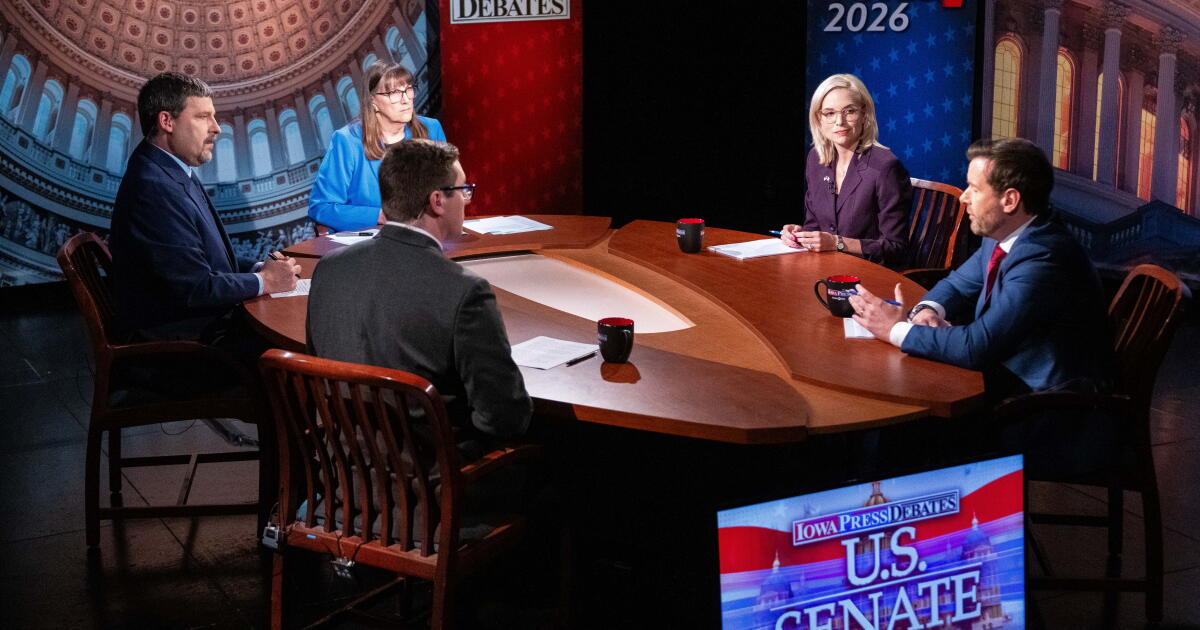
Running for a promotion to the Senate, Iowa U.S. Rep. Ashley Hinson tried in her debate Wednesday against Democrat Josh Turek to reconcile her earlier promises to be a Trump ally in Congress’s upper chamber. She said it would be “really easy” to keep her word and still be bipartisan — a buzz word she’s already been featuring in her campaign.
“I’ll be President Donald Trump’s ally when it is important for Iowa, but I will push back on him — he knows this, because I talk to him regularly — on things that are wrong for our state,” she said. “That’s true no matter who’s in the White House. That’s true no matter who is governing and who has the gavel.”
That’s the same path Jackson took in Georgia, as he pivoted away from Trump by embracing outgoing Georgia Gov. Brian Kemp, a Republican who has clashed with the president, starting with Trump’s false claims that he won Georgia in the 2020 presidential election.
“I will stand up to anybody, just like Brian Kemp has done,” Jackson said.
Another Republican House member, Mike Lawler of New York, made a point of name-checking a Democratic colleague, New Jersey’s Josh Gottheimer, and discussing bills they’d work on together. It was part of his argument that he’s able to challenge Trump and the party line.
“When I agree with the president I say it. When I disagree with the president, I say it,” he said in his closing remarks.
Hinson, meanwhile, referenced bills she’s worked on in the House that have been signed into law by both President Joe Biden and Trump.
But she also avoided criticizing Trump when asked about the president sending Affordable Care Act rebate checks to some Americans and promising a $5,000 bonus after the midterm elections if Republicans retain control of the House and Senate.
She said she “cares very deeply” about making sure Congress maintains the power of the purse and thinks it’s important to “live better within our means.”
Democrats pounce on either approach
Regardless of the Republican efforts, Democrats have continued peppering them with attacks and retorts about Trump. The most heated moments came when Democrat Cait Conley repeatedly said Lawler always voted with Trump.
“No matter how many times you say 100% of the time,” the congressman answered, “it’s provably false.”
When Rogers conceded in his back-and-forth with El-Sayed that the administration “probably” made errors in its mass deportation strategy, the Democrat answered swiftly.
“He said it was probably not right. I mean, it’s definitely not right,” El-Sayed said. “They killed two people.”
And while Georgia’s Jackson seemed uncomfortable talking about Trump, Bottoms was more than happy to mention him.
“I’m not running to be his favorite governor,” she said. “I’m running to work on behalf of people like you.” ___ Associated Press reporters Joey Cappelletti in Washington; Hannah Fingerhut in Des Moines, Iowa; and Jill Colvin in New York contributed to this report.
WASHINGTON — Political advertising warns about Democratic plots to defund the police. Campaign events feature law enforcement unions and tough talk about law and order. Stump speeches boast about record low levels of violent crime.
From coast to coast, Republicans are focusing on public disorder, illegal immigration and violent crime in midterm campaigns as voters sour on their party’s handling of the cost of living and the war with Iran.
Democrats have tried to counter the attacks by recruiting candidates with law enforcement backgrounds and emphasizing their own anti-crime plans, but Republicans believe it’s a rare opportunity to go on the offensive in an otherwise challenging year.
“Do you know that right now we have the lowest violent crime rate in 126 years in America right now? Because we emphasize the rule of law,” House Speaker Mike Johnson recently told an audience at Louisiana State University. Crime rates have generally trended down since the 1990s with a brief spike during the COVID pandemic. “We have the most secure border we have had in the past half century.”
President Trump returned to the topic Monday night in Nebraska, warning about how the country used to be before he returned to the White House.
“We had a border with people pouring in, crime like nobody’s ever seen,” he said.
Republicans say Democrats will ‘defund the police’
In Georgia, Michigan, Nevada, Texas and Wisconsin, Republican candidates for governor have attacked their Democratic rivals as weak on crime or warned they could cut police funding. Texas Gov. Greg Abbott, for instance, has lambasted Democratic nominee and state Rep. Gina Hinojosa for not supporting legislation that would require judges to deny bail to illegal immigrants charged with a violent crime.
Hinojosa has campaigned on her tenure as a civil rights lawyer and criticized Abbott’s crime policies as violating civil liberties.
Rick Jackson, a billionaire healthcare executive running in Georgia, has repeatedly attacked Democratic opponent Keisha Lance Bottoms over her tenure as Atlanta mayor.
“I grew up in the type of neighborhood Keisha Lance Bottoms abandoned,” Jackson said at a summer campaign rally. “I know who gets hurt when politicians defund the police.”
In an interview with Atlanta station 11Alive, Bottoms emphasized that her administration gave pay raises to police and firefighters, and said she called for increased federal funding for public safety during her time as mayor.
Crime warnings pervade congressional races
It’s a similar story in U.S. House races.
In Virginia’s first congressional district, Rep. Rob Wittman has attacked his Democratic opponent, prosecutor Shannon Taylor, over her allegedly “soft on crime” record in office. In Michigan’s 10th district, Republican Michael Bouchard is running on his service as a Bronze Star Army captain and son of a longtime local sheriff. He’s claimed his Democratic opponent, former prosecutor Christina Hines, supports “woke, soft on crime, socialist policies.”
In Colorado’s eighth district, Rep. Gabe Evans touts his time as a police officer against Democratic challenger Manny Rutinel. And in Wisconsin’s third district, Rep. Derrick Van Orden hopes to win a third race against Democratic nominee Rebecca Cooke by painting her as a communist who wants to defund the police.
Republicans hope that by reprising warnings of crime and disorder the party can reenergize their disillusioned base and win back skeptical moderate voters who have drifted over concerns like affordability.
Democratic rivals have responded in kind. Taylor aired an ad featuring 13 local sheriffs who endorsed her campaign. Rutinel aired ads with local police and rolled out a safety plan that called for greater police funding and drug prevention programs. Hines said she’ll continue to prioritize public safety and prosecute corruption in Washington. Cooke has vowed to fully fund police departments in Congress.
Not all Republicans see crime as a winning issue
It’s yet to be seen if the strategy will prove effective.
“We’ve got to talk about it. I think that in many ways, we are the victim of our own success because it’s off the headlines a little bit more,” said Sen. Eric Schmitt, a Missouri Republican and former state attorney general. “Having a completely secure border now, no one even talks about it. But that’s a huge accomplishment from where we were at before.”
An AP-NORC poll conducted in September found that border security — which Trump and Republicans often link to crime — was a relative strength for the Republican president, with 48% of U.S. adults saying they approved of his performance on the issue. But that was still a decline from a year ago, when his approval on border security was at 55%.
Not everyone in the party is sold on Republicans rehashing the crime message.
“I don’t see that bubbling up as a major issue for the voters,” said Sen. Thom Tillis, a North Carolina Republican who chose not to seek reelection this year. Aiming to make the race to succeed Tillis a referendum on crime, Republicans have run ads claiming that Democratic nominee Roy Cooper went easy on convicts during his two terms in the governor’s mansion.
Black political leaders have criticized the ads as racist and reminiscent of past Republican campaigns that used dog whistles to appeal to suburban white voters. Trump made the message explicit when he invoked the infamous 1988 “Willie Horton” ad and displayed dozens of mugshots of men of color on a jumbotron during a rally stumping for Michael Whatley, Cooper’s Republican rival.
In contrast to his party’s messaging, Tillis noted his state’s safety in recent years.
“Frankly, when I hear somebody talking about crime in Charlotte, I live 25 minutes from downtown. I’m not worried about walking through Charlotte at night,” said Tillis.
Democrats accuse Trump of corruption
National Democrats contend that Republicans’ message on violent crime is undercut by the Trump administration’s hardline immigration enforcement actions, which resulted in the killing of two American protesters in January and the fatal shootings of multiple undocumented people. They accuse Trump of corruption and have hammered Republicans for alleged complicity in the president’s self-dealing.
“This is the biggest criminal organization that we’ve ever seen,” said Sen. Ruben Gallego, an Arizona Democrat, of the current White House.
He added that, “Democrats should be pushing back with the fact that, if not for the fact that he was president, this guy would be leading some type of mafia right now.”
Lauren Bis, a White House spokeswoman, said “extreme Democrats are trying to deflect from their radical soft on crime agenda.”
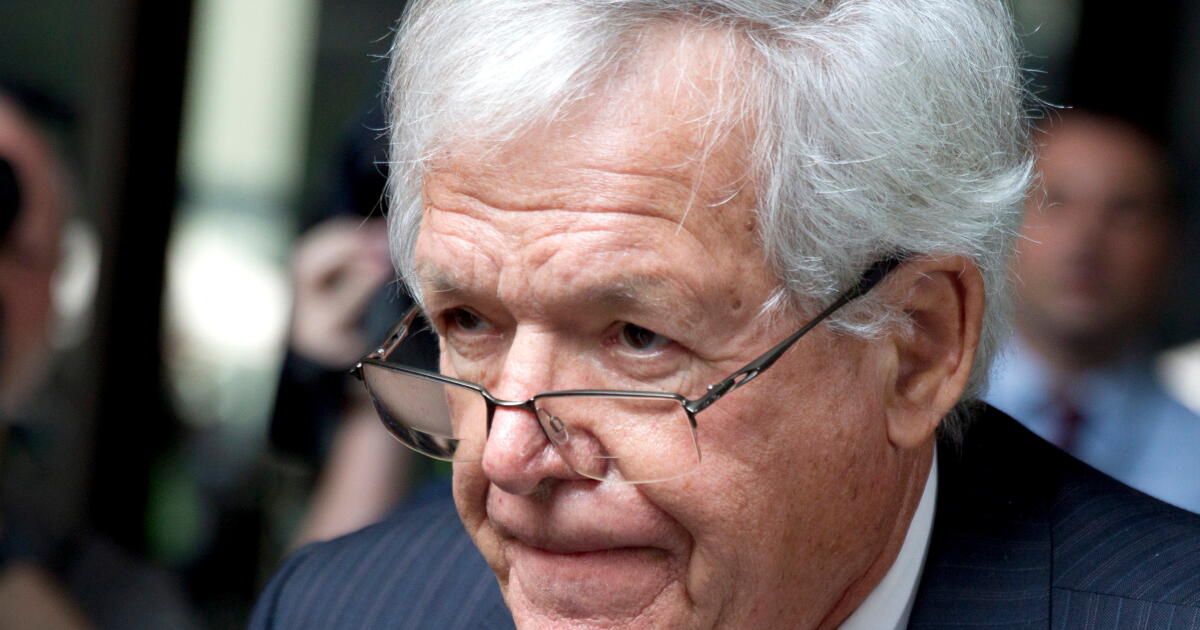
CHICAGO — Dennis Hastert, the nation’s longest-serving Republican House speaker, who helped turn much of President George W. Bush’s agenda into law before his own political legacy was forever fouled by allegations that he molested high school athletes when he was a wrestling coach, died over the weekend, a coroner said Monday. He was 84.
Hastert, who was speaker from 1999 until 2007, died of natural causes at his home, according to Kendall County Coroner Jacquie Purcell.
When he was sentenced in 2016 to more than a year behind bars, the former history teacher became one of the highest-ranking American politicians ever ordered to prison.
In the late 1990s, Hastert was a little-known Illinois lawmaker with a reputation for congeniality that had helped him ascend the ranks of congressional leaders. When Newt Gingrich lost support because of ethics violations and the GOP’s poor showing in an election, Republicans elected Hastert to succeed him. In his first weeks on the job, he presided over the House while the Senate conducted Bill Clinton’s impeachment trial.
After the GOP reclaimed the White House, Hastert took much of what Bush proposed and steered it to passage, including massive tax cuts and a measure that amounted to a huge expansion of prescription drug benefits — the biggest change in Medicare in decades.
His legacy was suddenly thrown into doubt in 2015, when he was accused of evading banking regulations as part of a plan to pay hush money to conceal unspecified “prior misconduct.” Nearly a year later, prosecutors filed papers that described what media reports had suggested for months: Hastert’s misconduct involved the sexual abuse of teenage boys on his wrestling team in the small town of Yorkville, west of Chicago.
During a 16-year coaching career, he led his team to a state championship and was named national coach of the year in 1976. But behind the accolades, prosecutors said, Hastert sexually abused at least four team members from 1965 to 1981.
The person Hastert was paying, identified in court papers only as Individual A, said the abuse occurred in a motel room when he was 14 on the way home from wrestling camp. Hastert allegedly touched other wrestlers in a locker room after saying he would give them massages. Two wrestlers said Hastert performed sex acts on them.
Prosecutors also described a recliner where Hastert often sat in the locker room with a direct view of the stalls where the boys showered.
Hastert agreed to plead guilty to evading banking laws. In all, he paid more than $1.7 million out of $3.5 million that he had promised to Individual A, sometimes in lump sums of $100,000 cash.
At the sentencing hearing where he received 15 months behind bars, the visibly angry judge called Hastert a “serial child molester.” A former wrestler struggled with his emotions as he told the court about his “dark secret” from adolescence.
In his own statement, Hastert said he was “deeply ashamed” and admitted that he “mistreated” some of his athletes. But he never referred directly to sexual abuse.
The public knew nothing about Hastert’s past when Republicans lost seats in the 1998 midterm elections. Hastert confronted Gingrich about dissatisfaction in the GOP ranks, saying it was unlikely Gingrich could hold his post, Hastert wrote in “Speaker: Lessons from 40 Years in Coaching and Politics.”
“Well, I’ll make them support me,” he quoted Gingrich saying of the GOP rebels. Told that was unlikely, Gingrich asked Hastert what to do.
“Do what you have to do,” he replied. The next day, Gingrich stepped down as speaker and left the House.
Hastert’s path to the speaker’s office was cleared when Louisiana Rep. Bob Livingston, who was considered a lock to replace Gingrich as speaker, resigned after acknowledging several extramarital affairs.
In January 1999, Hastert broke with tradition by delivering his acceptance speech from the House floor and by allowing Minority Leader Dick Gephardt, a Missouri Democrat, to briefly preside over the day’s proceedings.
“Solutions to problems cannot be found in a pool of bitterness,” Hastert said in his speech. “They can be found in an environment in which we trust one another’s word, where we generate heat and passion, but where we recognize that each member is equally important to our overall mission of improving the life of the American people.”
Hastert was aware of the personal pitfalls of holding the powerful position.
“You know, in this business, especially in a job like this, you can get your head someplace where it shouldn’t be,” Hastert said in a 1999 interview with The Associated Press. “But you come back home, and you’re home. You’re back where you’ve always been, and your feet are back on the ground.”
He was generally viewed as a friendly, even-tempered lawmaker. His wrestling experience followed him to Washington, with GOP colleagues often calling him “coach.”
Hastert said he lacked the appetite for higher office.
As the recount of the 2000 presidential election dragged on, Hastert’s aides briefed him on the possibility that he might become acting president in the event of an Electoral College deadlock.
“I really didn’t want to be president, temporary or otherwise,” he wrote in his book. But he decided that he would not pass the office to the constitutional officer next in line if an Electoral College deadlock extended beyond Inauguration Day. In the end, the Supreme Court’s 5-4 ruling ended the recount, and Bush moved into the White House.
Hastert’s journey to Congress from his boyhood farm appeared to be the result of fate and luck.
In 1980, he finished third in an Illinois House primary. But the incumbent became fatally ill, and GOP leaders chose Hastert to take his place on the November ballot, where he won in a traditional GOP stronghold.
Hastert became a congressional candidate in 1986, when local Republican leaders put him on the primary ballot, replacing freshman Rep. John Grotberg, who was battling cancer. Hastert went on to beat the Democrat with 52 percent of the vote, his smallest margin of victory in a congressional race.
In Washington, Hastert served quietly in House leadership, working closely with Gingrich and then-House Majority Whip Tom DeLay after Republicans took control in 1995. Several years later, DeLay was the force driving Clinton’s impeachment and was simply too toxic to seek the speaker’s chair.
Hastert’s tenure was marked by a shift of power from committee chairmen to GOP leaders, fealty to the Bush administration and an explosion of congressional pet projects known as earmarks. Democrats fumed that he weakened the ethics process that ensnared DeLay, who left Congress under a cloud of criminal charges in 2006.
Hastert became wealthy largely through a complex web of transactions that coincided with one of his own highway earmarks increasing the value of land he had purchased in his district.
He was forced to step down as speaker in 2007, when Democrats gained control of the House, and he resigned his seat later that year. In 2008, he joined the Washington lobbying firm of Dickstein Shapiro as a senior adviser, specializing in government law and strategy.
Born in Aurora, Illinois, Hastert earned a bachelor’s degree in economics from Wheaton College in 1964 and a master’s in education from Northern Illinois University in 1967.
In 2007, Wheaton named its newly created public policy center the J. Dennis Hastert Center for Economics, Government and Public Policy. After Hastert’s indictment, the school removed his name in 2015. Other organizations abandoned associations with Hastert, and his portrait was removed from a hallway outside the House chamber.
Hastert lived his entire life in Chicago’s suburbs, primarily in the Yorkville area. While growing up, he helped his father with the family feed business.
Survivors include his wife, Jean, and two adult sons.
Tarm and McCann write for the Associated Press. Tarm and McCann are former Associated Press reporters.
WASHINGTON — After two years of struggling to slow down the Trump administration agenda under a Republican governing trifecta, Democrats are hoping to capture both chambers of Congress in the upcoming midterms.
All 435 House of Representatives seats are up for election, with 37 considered competitive, 21 of them toss-ups, by the Cook Political Report — a respected polling analysis site. Republicans currently hold a 218-214 edge over Democrats, with two seats vacant and one independent in the chamber.
To control the House, Democrats need a net gain of four seats.
Recent polls have shown Democrats creeping up on or surpassing their Republican opponents as President Trump’s approval rating hovers under 40%, which may offer an opening in unexpected places. But still, in a time when a more progressive wing has risen in popularity on the left, even some moderate Democrats are suffering from associations with the current administration.
Here is a look at five competitive races:
Ohio 7th: Miller vs. Poindexter
Incumbent Republican Max Miller, mired in controversy, will face union ironworker Brian Poindexter in a 7th Congressional District race that went from solidly Republican to a toss-up in the matter of weeks.
Miller, a second-term congressman, is facing a House Ethics Committee investigation after his ex-wife, Emily Moreno — daughter of Ohio Republican Sen. Bernie Moreno — accused Miller of extreme physical abuse, which he has denied.
Miller also faced accusations from former White House press secretary Stephanie Grisham that Miller had abused her during their relationship. An Ohio judge recently ordered both parties to remove social media posts about each other that were considered disparaging.
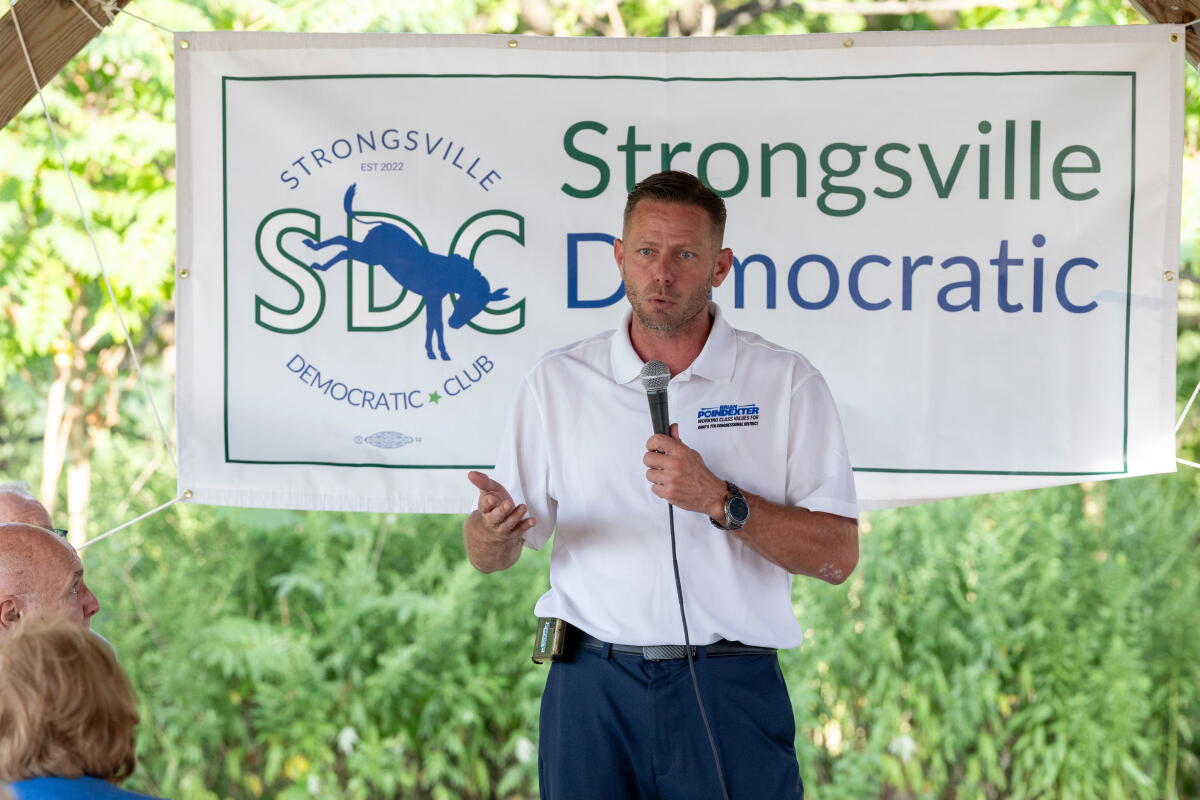
Brian Poindexter, Democratic nominee for Ohio’s 7th Congressional District, speaks at the Strongsville Democratic Club meeting on Aug. 5 in Strongsville, Ohio.
(Nate Manley / Associated Press)
Poindexter, a relative unknown, has surged in the meantime. According to a Co/efficient poll last month, Poindexter was leading Miller by 14 points, with 86% of respondents claiming they were aware of allegations against Miller.
Poindexter has centered his campaign on strengthening unions, retaining healthcare benefits for retirees and injured workers and raising wages.
Miller has attacked his opponent for a 1998 arrest in which Poindexter, a teenager at the time, allegedly tried to swallow a rock of crack cocaine during a traffic stop. Miller also homed in on an instance of alleged assault at a baseball game in 2013 by Poindexter.
Texas 34th: Gonzalez vs. Flores
Incumbent Democrat Vicente Gonzalez Jr. is attempting to retain his seat against challenger Eric Flores, an Army veteran endorsed by Trump.
Elected in 2016, Gonzalez held the 15th Congressional District for three terms until 2021, when a Texas redistricting shift absorbed his McAllen home into the 34th district. He is currently serving his second term under a new map, which favors Republicans and has shed many of his Latino constituents.
Flores, a political newcomer, made his first national appearance at the Republican National Committee’s midterm convention in Dallas, touting his commitment to border security and accusing Gonzalez of allowing migrants to make the community unsafe.
Immigration looms as an issue in the race. Gonzalez has introduced bills to prevent federal and state immigration enforcement officers from entering homes without an official warrant, and to force agents to wear clear identification. He has publicly criticized raids targeting hospitality, medical and construction workers.
Gonzalez has scored endorsements from several progressive organizations in the state, including LUPE Votes — a subsidiary of La Unión del Pueblo Entero.
In a Barbara Jordan Public Policy Research and Survey Center poll from August, Gonzalez was leading Flores, 45% to 42%, with 8% undecided.
North Carolina 1st: Davis vs. Buckhout
Incumbent Democrat Rep. Donald Davis will have to contend with a district that has grown more conservative to retain his seat against Republican challenger Laurie Buckhout.
North Carolina’s 1st Congressional District was the state’s only swing seat held by a Democrat before last year’s redistricting, which made the area lean Republican. This will be a rematch of the 2024 race, which Davis won by less than 2 points, or around 6,000 total votes.
Laurie Buckhout speaks as President Trump and North Carolina Rep. Jennifer Balkcom look on during a campaign rally at the Gastonia Municipal Airport on Sept. 16 in Gastonia, N.C.
(Matt Kelley / Associated Press)
Cook Political Report ranked this race as leaning Republican, calling Davis “the most vulnerable House Democrat in the country.”
It is unclear whether the gerrymandering effort will have been effective enough to make the district flip to Republican. Trump endorsed Buckhout in March and reiterated his support last week.
New York 17th: Lawler vs. Conley
New York Republican incumbent Rep. Mike Lawler is attempting to fend off a challenge from Democrat Cait Conley, a former White House director of counterterrorism on the National Security Council.
Cook Political Report rankings showed that early this year, the 17th Congressional District race went from likely Republican to a toss-up.
Pete Buttigieg went on the campaign trail last week with Conley to promote the candidate’s bid to unseat Lawler.
“Cait is as serious as it gets about keeping our country safe,” Buttigieg said on a rally stage in Tarrytown, “just like she is serious about bringing down the cost of housing, healthcare and energy.”
Lawler has presented a bipartisan image in Congress, but has come under fire in his purple district for aligning himself with the Trump administration on several issues, including his support for the Iran war.
At the Republican National Committee’s midterm convention, Lawler focused much of his speech on lambasting “socialist” Democrats and attempting to appeal to the more “common sense” wing of the opposition party.
“Radical socialists are winning Democratic primaries,” he said. “They claim to be well-meaning, but there is nothing kind-hearted about protecting criminals at the expense of American families … nothing compassionate about prioritizing illegal immigrants.”
Conley, however, has publicly refused to campaign with New York Mayor Zohran Mamdani or Rep. Alexandria Ocasio-Cortez — without condemning either figure — to avoid the open conflict between establishment figures and the more progressive wing of the party.
A July poll from co/efficient showed Lawler leading Conley 50% to 45%, with a nearly 3% margin of error.
Dr. Amish Shah, shown in July, is a Democrat running in Arizona’s 1st Congressional District.
(Ross D. Franklin / Associated Press)
Arizona 1st: Shah vs. Feely
A Democratic PAC plans to invest nearly $1 million to support Democrat state Rep. Amish Shah against Republican Jay Feely, a former NFL player with close ties to the president.
The 314 Action Fund — which seeks to elect Democrats with backgrounds in science, technology, engineering and mathematics — has made a big bet on the Democrat running in the 1st Congressional District, Arizona’s wealthiest, according to the Arizona Mirror.
Former professional football player Jay Feely, shown in April, is the Republican nominee in Arizona’s 1st District.
(Ross D. Franklin / Associated Press)
Subsequent ads have brought attention to Feely’s close association with Trump and his recent attendance at the Republican National Committee’s midterm convention in Dallas. Trump won the state by five points in 2024.
Elon Musk has also figured in this race, with his America PAC giving $24,000 to Republican candidates Feely in the 1st District and Juan Ciscomani in the 6th District, according to the Copper Courier.
The Cook Political Report called the 1st District “one of the most competitive … in the country.”