NEW YORK — Former New York City Mayor Eric Adams announced Friday that he had become a citizen of Albania, putting him one step closer to his oft-repeated dream of leaving politics behind for a life abroad.
Adams, a Democrat, received the honorary citizenship “at his request,” according to an official decree from the country’s president, Bajram Begaj.
The news was first reported in the Albanian press and confirmed by a spokesperson for Adams, who said the ex-mayor had “long been a friend and ally of the Albanian-American community.”
“The decision by the Republic of Albania to grant Mayor Adams citizenship reflects that enduring relationship and mutual respect,” the spokesperson, Todd Shapiro, said in a text message, adding that the recognition “further strengthens the bond between New York and Albania.”
Adams, who once described himself as an “international mayor,” has previously expressed an affinity for the small Balkan nation. His adult son lived in the country while competing in Albania’s version of “American Idol” and Adams traveled there himself in October — one of several international trips taken in his final months in office.
The purpose, he said at the time, was “to say hello to a friend and learn from a friend and build a relationship with the friendship that would not allow our oceans or seas to divide us.”
It wasn’t immediately clear what, if anything, Adams planned to do with his new citizenship. But he has previously expressed a desire to move far from his hometown of New York City.
“When I retire from government, I’m going to live in Baku,” Adams, then Brooklyn borough president, said at an event honoring the Azerbaijan community in 2018. A few years later, in an interview with a Jewish publication, Adams said he would like to retire in the Israeli-occupied Golan Heights.
As mayor, Adams’ penchant for international trips to Turkey prompted a federal indictment focused, in part, on allegations that he accepted improper travel benefits from foreign nationals.
Adams denied the allegations, and the case was later ordered dropped by President Trump’s Justice Department. Adams later met with Trump administration officials about the possibility of taking an ambassadorship, which did not materialize.
Shortly after dropping his ailing bid for reelection, Adams embarked on a four-day trip to Albania, meeting with the country’s Prime Minister Edi Rama and members of his Cabinet, along with local business leaders. The trip was paid for in part by the Albanian government.
Since leaving office, Adams has been spotted in Dubai and the Democratic Republic of Congo, though his day-to-day activities remain a source of some speculation.
In January, he launched a cryptocurrency coin that he said would beat back antisemitism and “anti-Americanism,” but it drew scrutiny after losing millions of dollars in value.
Aichatou often heard of insecurity for most of her life, but never experienced it herself. She had relatives who had either been killed or displaced in places like Bosso, a village close to Lake Chad that was ravaged by Boko Haram insurgency in 2015. But the violence that festered along the Sokoto and Kebbi flanks was not common where she lived in Dosso, a region in southwestern Niger.
Then came the coup. And with it, a promise that what had happened elsewhere would never reach her.
It did.
In 2024, terrorists stormed her town. They killed her brother and neighbours. And like many other survivors, she fled carrying nothing except the experience of something she had only once heard about – violence. It had finally reached her.
After Niger’s military rulers seized power in July 2023, they promised to do what the elected government could not: make the country safe. Nearly three years later, an analysis of conflict data, geospatial information, and interviews with people in the country shows that the military administration has failed to deliver on its promise.
While the junta has partly succeeded in shielding the capital city, Niamey, from attacks, more people are being killed across the country, and more people are being displaced from regions that were previously stable. The evidence shows that the generals have not ended the violence; they have simply relocated it.
For this investigation, HumAngle analysed 62 months of conflict data, evenly divided between the period before and after the coup. We complemented this with interviews with Nigeriens in Maradi and Diffa, many of whom had fled from areas that had historically never been frontlines. They declined to speak on record, citing fear and arrest, and so their names have been changed to protect them.
Niger Republic map illustrated by Mansir Muhammed/HumAngle
Aichatou now lives in Maradi as a displaced person. She has not heard from her missing relatives and some of her neighbours. They were scattered when the attackers came. Everyone ran for safety, and it’s unclear who died and who survived. It’s a crisis of missing persons during a war.
“We don’t know where they are and don’t even have phone numbers to reach out,” she says.
The promise
When soldiers deposed President Mohamed Bazoum on the evening of July 26, 2023, the justification was that the civilian government had failed the people. Specifically, it had failed them on economy and security.
The coup leader, General Abdourahamane Tchiani, accused Bazoum of covering up the deteriorating security situation and cited what he described as both his predecessor’s “outstretched hand” policy toward armed groups and a fundamental failure to build a regionally coherent security architecture.
Two days after seizing power, Tchiani proclaimed himself head of state, saying he had deposed Bazoum to prevent what he described as “the gradual and inevitable demise of the country.” The new ruling body named itself the National Council for the Safeguard of the Homeland (CNSP) – a title that placed national security at the very centre of its identity and mandate.
The announcement landed on fertile ground. Niger had suffered genuine insecurity under the elected government. The Tillabéri region, squeezed between the borders of Mali and Burkina Faso in the volatile Liptako-Gourma tri-border zone, had been burning for years. Attacks by Islamic State affiliates and al-Qaeda-linked groups had claimed the lives of hundreds of soldiers and thousands of civilians. The insurgency had spread eastward into Tahoua, and southward into Dosso — regions that had once felt insulated.
Ordinary Nigeriens, particularly in rural and border areas, had every reason to want something different. The coup, for some, looked like that. What followed were celebrations.
Pro-junta crowds gathered in Niamey. Thousands marched. Russian and Nigerien flags flew alongside each other in the same streets where anti-French sentiment had been building for years. The generals had read the room correctly, at least in the capital.
Since assuming power, the junta in Niger has claimed some successes, especially in repelling some attacks, asserting sovereignty, and staging defences against the internal and perceived external threats. The military has, in 2025, also pursued general mobilisation decrees and created new partnerships, especially with Russian mercenaries. The mobilisation includes bolstering the military to 50,000 troops, increasing the retirement age for officers to 52, and mobilising youth to combat insecurity.
However, under the same military, in 2026 (data for 2025), Niger reached its worst-ever ranking on Global Terrorism Index (GTI) as the 3rd most terror-impacted country in the world. This was significantly higher than when it was under an elected government, in which it was ranked between 8th and 10th.
Screenshot showing the 2026 Global Terrorism Index (GTI).
The silence
As the violence spreads under the junta, public criticism becomes more dangerous.
State-owned newspapers in Niger do not often report comprehensively on the security crisis. Most of what appears tends to highlight that a security meeting was held, or that some terrorists were killed, or it focuses on accusing France of being responsible for the country’s security problems. This narrative has gone as far as Abdourahamane Tchiani alleging that Nigeria is collaborating with France to launch an attack on Niger through terrorists deployed at the Nigeria/Niger border. The Nigerian government and independent fact-checkers denied that.
But when activists or independent journalists speak about insecurity, they get arrested.
Get our in-depth, creative coverage of conflict and development delivered to you every weekend.
Subscribe now to our newsletter!
Gazali Abdou Tasawa, a correspondent of DW Hausa, was arrested and jailed in January 2026 for reporting on displaced persons in Niger. He was not the first.
Human Rights Watch (HRW) has documented that in October 2025 six journalists were arrested in Niamey – Moussa Kaka and Abdoul Aziz of Saraounia TV; Ibro Chaibou and Souleymane Brah from the online publication Voice of the People; Youssouf Seriba of Les Échos du Niger; and Oumarou Kané, founder of the magazine Le Hérisson – over their alleged role in circulating a government press briefing invitation on social media criticizing the introduction of the mandatory payment for “Solidarity Fund for the Safeguarding of the Homeland”, a form of security levy in Niger to combat terrorism.
Moussa Ngom, Committee to Protect Journalists (CPJ)’s Francophone Africa representative, explained that “arrest and detention have become tools-of-choice for Nigerien authorities to try to control information they find undesirable.” For this investigation, HumAngle reached out to journalists in Niger to speak on insecurity. Three of them declined to speak and one promised to speak but never replied to our questions.
However, recently, a few activists have begun to speak out. A prominent Nigerien activist, Maikoul Zodi, recently called on the military junta to account for two years of broken promises on security – the central justification offered for seizing power on July 26, 2023.
Writing on his Facebook page, Zodi was blunt about what he sees as the junta’s failure. “Niger is still bleeding… the same villages are burning… the same families are burying their dead.” He asked directly what tangible improvements had been made on the ground since the coup.
His statement reflects a shift in civil society’s posture from solidarity with the transition to demands for results. “Compassion alone is no longer enough. There must be accountability,” he wrote, as violence continues spreading into regions that had previously been spared.
“I think the CNSP should present a transparent report of the security situation, with concrete figures and data,” reacted Tahirou Halidou, a concerned Nigerien.
One day after that Facebook post, Zodi was interrogated by the police because of the publication.
What the numbers buried
The junta’s promise of improving security has not become a reality.
To understand what changed, HumAngle analyzed conflict data from the Armed Conflict Location and Event Data (ACLED) project which maps political violence worldwide in real time, covering equal 31-month periods before and after the coup – from January 2021 to February 2026.
ACLED data does not necessarily give us a complete picture of the dire situation in Niger, given that most of its information relies on open-source reporting from NGOs and journalists who have been repressed by the junta, and so may not be able to accurately capture what is really happening on the ground.
While the ACLED number of recorded incidents for the period under review rose only modestly, the outcomes of insecurity became dramatically deadlier in Niger Republic. Worse, the violence is spreading toward communities that were never hotspots.
“Although we are aware of insecurity in some villages a few kilometres away from ours, we had never experienced violence before the military coup,” said Ousmane*, an IDP who left his village Gadori in Diffa and moved to Maradi in early 2025.
According to ACLED data, total recorded conflict events rose modestly after July 26, 2023 – from 1,879 to 2,221, an increase of 18.2 percent. Taken alone, that figure might suggest a country holding steady. But fatalities tell a radically different story: deaths surged from 2,983 before the coup to 4,855 afterwards, a 62.8 percent increase. The same rough number of incidents, but significantly more people dying in them. The deaths per incident climbed by 37.7 percent, meaning that even setting aside the raw count, each individual attack became deadlier on average.
One of the deadliest attacks recorded under the junta was on Dec. 10, 2024, when Jihadists affiliated with the Islamic State attacked Nigerien soldiers at a market in Chetoumane, Tillabéri region, killing at least 90 soldiers and over 50 civilians. The junta suspended BBC for reporting the attack.
Before the coup, areas surrounding the Nigerien border with Nigeria were relatively safe, but not anymore. “In Dan Issa here, we had never experienced a situation when people were as afraid to go to villages as they are now,” one of the residents told HumAngle. “There is a silent displacement in the villages due to incessant cases of kidnappings.”
Dosso, Aichatou’s region, appeared in the ACLED displacement data for the first time, with six distinct locations recording forced civilian movement: Dogondoutchi, Banizoumbou Kobia, Boumba, Kassalama, Kontalangou, and Tounouga.
The entire Gaya corridor, the southern road connecting Niger to Nigeria and Benin, recorded zero displacement events in the 31 months before the coup. After it, the route became newly active, with JNIM and ISSP both documented operating along it. These are not places with histories of insurgent attack. They are places that were, until recently, buffers that absorbed refugees from further north without themselves being overrun. But that buffer has collapsed.
Tillabéri’s Abala district recorded nine distinct new displacement locations after the coup, compared to only two locations before the coup. A cluster triggered in a single week in October 2023 – Maimagare, Mandaba, Tamattey, Dangna, and Badak Toudou – marked the opening of that sub-region to what the data suggests was a systematic IS Sahel campaign of threats designed to clear villages.
By early 2026, even Niamey itself was no longer exempt: an Islamic State Sahel Province (ISSP) attack on Air Force Base 101 in January 2026 produced the capital’s first recorded displacement event.
Across the full dataset, 51 locations recorded displacement for the first time after the coup. Only four sites of chronic, pre-existing displacement persisted into the post-coup period. The coup expanded the footprint of violence into entirely new territory. Generally, according to the United Nations Refugee Council (UNHCR), as of 2026, Niger has recorded over one million displacements, more than half of whom are internally displaced (IDPs).
Displacement incidents before and after the coup in Niger. Source: ACLED. Illustrated by Mansir Muhammed/HumAngle
As the new wave of violence reached new places, more people fled their homes. Confirmed displacement events – i.e. ACLED incidents explicitly noting that people had fled or evacuated – rose by 83.3 percent, from 30 in the pre-coup period to 55 after. Abandoned settlement events declined, from 27 to 18, but that apparent drop carries a grim explanation: many of the communities that might have been abandoned had already been emptied. There were fewer inhabited places left to abandon.
The nature
The nature of the violence also transformed. Events recorded by ACLED explicitly as “violence against civilians” fell by nearly 31.7 percent. This decrease does not, however, reflect the full picture and reading it literally can be misleading.
ACLED records each conflict event under a single type based on its primary event: a gun battle is coded “Battles” even if the notes confirm civilians were killed; a roadside bomb is “Explosions/Remote violence” even when the target was a civilian vehicle. Only when deliberate civilian targeting is the defining characteristic, before they flag it as “Violence against civilians” and set the civilian targeting variable. However, three columns allow a closer accounting of civilian contributions to those increased overall fatality numbers: the “civilian_targeting” flag itself; the “interaction code”, which records the actor types involved; and the free-text “event notes”, which often documents civilian casualties in events coded under other categories.
Events that ACLED explicitly classifies as “Violence against civilians” did fall from 785 to 536 incidents. However, battles surged. The dominant interaction in battles by far was state forces against rebel groups, accounting for 182 clashes and 944 deaths before the coup and climbing to 382 clashes and 2,009 deaths afterwards. There have been clearly stated large combatant tolls in these events. But embedded in the ACLED event notes for those same battles are post-coup civilian-involved incidents, together contributing to 447 deaths when you count the fatality column of the rows’ note that explicitly records “civilian casualties”. This goes up from 23 battle events and 108 deaths before the coup to a more-than-threefold rise.
Most explosions and remote violence surges follow the same state-versus-rebel pattern: IED attacks on military convoys classified as “State forces-Rebel group” jumped from 46 to 155 events. Yet ACLED’s own civilian_targeting flag registers a 230 percent increase in civilian-linked explosion-related deaths (from 33 to 109).
Reviewing these columns in those months before and after the July 2026 coup gives a narrower picture than the overall event counts suggest.
The increase in the death toll aligns with the assessments of other security monitoring bodies. The Africa Center for Strategic Studies noted that fatalities linked to extremist groups were projected to reach more than 1,600 in 2024 alone — a 60 percent increase from 2023. The Safeguarding Security Sector Stockpiles (S4) Initiative found that attacks on Niger’s own security forces in the first nine months of 2024 were more frequent than in any previous year. The CNSP had promised to protect its soldiers, but the opposite happened.
The HumAngle ACLED analysis also tracked attacks on state forces specifically: incidents targeting the military nearly doubled, rising from 198 to 366 – an 84.8 percent jump. Fatalities in those incidents climbed from 623 to 1,555, a 149.6 percent jump. By the post-coup period, state-force targeted deaths accounted for 32 percent of all fatalities recorded – up from 21 percent before the coup. The lethality of each individual attack on security forces also rose: from 3.2 deaths per event before the coup to 4.3 after.
“Those numbers reflect a simple reality that the security vacuum created by the rupture with Western partners has been exploited ruthlessly by non-state armed groups,” said Ikemesit Effiong, an analyst and a managing partner at SBM Intelligence, an African security intel firm based in Lagos, Nigeria. “A massive increase in violence metrics is more than a failure of policy; it is a failure of legitimacy,” he told HumAngle.
Jihadist groups, freed from the surveillance, intelligence-sharing, and operational pressure that Western and regional partnerships had provided, adapted their tactics. They hit less often but harder, and with dramatically more lethal results. JNIM, the al-Qaeda affiliate that had previously operated mostly in southwestern Tillabéri, expanded into southern Dosso. Islamic State Sahel Province consolidated control over the Abala sub-region and extended pressure southward toward Niamey.
Tera, in Tillabéri, became the single deadliest location shift in the dataset: event counts rose by only a third, but fatalities exploded from 198 to 991 – a 401 percent increase. Gaya, on the Nigerian border, went from near-silence to an active conflict zone. Dioundiou appeared in the data for the first time, with 49 events and 144 fatalities recorded where none had existed before. The geography of the war had moved.
In January 2026, the Jihadists affiliated with the ISSP conducted an unprecedented daring attack on the Diori Hamani International Airport in Niamey. The attack included the first-time use of drones, which were reportedly engaged by the airport’s air defence systems. The attack sent a chilling message that the terrorists are getting bolder and ready to wage more sophisticated attacks on some of the state’s most protected infrastructure.
“The use of drones by ISSP shows a level of technical sophistication and intelligence gathering we haven’t seen this close to the capital before,” said Effiong, the security analyst. “For the military regime, if they cannot secure the perimeter of the country’s premier international gateway, they cannot claim to control the state.”
The protection bubble
What the full body of evidence suggests is that the junta in Niger built a bubble around Niamey and the corridors of power that connect it to key military installations. Inside that bubble, things are calmer. Attacks on urban centres remain relatively rare. The capital’s residents can move through their days with a reasonable sense that yesterday’s normal will resemble tomorrow’s.
“The distinction is now visible,” Effiong told HumAngle. “Regime security focuses on Niamey’s checkpoints and the presidential palace; peripheral areas are being sacrificed.”
Outside that bubble — in Dosso, in the new displacement clusters of Abala, in the villages whose names appear in ACLED event notes for the first time after July 2023 — the junta’s promise of peace has not arrived.
“This emboldens groups like ISSP and JNIM because it reveals a risk-reward calculation: the junta’s air power is limited, and their reaction times are slow,” Effiong said.
The Islamic State Sahel Province has moved closer to Niamey than at any point in the country’s history, with militants increasingly controlling key roads into the capital, effectively tightening a noose that the junta’s propaganda apparatus does not mention.
Aichatou knows this too well. She is in Maradi, far from everyone who once knew her, far from the brother whose body she could not bury, far from the relatives she could not trace, and far from the neighbours who once gave her a sense of community.
The promise of security reached Niamey.
It did not reach her.
This article was produced with support from the African Academy for Open Source Investigations (AAOSI) and the African Digital Democracy Observatory (ADDO) as part of an initiative by Code for Africa (CfA). Visit https://disinfo.africa/ for more information.
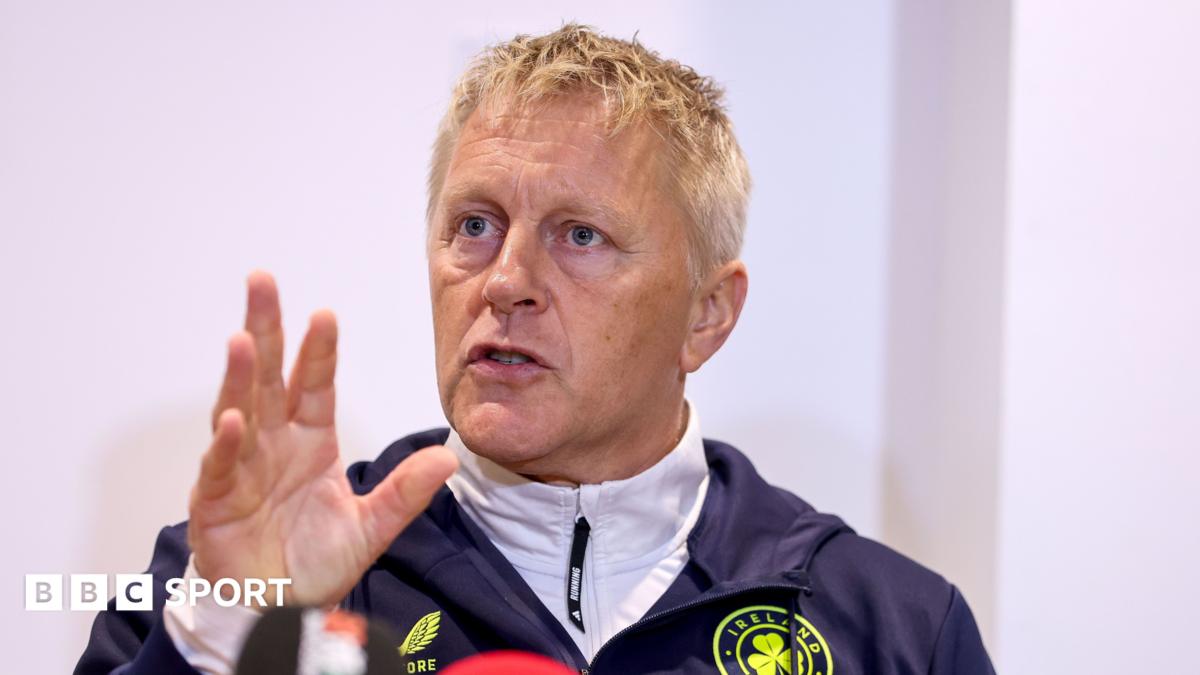
Republic of Ireland manager Heimir Hallgrimsson has called Portsmouth winger Millenic Alli into his squad for Tuesday’s friendly against North Macedonia in Dublin [19:45 BST].
The 26-year-old earns his first call-up to the senior squad and took part in training at Abbotstown on Sunday.
Alli began his career in England playing non-league before signing for Exeter City in 2024, catching the eye of Luton Town who spent £1.5 million to bring him to Kenilworth Road.
The Dubliner scored four goals in the final six games of last season, but the Hatters would suffer relegation to League One.
Despite falling out of favour, Alli was picked up on loan by Portsmouth and he has started all 14 games since his arrival at Fratton Park.
He has scored once in the Championship club’s bid to beat the drop and his performances have caught the attention of Hallgrimsson who brings him into the squad with others unavailable for Tuesday.
Midfielder Jack Taylor has left the squad for family reasons, while Sammie Szmodics has returned to Derby County to continue his recovery from a concussion sustained in Thursday’s World Cup play-off semi-final defeat on penalties by the Czech Republic.
That defeat in Prague saw the Republic of Ireland’s hopes of qualifying for this summer’s World Cup come to an end, while North Macedonia were beaten in their semi-final by Denmark, leaving both nations to face each other in a friendly.
MIAMI — Gunnar Henderson and Roman Anthony homered and the United States limited the Dominican Republic’s electric offense to win a thrilling semifinal 2-1 on Sunday and move one win from capturing its second World Baseball Classic championship.
The loaded American roster, led by National League Cy Young Award winner Paul Skenes and featuring stars Bryce Harper and Aaron Judge, reached its third straight WBC title game after winning in 2017 and falling to Shohei Ohtani and Japan in 2023. The Americans will face the winner of Monday’s semifinal between Italy and Venezuela in Tuesday’s title game.
The Dominicans reached the semifinals for the first time since winning the WBC title in 2013, but missing the championship was not the goal for a roster that featured six players who finished among the top 10 in MVP voting last year and cruised through the early rounds of this WBC.
They faced their biggest test of the tournament against Skenes (2-0), who gave up one run on six hits through 4 ⅓ innings, and the U.S. bullpen, which held the Dominicans scoreless the rest of the way.
The Dominican Republic threatened in the ninth when Julio Rodríguez drew a walk and advanced to third against Mason Miller. With two outs, Miller struck out Geraldo Perdomo for his second save.
Junior Caminero hit a solo drive off Skenes in the second to give the Dominicans a record 15 homers in the tournament, surpassing the mark set by Mexico in 2009. He finished the tournament hitting .350.
The matchup between the two star-studded lineups didn’t fail to deliver big moments, especially on defense.
Judge got it started in the third with a 95.7-mph laser from right field to get Fernando Tatis Jr. at third. The Yankees’ All-Star then found himself on the other side of a huge defensive play in the fifth when Rodríguez — an inning after being hit on the wrist by a 98-mph fastball from Skenes — scaled the center-field wall to rob Judge of a home run.
Henderson, starting at third base over Alex Bregman, homered off Luis Severino to tie it in the fourth before Anthony hit the go-ahead homer, connecting on a 3-2 sinker from loser Gregory Soto.
HOUSTON — Aaron Judge doubled and Pete Crow-Armstrong and Brice Turang each had two hits as the United States beat Canada 5-3 on Friday night to reach the World Baseball Classic semifinals.
The U.S. squad rebounded after an 8-6 loss to Italy in pool play left them needing help to advance to this round.
The Americans move on to face the Dominican Republic in a semifinal on Sunday in Miami. It will be the team’s third straight appearance in the semifinals and the fourth overall.
It’s another big win for the U.S. over its neighbors to the north, coming after the U.S. hockey team beat Canada 2-1 in overtime to win the gold medal at the Milan Olympics last month.
Bo Naylor hit a two-run homer in Canada’s three-run sixth that cut the deficit to two runs. But the U.S. bullpen closed it out, capped by Mason Miller striking out the side in the ninth for the save.
Canada, which was in the quarterfinals for the first time, fell to 1-5 against the U.S. in the WBC.
Canada trailed by five runs when Owen Caissie walked with one out in the sixth and moved to second on a groundout by Abraham Toro. Tyler Black’s RBI single off Brad Keller cut the lead to 5-1.
Naylor’s shot to the second deck in right field came on Gabe Speier’s fifth pitch and got Canada within 5-3. It was the 10th home run the U.S. has yielded in five games in the tournament.
Canada had a shot to close the gap in the seventh when it had runners on second and third with no outs. But David Bednar retired the next three batters, with two strikeouts, to escape the jam.
U.S. starter Logan Webb gave up four hits and walked one with five strikeouts in 4⅔ innings.
Bobby Witt Jr. was on with one out in the first when Judge doubled before Witt scored on a groundout by Kyle Schwarber to give the U.S. an early lead. The double by Judge was the only extra-base hit of the night for the U.S.
Canada had a runner on first with two outs in the second when Witt made a leaping catch on a ball hit by Edouard Julien to end the inning.
The bases were loaded with two outs in the third when Alex Bregman singled on a groundball to Toro. His throw to first sailed over Josh Naylor’s head and into the dugout and two runs scored to make it 3-0.
Roman Anthony singled with one out in the sixth before a walk by Cal Raleigh. Turang singled on a grounder to center field to score Anthony and push the lead to 4-0. Crow-Armstrong sent the next pitch into center field for an RBI single before Witt grounded into a double play to end the inning.
Voters in the Republic of Congo will choose their next president on Sunday, although longtime leader Dennis Sassou Nguesso is likely to be elected unchallenged, analysts say.
The central African nation, which has been led almost continuously by Nguesso for more than 40 years, is one of the most politically repressive in the world, with Freedom House giving it a 17 out of 100 rating for freedom.
Recommended Stories
list of 4 itemsend of list
The country is Africa’s third-largest oil exporter. It sells between 236,000 and 252,000 barrels per day, alongside copper and diamonds.
Congo is also highly biodiverse. Sprawling expanses of tropical rainforest in the country form part of the Congo Basin – the second-largest rainforest network in the world after the Amazon. The Nouabale-Ndoki National Park in the north is a UNESCO World Heritage site and is home to elephants, endangered lowland gorillas, and chimpanzees.
Still, the country of 6 million people is racked by economic woes. Corruption and mismanagement, analysts say, contribute to Congo being 171st of 193 countries on the United Nations Human Development Index.
A fractured political opposition, meanwhile, has only allowed Nguesso’s governing Congolese Labour Party (PCT) to consolidate power over the years, although a newcomer is raising hopes.
Here’s what we know about Sunday’s polls:
Supporters of outgoing President Denis Sassou Nguesso, who is running for re-election, take part in a campaign rally before the March 15 presidential election, in Brazzaville, Republic of Congo, March 7, 2026 [Roch Bouka/Reuters]
When do polls open?
Polls will open on Saturday, March 15, between 6am (05:00 GMT) and 6pm (05:00 GMT). More than 2.6 million people are eligible to vote; that is, they are more than 18 years old and have been registered.
Voter turnout in 2021 — during the last election — was 67.70 percent according to the International Foundation for Electoral Systems (IFES). Authorities have announced that borders will be closed during voting.
Candidates with an absolute majority usually win the elections, or in rare cases, a run-off will be called between the two top polling candidates.
Presidential terms in Congo are for five years. While the constitution had previously allowed a maximum of two terms and an age limit of 70, those were removed in 2015.
France’s President Emmanuel Macron speaks with President of Congo Denis Sassou Nguesso during the signing of a letter of intent by Denis Christel Sassou Nguesso, Congolese minister of international cooperation and promotion of partnership, and France’s Delegate Minister for Francophonie and International Partnerships Thani Mohamed Soilihi at The Elysee Presidential Palace in Paris on May 23, 2025 [File: Thomas Samson/Reuters]
Who’s running?
Dennis Sassou Nguesso: The 82-year-old was first elected to office in 1979 and led the country for 12 years under a one-party state. He lost elections after opposition lawmakers voted to introduce a multiparty system. On his second attempt in 1997, he seized power in a bloody civil war and has remained in office since. He is Africa’s third-longest serving ruler.
Nguesso’s legacy has been one of gross underdevelopment and corruption, said Andrea Ngombet, the exiled founder of Sassoufit, a group advocating for Nguesso’s exit. In 2015, Nguesso pushed through a controversial referendum that reset presidential term limits from two to three. It also completely removed age restrictions, allowing him to run for the fifth consecutive time in 2021.
A strong hold on the country’s judiciary and the Independent National Electoral Body (CENI) has helped secure Nguesso’s hold, analysts say. His strategic international alliances, from Beijing to Moscow to Paris, have ensured foreign investments and boosted his influence, according to Ngombet. However, since 2013, France has launched investigations into his family’s numerous assets in Europe and the US under pressure from civil society. French authorities seized property belonging to his son, Denis-Christel Sassou Nguesso, in 2022.
Melaine Deston Gavet Elengo: At only 35, Elengo’s candidacy has caused ripples. The oil sector engineer leads the Republican Movement and is the youngest contender in the race. Although a first-time presidential candidate, Elengo appears to be pulling an unusual amount of interest as he presents himself as a departure from the old system. His campaign has emphasised a government built on transparency, an independent justice system, and inclusive development.
“He could secure at least 20 percent of the vote, signalling a generational shift,” Ngombet said.
“His unique advantage lies in the unspoken support from UPADS dissidents frustrated with the boycott,” he added, referring to the opposition party, Pan-African Union for Social Democracy (UPADS), which boycotted the March 21, 2021, presidential election over concerns of integrity. UPADS is doing the same this year but has called on its supporters to go out and vote according to their “conscience”.
Elengo is also closely allied with political heavyweights like the opposition Union of Humanist Democrats, founded by the popular opposition figure, late Guy-Brice Parfait Kolelas, who came second in 2016.
A man walks past a campaign banner of presidential candidate Destin Gavet, before the presidential election scheduled for March 15, in Brazzaville, Republic of Congo, March 11, 2026 [Roch Bouka/Reuters]
Joseph Kignoumbi Kia Mboungou, 73: The veteran lawmaker is the leader of the political party The Chain and represents the southwestern Lekoumou department. He has run several times in the past without much success, with his 2021 bid resulting in just 0.62 percent of the vote. Mboungou’s campaign promised political change and an economy that diversifies from oil, while reducing poverty.
Uphrem Dave Mafoula, 43: The economist is leader of the New Start party. He is making his second bid for the top post after running as the youngest candidate in 2021 and securing just 0.52 percent of the vote. Mafoula’s goal, he says, is to implement governance reforms, create jobs, and reduce inequalities.
Vivien Romain Manangou, 43: The independent first-timer is a university lecturer campaigning on institutional reforms, improving public finances, and promoting national unity.
Mabio Mavoungou Zinga, 69: Running under the opposition coalition Alliance party, the retired customs inspector and former member of parliament promises to tackle corruption and free jailed opposition leaders. It’s his first bid.
Anguios Nganguia Engambe, about 60: The president of the Party for Action of the Republic is running for his fourth time as presidential candidate. In 2021, he won only 0.18 percent of the vote. This time, he has pledged to bridge political divisions in the country and foster better political participation.
Which opposition leaders have been targeted?
Several opposition leaders are either jailed or have fled into exile. Some are:
Jean-Marie Michel Mokoko,78: A former chief of the army and an adviser to Nguesso, who turned against the president and ran for elections in 2016. He called for protests after the results showed that he won 13.74 percent and placed third. He was arrested afterwards on charges of undermining state security and was in 2018 sentenced to 20 years in prison.
Andre Okombi Salissa: a one-time leading member of the governing Congolese Labour Party, and a former minister, Salissa also switched to the opposition in 2016 to contest the polls. He was arrested shortly after, also on security charges. In 2019, he was sentenced to 20 years of hard labour.
What are the key issues?
Poverty despite oil riches
Analysts have long warned that a lack of economic diversification hurts the country’s prospects. As Africa’s third-largest oil producer, Congo earns more than 80 percent of its export revenue from oil, according to the World Bank, making the economy vulnerable to shocks.
Government investment in hydrocarbons has only intensified in recent years. In 2015, authorities aimed to boost daily output to 500,000 barrels of oil per day within three years. Liquefied natural gas (LNG) production and export also began in 2024.
Despite this, around half the population lives below the poverty line. Most live in the main cities of Brazzaville and Pointe-Noire where access to electricity and roads is available but dismal. The situation is even worse in rural areas, analysts say.
While the population is young, with nearly half under 18, job creation is weak. Many young people with degrees have to turn to menial work for survival. The unemployment rate hovers at approximately 40 percent, with inadequate electricity being one of the major barriers for business, according to the World Bank.
Forests and agriculture
Before it began extracting oil in the 1970s, agricultural produce and timber were the biggest revenue generators in Congo.
However, Congo has become reliant on food imports amid the shift to oil.
Although the country has up to 10 million hectares (24 milllion acres) of arable land, only a small percentage is being cultivated, and that’s mostly for low-yield subsistence farming.
The government has touted plans to boost cassava, maize, sorghum, and soy farming, along with developing fisheries and poultry.
Meanwhile, deforestation in the Congo Basin, which encompasses parts of Congo and five neighbouring countries, nearly doubled between 2010 and 2020, compared to the previous decade.
Political freedom and post-Nguesso race
Protests are rare in the country as authorities don’t provide permits and respond with violence when demonstrators gather, according to the Africa Center for Strategic Studies.
Opposition members are routinely jailed. Nguesso appoints national judges himself, meaning the judiciary is not independent.
Many Congolese expect Nguesso to win Sunday’s elections, so much attention is now on who will likely take over leadership in the country in the coming years.
Analysts say an intense succession race is already brewing behind the scenes.
Denis-Christel Nguesso, the president’s son and minister of international cooperation, is the clear favourite, but he faces challenges from the president’s nephew and Head of National Security Jean-Dominique Okemba.
The Nguessos’ cousin, Jean-Jacques Bouya, who is currently the minister of planning and works, is another contender.
Pointe-Noire and Brazzaville, Republic of Congo – In Pointe-Noire, the economic capital of the Republic of Congo, the aisles of the Grand Marche come alive in the early hours of the morning. Among the market stalls, street vendors, and shoppers pushing their way through the crowd, Romain Tchicaya is selling medicines on the sly.
As the price of basics – including pharmaceutical products – rises, and people turn to more affordable unregulated options, merchants like Tchicaya step in to fill the gap while trying to earn a living in a struggling economy.
Recommended Stories
list of 3 itemsend of list
However, the 37-year-old’s background is far from typical for a street vendor.
With a degree in management, he thought he would find a stable job after graduating from university. But like many young Congolese, he found himself facing a tight job market with few opportunities.
“We are told that the country is rich in oil. But I don’t see that wealth in my daily life,” he told Al Jazeera. “Look at Pointe-Noire, formerly nicknamedas Ponton la Belle [Beautiful Pointe-Noire]. Today, the city is unrecognisable.”
Around the Grand Marche, the main roads are potholed, and when it rains, the streets get flooded, making it almost impossible to drive.
Like Tchicaya, Brice Makaya, in his 40s, has never managed to find a stable job here despite having a degree in computer science.
With no stable employment, he is unable to rent a house and now lives outside the church where he prays.
“I am still underhoused at my age and have no prospects for the future,” he told Al Jazeera. “Without a job, I can’t plan ahead. I’m just trying to survive.”
For many young Congolese, daily life is a paradox: though they live in a resource-rich country – the third largest oil producer in sub-Saharan Africa and a producer of liquefied natural gas (LNG) – nearly half the population live below the poverty line.
This Sunday, Congo goes to the polls in which President Denis Sassou Nguesso, 82, is again seeking another term. For young voters, jobs and the economy are a big concern. But for the government, there appear to be limitations to what is possible.
During one of his speeches in the election campaign, Nguesso pointed out that the civil service could not absorb all job seekers, and urged young people to take charge of their own futures by encouraging self-employment.
A market in the Republic of the Congo before the 2026 presidential election [Al Jazeera]
Oil: ‘Fuel of the political system’
According to the World Bank, oil accounts for about 70 percent of Congo’s exports and nearly 40 percent of its gross domestic product (GDP).
But this wealth does not automatically translate into an improvement in living standards for most of the populace.
The World Bank estimates that more than 40 percent of Congolese people live below the poverty line, despite the country’s significant natural resources.
For economist Charles Kombo, this can be explained in large part by the very structure of the Congolese economy, which is dependent on oil revenues.
“Oil dependency plays a structuring role in many African economies. In what some call a ‘rentier state’, a large part of public resources comes from the exploitation of natural resources rather than taxation,” he explained.
In a rentier state, the country generates substantial revenue from “renting out” natural resources, such as oil, to foreign companies. In exchange for the exploitation rights granted on these resources, the state receives royalties, taxes, or a share of production.
In this type of system, Kombo explains, the management of revenues becomes central to political power.
“Control of this revenue often reinforces institutional centralisation,” he said, explaining that dependence is no longer solely economic, but becomes institutional and sometimes psychological, as it influences budgetary priorities, political strategies, and even perceptions of development.
He points out that when the economy relies heavily on extractive revenues, economic and political resources tend to become intertwined, which can limit electoral competitiveness.
“Oil revenues can generate significant income, but they do not guarantee the structural transformation of the economy,” he said.
This oil dependence also exposes the country to fluctuations in oil prices on international markets.
After the fall in crude oil prices in 2014, the Congolese economy experienced a severe crisis. Public debt exceeded 90 percent of GDP, before being restructured under agreements with the International Monetary Fund and several international creditors.
Although this has helped stabilise the macroeconomic situation, the country remains heavily indebted. According to the World Bank, public debt fell from 103.6 percent of GDP in 2020 to about 93.6 percent in 2024, reflecting a gradual improvement, but also the continued vulnerability of Congo’s economy to fluctuations in global oil prices.
For political analyst Alphonse Ndongo, oil revenues also influence political life in Congo.
“Oil has become the fuel of the political system. It is used to finance parties, co-opt elites, and maintain social balance,” he said.
According to him, “oil money comes easily and quickly”, but this financial windfall has long delayed necessary structural reforms such as economic diversification.
In his view, the steady flow of money from the oil sector can create a sense of complacency within the system, reducing the pressure to pursue deeper structural reforms. As a result, debates around economic diversification tend to emerge mainly during periods of financial stress, when falling oil prices expose the limits of the model. But when revenues rise again, he argues, the urgency to diversify often fades, leaving the economy heavily dependent on the same resource.
A man walks past a campaign banner of first-time presidential candidate Destin Gavet, in advance of the election [Roch Bouka/Reuters]
‘An uphill battle’
As the country’s oil wealth fails to filter to the majority of the population, young people are particularly affected and many face unemployment.
According to data from the World Bank and the International Labour Organization, the youth unemployment rate in Congo is among the highest in Central Africa, while the informal sector absorbs the majority of new entrants to the labour market.
During a news conference on March 4 in Brazzaville, Prime Minister Anatole Collinet Makosso, who is also spokesperson for presidential candidate and incumbent leader Nguesso, said that young people were at the heart of the government’s policy.
“Youth has always been at the centre of Denis Sassou Nguesso’s policies and social projects,” he said, citing investments in education and the construction of universities.
He also claimed that the unemployment rate had fallen from 44 percent to 39 percent in recent years.
But on the ground, many young people remain sceptical.
Landry, 23, a student in the capital Brazzaville who did not want to give his last name, says he has lost faith in political promises.
“Promises of jobs come back every election. It’s become a cycle,” he said.
A months-long strike at Marien Ngouabi University, the country’s main institution of higher education, forced him to interrupt his studies.
“I went back to my parents’ house to wait and see what I could do. Today, I’m seriously thinking about going abroad.”
Another student in Brazzaville, a 26-year-old woman who did not want to give her name, expressed similar frustration.
“The only sector that is really recruiting today is the army. But not everyone can become a soldier. Becoming a civil servant is also an uphill battle,” she said.
Even sectors that are supposed to be structured are not immune to precariousness. Regine, a young journalist who also did not want to provide her last name, said she works without a stable employment contract.
“In the media, many young people live off ‘camora’, one-off payments for services. It’s not a real salary.”
She also lamented the difficulties of everyday life, including infrastructure issues, such as power cuts and inconsistent water supplies, despite repeated government investment plans.
“In the 21st century, people rejoice when the electricity comes back on. And when the water finally flows, everyone rushes to fill buckets,” she said.
President of Congo Denis Sassou Nguesso [File: Minasse Wondimu Hailu/Anadolu Agency]
‘Social time bomb’
Congo’s infrastructure problems are a reminder to Regine and many others that economic difficulties go beyond the issue of employment.
At the same time, the consequences of the country’s youth employment crisis also reverberate more widely and into the social sphere.
Analyst Ndongo sees this as a potentially explosive situation.
“When there are large numbers of young people who are unemployed and have no prospects, it can become a social time bomb,” he said.
This dynamic is already visible in the tensions that emerge when unemployment and inequality intersect, Ndongo explained: As large numbers of young people struggle to find work while wealth linked to the oil sector remains visible, frustration can build among those excluded from economic opportunities.
He says pressure can be contained for a time, but without meaningful job opportunities and stronger education systems, resentment may deepen. Over time, he warns, groups of unemployed and poorly trained youth can become more vulnerable to crime or gang activity.
The Congolese population is very young: more than 60 percent of people are under 25, according to United Nations data. This demographic reality represents both economic potential and a major challenge for the authorities.
For economist Kombo, the issue goes far beyond just unemployment.
“Demographics are a major political factor in many African countries. When the population is predominantly young, expectations for employment and social mobility are particularly high.”
According to him, long-term political stability will depend on the ability to create economic opportunities.
“Development is not distributed,” he said, “it is built.”
Despite the frustrations, political mobilisation remains limited, even as several candidates rally to compete against Nguesso in this weekend’s vote.
Chris Taty, a young student in Brazzaville, says he is not interested in the current election, as it is clear that the president who has already been in power for more than 40 years will once again reign supreme.
“Everyone already knows who is going to win. So why bother voting? I’d rather stay at home and do other things,” he said.
“Sometimes we joke that Sassou [Nguesso] is our grandfather,” the young journalist Regine said. “He has been ruling for so long that many of us have never known another president”
Nguesso has been a dominant figure in Congolese politics for decades, first ruling the country from 1979 to 1992 before returning to power in 1997 following a brief period out of office. His long tenure has enabled him to consolidate influence over key state institutions. Meanwhile, analysts say the country’s opposition remains fragmented and lacks the organisational capacity to pose a strong challenge.
For some potential voters, the perception of a largely predictable outcome has contributed to a degree of political disengagement, which Ndogo says is a “feeling of resignation”.
“Resignation is ingrained in everyone … Students, politicians, intellectuals … everyone is forced to scramble for a piece of the pie,” he said.
“We are all lulled into resignation because we tell ourselves that if we stand up against the established order, against those in power, we risk ending up in prison or even six feet under. It’s risky to oppose the system today.”
This combination of economic frustrations and limited political participation is a main challenge facing Congo, observers say. And the issue of youth unemployment risks becoming a major crisis in the coming years if nothing is done to fix it.
For many educated yet underemployed young people in the oil-rich country, the question is whether or not Congo can transform its natural wealth into concrete opportunities for its people.
“We are not asking for much,” said Regine. “Just the chance to work, to live in our own country with dignity and to believe that our future can be built here, without connections, with equal opportunities for young people, and without conditions.”