The “Transition” Has a Private Property Problem
After more than three years behind bars, José Ignacio Moreno Suárez said he walked out of El Rodeo I prison last Friday with nothing to his name. “I have no house. These are my clothes; this is what I have left after three years. They took everything from me, everything I have,” he told reporter Maryorin Méndez at the prison gates, gesturing at what he was wearing. Moreno Suárez, the legal representative in Venezuela for Canadian miner Gold Reserve, was arrested in June 2023 for defending the company’s international arbitration claim for over $1 billion in expropriated assets. He was freed in the first round of political prisoner releases since the beginning of the US-brokered talks between the Rodríguez government and the opposition.
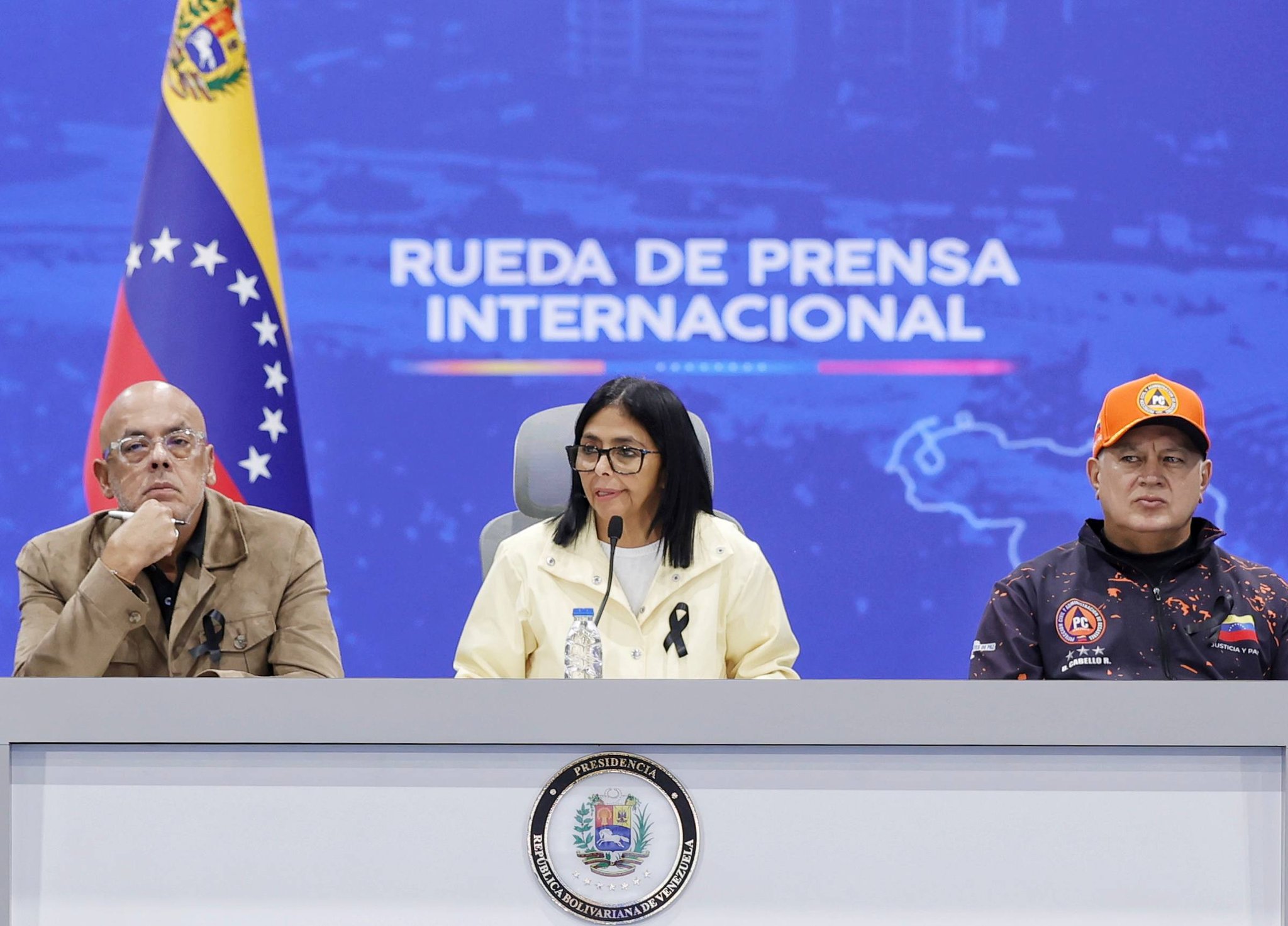
Although we know no further details about Moreno Suárez’s case, we do know that it is one of many cases of this kind of systematic punishment against political prisoners and dissident figures. While the Rodríguez-Figuera table gets to boast about the releases, the regime has yet to answer for the houses and personal property it raided or seized from dozens of political figures and their relatives. Among them is Dinorah Figuera herself, president of the Delegate Commission in the ongoing negotiations with chavismo. As they begin releasing prisoners and readmitting exiles to take part in the talks, the question remains about whether these negotiations will give any of the houses back.
Charity in a stolen home
In May, chavista officials gathered in Los Palos Grandes to inaugurate the Casa de los Abuelos y Abuelas Indio Chacao, a new branch of the Gran Misión Abuelas y Abuelos de la Patria program for the elderly. Footage of the opening (and backlash against it) spread quickly, as the building they chose was once the family home of Lilian Tintori and Leopoldo López, the exiled founder of Voluntad Popular and once-popular opposition leader.
Back in March, Tintori had reported that authorities took over the house, emptied it of their belongings and started demolishing parts of it. The raid happened after López said in an interview that he supported the US military operation that captured Maduro and Cilia Flores.
“They took my house from me for assuming the presidency of the 2015 National Assembly,” Dinorah Figuera said recently.
The day after the inauguration, López answered with a video walking through what was done to his house. “This is the house where my children grew up, where we hold the memory of our family, the photos, the sheets, the furniture, the toys. This is the house where I spent a year and a half under arrest,” he said. The video, originally posted on May 30 to Leopoldo López’s account in collaboration with Voluntad Popular, was deleted this week. Tintori had already reported, in March, that the home was looted and structurally damaged, with personal objects removed, interior walls knocked down, and even the family’s pets disappeared.
López clarified that he was not against this kind of assistance program, as he inaugurated similar centers during his time as mayor of Chacao. He condemned, however, that Rodríguez’s administration is now presenting this action as an ‘act of justice’ when, in his view, it represents a message of intimidation. “Recovering democracy also means recovering every citizen’s right to live, work, and return home in freedom and safety”, López wrote in his post.
House by house
Magalli Meda, campaign chief for María Corina Machado, had her family home raided in May 2025, days after she escaped from the Argentine embassy where she sheltered for over a year. Agents returned in February 2026, tagging the property “secured” and “seized.” GNB agents had raided Meda’s mother’s apartment in May 2025, stealing her car in the process. Machado’s personal assistant, Laura Acosta, also saw her main residence taken by force in March 2025, and formally confiscated a year later.
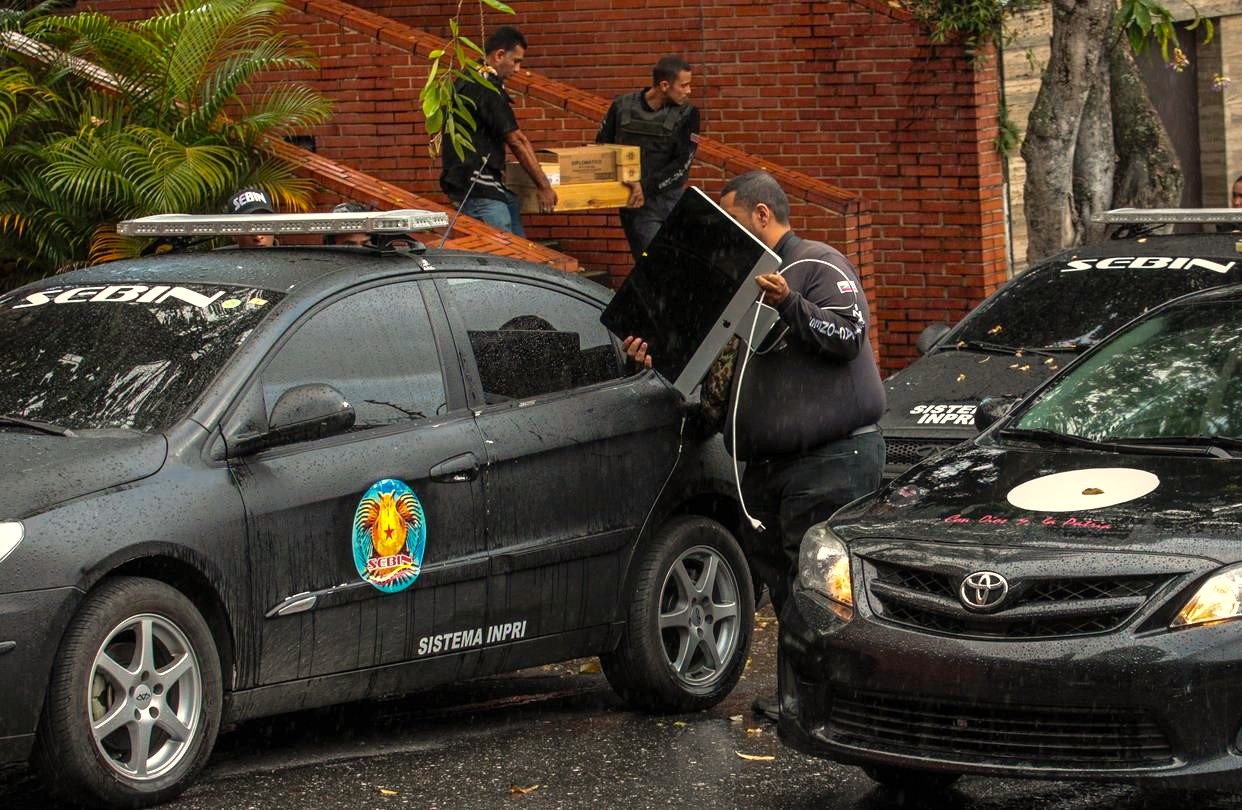
Those close to Antonio Ledezma— the former Caracas metropolitan mayor— lost multiple properties. In 2023, the National Anti-Corruption Police of Venezuela (PNCC) raided the Santa Rosa de Lima apartment he shared with his wife Mitzy Capriles, where Ledezma had lived under house arrest from 2015 until 2017, when he escaped the country. Neighbors told Ledezma that hooded men with long guns forced the lock, entered, and carried off boxes of his belongings. They left a sign on the door that read clausurado, sealed. Ledezma’s father-in-law’s vacation home in Naiguatá had already been seized before then. His stepdaughter Isabel González Capriles and her husband, former Chávez minister Andrés Izarra, were forcibly removed from their Quinta Los Gnomos in Caraballeda in 2020 and given a 15-day notice to remove their belongings. Three years later, the head of the DGCIM, Iván Hernández Dala, celebrated his wedding at the confiscated property.
Diego Arria, the former governor, minister and UN ambassador during the Carlos Andrés Pérez administrations, faced two expropriations back in 2010 under Chávez’s guerra al latifundio policies: his Hacienda La Carolina in Yaracuy and Finca Los Azahares in Carabobo. Julio Borges’s home was raided in 2018 over his alleged link to the drone attack on Maduro, which stripped him of parliamentary immunity. Bony Pertiñez, wife of the jailed police commissioner Iván Simonovis, lost her home in 2019 through a precautionary seizure issued by a terrorism court and executed by the SEBIN.
But confiscations and raids are not confined to the country’s household-name dissidents.
Former presidential candidate Enrique Márquez described the same process: “The police arrested me leaving my house, took my keys, and went in. They took my computer and personal effects… They stole money, kitchen appliances, clothes, paintings. They left us bankrupt.” When approached for an update on the state of the stolen goods, Márquez told Caracas Chronicles those belongings were never returned.
And then there’s Dinorah Figuera, the opposition’s co-chair at the current negotiating table. In January 2023, the DGCIM raided her home and that of Auristela Vásquez, second vice president of the 2015 National Assembly. “At this moment my home in Los Rosales, Caracas, is being raided. Regime security agents, continuing their strategy of State terrorism, are adding one more act to their long list of human rights violations”, she tweeted. In June, Figuera confirmed she returned to Venezuela “having been stripped of a home” in an interview with Luis Olavarrieta: “They took my house from me for assuming the presidency of the 2015 National Assembly,” she recalled when asked about those who consider her a divisive figure within the opposition.
But confiscations and raids are not confined to the country’s household-name dissidents.
José Breijo was a Uruguayan-Venezuelan former hotel manager held in Tocuyito Prison for two years on a terrorism charge. His alleged crime was taking a picture of a flag in an office where he believed Islamist groups met. The detention drew little attention until this May: after being granted house arrest, a photo of Breijo lying on a mattress at the entrance of his home started circulating on social media. One of the officers who arrested him had moved a family in. “It’s a very common police practice,” Breijo said. “They pick you up on the street, ask you a lot of questions, and if they realize you live alone, they send you to prison and take your house.” Unable to occupy the house the court ordered him to remain in, he risked being sent back to prison for failing to comply. He slept in the hallway for three days until, after several human rights organizations and activists denounced the situation, State authorities opened the doors to his house and handed José the keys. He passed away this month in that same apartment, at 71.
Even some chavistas were stripped of their property once their loyalties faded. Raúl Baduel was the general behind Chávez’s return to power after the 2002 coup, and then became his Minister of Defence in 2006. After breaking with Chávez the following year over proposed constitutional reforms, he was arrested in 2009, convicted on corruption charges and stripped of all his material goods. Baduel insisted the charges were pushed as a tool for political persecution. More recently, Tareck El Aissami, Simón Zerpa, and Samark López were deprived of their property because of their involvement in the PDVSA-crypto case of 2023.
The laws laundering the theft
Article 116 of the Venezuelan Constitution forbids confiscation, permitting it only by final judicial sentence and against those convicted of crimes against public property or enrichment through illicit trafficking. Still, the State built itself loopholes by declaring statutes to route around that protection.
Officers invoked one of three laws for the seizures (at least, whenever a legal basis was provided at all). The Organized Crime and Terrorism Financing Law, passed under Chávez in 2012, is used to target exiles: Article 58 allows a court to move from “preventive seizure” to permanent forfeiture after a year if the owner is deemed to have “abandoned” the property. On the other hand, the 2024 Libertator Law “against the imperial blockade” explicitly authorizes the confiscation of assets as a criminal penalty against anyone who supports or requests international sanctions against Venezuela.
The 2023 Asset Forfeiture Law (Ley de Extinción de Dominio) was born out of Maduro’s anti-corruption purge of El Aissami. The chavista National Assembly issued it to “establish mechanisms to identify, locate, and recover assets tied to illicit activity.” The law was first applied in February 2025 against an alleged corruption network within PDVSA, when a single court gave roughly 400 assets belonging to more than 100 people over to the State. The 462-page ruling never established when the alleged crimes took place, and inverted the presumption of innocence by forcing the accused to prove their assets were clean.
The US-sponsored negotiations are advanced by an opposition cohort of mostly exiles who have been permitted to return to take part in the talks, premised on “reconciliation” and on “verifiable” steps toward a restored democracy. While Figuera can now re-enter the country whose legitimate Assembly she once led, the properties seized from her circle have not been restored.
Restitution is a direct measure of whether “reconciliation” means anything concrete or is simply another buzzword to back transactions that leave the regime’s loot intact. A transition pushed by the US to partially restore investor confidence cannot leave the confiscations unaddressed. Doing so would ratify the theft and reward those behind the seizures with fresh capital. If the Trump administration intends to sell this process as a genuine opening, it must be prepared to say whether the property the regime took will be given back.