
JHVEPhoto/iStock Editorial via Getty Images
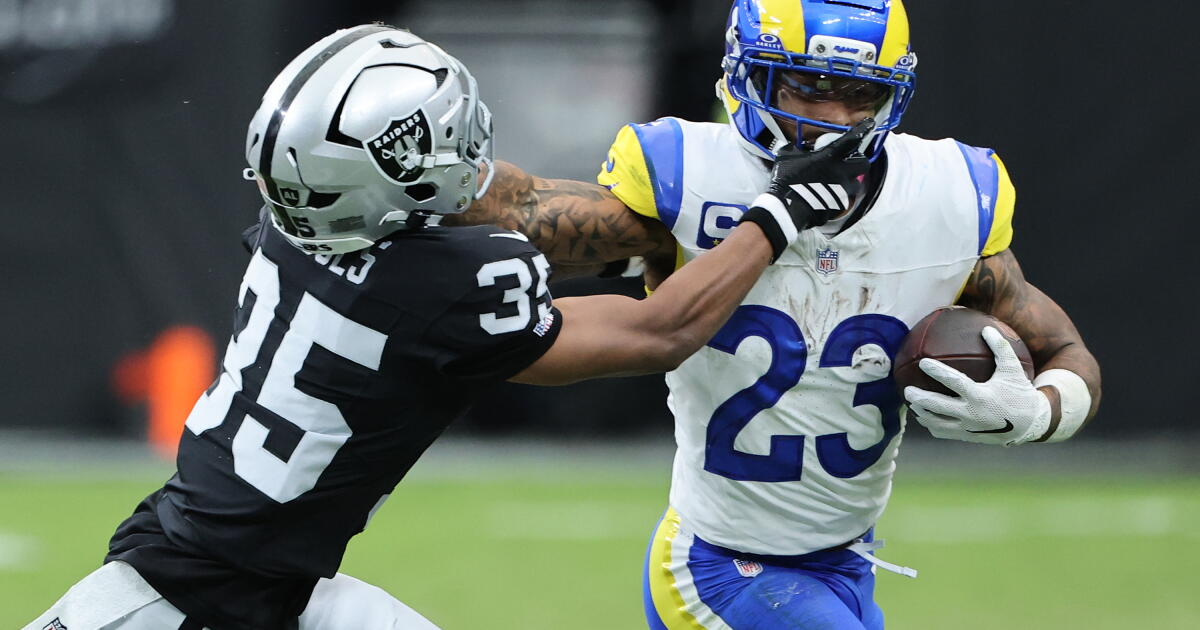
From Gary Klein: What happened in Vegas cannot stay in Vegas.
Not if the Rams want to make a run to the playoffs.
Matthew Stafford must continue to flash his 2025 MVP form. Star receiver Puka Nacua and Rams tight ends must keep carrying a Davante Adams-less receiving corps. Kyren Williams and Blake Corum must build on an impressive combo rushing performance.
And the Rams’ defense must negate potential comebacks.
The Rams displayed all those attributes Sunday in a 35-21 victory over the Raiders at Allegiant Stadium.
Stafford became the franchise’s all-time leader in touchdown passes by connecting with tight end Davis Allen for two and with Nacua for another in a victory that improved the Rams’ record to 3-4.
“A good step in the right direction,” coach Sean McVay said.
Williams and Corum each rushed for a touchdown as the Rams bounced back from consecutive defeats by the Buffalo Bills and Arizona Cardinals to keep alive their turnaround from their third poor start in three seasons.
For the first time in the Rams’ last five games, the outcome did not come down to the final play.
Get the latest on L.A.’s teams in the daily Sports Report newsletter.
By continuing, you agree to our Terms of Service, which include arbitration and a class action waiver. You agree that we and our third-party vendors may collect and use your information, including through cookies, pixels and similar technologies, for the purposes set forth in our Privacy Policy such as personalizing your experience and ads.
From Thuc Nhi Nguyen: Luka Doncic raised three fingers toward the Utah crowd. Fans were left counting more than just his points.
Doncic hit three clutch three-pointers late in the fourth quarter and took a momentum-swinging charge to lead the Lakers to a nail-biting 132-123 victory over the Utah Jazz on Sunday at Delta Center. Doncic led the Lakers (3-0) with 52 points, 10 assists and eight rebounds as the team fought back from an 18-point second-quarter deficit.
Guard Austin Reaves hit a dagger three with 34 seconds remaining to give the Lakers a seven-point lead. As Doncic salted the game away from the free-throw line, he was serenaded with chants of “MVP!” Reaves finished with 29 points.
“Getting MVP chants in someone else’s arena is crazy,” center Walker Kessler said. “But, you know, obviously deserving.”
Kessler knows this arena well. It’s where he spent the first four years of his career. But the center was quiet in his return to Salt Lake City. After he joined the Lakers in a massive sign-and-trade deal that cost the Lakers two first-round picks and two first-round pick swaps and a four-year, $130-million contract, Kessler was held to just two points on one-of-two shooting with seven rebounds.
From Mirjam Swanson: In the most complimentary way, I ask: What the heck was that first half, UCLA?
Yes, really. With Saturday’s 28-10 victory over Michigan State, Bob Chesney has the Bruins football team 7-0 for the first time since 2005. Still undefeated and still the only team in the Big Ten — and SEC — conferences that can say so. Ranked No. 9 in the nation and moving on up.
And so I ask: Two lost fumbles before halftime? Two drops? Two holding penalties? A meager 84 yards through the air and a modest 14-7 halftime lead? Against a majorly depleted Michigan State team fielding a freshman third-stringer at quarterback — that also lost two more of its best players to injury in the first half?
These Bruins are too good to be letting the wounded Spartans (2-6, 0-5 Big Ten) hang with them for even a half.
And yet, for a hot moment, doubt started to creep back in: Was this the day Chesney’s chariot turned back into a pumpkin? Was the last petal from the enchanted rose about to fall, this beauty of a season due to turn ugly? Was the fairy tale almost over?
Shai-Gilgeous Alexander scored 34 points, Ajay Mitchell had 18 off the bench, and the Oklahoma City Thunder stayed undefeated with a 108-101 victory over the Clippers on Sunday night.
Isaiah Hartenstein added 12 points and 12 rebounds for Oklahoma City, which won its third straight to start the season but lost three players to injury, including All-Star guard Jalen Williams, who went down hard on a drive to the basket with 1:14 left. Williams left the court on a stretcher with towels covering his left leg.
Guard Cason Wallace (left shoulder soreness) and forward Jaylin Williams (right wrist soreness) left the game in the first quarter and did not return. Mitchell was eight-for-14 shooting with six rebounds, four assists and three steals in 28 minutes.
Leo Walta scored the tying goal in the 62nd minute, and LAFC clinched a playoff spot by rallying from two goals down in the second half for a 2-2 draw with the Galaxy on Sunday night.
Joseph Paintsil scored his first two goals since August as the Galaxy hung on impressively for a point, but endangered their own playoff hopes by blowing the lead in another thrilling El Tráfico derby.
The final seconds of injury time were breathtaking: Galaxy goalkeeper JT Marcinkowski and defender Justin Haak both made spectacular stops on LAFC chances before Denis Bouanga scored on a redirection of Tyler Boyd‘s bicycle kick — only for the play to be ruled offside.
All games at 5 p.m. PT
All game on FOX/FOX Deportes/FOX One
No. 1 Milwaukee vs. No. 1 Tampa Bay
at Milwaukee 3, Tampa Bay 2 (box score)
at Milwaukee 5, Tampa Bay 4 (box score)
Monday at Tampa Bay
Tuesday at Tampa Bay
*Wednesday at Tampa Bay
*Friday at Milwaukee
*Saturday at Milwaukee
* if necessary
1907 — Jim Thorpe makes his Carlisle (Pa.) debut dazzling a crowd of 22,800 in a 26-6 defeat of No. 4 Penn at Philadelphia’s Franklin Field. Thorpe rushes, returns kicks and does all the kicking in putting on a one-man show.
1951 — Joe Louis loses his last fight, an eighth-round TKO to Rocky Marciano at New York’s Madison Square Garden. Marciano knocks Louis down with a left hook in the eighth round. Louis gets to one knee at the count of three and takes an eight-count before getting up. Marciano ends the fight with a right that sends Louis through the ropes and onto the ring apron. Louis’ career record is 66-3 with 52 knockouts.
1968 — Brooks Dawson of Texas El Paso completes 17 of 24 passes for 304 yards in the final 10:21 of the fourth quarter as the Miners beat Brigham Young 31-25.
1968 — Boxer George Foreman beats Ionas Chepulis of the Soviet Union for the gold medal in the heavyweight division at the Mexico Olympic Games.
1970 — Muhammad Ali returns to the ring after a 2 1/2-year layoff due to his refusal to be drafted into the United States Army. Fighting in Atlanta, Ali opened a cut over Jerry Quarry’s left eye with a right hand in the third round, causing the fight to be stopped before the start of the fourth round.
1980 — The St. Louis Cardinals sack quarterback Baltimore quarterback Bert Jones 12 times in a 17-10 victory.
1982 — Philadelphia Phillies Steve Carlton became the first pitcher to win four Cy Young Awards
1990 — Wayne Gretzky becomes the NHL first player to reach the 2,000-point plateau when he helps set up a goal by Tomas Sandstrom at 14:32 of the first period of the Kings’ game at Winnipeg.
2000 — The New York Yankees become the first team in more than a quarter-century to win three straight World Series titles, beating the New York Mets 4-2. The Yankees match the Oakland Athletics’ three in a row from 1972-74, and win their fourth title in five years.
2002 — Volponi, a 43-1 long shot, finds room along the rail and blows past the fading Kentucky Derby and Preakness winner War Emblem to take the Breeders’ Cup Classic by 6½ lengths ahead of Medaglia d’Oro.
2006 — Ryan Miller stops 29 shots as Buffalo beats the New York Islanders 3-0 to win its 10th straight game. The win matches the best start in NHL history, tying the 1993-94 Toronto Maple Leafs.
2012 — The NHL cancels all its games through the end of November because of the labor dispute between owners and players.
2013 — Octavias McKoy runs for 455 yards, setting an NCAA record for all-divisions, as Division III Western Connecticut State beats Worcester State 55-35. McKoy scores five touchdowns in the game and breaks the rushing record previously held by Dante Brown of Marietta College. Brown ran for 441 on Oct. 5, 1996 against Baldwin-Wallace.
2014 — Serena Williams wins the WTA Tour Finals for the third straight year and fifth time overall, beating Simona Halep 6-3, 6-0. Williams joins Martina Navratilova and Steffi Graf as the only players to have won five titles in the season-ending championship.
2014 — Ben Roethlisberger is 40 for 49 for 522 yards and six touchdown passes in Pittsburgh’s 51-34 win over Indianapolis. Roethlisberger became the first player in NFL history with two 500-yard passing games — 503 yards vs. Green Bay on Dec. 20, 2009.
2014 — Abby Wambach scores four goals and the World Cup-bound United States beat Costa Rica 6-0 for its fifth CONCACAF women’s title.
2018 — The longest World Series game by innings and time; Dodgers beat the Boston Red Sox, 3-2 in the 18th inning (7 hours, 20 minutes) in Game 3 at Dodger Stadium with a Max Muncy walk-off home run.
Compiled by the Associated Press
That concludes today’s newsletter. If you have any feedback, ideas for improvement or things you’d like to see, email me at houston.mitchell@latimes.com. To get this newsletter in your inbox, click here.

JHVEPhoto/iStock Editorial via Getty Images
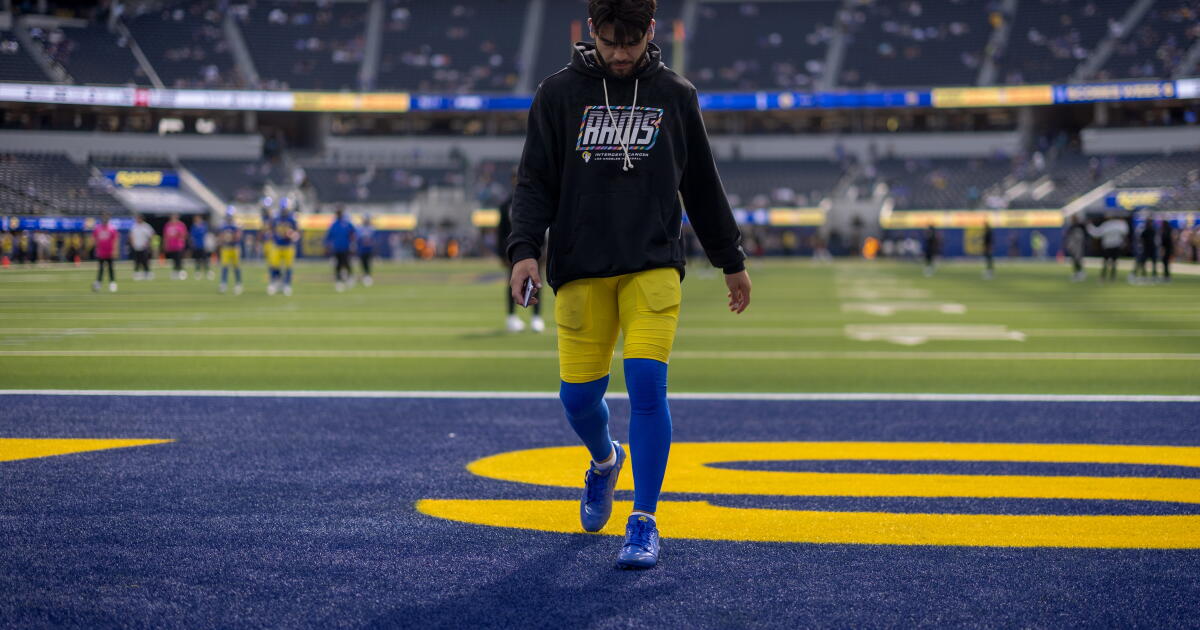
From Gary Klein: The Rams’ injury woes continued Thursday when star receiver Puka Nacua left practice because of a calf injury, a team official said.
Nacua was sidelined for two games this season because of a hip injury, but he has played the last three games for a Rams team that opened the season as the Super Bowl favorite but is 2-4 heading into Sunday’s game against the Raiders in Las Vegas.
The Rams are already thin at receiver in the wake of a hamstring injury suffered by Davante Adams during the Rams’ 18-16 defeat by the Arizona Cardinals last Sunday. Adams, 33, will be sidelined for six to 10 weeks, coach Sean McVay said.
It remains to be seen if Nacua, who led the NFL in receptions last season, will play against the Raiders. He has 37 catches for 417 yards and a touchdown, and he has also rushed for a touchdown this season.
Jordan Whittington, Konata Mumpfield, Tutu Atwell and rookie CJ Daniels are other Rams receivers.
Mumpfield, a second-year pro, said he would be ready if called upon for a larger role.
NFL Week 7 picks: Seahawks defeat Chiefs; Rams prevail over Raiders
Get the latest on L.A.’s teams in the daily Sports Report newsletter.
By continuing, you agree to our Terms of Service, which include arbitration and a class action waiver. You agree that we and our third-party vendors may collect and use your information, including through cookies, pixels and similar technologies, for the purposes set forth in our Privacy Policy such as personalizing your experience and ads.
From Thuc Nhi Nguyen: He spent the offseason admiring the great Lakers centers that came before him. He pondered how he could possibly continue such a legacy.
Turns out, Walker Kessler makes it look easy.
The new Lakers center scored 26 points on 12-for-12 shooting with nine rebounds, one assist and two blocks in his purple and gold debut to help the Lakers (1-0) to a dominant 127-105 win over the Golden State Warriors on Wednesday at Crypto.com Arena.
After admiring Lakers legends, Kessler can now be mentioned in the same breath. His 12 made field goals without a miss were the most by a Laker since Wilt Chamberlain in 1969. His 10 dunks are the most for a Laker since Shaquille O’Neal in 2003.
From Mirjam Swanson: Starting over has to start somewhere, and so the Clippers got on with it Wednesday.
While Kawhi Leonard got an NBA Finals hero’s welcome upon his return up north in Toronto, the Clippers did what they could to entice fans back to Intuit Dome.
Not with superstars or championship aspirations. But with the promise of free parking, a jersey trade-in and a basketball team that is, at least, better than the Sacramento Kings, who they beat 121-96 in both teams’ season opener. Coach Tyronn Lue dedicated the win to suspended team owner Steve Ballmer: “Just want to say thank you for everything. We’re still fighting for him.”
Yeah, but the Clippers should focus on fighting for their fans, not the billionaire whose apparent salary cap circumvention has the organization in hot water.
Wednesday’s fan appreciation stuff was a swell gesture, as a start. But it wasn’t nearly far-reaching enough.
From Bill Shaikin: The Dodgers have been dead for a week. The sting has dissipated. The World Series starts Friday.
For the first time in three years, Los Angeles faces a Fall Classic with no rooting interest.
Might we suggest the Milwaukee Brewers?
No?
So maybe the sting has not dissipated, not after the Brewers so rudely swept the Dodgers in the National League Championship Series. But did you see the thousands of Brewers fans that arose within Dodger Stadium to salute the newly crowned NL champions, sticking around long after the Dodgers fans had retreated to traffic jams in the parking lot?
“It’s a good time to be a Milwaukee Brewers fan, for sure,” NLCS MVP Jake Bauers said. “It’s always fun going into a road stadium, especially in a postseason environment, and coming out with a win and seeing how many people hang around after the game.”
The Brewers are L.A.’s team, at least for the next week.
From Kevin Baxter: Mohammed Annour spent much of his youth living in a flimsy shelter in a dusty, overcrowded refugee camp in east Africa, where the days were long, the food was poor and the future nonexistent.
“Go to the army and fight. That’s one option,” said Annour, who fled war in Sudan for the refugee camp in Chad when he was 9. “The other one is you stay there. But you don’t have a future.”
If he had stayed, Annour, now 33, has little doubt how his story would have ended.
“Probably,” he said, “I’m dead.”
Instead, he’s in Sweden, raising two boys, working as a quality control inspector for a textile company and playing amateur soccer for a team in the country’s fifth division. And the only thing that separates his experience from the tens of thousands of desperate people he left behind in the camp is the fact someone believed in him enough to give him a chance.
That would be Katie-Jay Scott and Gabriel Stauring, a pair of South Bay activists who showed up at Annour’s camp on a blazing hot day in 2011, rolled a battered soccer ball across a barren field and transformed an untold number of lives.
Artemi Panarin had two goals, Brandt Clarke scored in overtime and the Kings won their second consecutive game, 3-2, at the New York Islanders on Thursday night.
The Kings have back-to-back victories after losing their first six games. They were the final NHL team without a win before defeating Washington on Tuesday night.
The Kings were outplayed for much of the game and were outshot 43 to 26. Panarin beat rusty backup Semyon Varlamov glove side twice, and Darcy Kuemper kept making stops even as his rebound control was lacking, finishing with 41 saves.
Kuemper cracked for the first time with just under six minutes left in the second period when rookie Victor Eklund’s shot squeezed through on a power play. Matthew Schaefer wired a wrist shot past Kuemper 7:06 into the third.
Arseny Gritsyuk and Nico Hischier scored first-period goals, Nico Daws made 16 saves and the New Jersey Devils beat the Ducks 4-1 on Thursday night.
Anthony Mantha restored the two-goal lead with 6:33 left in the third, and Jack Hughes added an empty-netter with 6.1 seconds remaining. New Jersey won its second straight to improve to 6-4-0, while the Ducks dropped their fifth in a row to fall to 4-6-0.
Gritsyuk and Hischier each scored their fifth goal of the season, with Jesper Bratt assisting on both scores. Hughes assisted on Gritsyuk’s goal.
World Series
All games at 5 p.m. PT
All game on FOX/FOX Deportes/FOX One
No. 1 Milwaukee vs. No. 1 Tampa Bay
Friday at Milwaukee
Saturday at Milwaukee
Monday at Tampa Bay
Tuesday at Tampa Bay
*Wednesday at Tampa Bay
*Friday at Milwaukee
*Sat., Oct. 31 at Milwaukee
* if necessary
1921 — Green Bay Packers play 1st APFA (forerunner to NFL) game; beat Minneapolis Marines, 7-6 at Hagemeister Park, Green Bay, Wis.
1945 — Jackie Robinson signs a contract with the Montreal Royals, minor league farm team of the Brooklyn Dodgers.
1949 — Don Doll of the Detroit Lions intercepts four passes in a 24-7 victory over the Chicago Cardinals.
1960 — Jim Martin of Detroit becomes the first kicker to kick two field goals over 50 yards in a game as the Lions beat the Baltimore Colts 30-17.
1964 — Joe Frazier dominates German Hans Huber for an easy points win to capture the boxing heavyweight gold medal in Tokyo.
1971 — Greg Pruitt rushes for 294 yards on 19 carries to lead the Oklahoma Sooners to an NCAA record 711 yards rushing and a 75-28 pounding of Kansas State.
1976 — Pittsburgh’s Tony Dorsett rushes for 180 yards in a 45-0 rout over Navy to become the top career rusher in NCAA history with 5,206 yards.
1988 — Dan Marino passes for 521 yards, three touchdowns and five interceptions as the Miami Dolphins lose to the New York Jets 44-30. Marino completes 35 of 60 passes as he produces the second-best single-game total yardage in NFL history.
1993 — The Toronto Maple Leafs break the NHL record for most victories at the start of the season, winning their ninth straight game by beating the second-year Tampa Bay Lightning 2-0.
1999 — Florida State’s Bobby Bowden gets his 300th win with a 17-14 win over his son, Clemson coach Tommy Bowden. With the victory Bowden joins Bear Bryant, Pop Warner, Joe Paterno and Amos Alonzo Stagg as the only major college coaches to reach 300 victories.
2000 — The New York Jets, trailing 30-7 at the end of the third quarter, come back to beat the Miami Dolphins 40-37 in overtime on Monday night. The Jets score four touchdowns and a field goal in the fourth quarter to force overtime.
2005 — San Diego’s LaDainian Tomlinson is held to a career-low seven yards rushing in 17 carries and fails to score in the Chargers’ 20-17 loss at Philadelphia, ending his NFL record-tying streak of games with a touchdown at 18.
2008 — Carolina’s Brandon Sutter gives one of hockey’s most famous families another milestone, scoring his first NHL goal in a 4-1 loss at Pittsburgh. The 19-year-old Sutter, son of New Jersey Devils coach Brent Sutter, is the ninth member of the Sutter family to play in the NHL.
2011 — Tim Tebow rallies the Broncos for two touchdowns in the final 2:44 of the fourth quarter to force overtime, and Matt Prater’s 52-yard field goal gives Denver an improbable 18-15 victory over the stunned Miami Dolphins. The Broncos appeared beaten when they trailed 15-0 with 5:23 left and took over at their 20.
2016 — Jay Ajayi ties an NFL record by surpassing 200 yards rushing for the second game in a row, helping the Miami Dolphins rally past the Buffalo Bills 28-25. Ajayi rushes for 214 yards in 29 carries after totaling 204 yards a week earlier in a win over Pittsburgh.
2019 — All Star point guard Kyrie Irving pours in 50 points, setting a new NBA record for points on debut with a new team as his Brooklyn Nets go down 127-126 at home to the Minnesota Timberwolves.
Compiled by the Associated Press
That concludes today’s newsletter. If you have any feedback, ideas for improvement or things you’d like to see, email me at houston.mitchell@latimes.com. To get this newsletter in your inbox, click here.
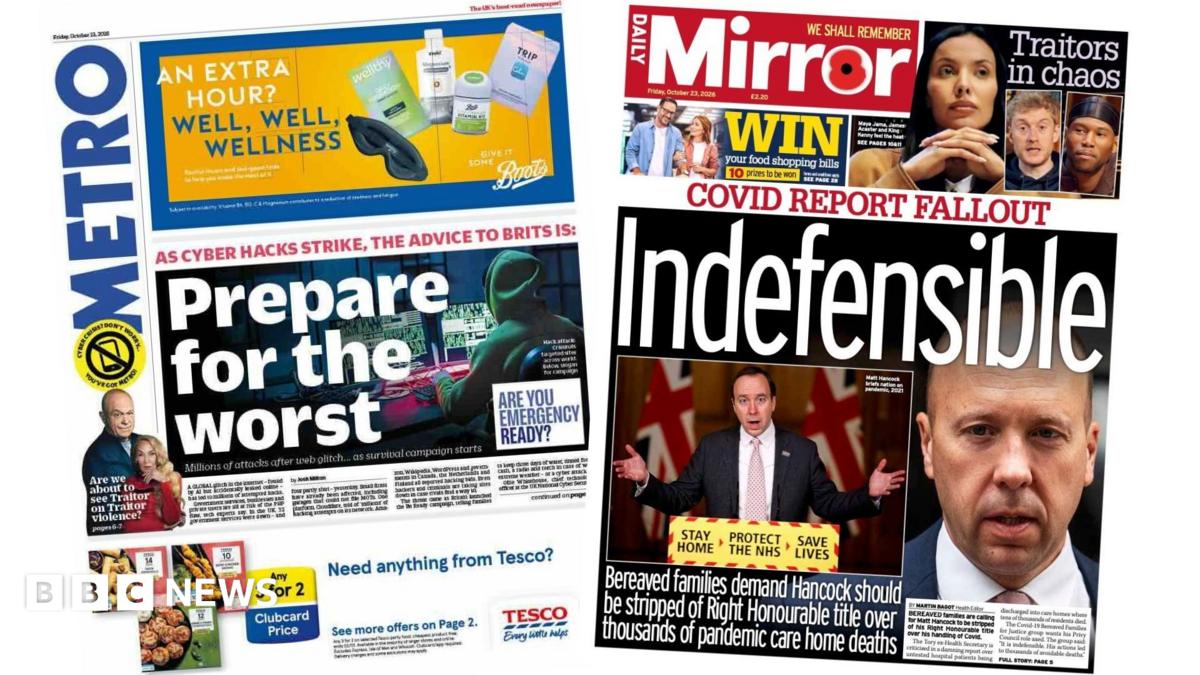
Defence Secretary Wes Streeting’s national campaign on preparedness for cyber or climate emergencies dominates today’s papers.
Source link

WASHINGTON — President Trump’s administration is on track to deport about 660,000 people over the past year, a new report released Thursday shows, as arrests ramp up across the country fueled by billions of dollars meant to supercharge his immigration agenda.
The report by the Migration Policy Institute shows deportations increased from 620,000 during the first year of Trump’s second administration. The numbers fall short of previous highs in the early 2000s and fail to meet the Trump administration’s promise, made when it received the billions from Congress, that the money would allow for 1 million deportations annually.
The report, based on publicly available data obtained through Freedom of Information Act requests, comes after the Trump administration in January 2025 stopped publicly releasing similar figures compiled by the Department of Homeland Security.
Trump, a Republican, returned to power last year promising to stanch crossings at the southern border and crack down on immigration. His administration has pushed through restrictions on both legal and illegal immigration and launched high-profile arrest operations in its bid to force migrants out.
The analysis found that the Department of Homeland Security carried out 980,000 deportations during the first 18 months of the second Trump administration.
During the last fiscal year — when the Trump administration’s immigration enforcement mechanisms were shifting into high gear — an estimated 660,000 people were deported.
According to MPI’s analysis, that’s a 26% increase from the yearly average from 2021 to 2024 during the administration of President Biden, a Democrat, but well below the 1.86 million deportations recorded in 2000, under President Clinton, another Democrat.
Despite the surging arrests, the report details some of the challenges to the Trump administration reaching its deportation targets.
Historically, many immigrants living in the U.S. without authorization were from Mexico and didn’t often seek asylum. But in recent years, migrants have come to the U.S. from a wide range of countries, which can make it more complicated to deport them. And immigration courts, which ultimately decide whether someone can be removed from the country, face more significant case backlogs.
The report said voluntary departures — when people give up their cases in immigration court and agree to leave the country — were at an “all-time high,” with 170,000 choosing to do so since Trump returned to office in January 2025. People who choose voluntary departure could one day return to the U.S. But some immigrant advocates and lawyers say that people give up their court fight and agree to leave simply to get out of U.S. Immigration and Customs Enforcement, or ICE, detention.
The Trump administration was also increasingly deporting people it arrested in the country’s interior, the report said, reflecting how it was stepping up enforcement against migrants who have been in the country for a long time. In 2025, about 28% of the people deported were arrested inside the country, but by July of this year that had risen to 39%.
Migrants arrested at the southern border still make up a large number of deportations, the report said — 69% of all deportations between Jan. 20, 2025, and July 31, 2026, were of people initially intercepted at the border.
People in the country longer may have more opportunities to contest their removal while the government typically has greater authority to fast-track deportations for people arrested at the border.
The analysis said most people deported have never been convicted of a crime, despite the Trump administration claiming to be targeting the “worst of the worst.” Previous data has showed the same.
In response to the MPI report, White House spokesperson Lauren Bis said: “President Trump has delivered the largest reduction in illegal immigration in modern history.”
Homeland Security stopped releasing similar data when Trump took office, making it difficult to track one of his key campaign promises. Figures the Trump administration has released are inconsistent and unverifiable.
The administration says it is transparent. On Tuesday, it released some of its own figures as part of a document boasting of its achievements on immigration, including that 1.2 million migrants have been deported or removed during Trump’s second term. The discrepancy could not immediately be reconciled.
In the absence of regular data, analysts and activists interested in immigration trends have relied on information obtained through lawsuits or limited and sporadic information released by federal agencies to track deportation data.
Santana writes for the Associated Press.
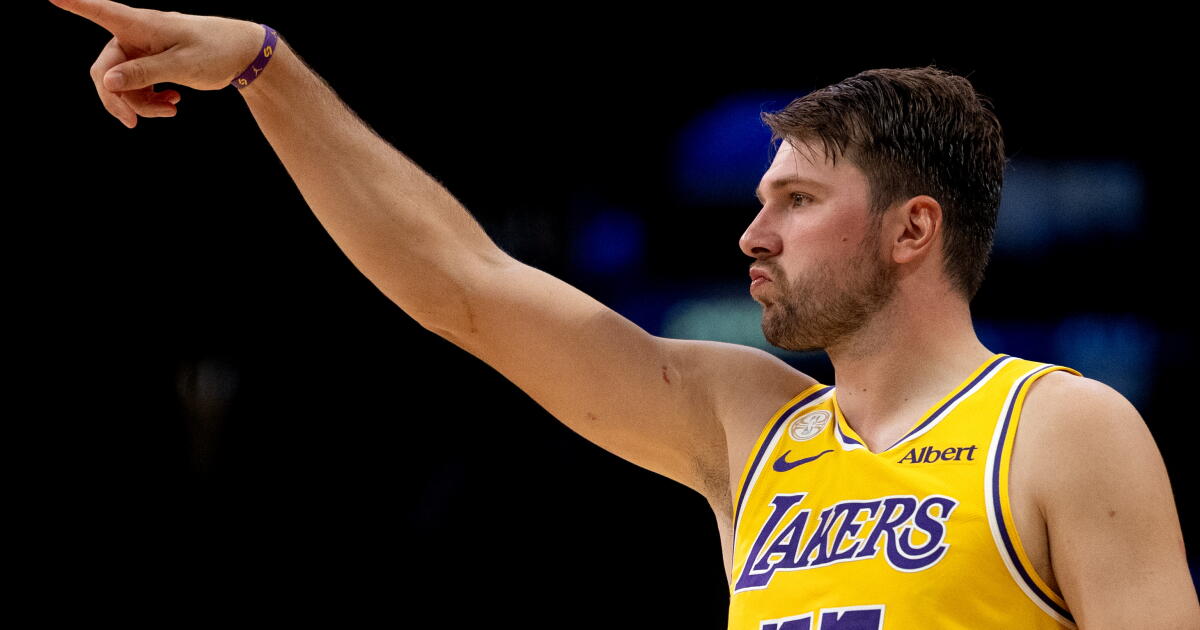
From Broderick Turner: As soon as Luka Doncic took the microphone to share some words with the Lakers’ faithful before their first game of the regular season Wednesday night, it was official that this was his team.
“Um, Laker nation. Thank you for supporting us,” Doncic said. “It’s the start of something new. It’s going to be a special season. So, thank you for your support.”
Then the game started and Doncic went right to work, throwing a lob pass to Walker Kessler for a dunk against Golden State at Crypto.com Arena.
Indeed it was the start of the Luka Doncic Show that included him finding an antagonist to direct his ire during the Lakers’ 127-105 win over the Warriors.
“I mean, obviously it’s the Lakers. It’s one of the biggest organizations in the world, if not the biggest,” Doncic said. “Some it’s a very…a lot of honor just to be the face of the franchise, and I hope I can stay here long. And it doesn’t feel…It’s very much an honor and just enjoy this moment.
Doncic and Warriors rookie Yaxel Lendeborg got into a little beef in the second quarter, leading to the Lakers All-Star guard to put in a little more effort while producing 28 points, eight rebounds and seven assists with six turnovers.
Doncic got help from Kessler, who was a force with 26 points on 12-for-12 shooting, nine rebounds and two blocked shot in his debut. Ten of his field goals were on dunks, and in the middle of it all, Kessler had several Lakers and NBA milestones.
Lakers center Walker Kessler believes his competitive side will overcome pressure
Get the latest on L.A.’s teams in the daily Sports Report newsletter.
By continuing, you agree to our Terms of Service, which include arbitration and a class action waiver. You agree that we and our third-party vendors may collect and use your information, including through cookies, pixels and similar technologies, for the purposes set forth in our Privacy Policy such as personalizing your experience and ads.
From Joaquin Ruiz: Darius Garland, microphone in hand, waited patiently at midcourt to speak before the Clippers tipped off their 2026-27 NBA season against the Sacramento Kings on Wednesday night at Intuit Dome.
“Clipper Nation, Clipper Nation,” the eighth-year guard said to raucous cheers in Inglewood. “We’ve been working hard all summer, ready to really turn up this year. [We’ll] try to play at the highest level. [I] really appreciate the support from my teammates, coaching staff [and] organization — really appreciate everybody that comes out and … continues to support. We’re gonna be here all year.
“Clipper Nation, let’s go.”
Garland wasted no time giving Clippers fans something to smile about after an offseason of torment and transformation. He started the game shooting five-for-five from the field and three-for-three from deep, scoring 16 points in nine minutes and fueling the Clippers’ 121-96 blowout win over the Kings.
From Bill Plaschke: As they head into an offseason of overdue rest and roster reshaping, the Dodgers really only face one obstacle.
But it’s a $700-million obstacle. It’s a 5,400-mile obstacle. It’s an obstacle whose gravitas can be found in everything from international sponsorships to stadium tours, an obstacle with expansive implications and crushing consequences.
The Dodgers have a Shohei Ohtani problem.
He is their best player… and their biggest pain.
He is insanely charming… and unrelentingly stubborn.
He has derived his worldwide popularity from his ability to hit and pitch with equal prowess, a deft duality unmatched in the history of baseball. This ability has helped earn him four MVP awards and status as the unofficial greatest player ever.
But, he’s changing. His body is changing. His skills are changing. He’s 32, with 13 seasons of pro baseball burdening his lumbering 6-foot-4 frame, and part of his game is slowly disintegrating under the weight.
After NLCS exit, Dodgers face big questions about their aging lineup and future
Dodgers catcher Dalton Rushing to undergo elbow surgery for partial UCL tear
The Angels have fired manager Kurt Suzuki after he lost 100 games in his only season in charge of the long-struggling club.
Baseball operations consultant John Mozeliak announced Wednesday that the Angels declined the option on Suzuki’s contract and would open a search for a new manager in 2027. Suzuki has been offered the opportunity to stay with the organization as a special assistant.
“Kurt has earned tremendous respect in our clubhouse, and I’ve seen firsthand how much he cares about our players,” Mozeliak said in a statement. “I do not believe our record this year was a true reflection of his true abilities as a manager.”
World Series
All games at 5 p.m. PT
All game on FOX/FOX Deportes/FOX One
No. 1 Milwaukee vs. No. 1 Tampa Bay
Friday at Milwaukee
Saturday at Milwaukee
Monday at Tampa Bay
Tuesday at Tampa Bay
*Wednesday at Tampa Bay
*Friday, Oct. 30 at Milwaukee
*Sat., Oct. 31 at Milwaukee
* if necessary
1933 — Primo Carnera retains the world heavyweight title with a 15-round decision over Paolino Uzcudun in Rome.
1950 — The Rams beat the Baltimore Colts 70-27.
1961 — Erich Barnes of the New York Giants ties an NFL record by returning an interception 102 yards for a touchdown in a 17-16 loss to the Dallas Cowboys.
1966 — Bobby Orr of the Boston Bruins scores his first goal.
1975 — The 10-team World Football League, citing lack of television and season ticket support, disbands before the 12th week of a 20-week season.
1975 — The Cincinnati Reds beat the Boston Red Sox at Fenway Park to win the World Series in seven games.
1976 — Twin brothers Tom and Dick Van Arsdale play together in a game for the Phoenix Suns, becoming the first and only pair of brothers to play for the same NBA club.
1984 — Future Pro Football HOF quarterback Ken Stabler retires after 17 seasons in the NFL with Oakland Raiders, Houston Oilers and New Orleans Saints.
1994 — Alcorn State’s Steve McNair becomes the NCAA’s career yardage leader with 15,049, surpassing the old mark set by Brigham Young’s Ty Detmer, who had 14,665. McNair’s 649 yards also breaks his own Division I-AA single-game record as he leads the Braves to a 41-37 win over Southern.
2000 — Bengals running back Corey Dillon rushes for an NFL single-game record 278 yards in a 31-21 victory over the Denver Broncos. Dillon betters Walter Payton’s 27-year-old mark by three yards.
2001 — New York routs Seattle 12-3 in Game 5 to win the AL pennant for the 38th time. The Yankees become the first team since their predecessors in 1960-64 to win four straight pennants.
2005 — Mount Union drops a regular-season game for the first time since 1994, losing 21-14 to Ohio Northern in a Division III matchup. The Purple Raiders, winners of 110 straight regular-season games, had not lost a regular-season game since they were beaten 23-10 by Baldwin-Wallace on Oct. 15, 1994.
2012 — Lance Armstrong is stripped of his seven Tour de France titles and banned for life by cycling’s governing body after a report from the U.S. Anti-Doping Agency that accuses him of leading a massive doping program on his teams.
2014 — Serena Williams is routed 6-0, 6-2 by Simona Halep in the WTA Finals round-robin, one of the most one-sided losses in the 18-time Grand Slam champion’s career. The last time Williams managed to win just two games in a WTA Tour or Grand Slam match was in 1998 when she was 16.
2016 — Kyle Hendricks outpitches Clayton Kershaw, Anthony Rizzo and Willson Contreras homers early and the Chicago Cubs won their first pennant since 1945, beating the Dodgers 5-0 in Game 6 of the NL Championship Series.
2016 — Baker Mayfield has seven touchdown passes and 545 yards to help No. 16 Oklahoma beat Texas Tech 66-59 in the game that breaks the NCAA record for combined offensive yards with 1,708 yards.
2016 — Leonard Fournette breaks LSU’s single-game rushing record in just his first eight carries as the No. 25 Tigers beat No. 23 Mississippi 38-21. Fournette finishes with 284 yards rushing in his first action since aggravating a left ankle injury on Sept. 24. He averages 17.8 yards in 16 carries and his touchdowns go for 78, 76 and 59 yards.
2017 — The Phoenix Suns fire coach Earl Watson just three games in to the NBA season.
2020 — The NHL announced its annual All-Star Game and Skills Competition would be postponed due to the COVID-19 pandemic.
2024 — LeBron and Bronny James become the first father-son duo in NBA history to appear in a game together as Lakers beat Minnesota Timberwolves 110-103.
Compiled by the Associated Press
That concludes today’s newsletter. If you have any feedback, ideas for improvement or things you’d like to see, email me at houston.mitchell@latimes.com. To get this newsletter in your inbox, click here.


Research said more than two thirds (77%) of passengers said they want a window seat(Image: Nathan Stirk/Getty Images)
Railway boffins claim to have discovered the ‘perfect train journey’ – from dodging boiled eggs and sweaty feet to revealing the best seat on any train. Avanti West Coast research and customer data claims to have revealed the unwritten rules of onboard comfort and which behaviours generate disapproving tuts.
The intercity operator has launched its first Comfort Index to provide a unique insight into what passengers value most during their journey and how it varies across Britain.
Their research said more than two thirds (77%) said they want a window seat, 69% prefer to face forward and 58% want an empty seat beside them. Exactly one in five (20%) would even travel 15 minutes longer to keep it empty, 18% would pay an extra £5 and 22% would sacrifice Wi-Fi.
Another one in five (20%) would even swap their coveted window seat for a little more space. Avanti’s booking data suggests there may be such a thing as the perfect train seat, with Seat 18 in Coach B being the most reserved seat on its Pendolino services.
It was booked 179,685 times between September 2025 – September 2026 and matches passenger preferences of having a window and table.
While those travelling on the West Coast Main Line have similar thoughts about seats, snacks proved controversial with 52% of rail travellers objecting to boiled eggs and 48% to tuna sandwiches being eaten onboard.
They say the famously reserved reputation of British people extends to the carriage environment too, with more than two-thirds (68%) wanting more quiet carriages.
More than half (52%) would even choose a completely phone-free carriage, suggesting that for many Brits, the dream journey might simply be one where nobody makes any noise.
The Index also reveals a generational shift in the unwritten rules of train travel, with Gen Z passengers being more tolerant of video calls. It says 38% think Facetiming onboard is unacceptable compared to almost three quarters (72%) of over-65s.
Sounds of other people’s phones onboard reveals an even bigger generation gap. A huge 88% of over-65s object to TikToks or videos without headphones compared to just 51% of 18-24-year-olds.
Younger passengers are said to place greater emphasis on choice and ‘making the journey their own’. A surprising 62% of 25-34-year-olds say choosing between Standard, Premium and First Class matters during planning compared with 42% of over-65s.
Gen Z are bringing their own comforts onboard too, with one in eight (12%) 18-24-year-olds saying they’d even pack a massage gun. Avanti West Coast say everyone seems to agree on keeping your socks on, as three quarters (75%) say taking them off onboard is unacceptable.
A whopping 70% object to TikToks without headphones and 67% to someone cutting or filing their nails. The study also shows how rail journeys are considered part of the occasion, with 69% of Brits saying their leisure time starts the moment they get onboard.
Between September 2025 – September 2026 Avanti West Coast say their customers drank almost 420,000 cups of breakfast tea and ate 212,000 KitKats.
Beer proved another favourite, with 154,000 Grolsch Pilsners sold, painting a suitably British picture of onboard comfort – a cuppa, something sweet or a cold beer en route. From seating preference and noise tolerance to boiled eggs, the Index shows Brits might never agree on exactly what makes the perfect journey.
Kathryn O’Brien at Avanti West Coast said: “The Comfort Index shows everyone’s definition of comfort varies. While there’s some unspoken rail travel etiquette most seem to agree on, beyond that people have different thoughts on what makes a comfortable journey.
“For some it’s peace and quiet while for others it’s getting work done, enjoying a snack or having space to relax.
“Customers most value the ability to shape their journey around their own needs, whether that’s choosing the perfect seat or enjoying a cup of tea onboard. That’s why we offer our seat picker tool and a range of refreshments in our onboard shop, helping customers to enjoy their trip from the very moment they board.
“By better understanding what matters most to our customers, we can continue to enhance and develop the onboard experience. This includes upgrading Wi-Fi connectivity to make travelling with Avanti West Coast as comfortable as possible for everyone.”
The full Avanti West Coast Comfort Index is available here
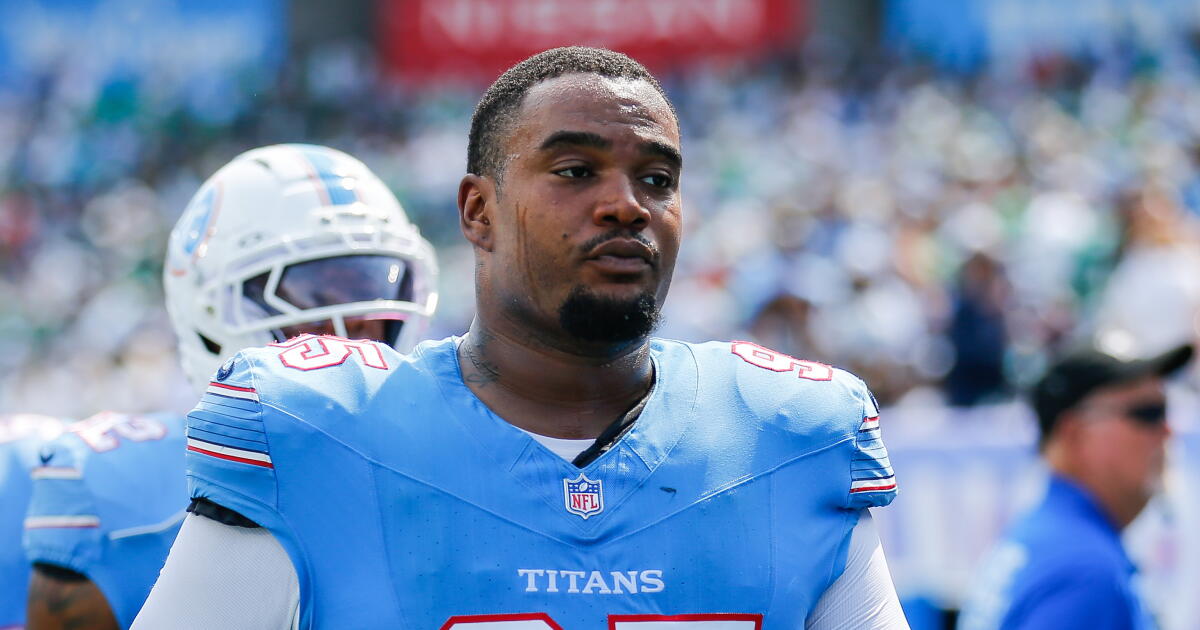
A day after the Tennessee Titans released defensive tackle Jordan Elliott after an alleged incident involving a gun at the team’s practice facility, coach Robert Saleh defended the veteran player as “a good man” who “had a terrible lapse in judgment that I recognize as a call for help more than a criminal act.”
The Titans announced Elliott’s dismissal on Tuesday but provided no details on the incident that prompted it. The NFL confirmed Wednesday that it was looking into the matter.
“The league’s firearm policy prohibits any personnel from bringing a firearm to club facilities, stadiums, and team hotels and on team planes or buses,” NFL spokesperson Brian McCarthy said in an email. “The club promptly notified the league of the matter which is under review.”
Details have since emerged that Elliott got into an altercation with offensive lineman JC Latham at practice last Thursday, then went out to his car in the players’ parking lot to get his gun, according to reports by multiple media outlets. Latham told reporters Wednesday that the incident between him and Elliott just happened in the “heat of the moment” and “we’d actually never had an argument leading up to it.”
“It’s no bad blood,” Latham said. “Nothing personal on my end.”
Defensive lineman John Franklin-Myers reportedly helped Elliott regain his composure before anything happened involving the gun. Latham said he was still on the practice field and not with Elliott when Franklin-Myers intervened.
“The D-line room is really close,” Saleh told reporters Wednesday, “and for JFM to go out there and just kind of help Jordan with whatever he was dealing with at that moment I thought was really admirable on JFM’s part.”
Elliott played five seasons with the Cleveland Browns and two with the San Francisco 49ers before signing a two-year, $8-million deal with the Titans this past offseason. Saleh, who was the 49ers’ defensive coordinator last season, told reporters Wednesday that the Titans and the league provided Elliott “with clinicians he needed to speak to help him in that moment.”
“He’s never committed a crime in his entire life, and he pulled a gun in the parking lot,” Saleh said. “And the first question that I think everyone forgets to ask is why would a great man, a great father, a man who shows up on time every day, works his ass off every day, contributes the way he’s supposed to contribute, is well-liked in the locker room — why did he go off the rails and grab a gun?
“To me, those are small signs of a cry for help, in terms of obviously there’s something greater happening,” he continued. “And I thought the team and the NFL did an outstanding job with regards to pausing and asking those questions and checking every single box with regards to getting him the help that he needs.”
Saleh added: “I will stand on the table for Jordan’s character. Unfortunately, rules are rules with regard to guns on property, and sometimes it’s far greater than the knee-jerk reaction of kicking somebody when they’re down. My message to 31 other teams would be: If you need a hell of a run-stopping D-tackle that can help you on a playoff run, give me a call. I’ll tell you everything you need to know about him.”

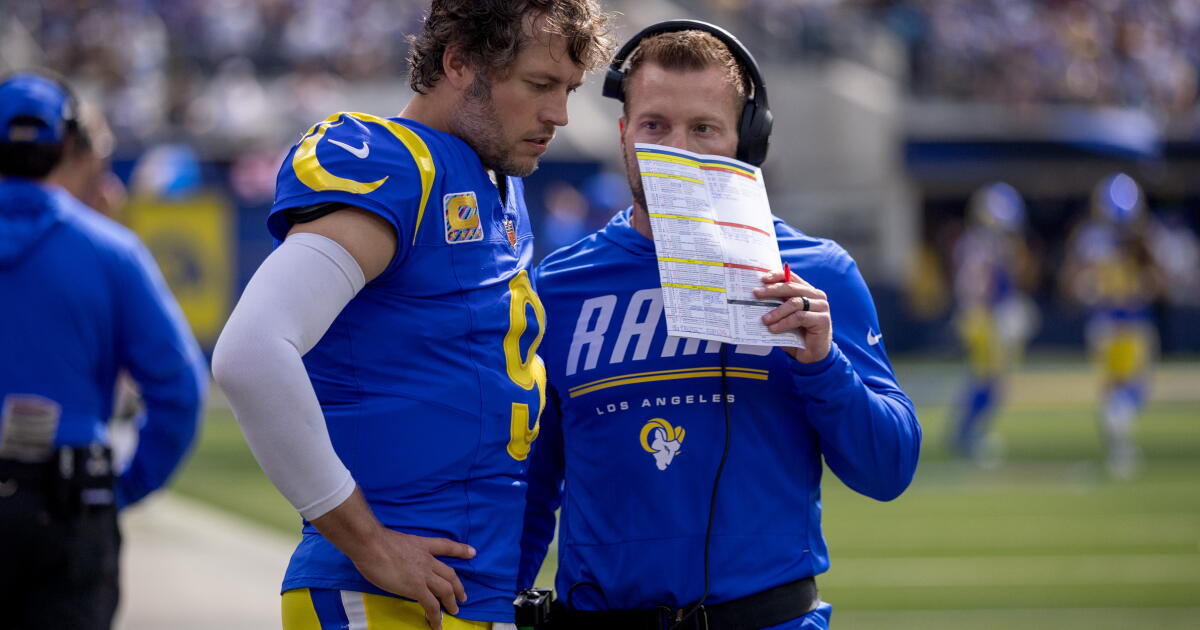
From Gary Klein: Other than the missing 23 carats of diamonds, the replica Super Bowl LVI rings fans received on Sunday at SoFi Stadium looked like the real thing.
That’s more than the Rams can claim.
The team that opened the season as the overwhelming favorite to win Super Bowl LXI continued to look like a cheap imitation.
They did not flash. They did not sparkle.
They looked dull. Lifeless.
And when Chad Ryland of the Arizona Cardinals kicked his sixth field goal as time expired, the Rams lost 18-16 in front of 72,573.
“There’s nothing positive that I can say,” Rams coach Sean McVay lamented.
First-year Cardinals coach Mike LaFleur, the Rams’ former offensive coordinator, outcoached and outmaneuvered McVay, his friend and mentor.
With just more than a third of the season complete, the Rams are 2-4.
“We are what our record is,” quarterback Matthew Stafford said.
Get the latest on L.A.’s teams in the daily Sports Report newsletter.
By continuing, you agree to our Terms of Service, which include arbitration and a class action waiver. You agree that we and our third-party vendors may collect and use your information, including through cookies, pixels and similar technologies, for the purposes set forth in our Privacy Policy such as personalizing your experience and ads.
From Kathleen Gier: The Chargers hit the road to face the undefeated, AFC West-leading Kansas City Chiefs, still looking for their first victory of the season.
They were unsuccessful, falling 22-6 on Sunday evening at Arrowhead Stadium. The Chargers are 0-6 to start the season for the first time since 2000, when they finished 1-16. They’ve also lost nine straight games since last season, tying a franchise mark for most consecutive losses.
“I truly believe and was confident that we would win this game,” Chargers coach Jim Harbaugh told reporters. “We have to address everything, guys, and especially offensively.
“We’re not scoring enough points. That’s the bottom line.”
The Chargers’ offense, already weakened by a series of injuries to its offensive line and receiving corps, struggled mightily, recording their second-lowest output of the season at 259 total yards. They also lost wide receiver Ladd McConkey, who was ruled out midway through the second quarter with a concussion. He had just one catch in his return from a foot injury that kept him out last week against Denver.
Miami is No. 1 in The Associated Press Top 25 for the first time since 2002, No. 2 BYU has its highest ranking since its 1984 national championship season and Notre Dame and Georgia stayed in the top five Sunday after both lost close games.
The UCLA Bruins, who are 6-0 after defeating Wisconsin, moved into the top 10 at No. 9, while idle USC moved up three spots to No. 16.
The Hurricanes took over the top spot from Georgia, which lasted one week at No. 1 after losing to Auburn at home. The Bulldogs were the second No. 1 team in two weeks — Texas was the other — to lose to an unranked opponent.
The Hurricanes received 40 of the 70 first-place votes from the media voting panel and were just 22 points ahead of BYU, which won a thriller at home over Notre Dame. The Cougars got 20 first-place votes and were 26 points ahead of Ohio State. The Buckeyes got nine first-place votes and were well ahead of No. 4 Notre Dame and No. 5 Georgia.
Miami is the first No. 1 team from the Atlantic Coast Conference team since Clemson in 2020. Other than Clemson, there had not been another ACC team ranked No. 1 since Florida State in 2014.
All times Pacific
NLCS
No. 1 Milwaukee vs. No. 2 Dodgers
at Milwaukee 2, Dodgers 1 (box score)
at Milwaukee 7, Dodgers 4 (box score)
Milwaukee 6, at Dodgers 2 (box score)
Milwaukee 6, at Dodgers 4 (box score)
ALCS
No. 1 Tampa Bay vs. No. 2 Cleveland
Cleveland 7, at Tampa Bay 3 (box score)
at Tampa Bay 3, Cleveland 1 (box score)
at Cleveland 3, Tampa Bay 2 (box score)
Tampa Bay 7, at Cleveland 3 (box score)
Tampa Bay 3, at Cleveland 1 (box score)
Monday at Tampa Bay, 5 p.m., TBS/truTV/UniMas/HBO Max
*Tuesday at Tampa Bay, 5 p.m., TBS/truTV/UniMas/HBO Max
World Series
All games at 5 p.m. PT
All game on FOX/FOX Deportes/FOX One
No. 1 Milwaukee vs. TB/Cleveland
Friday at Milwaukee, TBD, FOX/FOX Deportes/FOX One
Saturday at Milwaukee, TBD, FOX/FOX Deportes/FOX One
Monday, Oct. 26 at TB/Cle., TBD, FOX/FOX Deportes/FOX One
Tuesday, Oct. 27 at TB/Cle., TBD, FOX/FOX Deportes/FOX One
*Wed., Oct. 28 at TB/Cle., TBD, FOX/FOX Deportes/FOX One
*Friday, Oct. 30 at Milwaukee, TBD, FOX/FOX Deportes/FOX One
*Sat., Oct. 31 at Milwaukee, TBD, FOX/FOX Deportes/FOX One
* if necessary
1940 — Alabama snaps Tennessee’s defensive scoreless streak of 71 quarters but still loses 27-12. Tennessee hadn’t allowed a point since Oct. 29, 1938, when it beat LSU 14-6.
1957 — Maurice Richard of the Montreal Canadiens scores his 500th goal in a 3-1 victory over the Chicago Blackhawks.
1960 — After 13 years in Minneapolis, the Lakers opened their inaugural season in Los Angeles with a 140-123 loss at Cincinnati.
1966 — Bobby Orr makes his NHL regular season debut for the Boston Bruins.
1985 — Robbie Bosco of Brigham Young passes for 585 yards in a 45-23 victory over New Mexico.
1985 — Dale Klein of Nebraska ties an NCAA record with seven field goals in a 28-20 victory over Missouri.
1986 — Lloyd Burruss of Kansas City intercepts three passes and returns two for touchdowns to lead the Chiefs to a 42-21 victory over the San Diego Chargers.
1994 — Duke beats North Carolina 3-2 in women’s soccer to end the Tar Heels’ unbeaten streak of 101 games.
1997 — Pittsburgh goaltender Tom Barrasso makes 22 saves to earn his 300th victory with a 4-1 win over Florida. Barrasso becomes the first American-born goaltender and 13th overall with 300 wins.
1997 — Sandy Alomar of the Cleveland Indians hits the 700th World Series home run.
2002 — Avon Cobourne becomes the fifth Division I-A rusher with four 1,000-yard seasons as West Virginia beats Syracuse 34-7. Cobourne has 108 yards in the game for 1,002 yards this season.
2012 — The National Hockey League announces the cancellation of the 2012-13 regular-season schedule through November 1. A total of 135 regular-season games are now lost from Oct. 11 through Nov. 1.
2014 — Peyton Manning breaks Brett Favre’s NFL record of 508 career touchdown passes and he throws four TD passes in Denver’s 42-17 victory over the San Francisco 49ers. The record-breaker was an 8-yarder to Demaryius Thomas with 3:09 left in the first half. Manning reaches the milestone in his 246th regular-season game. Favre needed 302.
2014 — DeMarco Murray becomes the first running back in NFL history to start a season with seven straight 100-yard games in a 31-21 win over the New York Giants. Murray, with 128 yards and a touchdown, breaks Hall of Famer Jim Brown’s 56-year-old record.
Compiled by the Associated Press
That concludes today’s newsletter. If you have any feedback, ideas for improvement or things you’d like to see, email me at houston.mitchell@latimes.com. To get this newsletter in your inbox, click here.


Michael Vi
Starboard Value sees significant upside in Skyworks Solutions (SWKS), viewing the chipmaker as undervalued following its acquisition of Qorvo (QRVO), Bloomberg reported, citing people familiar with the matter.
The activist investor sees potential value in the companies’ complementary product portfolios and merger-related cost

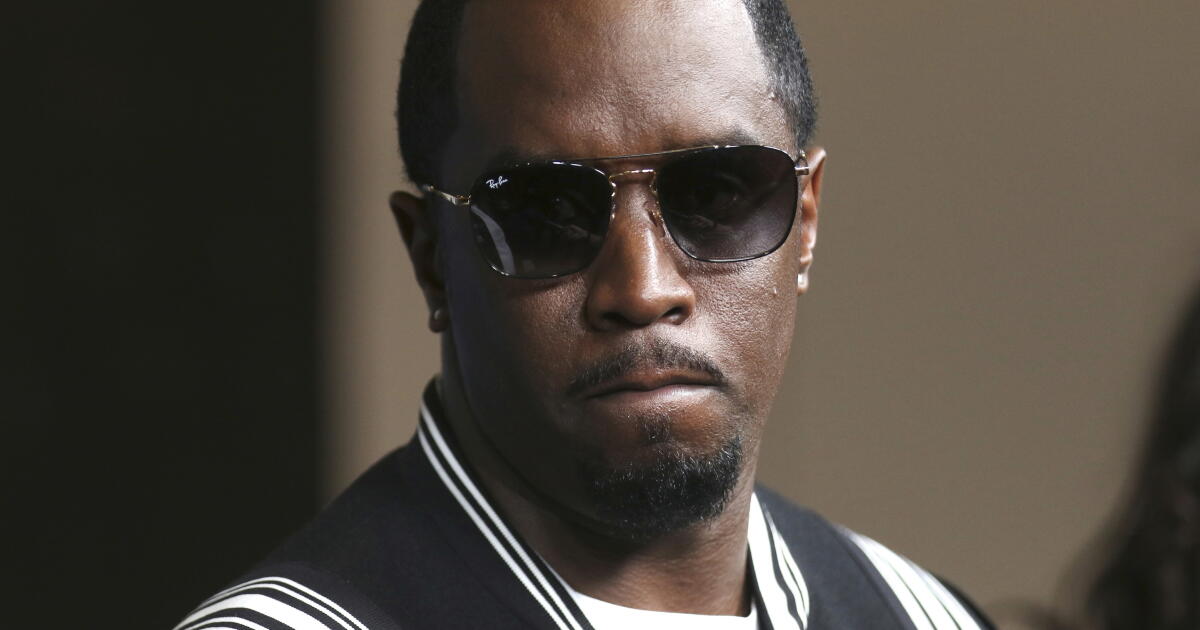
Sean “Diddy” Combs has been relocated to a new prison, following reports of lavish prison perks and a head injury that saw him hospitalized.
The 56-year-old was transferred on Friday from FCI Fort Dix in New Jersey to FCI Allenwood, a low-security prison in Pennsylvania, a Bureau of Prisons spokesperson confirmed with The Times.
Combs’ representatives welcomed the change.
“We appreciate the Bureau of Prisons taking the safety and security of Sean and everyone involved seriously,” Combs’ spokesperson said in an email to The Times on Friday. “His transfer from one low-security facility to another is an important distinction, and while we cannot speak to the BOP’s specific reasons for the move, it is consistent with a decision made with safety and security in mind. We are grateful for the attention being given to his well-being and hope he can continue serving his time without unnecessary disruption.”
Although the Bureau of Prisons is not at liberty to disclose the reasons for the transfer, it has been a hectic series of weeks for the disgraced music mogul, who was convicted in July 2025 of transporting prostitutes across state lines for drug-fueled sex performances known as “freak-offs” and sentenced to 50 months in prison in October that year.
During his time at FCI Fort Dix, Combs was reportedly living a pampered lifestyle behind bars. Combs paid inmates to clean and cook special meals for him, including curry chicken, pizza and empanadas, and that the hip-hop artist also received Chinese-style massages, four sources told NBC News. They also reported that the hip-hop and R&B music producer obtained a contraband phone, had access to a “jailbroken” tablet and had smuggled an illegal stash of alcohol.
To pay for the labor, individuals outside of the prison were allegedly paying thousands of dollars into the commissary accounts of those serving the “Bad Boy for Life” rapper, the sources claimed.
Reports of his posh prison life emerged on Sept. 29, just as news of Diddy’s shortened prison stint made headlines. His release date had moved up to Jan. 21, 2028, a September search of the Federal Bureau of Prisons inmate database showed. Following the prison perk allegations against the “I’ll Be Missing You” singer, however, an updated search on the database revealed that his release was pushed to March 2, 2028.
Combs also was reportedly placed in solitary confinement on Sept. 30 shortly following the report of his prison perks. The producer remained in the special unit as late as Oct. 8.
But extra solitary time in the slammer wasn’t the last blow for the singer: Combs was rushed to the hospital Oct. 10 with a non-life-threatening head injury. Despite reports that Combs sustained the injury in a retaliatory attack by another inmate, a Federal Bureau of Prisons representative said that the reported fight is “false and did not happen,” according to Page Six.
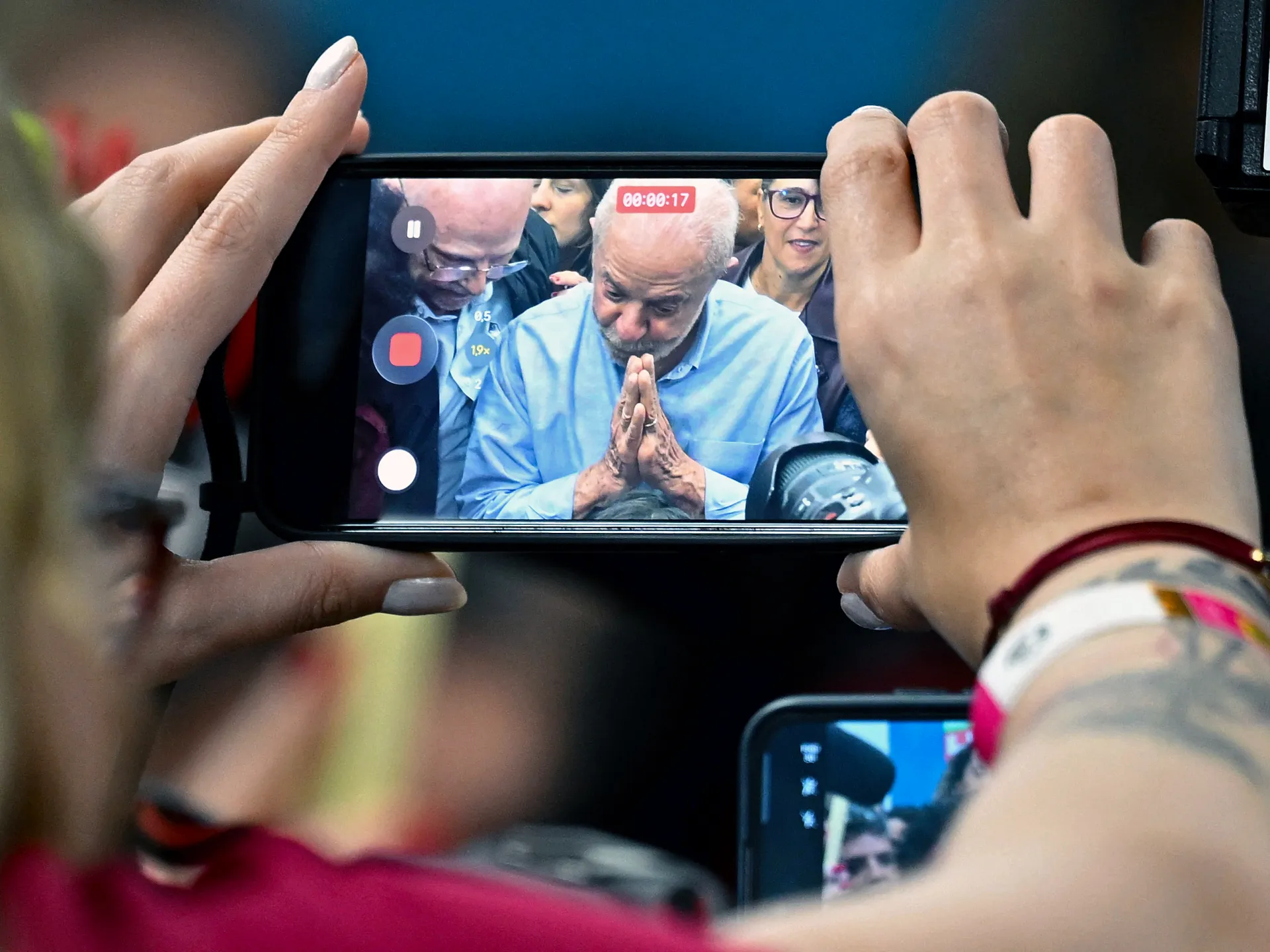
The messages, reported by a Brazilian daily, say the platform recommended Bolsonaro’s profile and his WhatsApp channel.
Published On 16 Oct 202616 Oct 2026
Employees at Meta have acknowledged in internal communications that the Instagram accounts of Brazilian President Luiz Inacio Lula da Silva were negatively affected by restrictions during the country’s election, media reports say.
The messages, reported on Friday by Brazilian daily Folha de S Paulo, also acknowledged the platform recommended the profile of Lula challenger Senator Flavio Bolsonaro, as well as his WhatsApp channel. Folha, the Sao Paulo-based paper, cited messages it had reviewed.
list of 4 itemsend of list
Meta told the Reuters news agency that the technical issues cited in the report were already public and the conversations it referenced related solely to the severity of the issues, not political interference.
“Any suggestion that Meta favors one side is false,” it added in a statement.
Lula, the left-wing incumbent, will face right-wing challenger Bolsonaro in a presidential runoff on October 25, following a stronger-than-expected performance by the senator in the first-round vote earlier this month.
Friday’s report came on the heels of a Brazilian court ruling on Thursday that ordered Meta to immediately adopt measures to provide equal treatment of the two candidates ahead of the runoff.
The ruling by a judge in Brazil’s top electoral court was made shortly after Lula filed a complaint that accused the tech giant – which owns Instagram, Facebook and WhatsApp – of using biased algorithms and AI restrictions to favour opposition candidate Bolsonaro ahead of the election.
Justice Marco Aurelio Bellizze ruled that Meta cannot reduce the distribution of political content, restrict searches or remove posts in a way that creates an imbalance between Lula and Bolsonaro. His ruling also orders the company to ensure its artificial intelligence tool applies identical criteria to both candidacies.
Bellizze said in his ruling that Meta must pay a fine of 500,000 reais ($98,700) per day if it fails to comply.
According to Lula’s party, some of his posts appeared without a share button and had reduced reach. Options for reactions, sharing, audio or accelerated speed were also missing.
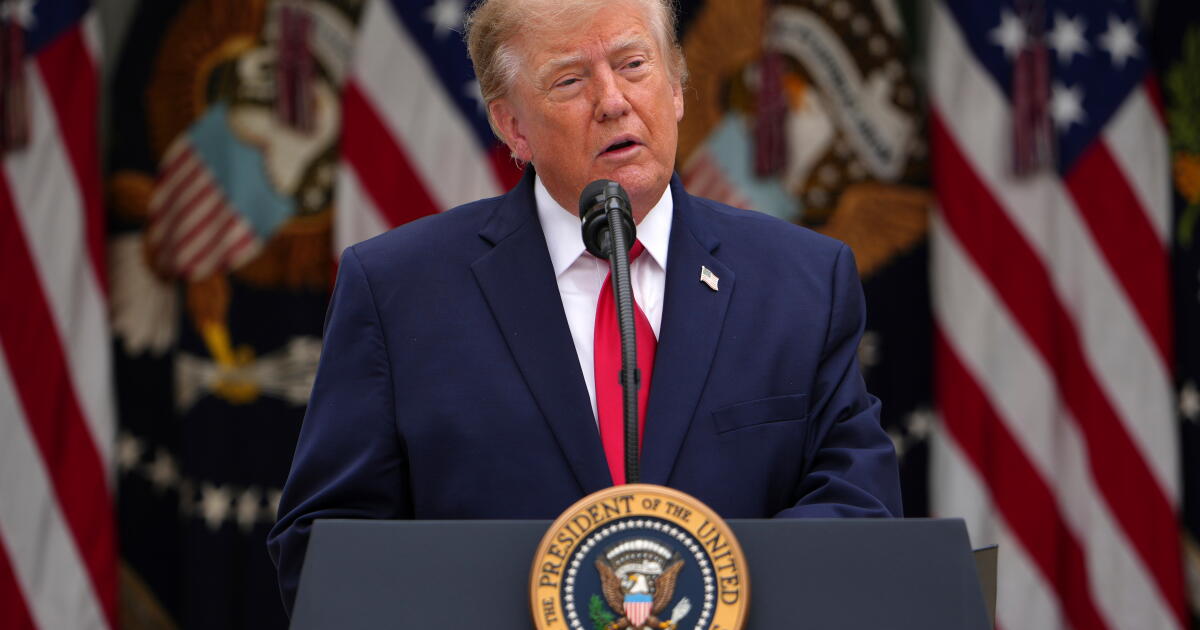
WASHINGTON — Investments in pharmaceutical companies made on behalf of President Trump increased significantly after he returned to the White House last year, with his portfolio adding millions of dollars in stock in firms that benefited from a Republican-backed law that shields certain medications from Medicare price negotiations, according to a report from congressional Democrats.
The report, released Friday by the Joint Economic Committee’s minority arm, found that Trump’s pharmaceutical stock holdings grew from a maximum reported value of $1.7 million in 2024 to as much as $56.2 million at the end of 2025. The report said that included up to $39.1 million worth of stock held in companies that benefited from exemptions to Medicare’s drug price negotiation program, which came through a provision in the Republicans’ 2025 tax and spending law.
Additional analysis of Trump’s financial disclosures provided by committee Democrats showed that his investment portfolio bought as much as $2.55 million in shares of pharmaceutical companies benefiting from the exemptions on three dates before he signed the legislation in July 2025. That included up to $950,000 in purchases on July 1, 2025, the day the Senate passed the bill. His portfolio also bought as much as $1 million in AbbVie stock in August 2025, after the bill became law.
The Republican president’s wealth has grown since he took office last year through a web of business interests, many of which have benefited from the policy moves of his administration. The White House has repeatedly denied any ethics issues and accused Democrats of “attempts to fabricate conflicts of interest.”
The report also noted that the exemptions policy could leave some Medicare beneficiaries paying thousands of dollars more for certain cancer treatments and other medications than they would have if Medicare had been allowed to negotiate lower prices.
The findings come as Trump has made lowering prescription drug costs a central part of his healthcare policy, striking deals with pharmaceutical companies that his administration says will make medications more affordable for Americans, although drug pricing is based on a complicated set of factors.
Recent polling from the Associated Press-NORC Center for Public Affairs Research shows that most Americans think Trump is profiting off the presidency in unethical or illegal ways and is focused more on his wealth than on helping people like them.
Democratic Sen. Maggie Hassan, who leads the Joint Economic Committee’s minority arm, called the report’s findings “outrageous and yet typical from this president, who makes the American people foot the bill again and again for his own gains.”
Davis Ingle, a White House spokesperson, said Trump’s stock and bond portfolio is independently managed by third-party financial institutions. He denied any conflict of interest.
“Neither President Trump nor any member of his family has any ability to direct, influence, or provide input regarding how the portfolio is invested or when investments are bought or sold,” Ingle said in a statement.
A law from President Biden’s Democratic administration allowed Medicare for the first time to negotiate prices for some of the costliest prescription drugs. Republicans’ 2025 tax and spending bill expanded an existing exemption for medications developed to treat rare diseases or conditions, delaying when certain costly drugs could become eligible for negotiations or excluding them entirely, according to healthcare research nonprofit KFF.
Also known as the orphan drug exclusion, the carve out allows drug companies to continue charging lucrative prices that might otherwise have been reduced through Medicare negotiations.
Supporters of the change argued that a broader exemption would encourage drug companies to develop treatments for rare diseases. Critics say it allows makers of blockbuster medications to avoid negotiations that could lower costs for Medicare and its recipients.
The report estimated that Medicare beneficiaries receiving the cancer drugs Keytruda, manufactured by Merck, and Opdivo, by Bristol Myers Squibb, could pay roughly $5,000 more annually than they would if Medicare negotiated prices for the medications. Trump’s portfolio includes stock in both firms.
The report also said that Trump’s portfolio continued to buy and sell pharma company stocks throughout the first eight months of 2026, adding as much as $3.5 million in stock wealth in the sector.
All recent U.S. presidents have dumped their stocks before assuming office, put their money in broadly diversified funds or set up a “blind” trust so they couldn’t even know what they owned.
Trump has put his broader business interests in a trust managed by his sons. But the arrangement rejects the conflict of interest protections that his recent predecessors in office had instituted.
Hussein writes for the Associated Press. AP writer Bernard Condon in New York contributed to this report.


designer491
Quantitative hedge fund Two Sigma Investments has halted efforts to raise $2B for its real estate investment unit and cut senior staff, as rising interest rates hobbled its fundraising efforts, according to a media report on Friday.
The unit’s partner
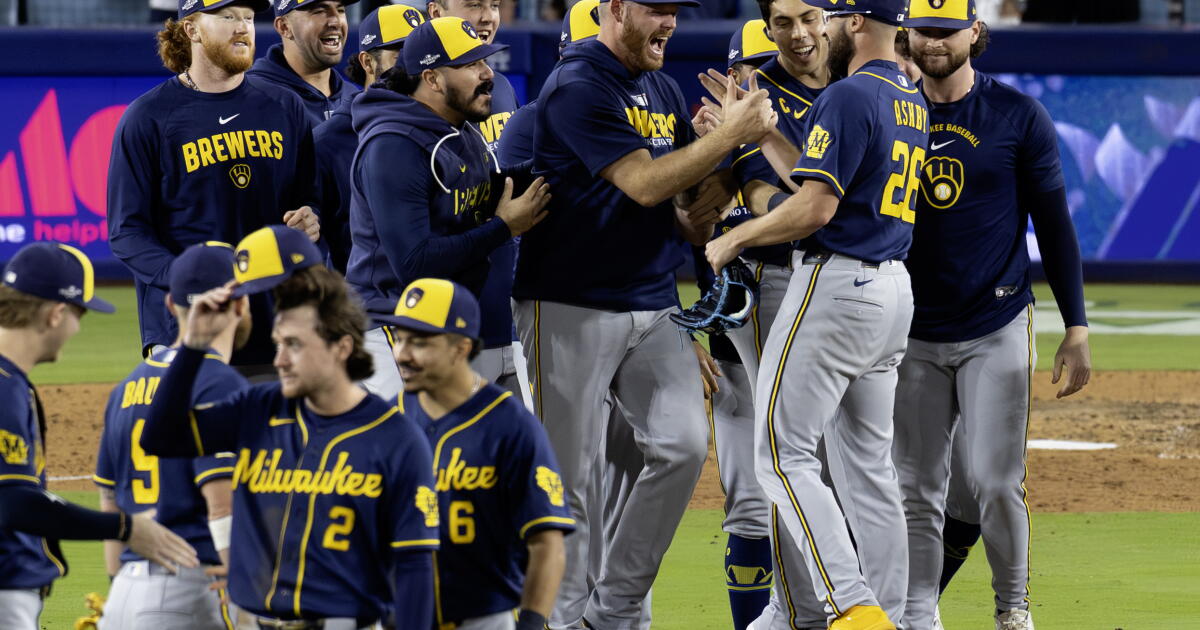
From Maddie Lee: The hope for a Dodgers comeback in the National League Championship Series ended with the smack of the ball hitting leather.
Milwaukee Brewers left fielder Jackson Chourio, sprinting toward the warning track, had to leap to reel in Kiké Hernández’s line drive in the gap. But he secured the catch. And ended the Dodgers’ season.
The Dodgers’ hopes of making National League history with a three-peat died with a 6-4 loss to the Brewers on Thursday, completing Milwaukee’s four-game sweep.
“It sucked,” veteran left fielder Teoscar Hernández said. “Especially after [what] we had done the last two years. This year at the beginning of the year, what we’ve been through, a lot of injuries throughout the year the last two years, a lot of ups and downs. It just sucked that we’re in this situation, but it’s part of the game.
“Somebody has to win, somebody has to lose. This time, we’re the ones that lost, and just reflect on everything that we didn’t do great this year and just try to do it next year.”
As the Dodgers’ postseason hype video declared before the game: “October doesn’t remember who came close. It remembers who triumphs.”
The Dodgers, after reinforcing to their back-to-back championship roster in the offseason and entering the year as the World Series favorites, fell short. And instead the Brewers will represent the National League, making their first trip to the Fall Classic in 44 years.
“They may have a bunch of Hall of Famers, but we have a bunch of gamers,” Brewers manager Pat Murphy said from the stage. “And the gamers won this week.”
Dodgers Debate NLCS Game 4: Dodgers are swept by Brewers
Get the latest on L.A.’s teams in the daily Sports Report newsletter.
By continuing, you agree to our Terms of Service, which include arbitration and a class action waiver. You agree that we and our third-party vendors may collect and use your information, including through cookies, pixels and similar technologies, for the purposes set forth in our Privacy Policy such as personalizing your experience and ads.
From Bill Plaschke: The two World Series championship trophies royally entered Dodger Stadium in a blue convertible while being cradled by two October heroes.
The 2024 trophy was held by Freddie Freeman, whose grand slam toppled the New York Yankees.
The 2025 trophy was held by Miguel Rojas, whose home run stunned the Toronto Blue Jays.
On this bright afternoon late last March, the Dodgers past shined and their future dazzled in a celebration that came with a promise.
It was elicited by an impromptu cheer by a pregame musician in a voice so loud, one could imagine it resonating until October.
“Three-peat!” shouted the man.
Yes, they were going for the three-peat, attempting to become the first team in National League history to win three consecutive championships.
On opening day, as epitomized by Freeman and Rojas, the Dodgers were unbeatable.
Six months later, the Dodgers were unrecognizable.
From Maddie Lee: Miguel Rojas didn’t want to take his cleats off.
The veteran infielder stood by his locker at Dodger Stadium, his eyes red and watery, his uniform covered in dirt, knowing that when he pulled them off, it would be for the last time.
“This is it, guys,” he said, announcing his retirement, after the Dodgers were swept by the Milwaukee Brewers in the National League Championship Series on Thursday. “It’s been a lot, the last four years of my life here. And obviously making my debut here in 2014 changed my life, not just for me but for my whole family. They took care of my son, my daughter, my wife, and everybody in my family. It’s really amazing what I can think about, what happened to me and to my family the last few years.”
Rojas addressed the team after the 6-4 loss to the Brewers. He said he was going to stay loyal to the Dodgers organization but in a different role.
All times Pacific
NLCS
No. 1 Milwaukee vs. No. 2 Dodgers
at Milwaukee 2, Dodgers 1 (box score)
at Milwaukee 7, Dodgers 4 (box score)
Milwaukee 6, at Dodgers 2 (box score)
Milwaukee 6, at Dodgers 4 (box score)
ALCS
No. 1 Tampa Bay vs. No. 2 Cleveland
Cleveland 7, at Tampa Bay 3 (box score)
at Tampa Bay 3, Cleveland 1 (box score)
at Cleveland 3, Tampa Bay 2 (box score)
Friday at Cleveland, 5 p.m., TBS/truTV/UniMas/HBO Max
Saturday at Cleveland, 5 p.m., TBS/truTV/UniMas/HBO Max
*Monday at Tampa Bay, 5 p.m., TBS/truTV/UniMas/HBO Max
*Tuesday at Tampa Bay, 5 p.m., TBS/truTV/UniMas/HBO Max
World Series
No. 1 Milwaukee vs. TB/Cleveland
Friday, Oct. 23 at Milwaukee, TBD, FOX/FOX Deportes/FOX One
Sat., Oct. 24 at Milwaukee, TBD, FOX/FOX Deportes/FOX One
Monday, Oct. 26 at TB/Cle., TBD, FOX/FOX Deportes/FOX One
Tuesday, Oct. 27 at TB/Cle., TBD, FOX/FOX Deportes/FOX One
*Wed., Oct. 28 at TB/Cle., TBD, FOX/FOX Deportes/FOX One
*Friday, Oct. 30 at Milwaukee, TBD, FOX/FOX Deportes/FOX One
*Sat., Oct. 31 at Milwaukee, TBD, FOX/FOX Deportes/FOX One
* if necessary
From Thuc Nhi Nguyen: He made one of the biggest splashes in the Lakers’ first preseason game. Ziaire Williams set the tone of the Lakers’ new defensive style, pressuring the ball the full length of the court and injecting energy into his teammates. The Sierra Canyon High alumnus sank three three-pointers in a stellar debut for his hometown team.
Then came the swelling in his left foot.
After a minor injury slowed Williams’ preseason ascent, the 6-foot-9 forward could be in position to return to the lineup for the Lakers’ preseason finale at 7:30 p.m. Friday against the visiting Denver Nuggets. Williams practiced fully Thursday after missing the last three games. He’ll leave the final call up to the Lakers’ medical staff as the team tries to maximize its preseason preparation.
“It’s important, man, just to get game reps with each other, but health is key,” said Williams, who had 13 points and a steal as a starter in the preseason opener against the Sacramento Kings on Oct. 5. “If you can’t go, you just can’t. It’s not the end of the world. Going back to championship identity, we’re looking ahead at the bigger picture. So it’s not worth [it] to risk your body for a game that doesn’t count and then be out for the real games.”
From Gary Klein: It was already going to be a short week, but Sean McVay navigated unexpected business that affected the start of preparation for Sunday’s game against the Arizona Cardinals.
After Monday night’s defeat by the Buffalo Bills, the Rams on Tuesday released struggling kicker Harrison Mevis, and signed Blake Grupe. Then left tackle Alaric Jackson was suspended by the NFL for punching a Bills player on the field after the game.
“You’re always ready for inevitable things to come up,” the Rams coach said Thursday.
From Joaquin Ruiz: Chargers offensive coordinator Mike McDaniel didn’t shy away from discussing his job security Thursday amid a frustrating 0-5 start to the season.
“I feel like it’s core to my job to always feel that way,” McDaniel said when asked if he’s coaching for his job. “I need to do the very best I possibly can, all the time, because [of] the players, the organization, the fans.
“So, that’s second nature. … I think it’s disrespectful to all those that choose to invest in our game and our team to not look at things that way. The second you get comfortable in this league, it’s a wrap; it’s too good. I will be doing my very best, because from an integrity standpoint, I think it’s really insulting to do anything else. And that won’t change.”
1897 — Michigan beats Ohio State 34-0 at Ann Arbor, the first meeting between theses storied rivals.
1909 — In his fourth title defense, Jack Johnson KOs Stanley Ketchel in the 12th round at Mission St Arena, Colma, California to retain his heavyweight boxing crown.
1932 — After a 0-0 tie earlier in the season, the Green Bay Packers beat the Chicago Bears 2-0.
1946 — Detroit’s Gordie Howe scores a goal and gets into two fights in his first NHL game. The Red Wings tie the Toronto Maple Leafs 3-3.
1964 — Babe Parilli of the Boston Patriots passes for 422 yards and four touchdowns in a 43-43 tie with the Oakland Raiders.
1968 — Americans Tommie Smith and John Carlos give Black power salutes during the medal ceremonies of the 200-meter race and are later banned for life from all Olympic competition by the IOC.
1971 — Norm Ullman of the Toronto Maple Leafs records his 1,000th point in a 5-3 loss to the New York Rangers. Ullman gets two assists to become the fourth NHL player to reach the milestone.
1976 — Tony Franklin of Texas A&M kicks two field goals over 60 yards for an NCAA record. The distances are 65 and 64 yards as the Aggies beat Baylor 24-0.
1977 — The Denver Broncos intercept seven passes off Ken Stabler of the Oakland Raiders in a 30-7 victory.
1977 — The Minnesota Vikings beat the Chicago Bears 16-10 in overtime with the only successful fake field goal in NFL overtime.
1987 — Mike Tyson retains his undisputed heavyweight title with a seven-round knockout of Tyrell Biggs in Atlantic City, N.J.
1999 — Fourth-ranked Virginia Tech hangs a record-setting 62-0 loss on No. 16 Syracuse. It’s the worst shutout loss by a ranked team in the history of The Associated Press poll.
1999 — Mount Union beats Otterbein 44-20 for its 48th consecutive victory, surpassing Oklahoma’s 42-year-old all-division mark of 47 in a row.
2004 — 17-year-old Lionel Messi makes his league debut for FC Barcelona in a 1-0 win against cross-town rivals Espanyol.
2004 — Mount Union beats Marietta 57-0 for its 100th consecutive regular-season victory. The Purple Raiders’ last regular-season loss was on Oct. 15, 1994, at home against Baldwin-Wallace.
2011 — Danell Leyva becomes the first American man gymnast to win a gold medal at the World Championships since 2003. Leyva wins the parallel bars title to become the first gold medalist for the U.S. since Paul Hamm claimed the floor exercise and all-around titles in 2003.
2011 — Dan Wheldon, 33, dies in a fiery 15-car wreck at Las Vegas Motor Speedway when his car flew over another on Lap 13 and smashes into the wall just outside turn 2.
2017 — Louisville’s Athletic Assn. officially fires coach Rick Pitino nearly three weeks after the school acknowledged that its men’s basketball program is being investigated as part of a federal corruption probe. The association, which oversees Louisville’s sports programs and is composed of trustees, faculty, students and administrators, vote unanimously to oust the longtime Cardinals coach following a board meeting.
Compiled by the Associated Press
That concludes today’s newsletter. If you have any feedback, ideas for improvement or things you’d like to see, email me at houston.mitchell@latimes.com. To get this newsletter in your inbox, click here.
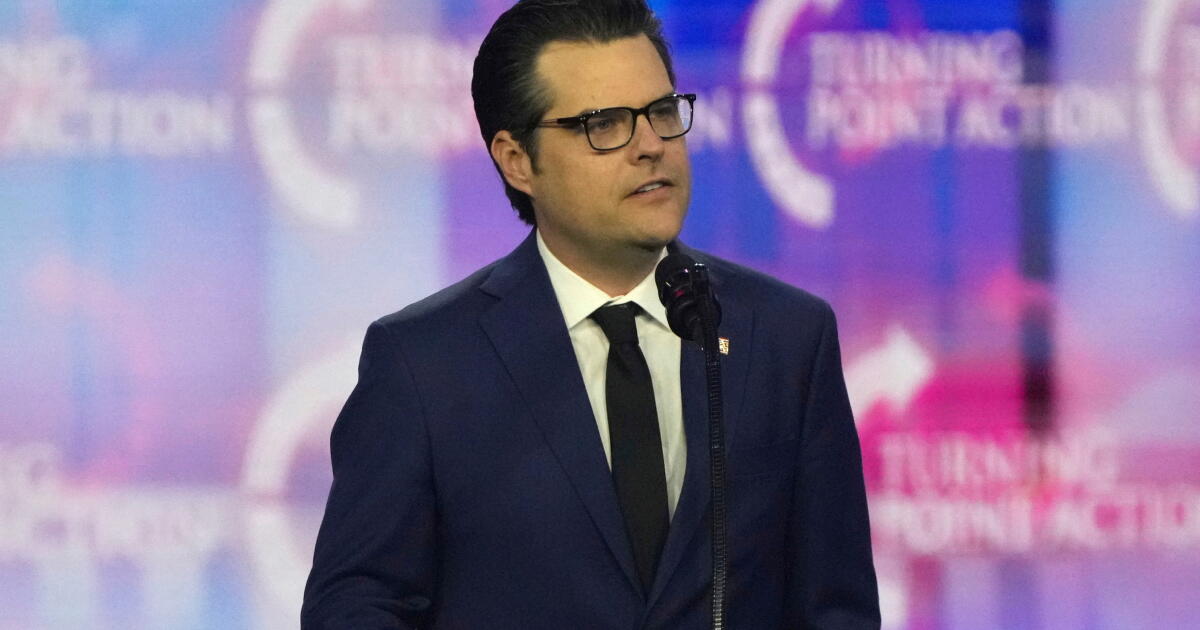
Two women filed a lawsuit Thursday against former U.S. Rep. Matt Gaetz, saying they were sexually exploited by him and other men in violation of a federal anti-trafficking law.
The lawsuit, filed in federal court in Orlando, Fla., comes nearly two years after the House Ethics Committee said the Florida Republican had regularly paid for sex, including once with a 17-year-old girl, purchased and used illicit drugs, and violated state laws while a member of Congress.
Gaetz had left office when the report was released and denied wrongdoing. But the report helped to tank his nomination to become attorney general in President Trump’s second administration.
Two women said they were in their early 20s in 2017 when they met Gaetz through Joel Greenberg, who was a tax official in Seminole County and is now in prison for a raft of crimes, including a sex crime.
Gaetz provided drugs and paid the women for sex, out-of-state travel, lodging and other expenses, according to the lawsuit.
“Much of the conduct alleged against me is false,” Gaetz said in response.
“The lawsuit relies almost exclusively on a Congressional Committee report that didn’t allow me to confront my accusers. Now I will finally have that chance,” he said in a statement.
Gaetz also appeared to mock the women on the social platform X, sharing a 2018 social media photo of the backs of three women in bathing suits looking at the ocean in the Bahamas.
“I’m shocked nobody responded to their repeated cries for help, posted to instagram,” he said Thursday.
The lawsuit also names Greenberg, another man and businesses tied to Greenberg’s family.
“Every part of this venture ran on an exploitative power imbalance,” the women’s attorney, Spencer Kuvin, said in the lawsuit. “On one side stood a sitting congressman, an elected tax collector, and a former state legislator, men with public office, private homes, and money to spend. On the other stood young financially vulnerable women in their early twenties.”
Gaetz hosts a political talk show on One America News Network. He was recently appointed to the board of Triumph Gulf Coast, which oversees how Florida spends money recovered for damage from the 2010 Deepwater Horizon oil spill.
White writes for the Associated Press.
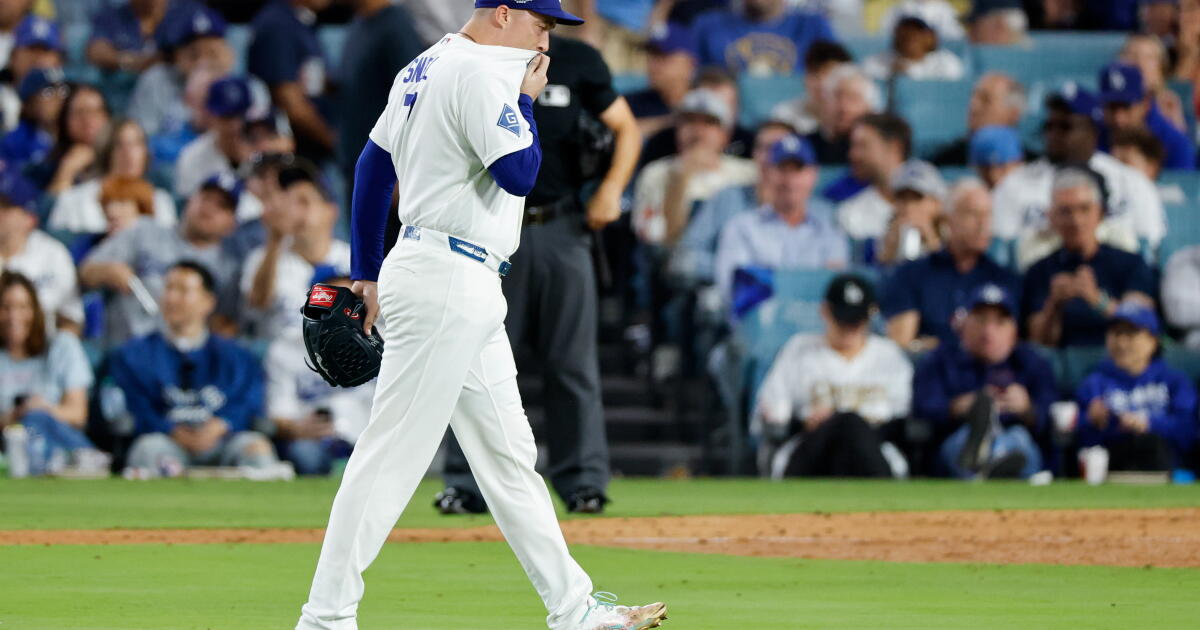
From Maddie Lee: Blake Snell stood on the mound with his hand on his hip, waiting for Jake Bauers to cross the plate before punching in his pitch call for the next batter.
The Dodgers left-hander had just given up the lead on Bauers’ two-run homer in the seventh inning, spoiling what had been a stellar start Wednesday night at Dodger Stadium. But Snell was ready to move on.
Two pitches later, he watched another ball fly over the fence, this time off Garrett Mitchell’s bat. And with it went the last of the Dodgers’ momentum in what would become a 6-2 loss to the Milwaukee Brewers in Game 3 of the National League Championship Series.
“It sucks,” Snell said of falling behind 3-0 in the series. “But it’s part of it. How do we bounce back? How do we fight? I think that’s the most important thing. It’s us coming together and finding a way to win.”
After setting their sights on a history-making three-peat, the Dodgers will have to win the next four games to advance to the World Series.
“At the beginning of this year, we set out to do something historic,” veteran third baseman Max Muncy said. “It looks like we’re going to have to make a little more history along the way if we want to accomplish that.
“That’s the task ahead of us. We still have the pitching staff to be able to do it. We just have to get some hits.”
‘We just need to win tomorrow’s game.’ Dodgers remain optimistic despite 3-0 hole
Get the latest on L.A.’s teams in the daily Sports Report newsletter.
By continuing, you agree to our Terms of Service, which include arbitration and a class action waiver. You agree that we and our third-party vendors may collect and use your information, including through cookies, pixels and similar technologies, for the purposes set forth in our Privacy Policy such as personalizing your experience and ads.
From Bill Plaschke: Blake Snell stood on the mound with his hand on his hip, waiting for Jake Bauers to cross the plate before punching in his pitch call for the next batter.
The Dodgers left-hander had just given up the lead on Bauers’ two-run homer, spoiling what had been a stellar start Wednesday night at Dodger Stadium. But Snell was ready to move on.
Two pitches later, he watched another ball fly over the fence, this time off Garrett Mitchell’s bat.
The Dodgers’ 6-2 loss to the Milwaukee Brewers in Game 3 of the National League Championship Series, after the visitors regained the lead with back-to-back home runs in the seventh inning, gave the Brewers a commanding 3-0 lead and set up an elimination game Thursday. After setting their sights on a history-making three-peat, the Dodgers will have to win the next four games just to advance to the World Series.
From Bill Shaikin: You don’t want to hear from me. You want to hear from Dave Roberts, the Dodgers’ manager.
The Dodgers are one loss from an abrupt ending to their season, and from a National League Championship Series sweep by the Milwaukee Brewers.
Let’s take you through the critical decisions Roberts made Wednesday night, the ones you second-guessed at home. They all pretty much backfired on him.
All times Pacific
NLCS
No. 1 Milwaukee vs. No. 2 Dodgers
at Milwaukee 2, Dodgers 1 (box score)
at Milwaukee 7, Dodgers 4 (box score)
Milwaukee 6, at Dodgers 2 (box score)
Thursday at Dodgers, 5 p.m., FS1/FOX Deportes/FOX One
*Friday at Dodgers, 6 p.m., FS1/FOX Deportes/FOX One
*Sunday at Milwaukee, 5 p.m., FS1/FOX Deportes/FOX One
*Monday at Milwaukee, 5 p.m., FOX/FS1/FOX Deportes/FOX One
ALCS
No. 1 Tampa Bay vs. No. 2 Cleveland
Cleveland 7, at Tampa Bay 3 (box score)
at Tampa Bay 3, Cleveland 1 (box score)
Thursday at Cleveland, 10 a.m., TBS/truTV/UniMas/HBO Max
Friday at Cleveland, 3 p.m., TBS/truTV/UniMas/HBO Max
Saturday at Cleveland, 5 p.m., TBS/truTV/UniMas/HBO Max
*Monday at Tampa Bay, 2 p.m., TBS/truTV/UniMas/HBO Max
*Tuesday at Tampa Bay, 5 p.m., TBS/truTV/UniMas/HBO Max
* if necessary
World Series starts Friday, Oct. 23
From Gary Klein: Rams left tackle Alaric Jackson’s suspension for punching a Buffalo Bills player after a game has been reduced from two games to one, an NFL spokesman said Wednesday.
Jackson was suspended for striking Bills linebacker Bradley Chubb in the face after the Bills defeated the Rams, 37-34, in overtime on Monday night.
Jackson appealed the suspension.
“Hearing officer Derrick Brooks, jointly appointed by the NFL and the NFLPA, has reduced the two game suspension of Los Angeles Rams offensive lineman Alaric Jackson to one game,” Michael Signora, the NFL’s senior vice president of football and international communications, said on social media.
Marco Reus had a goal and an assist to back JT Marcinkowski and the Galaxy beat the Portland Timbers 2-0 on Wednesday night at Dignity Health Sports Park.
Reus staked the Galaxy (10-11-9) to a 1-0 lead in the 17th minute when he used assists from Robert Taylor and Pablo Ruiz to score his eighth goal of the campaign.
That’s where the score stood until Reus set up up Justin Haak in the 80th minute for his second goal this season and his fourth in 110 matches. It was the career-high 11th assist for Reus.
Denis Bouanga and Son Heung-min both contributed to all three goals for LAFC in a 3-1 victory over Austin FC on Wednesday night at BMO Stadium.
Neither team found the net until Bouanga took a pass from Son seven minutes into the second half and scored to give LAFC (12-9-9) the lead.
Austin’s Brandon Vázquez scored for the second time this season, using an assist from Myrto Uzuni, to knot the score in the 66th minute.
1933 — The Philadelphia Eagles play their first NFL game and suffers a 56-0 loss to the New York Giants.
1961 — Mickey Wright wins her third LPGA Championship with a rout, nine strokes ahead of Louise Suggs. Wright shoots a 3-over, 287 at the Stardust Country Club in Las Vegas for her third major title of the year and her tenth tour victory of the season.
1972 — Stan Mikita of the Chicago Blackhawks becomes the sixth NHL player with 1,000 career points. Mikita assists on Cliff Koroll’s goal in a 3-1 loss to the St. Louis Blues at Chicago Stadium.
1983 — The Chicago Blackhawks and the Toronto Maple Leafs score five goals in 1 minute, 24 seconds to set an NHL record for the fastest five goals by two teams. The Maple Leafs beat the Blackhawks 10-8.
1988 — Oklahoma rushes for an NCAA-record 768 yards, including 123 by quarterback Charles Thompson. Thompson scores three touchdowns and passes for one in the first period of a 70-24 rout of Kansas State.
1988 — Mario Lemieux of the Pittsburgh Penguins scores eight points — two goals and six assists — in a 9-2 win over the St. Louis Blues at the Civic Arena in Pittsburgh.
1989 — Wayne Gretzky of the Kings passes Gordie Howe as the NHL’s all-time leading scorer in a during a 5-4 overtime win over the Edmonton Oilers. Gretzky flips a backhand shot past Oilers goaltender Bill Ranford with 53 seconds remaining to tie the score and pass Howe with his 1,851st point. Gretzky wins the game in overtime.
1995 — The Carolina Panthers beat the New York Jets 26-15 for their first NFL victory.
2005 — Michigan gives up a touchdown to Penn State with 53 seconds left, then marches down the field to score on a TD pass from Chad Henne to Mario Manningham with no time remaining for a 27-25 win over the eighth-ranked Nittany Lions.
2005 — USC’s Matt Leinart pushes and spins his way into the end zone with 3 seconds left to cap a chaotic finish to the top-ranked Trojans’ 28th straight victory, a back-and-forth 34-31 win over No. 9 Notre Dame.
2008 — Fabian Brunnstrom scores three goals in his NHL debut to match the league record in Dallas’ 6-4 victory over Nashville.
2009 — Detroit’s Nicklas Lidstrom becomes the first European defenseman and eighth overall to reach 1,000 points, assisting on two goals in the Red Wings 5-2 win over the Kings.
2012 — The Nets bring professional sports back to Brooklyn with a preseason victory, beating the Washington Wizards 98-88 in the first basketball game at the Barclays Center.
2015 — Carey Price makes 25 saves and the Montreal Canadiens make team history by starting a season with a five straight wins, the latest a 3-0 victory over the New York Rangers.
2017 — New England quarterback Tom Brady passes for 257 yards with two touchdowns in the Patriots’ 24-17 win at the New York Jets. Brady, who has 187 regular-season victories, surpasses Hall of Famer Brett Favre (186) and Peyton Manning (186) for the most regular-season victories by a starting quarterback in NFL history.
Compiled by the Associated Press
That concludes today’s newsletter. If you have any feedback, ideas for improvement or things you’d like to see, email me at houston.mitchell@latimes.com. To get this newsletter in your inbox, click here.

At least 350 Palestinian children currently face “harsh conditions” in Israeli prisons.
Published On 15 Oct 202615 Oct 2026
Israeli forces have detained more than 2,000 Palestinian children since October 2023, the Palestinian Prisoner’s Society said.
In a report released on Wednesday, the Palestinian rights group said Israeli authorities continue to escalate their targeting of Palestinian children. At least 350 Palestinian children are currently facing “harsh conditions” in Israeli prisons.
list of 3 itemsend of list
On Tuesday, Israeli forces arrested at least six children from Hebron in the occupied West Bank, the report said.
The organisation said information regarding the number of children arrested in Gaza is unclear, given the thousands of missing persons in the besieged Gaza Strip, including children, and the ongoing policy of enforced disappearance.
The group said Israel’s policy of detention without charges or a release date constitutes “an additional violation and crime that leaves children facing the unknown and deprives them of family and educational stability”.
The report described Israeli practices that begin with “intimidation and arrest” and extend to “torture, starvation and denial of healthcare”.
The group highlighted the case of 15-year-old Mohammed Hamid, who contracted scabies, a contagious skin infestation, while he was detained in Ofer Prison, where rights groups have long documented abuses. He suffered severe infections, underwent heart surgery and was admitted to intensive care in critical condition. He subsequently had one of his legs amputated.
The organisation also highlighted the case of 17-year-old Walid Ahmed, who died in March 2025 after six months in Megiddo Prison. In December, an Israeli judge halted the investigation into his death, stating that although there was evidence of starvation, no definitive cause of death had been established.
Ahmed was imprisoned in Megiddo with his friend Mohammed Ibrahim, a teenager from Florida. Ibrahim was released after months of advocacy from US-based organisations and appeals from high-ranking lawmakers.
Mohammed Ibrahim was not the only young American held in Israeli prison without charge – Israeli forces reportedly took Abdalkareem Issa Ahmed Safi from his West Bank home in a late-night raid in June. He turned 18 in detention, and authorities subsequently moved him from a youth holding area into an adult section at Ofer Prison.
Similarly, Israeli forces arrested 16-year-old Adam Wajeh Abdelfattah Karakrah, also an American, in July. Although he was set for release in August after his family secured bail, Israeli authorities abruptly reversed the decision to free him.
The Palestinian Prisoner’s Society called for “real international action” to ensure the release of arbitrarily detained children, enforce investigations and end torture, starvation and the denial of treatment in Israeli prisons.
Israeli forces have detained more than 25,000 Palestinians in the West Bank, and thousands more in Gaza, since Israel’s genocidal war began in October 2023.
The immigration agency has rejected a report from a government watchdog, making suggestions for improved body camera policy.

Published On 14 Oct 202614 Oct 2026
Immigration and Customs Enforcement (ICE), a United States agency that has taken a central role in President Donald Trump’s mass deportation campaign, has rejected a government report calling for its agents to wear body cameras that automatically activate.
On Wednesday, the Government Accountability Office, a nonpartisan agency that provides research to Congress, released a report recommending an update to ICE guidelines for camera usage.
list of 3 itemsend of list
It suggested that “automated camera activation” would be helpful in situations where “unexpected and unplanned incidents, unrelated to sensitive operations, result in use of force by or against personnel”.
“Given the important role of body-worn cameras in law enforcement activities, we maintain that additional controls are needed to help ensure that ICE personnel capture footage in accordance with policy,” the report said.
Automatic activation, it added, would address difficulties ICE agents face in manually turning on their cameras during enforcement operations.
But ICE has rejected the recommendation for automatic activation, which could be triggered by an agent pulling a gun or turning on a car siren. The agency cited privacy concerns.
But the Trump administration faces public pressure to improve transparency during its immigration raids.
Agents from ICE and other agencies such as Customs and Border Protection (CBP) have faced accusations of excessive force and civil liberties violations.
In January, two US citizens – Renee Good and Alex Pretti – were shot to death in separate shootings in Minneapolis, Minnesota, during immigration operations.
The New York Times estimated in July that immigration agents had opened fire on at least 25 people since the start of Trump’s second term. A CBS News review updated this week counts at least 30 shootings, with nine people killed and 13 others wounded.
ICE has often blamed such incidents on aggression against its agents, and it has argued that its officers have opened fire to defend themselves from danger.
But in several cases, that rationale has come under scrutiny.
Critics argued that video footage in Good’s fatal shooting disproved government statements alleging that she had weaponised her vehicle against agents. Her car, according to observers, appeared to be turning away from agents, not towards them.
In another case, ICE agent Christian Castro was accused of making false statements about a shooting that resulted in injury to Julio Cesar Sosa-Celis, a Venezuelan man living in Minneapolis.
Castro faces federal charges for allegedly lying about being attacked with a snow shovel and broom before the shooting, after video footage contradicted his account. Castro pleaded not guilty last month.
More recently, on October 8, immigration agents shot a man named Oscar Belgal in New York City while his five-year-old son was in the backseat of his car. ICE stated that Belgal appeared to be “going towards officers” in his car when they opened fire.
On Tuesday, a judge rejected the government’s effort to have Belgal deported.
Activists say better recording procedures for body camera footage could help clarify what happened in such incidents.
But the Trump administration has largely refused to implement reforms to ICE protocol.
Earlier this year, Democrats in Congress delayed funding for the Department of Homeland Security, which oversees ICE, on the basis that significant changes needed to be made to reduce incidents of excessive force.
The department said on Wednesday that automatically recording cameras could result in “the unauthorised recording of sensitive interactions with informants or victims”.
The agency added that all ICE offices had received body cameras as of August 5, but that training in their use was still ongoing and would be finished “soon”.
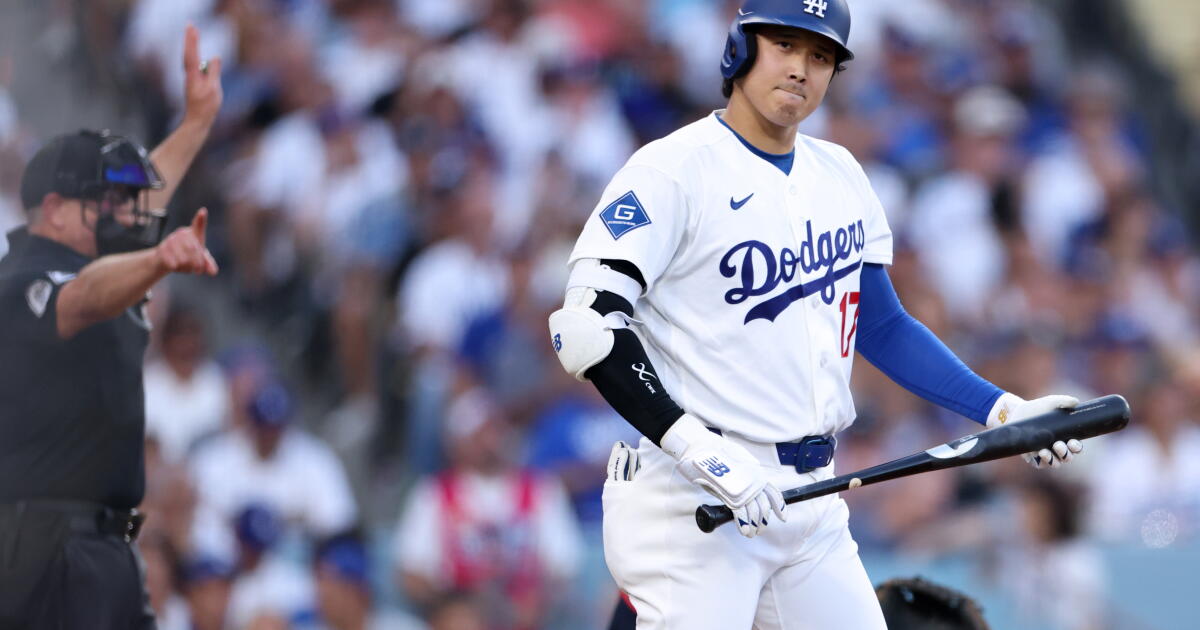
From Maddie Lee: Shohei Ohtani emerged from the visiting dugout at American Family Field with a bat in his hand, and the mass of media members scattered in foul territory up the third-base line shifted his way, pulled by the magnetic force that is Ohtani’s stardom.
Monday marked the third straight day Ohtani had hit on the field, after a multi-round session off the pitching machine on the workout day and batting practice before each of the first two games of the National League Championship series against the Milwaukee Brewers. But the novelty of the move — Ohtani only took batting practice on the field a few times during the regular season, always in the midst of a slump — had yet to fully wear off.
“The results, take full responsibility,” Ohtani said through interpreter Will Ireton on Tuesday. “That’s all I can really say, why the results haven’t been where I wanted it to be. But I think there’s different approaches to this, whether that be focusing on reducing the symptoms and getting rid of the pain and/or just making sure that I’m moving well in the swing.”
That break of routine for the start of the NLCS did not pay off in terms of results. But after a conversation with Ohtani, manager Dave Roberts said Tuesday that he felt “great” about playing Ohtani in Game 3 of the NLCS, even though Ohtani is still physically compromised by nagging right biceps and left knee problems.
“He’s adamant he feels good enough to be in there,” Roberts said. “He’s close to finding something with his swing. … Yeah, he wants to be in there and help us win a ballgame and win a championship. Great conversation, and I’m excited about having him in there.”
Get the latest on L.A.’s teams in the daily Sports Report newsletter.
By continuing, you agree to our Terms of Service, which include arbitration and a class action waiver. You agree that we and our third-party vendors may collect and use your information, including through cookies, pixels and similar technologies, for the purposes set forth in our Privacy Policy such as personalizing your experience and ads.
From Bill Shaikin: The Dodgers never waver in their game plan for the regular season: win enough games to secure a bye in the opening round of the playoffs and, in so doing, afford players all the down time they need during the summer to be in top form come fall. They do not need to hurry anyone off the injured list so they can squeak out another National League West title.
Unfortunately for the Dodgers and their increasingly perilous hope of a three-peat, they did not follow that game plan with Shohei Ohtani. The Dodgers failed Ohtani this summer, and now all that remains is for them to cross their collective fingers and hope for the best.
Hope, as they say, is not a strategy.
The Dodgers should drop Ohtani from the postseason roster.
They won’t. They won’t even take him out of Wednesday’s lineup.
Amid headlines about how the Dodgers might have benched Ohtani for Game 3 of the NL Championship Series, manager Dave Roberts said the thinking was more about coupling Tuesday’s day off with a second consecutive day of rest.
All times Pacific
NLCS
No. 1 Milwaukee vs. No. 2 Dodgers
at Milwaukee 2, Dodgers 1 (box score)
at Milwaukee 7, Dodgers 4 (box score)
Wednesday at Dodgers, 5 p.m., FS1/FOX Deportes/FOX One
Thursday at Dodgers, 6 p.m., FS1/FOX Deportes/FOX One
*Friday at Dodgers, 6 p.m., FS1/FOX Deportes/FOX One
*Sunday at Milwaukee, 5 p.m., FS1/FOX Deportes/FOX One
*Monday at Milwaukee, 5 p.m., FOX/FS1/FOX Deportes/FOX One
ALCS
No. 1 Tampa Bay vs. No. 2 Cleveland
Cleveland 7, at Tampa Bay 3 (box score)
at Tampa Bay 3, Cleveland 1 (box score)
Thursday at Cleveland, 3 p.m., TBS/truTV/UniMas/HBO Max
Friday at Cleveland, 3 p.m., TBS/truTV/UniMas/HBO Max
Saturday at Cleveland, 5 p.m., TBS/truTV/UniMas/HBO Max
*Monday at Tampa Bay, 2 p.m., TBS/truTV/UniMas/HBO Max
*Tuesday at Tampa Bay, 5 p.m., TBS/truTV/UniMas/HBO Max
* if necessary
World Series starts Friday, Oct. 23
From Broderick Turner: The plan for the Lakers had been to turn their fourth preseason game into a dress rehearsal for the upcoming season.
But that was not the case.
The Lakers did get the preseason debut of center Walker Kessler on Tuesday night, a good sign for them to see their biggest acquisition of the summer play.
But on the flip side, Luka Doncic didn’t play in the Lakers’ 101-89 loss to the Golden State Warriors at T-Mobile Arena because he was resting.
“He’s not injured, just getting the night off,” Lakers coach JJ Redick said.
Kessler had 11 points, nine rebounds, one blocked shot and one steal.
From Gary Klein: Less than 24 hours after kicking-game issues led to the Buffalo Bills defeating the Rams in overtime, the team released kicker Harrison Mevis, a team official said Tuesday.
Mevis missed a 50-yard field-goal attempt in the first half, and a had potential 48-yard game-winning field-goal attempt blocked in overtime. The Bills went on to win 37-34 in overtime, dropping the Rams’ record to 2-3.
“Not even close to good enough,” coach Sean McVay said of the field-goal and extra-point units after the defeat. “It cost us the game tonight.”
From Gary Klein: Quarterback Matthew Stafford, the Rams’ most valuable and most important player, will have a new blindside protector when the reigning NFL MVP faces the Arizona Cardinals on Sunday.
With left tackle Alaric Jackson suspended by the NFL for two games for punching an opposing player after the Rams 37-34 loss to the Buffalo Bills on Monday night, coach Sean McVay said Tuesday that veteran David Quessenberry would take Jackson’s spot.
Quessenberry, 36, is a ninth-year pro in his second season with the Rams. He has not started a game since 2023 when he started four times for the Minnesota Vikings.
McVay said the Rams also would open the 21-day window for rookie tackle Keagan Trost to return from injured reserve.
Connor McDavid had a goal and two assists in the dynamic first period of his four-point night, propelling the Edmonton Oilers to a 4-1 victory over the winless Kings on Tuesday.
Vasily Podkolzin got his sixth and seventh goals of the season, Leon Draisaitl also scored and Devon Levi made 39 saves for the Oilers, who have won five straight and scored at least three goals in every game of their 5-0-1 start.
McDavid recorded at least three points in a period for the 33rd time in his 11-year career, doing it in the first period for the 10th time. The six-time Art Ross Trophy winner as the NHL’s top scorer has a whopping 16 points already this season with five multi-point games.
Martin Pospisil scored the tiebreaking goal with 4:22 left, Yegor Sharangovich added an empty-netter with 1:22 remaining and the Calgary Flames beat the Ducks 4-2 on Tuesday night.
Adam Klapka and Aydar Suniev added goals, and Dustin Wolf stopped 22 of 24 shots as the Flames (1-5) won for the first time this season. Beckett Sennecke and Leo Carlsson scored goals, and Lukas Dostal had 32 saves for the Ducks (4-2).
Pospisil’s decisive goal came after he took a pass from Suniev at the center circle, skated down the left side, deked Ducks defenders Tyson Hinds and Tristan Luneau by faking a shot and snapped the puck past Dostal’s short side for a 3-2 lead.
1945 — The Chicago Cardinals snap the longest losing streak in NFL history at 29 games with a 16-7 victory over the Chicago Bears.
1949 — Ezzard Charles TKOs Pat Valentino in 8 for heavyweight boxing title.
1951 — Detroit’s Jack Christiansen returns two punts for touchdowns, but the Lions still lose, 27-21, to the Rams.
1962 — Houston’s George Blanda throws six touchdown passes to lead the Oilers to a 56-17 rout of the New York Titans.
1967 — The Kings, led by Brain Kilrea, beat the Philadelphia Flyers 4-2 in their NHL debut. The game is held at Long Beach Arena. Kilrea scores two goals, including the first one in Kings history.
1978 — Darryl Sittler of the Toronto Maple Leafs gets seven assists in a 10-7 victory over the New York Islanders.
1979 — Edmonton’s Wayne Gretzky scores his first NHL goal in a 4-4 tie with the Vancouver Canucks. Gretzky beats goaltender Glen Hanlon with the game-tying power-play goal with 1:09 remaining in the third period.
1990 — Joe Montana passes for career highs of 476 yards and six touchdowns and Jerry Rice ties an NFL record with five scoring receptions as the San Francisco 49ers beat the Atlanta Falcons 45-35.
1991 — New York Rangers right wing Mike Gartner scores his 500th career goal in the first period of a 5-3 loss to the Washington Capitals.
2005 — Ryan Newman sets a NASCAR record by winning his fifth consecutive Busch Series race, the Charlotte 300 at Lowe’s Motor Speedway.
2006 — Mats Sundin scores his 500th career goal, completing a hat trick with a short-handed overtime game-winner and giving Toronto a 5-4 victory over Calgary. The third goal is Sundin’s 15th in overtime — the most in NHL history.
2007 — Tom Brady of New England passes for 388 yards and a career-high five touchdowns in a 48-27 win over previously unbeaten Dallas. The five TDs gives Brady the NFL mark with at least three in each of the first six games of the season.
2011 — Japan’s Kohei Uchimura becomes the first man to win three titles at the world gymnastics championships in Tokyo. Uchimura finishes with 93.631 points in the men’s all-around, more than three points ahead of Germany’s Philipp Boy.
2012 — Green Bay’s Aaron Rodgers sets a career high and ties a franchise record with six touchdown passes, three to Jordy Nelson, and the Packers rout the Houston Texans 42-24. Rodgers completes 24 of 37 passes for 338 yards and ties Matt Flynn’s single-game record for TD passes, set in last year’s regular-season finale against Detroit.
2015 — Sylvia Fowles has 20 points and 11 rebounds as the Minnesota Lynx capture their third WNBA title in five years with a 69-52 victory over the Indiana Fever in Game 5.
2018 — Stephen Gostkowski hit a 28-yard field goal as time expires, and the New England Patriots beat the Kansas City Chiefs 43-40 after blowing a big halftime lead. Tom Brady passes for 340 yards and a touchdown and runs for another score in his 200th victory as a starting quarterback, tops in NFL history. With New England leading 24-9 at halftime, Patrick Mahomes directs an impressive rally by Kansas City in the second half. He finishes 23 of 36 for 352 yards in his first loss as a starting quarterback, with three of his four TD passes going to Tyreek Hill.
2020 — The NFL cancels the Pro Bowl scheduled for January, 31, 2021 due to the COVID-19 pandemic.
Compiled by the Associated Press
1973 — 42-year-old future Baseball Hall of Fame center fielder Willie Mays′ last MLB career hit, as N.Y. Mets beat A’s, 10-7 in World Series Game 2 in Oakland.
Compiled by the Associated Press
That concludes today’s newsletter. If you have any feedback, ideas for improvement or things you’d like to see, email me at houston.mitchell@latimes.com. To get this newsletter in your inbox, click here.
