repair

Contributor: Which Democrat could repair the damage Trump did?

Democrats have a huge opportunity to make a huge difference. But whether they’ll grab it is a huge question.

In 2020, I wrote that voters were “weary, anxious and looking for salve” after President Trump’s first term. I said then that the experienced, reassuring Joe Biden fit the moment. Now I fear that if Democrats nominate a similar presidential candidate in 2028, one who wins yet doesn’t act with alacrity on democracy preservation and helping Americans live better lives, a fed-up electorate will once again turn them out as ineffectual.

Who can or should lead the party at a time like this?

I’m not alone in hoping for a tough and confrontational 2028 nominee, someone who is aggressive, persistent and, when necessary, as ruthless as the forces on the opposite side. This person also must have the energy to undertake the mammoth task of repairing the institutional wreckage of Trumpism. Which suggests Democrats should be checking out younger nominees.

Fortunately, newer generations of leaders are emerging. Those who “get it,” in my view, include Sen. Jon Ossoff of Georgia, Rep. Alexandria Ocasio-Cortez of New York and Sen. Chris Murphy of Connecticut.

Obviously any Democrat will be better than anyone from Trump’s team or orbit, including JD Vance, Donald Trump Jr. or Marco Rubio. The issue facing Democrats is whether moderate or policy wonkish people such as former Transportation Secretary Pete Buttigieg, Kentucky Gov. Andy Beshear or Pennsylvania Gov. Josh Shapiro would be the democracy warriors this moment demands. Repairing a crucial interstate bridge with lightning speed is a great thing and, sometimes, so is outreach to Republicans and Fox News. But would they prioritize thinking big and fighting hard for the fundamental changes we need?

Where would centrist former CIA officer Abigail Spanberger, the new Virginia governor, land on this scale? Even after coming around to supporting new House maps that will net four seats for her party? Gov. Gavin Newsom of California, who began his podcast by inviting MAGA guests, championed a referendum on five new Democratic seats in his state and led his party to a redistricting triumph. Where would he land? Would he prioritize outreach to Republicans or the battle to assure a “no kings” future for America? The need for structural changes in our outdated institutions is glaringly obvious. Who will run to repair this country? Who can be trusted to follow through? Because the solutions are out there, staring us in the face:

Checks on presidential pardon power. A larger, term-limited Supreme Court bound to an enforceable ethics code. A national law requiring independent redistricting commissions or, better yet, multi-member districts with proportional representation. A voting rights law that sets minimum standards for mail voting, early voting and voter IDs. Anti-corruption laws that prevent profiteering by presidents and their allies. Explicit limits on presidential construction and alterations to federal properties. A stronger “impoundment” act with sharp teeth to make sure future presidents spend taxpayer money constitutionally, as Congress intends, instead of any way they want. D.C. and Puerto Rico statehood to start rebalancing a Congress and electoral college that have shortchanged urban America since the late 19th century.

It’s a long list, and there’s no guarantee that today’s Supreme Court would allow any of it. But realizing some of these goals will take decades; we can’t be discouraged by temporary impediments such as the current lineup of justices. The work on all of it should start ASAP — next year in the next Congress if Democrats are running one or both chambers. And at some point, we’ll have a different high court.

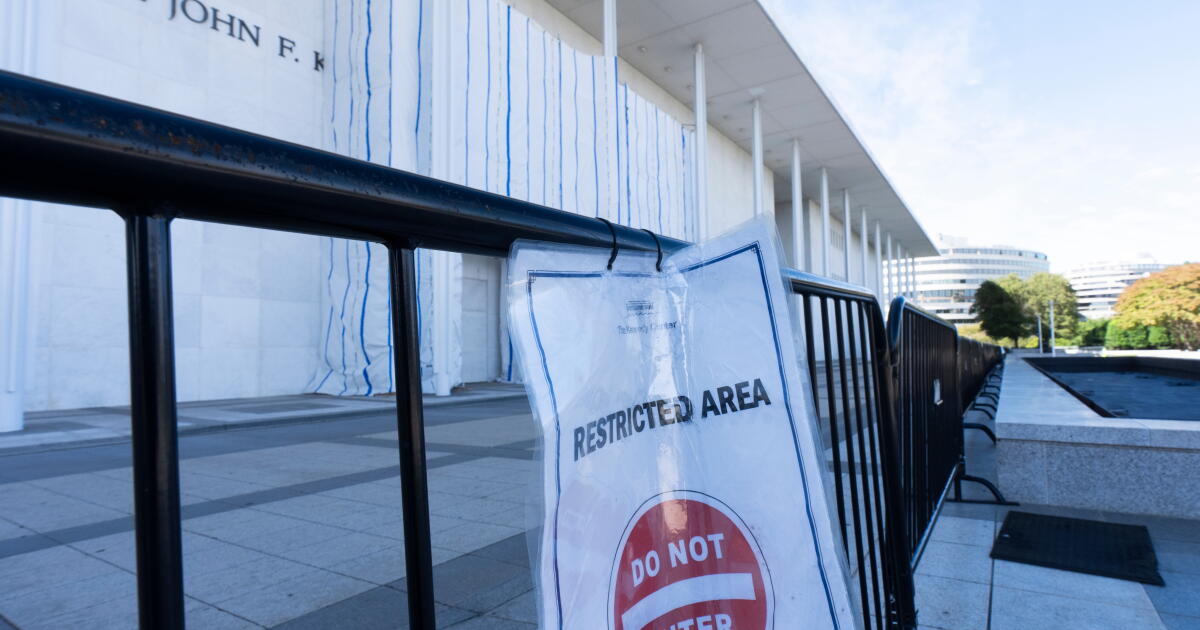
I can already hear the protests: What about affordability? That’s the best part: Trump has done so many things to make life more expensive that simply reversing them would have immediate impact. Stop the Iran war; reopen the Strait of Hormuz; aim to restore the Obama-era agreement that kept Iran’s nuclear ambitions in check; end the Trump tariffs; stop shrinking labor forces in agriculture, healthcare, construction and other industries by ending detentions and deportations of noncriminals; reverse last year’s tax breaks for elites and restore the money for Medicaid and health insurance premium subsidies; and kill off the Versailles-level Trump ballroom that he now wants to fund with taxpayer dollars (initially $400 million, now $1 billion).

Then Democrats could revisit some of their own affordability priorities, including the expanded child tax credit that significantly reduced child poverty, new ways to put housing within reach of more people and national paid family leave. They could also crack down on military spending that is pointless in the modern era and refocus on cheap and effective equipment such as drones like Ukraine is using to strike inside Russia.

As it happens, a stark indicator of the political tides came as I was writing this. Maine Gov. Janet Mills suddenly dropped out of the Democratic Senate primary race against Graham Platner. It was a lightning bolt, given her establishment support after being recruited by Senate Minority Leader Chuck Schumer. But in a way it was inevitable.

Mills is 78. If she had gone on to win the primary and defeat GOP Sen. Susan Collins, she would have been sworn in at age 79. Platner is 41, an oyster farmer and military veteran with a compelling, relatable persona. Though he has a controversial past, Mills’ negative ads did nothing to dent his appeal. Polls showed him winning the primary vote against Mills, sometimes by 2 to 1, and with a consistent general-election edge against Collins as well.

Platner told Jon Stewart last week that the party leadership establishment had largely ignored him. His message to them? “You should be curious, because I’m polling 40 points ahead.” By the next morning, Mills was out, and the establishment — Schumer and New York Sen. Kirsten Gillibrand, chair of the Senate campaign committee — said they’d work with Platner to flip the seat.

The midterm races are sending Democrats clues. They should take them seriously.

Jill Lawrence is a journalist and the author of “The Art of the Political Deal: How Congress Beat the Odds and Broke Through Gridlock.” Bluesky: @jilldlawrence

Source link

The Repair Shop star says ‘it’s getting worse and worse’ in emotional update

A second disaster has struck the prized car collection of The Repair Shop star star Dominic Chinea, and he says this may be the final straw as he considers selling it

TV star and The Repair Shop presenter Dominic Chinea admitted “it’s getting worse and worse” as he introduced the latest update on his Land Rover restoration project.

The engineering expert has been restoring a dilapidated 1957 Series 1 Land Rover that he found buried in a hedge near his new home in Cornwall. He has described it as one of his most challenging projects to date, given that the chassis was completely rotten and the vehicle had been half-buried in undergrowth for several years.

Dominic hasn’t had the best of luck with the rebuild. Only a few weeks ago, Dominic admitted that he had hit a major snag after accidentally damaging the Land Rover’s seat base as he lifted the rear tub.

He said he was thinking of reaching out to Repair Shop co-star, upholstery expert Sonnaz Nooranvary, before the Land Rover can be considered complete.

But Dominic’s trials and tribulation with the Land Rover restoration aren’t his only problem at present, because he’s had a second mishap with his vintage VW Caddy.

The BBC star is something of a petrol-head, counting a 1957 Porsche 356a, multiple Land Rovers (Series 1 and Defender 110), a 13-window VW camper, a 1958 VW split bus, and a 1936 BSA motorbike among his extensive collection. One of the numerous vehicles undergoing restoration in Dominic’s new workshop is an early Eighties Volkswagen Caddy pickup.

Back in February, back-to back storms caused a major accident in his new workshop, causing major damage to the Mk1 Caddy.

Dominic explained: “Previously, during the last storm, part of the roof flew off of the workshop and landed on the Caddy, smashed into the bonnet. It made a hole in the bonnet, dented the wing, and I was gutted.”

He added that the reinforced concrete beams that support the structure of his workshop are becoming increasingly corroded: “The steel rebar is getting rusty and swelling up and it’s breaking the concrete and a chunk of that has fallen off the roof.

“Of course, it’s landed on the windscreen of the Caddy and broken the windscreen”

Dominic blamed himself for the accident, explaining that he’d had some work done to install a ramp into the workshop and that the vibration from the machinery may well have dislodged the loose chunk of concrete: “That is my stupid fault,” he said. “I should have put something a board over [the cars] or moved them outside or something like that.”

Dominic said that after this latest disaster he was close to giving up on the pickup: “I may well sell it because I haven’t really used it since I’ve been down here and I feel bad that the poor thing is just getting worse and worse whilst it’s here.”

He called out to fans, saying that he wasn’t really sure what the car might be worth, saying: “Make me an offer.”

Catch Dominic on The Repair Shop tonight (Wednesday, May 6) on BBC One from 8pm to 9pm.

Source link

The Repair Shop guest breaks down in tears over late father’s incredible item

The Repair Shop expert Steve Fletcher faced a challenging restoration on the BBC show.

Steve Fletcher, an expert on The Repair Shop since its launch in 2017, was left astounded by the item he was called upon to restore.

During the latest episode of the BBC programme (April 29), viewers watched Steve alongside Sonnaz Nooranvary examine the item that had been brought in.

Casting her eye over it on the table, Sonnaz remarked: “I’m no builder, but needless to say, this looks like it’s seen much better days.” Concurring, Steve responded: “Yeah, I’ve done up old buildings, and I don’t think any of them were as bad as this.”

Stepping into the barn was Dawn Shrives from West Sussex, who jokingly told the experts they were looking at “ruins” before revealing it was an extraordinary model watermill constructed by her late father in 1996.

She explained: “He put it all together to go in front of our family home to replicate the red brickwork of the house. Every little brick he made by hand, individually, he wanted it to be a working watermill. Obviously, the years of it sitting on the ground, outside, the weather had gotten to it.”

Dawn went on to describe how her father had planned to install an underground chamber to make the watermill turn. Tragically, he passed away in 2014, and her mother subsequently moved to a smaller property, reports the Manchester Evening News.

She noted that with her mother now living in a bungalow, there is nothing left to remind her of her beloved late husband, underlining just how precious the watermill model truly is. Dawn continued: “He’s touched, every single piece of this. He’s crafted this, and she looks out her front window and sees this deteriorating; it’s just so sad to see.”

She went on: “So to have it brought back to life for the family, for mum, would just be amazing. Just to see it put back together and whole again, I think, is almost- we can’t even think of that.” As Steve outlined his intentions to repair the model, it was evident he faced a considerable challenge.

Ultimately, after crafting bricks to substitute those Dawn’s father had originally made, Steve succeeded in restoring the dilapidated model and incorporated water to make the wheel rotate as her father had envisioned decades earlier.

When the moment arrived to reveal the completed restoration, Dawn brought her mother, Pam, along to view the model. The two women were immediately moved to tears upon seeing it unveiled, astounded by Steve’s achievement.

Pam promptly thanked Steve as Dawn exclaimed: “Look at that! Isn’t that lovely?” Pam remarked: “Gosh, that’s amazing. You’ve done all of these (roof tiles). Gosh, thank you.”

Upon noticing the water feature surrounding the house, Steve activated it for the first time, demonstrating the functioning watermill. She observed: “It’s just beyond anything that we could’ve thought would ever happen to it, thank you.”

Addressing the camera directly, Dawn said: “The watermill just sums up a legacy that will now stay in the family, be preserved, and dad would be so pleased to know that it’s working and it’s loved and it’s still loved.” Pam agreed, adding: “It’s just the best thing we could have done, isn’t it?”

The Repair Shop is available to watch on BBC iPlayer.

Source link

Contributor: Carlson’s cautious apology does little to repair Trumpism’s damage

When you break a promise as clear as “No new wars,” you shouldn’t be surprised when even your most loyal supporters revolt. And that’s exactly what is happening to President Trump.

One such disillusioned supporter is Tucker Carlson — who on a recent podcast with his brother Buckley admitted, in essence, “My bad.”

“You wrote speeches for him. I campaigned for him. I mean, we’re implicated in this, for sure,” Tucker Carlson said during the conversation.

“In real ways, you and me, and millions of people like us, are the reason this is happening right now,” Calson confessed, referring to the Iran war. “We’ll be tormented by it for a long time. I will be, and I want to say I’m sorry for misleading people, and it was not intentional.”

Having worked for Carlson for six years at the Daily Caller, I’ve always found him intelligent and funny and generous, even as I have profoundly differed with him on a variety of issues throughout the Trump era.

It did my heart good to hear him accept some responsibility for what Trump has wrought.

A lot of people were complicit in boosting Trump, and some of them have even subsequently criticized him for various sins (failing to release the Epstein files, going to war with Iran, etc.). But this is the first time I can recall anyone of this stature explicitly apologizing for helping elect Trump. And that warrants a certain amount of respect.

Still, let’s be clear-eyed about what Carlson is — and isn’t — saying here. Specifically, it’s worth noting that the apology doesn’t extend to validating those of us who opposed Trump from the beginning.

In fact, it almost can’t.

Doing that would require the confessor to reinterpret not just Trump’s presidency, but also the entire ecosystem that made supporting Trump a viable option in the first place.

It would mean admitting that the framework he used to evaluate Trump was flawed, not just the outcome.

That would end up being perceived as an indictment on the broader Republican electorate — and on Carlson’s worldview and judgment — not just on Trump’s recent performance or (even more conveniently) the notion that Trump has changed or was co-opted by Israel (or whomever) since 2024.

It’s a much bigger ask than saying, “I regret this specific result.”

Specifically, Carlson is not conceding that the “Never Trump” crowd got it right — which is what those of us who have spent a decade opposing Trump (with little fanfare) have been dying to hear for a decade (even more so than “I’m sorry.”)

This is an important distinction, partly because it means that, although Carlson is now a convenient ally in the “resistance,” he is not opposing Trump for the same reasons that most Democrats or Never Trump conservatives oppose Trump.

If you put aside Trump’s decision to go to war with Iran, the Carlsons’ second-biggest criticism of Trump (based on their two-hour-long podcast) is his failure to more vigorously defend the Jan. 6 Capitol rioters.

That’s right. It’s not that he sicced immigration enforcers on immigrants and that they subsequently killed two American citizens. It’s not that DOGE fired lots of good people. It’s not that this president tried to use the Department of Justice to seek vengeance on his political rivals. It’s that Trump — the person who pardoned these people — wasn’t aggressive enough in defending the criminals who stormed the U.S. Capitol while trying to overturn the 2020 election results.

And while there’s no reason to doubt Carlson’s remarks are sincere (he has been a vocal opponent of war with Iran) and meaningful (he’s an influential figure), his comments may also signal something else: a recognition that opportunity awaits.

Consider this: Trump’s political standing is in deep trouble (Trump’s approval rating is down to 33%, according to a new AP-NORC poll).

What is more, Trump’s fading fortunes aren’t just isolated to Trump. As always, there is collateral damage: JD Vance.

Once seen as Trump’s obvious heir, Vance now finds himself in a difficult position, defending the war in Iran and attacking the pope, while simultaneously releasing a book about his Catholic conversion.

In that sense, Carlson’s apology could be less a grudging epiphany than a strategic recalibration. It acknowledges that Trump has gone off the rails but stops short of examining why it was destined to go wrong in the first place.

Carlson gets close to the answer when he tells his brother, “there were signs of low character. We knew that,” but then dismisses it by saying “there are tons of people of low character who outperform their character.”

Without deeper reflection, this apology risks becoming just another pivot — one that has as much to do with positioning as it does with repentance.

And that would be a shame.

It’s easy to regret an outcome. It’s much harder to interrogate the instincts that led you (and tens of millions of Americans) to enable it.

Apologies like Carlson’s won’t close the chapter on this long national nightmare.

Matt K. Lewis is the author of “Filthy Rich Politicians” and “Too Dumb to Fail.”

Source link