LAS VEGAS — Mitch Marner scored a power-play goal from the high slot at 2:41 of overtime to give Vegas a 2-1 victory over the Kings on Saturday on a night in which the Golden Knights paid tribute to their past.
Trevor Connelly scored the other goal for the Golden Knights. Connelly, Marner and Mark Stone each had two points, with Stone getting both of his on assists. Carter Hart made 26 saves.
Artemi Panarin scored for the Kings and Darcy Kuemper made 30 saves.
Vegas (5-1) is off to a quick start this season, and the Kings (0-2-2) are still searching for their first victory.
Each club swapped power-play goals in the second period, with the 20-year-old rookie Connelly scoring after Stone’s pinpoint cross-ice pass. Panarin answered with a shot from the high slot later in the period.
In overtime, the Golden Knights quickly took advantage of a tripping penalty on Kings center Scott Laughton. Marner skated from near the blue line toward the slot, scoring just seven seconds into the penalty.
The Golden Knights, in their 10th season, paid tribute throughout the game to their inaugural “Misfits” team that reached the Stanley Cup Final. Gerard Gallant, who coached that team, was in attendance along with several players from that squad. Fan-favorite Ryan Reaves, who retired last month after 16 NHL seasons, cranked the pregame siren.
Referee Furman South briefly went down to the ice early in the third period when Vegas center Nic Dowd collided with him. South got up holding his midsection, but remained in the game.
Up next for the Kings: vs. Edmonton at Crypto.com Arena on Tuesday night.
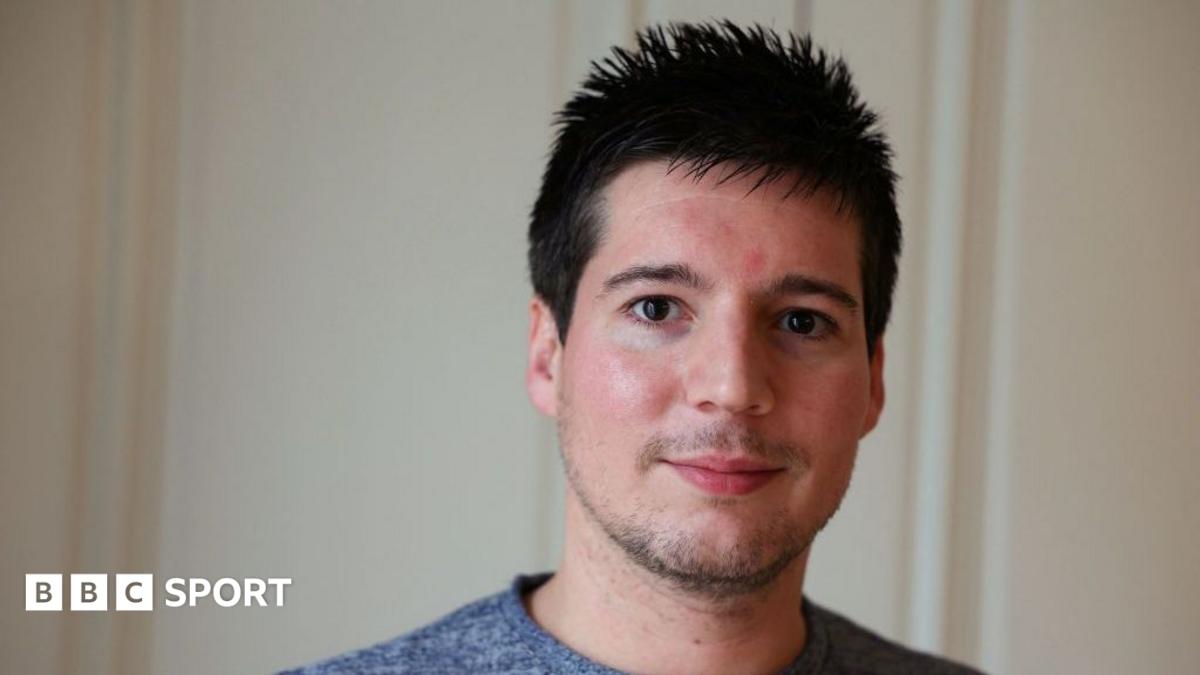
The Portuguese computer hacker who released documents which helped trigger the Premier League investigation into Manchester City will remain in witness protection after authorities in the country suspended the decision to end it.
Pinto, 37, disclosed a tranche of confidential football documents, including emails and financial records relating to the English Premier League side.
In 2018, he shared documents with German magazine Der Spiegel, which used them for investigations into City’s finances and alleged breaches of financial fair play rules.
City were recently found guilty of all charges relating to breaches of the Premier League’s financial regulations between the 2009-10 and 2017-18 seasons. They have appealed against the decision.
Pinto became part of Portugal’s witness protection programme in 2020 after agreeing to co-operate with authorities and provide information obtained through the Football Leaks operation.
However, in a statement on Friday,, external Portugal’s Ministry of Justice said a decision to remove Pinto from witness protection had been reversed for the time being, with the body responsible for it – the special security programmes commission – having not adequately “notified” Pinto of grounds for its termination or given him the opportunity to challenge the decision.
Pinto will now be given 10 days to assess a risk assessment conducted by the special security programmes commission that indicates a low threat to his safety.
He posted on X, external thanking Portugal’s Minister of Justice, Rita Alarcao Judice and saying the commission’s initial decision had clearly violated the law and amounted to a “manifest abuse of power”.
Pinto has described himself as a whistleblower, but was convicted in Portugal of offences including illegal access to data and attempted extortion and given a four-year suspended sentence.
He wore a bulletproof vest during his first trial in 2020, which was also subject to heightened security measures.
Earlier this year, he was acquitted of 241 counts of illegally accessing email accounts belonging to a number of sports bodies in Portugal, including Benfica.
Some countries, from which Brazilians living overseas are able to vote, have also already released preliminary vote count data.
In China, Lula won 56.63% of the votes, while Bolsonaro came in second with 31.33%. Lula also won in countries including South Korea, New Zealand and Saudi Arabia.
In Israel, however, Bolsonaro won 74.40% of the valid votes. He also won 71.59% of the valid votes in Japan.
Today’s result will also determine the composition of the Senate from February 2027 onwards, as 54 of the Senate’s 81 seats are being contested, representing two-thirds of the chamber.
Currently, the largest bloc in the Senate is Bolsonaro’s Liberal Party (PL), followed by the Social Democratic Party (PSD), which has served in a coalition government under Lula.
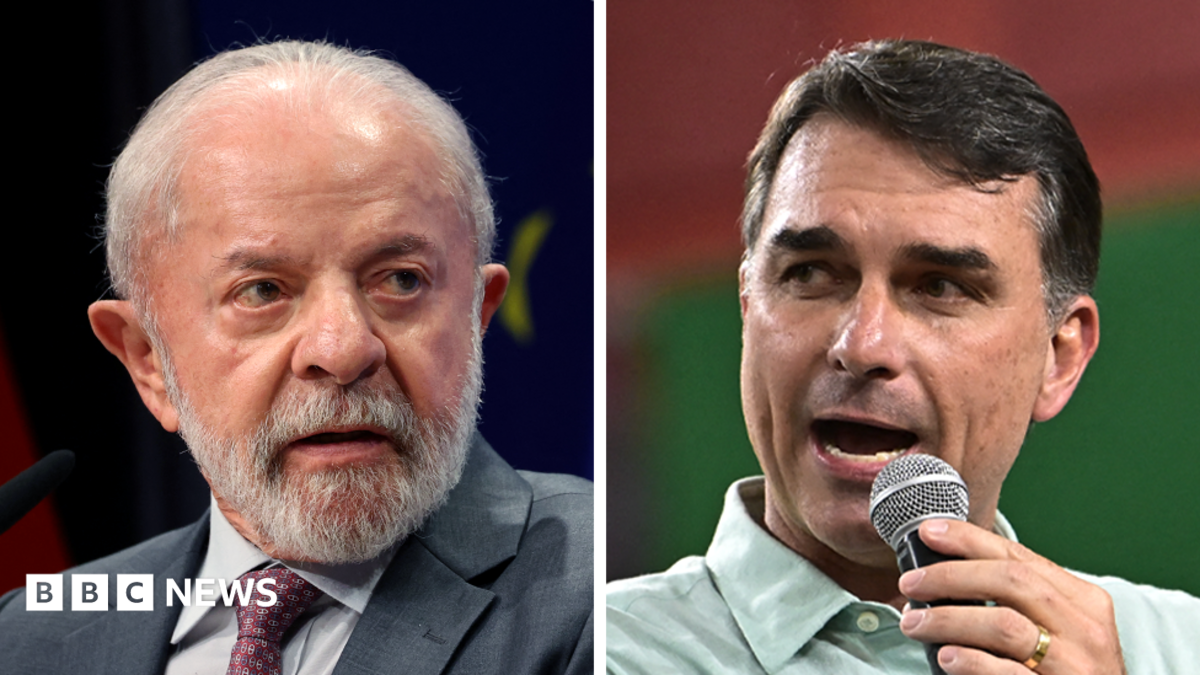
In the last election four years ago, Lula narrowly defeated Flávio Bolsonaro’s father, Jair. But the tumultuous aftermath of the election, which saw Jair Bolsonaro convicted of plotting a coup after thousands of his supporters stormed the Brazilian Congress, has had a lasting impact on the nation’s political life and this election.
Jair Bolsonaro is serving a 27-year sentence for plotting a coup and is barred from standing for office.
Because of recurrent health problems, he is currently under house arrest rather than in a cell, but he has been prohibited from posting on social media or making public statements.
Despite these restrictions, there is little doubt that Flávio Bolsonaro has his father’s backing.
Iran’s Foreign Ministry says reopening the strait has been its main goal, while the US continues to focus on nuclear talks.
Published On 4 Oct 20264 Oct 2026
The Strait of Hormuz is going to remain closed until the United States accepts Tehran’s seven-day plan to reopen the waterway, Iran’s top negotiator and parliament speaker has said.
Iranian state-linked news agency Nournews, quoting Mohammad Bagher Ghalibaf, reported on Sunday that Washington made “some proposals through a mediator” days after the US replied to Iran’s diplomatic proposal.
Recommended Stories
list of 4 itemsend of list
The US should know “that the era of wasting time and dictating unilateral demands is over”, Ghalibaf said, adding Iran’s position remains “clear and definite”.
He emphasised that “the Strait of Hormuz will not open until our seven conditions based on the Islamabad memorandum are met”, and that Iran is “present on the military battlefield and will confront them with new surprises”.
He added that Iran was neither “excited” nor “intimidated” by the latest US proposals and would “both fight and negotiate”.
US President Donald Trump ruled out an Iranian proposal to reopen the Strait of Hormuz last week, hours after Iran put forward a roadmap to reopening the strait, through which one-fifth of global oil and natural gas is shipped during peacetime.
Last month, Trump threatened to “annihilate” Iran in his speech on the floor of the United Nations General Assembly (UNGA).
On Sunday, Iranian Foreign Minister Abbas Araghchi also said Iran is “serious about finding diplomatic solutions just as we are serious about defending ourselves”.
Speaking to foreign ambassadors and diplomats in Tehran, Araghchi said Iran had clearly explained its conditions for reopening the strait and that Tehran hoped Washington would choose diplomacy and accept its proposal.
However, Araghchi warned that if the US takes military action again, Iran is “more prepared than before and will take whatever action is necessary to defend ourselves”.
Iranian Ministry of Foreign Affairs spokesman Esmaeil Baghaei added that Tehran used the UNGA platform last month to provide world leaders with its position on ending the US-Israel war on Iran.
He said the US has continued to focus on nuclear talks, while reopening the strait has been Iran’s main goal.
“We are at this stage mainly focusing on the strait, and our principal concern is to reach a solution and to have peace and stability restored within this waterway,” Baghaei said.
The Strait of Hormuz has been largely blocked and disrupted for more than seven months, since the US and Israel launched strikes on Iran on February 28, driving one of the worst maritime shipping disruptions in decades.
About one-fifth of global oil and natural gas is shipped through the Strait of Hormuz during peacetime, as the US-Israel war on Iran has created several trade chokepoints [File: Al Jazeera]
CNN Chairman and Chief Executive Mark Thompson could remain in his role at the news network after Paramount completes its deal to acquire the news network’s parent company, Warner Bros. Discovery.
Thompson, 69, is said to be in early stages of a discussions with Paramount Skydance Chief Executive David Ellison about continuing in the job he has held since April 2023, according to two people familiar with the matter who were not authorized to discuss it publicly.
The Wall Street Journal was first to report Thursday that Thompson has been approached by Ellison about staying with the network. A representative for Paramount declined to comment.
Retaining Thompson in his role would provide short-term relief to CNN staffers who are concerned about the change in ownership. As Paramount pursued its $111-million deal to acquire Warner Bros. Discovery — which is moving forward following a judge’s decision to settle an antitrust suit filed by state attorneys general who wanted to block the deal — the Ellison family have reportedly had discussions with President Trump about altering the network’s coverage, which he has often deemed as unfair.
As part of the settlement, Paramount agreed to the formation of an editorial oversight board that will monitor adherence to editorial independence from its owners and shareholders. The editorial board is part of an agreement to end the states’ antitrust fight that threatened to delay the completion of the deal for months.
Keeping Thompson at CNN raises questions of how CBS News Editor-in-chief Bari Weiss will be integrated into the new company.
Weiss, who joined the storied news division after Paramount acquired her contrarian digital news site the Free Press last year, has made major changes at “CBS Evening News” and the top rated newsmagazine “60 Minutes,” with no audience gains to show for it.
CNN insiders have been skeptical over how Weiss could take over the vastly larger and more profitable news organization based on her CBS track record so far.
CNN and CBS News are expected to consolidate some of their operations, such as its overseas bureaus. But there are obstacles to a rapid consolidation, as many CBS News employees work under union contracts. Most of CNN is not unionized.
But if Thompson remains, its likely he we will have the task of reducing costs, as the traditional TV audience that provides the bulk of revenues for both CNN and CBS News continues to shrink.
Thompson has been behind a major effort to generate more revenue from CNN’s digital operations, which now include a subscription streaming service that makes the channel available without a cable or satellite TV package. He oversaw the New York Times’ successful transformation into a dominant digital news product during his run as president and chief executive from 2012 to 2020.
The Paramount-Warner deal will close soon after a judge signed a settlement that ended the antitrust lawsuit brought by Calif. Atty. General Rob Bonta and 11 other attorneys general. The detente , however, has not cooled tensions between CNN and the White House.
CNN was scheduled to provide press pool coverage of Trump’s trip to Texas and Oklahoma on Thursday. But the White House removed the network from the pool, despite a judge’s order last week to block the administration’s attempt to ban access for some media outlets.
Last week, CNN, MS NOW and Politico were banned from White House grounds. Trump cited the outlets’ ongoing negative coverage of him as the reason for the ban. The administration later tried to argue in court that their coverage was a threat to national security.
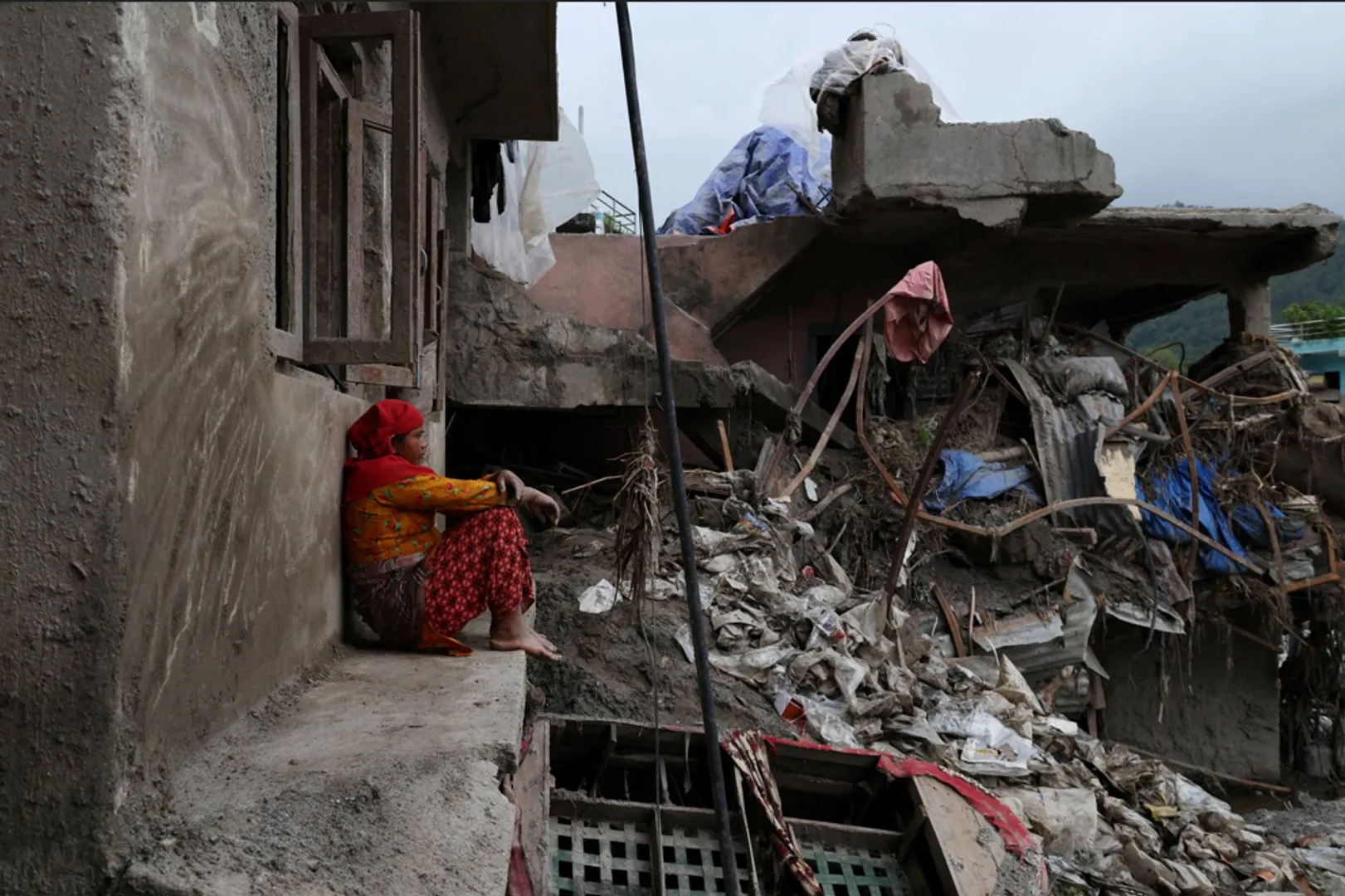
A month after catastrophic floods tore through Nepal, 5,285 people remain missing and more than 1,100 are still in holding centres. Fresh rains are now worsening conditions for displaced families living in temporary shelters, as the country faces a $4.78bn rebuilding bill.
People in Ceuta face harsh living conditions, overcrowding, limited aid, and alleged abuse while awaiting decisions about their future.
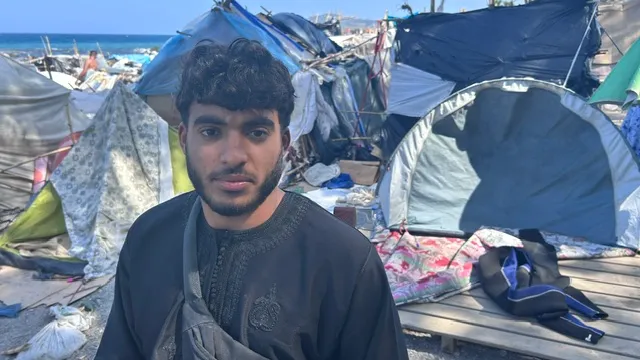
Ceuta, Spain – For more than a month, 21-year-old Anis Fadi, a university graduate and qualified accountant, has been sleeping in a makeshift shelter.
At the end of July, he crossed the border from Morocco to the Spanish enclave of Ceuta, on the North African coast, along with about 70,000 others.
Recommended Stories
list of 4 itemsend of list
At his migrant camp on Trampolin Beach, he queues for hours each day for food at a Red Cross centre.
“I don’t even have a tent,” he told Al Jazeera. “We make shelter with old pieces of wood, sticks from broken branches, and whatever else we find here.”
Anis Fadi, a 21-year-old graduate, believes Europe would offer him better employment opportunities than Morocco [Peter Smith/Al Jazeera]
When the wind blows, these makeshift shelters offer little protection, and soon the temperature will dip.
“There are a lot of people worse than me,” said Fadi.
The Spanish government estimates that between 6,000 and 10,000 who made the crossing remain stranded. Officials in Ceuta believe the figure is closer to 13,000 people.
Thousands of people remain stranded in Ceuta having crossed the border in July [Peter Smith/Al Jazeera]
About 5,000 – mostly women and children – have been given temporary accommodation by the authorities. The rest sleep outside.
Fadi said, as he waits for food in the heat, police officers with batons shout orders at the crowds.
“It’s a hard life here,” he said, but he does not regret leaving Morocco.
“Life was harder there for me. I didn’t see any future for myself.”
‘We are not criminals’
More than 100 people died in the crossing. Fadi said he swam for hours to reach Ceuta, believing it was a gateway to Europe, where he imagines a better life awaits.
He believes men like him who “have the skills … don’t have the chance”.
“We are not criminals,” he said, in response to the anti-migration rhetoric and protests that followed the crossing. “We just want to work.”
Right-wing European politicians have framed the Ceuta crossing as a threatening invasion.
Migrant children take toys at an industrial area in Ceuta, Spain, September 21, 2026 [Jon Nazca/Reuters]
In Spain, protests have erupted against the government’s handling of the crisis.
Ceuta is usually home to about 84,000 people. Its population almost doubled at the outset of this crisis. Though most have returned, the enclave has been struggling to cope with the pressure of hosting those who remain.
After a new temporary shelter opened up recently, offering space for about 1,700 people, it hit capacity within hours.
Claims of abuse
As humanitarian groups struggle to provide basic needs, Nolte Bauer, from Mission Lifeline International, said migrants also feel unsafe.
“Outside the official camps there is a lack of basic hygiene,” he said. “There is insufficient medical aid and the immediate danger of violence, especially at night.”
His organisation often receives reports of people being beaten.
Members of the Spanish NGO Medicos del Mundo (Doctors of the World) help injured migrants at an industrial area in Ceuta, Spain, September 21, 2026 [Jon Nazca/Reuters]
Several people interviewed by Al Jazeera said they had been abused by men in military or police uniforms. Some were wounded, with cuts to the head or bruising around the body.
“These are racist people, these soldiers,” one man who requested anonymity told Al Jazeera. “They found me sleeping and they started to hit me without any reason. They broke one of my hands; they wanted to break the other one. They also beat me on my knees.”
Some said they were afraid to go to hospital, fearing they could be deported, and instead sought help from aid groups. NGO volunteers told Al Jazeera they had treated wounded men.
People play with a ball surrounded by tents at the Trampolin Beach in Ceuta, Spain, September 19, 2026 [Jon Nazca/Reuters]
But Spanish authorities rejected any claims of abuse and discrimination, telling Al Jazeera that the police acts “with absolute respect for human rights”.
They say they are expanding accommodation and providing food and medical care while migrants are identified and their cases are processed.
The government has said the aim is to return to Morocco those who do not have a legal status to remain in Spain, while Ceuta’s leaders have repeatedly called on Madrid and Europe for more support.
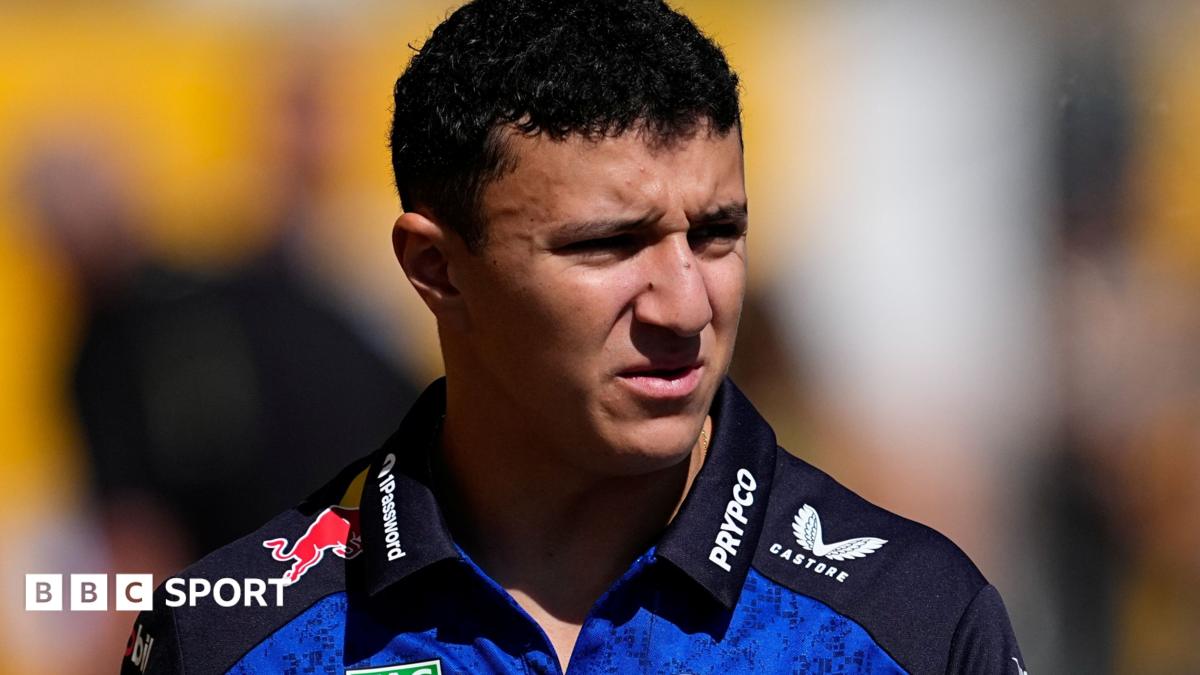
Frenchman Isack Hadjar is to stay at Red Bull as Max Verstappen’s team-mate for the 2027 season.
The 21-year-old was promoted to the senior team this season after a rookie year with Racing Bulls and has managed to be closer to Verstappen on pace than any team-mate since Daniel Ricciardo in 2018.
His best result this season came with a third place at the Monaco Grand Prix.
Red Bull team principal Laurent Mekies described the move as “an easy decision”.
Mekies said: “Since joining us at the start of the year, Isack has been superb on and off track, especially considering this is only his second F1 season.”
Hadjar returns to Red Bull for this weekend’s Azerbaijan Grand Prix after missing the past three races with a broken wrist, an injury sustained while boxing as part of his training programme.
Mekies added: “You could see from his first weekend in Melbourne that he handled the step up with remarkable composure and had earned his place in this seat.
“The period since his injury has been a difficult one for Isack, but this extension shows how much we believe in him.”
Hadjar said: “I came to this team eight months ago and immediately understood the scale and ambition of this organisation.
“There are so many talented people at the factory, and you’re aware of the privilege of driving for such an incredible team alongside a four-time world champion like Max.
“I’m constantly looking to listen, learn and push myself further every single day, which only makes me more excited about what lies ahead.”
Over the first half of the season, Hadjar was 0.239 seconds slower than Verstappen on average in qualifying and has managed to out-qualify the Dutchman three times, in Australia, Japan and Britain.
In Silverstone Verstappen had a down-on-power engine and in Australia the Dutchman crashed at the start of qualifying.
Verstappen signed a two-year extension to his contract, that now runs to the end of 2030, in August.
As both the Navy and the USAF were racing to field a new generation of advanced tactical jets, the seagoing service’s program hit a wall. A major reason behind this from the Pentagon was concern that the U.S. industrial base could not handle simultaneous final development and production of two extremely complex new fighter aircraft. This was a controversial justification that many had a hard time swallowing. The Navy’s program, dubbed F/A-XX, is supposedly back on and a down-select on who will build it is coming soon, but that concern appears to linger among at least one of the Department of War’s top acquisition officials.
Though he remains confident that the U.S. Air Force F-47 sixth-generation fighter will fly in the next two years, Air Force Gen. Dale R. White, Director, Critical Major Weapon Systems — the service’s leading weapons procurement advisor — remains concerned about the overall capacity of industry to provide the military with the aircraft it needs, including two new fighters. His comments were in response to questions about the Navy’s challenges in building its own sixth-gen fighter alongside F-47.
The concerns are “not unique” to the F-47 or the Navy’s program but the problem exists to various degrees across the industrial base too, White told reporters Tuesday during a media roundtable at the Air & Space Forces Air, Space and Cyber Conference that TWZ is attending.
White has a dual-hatted role, serving as the Pentagon’s top weapon’s procurement officer and as the senior acquisition advisor to the Secretary of the Air Force for all acquisition matters.
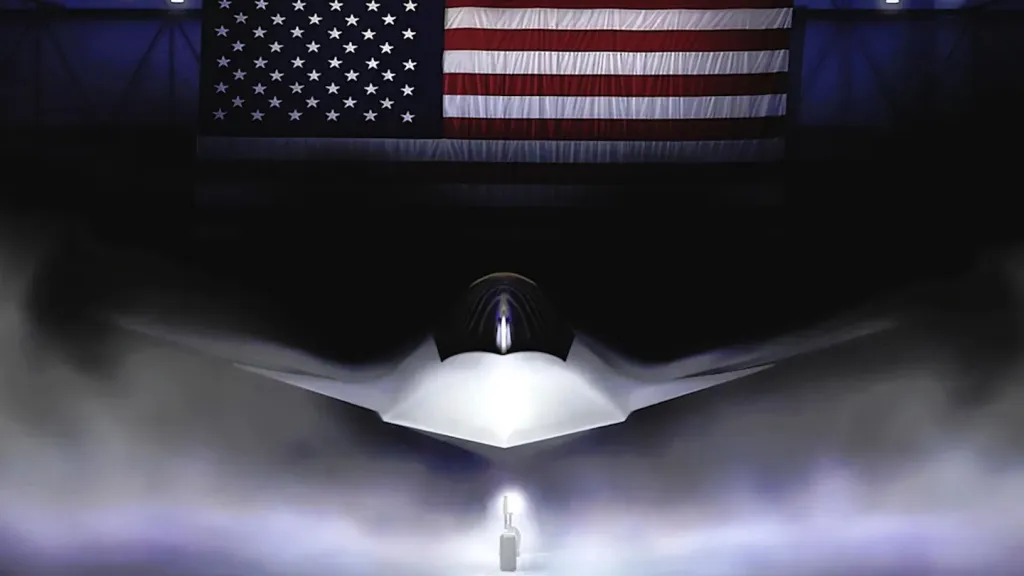
A rendering of the F-47. (U.S. Air Force) U.S. Air Force
“We’re seeing it in multiple platforms,” said White, who did not elaborate. “And so what we’re having to do is, at some point, we’re having to make some trade space in between some of these.”
“I see Boeing making smart investments,” White said of the prime contractor of the F-47, selected for the U.S. Air Force’s Next Generation Air Dominance (NGAD) ‘fighter’ initiative. “They have a lot of CAPEX [capital expenditure] that they’re pouring in, but we have to get through the process of the design piece, getting that completed and closed out. Then we all hit some major milestones with things like flight tests and software and those things.”
F-47 specifications infographic (USAF)
“Really, it’s just being able to manage the overall resourcing as it relates to number one, people resources,” the general added. “Number two, when you start getting into the production conversation, do we have enough capacity to be able to produce at that rate? And so, by and large, I have concerns. I have concerns about the capacity of our industrial base, but they are not unique to F-47 or to any program.”
As for the F-47, White said the program “continues to progress exceptionally well.”
“As you know, many, many years in tech maturation and risk reduction gave us a tremendous head start on this program,” White explained. “Extremely proud of what the team has done, what they continue to do each and every day. We are still absolutely on path to be able to hit the mark of flying within this administration. So we see no issues in front of us right now.”
While the first example of the F-47 has been in production for about a year now, the Navy has yet to even select a prime contractor for its next generation fighter. The current competitors for the F/A-XX are Boeing and Northrop Grumman. A decision was supposed to have been made by last month.
“The F/A-XX program remains on track, and we have no further information to provide at this time,” a Navy official told us last week.
In response to a question from TWZ earlier this year, the Chief of Naval Operations acknowledged the uncertainty over the F/A-XX program.
“One of the challenges we’re seeing is, not only [are] our peer competitors improving their capability for anti-air, either air-to-air or surface-to-air, but the lower cost of entry of very capable weapons is also making more players on the field in which that level of stealth and technology is required,” Adm. Daryl Caudle told us back in April at the Sea-Air-Space 2026 exposition. “So this is not about the need for a peer adversary. This is just having an aircraft that can operate with a level of uncertainty and with the acceptable level of risk.”
With Boeing as a finalist, it is also possible that F/A-XX could be a variant of the F-47. As we noted in a past story, the Boeing render for its F/A-XX concept is remarkably similar to artwork for its F-47.
Last year, Steve Parker, Boeing Defense and Space CEO, said he didn’t see a problem with his company building both jets stating that this had been part of the strategy all along.
If this is the case, the company’s claim that it would not have a problem building both the Navy and Air Force next-generation fighters would make more sense. There are a number of advantages when it comes to establishing a high-degree of commonality between F/A-XX and F-47, although there would also be challenges, especially when it comes to getting the most out of a design that was not meant to operate from a carrier deck and scaling production up for both services. There is already significant sharing of elements of both the Navy’s and Air Force’s sixth-generation fighter programs. So commonality in some subsystems and interoperability is already baked in.
We should hopefully finally get a clearer picture in the coming weeks about the status of the F/A-XX and possibly the answer to who will actually build it, which will give us a better idea of what the industrial base impact actually will be.
It’s been more than six years since teenager Noah Donohoe was found dead 600m into a freezing underground water tunnel in Belfast.
His death – and the speculation over what happened to him in the week between his daylight disappearance and the discovery of his body – became a huge news story that provoked countless unanswered questions.
Now, after an inquest and months of exhaustive hearings and long deliberations by a jury, there is a verdict – but much is still unknown about what happened to Noah.
Why, the night before he disappeared, did he leave his home in the middle of the rain-soaked night? Where did he go? Why did he come back 34 minutes later, as documented by CCTV, barefoot?
Hours later, on Sunday 21 June 2020, he left the south Belfast home he shared with his mother for the final time.
Why did he leave and go to an unfamiliar part of north Belfast? Why was the teenager naked when he was last seen in the area of the water tunnel entrance?
And what might have been if he had seen the social media message sent him by one of two friends he planned to meet in north Belfast telling him their plans were cancelled?
An autopsy found Noah had died from drowning, with the tunnel he was found in heading towards Belfast Lough and its tides.
Now, after years of delays, a jury has found that it was possible, but not probable, that failings by the Department of Infrastructure over the tunnel in which he was found contribute to his death.
They also found 13 failings by the Police Service of Northern Ireland (PSNI) but that these did not in any way contribute to the 14-year-old’s death.
Having spent months in court following all the evidence, it was clearly not an easy process for the men and women of the jury.
They heard from dozens of witnesses and received voluminous amounts of official and expert documentation.
This week they deliberated on Monday and Tuesday. But it came more than two months after the inquest was dramatically adjourned in the early hours after three days of deliberations did not lead to a verdict.