relocated

US says over 5,700 suspected ISIL detainees relocated from Syria to Iraq | News

Iraqi authorities confirm the transfer, saying detainees of 61 nationalities have arrived in the country.

The United States has announced the completion of the transfer of more than 5,700 suspected ISIL (ISIS) detainees from Syria to Iraq.

“The 23-day transfer mission began on Jan 21 and resulted in US forces successfully transporting more than 5,700 adult male ISIS fighters from detention facilities in Syria to Iraqi custody,” the US Central Command (CENTCOM) said in a statement on X on Saturday.

Recommended Stories

list of 4 itemsend of list

The operation was completed after a night flight from northeastern Syria to Iraq took place on February 12, “to help ensure ISIS detainees remain secure in detention facilities”, CENTCOM added.

The US had previously announced it would transfer about 7,000 detainees.

The detainees from some 60 countries had for years been held in Syrian prisons run by Kurdish-led Syrian Democratic Forces (SDF) before the recapture of surrounding territory by the Syrian government prompted the US to step in.

ISIL swept across Syria and Iraq in 2014, committing massacres and forcing women and girls into sexual slavery.

Backed by US-led forces, Iraq proclaimed a victory over ISIL in the country in 2017, and the SDF ultimately defeated the armed group in Syria two years later.

The SDF went on to jail thousands of suspected fighters and detain tens of thousands of their relatives in camps.

Iraq’s National Centre for International Judicial Cooperation (NCIJC) said 5,704 ISIL detainees of 61 nationalities had arrived in Iraq. They include 3,543 Syrians, 467 Iraqis, and another 710 detainees from other Arab countries.

There are also more than 980 foreigners, including those from Europe, Asia, Australia and the US.

“We appreciate Iraq’s leadership and recognition that transferring the detainees is essential to regional security,” said CENTCOM head, Admiral Brad Cooper. “Job well done to the entire Joint Force team who executed this exceptionally challenging mission on the ground and in the air.”

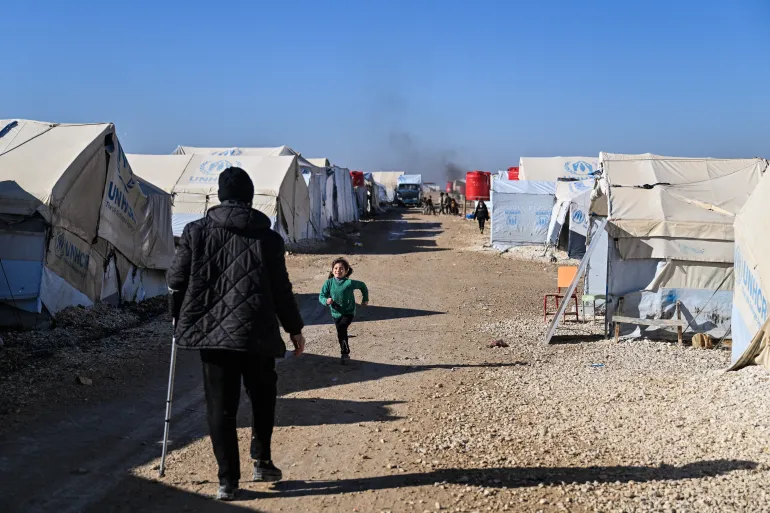
AL HASAKAH, SYRIA - JANUARY 26: Detainees are seen between tents at the al-Hol camp on January 26, 2026 in Al Hasakah, Syria. The al-Hol camp (also spelled Al-Hawl) in Syria's northeastern Hasakah province has come under control by Syrian government forces, following the withdrawal of the Kurdish-led Syrian Democratic Forces (SDF) in recent days. The camp houses around 24,000 people, many of whom are women and children, with alleged links to the jihadist group Islamic State (IS), also referred to as ISIS in the region. Clashes between the SDF and government forces this month over the former's integration with state institutions has seen large swaths of Kurdish-controlled territory ceded. Under a ceasefire agreement, camps and prisons housing ISIS detainees previously held by the US-backed Kurdish forces are to be transferred to the government. The United Nations (UN) has said it will take over management of al-Hol, resuming the delivery of humanitarian supplies to the camp, amid dire conditions. (Photo by Abdulmonam Eassa/Getty Images)
Detainees at the al-Hol camp in Syria’s northeastern Hasakah province [File: Abdulmonam Eassa/Getty Images]

The NCIJC said Iraq’s judiciary will interrogate the detainees before taking legal action against them.

Last month, Syrian troops drove the SDF from swaths of northern Syria, prompting questions over the fate of the ISIL prisoners. Lingering doubts about security pushed the US to announce it would transfer them to Iraq to prevent “a breakout” that could threaten the region.

Iraq has issued calls for countries to repatriate their nationals among the ISIL detainees, though this appears unlikely.

For years, the SDF also called on foreign governments to take back their citizens, but this was done on a small scale and remained limited to women and children held in detention camps.

Most foreign families have left northeast Syria’s al-Hol camp, which is the largest camp holding relatives of ISIL fighters, since the departure of the SDF, which previously guarded it, humanitarian sources told the AFP news agency on Thursday.

Al Jazeera’s Assad Beig said the al-Hol camp, established in 2019 after ISIL was defeated in Syria, developed a “notorious reputation” over the years.

“Aid workers documented the killings and underground ISIL enforcement groups, while security officials warned it was a breeding ground for future armed groups,” he said.

Source link

Huge 1,400-ton bridge relocated 100m without using a single crane

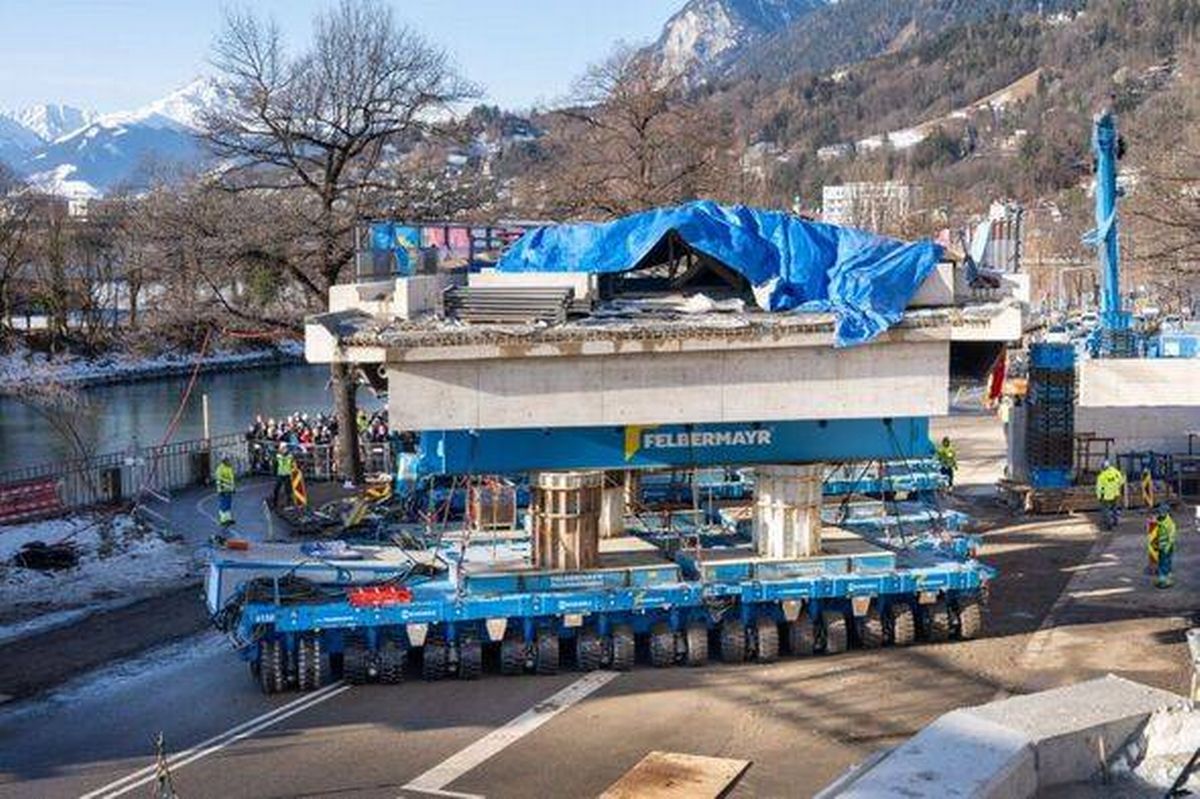
The new Rauchmühle bridge in Innsbruck, Austria, was built close to its final location to keep disruption to a minimum. Engineers then began lifting the structure more than five metres off the ground using hydraulic presses.

A massive 1,400-tonne bridge has been transported nearly 100 metres through the heart of Innsbruck, Austria without requiring a single crane.

Austria’s state-owned railway operator, ÖBB, accomplished the feat at the weekend as part of a major overhaul of the city’s rail infrastructure. The new Rauchmühle bridge had been constructed near its ultimate destination to minimise disruption. Once completed, engineers began raising the structure more than five metres above ground level using hydraulic presses.

This phase required careful execution to maintain the bridge’s stability, reports the Express. On Sunday morning, the bridge began its slow journey. Rather than cranes, the team used heavy-duty platforms typically found at industrial facilities.

READ MORE: Abandoned zoo closed down leaving two living orca whales to rot to death

A total of 12 units were deployed, featuring 56 axles and 112 wheels. They travelled at approximately 1-2 km/h, providing precise control as the bridge rolled into position over Hallerstraße. The structure was also rotated roughly 90 degrees before being lowered onto its new supports.

Engineers stated the approach was safer and more precise than hoisting the bridge with cranes, particularly in a densely populated urban environment. Construction on the scheme continues.

Over the coming days, teams will install bearings, complete the supports, fit railway equipment and prepare the line for reopening. Rail services between Rum and Innsbruck Central Station remain suspended until January 29, with replacement buses running instead. The new bridge replaces a metal structure that had been in service for more than 60 years. Around 270 trains crossed it every day, and a combination of heavy use and harsh Alpine weather meant it had reached the end of its technical life.

The replacement is made from concrete, offers a longer lifespan, reduces noise and should provide a smoother ride for passengers. ÖBB released several figures showing the scale of the operation:

Engineers described the relocation as one of the most complex moves carried out on an Austrian railway site in recent years. The bridge is expected to come into full use once the remaining work is completed later this month.

Meanwhile, those who wish to sample the delights of Denmark and Sweden can visit both in just one day, thanks to a striking ‘disappearing bridge’.

With many of us eyeing up quirky travel destinations this summer, this intriguing construction is a bit of a must-see. Remember, however, it has a different name depending on what side of the crossing you’re on – Øresund in Danish and Öresund in Swedish.

What’s striking about this structure is that, while it begins as a bridge, it cleverly plunges into the ocean, transforming into a tube tunnel in such a way that makes it appear as though it simply vanishes beneath the surface. Completed in 2000, following a grand opening ceremony jointly hosted by Queen Margrethe II of Denmark and King Carl XVI Gustaf of Sweden, Øresund connects the two great cities of Copenhagen and Malmö.

All in all, the structure is approximately 16km in length, and cost £2.3 billion (£4.8 billion in today’s money) to build over a period of five years. Project designers opted to incorporate a tunnel over fears that a complete bridge could well interfere with radio signals from nearby Copenhagen Airport. This design also means a readily available shipping channel, whatever the weather.

More than a quarter of a century on since it was first unveiled, Øresund is regarded as a roaring success, helping to improve economic prospects for both Denmark and Sweden, and is credited with helping to build a trading region of some 4.2 million people, known on the world stage as the Øresund Region.

A recipient of the prestigious IABSE Outstanding Structure Award, Øresund is also immortalised in popular culture, being a key setting for the Swedish/Danish TV crime drama The Bridge. Seaon one, which first aired in 2011, kicked off with the discovery of a body on the bridge, located just between the two countries.

Source link