regulator

Trump threatens to report journalist Kristen Welker to broadcast regulator | Donald Trump News

The Federal Communications Commission under Trump has tried to target news outlets for spreading ‘fake’ news.

United States President Donald Trump says he will report a prominent NBC television journalist to the federal agency in charge of regulating broadcast news outlets for “rebuke or punishment”.

In a post on Truth Social on Sunday, Trump took issue with Kristen Welker’s characterisation of his endorsements of electoral candidates as having “mixed results” in the primaries leading up to November’s elections.

Recommended Stories

list of 3 itemsend of list

“How can anyone be allowed to say this, working for freely given public airwaves?” Trump wrote. He also posted, without any attribution of where he got the data, a chart showing 98 percent of the candidates he endorsed had won their elections.

“Because of this purposeful inaccuracy, she will be reported to the FCC,” the Federal Communications Commission, he said.

Welker hosted the 2020 presidential election debate between Trump and former President Joe Biden and currently hosts NBC’s weekly news programme Meet the Press.

‘Crooked networks’

In June, Welker had a one-on-one interview with Trump that ended in a heated exchange as she pressed the Republican president on continuing to claim the Democratic Party had cheated in the 2020 presidential election, in which Biden defeated Trump.

“Your elections are crooked, and you’re crooked, and Meet the Press is crooked and so is ABC and CBS and CNN. You’re one-sided crooked networks,” Trump said shortly before pulling off his microphone and leaving the interview.

Trump, who has long had a tumultuous relationship with those US television news networks, has increasingly threatened to use the FCC to target what he says is false news.

This month, ABC News’s owner, Disney, sued the FCC, saying the agency was conducting an early licence review of eight of the network’s stations, a move that it said was “retaliation” against it. ABC said the FCC was seeking “a media industry too fearful of official reprisal to report the news freely”.

The review followed a row between the network and the FCC after Trump and his wife Melania called on it to fire late-night TV host Jimmy Kimmel over a joke he had made about her.

President Trump has also filed several multibillion-dollar civil lawsuits against news outlets alleging defamation. Last year, he filed a $10bn lawsuit against the BBC, which he said unfairly edited a clip of him speaking just before his supporters stormed the US Capitol on January 6, 2021, to make it seem like he had called for violence.

Trump sued The New York Times for $15bn and The Wall Street Journal for $10bn, alleging defamation over reporting on issues such as how he amassed his wealth and his relationship to convicted sex offender Jeffrey Epstein. A judge threw out the case against The Wall Street Journal. Trump refiled the case against The New York Times after a judge dismissed the first complaint against the newspaper last year.

Attempts to compel reporters to reveal sources

The warning from Trump also comes as his administration has taken the rare step of using the courts to try to pressure journalists into giving up confidential sources for stories that have pointed out wrongdoing.

This month, The New York Times said agents from the FBI showed up at the home of one of its reporters in February to deliver a subpoena seeking cooperation for an investigation into a story that revealed how a secret US Navy SEALs mission in North Korea had ended up with them opening fire on a North Korean boat.

In July, the US Department of Justice also tried to subpoena three other journalists from the newspaper after they reported on security concerns with the president’s new Air Force One jet. Investigators were seeking phone records of the journalists but withdrew the requests after a federal judge upbraided the tactic in court, saying they were violating the First Amendment, a provision in the US Constitution that protects freedom of the press.

Reporters at The Wall Street Journal and The Washington Post have also been subpoenaed in recent months for national security coverage, including for reporting on internal Pentagon warnings about the US-Israel war on Iran.

News media freedom groups like the Committee to Protect Journalists have criticised the Trump administration for targeting critical media. In April, the group Reporters Sans Frontieres, or Reporters Without Borders, said the US has fallen to a “historic low” in its annual global press freedom rankings, dropping from 57th in the world to 64th.

Source link

Disney sues US regulator, claiming political retaliation over ABC stations | Media News

FCC faces scrutiny as Disney claims licence renewal order is tied to political motives against ABC’s coverage.

Disney has filed a lawsuit against the Federal Communications Commission (FCC) amid efforts to stop an early licence review for eight ABC-owned and -operated stations around the United States.

In the lawsuit filed in a federal court in Washington, DC, the media giant alleged the early renewal is an effort by the administration of US President Donald Trump to intimidate the company after infuriating the president.

Recommended Stories

list of 4 itemsend of list

In April, the FCC ordered the network’s stations, which include its affiliates in New York and Los Angeles, to file their licence renewals ahead of schedule despite the fact that for six of its stations, the current term isn’t even halfway finished. The station with the closest deadline is WTVD in Durham, North Carolina, but that is not until December 2028. The network says the move is part of a political “retaliatory campaign”.

“Again and again, the Administration has attacked ABC’s speech – the stories its journalists report and the viewpoints its network programs air. Over time, those attacks have escalated into express demands that ABC be stripped of its broadcast licenses because of its speech,” the 46-page complaint said.

The suit presented a wave of Truth Social posts that the president posted in 2025 threatening the network, among them one saying that the network “should lose their Licences for their unfair coverage of Republicans and/or Conservatives”.

The FCC said the April licence renewal call was a result of diversity, equity and inclusion practices at ABC’s parent company, Disney, and an investigation into the ABC network’s talk show programme The View.

In March, FCC Chairman Brendan Carr threatened broadcasters, saying stations airing “fake news” could lose their licences amid Trump’s frustration with coverage of the US-Israel war on Iran.

Not long after, Trump demanded that ABC fire late-night host Jimmy Kimmel over comments he made before the White House correspondents dinner shooting in which he called first lady Melania Trump an “expectant widow”. Trump responded to them after the shooting, characterising them “a call to violence”.

Free speech advocates have praised ABC for the lawsuit.

“It’s about time for someone to take Brendan Carr and his FCC to court over their endless campaign of intimidation and retaliation against journalism that displeases Carr’s thin-skinned boss,” Seth Stern, director of advocacy at the Freedom of the Press Foundation, told Al Jazeera.

“No matter what pretexts he asserts, Carr’s modus operandi is clear: to serve as Trump’s censorship tsar and abuse his office to repeatedly and exclusively target Trump’s perceived adversaries in the media, whether through sham proceedings or threatening letters and X posts.”

The network called for a “speedy hearing” in the complaint as well as a temporary restraining order.

News of the lawsuit sent Disney’s stock surging in morning trading by 1.1 percent.

Source link

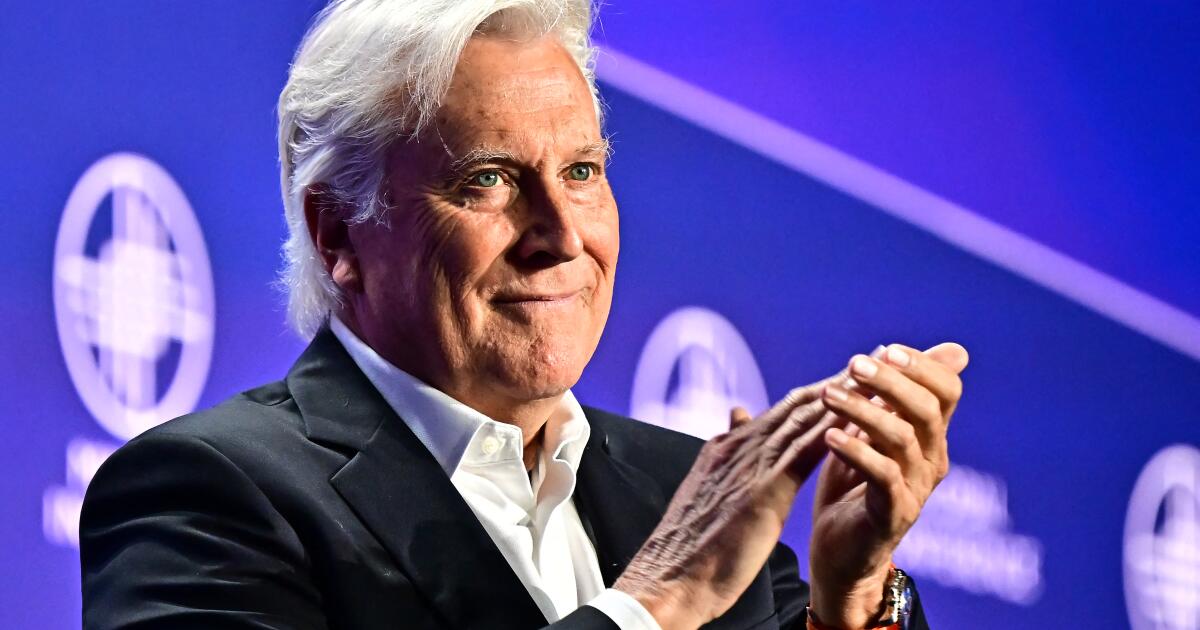
What’s at stake for Dodgers’ owner Mark Walter as authorities probe his businesses

When Mark Walter, the Lakers controlling owner, flipped the storied team last week for $12.5 billion amid a federal probe of his businesses, it stunned the sports world but seemed to make financial and legal sense.

The Dodgers majority owner, who had bought his stake in the basketball team last year at a $10-billion valuation, likely netted a big payday from the sale to former Disney Chief Executive Bob Iger and venture capitalist Joshua Kushner.

And that’s money the billionaire can apply to pay down the debts of two troubled Delaware life insurers he owns that are under federal scrutiny.

It’s not at all clear whether the sale of the Lakers will have any effect on the ongoing investigations. Neither Walter nor his companies have been charged with any crimes.

TWG Global, Walter’s holding company, did not respond to a request for comment Friday, but a spokesperson for the company has previously stated that they are cooperating with authorities and expect the matter to be resolved “favorably.”

“Mark Walter and TWG have always acted in good faith, and those who have done business with Mark know him as honest and straightforward,” the statement said.

After receiving federal grand jury subpoenas in February, Delaware Life and Clear Spring Life and Annuity conducted internal investigations. They found that $21 billion in loans they made should have been recorded as extended to “related parties.”

Related parties have business or personal ties and transactions between them can have legitimate reasons, but they also pose potential conflicts of interest and require disclosure and typically extra regulatory scrutiny.

In the case of insurers, which hold premium dollars from policyholders for future claims payouts, regulators want to ensure the money is there when it’s needed. Related-party transactions can threaten that.

Walter, 66, chief executive of Chicago investment firm Guggenheim Partners, led a group that included another Guggenheim executive and Magic Johnson in acquiring the Dodgers for $2.15 billion in 2012. The Times has reported he tapped the insurers he owned for financing, a deal that was later vetted by state insurance regulators.

However, the amount of related-party loans made by the two affiliated life insurers now under federal scrutiny is vastly more, amounting to 40% of the invested assets of Delaware Life as of Dec. 31, according to Fitch Ratings. The credit rating outfit said that is the most of any North American life insurers it reviews.

It’s unclear exactly where all the money went, but the Wall Street Journal reported billions were passed through a third party before being received by entities tied to Walter or his TWG Global holding company.

Company executives also told Fitch that they were unaware they were making related-party loans. Bloomberg reported that investigators are looking at some loans made to multiple companies affiliated with one Chicago firm to see if they were passed along to Walter’s ventures.

In June regulatory filings that disclosed the $21 billion in restatements, each insurer labeled them as “corrections of errors,” which would imply that they were inadvertent.

Jacob Frenkel, a former U.S. attorney, said it appears clear a focus of the investigation into Walter’s businesses is to determine whether the restatements were just errors.

“If there is intentional concealment of related-party transactions or the creation of intermediaries to help with that concealment, that certainly [could] invite criminal and civil enforcement scrutiny,” said Frenkel, who prosecuted financial crimes and also worked for the Securities and Exchange Commission.

Authorities have seized Walter’s cellphone and laptop, according to Bloomberg. Still, investigations by prosecutors and securities regulators can result in no action.

Frenkel said that if criminality is found in complex investigations such as this one, federal prosecutors will typically file mail or wire fraud charges that carry up to 20 years in prison.

It would not matter whether a company that was the victim of fraudulent conduct closed or is able to continue conducting business after being rescued financially.

“The entity’s failure is not a prerequisite for there to be a crime in intentionally misleading conduct,” he said.

The Securities and Exchange Commission is conducting a parallel investigation into both companies, according to their regulatory filings.

Frenkel said its interest could revolve around how Guggenheim Investments, Walter’s asset management firm, booked revenue from its dealings with the insurers and the disclosures of the transactions.

The SEC can seek civil monetary penalties and the return of illegal profits, and bar or suspend an individual from serving as a corporate officer or director, among other remedies.

Delaware Life and Clear Spring are part of TWG’s Group 1001 Life & Annuity.

Delaware Life has started a remediation plan to restructure some of the loans, review others and address its “control deficiencies,” including through TWG purchasing some of the loans, according to ratings outfit S&P Global. It hopes to complete the plan by the end of the year.

However, Fitch in its downgrade of Delaware Life said the plan may prove “insufficient to fully address governance, reporting, and investment oversight issues.”

The Delaware Department of Insurance did not respond to emails for comment.

Rex Frazier, a former deputy commissioner at the California Department of Insurance, said that in the situation that the insurers find themselves, the state regulator will be looking at a company’s capital sufficiency.

“The change from unaffiliated to affiliated transactions can affect the regulator’s view of whether the insurers have adequate capital and, if the regulator thinks not, then the regulator can impose additional capital requirements,” said Frazier, now president of the Personal Insurance Federation of California, a property and casualty industry trade group.

“If the regulator determines that there is inadequate capital to pay for their obligations … there are many serious remedies they can take to protect vulnerable people depending on those income streams,” he said, including seizing a company or forcing its sale.

There is no indication that either insurer is in such dire straits. Since the disclosures, rating agencies Fitch, AM Best and S&P Global have downgraded the companies’ outlook to negative, but they also have said the insurers maintain a high level of financial strength.

Walter is not the only owner of a life insurer to rely on related-party loans to fund its business dealings.

AM Best, in a December report, said affiliated investments among life insurers and annuity companies grew more than 17% annually in 2024 to more than $373 billion, driven by those owned by private equity and asset managers.

It said the growth of such investments — a type of related-party transactions — presents “regulatory risks” that may suggest “a company’s operations are more intertwined with its parent and affiliated investment management with possible negative consequences.”

“Should the parent/affiliate company experience financial stress, negative impacts to the insurer are heightened due to the higher exposure,” it said.

Frenkel said it’s good to keep in mind that at the end of their investigations, neither the Justice Department nor the SEC may take any action.

However, due to the complexity of the case, it may be a while before that point is even reached.

“This is clearly the type of investigation that the ‘where is this going?’ conversation could easily still be continuing in January of 2028,” he said.

Source link

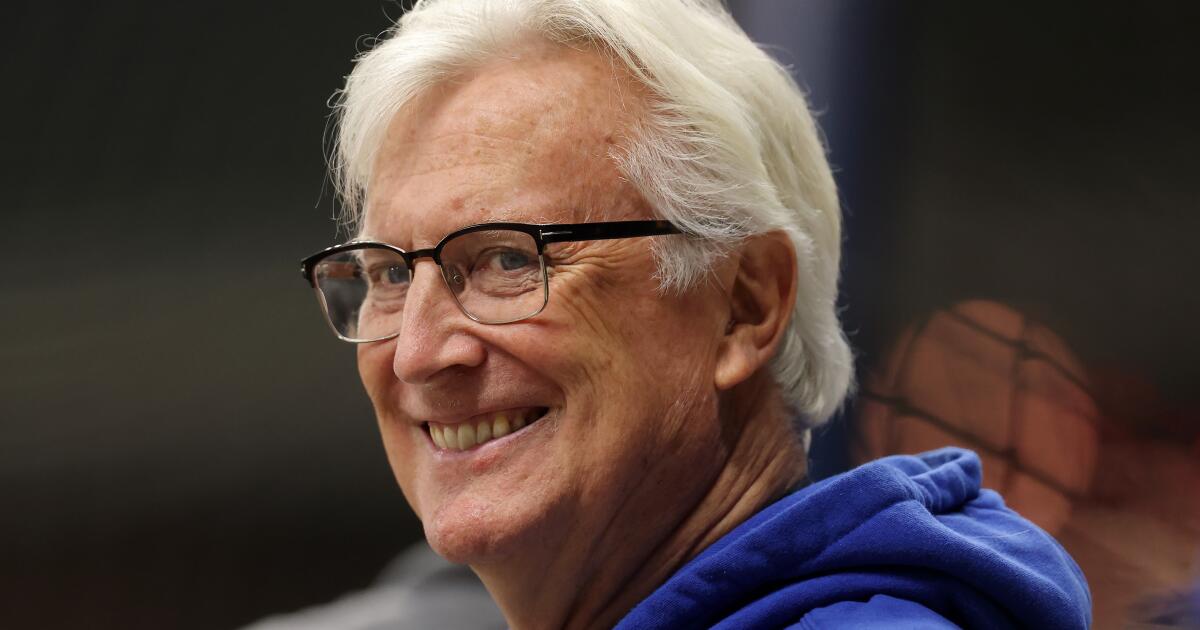
Why related-party loans at issue in Mark Walter probe considered risky

The federal law enforcement probe into the financial affairs of the Dodgers’ controlling owner, Mark Walter, seems to focus on what looks like an obscure financial maneuver: related-party transactions.

They are deals between entities with business or personal ties, including loans, sales and other transactions, that can have legitimate reasons but pose potential conflicts of interest and typically require extra scrutiny.

Walter tapped insurers he controlled to provide most of the financing for the $2.15-billion acquisition of the Dodgers in 2012, The Times has reported — a deal later vetted by state insurance regulators.

Now, regulators reportedly are investigating whether billions of dollars’ worth of similar loans made by Walter’s companies were properly disclosed.

There are examples in which related-party transactions led to trouble, including the 2001 bankruptcy of Enron Corp., the largest at the time in Wall Street history. Bernie Madoff profited from his Ponzi scheme through related-party loans.

At issue with Walter is $21 billion in loans not disclosed to state insurance regulators that were made by two Delaware insurers he owns, according to ratings agency Fitch. The loans reportedly were made to companies with ties to Walter or his TWG Global holdings company.

The seriousness of the investigation has been highlighted by subpoenas served on the insurers and the reported seizure of Walter’s cellphone and laptop by federal authorities. Still, investigations by prosecutors and securities regulators can result in no action.

Here are more details on the risk presented by related-party transactions and why they require disclosure and extra regulatory scrutiny.

What do the investigations mean for his ownership of his sport teams?

The 66-year-old billionaire also took a majority stake in the Los Angeles Lakers last year and owns the Chelsea soccer team in the English Premier League. There is no indication yet that any of this has affected his ownership stakes, but the probe has yet to be completed.

What is the problem with related-party transactions?

Bruce Dubinsky, a forensic accountant who worked on the Enron and Madoff cases, says the issue comes down to the motivation of the parties and can be explained through an analogy.

Sell a car to a stranger and you both research its worth and come to an agreed “fair market value,” he said. Sell it to your brother, you might cut the price to “give him a deal,” and later even forgive the payments.

“That’s why, from an audit standpoint, there should be more scrutiny if you’re doing business with the left hand and the right hand, because it’s easier to manipulate things,” Dubinsky said. “Repayments can be delayed indefinitely. They are always more suspect to fraud.”

How does that play out in the insurance industry?

Insurance is one of the most regulated industries, since the companies hold premium dollars from policyholders for future claims payouts — and regulators want to ensure the money is there when it’s needed. Related-party transactions can threaten that.

“There is a conflict of interest between the policyholders’ interest in the company being profitable and the owner’s interest in getting the least expensive financing that is available,” said Jim Donelon, who served as Louisiana insurance commissioner for 18 years before stepping down in 2024.

“It potentially threatens the solvency of the company, which then threatens the welfare of the policyholders,” Donelon said.

The National Assn. of Insurance Commissioners, for whom Donelon served as president, provides guidance to regulators on how to review related-party transactions.

What are some of the most notable examples of related-party transactions turning into financial disasters?

The failure of Enron was a prime lesson in how related-party transactions can lead to a company’s downfall.

As the Houston energy trader struggled and racked up $30 billion in debt, chief financial officer Andrew Fastow thought he found a way to keep it off Enron’s books. He created off-balance sheet entities to unload the debt and took personal stakes in them, allowing him to sit on both sides of the negotiation and pocket millions.

They were “transactions with related parties that were not at arm’s length,” Dubinsky said.

The debacle was a driving force in the passage of the Sarbanes-Oxley Act of 2002, which tightened regulations over governance, accounting and related-party transactions.

What about the Madoff fraud?

The Madoff scandal, in which investors lost $17.5 billion in invested principal, operated like a typical Ponzi scheme with returns to older investors paid by money from new investors.

However, related-party transactions were key too, and some literally involved family members. Madoff’s brother, Peter, pleaded guilty to receiving $15.7 million in sham loans and giving $9.9 million in sham loans to family members. What’s more, the auditor was a related party.

“In Madoff, what were called ‘related‑party loans’ were just sham transactions — there was no real economic substance. It was simply Madoff taking money out of his own firm,” said Dubinsky, an expert witness for the government.

Is there anything comparable with the Walter probe?

The three situations appear entirely different, but the investigation into the related-party loans made by Walter’s Delaware Life and its affiliate, Clear Spring Life and Annuity, involves vast sums of money.

After receiving the subpoenas, the firms conducted internal investigations. They had reported having $1 billion in related-party loans but, after the review, they reclassified $21 billion worth of loans as related, including $4.6 billion held by Clear Spring, said Fitch analyst Jamie Tucker, senior director of North American insurance ratings.

Executives said they were unaware the loans were going to an affiliated company.

Is there any indication what the money was used for?

“Unclear at this stage,” Tucker said. “This a developing situation with ongoing investigations.”

One clue may be a report that Walter tapped insurers to fund more deals than the Dodgers acquisition. The Wall Street Journal said five insurers had provided more than $10 billion in deal funding since Walter’s financial services company, Guggenheim Partners, got into the insurance business after the 2008 financial crisis.

What have been the implications for the insurers owned by Walters?

Fitch said the financial restatement increased the two insurers’ related-party loans from 2% to 40% of their portfolios, the highest exposure among life insurers it rates in North America.

Fitch, A.M. Best and S&P Global also downgraded Delaware Life’s outlook to negative, though they said the insurer maintain a high level of financial strength.

“Our capital position and liquidity remain strong, and our financial strength ratings are unchanged,” said Group 1001, the insurers’ parent company, in a statement.

What has Walter had to say about all this?

He has not publicly commented, but a TWG spokesperson stated that, “Mark Walter and TWG have always acted in good faith, and those who have done business with Mark know him as honest and straightforward. Nothing about these transactions was any different.”

Source link