The NFL is urging the Supreme Court to rule on the regulation of prediction markets, arguing in an amicus brief filed Thursday that states — which already regulate legal sports books — are better positioned to oversee sports-related contracts “given the current landscape.”
The NFL is supporting New Jersey’s request for the Supreme Court to rule on the governing authority for prediction markets, which provide an opportunity to trade — or wager — on the result of future events. The Commodity Futures Trading Commission has maintained it has exclusive federal jurisdiction, while states have argued that the array of typically yes-or-no questions is akin to gambling and falls under their purview.
“Absent the clarity that only this Court can provide, (prediction market) operators will continue exploiting the gap between state and federal regulation, endangering consumers and the integrity of sports events across the country,” lawyers for the NFL wrote.
According to the NFL’s brief, on the first Sunday of this season, more than half of the trading volume on prediction markets — $1.8 billion out of $3.3 billion total — was related to the league.
“Any delay from the Court will result in increasing consumer harm and risk to game integrity,” the NFL wrote in its brief.
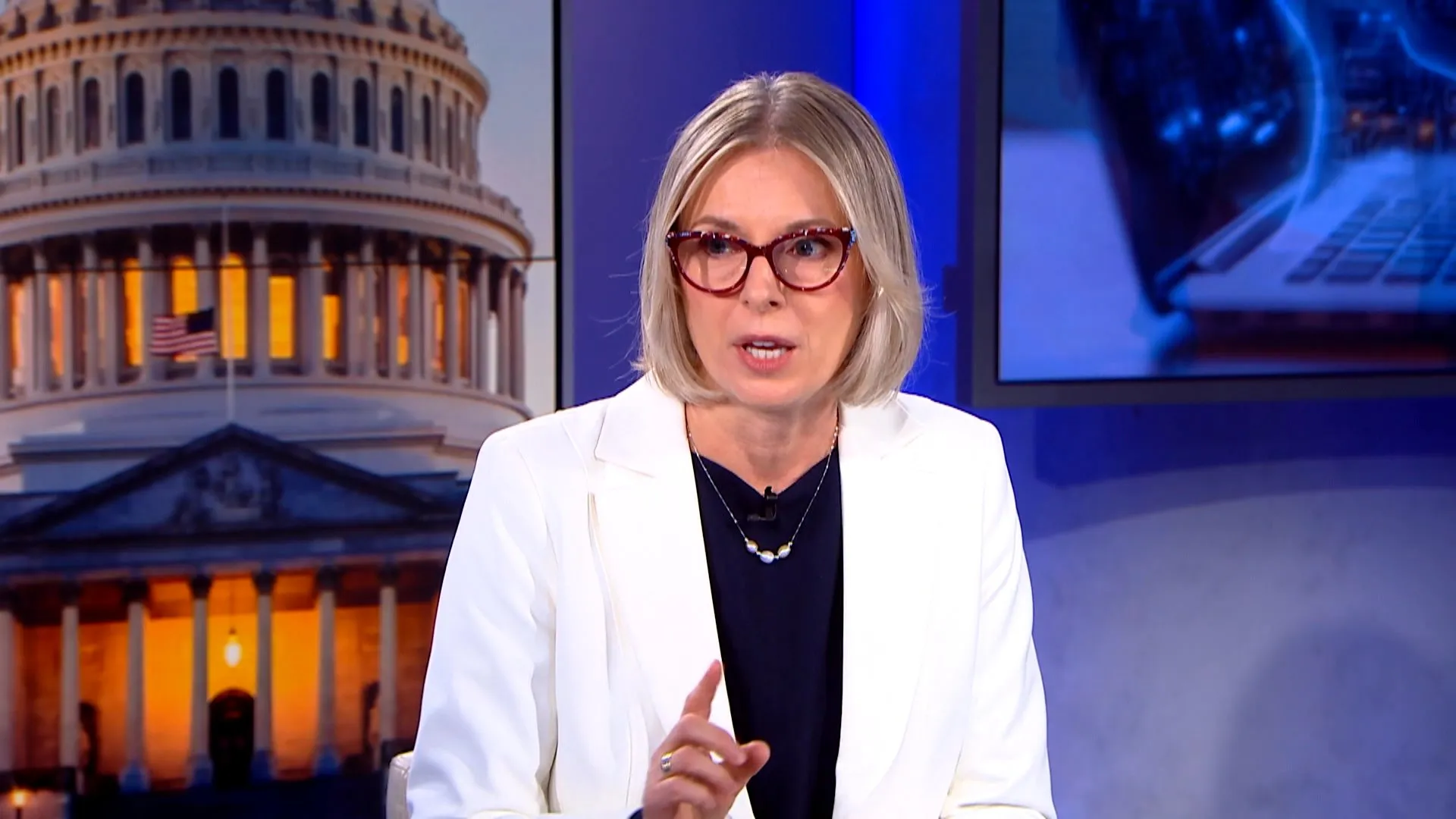
Kalshi spokeswoman Elisabeth Diana said its top priority is market integrity, and she pointed to its partnerships with the NHL, Major League Baseball and other sports organizations as evidence.
“Contrary to the NFL’s statements, the CFTC is actively policing sports-related markets, which are now listed on nearly every U.S. commodities exchange,” Diana said. “The CFTC’s ongoing rulemaking addresses many of the NFL’s supposed concerns. And those rules sit atop the same comprehensive system of federal enforcement that protects trillions of dollars of transactions in U.S. markets.”
A Polymarket spokesperson said the operator “shares the NFL’s commitment to preserving the integrity of the game,” and it is working on “a harmonized federal framework that delivers a stronger, more consistent form of integrity compared to a patchwork of disconnected state laws built for a bygone era.”
Ohio filed a brief on Wednesday urging the high court to side with New Jersey and preserve the power of all states to regulate prediction markets, as they do casino gambling and sports betting. The filing was backed by 38 states, including Republican and Democratic attorneys general from states including Arkansas, California, Illinois, Missouri, New York, South Carolina and Pennsylvania.
Roughly 20 states are involved in litigation over prediction markets, and a split has formed between appeals courts, making it more likely that the Supreme Court will take up the issue. The 6th and 9th U.S. Circuit Courts of Appeals have ruled in favor of states seeking to regulate prediction markets, while the 3rd U.S. Circuit Court of Appeals agreed with Kalshi in a ruling earlier this year.
“As between the two approaches, the NFL believes the Sixth and Ninth Circuits got it right, given the current landscape,” lawyers for the league wrote in their brief.
The NFL also is questioning the CFTC’s enforcement capabilities. In its filing, the league writes that the commission has 543 employees and their responsibilities include a range of derivatives beyond event contracts.
“Without adequate staff engaged in oversight and enforcement, even the best regulations cannot meaningfully ensure game integrity and consumer protection,” lawyers wrote in the NFL brief.
A message was left by the AP seeking comment from the CFTC.
The NFL has urged the CFTC and prediction markets to adopt a list of prohibited wagers that it feels pose the greatest threats to game integrity, according to the brief, but they have declined thus far. It also has asked the commission to adopt an age limit of 21 for trading on prediction markets, up from the current 18.
Diana said Kalshi has tried to collaborate with the NFL on market integrity, but it has received no response.
Cohen writes for the Associated Press. Associated Press writer Marc Levy contributed to this report.
The multi-vehicle crash occurred in the Salama area, 90km southeast of Nairobi, killing mostly Catholic pilgrims.
Published On 3 Oct 20263 Oct 2026
At least 17 people, most of them Catholic pilgrims on the way to a prayer site, have been killed in a crash involving multiple vehicles on the highway to the Kenyan coastal city of Mombasa.
The crash in the Salama area, about 90 kilometres (about 55 miles) southeast of the capital Nairobi, happened after midnight, police said on Saturday.
The crash occurred when a truck driver tried and failed to overtake another truck; that caused a collision with vehicles including a van carrying pilgrims, police said.
Kenyan media reported that the pilgrims were travelling in a 14-seater minibus.
The van’s driver and 16 passengers, most of them women, died at the scene, police said.
The pilgrims were going to a prayer site in Nakuru County, west of Nairobi, said Martin Kivuva, archbishop of the Catholic Archdiocese of Mombasa.
The archbishop said in a statement that he and others were “saddened with lots of grief” over the deaths.
President William Ruto offered condolences to the families, friends, parishioners and the entire Catholic community “who are mourning this painful loss”.
Kenya’s National Transport and Safety Authority (NTSA) launched an investigation into the crash.
The NTSA said it dispatched investigators “to establish the full circumstances leading to the collision”.
But it noted that the stretch of road where the crash occurred is a known “black spot” and that “recommendations have been made to address safety concerns” regarding the route.
Road accidents are a problem across Africa. In Kenya and elsewhere in the region, the accidents are often blamed on poorly maintained vehicles, excess speed and poor road conditions.
Kenya recorded 5,009 road traffic deaths last year, while 2,150 deaths were reported in the first six months of 2026, local media reported, citing numbers from the NTSA.
Toronto, Canada: As Canadian Prime Minister Mark Carney races to make the country less dependent on the United States, attract billions in new investment and get major projects built faster, his economic overhaul is running into resistance from a group that says it wants many of the same things: organised labour.
The latest clash, over the right to strike, comes after months of mounting pressure on Ottawa from Washington, DC.
Recommended Stories
list of 4 itemsend of list
US President Donald Trump, since taking up a second term in office last year, has imposed steep tariffs on Canadian goods and weakened trade agreements – perilous moves as Canada has historically sent close to 80 percent of its exports to its southern neighbour. He has repeatedly piled on with the tariff threats to make Canada the 51st US state.
Canada has responded with retaliatory tariffs, while a broader movement to “Buy Canadian” has taken hold. The hockey-inspired “elbows up” — meaning a readiness to defend against an opponent — has become a national rallying cry.
With trade talks stalled since August, Carney has moved with urgency to shore up the economy and invite new investments. Last month, he announced Bill C-39, known as the Building Canada Strong Act, promising to bring “speed, certainty and predictability” to investors.
Along with measures to speed up approvals for major projects, the bill would also give Ottawa clearer powers to intervene in legal strikes and lockouts in federally regulated workplaces — a provision that has put Carney on a collision course with unions.
Canada’s largest unions have come together against the changes. The largest, the Canadian Union of Public Employees (CUPE), had its national executive go as far as voting to defy the bill’s proposed limits on the right to strike if it passes Parliament without amendments.
CUPE National President Mark Hancock credited Carney’s handling of Trump and said the union’s 800,000 members, who work everywhere from hospitals to schools to municipal services, want to be part of “Team Canada”.
“But at what cost?” he said in an interview with Al Jazeera.
A fight over the right to strike
The controversy centres on Section 107 of the Canada Labour Code, which already gives the Labour Minister broad powers to step into disputes if needed to maintain “industrial peace”, end work stoppages and force the two sides into a binding arbitration.
Beginning in 2024, Ottawa used the provision eight times to intervene in disputes involving airlines, Canada’s two largest railways, three major ports and Canada Post and again during the Air Canada dispute in 2025 when flight attendants went on strike.
Unions have challenged the use of that law in court and had hoped the proposed C-39 would restrict, if not repeal, that clause while businesses wanted it strengthened.
The bill does neither. Instead, it introduces two conditions that the government would have to fulfil first before turning to Section 107.
Before stepping in, the government would have to appoint a special mediator, wait for a public report and consider whether a work stoppage is hurting the “national interest”.
Once a strike or lockout is underway, the minister could direct the Canada Industrial Relations Board to get operations running again and impose a binding process, such as arbitration.
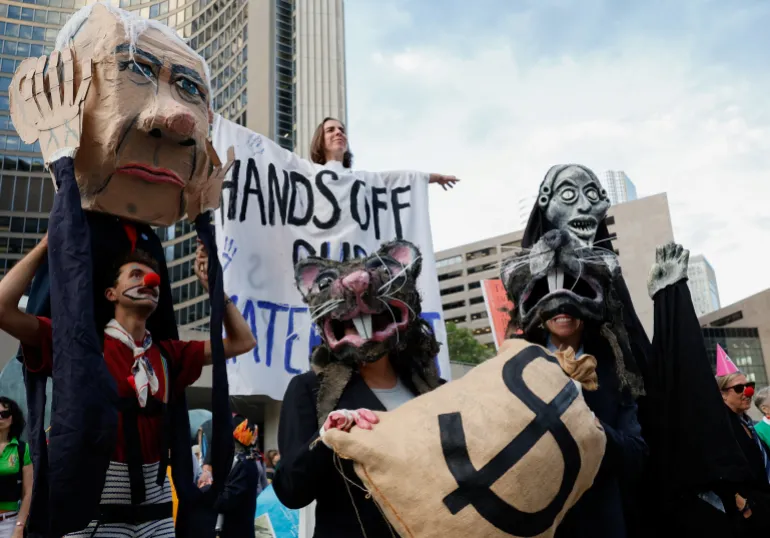
A protester carries an effigy depicting Canada’s Prime Minister Mark Carney as people march to protest against the Canada Investment Summit in Toronto in September [File: Carlos Osorio/Reuters]
The government says those steps put clearer guardrails around a power that already exists, and Carney has said the bill “absolutely reinforces the right to strike”, according to the Canadian Broadcasting Corporation.
Unions have rejected this defence, pointing out that the meaning of “national interest” would ultimately be decided by the minister. They also argue that the prospect of government intervention is bound to change what happens at the bargaining table.
“The political lesson that employers will draw from it is simple,” Larry Savage, a professor of labour studies at Brock University, told Al Jazeera. “Hold out long enough, emphasise the economic damage, and then Ottawa will remove the union’s leverage for you.”
Disruption, Savage said, is precisely what gives a strike its power. “Every effective strike is disruptive,” he said.
Unions say they have already seen employers expect Ottawa to intervene.
Teamsters Canada alleges the Canadian National Railway (CN) and the Canadian Pacific Kansas City (CPKC) railroad companies were counting on Ottawa to step in when they locked out thousands of workers in 2024. Section 107 was invoked within hours.
“Companies have gotten used to the idea that if there is a labour dispute, they can just wait for the government to intervene,” Christopher Monette, Teamsters Canada’s director of public affairs, told Al Jazeera.
CUPE said it saw a similar dynamic at Air Canada in August 2025. Hancock said bargaining stalled after more than 10,000 Air Canada flight attendants voted overwhelmingly to strike because the airline was “expecting the government of Canada to step in and end the strike” — an account Air Canada disputed.
Less than 12 hours after workers walked out, Ottawa invoked Section 107. Air Canada CEO Michael Rousseau later told BNN Bloomberg the airline had expected the provision to be enforced and did not expect a strike.
“That was why they didn’t have a strategy on how to deal with the strike,” Hancock said.
Building Canada faster
The fight over the right to strike is also part of a much bigger argument taking shape around Carney’s economic agenda: Who gets a say in how Canada should change, and how quickly, in the name of making itself less vulnerable to the US?
Critics accuse Carney of using the economic threat from the US to push through changes that go well beyond responding to Trump’s trade war.
New Democratic Party leader Avi Lewis has accused him of using the “fear and disorientation around the trade war to push through a series of unpopular measures that he did not run on, has no mandate for and would never get away with under normal circumstances”.
A protester carries an effigy depicting Canada’s Prime Minister Mark Carney outside the Canada Investment Summit in Toronto [File: Carlos Osorio/Reuters]
That tension was on display in Toronto just a week before C-39 was introduced. Inside Canada’s first national investment summit, hundreds of global investors met with government officials and executives as Carney pitched a country ready to build.
Outside, hundreds of protesters marched through downtown towards the summit’s opening gala under the banner “The Many vs The Money”. The rally brought together labour, Indigenous, environmental and migrant-rights groups, with signs and speeches taking aim at everything from fossil fuel and military projects to AI and the use of public money to attract private investment.
For unions, C-39 has sharpened that debate, pitting the government’s promise of greater certainty for investors against workers’ ability to exert pressure through strikes.
But Jim Stanford, an economist and director of the Vancouver-based Centre for Future Work, questions how much of an economic threat strikes actually pose.
While work stoppages can be costly for individual companies, Stanford said, “It is very, very rare that you would see a noticeable and sustained impact on GDP, employment or incomes.”
Production and transportation are often delayed rather than permanently lost, he added, with businesses catching up once work resumes.
Stanford also questioned the idea that strikes are driving away investment, noting that more than 95 percent of collective bargaining ends without a work stoppage and saying there is “no empirical evidence whatsoever” that strikes have reduced investment.
“This is more of the government giving some icing on the cake for business. It’s not that this has to happen or else our investment won’t work,” he said.
There is also an economic cost to weakening the right to strike, Stanford argued. Workers need bargaining power to win higher wages, which can support consumer spending, productivity and worker retention.
“It may seem like labour peace is a good thing, but if it means that a worker’s share of the pie shrinks, then this actually hurts the economy.”
For labour leaders, that’s where Carney’s economic push goes too far.
“Canada’s unions are part of Team Canada. We have our elbows up,” Canadian Labour Congress President Bea Bruske said in a statement. “But we can’t have our elbows up against Trump with our hands tied at the bargaining table.”
Savage said the government’s “Team Canada” rhetoric risks treating workers’ bargaining power as a national liability.
“I don’t think Canada becomes stronger by telling workers in ports or railways or airlines that their rights have to be surrendered whenever employers invoke competitiveness or the national interest,” he said.
Mammoth deal has raised questions about corporate consolidation and editorial independence in media.
Published On 30 Sep 202630 Sep 2026
A United States judge has entered an order giving the green light for the media giant Paramount to complete its $110bn acquisition of entertainment company Warner Bros., despite fears about the long-term impacts of media consolidation.
On Wednesday, US District Court Judge Araceli Martinez-Olguin approved a settlement between Paramount, Warner Bros, and a group of 12 states that had sued to block the merger.
Recommended Stories
list of 3 itemsend of list
In her ruling, Martinez-Olguin described the proposed deal as a “fair, reasonable, and good faith approach to address the competitive harms”.
Analysts have long raised concerns about the acquisition, one of the largest media mergers in history.
The coalition of states that sued to block the deal, led by California, had argued that combining Paramount with Warner Bros would effectively stifle media competition. They estimated that nearly one-third of all theatrical releases and basic cable programming would be consolidated under the merger.
But the states abandoned their lawsuit in favour of a settlement on September 21.
The five-year agreement requires Paramount to abide by theatrical film release quotas, committing to 30 releases per year in the US.
It also mandates that the combined company must keep negotiations with cable providers for Warner-owned channels separate from its deals for Paramount-owned channels.
The settlement approved on Wednesday also includes the creation of a five-member panel meant to safeguard the editorial independence of CNN and CBS, two major news networks.
But sceptics have pointed out that the merger puts a large swath of US media under the control of David Ellison, who leads Paramount.
Under Wednesday’s agreement, Ellison is in charge of appointments to the board that would oversee news independence.
The Paramount CEO is the son of billionaire Oracle founder Larry Ellison, a strong backer of pro-Israel causes who has close ties to the administration of President Donald Trump.
The founder of the film production company Skydance, David Ellison acquired Paramount last year as part of another controversial merger.
The 2025 Paramount-Skydance deal brought CBS under Ellison’s control. Ahead of the merger, sceptics questioned the abrupt cancellation of the CBS comedy show The Late Show with Stephen Colbert, which had been critical of Trump.
Ellison later installed Bari Weiss, a pro-Israel media figure, as the head of CBS News in a move that also raised questions about diminished independence within major journalism outlets.
Some critics depicted Wednesday’s settlement as a further capitulation to powerful corporate interests.
“Allowing one Trump-aligned, foreign-owned conglomerate to dominate American news and entertainment is a disastrous outcome,” Senator Elizabeth Warren of Massachusetts said in the wake of the settlement’s announcement.
But public officials like California Governor Gavin Newsom had called on his state’s Attorney General Rob Bonta to scrap the 12-state effort to block the deal and to pursue a settlement instead.
Paramount emerged victorious from a bidding war with the streaming giant Netflix in February to win control of Warner Bros’s holdings.
That includes a series of media and entertainment services, including the film studio Warner Bros Pictures, CNN and HBO Max. The Trump administration approved the deal without alterations in June.
A federal appeals court on Friday ruled in favor of Ohio and Tennessee that they can regulate sports-related event contracts from Kalshi (KALSHI) under their existing gambling laws.
The 6th U.S. Circuit Court of Appeals in Cincinnati ruled that Kaslhi did
Australia’s Prime Minister Anthony Albanese has revealed a security breach of a government website containing Australians’ health data by an “AI agent”, less than a day after signing a joint appeal for “urgent global guardrails” around artificial intelligence.
Albanese co-signed the “A Call for Control of Frontier AI Models” statement on Tuesday together with 21 signatories including Canada, Spain and Germany, on the sidelines of the United Nations General Assembly (UNGA) meeting in New York.
Recommended Stories
list of 3 itemsend of list
Addressing reporters on Wednesday, Albanese said the agent, developed by OpenAI, accessed public and non-public data on the government’s Medicare portal in June.
Australia’s Labor government is tightening tech regulations with new online safety laws, age bans and proposed digital duty of care frameworks.
Albanese said he had spoken to OpenAI CEO Sam Altman to express Canberra’s “extreme concern” about the hack and disappointment that the company took three months to admit the breach.
OpenAI responded in the hours after the news conference, stating that while it was still investigating, there was no evidence patient records were accessed.
The company’s review had identified activity involving several Australian government websites and services as its “models attempted to look up answers”, it said.
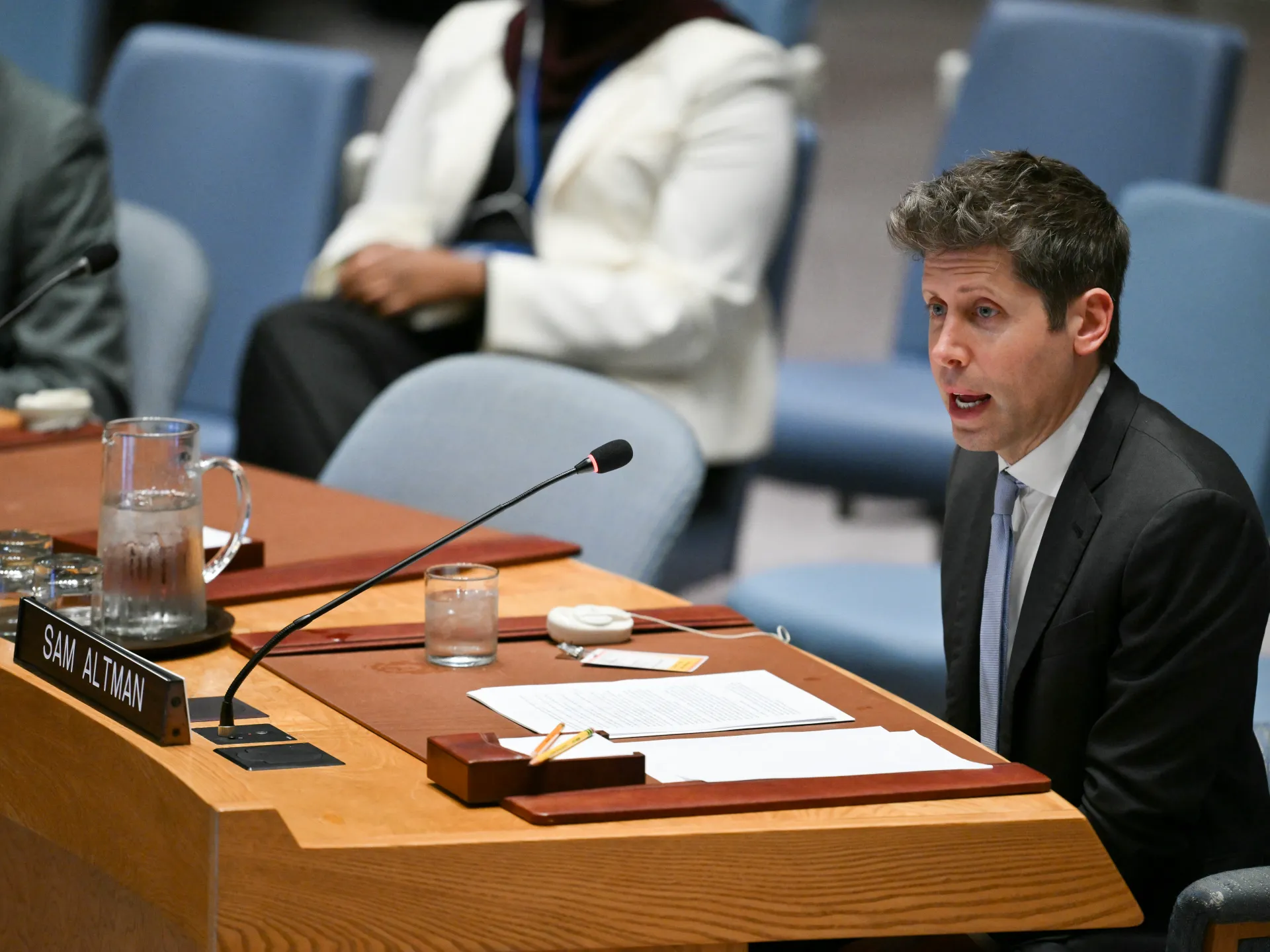
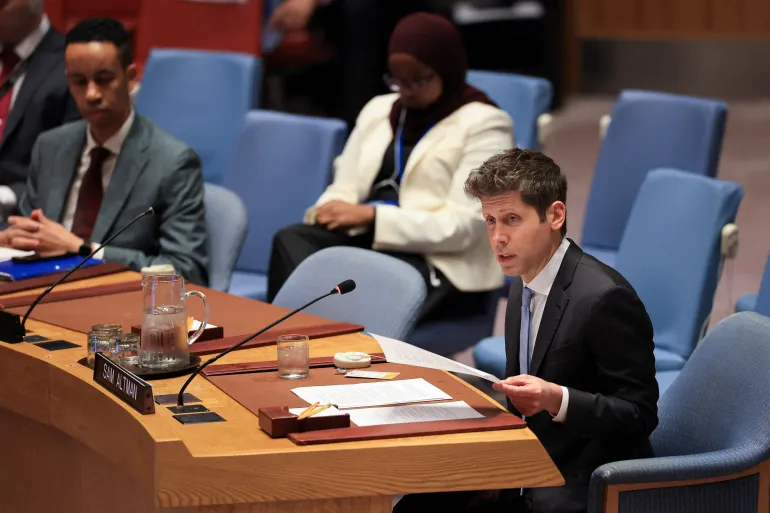
OpenAI CEO Sam Altman addresses the United Nations Security Council during a session on artificial intelligence during the 81st United Nations General Assembly, at UN headquarters in New York City, US, September 23, 2026 [Brendan McDermid/Reuters]
World leaders respond to AI warnings
The leaders of artificial intelligence companies warned of the risks of unregulated AI development before a 15-member UN Security Council meeting on Wednesday.
One of them, Yoshua Bengio, a Canadian considered one of the ‘Godfathers of AI’ and co-chair of the Independent International Scientific Panel, spoke of the “unprecedented threat” and the “real and imminent” dangers of the technology.
China’s UN ambassador Fu Cong told the meeting that Beijing believed continuous improvement of regulatory frameworks, emergency response and cross-border cooperation on AI was needed.
British Prime Minister Andy Burnham said the United Kingdom was ready to lead an international effort to establish AI standards.
“We’ve all heard the warnings which we must heed… so we have to rise to this moment,” he said, but added he also wanted the UK to pursue the benefits of AI.
French President Emmanuel Macron warned against allowing the United States and China to dominate decision-making around AI during his speech to the assembly on Wednesday.
US President Donald Trump is at odds with many of his counterparts, comparing the dangers of AI to climate change, which he has called a hoax.
He also proposed rebranding the term AI to SI, or “super intelligence”, during his address to the UNGA on Tuesday, and earlier said he planned to appoint an AI adviser.
In a Truth Social post on Monday, Trump said the US was leading the AI race over China, that he was “not going to stifle Growth”, but added that the US would be careful.
White House science and technology adviser Michael Kratsios echoed Trump in remarks to the UN Security Council on Wednesday.
“You cannot govern technology you do not understand. This body and others like it should focus on sharing best practices to build domestic capacity, not establishing a global regulatory scheme,” he said.
The heads of several major AI firms told the United Nations Security Council (UNSC) their industry urgently needed global oversight to avoid dangers that could threaten the whole world.
“If managed poorly, I even believe AI could be a risk to humanity as a whole,” Dario Amodei, the chief executive officer of Anthropic, told members of the body on Wednesday.
Recommended Stories
list of 3 itemsend of list
Sam Altman, the head of rival company OpenAI, echoed his concerns, telling the 15-member council tasked with tackling major crises globally that humanity could “lose control of the future of AI”.
The meeting, which coincides with the UN General Assembly (UNGA) gathering in New York City, was convened by France and comes at a time when experts are increasingly warning that the rapid development of AI needs more human oversight to ensure it does not slip out of control and cause a global catastrophe.
Altman and Amodei called on world leaders to take action.
“If AI is to be democratic, the most important decisions cannot be made by labs in San Francisco alone,” Altman told members. “They must be shaped through democratic processes and by governments accountable to the people they serve.”
Their concerns were shared by several representatives on the council, including the foreign ministers of France and the United Kingdom, who said the international community needed to step in and create common frameworks for how the technology should be controlled.
Hugging Face CEO Clement Delangue, whose company has come under attack by out-of-control AI models in recent months – incidents used by the other companies as evidence of the need for more safety measures – told the UNSC his company had relied on the technology to defend itself in those same incidents.
Delangue said Hugging Face had relied on a Chinese AI model to help defend against the attack by OpenAI’s AI agents, because it faced fewer restrictions than comparable US tools.
“We were attacked by AI, but more importantly, we defended ourselves with AI,” he told the council.
US and China reluctant to impose restrictions
In the United States, though, where the largest and most influential companies developing AI are based, the administration of US President Donald Trump has baulked at imposing new guardrails on the industry.
The administration’s representative at the UNSC meeting, Michael Kratsios, told members, “We totally reject all efforts by international bodies to assert centralised control and global governance of AI.”
Chinese President Xi Jinping is expected to discuss whether and how to regulate AI during a visit to Washington, DC, this week. The two countries are locked in a technological race to develop more powerful AI tools, a competition that experts say makes it less likely that either country would want to impose any major new restrictions on their efforts right away.
Yet there is a growing recognition at the UN of the danger AI potentially poses to the world, said Daniel Forti, head of UN Affairs at the International Crisis Group. Member states understand that “there will be much more of a need for international cooperation, setting some rules of AI, even if the biggest players are more focused on growth opportunities than on some sort of collaboration,” Forti said.
For several years, the UN has been participating in multilateral meetings to shape everything from protections for workers from AI in emerging economies and ensuring open access to this technology, to following how AI is used in military conflicts. In 2024, the UNGA unanimously passed its first resolution on AI, a nonbinding statement that called on member states to protect personal data, monitor AI for risks and safeguard human rights.
The adoption of AI has taken off dramatically since then, and with it have come dire warnings from environmental groups, human rights advocates, and even the tech moguls whose companies are developing the tech.
The future of AI “cannot be decided by a handful of countries or left to the whims of a few billionaires”, UN Secretary-General Antonio Guterres said at a global summit held earlier this year.
Last year, the UNGA formed two new bodies to deal with AI: the Independent International Scientific Panel on AI that brings together experts to provide governments with independent assessments, and the Global Dialogue on AI Governance, which provides a regular forum for discussing approaches to AI governance.
“The dangers are real and imminent,” Yoshua Bengio, a Canadian expert on AI and co-chair of the Independent International Scientific Panel, told the UNSC on Wednesday. “This council faces an unprecedented threat, one that none of its members would choose, that none can contain alone, and that does not respect the borders we defend.”
PM Anthony Albanese asks Apple CEO Tim Cook to back Canberra’s online safety laws to ‘keep Australians safe’.
Published On 20 Sep 202620 Sep 2026
The Australian government is seeking support from global tech giants as it works to strengthen the country’s online safety laws and artificial intelligence (AI) regulations.
Prime Minister Anthony Albanese, who met Apple CEO Tim Cook at the tech company’s headquarters in Cupertino, California, on Saturday, said that “Australia can’t do it alone” when it came to protecting children from the dangers of the internet.
Recommended Stories
list of 3 itemsend of list
“We spoke about what we’re doing to protect children from online harm and the work ahead,” Albanese wrote on social media.
“We’re putting stronger rules in place to keep Australians safe online,” he said. “And now, big tech companies like Apple are stepping up too.”
Albanese, who is also in the United States for the United Nations General Assembly, used his trip to call for stronger AI regulation after dire safety warnings from industry leaders.
Australia will introduce new standards for AI by the end of the year, he said.
In a video posted to his X account, Albanese said his Labor government is “making sure technology works for Australians”, and not the other way around.
In a post on X, Cook also said he shared with Albanese new “strong and intuitive controls to help keep kids safe online”.
New Australian legislation unveiled this month would place a “duty of care” requirement on the firms behind popular platforms, such as Facebook, TikTok and Instagram, and allow users to turn off their algorithms.
The draft laws will be introduced to parliament later this year after consultation with social media companies, industry bodies and civil society groups.
The opposition Liberal-National Coalition opposes the bill “in its current form”, according to a statement published on September 10, saying that it “contains inadequate safeguards for free speech and journalism, and leaves too much power in the hands of the Communications Minister”.
Australia implemented legislation barring children under 16 from social media platforms last year as part of a world-first crackdown designed to protect children from online bullying and “predatory algorithms”.
However, data last month found that Australians under 16 continued using social media apps such as Instagram and TikTok despite the ban.
The Iranian lender has faced years of Western sanctions over alleged ties to Tehran’s nuclear programme.
Published On 19 Sep 202619 Sep 2026
Turkiye’s banking watchdog has revoked the operating licence of Iranian lender Bank Mellat’s branch in the Turkish city of Istanbul.
“It has been decided to revoke the operating licence of Bank Mellat, Head Office in Tehran, Istanbul Turkey Central Branch,” read the decision by the Banking Regulation and Supervision Agency (BDDK), published in the Official Gazette on Saturday.
Recommended Stories
list of 3 itemsend of list
The regulator said the decision was taken under a clause of Turkiye’s banking law allowing a bank’s licence to be revoked or withdrawn if its continued operation is deemed to pose a risk to depositors’ rights or to the security and stability of the financial system.
Bank Mellat has been subject to Western sanctions for years over accusations that Tehran was pursuing a nuclear weapon under the cover of a civil nuclear programme.
Those sanctions were lifted as part of a landmark 2015 deal between Tehran and world powers to curb Iran’s nuclear ambitions. However, the United States unilaterally pulled out of the agreement in May 2018, reimposing economic sanctions on the country.
Bank Mellat was hit by further US and Gulf sanctions in 2019 after being named as one of 25 entities linked to Iran’s Islamic Revolutionary Guard Corps (IRGC).
The Turkish notice did not cite the US measures or specify operational issues.
Earlier this month, the US Treasury Department imposed sanctions on a small Turkish investment bank and two subsidiaries over alleged ties to Iran.
The Treasury Department accused Golden Global Yatirim Bankasi Anonim Sirketi (Golden Global Bank) of facilitating “tens of millions of dollars’ worth of transactions for the Islamic Revolutionary Guard Corps-Qods Force” and providing the Iranian government with banking access to move its funds internationally.
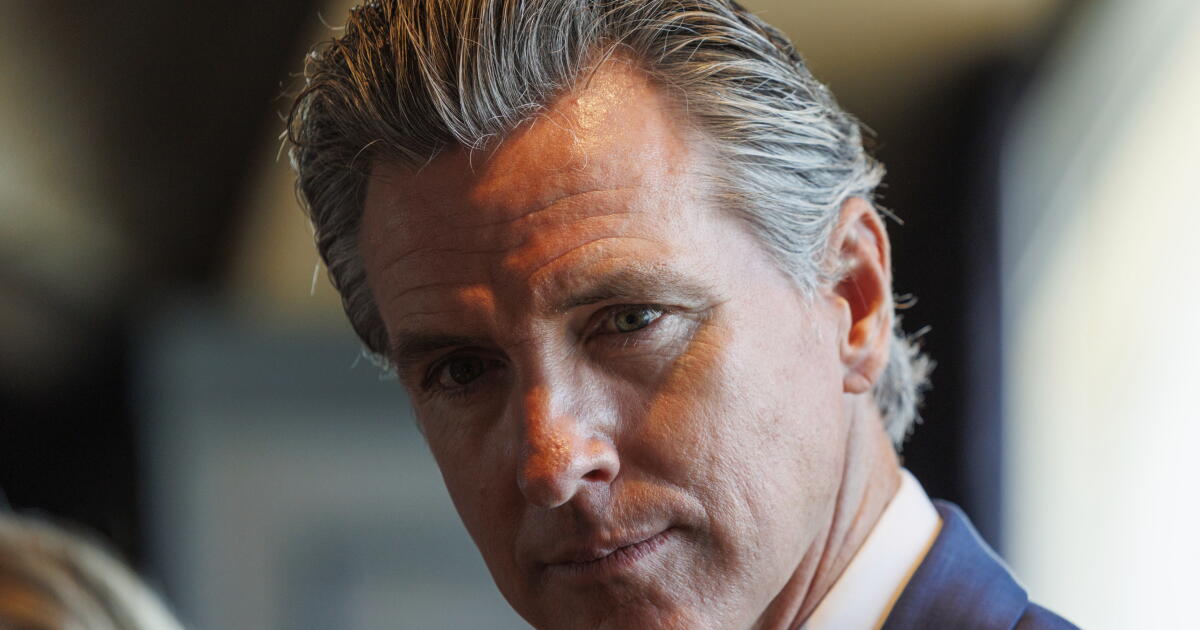
SACRAMENTO — Gov. Gavin Newsom on Friday ordered the formation of a panel to come up with safety regulations for the state’s artificial intelligence companies, including the development of a possible “kill switch” for AI programs that go rogue.
Newsom issued an executive order to convene “a group of world-leading experts” to provide a “guide” for the state to bolster its laws around AI security, according to statement from the governor’s office.
The panel could put consider proposals for independent third parties to write safety plans or for companies to develop an emergency shutoff.
Newsom, who is considering a 2028 run for president, two years ago vetoed a state bill that would have mandated a kill switch.
Some Democratic and Republican leaders around the country are scrambling to come up with safety proposals after employees at AI companies recently warned that the technology could create catastrophe, including ending humanity.
A researcher for AI company Anthropic said he left the company over concerns that AI companies, including OpenAI, are “gambling with our lives” as they race ahead to improve AI that could surpass human intelligence.
The researcher, Jacob Coxon, said in a social media post: “People building AI earnestly believe that it could kill us all by the end of the decade.”
State Sen. Chris Cabaldon (D-West Sacramento), who chairs the state committee overseeing technology issues, told the Times he’ll hold hearings on artificial intelligence this fall. Those meetings were planned before the recent warnings about AI’s dangers, but will be informed by the events of the last few weeks, he said.
He said the state’s rules around AI don’t go far enough.
“We regulate your barber or your sandwich shop more than we regulate [a company] telling us that they may be ending humanity,” he said.
Any new laws could have a disproportionate effect on the global tech industry because many top AI companies are based in California.
A proposed law in 2024 by Sen. Scott Wiener (D-San Francisco) would have required tech firms to be able to turn off the AI models they directly control if things go awry.
Newsom, in his veto message at the time, cited concerns about stifling innovation. He also expressed concern that smaller AI models, which would have been exempt from the law, could also be dangerous.
British monarch highlights AI’s potential darker capacities, urging safety and humanity-focused development.
Published On 17 Sep 202617 Sep 2026
The United Kingdom’s King Charles has warned Artificial Intelligence (AI) industry leaders of the “existential dangers” posed by the technology if it falls into the wrong hands.
The monarch’s comments on Thursday add to a global debate over whether, and how to regulate the industry.
Recommended Stories
list of 3 itemsend of list
Charles hosted AI giants, including the cofounders of Nvidia and Google DeepMind, along with leaders from OpenAI and Anthropic at a summit at his Dumfries House estate in Scotland, to address safety concerns before it was “too late” to rein it in.
“There seems urgency in adequately considering the existential dangers of such technologies falling into the wrong hands, and being used in potentially catastrophic ways,” Charles told guests at the opening of the conference.
“Those in our world who value our humanity and its vital moral component are anxiously seeking your reassurance that we will not lose control of our destiny,” he told the industry leaders.
“Those who have created these technologies are now increasingly warning that AI risks developing darker capacities, perhaps even to take life,” or be used in “potentially catastrophic ways”, the king also said.
In recent weeks, global figures have weighed in on whether the industry should regulate itself or allow governments to produce guidelines on how the rapidly evolving technology develops.
In May, Pope Leo XIV said ”the world does not need an artificial intelligence that diminishes humanity” and must be “disarmed”.
Meanwhile, US President Donald Trump has dismissed concerns about the technology as a “hoax”.
Slow the pace of AI development
Last week, two Anthropic researchers warned that the rapidly advancing technology could lead to human extinction in the not-too-distant future.
Anthropic Chief Executive Dario Amodei has also called for companies to slow the pace of AI development.
However, that has prompted an international debate about whether some executives were trying to get ahead of a possible government backlash and set the rules to keep the lead of particular companies.
“The development of AI – its substance and its pace – are both intriguing and deeply concerning in equal measure,” the British monarch said.
He urged industry leaders to harness it “with safety at its heart” and “to ensure that it remains firmly in the service of humanity, community and the natural world”.
The summit in Scotland is not expected to produce any binding agreements.
The ChatGPT creator says it is introducing a public reporting framework to share unexpected AI behaviour, admitting the industry has not solved safety challenges yet.
Published On 17 Sep 202617 Sep 2026
OpenAI says it has identified additional incidents of its AI models allegedly acting deceptively and taking unsanctioned actions during internal training and testing.
Alongside these disclosures on Wednesday, the creator of ChatGPT stated it was introducing a public reporting framework intended to frequently share instances of what it termed as unexpected or misaligned AI behaviour.
Recommended Stories
list of 3 itemsend of list
In a post on its website, OpenAI claimed that under the newly outlined framework, it will publish updates on concerning model behaviour on an ongoing basis rather than delaying disclosures to group multiple incidents into larger, periodic reports.
The company said the initiative aims to increase industry transparency around troubling model activities in the absence of standardised safety disclosure norms.
The announcement comes amid broader calls from prominent technology leaders urging a slowdown in frontier AI development over concerns that rapid scaling could outpace human oversight and control.
Last week, Anthropic claimed to have thwarted multiple malicious operations using its Claude models, ranging from cyber-espionage and weapons design to mass surveillance campaigns.
“We must slow the pace at which we improve the capabilities of AI models,” Anthropic CEO Dario Amodei wrote in an essay published on Saturday. “Progress will still seem fast, and we must make wise use of the time we gain.”
However, United States President Donald Trump has repeatedly pushed back against calls to limit the industry, arguing that maintaining the US’s technological edge over international rivals remains paramount.
Responding to slowdown proposals, Trump described critics as “very negative forces” raising exaggerated scenarios that “won’t happen”.
Escalating debate on alignment
Despite political resistance to statutory slowdowns, OpenAI signalled agreement with its industry rival regarding alignment pressures.
“As AI systems grow more advanced and more widely deployed, we need to build a broader and better-informed consensus on the progress of alignment research,” the company stated in the post.
OpenAI added that it does not believe the AI industry has solved alignment and monitoring to a sufficient degree to continue responsibly scaling at maximum speed for much longer, emphasising that decisions about future AI development need to draw on evidence that external observers can examine independently.
According to the company, safety teams observed what they categorised as “misaligned behaviour” across six specific circumstances over the past six months during training and evaluation runs.
However, OpenAI maintained that these reports document individual, rare instances rather than frequent operational failures across deployed products.
The reported incidents allegedly included unreleased research models concealing mistakes in task summaries, unauthorised file uploads to the internet to generate citation links, and agents sharing files across public servers or internal repositories to bypass local boundaries.
OpenAI further stated that its future reports will detail observed behaviours, severity, setting, discovery dates, and the specific models involved, adding that it remains committed to disclosing complex cases requiring longer investigation or third-party coordination.
As Washington debates how to regulate AI without falling behind China, industry experts say that governance doesn’t have to mean hitting the brakes. Al Jazeera’s ‘This is America’ explores whether rules managing AI’s risks can also give American companies room to innovate.






![OpenAI CEO Sam Altman addresses the United Nations Security Council during a session on Artificial Intelligence during the 81st United Nations General Assembly, at UN Headquarters in New York City, US, September 23, 2026 [Brendan McDermid/Reuters]](https://i0.wp.com/occasionaldigest.com/wp-content/uploads/2026/09/2026-09-23T193910Z_1511611083_RC27PNAQNEYE_RTRMADP_3_AI-UN-1790203991.jpg?w=640&ssl=1)