regional

Regional UK airport to get new Ryanair flights to one of Europe’s most beautiful islands

ONE of the most beautiful islands in the Mediterranean will soon be getting new flights from just £14.99.

There’s a reason Sicily, Italy, is dubbed the ‘Pearl of the Mediterranean’, with its soft sand beaches, clear waters and warm climate.

Ryanair is launching new flights from Bournemouth Airport to Trapani in Sicily, ItalyCredit: Alamy
The first flight will take off on March 31Credit: Alamy

And now, one city on the island – referred to as the ‘city on two seas’ due to its centre sitting on a peninsula with the Tyrrhenian Sea to the north and the Mediterranean Sea to the south and west – will be getting new flights from Bournemouth Airport.

Ryanair will launch new flights to Trapani in Sicily from the end of March.

The first flight from Bournemouth Airport to Trapani will take off on March 31, costing £60.59 each way.

Though, if you wait a bit, the fares get cheaper – for example, you could fly on April 7 for £14.99 one-way.

Read more on travel inspo

ALL IN

I found the best value all inclusive London hotel… just £55pp with free food & booze


HOL YES

I’m a travel editor & mum-of-3… my favourite family holidays from just £3pp a night

Sun Travel found that the airline will be flying to the Sicilian destination twice a week, with one flight on Tuesdays and another on Saturdays.

Trapani sits on the west coast of Sicily and is well-known for its historic old town and harbour.

Throughout the city visitors can explore Baroque architecture, especially in the old town, Centro Storico.

Here you will find a maze of narrow alleyways that you would expect of any charming old town, but what makes it particularly special is Corso Vittorio Emanuele.

This is the main street in the old town and is home to unique pottery shops where you might even catch the store owners painting the ceramics.

It’s on this street that you will also find the city’s cathedral, Cattedrale di San Lorenzo.

Don’t miss Piazza Mercato either, a sprawling square which used to be the home of the city’s main fish market for over a century.

There are a lot of famous landmarks in the city too, such as Torre di Ligny which was a watchtower and is now a museum.

You can also see the Saline di Trapani salt pans, which is a protected nature reserve.

But if you wait a bit, you could travel to Trapani from Bournemouth for as little as £14.99Credit: Alamy

In total, the pans span across 2,400 acres and dates back to the 12th century when they were used to harvest sea salt.

If you prefer the beach, you can visit Spiaggia delle Mura di Tramontana, which has the “clearest water in Sicily” according to one visitor.

Along the beach is the old Spanish wall, which you can walk along – providing a great spot to catch the Italian sunset.

If you happen to visit the city during Easter, look out for the Processione dei Misteri, which is a famous, 24-hour long religious event that dates back to the 17th century.

There are plenty of places to stay in Trapani, including the four-star Hotel Punta Tipa which overlooks the beach and costs from £73 a night.

If you want to have access to a spa during your stay, then head to Palazzo Gatto Art Hotel and Spa, costing from £127 per night.

In Trapani, you can explore the historic centre as well as the sprawling salt pansCredit: Alamy

When exploring Trapani, you can expect to pay around €50 (£43.58) for a three-course meal for two people and if you add a beer, that will set you back an additional €3.75 (£3.27).

The city is just an hour by car from Palermo as well, if you wanted to spend more time exploring Sicily.

The new flights are one of 20 new routes that have been announced for this summer from Bournemouth Airport.

Other holiday destinations include Alicante and Malaga in Spain and Edinburgh in Scotland.

In other destination news, here are six of the best holiday destinations to book for some quick Vitamin D including 28C Spanish islands.

Plus, here are the cheapest family holiday destinations under three hours from UK that are over 20C this Easter.

The new route is one of 20 Ryanair is launching from the airport this summerCredit: Alamy

Source link

Ungoverned Space and Regional Spillover, Rethinking Afghanistan’s Borders

The Afghanistan crisis is generally spoken of as a crisis of the hour in terms of the Taliban, outside power intervention, or an unsuccessful election season. Such framing is not as profound as the problem. The state and province conquests, bargaining, and coercion united Afghanistan, the state, but not a civic transaction between peoples. Although the significance of an actual national flag was yet to arrive, Tajiks, Uzbeks, Hazaras, Pashtuns, and minorities occupied different regions, related to regional leaders, tribal councils, and local trade routes. The power was not national but local and individual. The contemporary state emerged later, and at the inception of its emergence, it was naturally skewed in a manner that remained to fulfil the definition of politics.

The birth of Ahmad Shah Abdali, recalled as Ahmad Shah Durrani in the middle of the eighteenth century, could be recalled as one of the foundational legends. It was also when the military alliance of one community had become the core of the state’s strength. The shell of a state was built by Ahmad Shah through warfare, and the coalition of Pashtun tribes consolidated the territory and gained more lands, with the foundation of a heterogeneous and broad territory. The logic, however, was not inclusion. It was piety, preference, and blackmail. Peripheral territories like the non-Pashtun were to be ruled as they were expected to submit, pay, or surrender when the center was strong and to ignore when it was weak. That model had never killed with Ahmad Shah. It was a practice that has been emulated by other leaders who have come after and tried to play a stage of unity without building institutions that can be regarded as belonging to all groups.

The trend was established following the demise of Ahmad Shah. Kabul was rarely what it purported to be. Power moved around among leaders, but the leadership was generally stopped at metropolises, armies, and major highways. Large areas were something like semi-autonomous states, which cooperated with the state, fought it, or alternated in each of the seasons. When they say that Afghanistan has never had full rule of its own land, people are not hurting the country; they are saying a structural truth, which is that the center has never had sovereignty and has never received legitimacy on the full map. The actual authority was left to the ethnic groups, strongmen, clerics, and commanders. In that perspective, any change in Kabul became existential to the non-residents of the city, as the state was no competition referee but a prize.

Even the geography and the demography make this worse. Pashtuns have been estimated to be approximately 42 percent, Tajiks approximately 27 percent, and Hazaras and Uzbeks approximately 9 percent, and the rest are made up of Turkmen, Baloch, and others. Two official languages exist: Pashto and Dari, but the status of any language could never be a purely cultural one since it was always a political one. Even the name of the country, Afghanistan, is perceived by most Afghans as a loaded word, and that practice is tied to the Pashtun identity and leadership even when they are being applied as a national one. People are angry because of the gap between the way the label instructs us to feel and the way that people feel. Pleas of togetherness are empty when the name of a state is doubted even in real life.

The south, northeast, and many of the cities are then the Pashtun, Tajik, Uzbek, and Hazara distributions, respectively. These areas are not eliminated by violent migration, displacement in war, or careful political manipulation. Rather, the blurring would contribute to some new fault lines, and communities would need to be pushed into the interspace of their neighbors without an established system of solving disagreements without favoritism. The cross-border relationships include the Tajiks and Tajikistan, Uzbeks and Uzbekistan, and Pashtuns and Pakistan, and there is a stable tug-of-war that the neighbors and patrons can make use of. A low external and high center connection is a formula for continued disintegration.

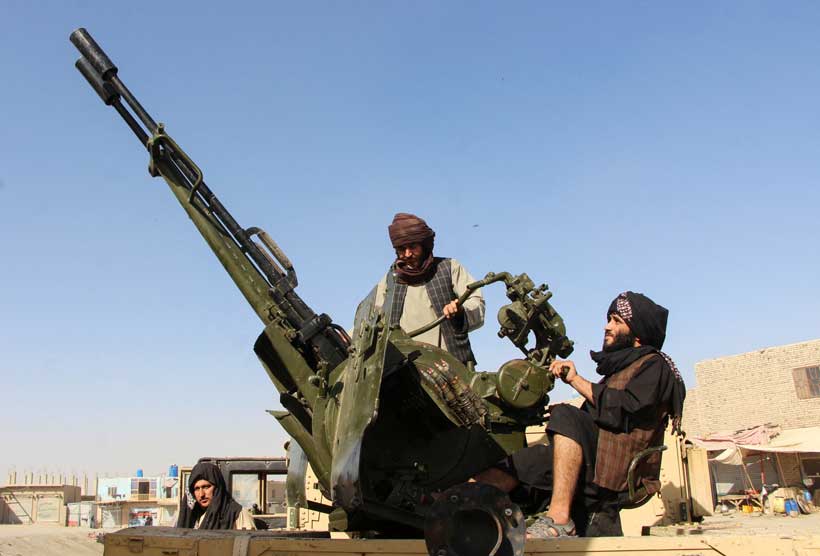
This is the sphere where the aspect of security cannot be neglected. The decades of controversial control and open borders have transformed parts of Afghanistan into an attractive location for militants that occupy uncontrolled space. When the state cannot provide some kind of protection over territory, the armed networks take its position and deliver protection, taxation, ideology, and logistics. These networks do not have a localization. Training, financing, and planning have border-crossing characteristics, subjecting the region to an environment of a shared threat. At that, the question is not only a moral or historical one, but one of expediency: what are the political structures that may be implemented to make sure that Afghanistan will no longer remain a jihadist temptation to armed groups that can break the peace of its neighbors?

The solution is suggested in a provocative manner, and that is the territorial restructuring, a peaceful partitioning of the state along ethnic and regional lines: Uzbek majority areas become Uzbekistan, Tajik majority areas become Tajikistan, Pashtun majority areas become Pakistan, another separate state is established called Hazaras, etc. The appeal is obvious. It will eliminate the sovereignty of a group, a distinct line of power, and smaller political units, which might be more efficient to govern. It also tries to compare borders to lives in stating that when people believe that the state is an extension of them and not the rulers of the state, then stability is achieved.


Source link

Netanyahu says Israel will forge regional alliance to rival ‘radical axes’ | Israel-Palestine conflict News

Israel to join with India, Greece, Cyprus and other Arab, African, Asian countries that ‘see eye to eye’, says PM.

Israeli Prime Minister Benjamin Netanyahu has announced that Israel plans to build a network of allied nations in or around the Middle East to collectively stand against what he called “radical” adversaries.

Netanyahu made the comments on Sunday while announcing the upcoming visit to Israel of Indian Prime Minister Narendra Modi, whose country the Israeli leader said would be part of the “axis of nations that see eye to eye” with Israel.

Recommended Stories

list of 3 itemsend of list

Netanyahu, who is wanted by the International Criminal Court on war crimes charges, also referred to Greece, Cyprus and other unnamed Arab, African and Asian countries.

“In the vision I see before me, we will create an entire system, essentially a ‘hexagon’ of alliances around or within the Middle East,” Netanyahu said, according to the Times of Israel.

“The intention here is to create an axis of nations that see eye to eye on the reality, challenges, and goals against the radical axes, both the radical Shia axis, which we have struck very hard, and the emerging radical Sunni axis.”

Modi said he fully agrees with Netanyahu on the “bond between India and Israel”, including the “diverse nature of our bilateral relations”.

“India deeply values the enduring friendship with Israel, built on trust, innovation and a shared commitment to peace and progress,” Modi wrote in a post on X.

Since the start of Israel’s genocidal war on Gaza, its assaults have been weakening the Iran-led “axis of resistance”, including Hezbollah in Lebanon. Israel and Iran also directly clashed last June in a 12-day war, in which the US military also joined to attack Iran’s nuclear sites.

Netanyahu did not elaborate on what he meant by “emerging radical Sunni axis”, but he has previously identified the Muslim Brotherhood as its leading element.

Relations between Israel and several predominantly Sunni Muslim states have soured amid the bloodshed in Gaza, including with Turkiye, whose President Recep Tayyip Erdogan has sharply criticised Netanyahu, and Saudi Arabia, which has accused Israel of genocide.

Prospects for normalisation between Israel and Saudi Arabia also appear to be eroding. In recent months, the kingdom has rebuked Israel’s recognition of Somalia’s breakaway region, Somaliland, as well as the Israeli moves towards annexation in the occupied West Bank.

Since 2020, Israel has pushed to establish formal ties with Arab and Muslim states as a way to shore up its regional standing as part of the US-backed so-called “Abraham Accords”.

Under that framework, Israel has been enjoying close relations with the United Arab Emirates, Bahrain and Morocco.

Source link

Somalia’s president on Israel, Somaliland and rising regional tension | Donald Trump

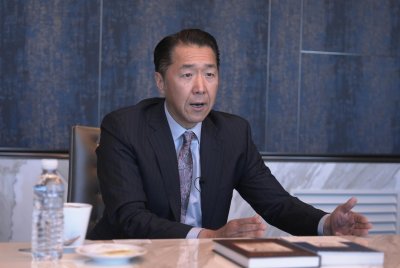
President Hassan Sheikh Mohamud responds to Israel’s recognition of Somaliland – a self-governing Somali territory, allegations of a possible Israeli military presence near the Red Sea and shifting power dynamics in the Horn of Africa. He addresses criticism by the United States as well as President Donald Trump’s remarks on Somalia, growing ties with regional allies and fears of wider instability as tensions rise between Israel, Iran and their rivals. At home, Mohamud faces pressing questions over security, human rights, media freedom and whether he will seek a third term ahead of crucial elections.

Source link