Jordan’s military said the attacks ‘neutralised arms and drug traffickers’ and destroyed their laboratories and factories.
Published On 25 Dec 202525 Dec 2025
Share
Jordan’s military has launched strikes on drug and weapons smugglers in the country’s northern border regions with Syria, targeting sites used as “launch points” by trafficking groups into Jordanian territory, according to reports.
The Jordan News Agency, Petra, said the strikes on Wednesday “neutralised a number of arms and drug traffickers who organise weapons and narcotics smuggling operations along the northern border of the Kingdom”.
Recommended Stories
list of 4 itemsend of list
Jordan’s armed forces destroyed “factories and workshops” used by the trafficking groups, Petra reports, adding that the attacks were carried out based on “precise intelligence” and in coordination with regional partners.
The Jordanian military did not name the partner countries involved in the strikes but warned that it would “continue to counter any threats with force at the appropriate time and place”, Petra said.
Syrian state broadcaster Al-Ikhbariah TV reported on its Telegram channel that the Jordanian army had carried out air strikes on locations in the southern and eastern countryside of Syria’s Suwayda governorate.
A resident of Syria’s Suwayda border region told the AFP news agency that the bombardment “was extremely intense and targeted farms and smuggling routes”, while the UK-based Syrian Observatory for Human Rights said jets and helicopters had reportedly taken part in the raid.
The observatory said photos taken at the scene of the attacks showed destruction at an abandoned military barracks of the former al-Assad regime in Suwayda.
There were no initial reports of casualties from the Jordanian attacks and no official comment from authorities in Damascus.
A farm believed to have been used for storing drugs was among the targets, according to the Zaman Al Wasl online news site, which also reported that similar Jordanian attacks had been carried out previously in a bid to stem the flow of captagon – an addictive, amphetamine-type stimulant.
Before the removal of Syria’s President Bashar al-Assad in December 2024, captagon had become the regime’s largest export and key source of funding amid the country’s years of grinding civil war.
Produced in vast quantities in Syria, the synthetic drug flooded the region, particularly the Gulf states, prompting neighbouring countries to announce seizures and call on both Lebanon and Damascus to ramp up efforts to combat the trade.
Although Damascus denied any involvement in the drug trade, analysts estimated that production and smuggling of captagon brought in billions of dollars for al-Assad, his associates and allies as they looked for an economic lifeline amid the civil war, which was fought between 2011 and the regime’s toppling last year.
Good morning, and welcome to L.A. on the Record — our City Hall newsletter. It’s Noah Goldberg giving you the latest on city and county government.
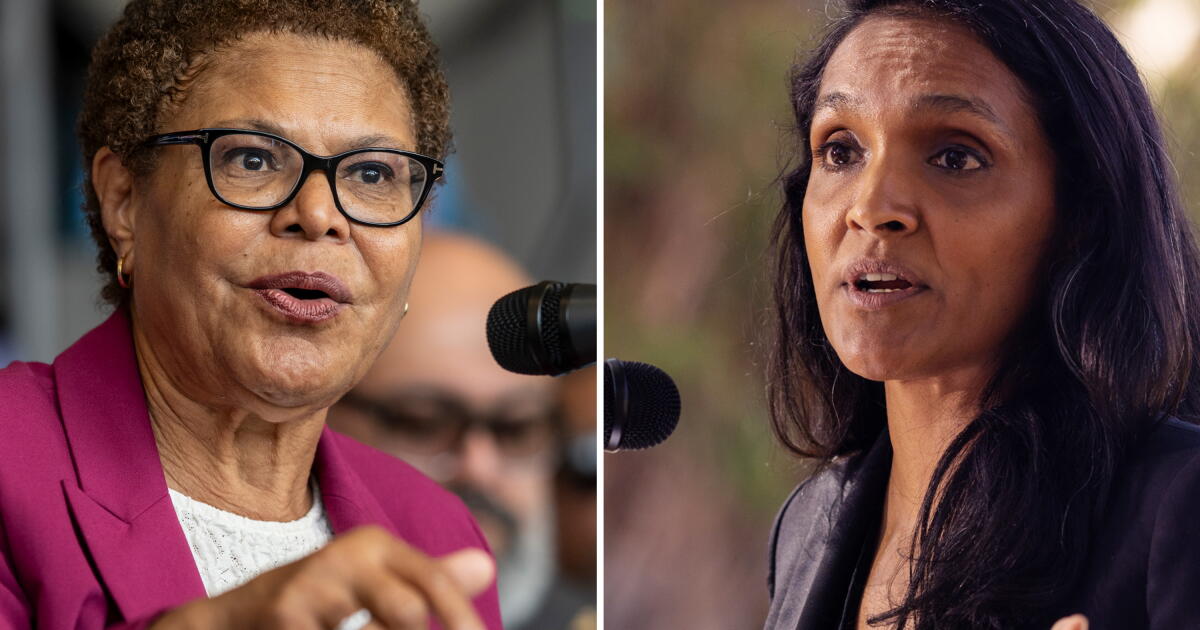
At her official campaign launch Dec. 13, Mayor Karen Bass told Angelenos that they face a simple decision.
After speaking about the Palisades fire, federal immigration raids and the homelessness and affordability crises, she turned to the primary election next June.
“This election will be a choice between working people and the billionaire class who treat public office as their next vanity project,” Bass told a crowd of a few hundred people at Los Angeles Trade Technical-College.
Attendees take their picture against a “photo booth” wall at Mayor Karen Bass’ reelection campaign kickoff rally.
(Myung J. Chun/Los Angeles Times)
In one sentence, without uttering a single name, the mayor appeared to be taking a shot at three different men. Was she talking about President Trump? Mayoral hopeful Austin Beutner? Her previous opponent, the billionaire developer Rick Caruso?
Or how about all of the above, suggested Bass’ campaign spokesperson, Doug Herman.
The billionaire class certainly includes Caruso, who self-funded his 2022 campaign to the tune of more than $100 million. It also includes Trump, who the New York Times estimated could be worth more than $10 billion. Though the mayor is not running against Trump, she likes to cast herself in opposition him. And Beutner, a former Los Angeles schools superintendent, was once an investment banker, Herman pointed out.
Beutner confirmed to The Times that he is not a billionaire. To the contrary, Beutner said, he drives a 10-year-old Volkswagen Golf.
Herman said Angelenos don’t care if Beutner has billions or just a lot of millions.
“Whether you’re a billionaire or multimillionaire is not really important to someone having trouble getting by and playing by the rules,” Herman told The Times.
“I’m trying to find the polite words,” Beutner said when asked about Bass’ comments. “Frankly, I think it’s an attempt to distract people from her record or lack thereof.”
Caruso declined to comment.
In a speech at Bass’ campaign launch, City Councilmember Hugo Soto-Martínez hammered the same point as the mayor.
City Councilmember Hugo Soto-Martínez shows his support during Mayor Karen Bass’ reelection campaign kickoff rally at Los Angeles Trade-Technical College.
(Myung J. Chun/Los Angeles Times)
“We’re always going to have rich old white men, the millionaires and billionaires — they think they can do it better,” he said. “They didn’t get it last time, and they’re not going to get it this time.”
Then, Soto-Martínez seemed to reference Beutner.
“Do you want a healthcare worker over a hedge fund manager?” he asked the crowd, to roaring applause (Bass used to work as a physician’s assistant, while Beutner founded the investment banking advisory group Evercore Partners).
With Bass’ reelection campaign underway, Beutner challenging her as a moderate and community organizer Rae Huangrunning to her left, Caruso could be the last major domino left to fall.
The Grove and Americana at Brand developer, who has been mulling a run for either governor or mayor (or neither), still has not revealed his plans for 2026.
Karen Bass supporters created signs for her reelection campaign kickoff rally.
(Myung J. Chun/Los Angeles Times)
Stuart Waldman, president of the Valley Industry & Commerce Assn., was among the diverse array of Bass supporters gathered on stage at Trade-Tech to voice their endorsements.
Waldman told The Times that he is supporting the mayor in his personal capacity, though VICA has not yet endorsed.
In 2022, Waldman and VICA supported Caruso, and Waldman spoke at some Caruso events.
He said he switched to Bass this time partly because of his unhappiness with the $30-minimum wage for airport and hotel workers passed by the City Council earlier this year. Businesses cannot move quickly enough to raise worker wages without laying off other workers, he said.
Waldman said that Bass arranged for him to meet with Council President Marqueece Harris-Dawson, who then introduced a motion that would phase in the minimum wage increase over a longer period. The current law brings the wage up to $30 by 2028, while Harris-Dawson wants the $30 minimum to start in 2030.
“Bass was instrumental in making that happen, and we appreciate that,” Waldman said.
Harris-Dawson, a Bass ally, was at the campaign kickoff but did not make a speech.
Some were not pleased with his minimum wage proposal. Yvonne Wheeler, who is president of the Los Angeles County Federal of Labor and was at the Bass event, called it “shameful.” Soto-Martínez, who co-sponsored the minimum wage ordinance, also opposes Harris-Dawson’s proposal.
Waldman said that Soto-Martínez refused to take a meeting with him during the minimum wage fight.
“Hugo and I come from two different worlds and see the world differently,” Waldman said. “Unfortunately, I am willing to talk to everybody, and he is not.”
But at the Bass campaign launch, the two men delivered speeches one right after the other. Waldman said the diversity of opinion among the mayor’s supporters is a good sign for her.
“It’s a broad coalition,” he said.
You’re reading the L.A. on the Record newsletter
State of play
— AFTER THE FIRES: The Times posted a project called “After the Fires” online Wednesday, nearly a year after the Palisades and Eaton fires. The stories, which document mayoral missteps, changes at the LAFD, failed emergency alerts and more, will be published as a special section in Sunday’s print edition.
— VEGAS, BABY: Councilmember John Lee is facing a steep fine for his notorious 2017 trip to Las Vegas, with the city’s Ethics Commission saying he must pay $138,424 in a case involving pricey meals, casino chips and expensive nightclub “bottle service.” The commission doled out a punishment much harsher than that recommended by an administrative law judge. Lee vowed to keep fighting, calling the case “wasteful and political.”
— EX-MAYOR FOR GOVERNOR: Four Los Angeles City Council members — Harris-Dawson, Heather Hutt, Bob Blumenfield and Curren Price — threw their support behind former L.A. Mayor Antonio Villaraigosa to be the next California governor.
— POOLS OUT FOR WINTER: City swimming pools will be closed on Fridays “until further notice,” the Department of Recreation and Parks announced Monday. “These adjustments were necessary to continue operating within our available resources,” the department said on Instagram.
— HOT MIC: Bass was caught on a hot mic ripping into the city and county responses to the January wildfires. “Both sides botched it,” she said on “The Fifth Column” podcast, after she shook hands with the host and they continued chatting. The final minutes of the podcast were later deleted from YouTube, with Bass’ team confirming that her office had asked for the segment to be removed.
— HOMELESSNESS FUNDING: The Los Angeles County Affordable Housing Solutions Agency on Wednesday approved nearly $11.5 million in homeless prevention funds, the largest single allocation yet for the new agency.
— A YEAR OF JIM: After more than a year as the LAPD’s top cop, Chief Jim McDonnell is receiving mixed reviews. While violent crime is at historic lows, some say the LAPD is sliding back into its defiant culture of years past.
— “CALM AMIDST CHAOS”: LAFD spokesperson Erik Scottannounced this week that he has written a “frontline memoir” about the January wildfires. The book is set to be released on the one-year anniversary of the Palisades fire.
— “THE GIRLS ARE FIGHTING”: Mayor Karen Bass and L.A. County Supervisor Lindsey Horvath got into a tiff on X over homelessness. After Bass published an op-ed in the Daily News saying that the county’s new Department of Homelessness is a bad idea, the supervisor shot back, calling the mayor’s track record on homelessness “indefensible.” Following the spat, City Councilmember Ysabel Jurado posted on X, “I fear the girls are fighting.” And Austin Beutner, who is running against Bass, responded with a nearly six-minute video criticizing the mayor’s record on homelessness.
— OVERSIGHT OVER?: Experts worry that effective civilian oversight of the L.A. County Sheriff’s Department could be in jeopardy following a recent leadership exodus. A succession of legal challenges and funding cuts, coupled with what some say is resistance from county officials, raised concerns that long-fought gains in transparency are slipping away.
QUICK HITS
Where is Inside Safe? The mayor’s signature program did not conduct any new operations this week. The team “returned to previous Inside Safe operation locations, building relationships with unhoused Angelenos in the area to offer resources when available,” the mayor’s office said.
On the docket next week: Mayoral candidate Rae Huang will host a text bank and volunteer meetup at Lawless Brewing on Monday, Dec. 22. The City Council remains in recess until Jan. 7.
Stay in touch
That’s it for now! We’ll be dark next week for the holidays. Send your questions, comments and gossip to LAontheRecord@latimes.com. Did a friend forward you this email? Sign up here to get it in your inbox every Saturday morning.
ONE lesser-visited region in Spain has been named as one of the best places to visit next year.
It has a main city that holds bull racing events along with huge valleys, mountains and even a desert.
Sign up for the Travel newsletter
Thank you!
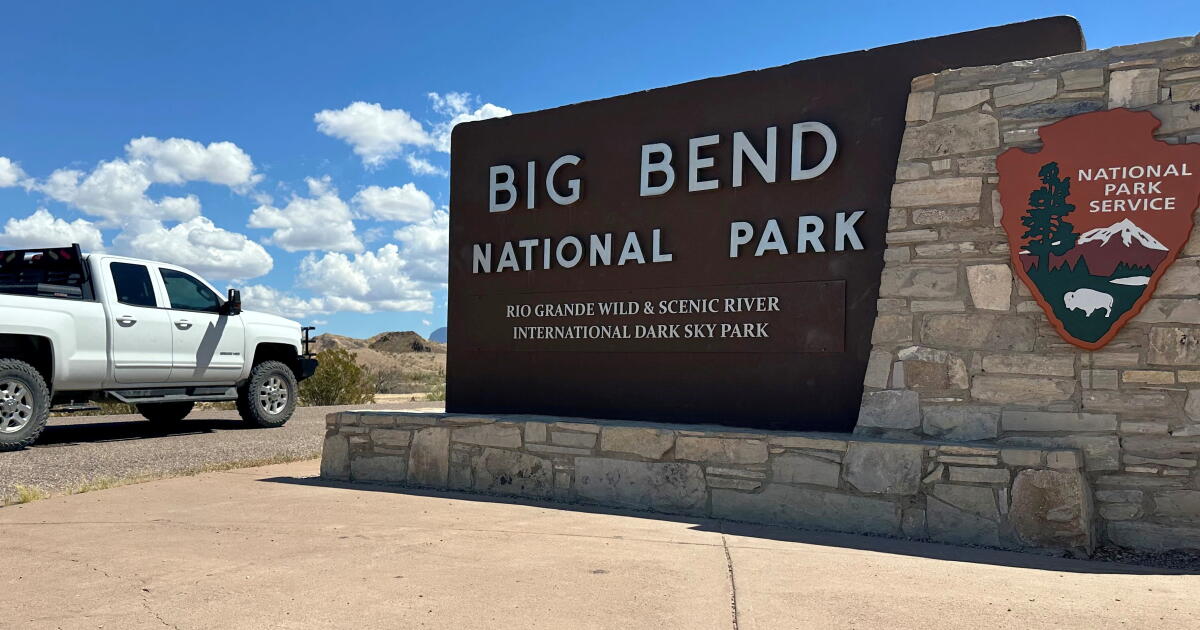
The capital of Navarre is the city of Pamplona and has a mountain landscapeCredit: GettyNavarre is part semi-desert called the Bardenas RealesCredit: Alamy
Conde Nast Traveller declared Navarra, also called Navarre, as one of the ‘Best Places to Go in Spain and Portugal in 2026’.
The publication said: “We often make a point of covering lesser-known sites in every region and in 2026 we want to encourage readers to check out a new project focused on rural areas in Navarra.”
And it’s famous for its San Fermín festival which is celebrated each year from July 6 to 14 with parades, music, dancing, and bullfights.
The most well-known event is called Encierro or Running of the Bulls.
It involves hundreds of people running in front of six bulls down a stretch of narrow streets which ends in Pamplona’s bullring.
The city also has a pretty Old Town, Cathedral, the Renaissance-like fort Ciudadela, Plaza del Castillo, and the Museum of Navarre.
It’s not just Pamplona, there are other smaller cities within the region, like Barañáin,Burlada, andEstella-Lizarra.
The region was even once an independent kingdom and known as the Kingdom of Navarre.
There are valleys and rivers around the region for kayaking and watersportsCredit: Alamy
Eventually it as split with Lower Navarre merging into France, and Upper Navarre becoming a province of Spain.
Aside from the cities, Navarre also has a semi-desert region called Bardenas Reales which is around 162 square miles.
The desert has plenty of hiking trails and places to go biking – but unique rock formations aren’t to be climbed on themselves as they are part of an eco-system.
In contrast, part of Navarre encompasses the Pyrenean valleys.
It has high mountain peaks like Mesa de los Tres Reyes as well as green valleys, forests and even caves.
During the winter, the Pyrenean valleys become a great and popular spot for skiers.
For four days last summer, professional beer sommeliers and experienced brewers gathered in Estoril, Portugal, for the World Beer Challenge.
The international contest declared which beers were the greatest in the world across a number of categories.
One of the winners of the 2024 gongs was Spanish beer Ambar Especial, which picked up a perfect 100/100 score from all 125 judges, who came from 29 different countries.
The beer is made in the city of Zaragoza in Spain and claimed the gold in the International Lager category at this year’s event.
It’s a city that is often overlooked by people heading to north Spain, with visitors more commonly heading to places like Barcelona, or the beaches of San Sebastian.
Good morning, and welcome to L.A. on the Record — our City Hall newsletter. It’s Noah Goldberg, with an assist from David Zahniser, giving you the latest on city and county government.
With the 2028 Summer Olympics creeping closer, the Los Angeles City Council still has not come to an agreement with the private committee overseeing the Games over who will pay for the additional city services required to host athletes and spectators from around the world.
With hundreds of millions of taxpayer dollars at stake, the city has blown past its own Oct. 1 deadline for hammering out an “Enhanced City Resources Master Agreement” contract with LA28 and is now considering filing suit.
City officials indicated the potential for a lawsuit against LA28 Monday during a meeting of the council’s ad hoc Olympics committee. In closed session, the committee conferred “with its legal counsel relative to possible initiation of litigation,” according to the meeting agenda.
But after a lengthy closed-door meeting, the committee broke without moving any closer to suing LA28.
“There was no recommendation to move forward on litigation,” said Councilmember Bob Blumenfield, who sits on the Olympic committee, in a brief interview with The Times after the closed session.
Although it remains unclear exactly why the city might sue LA28, the stakes of the negotiations between the two parties are high.
The Olympics have repeatedly been billed as a “zero cost” event for Los Angeles, with the city’s costs reimbursed by LA28 and the federal government. But depending on how “enhanced services” are defined, the city, which is facing financial headwinds, could end up bearing significant costs for services, including security, trash removal, traffic control and paramedics, that will go well beyond what it provides on typical days.
One of the biggest expenses will be security, with the LAPD, as well as a host of other local, state and federal agencies, working to keep athletes and spectators safe during the 17-day Olympics and the two-week Paralympics.
During a presentation before the council committee on Monday, City Administrative Officer Matt Szabo used the Dodgers’ 2024 World Series victory parade as an example of a similar, albeit much smaller scale, situation.
The baseball team reimbursed the city nearly $2 million for police, fire department, transportation and other services to pull off the parade safely.
Monday’s developments provided a small glimpse into the secretive negotiations between the two sides. Coupled with the missed October deadline to finalize an agreement, it was apparent that the negotiations were not going completely smoothly.
A senior city official, who requested anonymity to discuss sensitive negotiations, said the city is not at an “irresolvable impasse” with LA28 but that litigation is very much on the table in an effort to make sure the city is fully reimbursed.
The city and LA28 are meeting daily to try to hash out an agreement, the source said, characterizing the negotiations as “intense and focused.”
“All parties are working actively at the table to finalize the [ECRMA] that will ensure reimbursement of the city’s costs required by the 2028 Games,” the city and LA28 said in a joint statement to The Times.
Szabo told the council committee that it’s more important to get a good deal than an on-time deal.
“This needs to be the right agreement for the city,” Szabo said.
The city also hopes to recoup some costs from the federal government. PresidentTrump’s “Big Beautiful Bill” included $1 billion to reimburse state and local governments for security, planning and other Olympics-related costs. But exactly what the money can be used for won’t be known until next year, Szabo said.
But the unpredictability of the Trump administration has left the city and LA28 wary about whether all the security costs will be reimbursed, said Council President Marqueece Harris-Dawson.
“With this administration, you don’t know what the hell is going to happen, right?” Harris-Dawson said during the Los Angeles Current Affairs Forum Luncheon on Thursday. “So both of us [the city and LA28] are looking at a $1.5-billion bill, and we’re like, ‘Yeah, I’m not paying it. You’re gonna pay it.’”
So far, Harris-Dawson said, the federal government has been “good” about putting money aside for the Games. But that could change, Harris-Dawson said.
“I could show up here 10 days from now and the world could have turned on its head, because you just never know how the guy’s gonna wake up in the morning, or what he’s gonna see on TV to make him react,” he said of Trump. “So … it’s day to day, but on this particular issue, so far so good.”
Outside of security, LA28 should cover costs like staffing, expenses and equipment related to the Games, Szabo said.
Some don’t have high expectations that the costs will be completely footed by others. In a July letter to the city, retired civil rights attorney Connie Rice said she had heard from city employees worried that L.A. would be left with a massive bill.
What if LA28 dissolves after the Olympics — how would the city force it to provide reimbursement? Security and other city services typically extend beyond the Olympic venue itself — how large of a radius around the venue would be included in the reimbursement?
These are questions Rice feels the city has not yet answered.
“I have seen 10th-graders plan their prom better than the city is planning these Olympics,” Rice said in an interview.
You’re reading the L.A. on the Record newsletter
State of play
— RECRUIT-GATE: Months of tension between Los Angeles Mayor Karen Bass and members of the City Council burst into public view Friday when the council rebuffed the mayor’s request to significantly increase police hiring. The council instead agreed to a more modest increase, which could ramp up if the city finds money for more police recruits.
— JUST A COUPLE HUNDRED MILLION OFF: L.A. County officials justified their $200-million purchase of the Gas Company Tower by claiming that seismic retrofits of their old 1960s headquarters would cost $700 million. But experts hoping to save the building now say the retrofits could cost under $150 million, using standard techniques applied to other historic L.A. buildings.
— STEP DOWN: The chief executive of Weingart Center, Kevin Murray, resigned from the L.A. County Affordable Housing Solutions Agency board amid a federal real estate investigation. Federal prosecutors say a Cheviot Hills property was purchased for $11.2 million, then flipped to Weingart for $27.3 million. Weingart used public money to finance the purchase and conversion of the site into homeless housing.
— ED1 FOREVER: The L.A. City Council approved an ordinance on Tuesday formalizing Mayor Karen Bass’ Executive Directive 1, which fast-tracks planning department approval of 100% affordable housing projects. That initiative, which began as an emergency order issued by Bass in 2022, will now be a permanent part of city law.
— CROSSWALK VIGILANTE: An activist with People’s Vision Zero was arrested and cited while painting a crosswalk at an intersection in Westwood on Sunday. The arrest marks the latest clash between the city of Los Angeles and traffic safety advocates who are frustrated by delays in marking pedestrian crossings and are taking it upon themselves to do the work they say can’t wait.
— END OF WATCH(DOG): L.A. County Inspector General Max Huntsman, who served as chief watchdog over the L.A. County Sheriff’s Department for 12 years, is retiring. In a farewell letter, he laid into county leaders, saying they ignored his office’s efforts at oversight.
QUICK HITS
Where is Inside Safe? The mayor’s signature program to combat homelessness went to Downtown L.A., South L.A., Exposition Park, Hollywood, Silver Lake, North Hills, Pacoima, Woodland Hills, Shadow Hills and Van Nuys this week, bringing more than 70 people inside.
On the docket next week: The city’s Ethics Commission will meet Wednesday. The City Council is on recess until Jan. 7.
Stay in touch
That’s it for this week! Send your questions, comments and gossip to LAontheRecord@latimes.com. Did a friend forward you this email? Sign up here to get it in your inbox every Saturday morning.