SEATTLE — Logan Gilbert struck out eight in four no-hit innings and five Seattle pitchers combined for 12 strikeouts as the Mariners beat the Angels 7-3 in the regular-season finale for both teams.
The Angels finish 2026 with a record of 62-100, the first 100 loss season in franchise history. It was a 10-game slide for the Angels, who had a 72-90 record in 2025.
Gilbert retired the first 12 batters he faced and, after walking Moisés Ballesteros at the start of the fifth inning, was lifted and left to a standing ovation from the Mariners fans.
The Mariners took a 1-0 lead in the second inning when Weston Wilson drove in Cole Young with a grounder to third base.
Seattle scored two more runs in the third on Cal Raleigh’s RBI single off Angels starter Yusei Kikuchi, and Dominic Canzone scored on a groundout by Josh Naylor to make it 3-0.
Kikuchi (1-7) gave up three runs and six hits over five innings, with one walk and seven strikeouts.
Bryce Teodosio scored for the Angels on a sacrifice fly in the top of the sixth inning, but the Mariners responded with three in the bottom half when Young scored on an Angels throwing error and Randy Arozarena drove in two with a double to make it 6-1.
Jose Siri hit a two-run homer for the Angels in the eighth, and Leo Rivas scored for the Mariners in the bottom half on a wild pitch.
Cooper Criswell pitched the ninth for the Mariners. Eduard Bazardo (4-4) got the win.
After finishing the 2025 season with a 90-72 record and advancing to the seventh game of the ALCS against Toronto, the Mariners missed the playoffs with a disappointing 76-86 record this season. Despite that mark, the Mariners drew 2,883,798 fans in 2026, the team’s highest total since 2004.
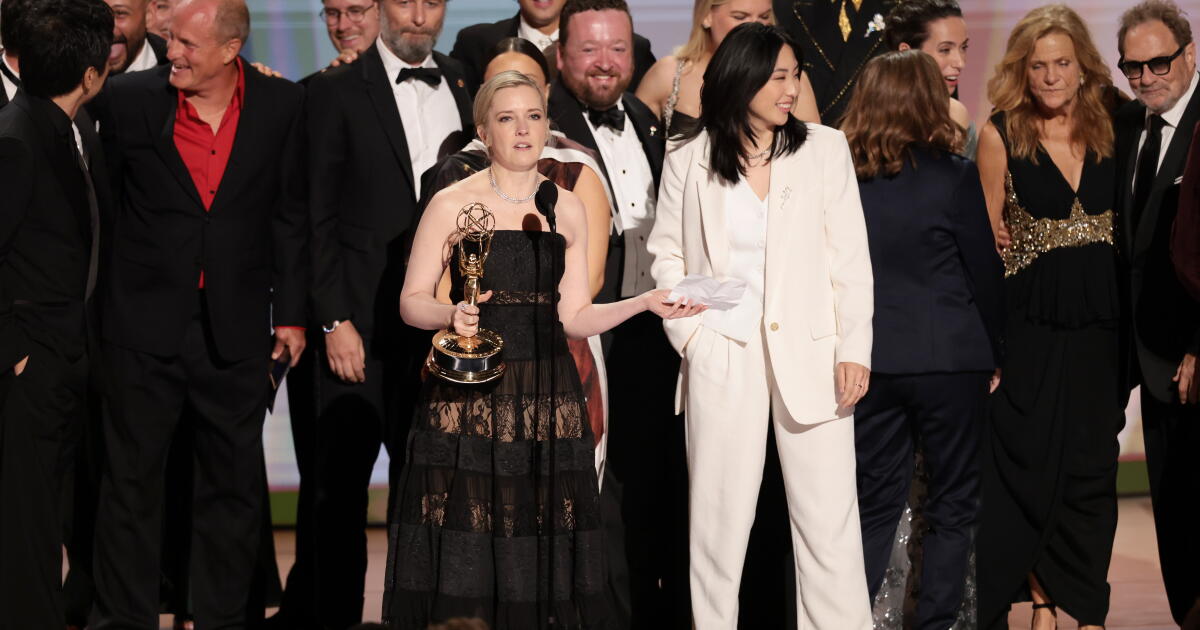
Forget about its comparison to Martha’s Vineyard. “Widow’s Bay” can now call itself the next Emmy-winning comedy series.
At Monday’s Emmys ceremony, the first-year series beat out former winners “The Bear” and “Hacks”; returning nominees “Abbott Elementary,” “Nobody Wants This,” “Only Murders in the Building” and “Shrinking”; and fellow newcomer “Margo’s Got Money Troubles.”
The show took home a record-breaking 14 Emmys, the most ever for a comedy series. The wins include lead and supporting actor, supporting actress, directing and writing. The total overcame the milestone set by “The Studio” with its 13 wins last year.
Apple TV’s horror-comedy series about a fictional cursed island off the coast of New England and its mayor, played by Matthew Rhys, who is trying to save it from economic depression, became a word-of-mouth hit that’s inspired memes and fan cosplay. Creator and showrunner Katie Dippold began writing the series more than 10 years ago, inspired by her trips as a youth to the Jersey Shore and quaint New England seaside towns.
“This was such a great collaboration of the best wonderful weirdos and artists,” Dippold said while accepting the award. “We’d also like to thank the evil entity on the island that trusted us with its story.”
“That is exciting and terrifying,” she added backstage. “One thing I meant to thank in the speech, there’s so many people that spread the word early on, all the people online talking about it with reviews, people tweeting about it … we’re so grateful for that.”
“They were predominately our parents,” Rhys joked.
“And some burner accounts,” Dippold added.
The series was a late entry into the Emmy race, premiering at the end of April. Hiro Murai, who directed five of the series’ 10 episodes and is an executive producer, told The Times he thought of it as a “spooky summer show.” Murai won for directing for a comedy.
“The show takes place during the summer, and so much of what makes it scary is that it doesn’t look like it should be scary. It’s all sunlight,” he said. “The atmosphere is very summery.”
The series stars Rhys as overcompensating mayor Tom Loftis, with a supporting cast that includes veteran actors Stephen Root, Dale Dickey and Kate O’Flynn.
“Widow’s Bay” earned 19 nominations, including lead actor for Rhys and acting nominations for Root and O’Flynn. All three won in their categories.
“Everyone’s more than ready for it and thirsty for it in a real way,” he said. “I really hope this does something in the Hollywood psyche, where they go, ‘Let’s put away the remakes and let’s just get after new challenging, original material.’ ”
The win gives Apple TV its second consecutive comedy series victory after “The Studio” won last year, and its fourth (“Ted Lasso” in 2021 and 2022) in the category in the last six years.
The tech giant in San Bruno, Calif., has renewed its partnership with festival promoter Goldenvoice, keeping exclusive livestream rights to the three-day desert festival through 2030. The next edition, in April 2027, will mark 15 years of Coachella on YouTube.
“We’re excited to bring the energy of the desert to millions of music fans around the world,” Neal Mohan, YouTube’s chief executive officer, said at its Made On YouTube event in New York City on Wednesday morning.
This year’s Coachella, headlined by Sabrina Carpenter, Justin Bieber and Karol G, drew the most concurrent viewers in the history of Coachella on YouTube, according to the company. Bieber, who was discovered on YouTube, even included a nostalgic homage to the platform into his set.
Over the years, the livestream has become an essential part of the Coachella experience, especially for fans who can’t make it to the desert. What started as a single feed has evolved into live coverage of every stage across both weekends.
Beyond Coachella, YouTube doubled down on livestreaming during its presentation, unveiling a slew of new live and AI-powered tools. In August, more than 600 million logged-in viewers watched live content on the platform each day on average, according to YouTube. The new live features include a new co-hosting function in which two creators can appear on the same stream together, and a live auto-dubbing tool that automatically translates speech in real time. Several of the updates are slated to roll out in early 2027.
“Whether it’s a music festival or a creator’s livestream, fandom is no longer a spectator sport,” added Mohan. “Just look at the sheer scale of the live communities we’re seeing today.”
YouTube isn’t the only streamer leaning into live. Netflix has spent the last few years buliding out its own live business, which now includes NFL and MLB games.
The 13-year-old beat the previous 400m Asian Games record, set by China’s Ye Shiwen in 2014, by about 4.5 seconds.
Published On 23 Sep 202623 Sep 2026
China’s 13-year-old swimming sensation Yu Zidi has completed a hat-trick of Asian Games golds with a dominant victory in the 400m individual medley, two years before the Los Angeles Olympics.
The schoolgirl powered home in an Asian Games-record 4 minutes 28.56 seconds (04:28.56) on Wednesday to make it a clean sweep of her three individual events in Tokyo, following victories in the 200m butterfly and 200m individual medley, also in games-record times.
Recommended Stories
list of 4 itemsend of list
She beat the previous 400m games record set by China’s Ye Shiwen in 2014 by approximately 4.5 seconds.
It was the fourth-fastest time in the world this year, with world record-holder Summer McIntosh owning the top three.
With the next Olympics two years away, Yu is shaping up to be a major medal contender at the 2028 Los Angeles Games.
Last year, she became the youngest medallist at the World Aquatics Championships, where she won bronze for China’s relay team at the age of 12, and has since been earmarked for success in the swimming world.
At the same championship, Yu finished fourth by a small margin in three individual events.
In March, the teen sensation built on her growing reputation with a 200m butterfly victory over seven-time American Olympic medallist Regan Smith at the China Swimming Open.
At the Asian Games, Yu has dominated the pool and showed another glimpse of her immense talent in the 400m individual medley, where she took the lead from the start and finished 3.95 seconds clear of silver medallist Ke Wenxi of China, with Japan’s Mio Narita finishing third.
In addition to grabbing international headlines, Yu has become a sensation at home following her Asian Games exploits.
The story of her introduction to competitive swimming after being spotted by a coach at a water park, and her struggle with interviews, has gone viral on local social media platforms.
At the games, Yu was asked by the media whether answering questions was the hardest part of competing. She replied, with a giggle: “Every time I just want to float off somewhere else.”
Ri Song-gum wins North Korea’s first gold at the games while Chanu finally clinches elusive Asian Games medal in Japan.
Published On 23 Sep 202623 Sep 2026
North Korean weightlifter Ri Song Gum has broken three world records en route to winning gold in the women’s 49kg (108lbs) competition, which saw India’s Mirabai Chanu win an elusive Asian Games medal by finishing second.
Ri gave North Korea its first gold of the games in Nagoya, Japan, on Wednesday, joining an elite club of four weightlifters who have won three Asian Games gold medals.
Recommended Stories
list of 4 itemsend of list
The 28-year-old hauled 94kg above her head in the opening snatch discipline – the first official segment of the competition where athletes lift a barbell from the floor to an overhead position in a single motion. The lift was 1kg heavier than the previous world record of 93kg.
Ri followed it up by breaking the world record twice in the 115kg clean and jerk – a two-part movement where a barbell is lifted from the floor to the shoulders and then pushed overhead. The 4ft-7in (139.7cm) weightlifter hoisted 116kg and 121kg above her head.
Ri’s total lift of 215kg obliterated the old world record total by 7kg.
She is the fourth lifter, and first woman, to win three Asian Games weightlifting golds and joined Iran’s Mohammad Nassiri (1966-74), South Korea’s Kim Tae-hyun (1990-98) and Iran’s Behdad Salimi (2010-18), who all won three gold medals. No athlete has won four weightlifting gold medals.
Ri joined an elite club of just four weightlifters who have won three Asian Games gold medals [Dita Alangkara/AP]
In the same category, India’s Chanu finally won an Asian Games medal at the third time of asking. She won a silver medal at the Tokyo Olympics in 2021.
The 32-year-old is India’s most decorated weightlifter, with three Commonwealth gold medals and a silver to her name, along with multiple global titles.
She lifted a total of 198kg after a snatch of 87kg and a clean and jerk of 111kg, while Indonesia’s Diana Tri Wijayana took bronze with a total of 191kg, comprising 88kg and 103kg.
Chanu’s silver also ended India’s 28-year wait for a weightlifting medal at the games since Karnam Malleswari won silver in 1998.
Mirabai Chanu during the women’s 49kg weightlifting final [Dita Alangkara/AP]
Six-year-old Lian Yunzhi from China broke the women’s 3x3x3 Rubik’s Cube world record, and then broke her own record days later. She also became the only female cuber in the world to have an average time under 4.5 seconds.
Nearly every summer, Tove Lo finds herself itching for a change.
Typically, the sweltering season will prompt the Swedish singer-songwriter to do something new, like dye her hair black or switch up her personal style. But even in the midst of this annual metamorphosis, she tends to find her way back to the same place: a small Swedish fishing village called Torekov.
Between recovering from her first heartbreak and overcoming burnout from her debut album “Queen of the Clouds,” the remote town has offered her a seaside refuge ever since childhood. Yet, with the making of her latest studio album “Estrus,” Torekov officially solidified itself as a mainstay in the singer’s artistic process.
“It’s kind of an emotionally triggering place for me, both good and bad,” Lo said, as she sank farther into the booth at Thai Angel on a humid August afternoon. “I needed a second to be in a place without distractions, where I’m more like a person than an artist … It almost offers a creative force field that I need to enter every process now.”
Torekov, as Lo describes it, is what the neighborhood in “‘The Truman Show’ is like before they hit record.” It’s somewhat of an idyllic place where the seashore is lined with wooden houses; sheep graze along the grassy cliffsides and residents wander around the shops in bathrobes and clogs, right after their morning swims.
However, when Lo visited during the off-season, its emptiness was “ominous” — unintentionally stirring her inner want to cause chaos. In true Tove Lo fashion, the surrounding serene village made her turn to the familiar sounds of heavy club electronica, further building on the contradictory ethos that comprises “Estrus.”
“Every song feels different. It’s like every feeling I’ve ever felt condensed into 13 songs,” Lo said, in between sips of her iced tea. “[Listeners] are getting this horny, rolly, aggressive bass line, and these super intimate, knife-to-the-heart kind of emotions in a very intimate way. I feel like they’re going to be emotionally exhausted.”
Under the dim red light of the Koreatown bar, the singer exuded an air of comfort, as she’s somewhat of a Thai Angel regular. The Swede, who’s lived in L.A. for nearly a decade, hosts a secretive, recurring party at the bar called SOUP. Usually the bar is a rowdy reprieve filled with sweaty bodies and pounding bass lines, with Lo situated behind the DJ decks. But on that Monday afternoon, hours before the bar opens, she had the place almost entirely to herself.
Tove Lo outside Thai Angel, a Koreatown bar where she hosts a recurring party.
(Jason Armond / Los Angeles Times)
With only the swirling sounds of an overhead air conditioning vent to cloud her thoughts, she explained that, at the beginning, “Estrus” was bogged down by an unprecedented wave of writer’s block. The singer had initially tried to get a head start on her sixth studio album at home in Los Angeles, but she felt a new kind of pressure hanging over her head.
“I had this feeling that this is my sixth album and I had something to prove, like I needed to have a message or some kind of advice,” Lo said.
She credits the newfound tension to her career’s longevity. The 38-year-old, raised in the suburbs of Stockholm, got her start in music as a songwriter in the early 2010s, earning credits on tracks including Ellie Goulding’s “Love Me Like You Do” and Lorde’s “Homemade Dynamite.”
She gave in to her pop-star ambitions in 2014, with the release of her debut album, “Queen of the Clouds.” The record featured her breakout hit “Habits (Stay High),” which details her getting the munchies, throwing up in a tub and going to sex clubs to get over a heartbreak. Lo said she likes to think that, with the early success of the rebellious anthem, she was “very clear from the start.”
“I’m a hot mess,” Lo remarked, between laughs. “Here you go.”
Since then, she’s continued to develop her raw pop sound by collaborating with DJs like Flume and SG Lewis, while adding to her library of cult-classic tracks like “disco tits” and “Glad He’s Gone.” But at this point in her career, she said it also felt like she “should’ve had all the answers” by now.
“I had this idea that I had to prove that I had become a better, bigger person,” Lo said. “But I’m just the same f— messy girl.”
And the sound of “Estrus” follows suit. Immediately, the opening song, “a lot of feelings, no solutions,” hits listeners with a punchy bass line and blatant lyrics about having no advice to offer. Throughout the 13-track record, she flip-flops between being vulnerable and playful while also being hedonistic and making sacrifices. For example, on “the bad one,” she takes accountability for being a “problematic” partner over staccato percussion and a cinematic synth, while also being grateful she got out of the relationship. Similarly, on “F.A.M.T,” she leans into her avoidant tendencies on top of a choir of high-pitched cyber chimes and resorts to sexual endeavors instead of looking inward.
Tove Lo is set to perform at the Greek Theatre on September 27 as part of the Estrus tour.
(Jason Armond / Los Angeles Times)
“We suppress a lot to be respectful to other people, and there’s nothing bad in that,” Lo said. “But if you never let your vices drive you for a night or a day, I think you’ll go absolutely crazy. You just need to have moments where you don’t think about the consequences. Just be hedonistic for a second. Indulge.”
Like much of Lo’s music, the new project, named after a female mammal in heat, is centered around the age-old tension between the body and mind. On her previous album “Dirt Femme,” released in 2022, she opened up about being unsure if she wants children, while denouncing the societal expectations that come with being a married woman.
And it’s still something she’s trying to figure out on “Estrus.” The album’s final track, “source of life,” offers up a mantra of contradicting adjectives like “feral,” “euphoric” and “fragile,” while questioning if she ruined her chances of motherhood by “partying late.”
“My body [says] well, maybe we should just have like one baby, and my mind is like, absolutely not,” said Lo. “I don’t know who’s gonna win. But I do feel like I’m in the final boss of adventures.”
By the end of “Estrus,” it’s apparent that the tug-of-war between her body and mind isn’t over. And she’s not sure if there will be a resolution. It’s still an ongoing battle — and it’s precisely what Lo says she was aiming for.
“There’s no good advice on this album,” she playfully reiterated. “Just don’t ask me.”
WASHINGTON — As President Trump tells supporters to vote in November as if he were on the ballot, California Republicans in tight congressional races are sending a different message to voters.
The four California Republicans running in the state’s most competitive U.S. House races, plus a fifth opposing a fellow Republican in a close contest, are appearing to keep some distance from Trump as they campaign ahead of the Nov. 3 election.
They all skipped the president’s midterm convention in Dallas this month. Two candidates in tough races removed references to Trump on their campaign websites. And most are favoring a heavy focus on local and state issues in their campaigns — a contrast to Trump’s approach, driven home in Dallas, of casting the election as a loyalty exercise.
President Trump watches as balloons fall at the Republican convention.
(Alex Brandon / Associated Press)
“You’ve got to do me the biggest favor you’ve ever done me. You’ve got to do this for me: You have to pretend I am on the ticket,” Trump told a crowd at the GOP midterm convention. “Pretend I am on the ticket because this is going to turn out to be one of the most important elections.”
The dynamic within the GOP reflects several competing factors: the need to attract new voters in districts made more purple by California’s redistricting, the hope that Trump can rally the base while candidates focus on swing voters, and the fear among Republicans that the president’s flagging approval ratings could cost them crucial seats in the midterms.
“There is a bit of jujitsu to it,” said Rob Stutzman, a longtime California Republican consultant. “These candidates are hoping that Trump motivates these voters to vote … [while they] focus on gaining votes, particularly from independents who don’t like the president right now.”
The state’s redistricting under Proposition 50, which redrew the congressional map to be more favorable to Democrats, also handed Republican candidates the necessity of persuading more unaffiliated voters and moderate Democrats — likely a major factor in their stances toward the White House, said Pete Peterson, dean of the Pepperdine University School of Public Policy.
“To the degree that Republican candidates are distancing themselves, they’re understanding that they’re actually appealing to newer electorates,” Peterson said. “[The districts] have been made more moderate, more purple, and candidates may be responding accordingly as a way of trying to attract those voters.”
Facing headwinds
The party in power typically faces an uphill battle in midterm elections, and vulnerable candidates often distance themselves from the sitting president. As Republicans fight to keep control of the House and Senate in November, however, they are dealing with particularly serious challenges stemming from Trump’s low favorability rating and public frustration with the economy, the war in Iran and the escalating trade war with Canada.
Trump largely has dismissed concerns about the economy and the war, even as polling shows both are weighing heavily on voters. He also has exacerbated challenges for his party amid the growing public backlash to data centers and artificial intelligence, doubling down on his support for AI advancement in recent days even as GOP candidates in tight races look to respond to constituents’ concerns.
He also drew criticism from some within his party after promising to give a $5,000 payment to every adult citizen if Republicans win the House and Senate in November, a legally murky idea.
Still, Trump has urged Republican lawmakers in tough reelection campaigns to run on his record and earlier this month vowed to spend the last month before the election stumping for candidates in 35 battleground races, including in Alaska and Texas. He has not yet mentioned plans for California.
“All you have to do is talk about it, and you’re going to win and you’re going to win big,” Trump said of his record.
Candidates nationwide seem unconvinced. A Washington Post analysis found that Republican politicians have stopped mentioning Trump on social media, doing so about half as often as they did in January. Many in competitive races skipped his convention, and in recent weeks some have broken with him on data centers and the payout pitch.
In California, the headwinds for the GOP were captured in a survey released last week: A greater share of independents said they would vote for the Democratic candidate over the Republican in their House districts, the Public Policy Institute of California found, and a majority of likely voters polled Sept. 4-10 said they would choose the Democratic candidate if the election were held now.
Robert Rivera, left, of San José and Corky Galey of Modesto listen to gubernatorial candidate Steve Hilton during a town hall in Modesto on Aug. 26.
(Sara Nevis/For The Times)
Last week, Republican gubernatorial candidate Steve Hilton’s campaign blasted a fundraising text to voters that began: “We get it. Maybe you don’t like Trump. Maybe you can’t stand MAGA.”
Democrats have seized on the dynamic.
“California Republicans know their loyalty to a toxic MAGA brand is a losing strategy,” said Anna Elsasser, spokesperson for the Democratic Congressional Campaign Committee. “Unlucky for them, no desperate rebrand can save them from their clear record of broken promises — from raising costs, to ripping away health care, to supporting another forever war everyone hates.”
Leaning on the local
Rep. Young Kim (R-Anaheim Hills) stripped her campaign website of the “America first” branding and references to Trump that defined it before the primary.
(Bill Clark / CQ Roll Call via Associated Press)
In Orange County, Rep. Young Kim — in a close contest with fellow Republican Ken Calvert — has stripped her campaign website of the “America first” branding and references to Trump that defined it before the primary. And in Northern California, Rep. James Gallagher has scrubbed Trump’s endorsement from his campaign website, which months ago prominently featured his close ties to the president.
Other candidates in tight races — Rep. David Valadao, running for reelection in the Central Valley; Kevin Lincoln, challenging Democratic Rep. Adam Gray; and Jim Desmond, running to fill the seat of retiring Republican Rep. Darrell Issa — have leaned on campaign optics centered around their regions rather than on sharply partisan politics.
None of the three attended Trump’s convention. Valadao rarely mentions Trump on social media and is the last House Republican still running who voted for Trump’s second impeachment. Desmond does not mention his support from Trump on his endorsements web page; Lincoln does.
Rep. Kevin Kiley, who left the Republican Party this year after his district was redrawn and after he clashed with Trump over tariffs, also is making an appeal to middle-of-the-road voters, promoting legislation around AI safeguards while taking aim at Sacramento policies. Kiley still caucuses with congressional Republicans but says he won’t if reelected.
Representatives for Gallagher, Lincoln, Desmond and Valadao did not respond to requests for comment.
Chris Pack, a spokesperson for Kim, said she was “proud of her work with President Trump to deliver results for Southern California.” But he framed her race as a choice between Kim and her opponent, saying the campaign’s messaging is focused on Calvert’s record. Pack didn’t answer a question about the removal of Trump’s name from Kim’s website.
Moves like Kim’s and Gallagher’s are angled at conveying to moderate voters that “they’re not going to be beholden to the party line, they’re simply going to run on common sense,” and may give centrist Democratic voters “permission” to consider the candidates, said one GOP operative who works in the state, granted anonymity in order to speak candidly.
In competitive districts like the ones California Republicans are trying to hold on to, Trump’s ask for voters to pretend he’s on the ballot is “probably not as helpful,” the operative said.
Instead, strategists see the local focus as the most effective strategy for California Republicans, along with a focus on statewide issues that allow them to counter policies of Gov. Gavin Newsom that they perceive as unpopular with voters.
“California Republicans know what’s best for their districts,” the operative said. “They all have their own independent records and are pretty well-known by their communities.”
Republicans are making the case that California’s long-term affordability issues, which far predate the current national economic landscape, have been exacerbated and mishandled by Democrats. The party also is leaning on an argument that Democrats are overly focused on Trump and have few substantive policy solutions.
Texas attendees hold up flags and cowboys hats at the Republican convention.
(Smiley N. Pool / Dallas Morning News via Getty Images)
Mike Madrid, a veteran California Republican political consultant, argued that a last-minute rebrand is unlikely to stick for candidates whose party has built a political identity around loyalty to the president and his policies. He said Republicans’ retreat is a sign of how Trump’s popularity is dwindling.
“I wouldn’t call that subtle in politics,” he said. “When you’re distancing yourself from the president of your own party, a man that everybody’s been championing as a political and cultural hero in those parts, I don’t think that’s subtle at all.”
When asked to make his case to midterm voters in an interview last week, Vice President JD Vance argued that Americans should give his party more time to deliver.
“Give us another chance,” Vance said on the All-In Podcast. “Give us another couple of years to continue to work on the amazing things that we have been doing for the past two years.”
India defeat Bangladesh by 114 runs to book women’s cricket final against Sri Lanka, who beat Pakistan by eight wickets.
Published On 20 Sep 202620 Sep 2026
Smriti Mandhana has become the highest run-scorer in women’s T20 international cricket, guiding India to a crushing win over Bangladesh in an Asian Games semifinal in Japan.
The recently crowned Asian champions defeated Bangladesh by 114 runs on Sunday as Mandhana’s fellow opener Shafali Verma hit her maiden T20 hundred at the Korogi Athletic Park ground in Nagoya.
Mandhana scored 37 off 19 balls with five fours and two sixes in her side’s 195-4 in 20 overs and, in the process, went past New Zealand all-rounder Suzie Bates’s 4,758 runs at the top of the all-time list to stand on 4,788 runs from 171 innings.
Earlier this month, Mandhana reached the top of overall run-scoring charts in women’s international cricket after smashing a record-breaking 124 off 64 balls in the Women’s Asia Cup in Dubai.
Mandhana overtook former India captain Mithali Raj, who had been the top international scorer with 10,868 international runs, during her match-winning innings against Hong Kong on Thursday.
Verma was the star on the day for India in the Asian Games semifinal, scoring 100 not out off 49 balls with three fours and nine sixes. She reached her hundred off the final ball of the 20-over innings and was clearly emotional as she took off her helmet and raised her bat in celebration towards her applauding teammates on the boundary.
India then restricted Bangladesh to 81 in 15.4 overs.
The 50-over world champions will meet Sri Lanka on Tuesday in the gold medal match, which will be a replay of the Asia Cup final from last Sunday, when India won a record-extending eighth title.
Sri Lanka advanced to the final after their captain Chamari Athapaththu led them to an easy eight-wicket win over Pakistan with more than two overs to spare.
The island nation hunted down the 178-run target with 13 balls to spare as Athapaththu led the scoring with 83 not out.
Earlier, Pakistan were asked to bat first and, with half-centuries from Ayesha Zafar and Shawaal Zulfiqar, they posted a total of 177-4 in 20 overs.
Zafar, who hit the joint third-fastest fifty for Pakistan in WT20Is off 27 balls, shared a record stand of 115 with Zulfiqar, which is the second-highest in the format for Pakistan and the highest for the third wicket.
Pakistan were able to score 27 runs off the last three overs as their all-rounder captain Fatima Sana hit two fours and one six in her 12-ball 20.
In reply, Sana broke Sri Lanka’s 36-run opening stand in the fifth over, bowling out Imesha Dulani for 27. Athapaththu, who hit seven fours and six sixes in her 50-ball knock, joined forces with Hasini Perera (42) to form a match-winning 95-run partnership off 56 balls.
Nashra Sundhu provided Pakistan the breakthrough in the 14th over, with Sri Lanka requiring another 47 runs off the last six overs, but Athapaththu’s quickfire stand of 47 off 23 balls with Harshitha Samrawickrama (17 not out) took their team over the line with 13 balls to spare.
Pakistan will play Bangladesh for the bronze medal, also on Tuesday.
Four days before they’re set to play the first-ever concert by their new band, Dhani Harrison and Nigel Godrich sit down to enjoy a post-rehearsal libation in the parking lot of a North Hollywood practice space.
“Is there an opener?” asks Godrich, who holds a bottle of fancy root beer. Harrison, who’s clutching a Sapporo, grabs his friend’s drink and neatly pops the top off using his own bottle.
“I went to Brown,” he says with a little smile. “That’s what they teach you in the Ivy League.”
Harrison, 48, is the son of the late Beatles legend George Harrison; long before college, he got a priceless musical education from his father, whose final solo album — 2002’s Grammy-winning “Brainwashed” — Dhani helped complete after George’s death in 2001. Godrich, 55, made his name working in the studio with Radiohead on game-changing records like “OK Computer” and “Kid A”; he’s also produced for Beck, Paul McCartney and Roger Waters and played with Thom Yorke and Flea in Atoms for Peace.
Now the two have teamed up in Dragonflies, a spacey and atmospheric art-rock duo with a self-titled debut album due Friday from Dark Horse Records, the label George Harrison founded in 1974 and Dhani Harrison relaunched in 2020. This weekend, Harrison and Godrich will celebrate the LP’s release with two shows at Hollywood Forever’s Masonic Lodge, where they’ll be joined by guitarist Nick Valensi (of the Strokes) and drummer Joey Waronker (who’s played with Beck, R.E.M. and Oasis).
Asked how exactly the group came together, Godrich and Harrison look at each other across a picnic table and shrug. “The real reason we did it was as a vehicle to hang out,” Godrich says of the two, who’ve been pals since both were living in Los Angeles in the early 2000s and who both found themselves back home in England a few years ago.
Yet “Dragonflies” has plenty to offer the rest of us: Built around Harrison’s high, sighing vocals, the music moves with a funky rhythmic propulsion rooted in Godrich’s signature tape loops; lush string arrangements by David Campbell (also known as Beck’s dad) add a touch of slightly spooked romance to songs about nature and friendship.
Harrison describes the band’s sound as “a bit creaky” and compares it to the feeling of being out on the water. “I always thought that’s a cool place to start — like you’re on a sinking ship,” he says.
Godrich laughs and adds, “Well, I hope not.”
For Harrison, working with Godrich provided a kind of full-circle moment nearly two decades after he caught one of Atoms for Peace’s first gigs at downtown L.A.’s Orpheum Theatre in 2009.
“I remember it made me want to quit music,” he says, which draws a frown from his bandmate.
“That’s not a great review,” Godrich says.
“No, that concert blew me away,” Harrison replies. “I went home and I was like, Oh, they’ve already done all the things I want to do. So I just went and sulked for a few days.”
Dragonflies began after Harrison returned to England, where he’d grown up on his father’s Friar Park estate, following the death of his grandmother, who famously raised George Harrison’s widow, Olivia Harrison, in Hawthorne. “I was still here basically to be around her,” says the musician, who formed the bands Thenewno2 and Fistful of Mercy while in L.A. “When she passed, that was the last of my grandparents. My mom was living in England, and so I just thought, Well, time to go.”
Harrison sought out Godrich for help on his 2023 solo album, “Innerstanding”; later, he lent the producer one of his dad’s old tape machines — “They did ‘Shankar Family & Friends’ on it,” he points out — which led to a series of casual jam sessions at Godrich’s studio in London’s Brixton neighborhood.
“It was like, ‘Hey, you want to get some Japanese food and make some tape loops?’” Harrison recalls.
Godrich notes proudly that “the way the record was made was completely mechanical,” meaning nothing was programmed on a computer but instead recorded “live on the fly” using older equipment.
“Fortunately, we both own a ridiculous amount of analog gear,” Harrison adds. “Because we’re nerds.”
“I’m not a nerd,” Godrich says. “I hate gear chat.”
“That’s true,” Harrison says. “He doesn’t nerd out about that stuff — I’m the nerd. He won’t even let me use six Kaoss Pads onstage.”
What’s a Kaoss Pad?
“You don’t want to know,” Godrich replies.
Gearhead or no, the producer was adamant that Dragonflies not rely on prerecorded backing tracks when it starts playing live.
“No computers were harmed in the making of this show,” Harrison says — thus the extra players.
(Brian Feinzimer / For The Times)
Waronker is an old friend of Godrich’s who played drums in Atoms for Peace and on Beck’s “Sea Change” and “Morning Phase” (not to mention Beck’s brand-new “Ride Lonesome,” which Godrich mixed); the producer has known Valensi since he “didn’t work with the Strokes,” as he puts it, in 2003, when Godrich tried a couple of sessions with the New York garage-rock band before deciding it wasn’t a good fit.
Godrich says he plays bass in the live group because it’s easy. But also: “Bass is such an important part of the sound that if somebody else was doing it, they would never do it the same as me, and it would annoy me.”
Top three bass players of all time, according to Dragonflies?
“McCartney’s good, isn’t he?” Godrich asks.
“Les Claypool,” says Harrison. “I’m a huge Primus fan.”
“I like David J from Bauhaus,” Godrich says. “He’s an incredibly innovative bass player — always did very interesting things. Stylistically, he’s someone that I probably copy a lot from. It’s just the root notes, but whoever’s in control of the root notes is in control of everything.”
“It really is a power move to be the bass player,” Harrison says.
“I don’t want to be at the front — that’s not my thing,” says Godrich. “I don’t want to be the guy.”
Does Harrison?
“It takes me a while to get warmed up,” he says. “I don’t really look at people when I’m playing a show. I’m not sure if that means I’m mildly spectoral. I took the test, actually — I scored highest in my old band. I know a lot of neurodivergent people who perform.” He shrugs. “Sometimes you don’t get to choose if you’re the guy, but you’re the guy.”
In addition to his father, one of Dhani’s mentors was George’s friend and latter-day creative partner Jeff Lynne, who for all his musical genius has never seemed particularly comfortable onstage.
“He’s brilliant at what he does, but you talk about in-ear monitors or the sound onstage or the lighting or something, and it’s over,” Harrison says. “It’s too much input. That’s why Jeff wears the Spider-Man goggles,” he adds, referring to the ELO frontman’s ever-present aviator shades. “He has too much Spider-Sense. My dad was the same way. He definitely was like, ‘Look at him — don’t look at me!’”
After Dragonflies’ Hollywood Forever shows, Godrich and Harrison have dates scheduled in Europe for November and hope to play more in the future, depending on when Godrich finishes a couple of records he’s producing. (To give a sense of the stress he’s under, he mimes putting a gun to his head.) The duo already has enough material for a second album too.
How much time does Harrison intend to dedicate to the project?
“As much as I can, really,” he says. “How much do you want to hang out with your mate? I got bored of being Dhani Harrison anyway — I like being Dragonflies now.”
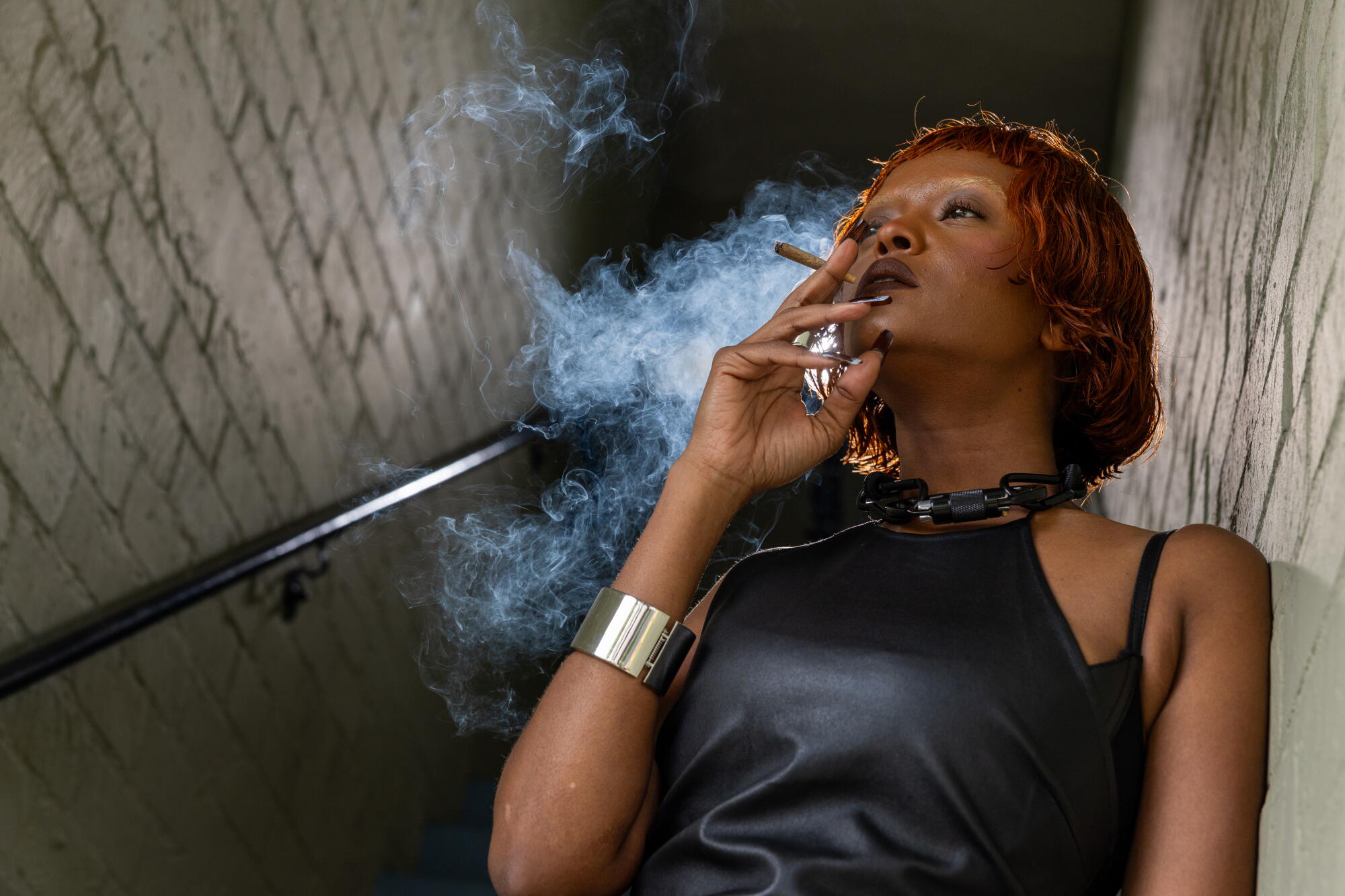
We’re hunkered down in a dark stairwell on the side of a hotel facing a busy street in Hollywood. To passersby, we could easily be mistaken for two teenagers hiding in the shadows. In reality, I’m sitting with Kelela, the electronic R&B architect whose uncompromising vision has quietly reshaped the contours of alternative music.
Dressed in oversize sunglasses, an acid-washed tee, light blue jeans, checkered Vans and a vibrant auburn-colored French bob with micro bangs, she effortlessly rolls a joint with long ombre nails that mimic smoke and fire. She slips it between her lips and flicks a lighter stamped with a single word: Gotham.
(Robert Gauthier / Los Angeles Times)
Her lighter choice is pure coincidence, she says, but it fits the apocalyptic visual universe she’s built for “New Avatar,” her dark, guitar-heavy third album that merges her early D.C. indie roots with shoegaze, grunge, futuristic club music and R&B. Produced almost exclusively by Oscar Scheller — who has crafted tracks for PinkPantheress and Lily Allen — the 12-track project finds Kelela chasing intimacy, desire and emotional refuge in the midst of an increasingly chaotic world. From the color-inverted cover art to her icy white hair and bleached brows in the video for “idea 1” — a song that draws inspiration from Octavia Butler’s 1993 sci-fi classic “Parable of the Sower” — the world-building is unmistakable.
“I used it to describe the context … of these stories on the record,” Kelela explains about the Gotham visual concept. “It’s a basic reference, but it feels like it applies. It’s the context for people needing to be saved and everything being f— on some level, but there still being hope.”
Just a few miles from the Hollywood stairwell where we’re sitting, Kelela will translate her genre-flexing record for the stage at the Wiltern during two back-to-back shows on Sept. 21 and 22.
Although she’s a New Yorker now, Los Angeles plays a crucial role in her musical journey. In 2010, the Ethiopian American singer-songwriter moved to Venice to work as a nanny before taking a gig as a solar panel telemarketer — a job she picked to avoid moving back home but unexpectedly excelled at.
“I’ve sold solar power to hundreds of people in the L.A. area,” she quips. “I would level with people. I didn’t sound like a salesperson because I can’t sell something that doesn’t make sense.”
(Robert Gauthier / Los Angeles Times)
The job funded her first solo apartment in MacArthur Park, but an insurance payout from a totaled car ultimately gave her the financial runway to leave sales behind and focus solely on music. That freedom manifested into her debut mixtape “Cut 4 Me,” featuring fan favorites like “Send Me Out” and “Bank Head.”
“It’s a very L.A. story,” she says with a laugh.
More than 10 years after the breakthrough record, Kelela returned to L.A. to record “New Avatar” with Scheller at his home studio in Silver Lake.
During their first session, she played him “Outta Time,” a track featuring British singer-producer A.K. Paul (Jai Paul’s brother) that she’d been holding onto for a decade until she was ready to make her first guitar-centered album. She also showed Scheller her “white bag” playlist — a collection of indie, rock and alternative tracks she loved as a teenager, from Incubus to Deftones to the Red Hot Chili Peppers. He understood the assignment and by the end of their session, they walked away with two songs: the lead single “Idea 1” and the sensual, U.K. garage-infused “Don’t Piss Me Off.”
“I had a sketch and I think that felt very magical,” Kelela says.
Their natural flow was part of the reason why Kelela was able to release “New Avatar” sooner than previous albums. It arrives just three years after its predecessor, “Raven.”
(Robert Gauthier / Los Angeles Times)
But leaning into her “white bag” wasn’t just about nostalgia. It’s a return for the artist who was once the frontwoman of indie rockers Dizzy Spells and was rocking out with her then-boyfriend, guitarist Tosin Abasi (of Animals as Leaders). It’s also a direct confrontation with the industry’s racialized genre boxes — a phenomenon Kelela identifies as “sonic racism.”
“It’s designed to keep us apart, to keep us out,” she says, “and I think clocking that is really important.”
She points to the unspoken kinship that forms when Black fans who love heavier guitar music find each other in white-dominated crowds.
“When they meet it’s a different type of bond through the music — like ‘I’ve always felt on the outside,’ but also ‘We are so inside,’” she says. “That catharsis is another feeling and I knew so much of my audience had an experience with this music, but maybe had to compartmentalize and be on the outside in order to enjoy it.” With “New Avatar,” she wanted to “dismantle and disrupt” that dissonance without abandoning her R&B roots, she says.
(Robert Gauthier / Los Angeles Times)
That philosophy echoes through the record’s lyricism. Where 2023’s “Raven,” a rave-inspired, post-pandemic offering that ruminated on the times and being firm in your boundaries, “New Avatar” is its older sister who is a bit more wise and speaks with even sharper conviction.
“We need space to feel over it,” she says, “and to not be considered Debbie Downers. That’s basically the role that Black women have been sort of relegated to — to be truth tellers. Then everyone’s like ‘Ugh, come on…’ But it’s like we’re laughing all the time. I’m so happy. I’m not unhappy.”
She adds, “The key is not rooted in escapism. The key is rooted in being honest about what you saw, and that’s kind of the tradition that I’d want my work to live in.”
On “Point Blank,” Kelela explores the emotional labor for a woman in a one-sided relationship: “By now, I hope you see/That bullet set me free/And the more I pour, the more you reap/And I’m too spent too weep.” As the title implies, “Don’t Piss Me Off” sees a woman losing her patience with a lover: “Know you want me/Tell me I’m wrong/Takin’ all night/Don’t piss me off.” But by the album’s closer “If We Meet Again,” she cuts ties entirely: “If we ever amend/Nevermind, over and out.”
“A lot of the songs are like “Y’all ain’t s—,’” she says laughing, “But I try to say it in an artful way.”
Two bright spots on the album arrive in the final act: the dream pop-infused “New Life Forms” featuring Fousheé and “The Bridge,” a song about yearning with PinkPantheress, who returned the favor after Kelela appeared on her track “Bury Me.” Directed by Yasser Abubeker, “The Bridge” music video features a memorable, sultry dance number between the two singers — a sequence Kelela encouraged fans to learn before her shows.
“I cried the first time that Yasser sent me the edit,” she says. “It’s like a love letter to Black queer culture, our intimacy. It’s so sexy without me and her having an overt love interest. It just feels so implied in this smart way.”
The day before we met in Hollywood, Kelela gave an intimate live performance for Spotify. Backed by an all-Black femme band featuring a string quartet, guitar, bass and backup vocals, she performed “Idea 1” and a cover of Incubus’ “Mexico” — a rendition that earned her praise on social media from Incubus’ frontman, Brandon Boyd, himself.
“It’s a really important image,” says Kelela about the video. “In addition to it sounding exquisite, I’m not gonna lie, it also tore visually and symbolically.”
She’ll also be backed by a full band during her “New Avatar Live” tour, which she envisions as a high-energy rave that could break into a mosh pit at any moment.
(Robert Gauthier / Los Angeles Times)
“It’s another medium for me to be able to articulate or dismantle those constructs around what makes sense together,” Kelela says. “It’s going to be first and foremost — like any record or anything that I do — cathartic for me.”
She continues, “So I’m going to be living my best f— life and through that I know I will give a good show because it just excites me. It’s a dream come true to be able to pull these things together.”
MEXICO CITY — Nicaraguan journalist Luis Galeano fled his country in 2018 after police raided the television station where he broadcasted his popular talk show, arresting two of his colleagues.
Galeano applied for political asylum when he arrived in Florida on a tourism visa, saying he faced grave risks back home for his fierce criticism of Nicaragua’s left-wing Sandinista government, which the U.S. labels a dictatorship. Soon after, Nicaragua declared Galeano a “traitor to the homeland” and confiscated his home and assets in the capital of Managua.
This week, U.S. immigration agents arrested Galeano in Orlando. Despite his ongoing asylum case, he now faces deportation to the country he fled and whose abuses he has spent years documenting.
Journalists, human rights advocates and political dissidents who were persecuted in Nicaragua and sought safety in the United States are increasingly being detained as the Trump administration widens its deportation dragnet and narrows access to asylum and other forms of protection.
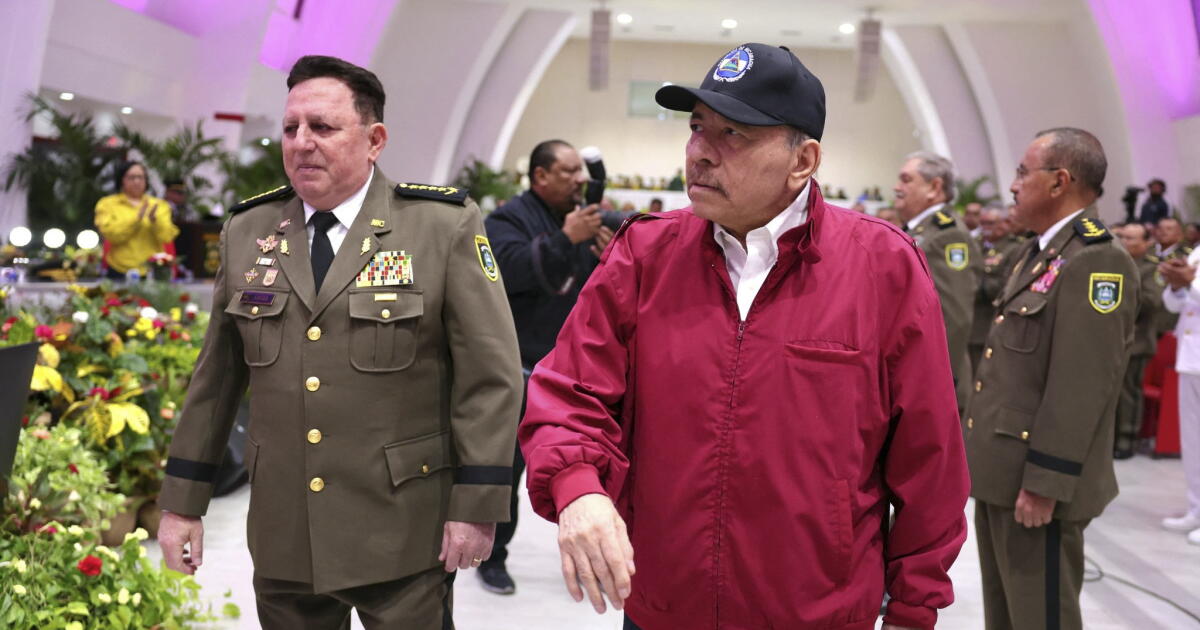
Recent targets include activists who fled Nicaragua after a bloody crackdown on pro-democracy protests in 2018 and opposition leaders critical of the regime of Daniel Ortega and Rosario Murillo, a married couple who lead Nicaragua as co-presidents.
Some of the exiles arrested by U.S. agents in recent months had been welcomed with open arms by the U.S. government just three years ago under a novel deal negotiated by the State Department.
As part of the 2023 agreement, Nicaragua freed 222 political prisoners and the U.S. hired a charter plane to fly them to Washington, where each person was granted temporary humanitarian parole and the chance to apply for asylum.
One of those former prisoners, Marlon Gerardo Sáenz Cruz, a former Sandinista who said he was tortured in Nicaragua after denouncing government corruption, was arrested during a regular check-in with immigration authorities in Los Angeles on Aug. 17.
Another, Denis Javier Palacios Hernández, who languished for three years in a Nicaraguan jail after participating in pro-democracy marches, was detained by immigration agents Wednesday morning in Virginia.
Human rights advocates say the effort to deport dissidents with no criminal record and a history of persecution puts their lives in danger and is at odds with U.S. foreign policy, which condemns human rights abuses and corruption under Murillo and Ortega, a former Marxist revolutionary who at 80 is now the longest-serving leader in the Americas.
After Ortega said in July that Nicaragua would scrap all future elections, Secretary of State Marco Rubio, who had recently announced sweeping sanctions on dozens of Nicaraguan leaders, vowed consequences. This week, while celebrating the anniversary of Central America’s independence from Spain, Rubio praised Nicaraguans for pushing for democracy “despite the Murillo-Ortega dictatorship’s brutal efforts to annihilate it.”
“Whether at home or in exile, Nicaraguans’ aspirations for a future free from tyranny cannot be canceled or erased,” Rubio said.
He spoke one day after Border Patrol agents arrested Galeano, who, since moving to Florida, has driven for ride-hailing apps in the mornings to provide for his two children and has spent his afternoons recording episodes of “Café con Voz,” his daily YouTube show.
A spokesperson for the Department of Homeland Security said Galeano was detained because he overstayed his tourist visa, which gave him permission to remain in the U.S. only through 2019, and encouraged Galeano to self-deport. “Being in detention is a choice,” the spokesperson said. “The United States is offering illegal aliens $3,000 and a free flight to self-deport now.”
In the past, people who had filed asylum applications in the U.S. were generally allowed to stay and work while they waited for a ruling in their case, a process that often stretches years because of backlogs in immigration court.
That’s changed under President Trump, who has vowed to deport 1 million people annually, and who complains that the asylum system is abused and used as a back door for economic migrants falsely claiming persecution.
As immigration arrests in the U.S. have soared in recent months, surpassing 51,000 in August, asylum seekers and others who have shared their information with the U.S. in hopes of achieving legal status make up a growing share of detainees, according to the Deportation Data Project.
Removals of Nicaraguans have also surged, with deportation flights to Managua increasing more than fourfold under Trump compared to under President Biden, according to data tracked by Human Rights First.
Nicaraguans are also being shipped to Mexico, Costa Rica and as far away as the Central African Republic. They face unique risks in those countries, said Savi Arvey, director of policy for refugee and immigrant rights at Human Rights First.
In Costa Rica, Sandinista operatives are suspected in a series of shootings, abductions and killings of Nicaraguan exiles in recent years.
“This government is so single-minded in carrying out this vast mass deportation campaign that it blatantly ignores realities on the ground,” Arvey said.
Gerald Chávez, president of the Independent Journalists and Communicators of Nicaragua, said that at least one journalist who had sought protection in the U.S. had been sent to Costa Rica, avoiding deportation to Nicaragua thanks to a lengthy legal battle and help from Reporters Without Borders.
Restriction of press freedoms has been a cornerstone of Ortega and Murillo’s efforts to concentrate power in recent years.
Hundreds of journalists fled as government officials jailed colleagues, shuttered dozens of news outlets and passed laws barring reporters from publishing information not authorized by the government. At one point, Ortega even banned newspapers from importing paper and ink.
Galeano — who previously worked as a correspondent for the Associated Press in Nicaragua — believed he had a responsibility to call out what he saw as injustices perpetrated by the government.
“If there is one thing that has distinguished the Sandinista thugs … it is that up until now, they have enjoyed total impunity,” he said on a recent episode of his YouTube show.
Galeano’s arrest has drawn sharp criticism from human rights and press freedom groups and even Republican Rep. María Elvira Salazar, a Trump ally who is seeking reelection in Florida.
Salazar described Galeano as a journalist who had “paid a very high price for telling the world the truth.”
“The United States must always know how to distinguish between a criminal and a political exile,” she wrote on X. “Luis cannot end up in the hands of the very dictatorship that persecuted him.”
Linthicum reported from Mexico City. López, a special correspondent, reported from Orlando.
CINCINNATI — The Dodgers celebrated clinching a postseason berth with a champagne toast. Simple. Restrained. Leaving room for larger celebrations to come.
“The message was, ‘We haven’t come close to playing our best baseball yet,’” manager Dave Roberts said after the Dodgers’ 4-1 win over the Reds on Monday. “And here we are with 12 games left, getting a ticket to the postseason. And that says a lot about this entire organization. And just to finish strong.”
It marked the Dodgers’ 14th straight playoff berth, tying a record set by the Atlanta Braves from 1991 to 2005.
“It’s different than anything I’ve experienced, for sure,” Tarik Skubal said of the understated celebration. “But I think it just speaks to the people in this room and what they expect out of this team. That was cool. A little toast and move on. Forget it happened. We’ve got more to accomplish.”
Most teams don ski goggles to celebrate with champagne and beer showers. The Dodgers will save the messier celebration for clinching the division. Their win over the Reds (70-80) trimmed that magic number to three.
It was fitting that Skubal, the Dodgers’ big trade-deadline acquisition, was on the mound for the clincher. He’s progressively improved in his eight starts with the Dodgers. And on Monday, he breezed through seven shutout innings, allowing just four baserunners (three singles and a walk).
“I think a lot of the struggles have been me versus me,” Skubal said. “Thinking too much out there, not competing the way I know how to compete. Just thinking too much about pitch selection at times and trying to be too fine and not challenging guys.”
He has grown more comfortable with the pitching coaches and his catchers, and it has brought out a better version of him. Skubal seems to be peaking at the right time — just as Roberts hoped for the team as a whole.
Even after clinching the division likely this week, the Dodgers (91-59) will be playing for seeding, aiming for at least a first-round bye.
“It’s always helpful in the sense of giving your guys a break to reset,” Roberts said. “But given all the tax and where our guys are health-wise, to get that week would be huge. So we’ve still got to play well to finish out the season to get to that point.”
The position-player group has been hit the hardest down the stretch.
Designated hitter Shohei Ohtani (right biceps and left knee), center fielder Andy Pages (left hand fracture) and backup catcher Dalton Rushing (sprained right elbow) are on the IL. First baseman Freddie Freeman was out of the lineup Monday managing right knee soreness, and second baseman Miguel Rojas was playing through shoulder soreness after aggravating a longstanding partial tear in a labrum.
“You’ve got to give credit to the front office,” said Teoscar Hernández, who hit a two-run homer Monday. “They put together a really good team, [a] deep team that has a little bit of too much of everything. A lot of pitchers, a lot of position players here, players that can play all over the field. We’re one of the oldest teams. We know [injuries] are going to happen throughout the season. So, we’ve just gotta be ready, and the team has to be ready, and everybody else.”
Here are more specific injury updates provided by Roberts:
— Ohtani is set to hit off a tee Tuesday. Up until this point, he’s been working out, lifting and undergoing treatment.
— Pages hit softer balls Monday and will advance to hitting baseballs in the cage Tuesday. “He’s trending really well,” Roberts said.
— Freeman is expected to return to the lineup Tuesday, but Roberts will continue to keep a close eye on him. “Where we’re at in the season, an IL is not an option in the sense of — I personally don’t think we have a better option,” Roberts said. “So I don’t think it needs to be 10 days. But could it be more than one? That’s a fair question. And I’ve got to talk to the training staff, Freddie, and ultimately make that decision. But I don’t think IL would make sense at all.”
— Rojas did not receive a cortisone injection as he had initially predicted when he hurt his shoulder Sunday. But he said it’s still a possibility as he manages pain in his shoulder. The Reds have left-handed starters scheduled for two of the four games, making Rojas’ right-handed bat valuable.
“Right now it’s front of mind, it’s not great,” Roberts said of the Dodgers’ injury situation. “But I will say this: Once you get to October, athletes have a magical way of feeling better. It happens every single year, where there’s that extra adrenaline that athletes get when you get to the postseason.”
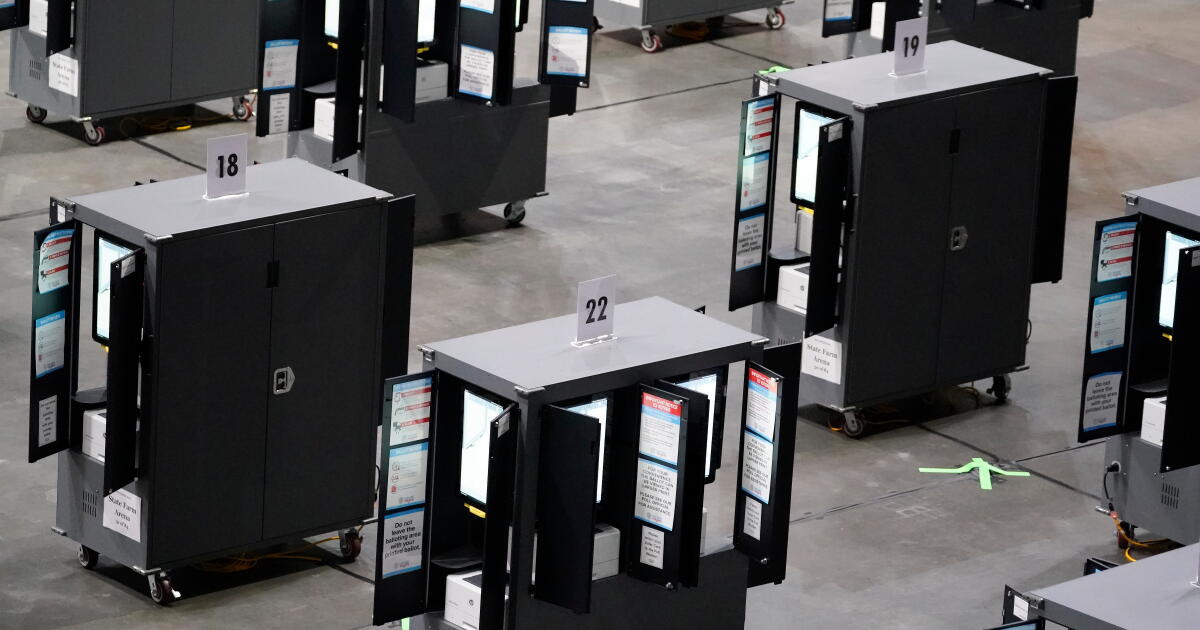
ATLANTA — Security researchers say rapid advances in artificial intelligence are making it more critical to address a flaw in Georgia’s voting equipment that can allow voters to be matched to their ballots after they have been cast.
The system’s vulnerability has been drawing increased attention, with election security advocates criticizing state election officials for failing to fix it before the November elections. Georgia election officials say they have taken steps to address the potential harm, but some advocates say the state is not going far enough.
The vulnerability does not allow votes to be changed or cast doubt on election results, but it could let someone see how others voted. That is important because ballot secrecy is a fundamental right under the state constitution, and violations could create an opening for legal challenges.
While the flaw in Georgia has been known for a few years, the widespread adoption of AI tools and the blistering pace of its sophistication have election security experts raising alarms.
This is “a bit of a wake-up call because it illustrates how much more easily vulnerabilities can be exploited now that AI can do all of the technical work for you,” said J. Alex Halderman, a voting technology specialist at the University of Michigan who was part of the team that exposed the flaw.
Other jurisdictions across the country use the same voting equipment made by Liberty Vote, which was known as Dominion Voting Systems before the company was sold. But many have applied a software update to fix the flaw, and some other states do not allow the public release of records that are needed to exploit it, said Mark Lindeman, policy and strategy director at Verified Voting, a nonpartisan group focused on election technology.
Georgia, a presidential battleground with one of the nation’s most closely watched U.S. Senate races this year, is the only place where the system is used statewide. Lindeman said that, combined with an open records law that has allowed access to key documents, creates a “perfect storm.”
“It’s really embarrassing that this is still a possibility,” Lindeman said.
How does voting work in Georgia?
Georgia voters make their selections on touchscreen voting machines that print paper ballots voters insert into scanners to tally the votes.
Such cast-vote records detail the votes from each ballot. Those records and electronic ballot images created by the scanners are randomized. But the software flaw allows them to be put back in the order they were cast, according to a report by researchers who discovered it in 2022.
Along with other publicly available data, that information could be used to match voters to their ballots, the researchers wrote.
Max Springer, a Princeton University researcher who was not involved in the original research and studies AI, said he gave a publicly available AI assistant that research. He said it was able to reverse the shuffling of electronic ballot records from Georgia’s May primary and then tell him what other records it would need to match names to ballots.
He then gave the AI assistant the early voting list for the counties he examined and the cast-vote record file, which could be obtained through a public records request. It was able to create “buckets of ballots and potential voters,” he wrote in a blog post. In many instances, that made it possible to match voters to their ballots.
In cases where ambiguity remained, he wrote, he got the public audit log for the ballot scanners and precinct check-in records and was able to match most ballots to specific voters.
“AI coding tools are essentially supercharging laymen people to exploit vulnerabilities,” Springer said in an interview.
Why does ballot secrecy matter?
Georgia’s Constitution says elections “shall be by secret ballot,” and state law requires voting machines to “permit voting in absolute secrecy so that no person can see or know any other elector’s votes.”
A lack of ballot secrecy can make it easier to buy or sell votes and increase the danger of coercion to vote a certain way by family members, political organizations, employers or government officials. It also is information that could be invaluable to political campaigns.
Gabriel Sterling, special projects manager in the secretary of state’s office, pushed back on the concerns. He said it would be easier to use mail ballots if vote-buying or coercion was the goal and that it probably would be cheaper for campaigns to just increase outreach to voters who fit a certain profile than try to identify voters this way.
State Election Board member Salleigh Grubbs proposed a rule during the board’s August meeting that would have required the secretary of state’s office to apply the software update recommended by the manufacturer by Tuesday.
“Each [voter] has one vote, and no one is entitled to know how it was cast,” Grubbs said. “That privacy protects more than the individual voter. It protects the integrity of the entire election.”
In a letter to the election board, an agency lawyer argued that the update has not been certified by the secretary of state, the implementation would take months, and the Legislature has not provided necessary funding. The board rejected Grubbs’ proposal. Some members said they did not believe they had the authority to order the secretary of state to act and they raised concerns about the short timeline before the November midterms.
Board member Sara Tindall Ghazal, who voted against the proposal, said it is “intensely frustrating” that the software update has not been applied. But she pointed out that it is a felony to reveal how someone voted, which should serve as a deterrent.
“I hate the fact that it’s even physically possible, but there are very, very severe penalties if somebody were to actually do this,” she said.
What’s being done?
The secretary of state’s office sent guidance to county election officials instructing them to refer open records requests for certain records to the secretary of state’s office. It will release them with the problematic information blacked out and decline to release other information and documents.
Sterling said the office is working with a vendor to scramble the original order of ballot images and cast-vote records before they are made public. Halderman said that precaution would be necessary to keep someone from reconstructing the order.
While some other jurisdictions have applied the software update that reportedly fixes the problem, some have done what Georgia is now trying to do by restricting public access to the records needed to exploit the flaw.
Marilyn Marks is executive director of the Coalition for Good Governance, which advocates for election transparency and security and raised the alarm about the vulnerability. She argued that withholding documents is not the solution and that steps need to be taken to ensure ballots cannot be traced to voters in the first place.
“When Georgia’s election records contain identifiers that can be used to trace ballots to voters, the only legal and acceptable answer is to stop recording that information — not restrict public access to sensitive unlawful information to insiders and commercial vendors,” she said.
With time growing short before the elections, Marks said a workable interim solution would be to collect ballots in locked boxes at precincts and then shuffle and scan them at a central tabulating center.
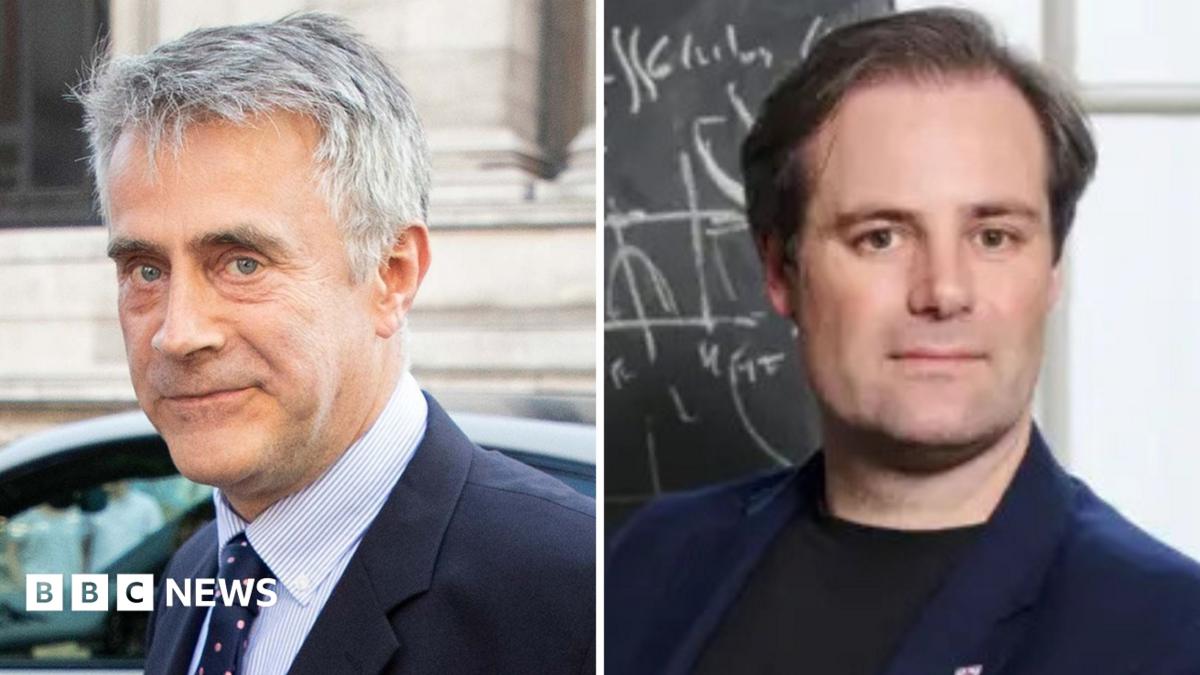
Harborne has already donated millions to Reform and Farage, who is currently under investigation by the parliamentary standards commissioner over whether he should have declared a £5m cash gift from Harborne ahead of the 2024 election.
Farage has argued that he was under no obligation to register the “purely private” gift, as it was unrelated to his parliamentary or political activities.
The party is also facing scrutiny over its finances after a broadcast by Channel 4 News last week showed two senior Reform aides apparently suggesting a way around electoral law to secure foreign party donations.
The Metropolitan Police has said it is investigating, while the party denies any wrongdoing.
The force is also looking into donations given to the party by Fiona Cottrell, mother of longstanding Farage ally George Cottrell, as well as a company controlled by its deputy leader Richard Tice.
Harborne wrote on Saturday that he had “already accumulated enough wealth for the rest of my life”, while Reform was a “start-up party” that lacked “the benefit of hundreds of years of patronage”.
“A start-up party needs more money than can be provided by membership fees alone, to build and sustain itself and be ready for government,” he said.
Harborne and Delo’s donations mark the largest sums received by a UK political party since they had to begin declaring them in 2001.
Delo, who also announced his donation in a Telegraph op-ed, said he was giving the money away because he wanted a “fair fight and a level playing field”. He said in April he was moving back to Britain from Hong Kong.
Addressing the recent scrutiny of Reform’s finances, he said: “My conclusion from Reform’s recent troubles is that they should spend less time trying to raise funds to compete on equal terms and more time preparing for government.”
Last year, he was given an unconditional pardon by US President Donald Trump over a breach of anti-money laundering laws at his crypto trading platform, BitMEX, to which he had pleaded guilty in 2022.
There are currently no restrictions on the amount of money UK-based donors can give to political parties.
However, the Labour government has introduced a £100,000 cap on donations from British citizens living overseas, and plans to introduce a similar one for those who have recently returned to the UK.
There were nine donations of £1m or more to political parties in 2025. The largest was £9m given to Reform UK by Harborne.
Labour had five donations of £1m or more – totalling nearly £10m – and the Conservatives had three of £1m each.
Labour said Reform and Farage still had “serious questions” to answer about their finances.
Party chairwoman Bridget Phillipson said Reform were “drowning” in “sleaze and scandal”,.
She added: “It’s time Farage and Reform came clean with the public, fully co-operated with the ongoing police investigations and prove they’re not just in it for themselves.”
Rachel Millward, deputy leader of the Green Party, told BBC News it wanted a cap on donations from individuals of £500,000.
She said the donations to Reform were “absolutely staggering amounts”, adding: “What I am very frustrated about is the influence of extreme wealth and the super rich. What I want to see is people in politics representing the needs of their communities and ordinary people.”
Liberal Democrat Cabinet Office spokeswoman Lisa Smart called for the government to introduce emergency legislation to cap donations.
She said: “These are eye-watering amounts of money. This is real emergency for our democracy. It presents a very clear and present threat.”
Duncan Hames, Director of Policy and Programmes at campaigning charity Transparency International UK, said: “This is a watershed moment, with two billionaires pledging £72m to one political party in less than 48 hours.
“This situation is now completely out of control, and makes an irrefutable case for government to bring forward an annual cap on political donations, and fast.”
The “best of the best” in athletics are preparing to compete in the inaugural World Athletics Ultimate Championship that gets under way in Budapest this weekend.
The three-day competition will see 26 Olympic champions from Paris, 26 world champions from Tokyo last year, and this season’s top athletes battle it out to be crowned the best in track and field.
Recommended Stories
list of 4 itemsend of list
Many return to the stomping ground in the Hungarian capital after successes at the 2023 World Championships, while others have racked up global titles after breakout performances throughout the year.
Here’s Al Jazeera’s all-to-know guide to the meet:
Who, what, where and when at the Ultimate Championship?
The Ultimate Championship is an invite-only competition featuring the Olympic gold medallist, World Championship gold medallist, Diamond League winners, and the best performers of 2026 based on the World Rankings qualification system.
It runs from September 11-13 in Budapest and will become a biennial feature in World Athletics’ calendar. The sport’s global governing body chose 2026 to launch the event in between the World Championships, and, in Olympic years, use it to round out a highly competitive season.
Jamaican sprint legend Usain Bolt, an ambassador for the event, said it was “great to see track and field going in a different direction”.
“It’s going to be great to see the best of the best,” the eight-time Olympic gold medallist said at a news conference on Thursday before the event.
“This was one of my greatest things. I’ve always lived to compete against the best and I would thrive in this moment.”
The former sprinter Usain Bolt, now 40, still holds the world record in the men’s 100m and 200m [Bernadett Szabo/Reuters]
What is the Ultimate Championship prize pot?
The $10m prize pot will see winners of each event bag a record $150,000.
That’s more than double the $70,000 given at last year’s World Championships in Tokyo, and three times what was awarded by World Athletics to Olympic champions in Paris. Second place takes home $75,000, third place $40,000, all the way to $2,000 for 16th-place finishers.
Relay teams will split $80,000 among themselves, followed by $40,000 and $24,000 for second and third place, respectively.
The Ultimate Champion also walks away with global “bragging rights”, World Athletics President Sebastian Coe said before the event as he explained its significance to the sport.
What’s new at the Ultimate Championship?
For one, there are no medals. It’s part of World Athletics’ “reimagining of awards” that replaces the traditional accolade with a customised trophy for the Ultimate Champions based on individual tokens.
All events will be direct semifinals or finals rather than starting off as heats. Athletes competing in the men’s and women’s 200m will select their preferred semifinal heat and lane based on their seed order.
A tie for first place in a vertical jump will be decided by a jump-off rather than be shared, while athletes in throwing events will have four attempts down from the typical six, that too in the 8:8:6:4 model.
The mixed 4×100-metre relay will feature in Budapest after its debut at the World Relays earlier this year, with each quartet competing in national kits.
Why is Ultimate Championship getting criticism from a few athletes?
A number of events have been excluded from the Ultimate Championship, including shot put, triple jump, women’s hammer throw, and discus throw, as well as long-distance track events like 3,000-metre steeplechase and 10,000-metre.
World Athletics said its decision was based on viewership and priority for faster-paced events.
Olympic discus champion Matthew Denny and former world champion and two-time triple jump champion Pedro Pichardo were among the athletes who lamented the decision on social media.
Denny, current world number two, explained that the prize money “can change a career and a life” and implored World Athletics to reconsider its stance on public interest driven by its own statistics.
“Innovation should not come at the expense of opportunity.”
World record watch
These athletes are already the creme de la creme in their field and are most likely to set a world record, based on this year’s performance:
Men’s Pole Vault: None other than Sweden’s Armand ‘Mondo’ Duplantis, who has broken the world record 15 times and most recently this March.
Men’s 800m: World lead Emanuel Wanyonyi has repeatedly threatened fellow Kenyan David Rudisha’s 1:40.91 set at the London 2012 Olympics.
Women’s 800m: Audrey Werro is fresh off her 1:53.70 set on home soil at the Zurich Diamond League in August. The Swiss’s time is third all-time and dangerously close to the 1:53.28 set by Jarmila Kratochvilova in 1983.
Men’s 400m hurdles: Brazil’s Alison dos Santos recently smashed the record in Zurich, five years after Norway’s Karsten Warholm clocked 45.94 at the Tokyo Olympics.
Women’s 100m hurdles: Zurich magic extended to the women’s 100m hurdles as USA’s Masai Russell stormed to a 12.09 to cap off 12 straight wins this season.
In an unusual move, Assembly candidate Cesar Portillo, a gay activist running in a Hollywood-Eastside district, disclosed Sunday that he was arrested nine years ago after being propositioned by an undercover Los Angeles policeman.
Surrounded by members of his family, his partner and supporters at a news conference at his Highland Park election headquarters, Portillo claimed that the campaign of his opponent, Los Angeles City Councilwoman Jackie Goldberg, had begun a whisper campaign about the arrest and he chose to discuss it.
Goldberg flatly denied that her campaign had any role in spreading information about the issue. “We would never raise it,” she said in an interview. “We did hear rumors, but I told everybody this was not something we were going to do. I don’t think this is an appropriate issue to raise.”
Portillo, the director of governmental affairs at the AIDS Healthcare Foundation, said he chose to address the issue head-on because he “wanted to make sure people heard from me first rather than misinformation and smear.”
In a statement read to supporters at the news conference, he said: “Nine years ago, I was approached by an undercover police officer who propositioned me and then arrested me. I was not guilty. I was in my twenties and I did not have the money to fight this in court.”
Later, in an interview, Portillo said he pleaded no contest to the 1991 misdemeanor charge of lewd conduct and paid a fine of about $200. After his arrest, he said, he was automatically suspended from his job as an elementary school teacher in the Los Angeles Unified School District and resigned before the case was concluded.
The 36-year-old Portillo vowed to continue campaigning for the seat being vacated by Assembly Speaker Antonio Villaraigosa (D-Los Angeles), who is running for mayor of Los Angeles. Villaraigosa and County Supervisor Gloria Molina, among others, have endorsed Goldberg. Portillo has been endorsed by numerous Latino legislators, including state Sen. Richard Polanco (D-Los Angeles).
Portillo said he will release any officeholders from their previous endorsement if they so desire.
The March 7 primary is tantamount to election because the 45th Assembly District is so overwhelmingly Democratic in registration that there is no Republican on the ballot. The district runs from Hollywood through Silver Lake, Mount Washington, Boyle Heights, Lincoln Heights, and Highland Park to the edge of Pasadena.
Prominent gay activist Morris Kight, a member of the county’s Human Relations Commission, said that what happened to Portillo reflects police harassment and entrapment of gays.
And Wallace Albertson, a longtime Democratic Party activist, added that she was appalled at “this kind of character assassination and smearing going on.”
Portillo charged that the whisper campaign had started in Sacramento when a legislator and a legislative aide were contacted by Goldberg’s campaign.
Parke Skelton, Goldberg’s campaign consultant, denied that that occurred. “It’s been whispered about for quite some time,” Skelton said. “Believe me, it didn’t come from us.” He said Goldberg has no intention of using “any issue about [Portillo’s] private life or criminal arrest” in the final weeks of the race. “This is a ludicrous battle to get in the middle of,” he said.
Skelton did say that people in Sacramento had called him about the arrest.
Anticipating that the arrest could find its way into the contest, Portillo’s campaign manager, Frank Berged III, said it was necessary to discuss the issue.
Tanzanian striker Clara Luvanga has joined the Washington Spirit from Saudi Arabian club Al-Nassr in a deal believed to be one of the most costly in the history of women’s football.
The fee paid by the National Women’s Soccer League side has not been officially disclosed.
Some are reporting it to be $2.3m, external (about £1.7m), which would make Luvanga the most expensive female footballer in history.
BBC Sport has not been able to verify this figure, although a well-placed source said they believed it ranked in the top five most expensive signings in the women’s game.
The Spirit declined to comment on the fee involved when contacted by BBC Sport.
Luvanga, 21, has signed a contract running to the end of the 2029 NWSL season.
If the reported record figure is correct, it would mean the fee passes the £1.4m that London City Lionesses are said to have paid to Paris St-Germain for Grace Geyoro last year.
However, the Geyoro fee has been disputed, further illustrating how transfer figures in the women’s game are often kept private.
With her move, Luvanga becomes the first Tanzanian player in NWSL history.
Luvanga won the Saudi Women’s Premier League in all three of her seasons with Al-Nassr, as well as the Saudi Women’s Cup, Saudi Women’s Super Cup and West Asian Football Federation (WAFF) Women’s Clubs Championship.
She also claimed the league’s golden boot last season after scoring 24 goals in 14 appearances.
The Washington Spirit are owned by Michele Kang, who also owns London City Lionesses.
London City made a series of high-profile signings during the summer transfer window, including two-time Ballon d’Or winner Alexia Putellas who arrived from Barcelona on a three-year deal.
Luvanga made her senior international debut for Tanzania in 2024. Before joining Al-Nassr in 2023, she played for DUX Logrono in Spain, having developed through the youth system at Tanzanian club Yanga Princess.
When discussing her new club, Luvanga said: “I am very excited to join the Washington Spirit and to take on this new challenge in the NWSL.
“I know I am arriving with the season already under way, but I’m really excited to play in a new league and a new country.”
Spirit sporting director James Hocken said: “Clara adds an exciting new dimension to our attack as we head toward the play-offs.
“Despite her young age, she has demonstrated the ability to score goals in different ways and has the profile to be very successful in this league.”
NEW YORK: Carlos Alcaraz tumbled out of the US Open quarter-finals at 3:34 am Wednesday, falling to Ben Shelton in an epic five-set thriller that broke the record for latest finish ever at Flushing Meadows.
The big-hitting Shelton claimed his first career win over Alcaraz, 6-7 (5/7), 6-1, 6-3, 1-6, 7-6 (10/7), ending the Spaniard’s hopes of retaining his title in his first tournament back after a four-month injury absence.
Europe’s answer to OpenAI has just become considerably better funded.
ADVERTISEMENT
ADVERTISEMENT
The Paris-based company Mistral AI announced its Series D on Tuesday, three years after being seeded, with the memory chip giant Samsung leading alongside the EU-backed Scaleup Europe Fund, managed by EQT, and existing investor PSG Equity.
The step up is steep.
Mistral was valued at €11.7 billion in 2025 after a €1.7 billion Series C led by Dutch chipmaker ASML, meaning the company has almost doubled its valuation in a year.
Much of the money is going into concrete rather than code. CEO Arthur Mensch announced the funding would build out data centres and computing capacity that Mistral can rent to others but that will also ensure autonomy.
“Long term, the plan is to fully rely on capacity that we are building ourselves, and so that means that the amount of compute that we own is going to grow around 100% in the next five years,” Mensch said, adding that the company would train “bigger and faster models.”
Mistral is already spending €4 billion on data centres across France and Europe, with one facility running outside Paris and another under construction in Sweden.
It raised further debt financing in March for the same purpose, and Microsoft has agreed to fund capacity from its European network, built around thousands of Nvidia chips.
Both Microsoft and Nvidia are also investors in Mistral, with the latter also adding exposure in this funding round.
The company says more than 125 enterprises across 20 countries use its technology, and Mistral projects it will pass a billion in annual recurring revenue by the end of 2026.
Europe lags behind in the AI race
Despite the news, Europe continues to critically lag behind in the global AI race.
Mistral’s valuation sits far below OpenAI and Anthropic, and Europe’s wider AI sector remains a fraction of the American one, with enterprise adoption across the bloc running at around 13.5%.
Other European contenders exist but are smaller.
Germany’s Aleph Alpha focuses on government and regulated industries rather than competing at the frontier, while Helsing has grown quickly in defence applications, and Switzerland’s Apertus offers fully open models and training data.
Brussels is trying to close the gap.
The InvestAI initiative carries a €200 billion headline commitment, and in July the Commission opened tenders for up to seven AI gigafactories, aiming to unlock more than €30 billion in investment, though those sites are not expected to operate until next year or 2028.
Thirteen smaller AI factories are already being built across seven EU countries.
The AI Act became applicable in August, but its toughest obligations were pushed back by the digital omnibus agreed in May, with high-risk rules now landing in December 2027 and August 2028, a delay Brussels framed as making the policy more innovation-friendly.
WASHINGTON — A sporadic global trade war led by President Trump is fueling inflation across the U.S. economy, elevating prices on everyday goods, as the war with Iran sends the price of gas on a roller coaster.
Aggressive tax cuts have pushed the national debt past $40 trillion, driving a growing crisis in the bond market. And an unprecedented immigration crackdown is disrupting the labor supply in agriculture, construction, hospitality and food processing, raising prices even further.
Approaching the halfway point of Trump’s second term, a president who won reelection based on a promise to turn the economy around now faces a reckoning in the midterm elections centered largely on his economic record.
Trump’s economic agenda has emerged as an increasingly awkward liability for Republicans heading into the November elections, leaving lawmakers to defend policies that have delivered political pain at home, even as the White House argues they will pay off in the long run.
Polling on Trump’s handling of the economy has remained in precariously low territory throughout the summer, entering Labor Day weekend with less than a third of Americans supporting his job performance on their most pressing concerns. One recent poll, from the University of Massachusetts Amherst, found that only 22% perceive the economy in a good or fair state.
Shoppers at Lincoln Heights Certified Farmers Market in Los Angeles on Wednesday.
(Jason Armond / Los Angeles Times)
And Americans’ confidence in the economy is unlikely to improve much ahead of election day, Nov. 3, in part because bad economic news has shown to sink confidence fast. Good news takes much longer to win people back, experts said.
“Voters’ opinion of the economy has mostly hardened,” said Aaron Klein, chair of economic studies at the Brookings Institution. “People vote the economy of the spring and summer, not November.”
Good news has been harder to come by.
Heading into the holiday weekend, Trump dismissed communities opposed to data-center construction as “backwards and poor.” A rapidly escalating trade dispute with Canada threatens Republican gains in battlegrounds along the northern border that could determine control of the Senate.
Sean Zabriskie, center, helps his son Connor, 7, try on hockey pants at The Ice Box Hockey shop in Harbor City. The trade war between the U.S. and Canada is affecting products like hockey gear, most of which is made in Canada and imported to the U.S.
(Genaro Molina / Los Angeles Times)
And fresh polling found that more than 90% of Americans believe corruption is rampant in Trump’s government, even as the president spends hundreds of millions of dollars on vanity projects across the capital.
Susan Collins, the incumbent Republican senator from Maine seeking another term in a strategically critical race, chastised the Trump administration for its latest trade spat with Ottawa as “making the job harder” of securing reelection.
“There’s just nothing good you can say about them,” Collins said of the tariffs.
Trump has pushed back on criticisms of his record, declaring the country has “the greatest economy we’ve ever had” and touting what he calls a manufacturing boom, all while distancing himself from potential midterm losses.
“I’m not affected by the election,” Trump told reporters last week. “I’m not running. But my party’s running, and I’m going to help my party.”
But Rep. Mike Johnson, a Louisiana Republican and speaker of the House, said last week that the midterms would serve as a referendum on Trump’s presidency.
Rep. Aisha Wahab (D-Hayward) and Speaker of the House Mike Johnson (R-La. ) arrive for a ceremonial swearing-in at the Capitol in Washington, D.C., on Sept. 2.
(Andrew Harnik / Getty Images)
“Even though his name isn’t in the midterm, his legacy is,” Johnson said. “The America First priorities and principles are. His administration is.”
Several embattled incumbents fear that’s the case and are distancing themselves from the president. Several Republican lawmakers — including Reps. Tom Barrett of Michigan and Zach Nunn of Iowa — plan on skipping a midterm GOP convention called by Trump for this week in Texas.
Joanne Hsu, director of the University of Michigan’s Survey of Consumers, said that gas prices were a chief frustration among Americans, and found that consumer sentiment soured rapidly once it became clear the conflict in Iran would not be short-lived.
“Consumers are absolutely not feeling great about the economy right now, and the factors that are underpinning their frustrations with the economy at this time are factors that are pretty tough to turn around on short notice,” Hsu said.
Even if the Iran conflict reached a resolution, confidence in the economy is likely to change only when the prices are reflected at the gas station, she said.
“When it comes to the views of the economy, it’s really about what’s happening to my wallet,” Hsu said.
During a White House press media briefing on Thursday,Vice President JD Vance acknowledged the Iran war has led gas prices to rise and that he does not know when Americans can expect those prices to go down.
Vice President JD Vance talks to reporters during a news briefing at the White House on Sept. 3.
(Chip Somodevilla / Getty Images)
“The reason gas prices are so high now is because the Iranians are shooting at commercial shipping,” Vance said. “Gas, frankly, could have been much, much higher were it not for our efforts. But I am not going to make a promise about when it is going to return to $3.”
The day after Vance spoke, diesel hit a record all-time high of $5.85 a gallon. In California, it sold for as much as $7.71.
Yet Trump has tried to downplay the economic pressure the war in Iran is placing on Americans, in particular as the Strait of Hormuz — a vital shipping corridor for oil and gas — remains under threat by Iranian troops.
Diesel prices over $7 a gallon are displayed at a gas station in Los Angeles on Aug. 21.
(Justin Sullivan / Getty Images)
“We have the Strait of Hormuz in extremely good shape,” Trump said, adding that the U.S. Navy has escorted ships through the channel. “A lot of oil is coming out. That’s why you haven’t seen the price of oil going the way they thought it might have to go.”
Trump on Monday also touted an agreement with the Venezuelan government to develop a vast amount of the South American country’s oil reserves. Asked how he sees the deal affecting American consumers, Trump said: “Ultimately prices are going to come down.”
One of the Arts of War statues, newly covered in gold leaf, is visible at Arlington Memorial Bridge near the Lincoln Memorial in Washington, D.C.
(Andrew Harnik / Getty Images)
“Now, will it happen before the election? I can’t tell you that. But I think people are very smart,” he said.
For some Americans, the economic pressures are a key driver ahead of the midterm elections.
Monica Escalante, a home care provider who is a member of the United Domestic Workers union, said she started feeling the pinch on her wallet after Trump imposed sweeping tariffs on a number of products she buys at the grocery store. Gas, she noticed, became harder to cover after the Iran war started.
Escalante, who lives in Bakersfield, said she also has to drive her client to the grocery store, and that mileage reimbursements are not enough to cover her costs.
“It’s really hard when I don’t have the money for gas, and she doesn’t have the money for gas. Then it is like: What do we do?” she said. “It is either she’s borrowing or I’m trying to figure out how I can get gas in my tank.”
RIYADH: Companies listed across the Gulf Cooperation Council posted a record $74.8 billion in net profits in the second quarter of 2026, up 31.3 percent year on year, driven by gains in the energy and banking sectors, according to an analysis.
In its latest report, Kamco Invest said the rise in net profit also reflected higher average crude oil prices amid the regional geopolitical situation, which more than offset a decline in crude oil exports from the region.
Compared with the previous three months, net profit of listed companies in the GCC region increased 10 percent.
The strong figures underscore the resilience of GCC corporates even as geopolitical tensions and regional disruptions continue to weigh on investor sentiment. The gains also highlight the continued importance of energy to Gulf corporate earnings, even as governments pursue economic diversification and non-oil sectors expand.
In its report, Kamco stated: “At the country level, the increase in profits mainly reflected double-digit y-o-y growth in profits for Kuwait, Saudi Arabia, Abu Dhabi and Oman and 4.9 percent growth in profits for companies listed on Dubai Exchange.
It added: “On the other hand, Qatari and Bahraini companies reported decline in quarterly profits by 20 percent and 0.4 percent, respectively.”
Industry observer Tony Hallside, CEO of STP Partners, said the record $74.8 billion profit figure reflected strength beyond the headline number. “Higher oil prices clearly provided a major tailwind, with energy-sector profits rising more than 40 percent, but earnings growth across several other sectors shows that corporate activity remains resilient.”
He added: “For investors, that breadth is arguably more important than the record number itself.”
Aggregate revenues for GCC-listed companies rose 17 percent year on year to $381.6 billion in the second quarter and 8.1 percent quarter on quarter.
Excluding Saudi Aramco, revenue growth for the rest of the region remained in double digits at 11.4 percent.
Saudi Arabia leads growth
Saudi-listed companies accounted for the bulk of the gain in the region, with aggregate net profits rising 36.7 percent to $45.3 billion from $33.2 billion a year earlier.
Energy, banking and materials together made up 92 percent of Saudi earnings in the quarter.
Saudi Aramco’s net profit increased 42 percent year on year to $32.4 billion, supported by a 19 percent rise in total revenue as realized crude prices climbed from $66.7 a barrel in the second quarter of 2025 to $108.1 a barrel in the second quarter of this year.
Saudi Arabia’s banking sector net profits increased 8.3 percent to $6.6 billion from $6.1 billion, supported by strong lending growth and resilient operating income.
Al Rajhi Bank reported $1.9 billion net profit, up from $1.6 billion, driven by a 13.7 percent increase in net income from financing and investments and a 13.3 percent rise in total operating income.
Saudi National Bank recorded a 7.5 percent increase in net profit to $1.8 billion, mainly supported by a 1.6 percent rise in income from financing and investments.
“Saudi Arabia remains the earnings engine of the GCC market. Aramco was clearly a major contributor as higher crude prices lifted energy earnings, but the more interesting figure is that Saudi-listed company revenues still grew around 11 percent excluding Aramco,” said Hallside.
He noted that it points to “broader corporate momentum and gives investors more evidence that the opportunity set in Saudi equities is widening beyond the traditional energy story.”
Wider regional outlook
Kuwaiti companies recorded the largest percentage increase, with net profits almost doubling to $3.1 billion, partly reflecting the absence of large losses from discontinued operations that weighed on Agility in the year-earlier quarter.
Abu Dhabi profits rose 41.8 percent year on year to $14.7 billion. Dubai-listed firms grew 4.9 percent to $6.9 billion.
Qatari companies saw profits fall 20 percent to $2.9 billion, while Bahraini firms declined 0.4 percent to $572 million. Omani companies rose 24.2 percent to $1.4 billion.
In the first half of 2026, aggregate net profits for GCC-listed companies rose 23.1 percent, or $26.8 billion, to $142.81 billion. The increase was led by almost 30 percent growth in Abu Dhabi and Saudi Arabia, followed by a 14.6 percent rise in Oman. Kuwaiti and Dubai-listed companies registered high single-digit growth, while Qatar and Bahrain recorded declines of 11.6 percent and 0.2 percent, respectively.
Sectoral outlook
Sector performance was mixed but broadly positive. Energy profits jumped 41.6 percent year on year to $36.2 billion in the second quarter.
Food, beverage and tobacco more than doubled to $3.9 billion. Real estate, materials, capital goods and transportation also posted higher profits.
Banks reached a record $17.8 billion, up from $16.6 billion, with six of seven country aggregates higher. Telecom recorded modest growth. Utilities, food and staples retailing, and media and entertainment declined.
“What stands out is the divergence within the GCC. Kuwait, Saudi Arabia, Abu Dhabi and Oman all delivered double-digit profit growth, while Qatar and Bahrain saw declines. That tells investors this remains a market where country and sector selection matters,” said Hallside.
He noted that banks and telecoms continued to grow, albeit more moderately, while energy, real estate, materials and transportation were stronger. “The GCC cannot be treated as one homogeneous equity market; earnings drivers are becoming increasingly differentiated,” Hallside added.