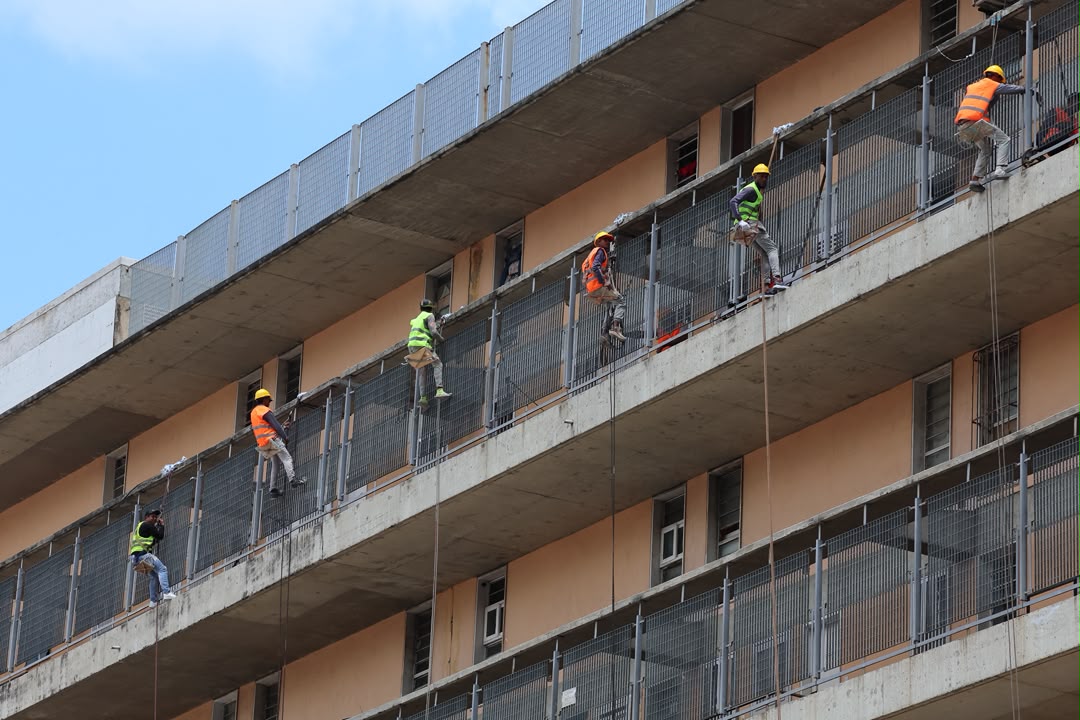
The first days after the earthquake were defined by what had been lost. Apartment blocks lay in ruins, entire neighborhoods disappeared beneath the rubble, hospitals overflowed, hundreds of thousands of Venezuelans found themselves without a home. Yet as the emergency slowly gave way to recovery, another realization has emerged, one less dramatic but perhaps more consequential.
Venezuela did not only lose buildings: it is now discovering that it has very little left with which to rebuild them.
Reconstruction is often described as something that begins after disaster strikes. In reality, it begins years earlier, with the reserves a country accumulates while times are good. Wealth matters, but so do things that rarely appear in economic statistics: functioning institutions, domestic industries, engineering firms, construction companies, reliable electricity, access to credit, insurance markets, emergency planning, skilled workers and the public trust needed to mobilize them all. These are the hidden reserves that allow societies to absorb shocks. The earthquake revealed that Venezuela had spent much of them long before the ground began to shake.
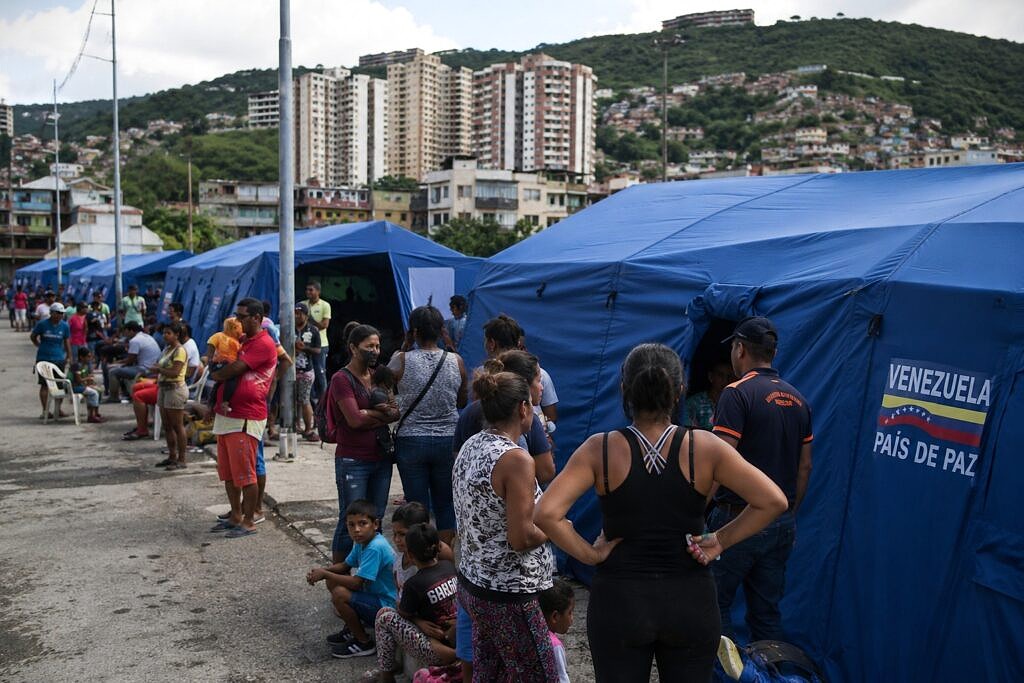
That depletion has become evident in almost every aspect of the response. Venezuela imports a significant share of the food it consumes and much of its medicine. The emergency quickly exhausted whatever inventories existed. Heavy machinery needed to clear debris had to be sought abroad. Medical supplies became scarce almost immediately. Temporary shelters proved insufficient, forcing thousands of survivors to remain in tents erected in parks and public spaces weeks after the disaster. The government is now considering housing many of them in schools, an understandable emergency measure made possible only because classes are suspended for the summer.
Temporary solutions, however, have a habit of becoming permanent in Venezuela. Families displaced by the Vargas Tragedy of 1999 and by the 2010 floods spent years, in some cases decades, living in shelters that were never meant to become homes. The earthquakes risk repeating a familiar pattern, not because Venezuelan authorities necessarily want it to, but because they have long lacked the capacity to offer anything else.
The Venezuelan diaspora contains an extraordinary concentration of precisely the human capital required to rebuild the country. Whether that expertise can be persuaded to return, even temporarily, remains an unlikely scenario.
Some will inevitably attribute this lack of preparedness primarily to sanctions. It is an understandable argument, but one that struggles to explain what the earthquakes actually exposed. The collapse of domestic industry, the deterioration of public infrastructure, chronic underinvestment in the electrical grid, the shrinking of Venezuela’s manufacturing base and the erosion of emergency response capacity all began years before oil sanctions were imposed.
Recent research has also challenged the idea that sanctions caused a discrete collapse in access to food and medicine, showing instead that essential imports had already fallen dramatically before sanctions and later stabilized as the government dismantled some of its own economic controls. The sanctions era itself demonstrated that Venezuela retained the ability to import consumer goods. Supermarkets gradually refilled for those able to pay. Construction cranes returned to Caracas’ wealthiest neighborhoods. Restaurants multiplied. Consumption recovered far more quickly than productive capacity.
The earthquake exposed the difference.
The destruction of resilience
Disasters ask questions that ordinary economic life does not. They care little about how many imported products sit on supermarket shelves or how many luxury apartments are being built in eastern Caracas. They ask whether a country can mobilize excavators, engineers, trauma surgeons, logistics networks, emergency housing, electricity, financing and public institutions at scale. They ask whether resilience has been accumulated or consumed. Venezuela’s answer has been painfully clear.
That is perhaps one of the least understood legacies of chavismo. Much has been written about the destruction of wealth, the collapse of oil production or the country’s prolonged recession. Less attention has been paid to the destruction of resilience itself. For years, the Venezuelan State approached institutions with the same extractive logic that governed its relationship with oil. Productive assets became sources of immediate political or fiscal returns rather than investments to be maintained and strengthened. Private companies were expropriated rather than incorporated into development. Public enterprises became instruments of patronage rather than production. Infrastructure was consumed faster than it was repaired. The country did not merely become poorer. It gradually spent the reserves that societies rely upon when catastrophe arrives.
Resources that may have financed future growth must now finance immediate recovery.
The consequences extend far beyond physical infrastructure. Reconstruction is ultimately carried out by people, and Venezuela has spent the last two decades exporting many of those it now needs most. Engineers who now design highways in Spain, petroleum specialists managing fields in Texas or Guyana, architects working across Latin America, doctors practicing in Colombia and Chile, electricians, project managers and construction supervisors who left because opportunities disappeared at home. The Venezuelan diaspora contains an extraordinary concentration of precisely the human capital required to rebuild the country. Whether that expertise can be persuaded to return, even temporarily, remains an unlikely scenario.
Money presents an equally daunting challenge. Before the earthquake, Venezuela’s slow economic reopening had begun to attract cautious international interest. Much of it remained exactly that, cautious. Memoranda of understanding outnumbered signed investment agreements, access to financing remained limited and investors continued to price Venezuela’s political risks accordingly. The expectation, however tentative, was that new investment would increasingly flow toward rebuilding the electrical grid, expanding oil production and modernizing neglected infrastructure. The earthquake has fundamentally altered those priorities. Resources that may have financed future growth must now finance immediate recovery. Every home rebuilt is a home that cannot wait. Every hospital repaired is indispensable. Every bridge reconstructed delays another project that might otherwise have expanded productive capacity. Reconstruction does not replace development. It postpones it.
Reconstruction-era uncertainty and challenges
The financing challenge has also become more complicated politically. Investors had already approached Venezuela with understandable caution. The humanitarian emergency has increased the country’s fiscal needs precisely as political uncertainty has deepened. The constitutional arrangements established after Nicolás Maduro’s removal were always presented as exceptional. As they become more prolonged and their legal basis increasingly contested, companies considering long-term reconstruction projects must ask whether contracts signed today will remain secure under whatever government eventually succeeds the current one. Investors do not need constitutional certainty, they simply need enough legal certainty to believe that agreements lasting ten or twenty years will survive political change. Venezuela offers remarkably little of it.
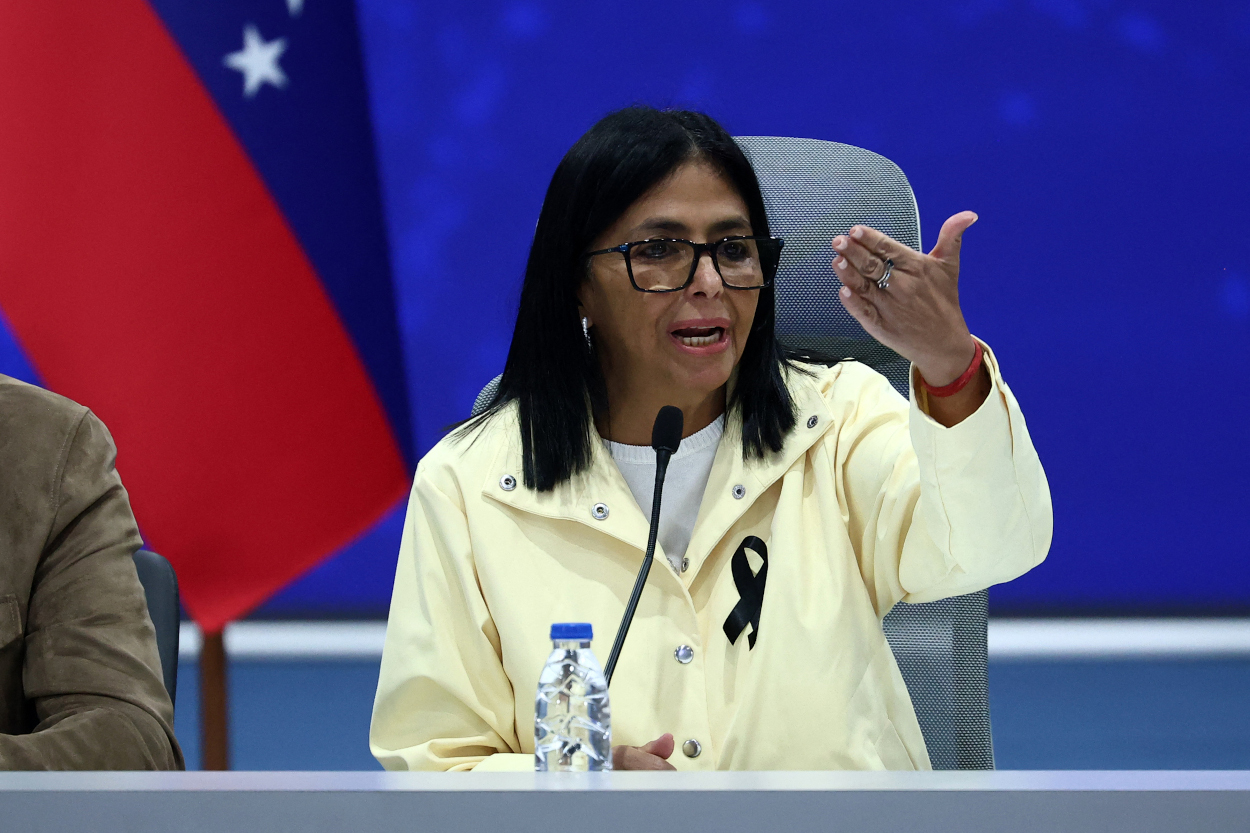
This is also why Delcy Rodríguez’s recent call for the lifting of sanctions misunderstands the country’s central problem. Whatever benefits further sanctions relief might provide, it cannot eliminate the uncertainty surrounding Venezuela’s legal and political environment. Investors deciding whether to finance ports, housing developments or power plants are unlikely to base their decisions on sanctions alone. They also ask whether contracts will survive a change of government, whether courts will enforce them and whether today’s authorities will still possess the legal authority to honor them tomorrow.
Reconstruction depends on trust, functioning institutions, access to capital, legal certainty and a productive economy capable of sustaining the effort long after international solidarity inevitably fades.
There is another irony hidden beneath the rubble. The Venezuelan insurance industry will likely survive this catastrophe better than many expected, not because losses have been modest, but because so much of what was lost was never insured. This was an under-insured disaster. Homes, businesses and families that lacked coverage will inevitably look toward the state for assistance. Yet the state that spent years hollowing out its own fiscal and institutional capacity now finds itself acting as insurer of last resort, precisely when it possesses the fewest resources to fulfill that role.
Natural disasters often become moments of national renewal. Reconstruction can modernize infrastructure, attract investment and accelerate reforms that politics alone struggles to produce. Those opportunities exist in Venezuela as well. Rebuilding cities will require new housing, new roads, new power systems, new telecommunications infrastructure and new industries capable of supplying them. But opportunities are only as valuable as a country’s ability to seize them. Reconstruction depends on trust, functioning institutions, access to capital, legal certainty and a productive economy capable of sustaining the effort long after international solidarity inevitably fades.
The earthquake destroyed thousands of buildings. Rebuilding them will take years. What it ultimately revealed, however, is something far more difficult to reconstruct. Over the last quarter century Venezuela has steadily depleted much of the industrial, institutional, financial, human and political capital that countries quietly accumulate before disasters occur. Those invisible reserves are what determine whether recovery becomes a matter of years or generations. They cannot be imported as easily as food or medicine. They have to be rebuilt, patiently, one institution at a time.