Rebels

Ukraine Denies Supporting M23 Rebels against DRC

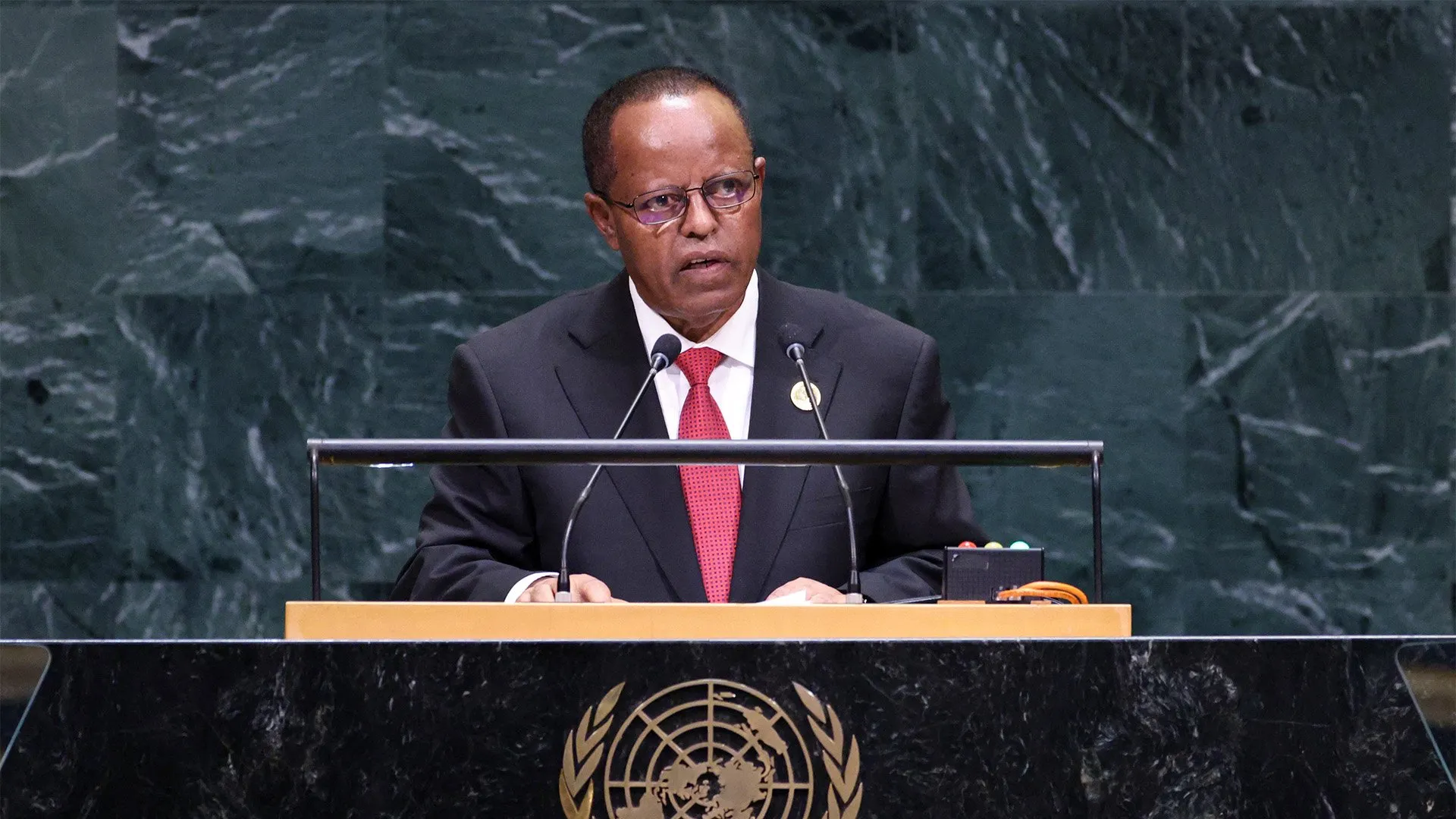
The Ukrainian government has dismissed allegations that it is backing the M23 rebels in the fight against the Democratic Republic of Congo. Heorhii Tykhyi, spokesperson for the Ukrainian Ministry of Foreign Affairs, described the accusations as “Kremlin disinformation.” 

During his visit to Bujumbura, the capital of Burundi, Russian Foreign Minister Sergei Lavrov claimed that Ukraine is one of the external supporters of the M23 rebellion, which controls significant territories in the North Kivu and South Kivu provinces of the DRC. In a statement on Saturday, July 11, the Ukrainian Foreign Ministry’s spokesperson said the Russian accusations have no concrete element of truth, noting that his country does not support the M23 rebels. 

“The affirmations by Lavrov according to which Ukraine supports the M23 in the Eastern DR Congo belong to Kremlin disinformation and are devoid of all foundations. We refute and officially reject these accusations,” Heorhi said.

He stressed that his country does not intervene in African conflicts and that Russia is implementing a policy of interference on the African continent while accusing other nations of similar actions. “Ukraine does not interfere in African conflicts. Russia, on the contrary, does so: it arms groups in violation of sanctions, fuels instability and recruits citizens of African countries to fight in its war against Ukraine. Moscow accuses others of what it does itself: there is nothing new,” he reiterated.

The Ukrainian official said these accusations form part of a broader political strategy by Moscow to distract people from its actions and undermine current diplomatic efforts in the Great Lakes region. “The Russian objective is clear: weaken the American mediation efforts in the Great Lakes region and divert attention from its destructive actions which hinder the peace process,” he said.

The situation remains fluid, even in light of the Washington Accord and several evaluation meetings. The security and humanitarian conditions in eastern DRC have worsened. Tensions persist between the DRC and Rwanda, with each side interpreting the Washington Accord differently. This has complicated matters one year after the accord was signed. 

It’s the same issue with the Qatar-facilitated peace accord in Doha. Despite multiple rounds of discussions, the Congolese government and the M23 are struggling to reach an agreement on their key points of disagreement. The Montreux meeting in Switzerland, intended to reinvigorate the process, has not yielded the anticipated results. Commitments made during this phase of negotiations have not been fully honoured, and the worsening security situation in the Middle East has further sidelined this issue, delaying mediation efforts. In light of the current situation, regional and international bodies have urged all parties to honour their commitments from the peace initiatives.

Source link

Congolese Forces Push to Retake Villages from M23 Rebels 

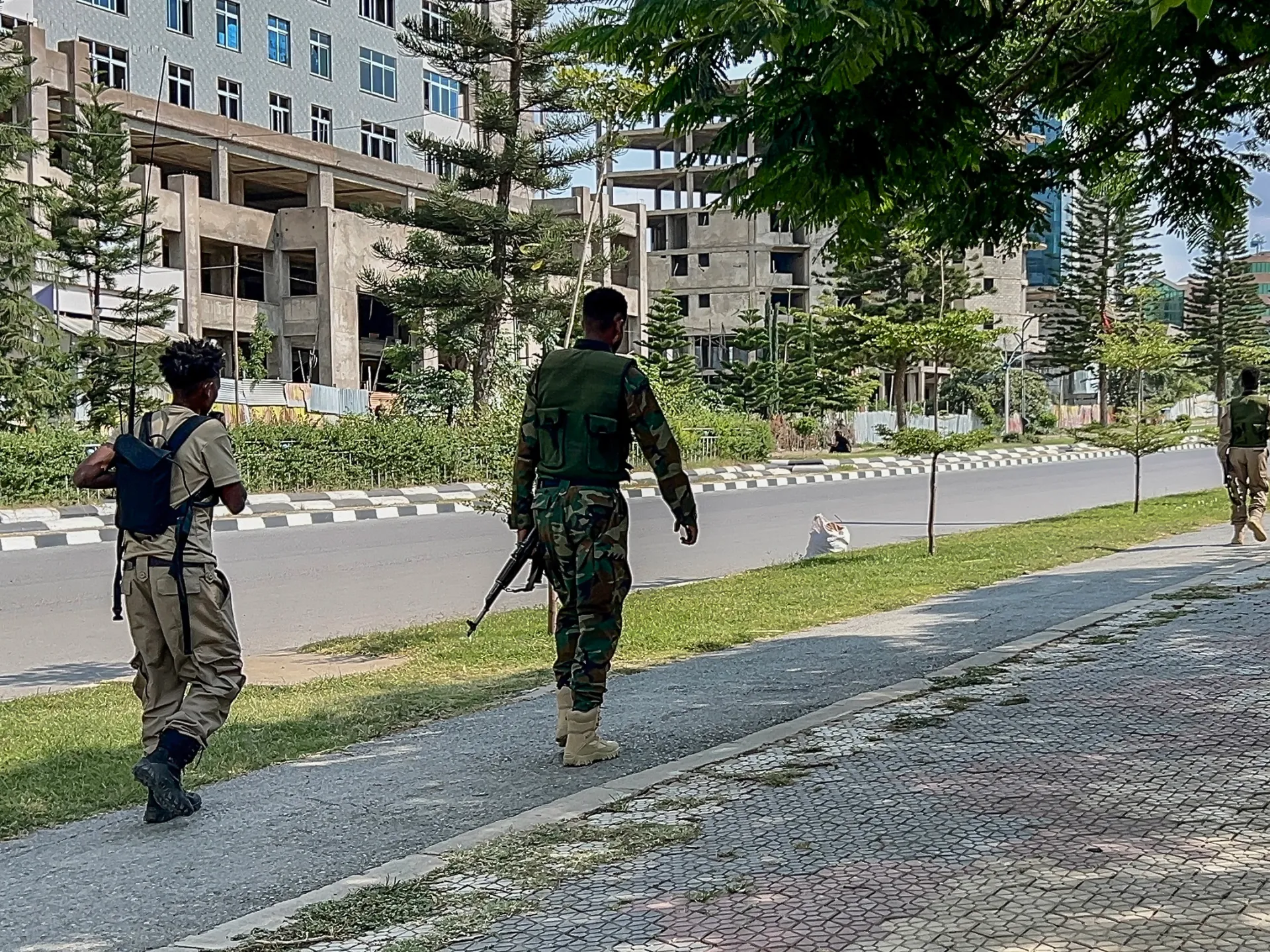
The armed forces of the Democratic Republic of Congo (DRC) have launched a large-scale drone offensive to reclaim towns and villages seized by M23 rebels in the South Kivu province.

The targeted areas are in the plateau regions of Fizi, Uvira, and Mwenga, where intense fighting is currently underway between the M23 fighters and the DRC forces. Supported by the Wazalendo, a militia group in the country, the Congolese army claimed to have retaken several villages in the areas surrounding Minembwe, particularly Point Zero and Rugezi, both in South Kivu.

On July 7, Reagan-Mbuyi Kalonjo, spokesperson for Operation 2 Sud Sud-Kivu, stated that Congolese forces recaptured the strategic positions of Kimete, Kihene, and Kashamata. “Elements of the M23/AFC-Twirwaneho-RDC-Red Tabara rebel coalition have been constrained to withdraw towards Rugezi and Bigaragara to the south of Minembwe,” Reagan-Mbuyi revealed.

The ongoing conflict happens to be in a region with poor telephone coverage, which delays access to information from independent sources. The Congolese national army has condemned the M23 drone bombardment on the village of Bidjaga, located east of Point Zero, as well as other densely populated villages. This attack resulted in ten deaths, according to an army communiqué.

The ongoing conflict between M23 rebels and the Congolese armed forces has intensified in the South Kivu province of the DRC. M23, a rebel group that claims to represent the interests of the ethnic Congolese Tutsi population, has sought to expand its control over strategic territories in the region, leading to violent confrontations with the Congolese army. The DRC forces, supported by the local militia group Wazalendo, have recently been deploying drone technology to reclaim towns and villages that have fallen under M23’s control. 

The conflict has also drawn international attention due to its humanitarian implications, as civilian populations in the affected areas face severe risks. Despite the complexities of warfare in a region marked by poor communication infrastructure, the clashes have been continuous, exacerbating the already precarious security situation for locals and creating a pressing need for humanitarian assistance.

Source link

Two Kashmir brothers: One killed by rebels, another by army 26 years later | Conflict News

Indian-administered Kashmir – Rashid Ahmad Mughal was barely six when armed rebels barged into their home in Chunt Waliwar village, in Ganderbal district of Indian-administered Kashmir, on a freezing January night in 2000.

At about midnight, nearly a dozen armed men broke the window by force and entered the Mughals’ home, where six people were asleep – 23-year-old Ishfaq, his 20-year-old sister Naseema, and younger brothers Ajaz, 8, and Rashid, 6, besides their two cousins.

Recommended Stories

list of 4 itemsend of list

The rebels had come looking for Ishfaq, who, the family admitted, worked for the Indian army, which controls the region.

“He tried to flee,” Naseema recalls, “but they shot him.”

As the family raised an alarm, the rebels took Ishfaq’s body and fled into the dead of the night.

Ishfaq Ahmad Mughal who was killed in 2000-
Ishfaq Ahmad Mughal was killed in 2000 by the Kashmiri rebels [Al Jazeera]

Since then, the Mughal siblings have been hoping for the return of his remains so that they can perform his last rites in accordance with Islamic traditions.

As the siblings waited for more than 26 years for closure on losing Ishfaq, another tragedy hit them last month.

On March 31, Rashid, now 32, was shot dead by the Indian army for being a suspected rebel.

The army said it launched an operation along with the police in the Arahama area of Ganderbal after receiving “specific intelligence input” on the presence of “terrorists”, as Indian authorities and the media describe the rebels.

The army said Rashid was killed during an exchange of fire with the rebels in a forest. But the residents reject the claim, calling it another instance of a “fake encounter” – staged extrajudicial killing of suspects by the Indian forces.

Identy card of Rashid Mughal
Residents said Rashid was the only college graduate in his village [Al Jazeera]

In a further blow to the Mughal family, Rashid’s body was buried 80km (50 miles) away in a graveyard marked for alleged rebels in the frontier town of Kupwara – a practice followed by the army in recent years to prevent the eruption of street protests.

Only Ajaz was allowed by the authorities to attend the funeral.

The Kashmir conflict

The killing of the two brothers over 26 years – one killed by suspected rebels and the other by the army – in many ways encapsulates the tragedy unfolding in Kashmir for decades.

Kashmir is a disputed Himalayan territory divided between nuclear-armed India and Pakistan, but claimed by both in full, with neighbouring China also controlling a sliver of its land. An armed rebellion erupted on the Indian side in the late 1980s. To crush it, New Delhi sent nearly a million soldiers, with the conflict since then killing tens of thousands of people, mostly civilians.

Anti-India sentiments in the Muslim-majority region intensified in 2019 when Prime Minister Narendra Modi’s right-wing government revoked Article 370 of the Indian Constitution, which granted partial autonomy to Kashmir, and brought the region under New Delhi’s direct control by dividing it into two federally-administered territories – Jammu and Kashmir, and Ladakh.

Modi’s government defended the revocation by claiming it would end the armed rebellion and bring lasting peace to the region. However, nearly seven years later, Kashmir continues to remain on the edge, with incidents of suspected rebel attacks, as well as alleged extrajudicial killings, torture and preventive detention of residents continuing to dominate headlines.

The Mughal family belongs to Kashmir’s Gujjar community, a nomadic Muslim tribal group that historically sided with the Indian state. When the armed rebellion broke out in 1989, the forest-dwelling Gujjars were seen as the “eyes and ears” of the Indian forces for sharing intelligence and, at times, assisting troops in operations against the rebels.

Over time, however, this relationship has frayed. Once trusted as a front-line community, the Gujjars and Bakarwals – the two main tribes in the region – now increasingly find themselves under pressure from the very system they once supported.

Since the 2019 abrogation of Kashmir’s special status, at least 11 Gujjars have been killed in suspected extrajudicial encounters, while more than 10 have suffered serious injuries, allegedly due to torture in custody, marking a stark shift in the fortunes of a community once central to India’s security apparatus in the region.

Government policy changes have added to their concerns. Alterations in quotas affected the marginalised community’s access to jobs and education, triggering protests and resentment. They have also faced eviction drives and displacement, with authorities accusing them of illegally occupying forest land and demolishing their seasonal shelters.

‘My brother wasn’t a rebel’

Today, the Gujjars find themselves increasingly vulnerable amid evolving security challenges. Rashid’s killing is seen by the community as part of that pattern.

As soon as the news of the killing spread in Kashmir, hundreds of people hit the streets, rejecting the army’s claims that he was a rebel and demanding an investigation into the March 31 “encounter”.

“I was busy with my work when I received a call from a local police official, saying that my brother had met with an accident and that I should reach the police station immediately,” Rashid’s elder brother, Ajaz Ahmad Mughal, a daily wage worker, told Al Jazeera.

The place where encounter took place and where the body of Rashid Ahmad Mughal was lying-
The site where Rashid was killed in an ‘encounter’ with the Indian army [Al Jazeera]

When Ajaz reached the Ganderbal police station, he was taken to another station in Srinagar, some 30km (20 miles) away, where he saw a body lying inside an ambulance.

“The police said your brother was a militant and that he was killed by the army in an encounter,” said Ajaz. “His face was mutilated, apparently to hide his identity. I identified him with his feet.”

Rashid was a commerce graduate – the only one in the impoverished village – and therefore helped the mainly illiterate people in his community in accessing essential government documents.

On the day he was killed, Rashid had left his home with the documents of some people he was helping – like he did every day before returning home by the evening.

“However, this time, he didn’t return and his phone was switched off,” Ajaz recalled.

The next morning, news about the army operation in nearby forests spread in the area. That is when, said Ajaz, people came to know about Rashid’s killing.

“We were absolutely devastated. How did my brother, who was a civilian until the day before, suddenly turn into a militant?” he asked.

Ajaz said the clothes Rashid was found wearing when he saw his body did not belong to his brother, alleging the security forces put the clothes on him after the killing. The family asked why Rashid was never questioned or arrested by the police if he was an armed rebel.

Room of Rashid AHMAD Mughal
Rashid’s room at their house in Chunt Waliwar village, Ganderbal, Kashmir [Al Jazeera]

As protests and questions over the killing grew, the New Delhi-appointed governor of the disputed region ordered a magisterial inquiry into the killing. The authorities said a probe will be completed within seven days. It has been nearly a month now, and no inquiry report has yet been published.

Al Jazeera reached out to the army and the regional police for their statements on the family’s allegations, but received no response.

However, a police official, on condition of anonymity since he was not authorised to speak to the media, told Al Jazeera the decision to return Rashid’s body to the family would be taken based on the “nature of the inquiry report” submitted by the magistrate.

The police official also said Rashid had no adverse police records and that he had never been summoned for questioning for any rebellion-related case.

‘Prepared a grave for Rashid’

Even as the government investigates the killing, the Mughal family doubts it will lead anywhere, noting that numerous such probes ordered in Kashmir in the past yielded little or no outcome.

Experts say such probes by magistrates, who are members of the same bureaucracy that governs the region, lead to little or no remedial action.

“The very least that can be done is a time-bound probe by a judicial magistrate answerable to the chief justice of a high court,” Ravi Nair, executive director of the South Asia Human Rights Documentation Centre, told Al Jazeera.

House of Rashid Ahmad Mughal
The house of the Mughals in Chunt Waliwar village [Al Jazeera]

According to data compiled by the Jammu Kashmir Coalition of Civil Society (JKCCS), there were at least 108 cases of rights violations by the Indian forces between 2008 and 2018, where probes were ordered, but no one has been prosecuted to date. JKCCS is now a defunct rights organisation after its founder, Khurram Parvez, was arrested under a stringent anti-terror law in 2023.

In 2018, the Indian government informed the parliament that it received 50 requests from the then-regional government for the prosecution of security forces accused of rights violations. It denied sanction in 47 cases, while the matter is still pending in the remaining three.

Since the onset of the armed rebellion in 1989, between 8,000 and 10,000 people have disappeared in Kashmir, according to the Association of Parents of Disappeared Persons (APDP), which represents the families of the missing.

As of December 2025, government data shows that the region recorded the highest number of arrests under the draconian Unlawful Activities (Prevention) Act (UAPA) for five consecutive years. In 2021, the federal government informed the parliament that as many as 33 custodial deaths took place in Kashmir between 2016 and 2021. The next year, an analysis of data provided by the National Human Rights Commission (NHRC) revealed 38 cases of alleged extrajudicial killings in Kashmir – the highest in India that year.

Human rights experts say the 1990 Armed Forces (Jammu and Kashmir) Special Powers Act (AFSPA), a controversial law that provides impunity to the army in Kashmir, acts as a legal shield for the accused members of the security forces.

Meenakshi Ganguly, South Asia director for Human Rights Watch, told Al Jazeera that despite several cases of extrajudicial killings in Kashmir and families clearly identifying the alleged perpetrators, not much action has been taken by the authorities.

“Unfortunately, there is a culture of impunity that has perpetuated such abuses. The Defence Ministry restricts sanction to prosecute soldiers, while the Home Ministry has shielded paramilitary forces,” she said, demanding a repeal of the AFSPA “and all other laws that provide security forces immunity from prosecution”.

“Justice and accountability are key to lasting peace,” she said.

B com degree of Rashid AHmad Mughal
The commerce degree marksheet of Rashid Ahmad Mughal [Al Jazeera]

Praveen Donthi, senior analyst with the International Crisis Group, an international think tank, says India’s 2019 move to revoke Article 370 was aimed at “fully integrating Kashmir into the union and end[ing] separatism and militancy”.

“However, seven years down the line, the situation remains precarious. The conflict is far from resolved, and militancy still has the capacity to ramp up at will,” he said.

“The pressure on security forces to maintain peace and stability may be leading to procedural errors and excesses.”

However, retired Indian army commander, DS Hooda, argues that the army “does not tolerate such incidents and has taken action if they found any wrongdoing by their soldiers”.

“It was an army investigation that revealed that one of the officials was involved, and the accused was punished by the army court,” Hooda said, referring to a staged killing of three civilians dubbed as rebels by the army in Kashmir’s Shopian area in 2020.

The army later acknowledged its soldiers exceeded powers under the AFSPA law and sentenced an accused soldier to life imprisonment. He was later suspended by an armed forces tribunal.

“The army carries out its own investigation. There is no impunity and if they find anything wrong, they take action. This is not an organisation thing.”

But the Mughal siblings say they had never thought a tragedy that struck them 26 years ago would return in such a devastating way, reopening old wounds and leaving them once again searching for answers and closure.

They say their suffering has not ended, with the years only deepening their grief as they wait for the return of the remains of their siblings.

“We have prepared a grave for Rashid. We will bury him in our own graveyard,” says his sister Naseema. “It will feel as though he is close to us.”

Source link