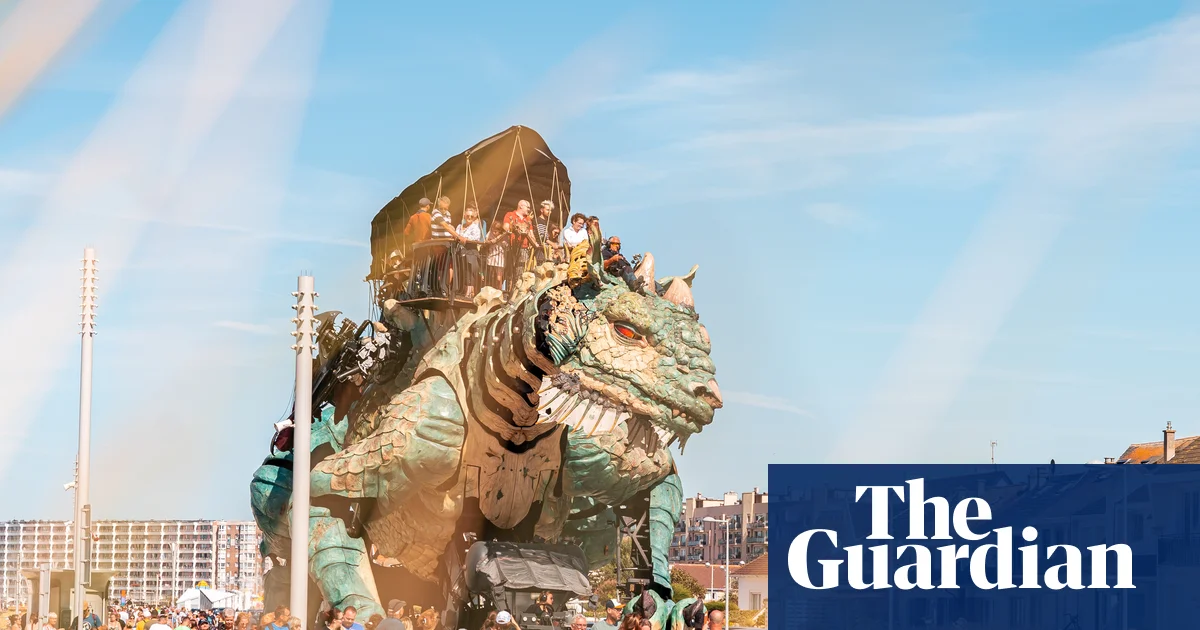
You don’t need to venture too far into France to find its wow factor. Indeed, within minutes of exiting the ferry or Channel Tunnel, you can be staring a fire-breathing dragon in the face. The Dragon de Calais is a 25-metre-long mechanical beast that stomps along the renovated sea front carrying 48 passengers on its back (adult ticket €9.50), emitting jets of fire, steam and water from its nostrils. It was created by the team behind Les Machines de L’île, a collection of steampunk wonders including a 12-metre elephant, in Nantes.
This year, Calais’ dragon is joined by Le Varan, a giant iguana that crawls around the town and the old fishing district with room for 25 passengers (adults €8.50). While you’re there, explore the beaches along the coast at Hardelot-Plage and visit the Chateau d’Hardelot, with its history of Franco-British relations.
Celebrate Monet in Rouen
Rouen cathedral, which Monet painted more than 30 times. Photograph: SC Stock/Getty Images
This year marks the 100th anniversary of Claude Monet’s death and many galleries and venues in Normandy and Paris have events planned. You don’t need to face the crowds at Giverny or the Musée d’Orsay to appreciate the great artist’s work, though. Instead, visit Rouen, where Monet found the ever-changing, silver-grey light on the intricate and imposing facade of the cathedral so inspiring he painted it more than 30 times (from the window of what was, at the time, a ladies’ undergarment shop opposite).
The Musée des Beaux-Arts de Rouen has the largest collection of French impressionist works outside Paris, including one of the cathedral paintings and works by Camille Pissarro and Alfred Sisley. While you’re there, explore the Boucles de la Seine natural regional park, where you can cycle between the loops of the River Seine through orchards and past the ruined Abbaye de Jumièges.
Visit a postman’s palace in Drôme
The Palais Idéal, created by Ferdinand Cheval. Photograph: DV Travel/Alamy
The Dauphiné region, close to Grenoble, combines breathtaking scenery and curious attractions. Chief among them is the Palais Idéal, a whimsical monument built over 33 years from the late 19th century by Ferdinand Cheval, a postman whose inspiration came from the travel journals and postcards he delivered on his 20-mile round. On the facade of the 10-metre-high palace, you’ll see mythical creatures and mysterious grottoes, Egyptian temples and Swiss chalets, while the small on-site museum recounts the stories of Cheval’s tragic life, and those who fought until the 1960s to have the structure recognised as a listed monument.
Nearby, explore the jaw-dropping Vercors mountains, with precipitous roads such as the Combe Laval route, which was chiselled out of the rock in the 19th century to transport timber. Also visit the fascinating Grotte de Choranche underground caves, with curious, spaghetti-like stalactites, and the town of Pont-en-Royans, where medieval houses hang high over a gorge.
Discover Brittany by bike
A cyclist on the Traversée Bretonne passes a chateau in Nantes. Photograph: Un Monde à Vélo
Cyclists have always been spoiled by the smooth, car-free cycle paths throughout France, and now the Traversée Bretonne, a new route through the heart of Brittany, offers a fresh challenge. Starting in the city of Nantes, the 14-stage route takes riders past the curious mid-century architecture of Saint-Nazaire (such as the Soucoupe, a sports centre shaped like a flying saucer), then on to the “Atlantic Riviera” at La Baule, with its belle époque villas and vast beach.
Further along, the lively city of Rennes is perfect for rehydrating: Rue Saint-Michel is nicknamed Rue de la Soif (thirsty street) because it has a bar approximately every 7 metres. The route finishes with a nice flat stage at Mont-Saint-Michel. traversee-bretonne.com
Celebrate figs in the Var
Figs for sale at the Fête de la Figue in the village of Solliès-Pont. Photograph: Laurent Parienti
Plan a late-summer sojourn in the Vallée du Gapeau, inland from Toulon, which is renowned for its fig orchards: local people say the trees like their heads in the sunshine and their feet in the water. At the end of August, the start of the harvest is celebrated with the lively Fête de la Figue in the village of Solliès-Pont. As well as the bountiful market, there are tours of the groves and a lively four-course dinner with music in the village’s main square.
While you’re there, hike in the wooded valley and admire the curiously shaped “elephant rock”. Visit the local olive oil mill at Moulin à Huile du Partégal (entry free) to explore its ancient grove and taste its oils; and stroll the unspoiled villages of Solliès-Ville and Solliès-Toucas. valleegapeau-tourisme.fr
Taste cheese in the Jura mountains
Cheese at La Maison du Comté. Photograph: Hemis/Alamy
To truly understand the flavours of French cheeses, it pays to visit the landscapes in which they are made. One of the most enchanting areas for a foray in fromage is the Jura mountains, the home of comté cheese. Here, as part of the Routes du Comté, you can visit the so-called cathedral of comté at the Fort Saint-Antoine (tour reservations essential, €11), where Fromageries Marcel Petite ages its 100,000 wheels of comté between the stone arches of a 19th-century military fort. Nearby, next to the Lac de Malbuisson, Restaurant du Fromage offers a comté and savagnin wine fondue in its Swiss-chalet-like surrounds.
An hour west, the town of Poligny is home to La Maison du Comté, a visitor centre dedicated to explaining how the cheese is made and infused with the flavours of the 130 plants from the spectacular landscape on which the cows graze. montagnes-du-jura.fr
Hunt for bric-a-brac in Normandy
A flea market in Honfleur. Photograph: Peter Andrew Richardson/Alamy
Take a road trip to the bucolic Perche regional natural park in southern Normandy, an area of rolling hills, cider farms and charming villages. It is ideal, too, for those who love hunting for vintage treasures and bric-a-brac. Near the towns of Bellême, Mortagne-au-Perche and along the D923 road between La Ferté-Bernard and Nogent-le-Rotrou, you will find many brocante shops and warehouses with artfully displayed items on offer.
The area is a popular weekend destination for Parisians, hence the abundance of good restaurants. In the village of La Perrière, La Maison d’Horbé B&B and wine bar (rooms from €142.50) is set in an antiques shop, while in Saint-Hilaire-le-Châtel, the Hotel les Prés has its own restaurant (rooms from €142). perche-tourisme.fr
Relive history in the Vendée
Cahriot racing at the Puy du Fou theme park. Photograph: Arthur Aumond
You need never utter the word Disney once you’ve discovered the Puy du Fou, a theme park like no other, in the countryside of the Vendée. With bombastic historical re-enactments of Viking invasions, Roman chariot races, medieval jousting and more than 2,500 actors across the park, many of the shows are big on wow factor.
Yet there are also experiences that evoke a quieter sense of wonder – walk through the cabins and hull of the 18th-century ship La Pérouse and see its myriad flora and fauna gathered from around the world, before it sinks in a storm in the South Pacific. Moving, too, is the Amoureux de Verdun experience, which puts you in the trenches of Verdun in the first world war, where actors play out a love story. Adult tickets from €47, puydufou.com
Swim in a tidal pool in Brittany
Saint-Malo’s Piscine de Bon Secours. Photograph: JJ Farquitectos/Getty Images
There are several tidal swimming pools along the Emerald Coast in Brittany. At Dinard, the Piscine de Mer overlooks the vast main beach, alongside stately belle époque villas and maritime pines; and from Saint-Malo’s Piscine de Bon Secours, you can walk at low tide to the island of Grand-Bé for a great view back to the walled town.
The Emerald Coast is good for hiking too, so make a point to stroll out to the dramatically perched Fort La Latte on the Cap Fréhel headland. dinardemeraudetourisme.com
Explore the wild Aubrac plateau
The volcanic landscape of the Aubrac plateau. Photograph: Hemis/Alamy
Many holidaymakers speed through the centre of France on the autoroute known as La Méridienne (A75), bound for busy beaches of the Med. Those who prefer more solitude, however, should exit sooner (exit 39 to be precise) and venture west on to the extraordinary, volcanic landscape of the Aubrac plateau. Here, stone-walled meadows abound with wild flowers and the buron huts that once housed cowherds and cheesemakers have been converted into welcoming rustic restaurants, such as the Buron de Born, serving local potato and cheese dishes such as aligot and truffade. At night, the total absence of light pollution makes it ideal for stargazing. tourisme-en-aubrac.com
As you begin to book seats on flights for the trips ahead of you this summer, there’s something you may want to consider when it comes to the most fuss-free flight
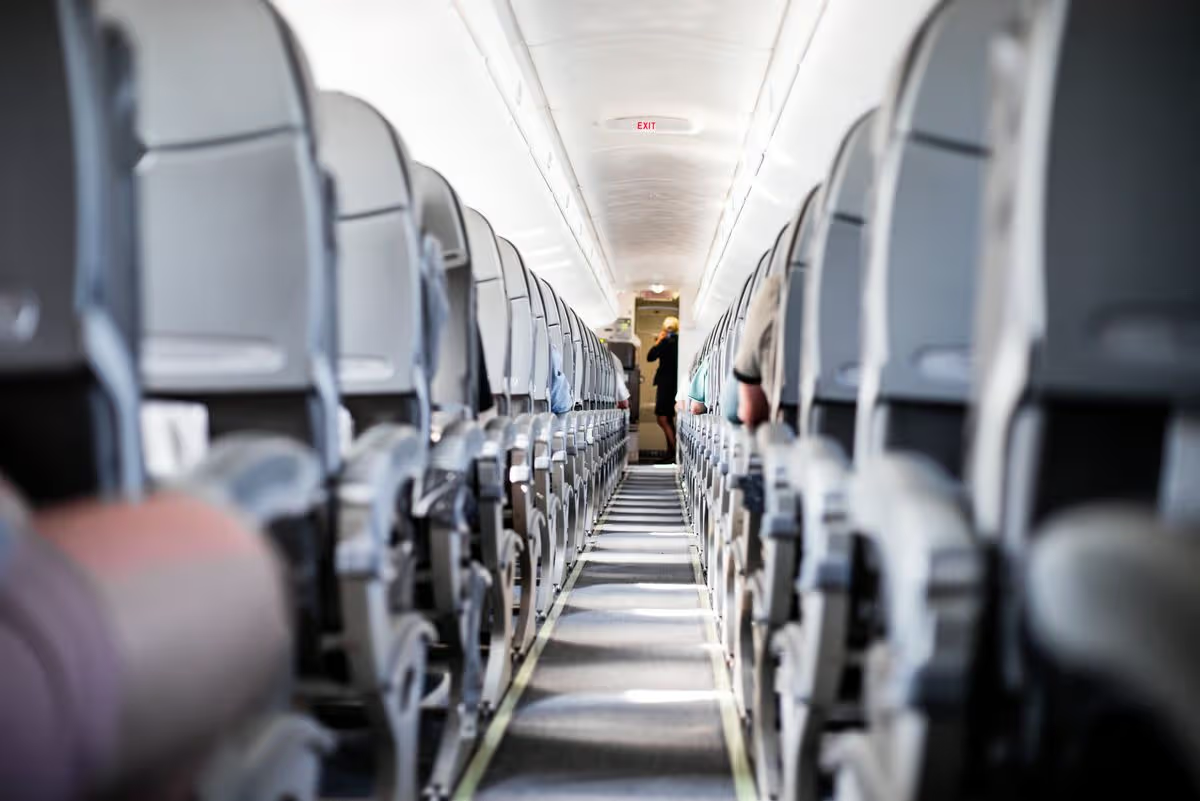
If you end up with one of these seats you might want to reconsider (Image: Getty Images)
Ahead of your big holidays this year you may be starting to look at your flights, or maybe you’re checking in and choosing your seats last minute; either way, you might want to hear this.
Most planes have a handful of seats that tend be located in the same place. Some with extra leg room, others with less, some in between windows, and some even on their own. Those boarding these flights and helping to keep everything streamlined know no more about those inside of those planes than anyone else.
That’s why it would be smart to consider this key piece of seat advice from Andrea Platania, operations manager at the airport transfer platform Transfeero. According to the firm’s onboard knowledge, there are a handful of seats that passengers continuously regret going for, and it may not be the ones that have even crossed your mind.
Seat 30F is a clear seat to avoid booking on a standard aircraft, along with 30E, as these tend to be located close to the toilets. In turn, the area tends to see a lot more disruption as people queue in the aisle or pass the seat to go in and out of the toilet.
He explained: “It’s not just about proximity, it’s about the constant movement around you.” He further claimed that these areas can quickly become gathering points during flights.
The expert shared: “The toilet doors opening and closing, people chatting as they wait, and general foot traffic all add up. If you’re hoping for a quiet, relaxed journey, these seats make that much harder.”
While these are notoriously standout bad seats, the specifics don’t quite stop there, especially in the 30 zone. Typically, seats 30A and 30F can’t be reclined as much as others.
This is worth noting for those particularly long journeys of yours, such as longer-haul flights. Andra suggested: “If you’re on a flight where you’re hoping to rest or even just sit comfortably, not being able to recline makes a big difference.” You end up feeling much more tired by the time you land.”
Adding to the already growing list of reasons as to why you might want to avoid these seats is time. If you’re a quick traveller, you have a short transfer time, you’ve got another flight to catch, or you just like to be efficient, you will not be cutting time by sitting in these seats.
These seats typically are some of the very last to leave the aircraft, according to the expert. Passengers in these rows often are left waiting longer as they have to allow time for almost everyone to disembark.
“It might not sound like a big deal, but when you’re eager to get off or have a connection to catch, it can feel like a long delay,” Andra said.
SPECTACULAR volcanos, breathtaking lakes and ancient jungle cities – explore this Central American gem before the crowds hit, says Picture Director Alan Gittos.
Here’s why it’s time to head to the central American country.
Sign up for the Travel newsletter
Thank you!
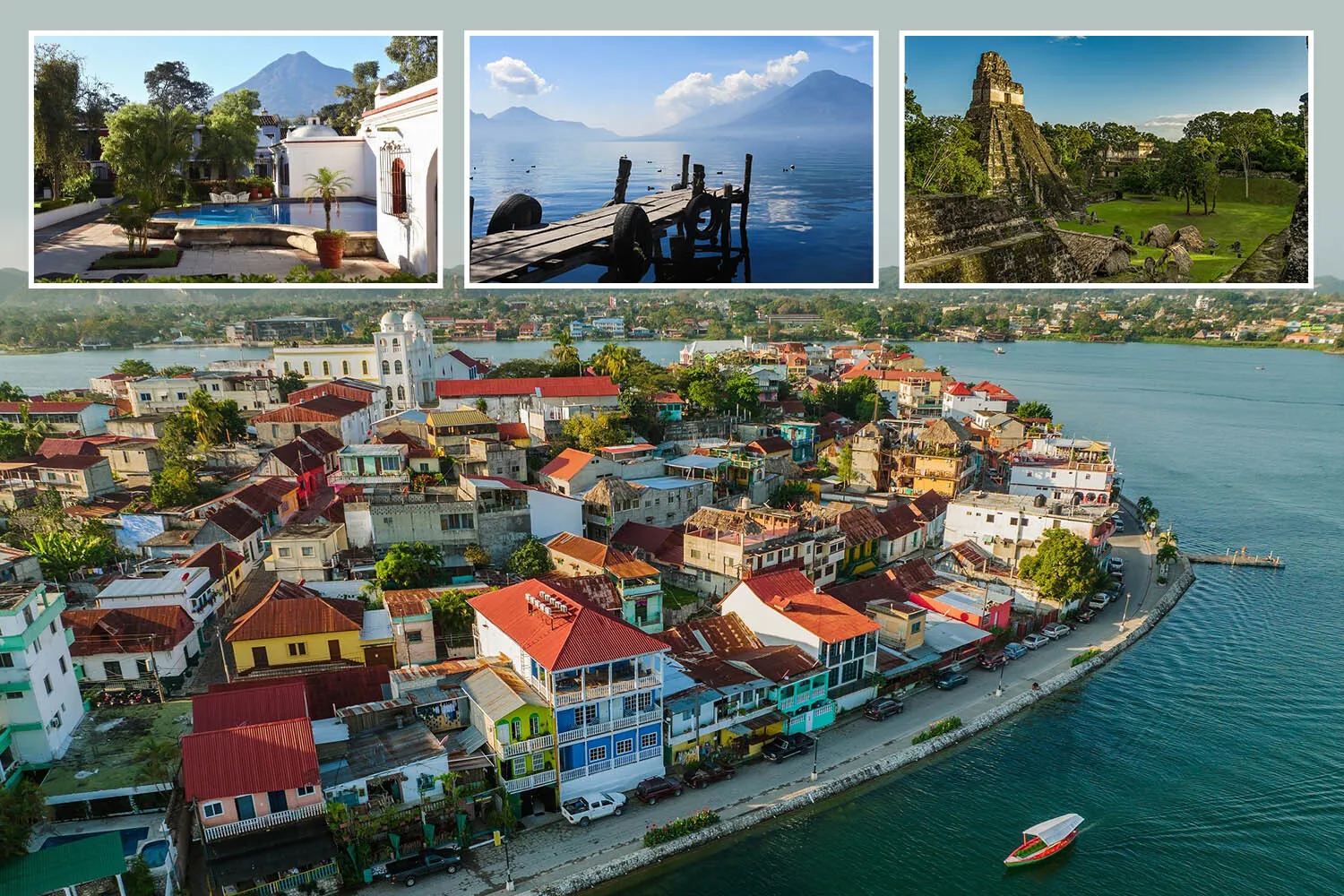
At hotel Villa Colonial, in former capital city Antigua, you can breakfast on the magnificent terrace with a great view of Fuego’s volcanic plumes
1 – Majestic Volcanos
As your flight descends into Guatemala City, you can’t miss the giant volcanoes that guard the highlands and stir the clouds.
Volcán de Fuego (Volcano of Fire) in the Sierra Madre mountains is one of the world’s most active stratovolcanoes.
And at hotel Villa Colonial, in former capital city Antigua, you can breakfast on the magnificent terrace with a great view of Fuego’s volcanic plumes. Stays cost from £77 per night (Villasdeguatemala.com).
To get even closer to playing a real game of The Floor Is Lava, take a trail ride up Volcán Pacaya, an hour’s drive from the city.
Let your horse carry you across dark ash soil to the base of the cone, then toast marshmallows on the geothermal vent – yes, really!
A six-hour horse-riding tour costs £67 per person (Pacayatours.com).
2 – Punchy Plates
For classic dishes in Antigua, head to charming La Fonda de la Calle Real
Breakfast is a big deal here. Try the traditional feast of eggs, black beans and tortilla somewhere atmospheric, such as Raíces Restaurant on the edge of Lake Petén Itzá – it will only set you back £3 (@Raicesrestaurante).
For classic dishes in Antigua, head to charming La Fonda de la Calle Real and order the delicious Chiles Rellenos De Res – battered roasted peppers stuffed with beef mince, £9 (Lafondadelacallereal.com).
After modern fusion cooking? Dig into a trio of ceviche at Maxán, £14, followed by Buñuelos – moreish plantain fritters laced with cardamom, £3 (@Maxangt).
3 – Floating Flores
Visit this small town on a tiny island in Petén as it was the last Mayan kingdom to resistCredit: Getty Images
This small town on a tiny island in Petén was the last Mayan kingdom to resist. Set sail on Lake Petén Itzá to spot kingfishers, vultures and maybe even a crocodile or two.
Expect to pay around £37 for a boat ride from the shore. Once back on dry land, browse the brightly painted shops for textiles, ceramics and souvenirs, then sip a refreshing, bright-green limonada con chaya, made with lime juice and local chaya leaves, £3.40, at La Danta restaurant as the sun sets (Ladantarestaurante.com).
After dark, settle into a charming cabin at nearby Hotel Villa Maya and drift off to the sounds of the rainforest.
Lake Atitlán was described as ‘the most beautiful lake on Earth’ by German explorer Alexander von Humboldt, and at sunrise it is truly bewitchingCredit: Getty Images/iStockphoto
Lake Atitlán was described as “the most beautiful lake on Earth” by German explorer Alexander von Humboldt, and at sunrise it is truly bewitching.
Stroll the water’s edge in Panajachel, then hop on a boat to the sleepy lakeside villages.
Stop off at San Juan La Laguna to meet women-run weaving cooperatives, watch natural-dye workshops and grab a large bag of fresh Arabica coffee, £8, from Café San Juan (Cafesanjuangt.com).
Day tours cost from £74 per person (Getyourguide.com). Finally, be sure to make the short, steep climb to Kaqasiiwaan Viewpoint for a stunning panorama – the £4 entry fee is well worth it.
At the top, sip cold Gallo beer crowned with spiced cucumber rings, £2, from the kiosk. Heaven!
5 – Cacao + Coffee
Marvel at the natural beauty all aroundCredit: Alamy Stock Photo
For thousands of years, maize and cacao have been Guatemala’s sacred crops.
In San Juan La Laguna, stop by Deleite Ancestral and learn to make traditional dishes, such as tz’utujil chicken stew with handmade tortillas – expect to get hands on! – then sample the mouth-watering results (@Deleiteancestral).
In Antigua, join a lively chocolate workshop at Ek Chuah to hear all about cacao’s history, while making sweet treats to take away.
An hour’s workshop costs £19 per person (Chocolateantigua.com). Coffee is the latest big Guatemalan obsession, and at 5,000ft above sea level, Antigua’s volcanic-soil plantations grow some of the world’s finest.
Take a tour of Finca Filadelfia to find out why shade-grown beans taste richer, why only women can plant the seedlings and why medium roast is the national sweet spot.
Finish with a tasting that’s both jittery and blissful. A 90-minute tour costs £19 per person (Facebook.com/fincafiladelfia).
6 – Gemstone shopping
Antigua Guatemala is a UNESCO World Heritage Site, with cobbled streets lined with ceramics, leather goods and exquisite jade jewelleryCredit: Getty Images
Antigua is a UNESCO World Heritage Site and its cobbled streets are filled with shops selling locally made ceramics, leather goods and exquisite jade jewellery. Discover why it’s the Mayans’ favourite gem with a free tour of Casa Del Jade’s museum (Casadeljade.com).
Later, check out the impressive 18th-century Convent of La Merced, with its giant fountain shaped like a water lily, and the Arch of Santa Catalina, £2 entry. But for the most dramatic view, head for Cerro de la Cruz (the hill of the cross) to snap vistas of the city beneath the incredible backdrop of Volcán Agua.
7 – Jungle adventures
Explore Tikal and climb Temple IV for one of the Americas’ most breathtaking views – seen in the first Star Wars filmCredit: Getty Images
Want to hear howler monkeys roar like dinosaurs and spy pyramids emerging from the jungle canopy?
Hit Tikal, a vast site built by the ancient Mayans using only stone-age tools, and climb Temple IV for one of the most extraordinary views in the Americas – it even featured in the first Star Wars film.
Tikal is also a UNESCO World Heritage Site for its biodiversity – back at ground level, coatimundis scramble across paths, spider monkeys hang from branches and leafcutter ants march across the jungle floor.
Tikal is also a UNESCO World Heritage Site for its biodiversityCredit: Getty Images/iStockphoto
Or to channel your inner Indiana Jones, head for the Belize border and pay the £8 entry to explore Yaxhá, a site whose origins are even older than Tikal.
It only receives about 80 visitors a day, so you may feel like the first to discover its huge plazas and temples.
Look out for the famous ball court, where Ancient Mayans played pok ta pok – a game with high stakes, where losing teams faced being sacrificed!