react

World leaders react to US capture of Venezuelan leader Nicolás Maduro

Leaders around the world have responded with a mix of condemnation and support to the US capture of Venezuela’s President Nicolás Maduro.

Following a large-scale strike on Venezuela on Saturday, Maduro and his wife were captured by US forces and removed from the country. The pair have been indicted on drug charges in New York.

In an initial response, UK Prime Minister Keir Starmer said his government would “shed no tears” for the end of Maduro’s regime.

Neighbouring Latin American countries condemned the actions, as did Venezuela’s long-term allies, Russia and China. China said it was “deeply shocked and strongly condemns” the use of force against a sovereign country and its president.

Russia accused the US of committing “an act of armed aggression”.

Iran, which is locked in its own dispute with Trump over his promise of intervention in its country, called the strikes a “flagrant violation of the country’s national sovereignty”.

Trump said the US will “run” Venezuela “until we can do a safe, proper and judicious transition”.

Many Latin American leaders condemned the US actions.

President Luiz Inacio Lula Da Silva in Brazil wrote on X that the actions “cross an unacceptable line”, adding “attacking countries in flagrant violation of international law is the first step toward a world of violence, chaos, and instability”.

Colombian President Gustavo Petro called the strikes an “assault on the sovereignty” of Latin America, while Cuba’s President Miguel Diaz-Canel described it as a “criminal attack”.

Chile’s President Gabriel Boric expressed “concern and condemnation” on X and called for “a peaceful solution to the serious crisis affecting the country”.

Cuban President Miguel Diaz-Cane accused the US of a “criminal attack”, while Uruguay said in an official statement it was monitoring developments “with attention and serious concern” and “rejects, as it always has, military intervention”.

Trump has indicated that Cuba could become part of a broader US policy in the region, calling it a failing nation. Secretary of State Marco Rubio said Cuba was a disaster run by incompetent leaders who supported Maduro’s administration. He said the government in Havana should be concerned

The Venezuelan Interior Minister Diosdado Cabello urged citizens to remain calm and to trust the country’s leadership and military, saying, “The world needs to speak out about this attack,” according to the Reuters news agency.

But Argentinian President Javier Milei – who Trump has described as his “favourite president” – wrote “Freedom moves forward” and “Long live freedom” on social media.

Meanwhile UK Prime Minister Sir Keir Starmer refused to be drawn into whether or not the military action may have broken international law.

In an interview with the BBC’s Sunday with Laura Kuenssberg programme on Saturday morning, the prime minister did not condemn the US strikes.

He said he was waiting to establish all the facts but would not “shy away from this”, adding he was a “lifelong advocate of international law”.

The UK was not involved in the strikes and Sir Keir said he had not spoken to Trump about the operation.

Later on Saturday, Sir Keir posted on X that the UK “regarded Maduro as an illegitimate president and we shed no tears about the end of his regime”.

“The UK government will discuss the evolving situation with US counterparts in the days ahead as we seek a safe and peaceful transition to a legitimate government that reflects the will of the Venezuelan people,” he added.

The EU’s top diplomat Kaja Kallas reiterated the bloc’s position that Maduro lacks legitimacy, that there should be a peaceful transition of power, and that the principles of international law must be respected.

French President Emmanuel Macron said the transition of power “must be peaceful, democratic, and respectful of the will of the Venezuelan people” in a post on X.

He added he hoped González – the opposition’s 2024 presidential candidate – could ensure the transition.

German Chancellor Friedrich Merz said the legality of the US operation was “complex” and international law in general must apply.

He warned that “political instability must not be allowed to arise in Venezuela”.

UN Secretary General Antonio Guterres said he was “deeply concerned that the rules of international law have not been respected”, his spokesperson said. He was “deeply alarmed” by the strikes, which set a “dangerous precedent”.

He called on all actors in Venezuela to engage in inclusive dialogue, in full respect of human rights and the rule of law”.

In the US, Senate Minority Leader Chuck Schumer, a Democrat, said, “Let me be clear, Maduro is an illegitimate dictator, but launching military action without congressional authorization, without a federal plan for what comes next, is reckless”

Source link

Venezuelans react to US Maduro arrest with hope and uncertainty

Grace Eliza Goodwin,

Cristobal Vasquezand

Tom Bateman,State department correspondent

Getty Images A man wipes his tears while holding flags of Venezuela and the United States next to the statue of Simon Bolivar in Bogota, Colombia during a rally after Nicolás Maduro's capture.Getty Images

Protestors held a rally in Bogota, Colombia after Nicolás Maduro’s capture.

As the dust settles in Caracas, Venezuelans are reacting to the news of President Nicolás Maduro’s capture by the US with hope, fear, and uncertainty.

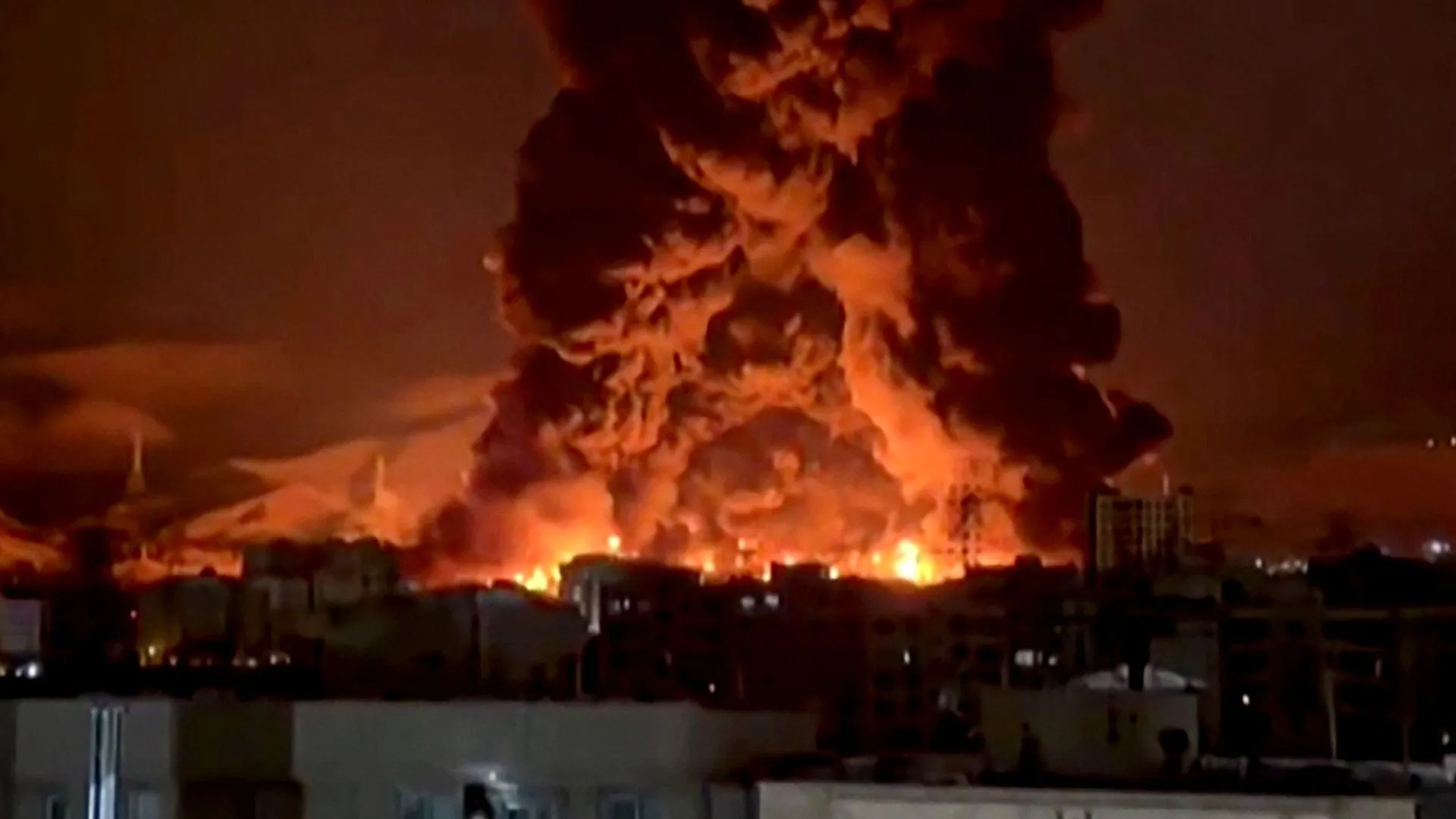
People began to emerge in the streets Saturday after a night rocked by explosions in the Caracas Valley, with moods that ranged from celebration to condemnation.

Dina, a local resident, told the BBC that for now, she is grateful to the US for “taking Maduro out of here” because now, she “at least can see some light at the end of the tunnel again”.

But the political climate remains tense, part of why she did not give the BBC her real name.

Jorge, another Venezuelan who lives near Caracas, told the BBC that while he’s grateful to be “well-supported by Trump and the entire United States”, he fears the coming days will not be easy.

“Now that they are taking this man away, what’s going to happen?” Jorge told the BBC. “It doesn’t guarantee us anything. So there is a bit of uncertainty. We don’t know what the coming days will bring.”

Supporters of Maduro’s government have also been rallying in the streets of Caracas, demanding the US release their leader. Caracas Mayor Carmen Meléndez, a firm government loyalist, joined in the rally to protest against what she called Maduro’s “kidnapping”.

Early Saturday, US forces under President Donald Trump carried out a series of targeted attacks in Venezuela’s capital, ultimately taking the country’s leader into US custody.

The US accuses Maduro of running a “narco-terrorist” regime. He is widely seen by opponents within his country as well as by foreign governments as having illegitimately won Venezuela’s 2024 election.

Maduro – who leads the United Socialist Party and has been in power since 2013 – has frequently been accused of repressing opposition groups and silencing dissent in Venezuela, at times with the use of violence.

As Maduro and his wife are extradited to New York City to face drug trafficking and weapons charges, the future of Venezuela remains unclear. Trump has said the US will run the country – and manage its oil reserves – until a permanent replacement for Maduro can be established.

Maduro has previously rejected US claims he has direct involvement in drug trafficking.

But even for those who are grateful to see Maduro gone, there’s still a lot of fear and uncertainty, several Venezuelans told the BBC.

Dina isn’t putting much faith in Trump.

“He says something now and tomorrow he changes his mind,” Dina said of Trump. “I mean, I’m not used to taking his words seriously.”

The “only thing that was good” about what Trump has said since Maduro’s capture, Dina said, is that the US will be investing in Venezuela, which she hopes will lead to “a better economic situation” for the struggling country.

Venezuela VP: Maduro is ‘the only president’

The danger of speaking out against Maduro is still very real within Venezuela, as the National Assembly – which is dominated by Maduro loyalists – passed a law a few weeks ago declaring anyone who expresses support for US naval blockades a “traitor”.

Jorge said he saw motorcyclists from colectivos, which are pro-government paramilitary groups in Venezuela, roaming the streets with weapons yesterday.

“It makes you a bit afraid to even go out to buy bread right now,” he said. “We’ll have to wait for the best and have patience.”

Jorge added that he’s worried about the influence of Maduro’s ally, Diosdado Cabello, Venezuela’s Minister of Interior, Justice and Peace.

“He is a very bad person, very spiteful,” Jorge said of Cabello. “I don’t know how many people he has on his side. Hopefully, the army stands with the people and he loses some control.”

Sandra echoed Jorge and Dina’s relief at Maduro’s ousting. But, she too is skeptical about the future and what it means for Venezuelans in exile.

Close to eight million Venezuelans have left Venezuela since Maduro came to power – and many of them have been openly celebrating Maduro’s capture in the streets of the cities where they have settled.

In addition to the millions in exile, others are “missing, imprisoned, dead, or merely surviving”, — which is “a true tragedy that had not been addressed by any country”, Sandra said.

“This is only the beginning; we know there is still a long road ahead,” Sandra added. “No country had previously heard the cry of Venezuelans in the face of this tragedy”.

Tom Bateman and Kristina Volk contributed to this report.

Source link