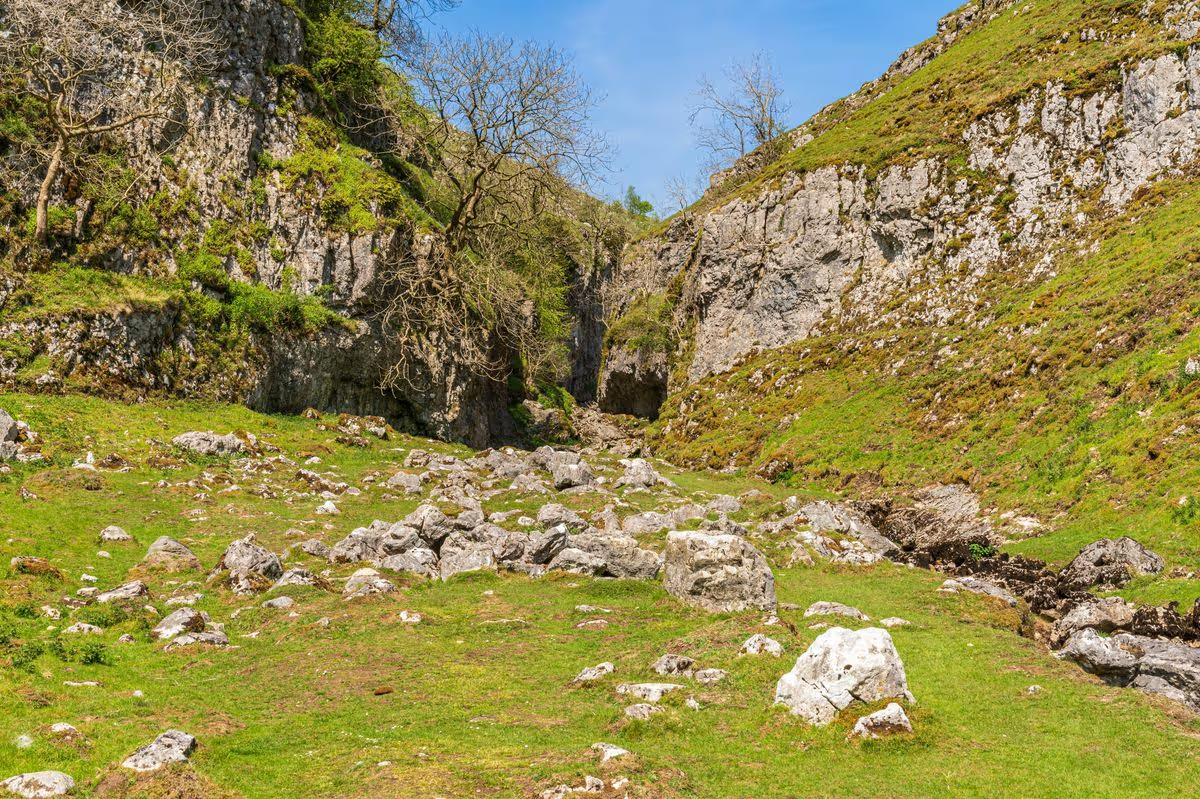
This countryside spot is steeped in folklore about a monstrous Barghest that legends claim crushed victims – making for an atmospheric hiking spot

The hidden gorge is thought to house an evil being (Image: BerndBrueggemann via Getty Images)
Nestled within an abandoned mining region, hidden away in the Wharfedale valley of the Yorkshire Dales, lies a collapsed limestone ravine, brimming with historical tales, folklore and even a potentially terrifying resident.
Unless you’re aware of its existence, the enigmatic cavern is virtually invisible from view, concealed just off the roadside, making it a genuine secret treasure for ramblers.
Troller’s Gill is a legendary location beloved by keen walkers who venture to the region hoping to witness its splendour, as it packs considerable natural beauty into a compact trail.
The difficulty level for the path is fairly moderate, largely due to a handful of sections requiring scrambling, with a total distance of 2.6 km. It’s a trek that typically takes around one hour and can therefore be combined with any other walking or exploration activities you’ve planned during your stay in the Dales.
Save on the best holiday cottages in Yorkshire

Famous for its dramatic landscapes, historic cities, hearty food, and rich cultural heritage Yorkshire is just waiting to be explored. Sykes Cottages has a large number of properties to choose from with prices from £31 per night.
To access this captivating destination, you can leave your vehicle on New Road, where parking is free, before discovering this luminous green treasure.
Upon arrival, you’ll understand why it’s such a frequently discussed location and observe its rocky brook, which seems to emerge from nowhere.
Approximately a 15-minute stroll from where you’ve parked, you’ll spot a disused mine, the former operations of Gill Heads Mine, which has remained dormant since the early 1980s.
The entrance features a substantial gate with rockfall partially obstructing it, and visitors are strongly advised against entering the mine itself due to potential hazards, including potholes and collapse risks.
Legends and myths
Since its existence began, Trollers Gill has been cloaked in mystery but there’s one talethat particularly stands out from the rest. The location is thought to have been haunted by a Barghest, a massive hound with large luminous eyes.
According to ancient folklore, encountering the creature was far from fortunate but rather a harbinger of death, as those who crossed paths with the fearsome beast were frequently crushed to death or ripped apart, tales suggest.
One legend recounts the story of a man, John Lambert of Skirethorns, who bragged in a local pub about what he’d do to the enormous hound, which involved ‘giving it a good thrashing’ if he were to ever come across it. However, legend has it, he encountered the dog on his journey home, and it fatally crushed him.
John Henry Dixon from Grassington may have been the first individual to document such tales when he contributed a poem to a book published in 1827, William Hone’s Table Book.
In the ballad he describes a courageous man who ventures out to visit the Gill hoping to summon the mighty Barghest.
As he entered the gorge, he sensed the spirit of the stream warning him to turn back, but he disregarded it. He drew a protective magic circle around himself “with charms unblest”.
In his brief tale, the stream swelled and thundered, accompanied by a powerful wind, sweeping down the valley. He glimpsed the enormous shadow of the growling dog, its eyes illuminating the gorge walls.
The ferocious creature launched itself at the man and seized him as its next victim, dragging him to the valley floor, where his remains were subsequently discovered.
Various mythical creatures and supernatural entities have been reported inhabiting the ravine, which quite literally takes its name from trolls. It’s believed that Trollers’ Gill originates from ‘Troll’s Valley’, drawing from the Scandinavian tongue of those who made this area their home.
Their traditions and legends indicate that the term ‘troll’ encompasses any supernatural creatures, ranging from hulking giants to goblins, and naturally ‘trolls dwelling beneath the bridge’.
Meanwhile, the term ‘trolldom’ was understood to signify witchcraft and therefore implies the name stems from the notion of the valley being cursed, enchanted or inhabited by otherworldly beings.