Raul Castro

U.S. sanctions Cuban leader Miguel Díaz-Canel, military, Castro kin

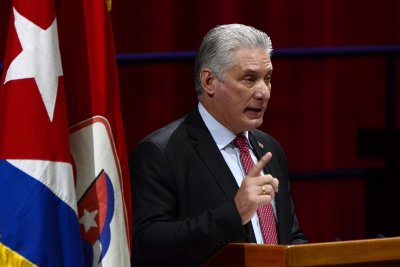
Cuban President Miguel Diaz-Canel was slapped with sanctions by the United States on Thursday as Washington continued to ratchet up pressure of the island nation’s communist government. File Photo by Ley Royero/EPA-EFE

June 4 (UPI) — The United States on Thursday leveled sanctions against Cuban Miguel Díaz-Canel, members of former President Raul Castro‘s family, the Cuban military and other organizations as it continued a crackdown on the country’s communist government.

Secretary of State Marco Rubio announced the measures against Diaz-Canel the others in a statement, asserting they are being targeted because they “fund the [Cuban] regime and its efforts to mobilize its radical revolutionary movements in the United States and around the world.”

The Cuban president, Rubio said, poses a threat to U.S. national security, while the Ministry of the Revolutionary Armed Forces of Cuba, with its “many majority holdings and subsidiaries,” is also now “considered blocked.”

Other organizations newly added to the sanctions list are the Cuban Institute of Friendship with the Peoples, or ICAP, Amistur Cuba S.A., Committees for the Defense of the Revolution and Minera La Victoria S.A.

The individuals sanctioned include Alejandro Castro Espin, the former head of the Cuban intelligence services and the son of Raul Castro, and Raul Alejandro Castro Calis, Castro Espin’s son.

“For decades, Cuba has been the world capital for radical left-wing terrorism,” Rubio asserted. “The regime in Havana has recruited, trained and backed violent Marxist and ‘third-worldist’ movements across our hemisphere and beyond.

“Today, we are targeting the network that enables and funds Cuba’s subversive and radical operations.”

In a stated response, Diaz-Canel said the latest sanctions are “illegitimate” and are “aimed at reinforcing the blockade measures and the scenario of conflict between Cuba and the United States.

“This political blindness is added to the coercive measures applied in recent weeks against our country, designed to harm the Cuban people,” he added. “The aggressiveness and perversity of the Yankee government will clash with our determination to confront the worst scenarios and resist the imperialist onslaught.”

The newly issued sanctions are the latest in a series of moves designed to ratchet up pressure on the Cuban government.

The Trump administration has set a Friday deadline for foreign companies to sever ties with GAESA, the business conglomerate run by Cuba’s Armed Forces, sparking a mass exodus of tourism-related businesses from the island nation.

Meanwhile, Cuba is struggling with the effects of a January 2026 executive order issued by U.S. President Donald Trump imposing a fuel blockade against the nation on national security grounds.

The move has resulted in shortages of electricity, fuel, medicine and medical supplies across Cuba, according to the U.N. Office for the Coordination of Humanitarian Affairs and the World Health Organization, which says emergency care, blood banks, laboratories, immunization programs and maternal and child health services have all been “severely disrupted.”

Source link

U.S. arrests sister of Cuban military conglomerate executive

May 22 (UPI) — Federal immigration officials have arrested the sister of a sanctioned Cuban executive on the grounds that her presence in the United States poses a threat to the nation and undermines U.S. foreign policy interests.

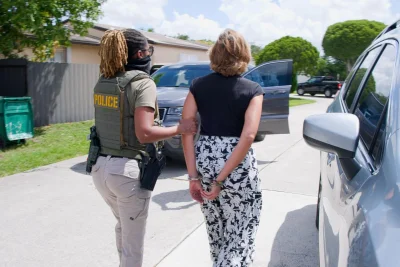
Homeland Security Investigations agents arrested Adys Lastres Morera in Miami on Thursday, Immigration and Customs Enforcement said.

Little information about the arrest was made public. ICE published a photo showing the back of a woman in handcuffs being detained by immigration officers.

The arrest came as Secretary of State Marco Rubio announced in a statement that he had terminated Morera’s lawful permanent resident status under a provision of thee Immigration and Nationality Act that makes non-citizens deportable if the secretary of state believes their presence or activities in the United States “would have potentially serious adverse foreign policy consequences.”

ICE said her status had been terminated on Wednesday, paving the way for her arrest.

“Allowing Lastres Morera to remain in the country would send a signal that Cuba regime-affiliated networks could continue to access the U.S.’s financial, education and social institutions — but that is not the case,” acting HSI Executive Associate Director John Condon said in a statement.

Adys Lastres Morera is the sister of Ania Guillermina Lastres Morera, the executive president of the Cuban military-controlled financial conglomerate GAESA.

The State Department sanctioned GAESA and Ania Guillermina Lastres Morera earlier this month on accusations of diverting resources from the Cuban people to “fuel the lavish lifestyles of Castro family members and other regime elites and to finance overseas influence operations as part of Cuba’s long-standing ambition of a global communist revolution,” Rubio said Thursday.

According to ICE, Adys Lastres Morera was admitted to the United States as a lawful permanent resident on Jan. 13, 2023.

“For far too long, the family members of terrorist organizations, repressive anti-American regimes and other bad actors who would threaten the national security of the United States have been given a free pass to enjoy the privileges of living in the United States,” Rubio said.

“No longer. Under President [Donald] Trump, we are removing from our country the family members of [Iran’s Islamic Revolutionary Guard Corps] terrorists and Cuban regime elites.”

The arrest comes amid mounting tensions in the Caribbean.

A day earlier, U.S. federal prosecutors charged former Cuban President Raul Castro on allegations of authorizing the 1996 shootdown of an aircraft operated by the Cuban American exile organization Brothers to the Rescue.

Rep. Gregory Meeks, the top Democrat on the House Foreign Affairs Committee, has accused the Trump administration of using the Castro indictment as a pretext to escalate tensions and potentially justify another military operation in the Caribbean, similar to the January U.S. strike that abducted Venezuela’s authoritarian leader, Nicolas Maduro, and brought him to the United States to face narco-terrorism charges.

Source link

Cubans react to US indictment of former President Raul Castro | Raul Castro

NewsFeed

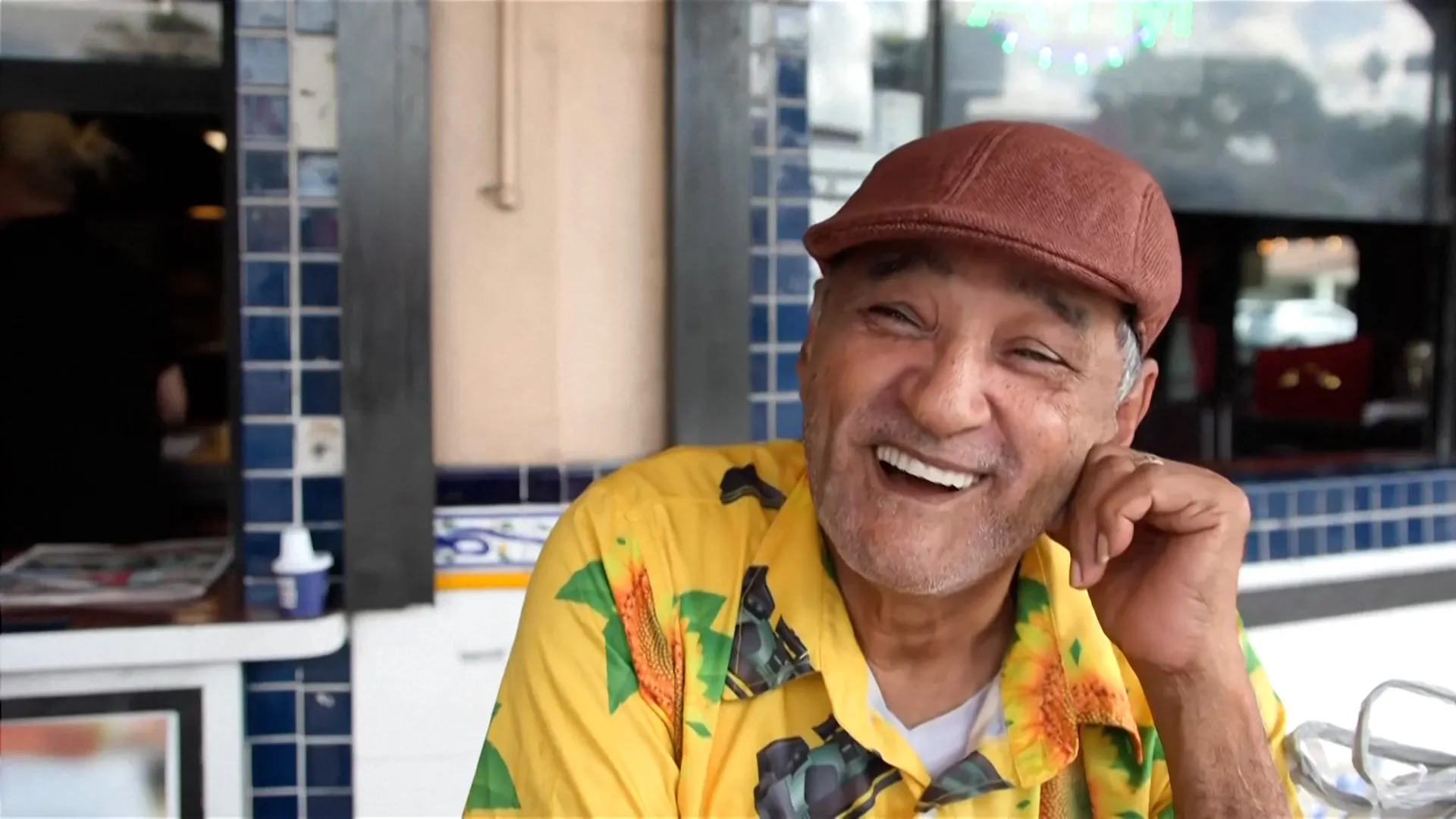
Cubans in Havana and Miami react to the US charges against former Cuban President Raul Castro over the 1996 downing of civilian planes. The charges against Castro mark a major escalation in pressure from the Trump administration against Cuba’s socialist government.

Source link

CIA director’s visit to Havana fuels questions over Cuba’s future

May 15 (UPI) — CIA Director John Ratcliffe’s visit to Havana this week opened a new political chapter inside and outside Cuba, with analysts and opposition figures interpreting the meeting as a sign of direct pressure from Washington on a regime battered by massive blackouts, fuel shortages and an increasingly deep economic crisis.

The trip marked an unusual development in bilateral relations. The Cuban government confirmed that a U.S. delegation led by Ratcliffe met with his counterpart Thursday at Cuba’s Interior Ministry.

Washington had requested the meeting, which was approved by “the leadership of the Revolution,” according to the state-run newspaper Granma.

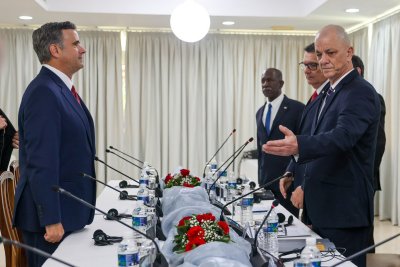
The CIA released photos of the meeting — “the most significant milestone so far in the two months of opaque negotiations taking place between Washington and Havana,” Spanish newspaper El País reported.

In another twist, according to reports by CBS News, USA Today and NBC News, a U.S. Justice Department official said the United States is considering formally charging former Cuban President Raul Castro over a 30-year-old incident in which the Cuban government shot down two aircraft operated by Cuban exile group Brothers to the Rescue.

The Ratcliffe visit, which lasted a brief time, was not announced in advance. He him Air Force plane flew from Joint Base Andrews in Maryland and returned hours later.

For decades, the Cuban government systematically accused opposition figures, independent journalists and dissidents of acting as agents or collaborators of the CIA. However, it was the regime itself that officially announced the meeting with agency director.

“The Cuban government announced the CIA visit first. For Cubans, that means important things are happening or about to happen,” Sebastián Arcos, acting director of the Institute for Cuban Studies, told UPI.

“This increases expectations and anxiety inside and outside the island.”

Energy has become the central focus of Cuba’s crisis. Ratcliffe arrived on the island precisely as Cuba declared a total energy collapse, formally running out of diesel fuel because of the U.S. naval blockade, while multiple technical failures at thermoelectric plants have left millions of people without electricity for up to 22 hours a day.

According to posts shared by activists and users on Facebook, protests have spread across the Cuban capital for four consecutive nights, while reports of internet outages in areas where gatherings have taken place have increased, Diario de Cuba reported.

Professor Jorge Piñón, director of the Latin America and Caribbean Energy Program at the University of Texas’ Energy Institute, said the visit by the CIA chief to Cuban territory “puts on the table what the rules of the game are from the point of view of the United States,” amid a crisis he described as “hour zero” for Cuba’s energy system.

Piñón told UPI that Cuba has practically exhausted its fuel reserves at storage facilities, ports and refineries, while thermoelectric plants operate on the verge of technical collapse.

The consequences extend far beyond the lack of electricity.

Piñón warned that the crisis affects ground transportation, water and food distribution, agriculture and even humanitarian operations by religious organizations that lack diesel to transport aid.

The deterioration of the electrical system also stems from structural problems accumulated over decades. Cuba depends on thermoelectric plants more than 40 years old, many adapted to burn extra-heavy domestically produced oil with high levels of sulfur and contaminating metals.

According to Piñón, that fuel accelerates the deterioration of already obsolete equipment, generating a “vicious cycle” of temporary repairs and new breakdowns.

He said the island produces about 40,000 barrels a day of heavy crude, but needs about 100,000 barrels a day to cover its energy demand, leaving a critical deficit of refined fuels mainly intended for transportation.

At the same time, Professor Raúl Rodríguez, director of the Center for Hemispheric and United States Studies at the University of Havana, described a society marked by daily exhaustion, uncertainty and the progressive deterioration of living conditions.

He told UPI that prolonged blackouts affect food preservation, access to drinking water and hospital operations.

The crisis also has deep economic consequences. Tourism, one of Cuba’s main sources of foreign currency, operates at less than 50% of capacity, affecting employment and the flow of resources into the country.

Rodríguez estimated that about 300,000 workers linked to the tourism sector face direct impacts from the economic slowdown.

Additional problems include health and environmental issues stemming from the lack of fuel for fumigation, garbage collection and basic urban services. The academic warned of growing risks of mosquito-borne diseases such as dengue and chikungunya.

Despite intensifying social unrest, the experts agreed that the crisis will not necessarily lead to an immediate political change.

Rodríguez argued that protests over blackouts and shortages “do not constitute, by themselves, a trigger capable of provoking regime change,” due to the absence of an organized political alternative with social legitimacy.

Piñón, meanwhile, said that although signs of social exhaustion exist, the country currently lacks leadership capable of channeling a political transition or with enough authority to organize a possible post-crisis scenario.

According to press reports, the U.S. demands delivered directly by the CIA director focus on an ultimatum conditioned on deep and immediate structural changes.

Washington is demanding that the Cuban government carry out political reforms toward democratization, release all political prisoners and fully open the economy to the private sector.

“From the information that has emerged, the CIA director traveled to Cuba to deliver an ultimatum: either you move, or the United States will,” the Institute for Cuban Studies’ Arcos said.

The reaction of Miguel Díaz-Canel’s government has reflected pragmatism forced by extreme economic suffocation and the collapse of basic services on the island.

Although Havana agreed to receive the CIA delegation to avoid a violent social outcome, it formally maintains its rhetoric defending national sovereignty, rejecting political conditions that threaten the socialist system.

Cuban officials used the meeting to present evidence that the island does not represent a threat to U.S. security, demanding in return its removal from the list of state sponsors of terrorism and an end to the naval blockade preventing fuel shipments from reaching the island.

Describing the country’s daily deterioration, Cuban writer Leonardo Padura recently portrayed Cuba as a nation where old social protections have collapsed, while the political structure remains intact.

In an essay published on the website La Carta de las Ideas, Padura recalled that July 2021 protests represented an unprecedented social explosion on an island historically marked by strong surveillance and state control mechanisms.

The government response, he wrote, was a severe “order to fight” accompanied by exemplary judicial proceedings aimed not only at punishing, but also at discouraging future public expressions of dissent.

Padura said that precedent helps explain why, despite economic and social conditions now being even worse than in 2021, street demonstrations have been more limited than many outside Cuba expected.

Another expert thinks the United States will dominate as Cuba sinks into crisis.

“The CIA currently has the upper hand. Without the CIA, [President Donald] Trump can do nothing, and [Secretary of State Marco] Rubio knows nothing because he has never even been to Cuba,” Lillian Guerra, professor of Cuban and Caribbean history and director of the Cuba Program at the University of Florida, told UPI.

Guerra argued that the agency holds a dominant position over the Cuban state because of its understanding of the regime’s “theater and discourse of lies and subterfuge” amid the crisis.

Guerra said “nobody is buying” the government’s official explanations anymore and warned that Cuban authorities “are running out of time” as public frustration grows across the island.

She added that the meeting shows Washington is negotiating with Cuba’s “real leaders” linked to the Ministry of the Interior, a structure she described as more powerful than the Revolutionary Armed Forces and primarily focused on preserving political control.
Source link

Photos: Cuba holds May Day celebrations amid US threats | Protests News

Cuban electrical and petroleum workers have marched in Havana to celebrate International Workers’ Day, or May Day, as the government pledges to stand firm against growing US pressure which is further straining the economy.

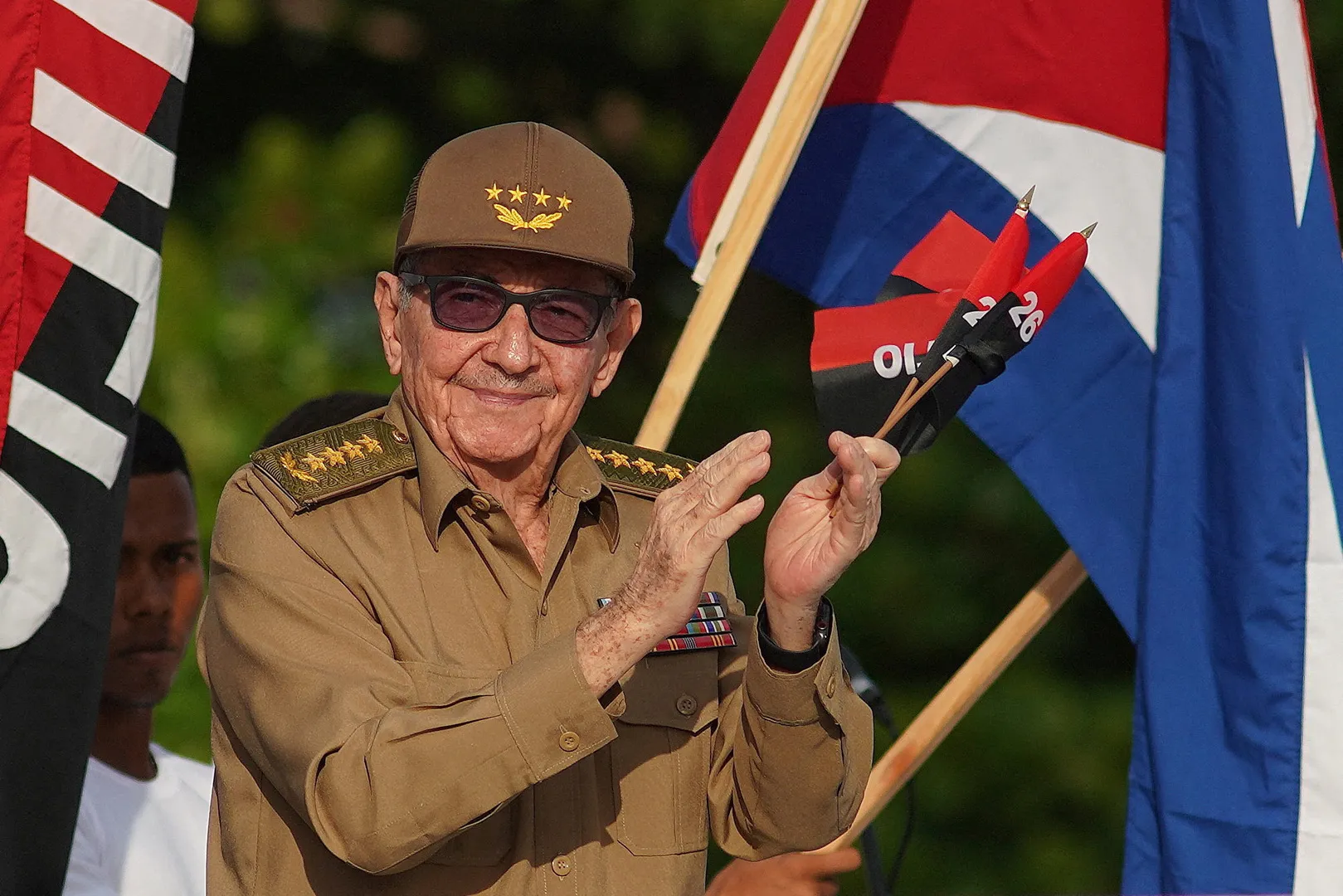
Ninety-four-year-old former leader Raul Castro and President Miguel Diaz-Canel took part in the celebrations in the capital on Friday, while the administration of US President Donald Trump announced further sanctions.

A White House statement said the sanctions would target those involved in the security services, along with “material supporters of the Cuban government”. The statement added, without evidence, that the Caribbean island serves as a “safe haven for transnational terrorist groups” such as the Lebanese armed group Hezbollah.

A US energy blockade has already battered the country’s struggling economy and contributed to widespread energy blackouts.

“We are living through difficult times,” said Yunier Merino Reyes, an accountant with the Electric Union who joined Friday’s march to celebrate his colleagues. “We are carrying out a very tough, arduous and relentless effort — day and night — to provide electricity to the people who need it,” he told the Associated Press.

The Trump administration has frequently threatened Cuba with military attacks in addition to greater economic pressure.

“Today Cuba demonstrated once again that this people does not give up, and that we will defend our homeland tooth and nail, even though we want peace,” Milagros Morales, a 34-year-old Havana resident who took part in the march, told Reuters.

Source link