raise

VAR call, Argentina win over Egypt raise questions of legitimacy at World Cup | World Cup 2026

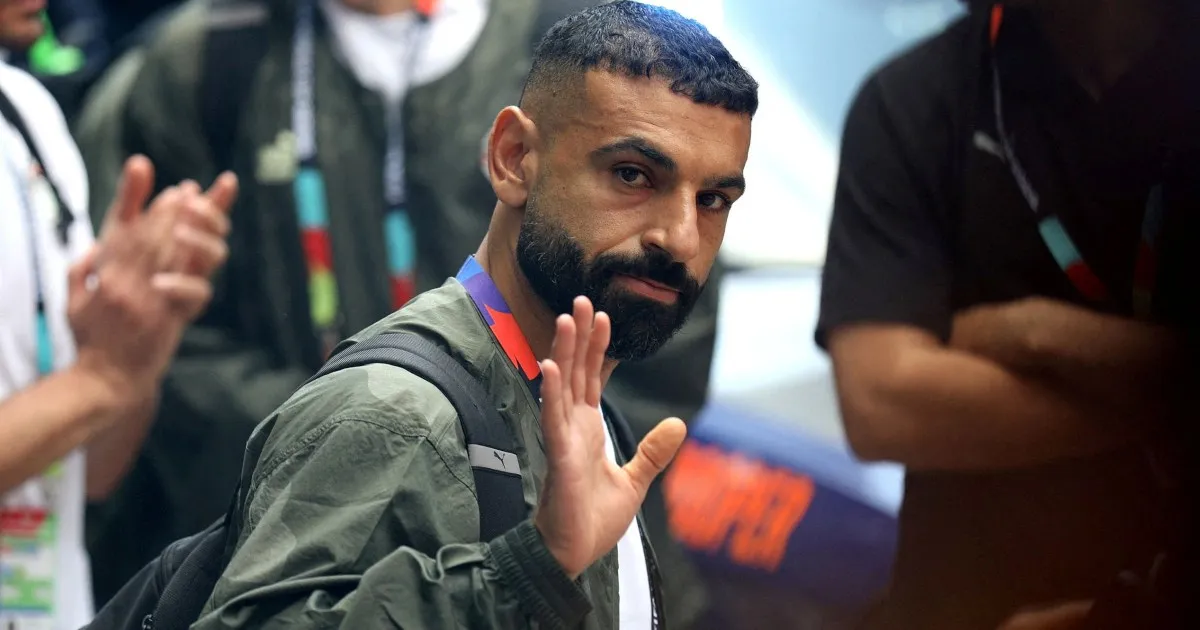
The clamour surrounding the World Cup’s controversy involving US President Donald Trump and FIFA chief Gianni Infantino had barely died down when another arose in the aftermath of Argentina’s controversial 3-2 win over Egypt in the round-of-16 match in Atlanta.

As the defending champions staged a stunning comeback against the Pharaohs in the knockout match on Tuesday, questions were raised about an unusually late VAR call that saw Egypt’s second goal rescinded, followed by a chain of events that led to Argentina’s victory.

Recommended Stories

list of 4 itemsend of list

A day earlier, Trump had revealed that he had asked FIFA to review, and overturn, USA striker Folarin Balogun’s one-game suspension for a red card, and the governing body controversially obliged. The matter was dusted off by Belgium as they dumped the hosts out of the tournament with a 4-1 win in the match Balogun was initially suspended from but ended up playing – to no avail.

Trump watch on the World Cup

While the anger surrounding FIFA’s red-card decision was directed at both the football governing body and Trump, Egypt’s outburst was solely aimed at the organisation, which, according to Egypt’s manager, had “wanted to keep the world champions in the competition”.

Head coach Hossam Hassan speculated that match officials had been put under pressure to ensure that one of the biggest names, Argentina’s Lionel Messi, stayed in the tournament.

“Perhaps they wanted Messi to stay in the running,” Hassan told beIN Sports after the match.

“In football, there are sometimes external factors that go beyond the technical aspects. The world champions received support at every level.”

While the tournament has been no stranger to the political spotlight of questionable integrity, experts say the lines between sport and politics have been blurred even further.

“After the Balogun affair, who knows which decisions are legitimate and can be trusted, and which can’t?” Simon Chadwick, professor of Afro-Eurasian sport at the Emlyon Business School in Shanghai, told Al Jazeera.

“If the Trump administration is maintaining a watching brief over the tournament, it’s worth remembering: Argentina’s president, Javier Milei, is a staunch Trump supporter.”

Trump and his Argentinian counterpart share a close relationship. Milei is a regular feature at pro-Trump political gatherings in the United States, and Trump has described Argentina’s far-right populist leader as his “favourite president”.

Chadwick also opined that Hassan’s vociferous support for Palestine at the World Cup could have prompted some officials to “have built-in biases when making decisions”.

Hassan dedicated part of his pre-match news conference on Monday to making an impassioned plea for the people of Palestine, especially those in the besieged Gaza Strip.

Advantage, Argentina

Circling back to the VAR call that sliced Egypt’s lead in half and was followed by decisions that conveniently favoured Argentina, Chadwick said the period of play was “unusual”.

He wondered why the referee had not called a foul in real-time that VAR picked up several moments later and only once Egypt scored their second goal.

“There was something distinctly unusual about the goal and VAR decision, something that was amplified when Argentina scored one of its goals,” Chadwick said, questioning refereeing standards in the match.

“In the build-up, an infringement was perpetrated by an Argentina player, which could have been interpreted as a similar offence to that supposedly committed earlier by the Egyptian player. At the very least, refereeing standards during the game were somewhat inconsistent, although critics are clearly making much more serious claims.”

But while many social media commentators and football experts were outraged at the decisions – Portuguese football icon Jose Mourinho reportedly termed the match “daylight robbery” – some football experts said it was a closer call.

“Robbed might be a strong word,” football analyst Ali El Garni said.

“I’d say decisions made by both the referee and VAR could have gone either way, and Argentina benefitted from all the 50/50 incidents.

“The incident leading to the Egyptian disallowed goal was an indisputable foul. The question is how far VAR should go back to check the legitimacy of a goal,” said El Garni, who has extensively reported on European and North African football.

However, he did wonder if VAR would have been involved had the scoreline been 2-0 in Argentina’s favour instead.

“Would the goal have been disallowed had it been scored by Argentina? It’s unlikely,” he said.

“What’s making it worse for Egypt is the fact that a similar incident involving what appeared to be a foul on [Mohamed] Salah took place before Argentina’s third goal, and VAR didn’t intervene,” he said.

Meanwhile, Chadwick questioned why VAR officials had raised the issue if the on-field officials did not call a foul when Egypt‘s Marwan Attia lightly tugged the shirt and stepped on the foot of Lisandro Martinez.

A logical solution to the VAR issue, Chadwick proposed, would be “for fans and viewers to listen to an assessment of the alleged offence, hear the various arguments, and have a clear insight into the basis for a decision”.

Chadwick admitted that although Egyptian players should not have become overwhelmed with emotion, “a sense of injustice was induced by the VAR decision”.

“This technology was supposed to minimise doubt and bring consistency. Instead, its use during this match had significant cognitive and behavioural effects,” he said.

“Indeed, rather than brandishing cards and inflaming the situation even further, the referee should have used his discretion and judgement to defuse the situation.”

While Chadwick dismissed rumours of match-rigging in favour of Messi and Argentina, he acknowledged the pull of the iconic footballer’s star power.

“There is no doubt that Messi is a box office attraction the tournament really can’t afford to be without.”

Source link

UK’s best place to raise children with most green spaces and average £222K homes

Research has named the best place in the UK to raise a child, thanks to a number of factors from the variety of countryside spaces to lower than average house prices

Raising a child in the modern world is a demanding task, and there are lots of big decisions parents-to-be need to make to give their offspring the best chance in life.

One of the most important factors is where to live, and parents will be seeking somewhere with a balance between safety, education quality, childcare costs, plus outdoor spaces to raise free-range kids.

To give parents a hand when making this life-changing choice, Outdoor Toys has created an index of the best places to raise a child in the UK for 2026, and its research looked at a huge number of factors. These included the number of child-friendly attractions, crime rates, and the percentage of schools with a good or outstanding OFSTED rating. This gave each town and city a child raise-ability score out of ten, and the overall winner scored an impressive 7.32.

Sheffield in South Yorkshire took the top spot thanks to offering double the average amount of green space per person . It also has relatively affordable childcare costs of £918.33 per month, which is below the UK average of £1,128 per child without government support.

Housing is also a major factor for growing families, and according to the Office of National Statistics (ONS), the average house price in Sheffield stands at £222,000. This is below the UK wide average of £270,080, and far below areas such as the south east at £379,000.

Green spaces that can be enjoyed around the city include the Sheffield Botanical Gardens, which includes colourful flowers and plants from around the world, some of them kept in huge Victorian greenhouses. Outside, kids can wander the endless trails, spotting statues, fountains, and other pretty features.

Graves Park is another spot that’s much-loved by families. It has two playgrounds, woodlands, lakes, and much more to explore, while Kelham Island Museum is a fun day out where kids can learn all about the area’s industrial heritage in an interactive environment.

Second place in the rankings was Milton Keynes, its score boosted by the fact it offered the widest range of child-friendly attractions. MK residents enjoy 31 kid-friendly attractions per 100,000 people, 11 more than the study’s average, meaning families who live in the city certainly won’t get bored.

While Milton Keynes lost some ground due to its costly childcare – an average of £1,416 per month – it offered large amounts of green space per person as well as a high percentage of schools OFSTED graded as good or outstanding.

Swindon came in third place, in part due to having the lowest crime rate in the study at 68 per 1,000 people. It also offered average childcare costs of £900, below the UK average, while two-thirds of its schools had good or higher OFSTED ratings.

Have a story you want to share? Email us at webtravel@reachplc.com

Source link

Kazakhstan Faces Pressure to Boost Oil Exports as Hormuz Risks Raise Supply Concerns

Kazakhstan’s Energy Minister Yerlan Akkenzhenov said international partners are urging the country to increase oil exports as concerns grow over disruptions to energy supplies linked to tensions around the Strait of Hormuz.

According to Akkenzhenov, buyers are seeking the maximum possible increase in Kazakh oil shipments due to uncertainty surrounding one of the world’s most important energy transit routes. However, he noted that Kazakhstan faces infrastructure and production constraints that limit how quickly exports can be expanded.

To support higher output, Kazakhstan has postponed planned maintenance work at the Kashagan Oil Field until 2027. The country is also considering increasing crude shipments through the Baku Tbilisi Ceyhan Pipeline, potentially raising volumes from 1.5 million tons to 2.2 million tons annually and beyond.

The development comes as global energy markets remain sensitive to geopolitical tensions involving Iran and the Strait of Hormuz, a key route for international oil and gas exports.

Why It Matters

Kazakhstan’s growing importance highlights how global energy markets are seeking alternative supply sources amid rising geopolitical risks in the Middle East.

Any disruption in the Strait of Hormuz could affect a significant share of global oil shipments, prompting importers to diversify supply chains and reduce dependence on vulnerable routes. Kazakhstan, one of the world’s major oil producers, is increasingly viewed as a reliable alternative supplier.

The decision to delay maintenance at Kashagan signals that Kazakhstan is prioritizing production stability and export capacity at a time when energy security has become a major concern for consuming nations.

The move could also strengthen Kazakhstan’s strategic position in global energy markets, giving it greater influence as countries seek dependable suppliers outside conflict affected regions.

Key Stakeholders

  • Kazakhstan – Seeking to expand exports while balancing OPEC+ commitments.
  • Yerlan Akkenzhenov – Overseeing the country’s energy strategy.
  • Kashagan Oil Field – One of the world’s largest oil fields and a key source of future production growth.
  • OPEC+ members monitoring compliance with production agreements.
  • Energy importing countries seeking alternative crude supplies.
  • Oil traders and global energy markets responding to supply risks.
  • Countries along the Baku Tbilisi Ceyhan Pipeline route that facilitate exports to international markets.

Future Outlook

Kazakhstan is likely to face increasing pressure from international buyers if instability around the Strait of Hormuz persists. While production constraints may limit immediate gains, the postponement of Kashagan maintenance suggests authorities are positioning the country to maximize output over the coming years.

The expansion of exports through the Baku Tbilisi Ceyhan pipeline could become increasingly important as energy consumers seek routes that bypass geopolitical hotspots. This would further enhance Kazakhstan’s role in global energy diversification efforts.

However, Kazakhstan must also balance market demand with its commitments under the OPEC+ framework. Any significant increase in production could attract scrutiny from fellow producers seeking to maintain supply discipline and price stability.

If Middle East tensions remain elevated, Kazakhstan is likely to emerge as one of the key beneficiaries of the global search for secure and reliable oil supplies.

With information from Reuters.

Source link

New York stabbing, Kansas City shooting raise World Cup security concerns | World Cup 2026 News

Two separate incidents of violence have left nine people injured in World Cup host cities in the United States, raising concerns over the safety and security of fans attending the tournament that starts in three days.

Six people were wounded in a stabbing on Sunday at New York’s Penn Station, the city’s mayor said, as the metropolitan area geared up to host two major sporting events, the NBA Finals and the FIFA World Cup.

Recommended Stories

list of 4 itemsend of list

Meanwhile, nine people sustained non-life-threatening injuries in a shooting near England’s World Cup base camp in Kansas City, Missouri, on Saturday.

The New York City Fire Department said a suspect was detained and the victims, including one with serious injuries, were taken to hospital.

Fire Department officials initially reported five wounded, but Mayor Zohran Mamdani said on X that “based on the information available right now, six people were stabbed and the alleged perpetrator is in custody.”

Circumstances of the attack were not immediately clear, but city Comptroller Mark Levine said on X that the suspect is “said to be an emotionally disturbed homeless person”.

All victims are expected to survive, he added.

State Governor Kathy Hochul described the attack as “an act of horrific violence”.

“New Yorkers deserve to feel safe wherever they go, and we will never stop working to make that a reality,” she said in a statement.

The incident occurred at one of the nation’s busiest rail and subway transport centres as the city prepares for two huge sporting spectacles.

Madison Square Garden, located directly above Penn Station in downtown Manhattan, will host games three and four of the NBA Finals on Monday and Wednesday between the New York Knicks and the San Antonio Spurs.

MetLife Stadium, outside the city in neighbouring New Jersey state, will host its first match of the World Cup on Saturday.

INTERACTIVE - venue world cup poster image-1780896044
[Al Jazeera]

US President Donald Trump is scheduled to attend Monday’s NBA game at Madison Square Garden, saying recently that he accepted an invitation from Knicks owner James Dolan.

Security has been enhanced in the city before the two events.

New York’s official emergency notification system did not describe the incident but said people should avoid the area and “expect traffic delays, road closures, mass transit disruptions & emergency personnel near Penn Station”.

Before the stabbing, New York officials had already cancelled an outdoor watch party set for Monday outside the Garden.

Thousands of spectators descended onto the streets outside the venue on Friday for a game two watch party. New York authorities said a police officer was assaulted and 26 people were arrested as a number of fans turned rowdy.

Meanwhile, Kansas City police said there were no suspects in custody and that at least three of the shooting victims were taken to local hospitals.

The incident occurred about 6.5km (4 miles) from where England are set to train at the Swope Soccer Village. England have not arrived in Kansas City and are due to play a friendly against Costa Rica in Orlando, Florida, on Wednesday.

A general view of Arrowhead Stadium as it is rebranded as Kansas City Stadium, Monday, May 11, 2026, ahead of the 2026 FIFA World Cup soccer matches in Kansas City, Mo. (AP Photo/Charlie Riedel)
The Arrowhead Stadium, rebranded as Kansas City Stadium, will host World Cup games [Charlie Riedel/AP]

What security measures has the US put in place for the World Cup?

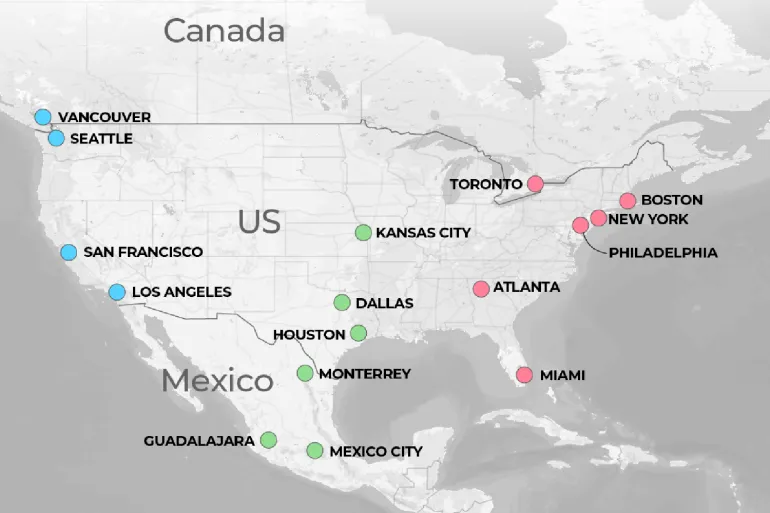
The 48-team, 104-match World Cup comes with an unprecedented security challenge for the host nations, particularly the US, which is hosting 78 matches across 11 cities.

Overseeing the sprawling security apparatus is a legion of federal agencies, state and local police departments and private entities. Their responsibilities range from securing stadiums and fan zones to escorting teams and protecting dignitaries.

Their tools include hunter drones that can shoot nets over objects in restricted airspace, bag-inspecting robot dogs, giant X-ray trucks and thousands of AI-powered cameras trained on public spaces soon to be thronged by fans.

Drones are prohibited over stadiums and fan zones, and the FBI has a “full suite of options” to thwart incursions, according to FBI Special Agent in Charge Amit Kachhia-Patel.

On match days, the FBI will activate joint operations centres in each host city, bringing together local, state and federal law enforcement agencies to monitor and investigate threats.

The tournament has the same high-level federal security designation as the Super Bowl, just below a presidential inauguration or a national political convention, ensuring federal, state and local coordination. It coincides with other major events linked to the 250th anniversary of the US’s founding.

So far, there are no credible threats, according to Andrew Giuliani, executive director of Trump’s World Cup task force, which is overseeing the multiagency effort.

The Department of Homeland Security, focused on Trump’s immigration enforcement crackdown and hit by a funding lapse only recently resolved, estimates that up to seven million people will visit the US for the World Cup.

The US Secret Service, under scrutiny after security breaches and attempts on Trump’s life, is in charge of protecting world leaders who show up to cheer on their countries. Trump has expressed interest in attending a match.

Gun violence is common in the US, where there were more than 400 mass shootings in 2025, according to the Gun Violence Archive.

Source link

Pentagon said to raise threat level on Israel spying to ‘critical’ | US-Israel war on Iran News

Department reports raise concerns about increased espionage activity amid US-Israeli war with Iran, ceasefire talks.

The Pentagon’s intelligence arm has raised the assessed threat level on Israeli spying from “high” to “critical” in recent weeks, according to US media.

NBC News first broke news of the change on Friday, with The New York Times issuing its own report the following day.

Recommended Stories

list of 3 itemsend of list

The news outlets cited anonymous sources as saying the switch came in light of concerns over increasingly aggressive tactics related to the US-Israeli war with Iran.

They said the Pentagon’s Defense Intelligence Agency (DIA) had raised the alert level amid fears that Israel is increasingly attempting to surveil top US officials. The aim is allegedly to understand internal White House deliberations about ending the war.

US President Donald Trump and Israeli Prime Minister Netanyahu have publicly diverged in their approach to the war, which the US and Israel started on February 28.

Trump, on one hand, has repeatedly said he wants to bring the war to a close, amid mounting political pressure at home.

Netanyahu, meanwhile, has called for war to resume, despite an April 8 ceasefire. The fighting has been mostly paused since the temporary truce was announced, but efforts to reach a lasting agreement have repeatedly stalled.

The New York Times reported that, while Israel has been known to spy on the US, the DIA cited an uptick in activities beginning in late 2024, as the administration of US President Joe Biden increased pressure on Israel over its genocidal war in Gaza.

That increase continued into 2025, as Trump returned to the presidency and began deliberating about how to approach Iran.

The newspaper added that other recent intelligence assessments have also documented evidence that there are Israeli efforts to monitor Trump’s special envoy Steve Witkoff as well as Elbridge Colby, a top policy official at the Pentagon, and his deputy Michael DiMino IV.

Witkoff had been the lead negotiator in nuclear talks that preceded the initial US-Israeli attack on Iran in February.

Both NBC News and The New York Times cited unnamed US officials in their reports. The US Department of Defense did not immediately respond to a request for comment from Al Jazeera.

However, an unnamed spokesperson told both news organisations that the reports were “false”.

Still, the reported concerns are likely to raise questions over the close intelligence and military coordination between Israel and the US.

Washington has, for years, provided billions in military aid and weapons sales to Israel, including throughout the genocide in Gaza.

The US Congress is also currently debating a section of a new defence bill, which would integrate the two countries’ research and development for weaponry to an unprecedented degree.

While the US and its allies are known to regularly conduct intelligence operations on each other, officials told both NBC and The New York Times that Israel’s recent vigour was unique.

The New York Times reported that the increased DIA designation surpasses all current allies, as well as a handful of countries with more fraught relations.

Recent incidents included Israel’s military intelligence trying to plant listening devices at the DIA headquarters in 2021, according to the newspaper.

In 2025, Israel’s domestic intelligence agency, Shin Bet, was found to have tried to plant a similar device in a Secret Service vehicle, the report said.

Source link

How does a 28-year-old raise more than $1 million for a congressional bid?

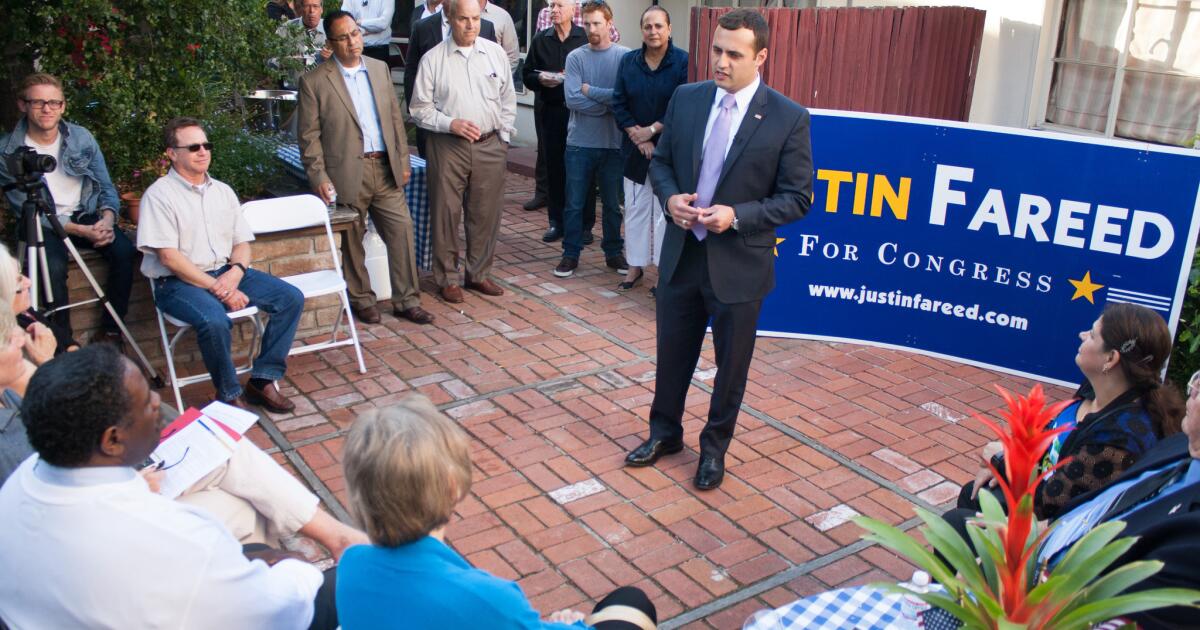
In his first run for Congress two years ago, Justin Fareed, a relative newcomer to politics, relied mostly on his own money. He didn’t make it past the primary.

This year, the 28-year-old Republican, a former UCLA Bruins running back, has significantly more money to work with — $1 million.

Most of it — 80% — came from people living outside his Santa Barbara district. And nearly $200,000 has come from donors with ties to two of the state’s largest nursing home operators.

The businessmen, Lawrence Feigen and Shlomo Rechnitz, of L.A.’s Westside, have given the maximum allowed contributions, as have members of their families and their friends and employees.

Operators of skilled nursing facilities have a big stake in congressional decisions on healthcare funding and policy. Those businesses depend on funding from Medicaid and Medicare — and, in California, Medi-Cal – and they are under constant scrutiny by government regulators and inspectors.

Fareed himself is in the medical business; he is vice president of his family’s company, ProBand Sports Industries, which makes devices to treat tennis elbow and other repetitive stress injuries. In his candidate statement on the ballot, he also describes himself as a “third-generation cattle rancher” who understands “the burdensome taxes and regulations coming out of Washington, and the implications it has on small businesses and the agricultural community along the Central Coast.”

The congressional race in Santa Barbara, where Democratic Rep. Lois Capps is retiring, pits Fareed against Democratic Santa Barbara County Supervisor Salud Carbajal, who has raised $1.8 million. The field of five others includes Santa Barbara Mayor Helene Schneider, also a Democrat, and Republican Assemblyman K.H. “Katcho” Achadjian. The top two finishers in June will face off in November.

Feigen’s company SnF Management owns more than 35 long-term nursing facilities in California and Arizona under the name Windsor Healthcare.

Rechnitz owns more than 70 facilities and has been described as the state’s largest nursing home operator. In recent years, state and federal authorities have investigated his companies on charges including elder abuse and involuntary manslaughter.

Feigen and at least 30 of his employees, business associates, friends and family members have together contributed at least $108,000 to Fareed’s congressional campaign. Rechnitz, employees of his businesses and their family members have given at least $74,000.

Federal law caps direct donations to candidates at $2,700 for the primary and $2,700 for the general election.

Feigen donated the maximum amount to Fareed’s campaign. Rechnitz contributed $2,700. Three Feigen family members listed as students in finance disclosures each donated $2,700.

In addition, Feigen, his family’s trust and his company donated $25,000 to New Generation, a pro-Fareed political action committee that has since disbanded. Ramat Medical, where Rechnitz is chief financial officer, donated $10,000. Feigen and his wife also donated $10,000 to another PAC set up to support Fareed.

When asked about his donations, Feigen said he and his family “like people who are honest” and not part of the political establishment. He said he knew Fareed through business connections in the medical sector. Rechnitz, through a representative, declined to speak about his contributions to Fareed’s campaign beyond an emailed statement.

“Mr. Rechnitz is a major, non-denominational, non-partisan donor who last year alone contributed to more than 1,100 institutions,” Rechnitz’s spokesperson Stefan Friedman said in the statement.

At the recent opening of his campaign’s Santa Barbara headquarters, Fareed described Feigen as “a supporter like all of our other supporters for the campaign.”

Fundraising success

Fareed, a onetime Capitol Hill aide to a Kentucky congressman, ran for the Santa Barbara congressional seat in 2014, coming up a few hundred votes short of making it past the top-two primary to challenge Capps, the incumbent. That year, he raised about $190,000 and loaned his campaign $197,000.

Voter registration in the district, which stretches across San Luis Obispo, Santa Barbara and Ventura counties, is almost evenly split between Democrats and Republicans. President Obama won the district by 11 points in 2012, and tea party favorite Chris Mitchum, son of the late actor Robert Mitchum, came close to ousting Capps in 2014.

Around 56% of Fareed contributors this year live outside the district, and they contributed $875,000 of his $1.08 million in donations.

About 77% of the $1.5 million that Fareed’s opponent Carbajal has raised from individual donors comes from inside the Central Coast district.

At least 90 of Fareed’s 490 donors live in West Los Angeles, in the Hancock Park, Fairfax and Mid-Wilshire neighborhoods. Supporters in the 90036 ZIP Code contributed a combined $235,000 to the candidate — nearly 25% of the money Fareed brought in since the campaign began.

Many of those Westside donors have ties to the medical industry, according to donation records filed with the FEC.

Feigen is the co-founder of privately owned SnF Management, which manages a chain of nursing facilities. He is also the chief executive of a medical device company that sells orthotic insoles, according to his company website and LinkedIn page.

Rechnitz’s facilities brought in $62 million in profits in 2013, according to a Sacramento Bee report, citing state figures.

In August, California Atty. Gen. Kamala Harris filed involuntary manslaughter charges against one of Rechnitz’s nursing homes, and two of its employees were also charged with dependent adult abuse. Charges against one defendant were dismissed at a hearing last month after she agreed to testify in this case. The charges against the head of nursing and the nursing home remain, and the case is pending. At another Rechnitz-owned facility in Orange County, two former employees were charged with three counts each of elder abuse and failure to report abuse. Their trial is scheduled for July.


For the Record

5:50 p.m., June 2: An earlier version of this article said charges of dependent adult abuse against one defendant were dismissed at a hearing this month. The hearing was in May.


In addition, three Rechnitz-owned facilities repeatedly failed inspections and were eventually decertified by the U.S. Centers for Medicare and Medicaid Services, an agency spokesman said. Regulatory violations at facilities owned by Rechnitz have led to hundreds of thousands of dollars in fines. Rechnitz’s spokesman declined to comment on those cases but said the executive brought “59 nursing homes out of insolvency and currently provides life-saving care to thousands of Californians.”

‘A good guy’

West Hollywood resident Viktor Kogan and his wife each gave $2,700 to Fareed’s campaign in late October.

Asked recently about the contributions, Kogan said he could not recall donating to Fareed, adding that he had never heard of the candidate.

When shown a copy of a federal record noting his contribution, Kogan, 75, said his daughter, Ksenya Kogan, arranged the donation. She also contributed, and listed one of Feigen’s companies, SnF Management, as her employer.

Ksenya Kogan, an attorney, declined to comment about the donations except to say she had met Fareed through friends.

In nearby Hancock Park, Freda Stock gave a total of $5,400 to Fareed, but said she didn’t know anything about the candidate or his campaign. Stock said Feigen has done business with her husband and has been a family friend for “many, many years.”

Fareed’s campaign also has received donations from outside the state, including a $2,700 contribution from Chaim Feigen, a recent graduate of New York University who works for SnF Management and is registered to vote at Lawrence Feigen’s Los Angeles home. Asked about his contribution, he declined to comment.

Other donors interviewed by The Times said they had given money to Fareed’s campaign based on the advice of friends or business associates.

One of those is Denise Wilson, an executive at Ramat Medical, the West Los Angeles medical supply company where Rechnitz is chief executive. Wilson, who gave $2,700, said a group of people that she works with introduced her to Fareed’s campaign.

“They said that he was a good guy,” she said. “I couldn’t give you a definitive answer of his issues or what he stands for. They just said that he was a good, up-and-coming person to support our industry.”

SIGN UP for our free Essential Politics newsletter >>

Lawrence Feigen’s brother, Alan, who also works at Ramat Medical and gave $2,700, said he did not know Fareed personally. He said that a client, whom he declined to identify, had asked Ramat Medical employees to support the candidate.

Among other donors, Ken Zelden, a vice president at Harris Office Products in Van Nuys, said he gave Fareed’s campaign $2,700 because he’d “been told he is a good guy.” “I’m looking forward to meeting him,” he said.

At a recent campaign event in Santa Barbara, Fareed said donors from the healthcare industry comprise “a very prominent base of support that we are developing all over the place.”

He added that his campaign has been holding meet-and-greets and fundraisers around Southern California.

“When you are working to develop an organization, an infrastructure for a campaign and one as significant as this one, it takes a huge geographical area that’s incredibly diverse,” he said.

Times staff writers Victoria Kim, Sarah D. Wire and Maloy Moore contributed to this report.

javier.panzar@latimes.com

@jpanzar

ALSO:

Why activists in these California swing districts are feuding with the national Democratic Party

Celebrity donors pour money into this open California congressional seat

A farmer and a former UCLA football player are running for Congress. Here’s why you should pay attention

Updates on California politics


UPDATES:

June 3, 8:40 p.m.: This article was updated to reflect two additional donations.

4:28.p.m.: This article was updated to include San Luis Obispo County in the description of the 24th Congressional District’s boundaries.

This article was originally published June 2 at 12:56 p.m.


Source link

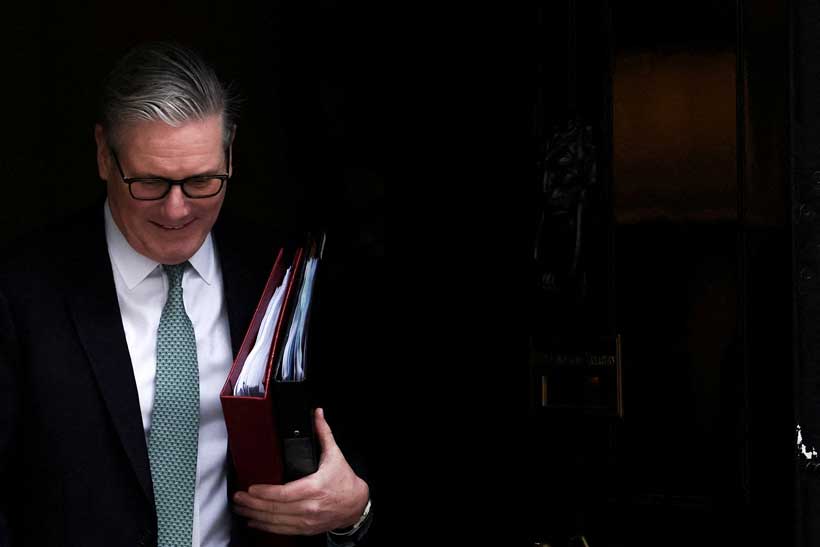
Will Keir Starmer Be Forced Out? UK Local Election Results Raise Pressure on Labour Leader

British Prime Minister Keir Starmer plans to continue as leader, despite heavy losses in local elections raising doubts about his ability to govern. Critics within the Labour Party have suggested he should resign, but currently, there is no leadership contest. Starmer’s personal approval ratings are among the lowest for a British leader, and Labour is trailing behind the Reform UK party in opinion polls, indicating a potential loss in the national election scheduled for 2029. However, some cabinet ministers have publicly supported him, and calls for his resignation mostly come from fringe party members and opposing parties.

The lack of immediate challenges to Starmer arises from several factors. Labour is facing significant domestic and international issues, such as financial constraints and rising living costs, that a new leader would also have to address. Among the possible successors, Greater Manchester Mayor Andy Burnham lacks a parliamentary seat, and former Deputy Prime Minister Angela Rayner is still dealing with unresolved tax issues. The third candidate, Wes Streeting, is currently serving as health minister.

A leadership challenge can occur if there is enough support within Labour for a new candidate. However, it is generally more difficult for Labour to remove a sitting prime minister compared to the Conservative Party. Any candidate wishing to challenge Starmer must secure support from 20% of Labour Members of Parliament, which would mean around 81 backers. Candidates also need backing from grassroots Labour Party organizations and affiliated groups. Starmer would automatically be on the ballot if he chooses to contest. Some lawmakers suggest Starmer should establish a timeline for his departure to allow for a smooth transition. Starmer insists he intends to lead the party into the next election.

With information from Reuters

Source link