race

BBC teases ‘journey of extremes’ as it unveils trailer for Race Across the World

Five teams will compete in the new series of the BBC travel show, racing from Europe to Mongolia

The upcoming Race Across the World contestants are shown battling through thick snow in an early look at the new series.

The much-loved BBC programme – which features teams racing vast distances on limited budgets, without phones and banned from flying – is back for a sixth series, and the broadcaster has released a short preview in a teaser trailer, reports Wales Online.

Whilst the departure point hasn’t been revealed yet, this season the participants will face the challenge of travelling from Europe “to the uncharted edges of Mongolia”. Footage in the trailer captures the racers riding horses, navigating major cities, leaping from boats and attempting to hitch lifts.

“The further they go, the closer they’ll get,” flashes across the screen, as one of this year’s participants is heard saying: “This race, it’s a lifetime of exploring in such a short amount of time.

“It’s going to open up a lot of doors not many people have the privilege to unlock.”

Another contestant is then heard exclaiming: “This is an adventure.”

The BBC teased: “In this vast east-to-west journey, five pairs race from the familiarities of Europe all the way to the uncharted edges of Mongolia in Race Across the World series six.

“These teams must forge their own path… But on this journey of extremes, who will finish first? No flights. No phones. No safety net… Let the race begin!”

Fans have declared they “can’t wait” following the series preview, with one posting on Instagram: “So excited for this.”

“OMG…. Can’t wait for this one!!!” gushed one person, whilst another fan declared: “My favourite programme.”

“Yippee!” enthused another viewer, as somebody else wrote: “Yesssssss!! Cannot wait – best programme!!”

Last year’s series of Race Across the World saw the teams departing from The Great Wall of China before journeying across China, Nepal and India to reach the finishing point of Kanniyakumari, the southernmost tip of India.

It was claimed by mother and son pairing Caroline and Tom, who secured the £20,000 prize after becoming the first duo to arrive at the final checkpoint.

For the latest showbiz, TV, movie and streaming news, go to the new **Everything Gossip** website.

Race Across the World airs on the BBC.

Source link

Here’s the final list of candidates for L.A. city elections

The list of candidates running for Los Angeles city and school board offices is set, with a number of incumbents facing what could be competitive primary elections on June 2.

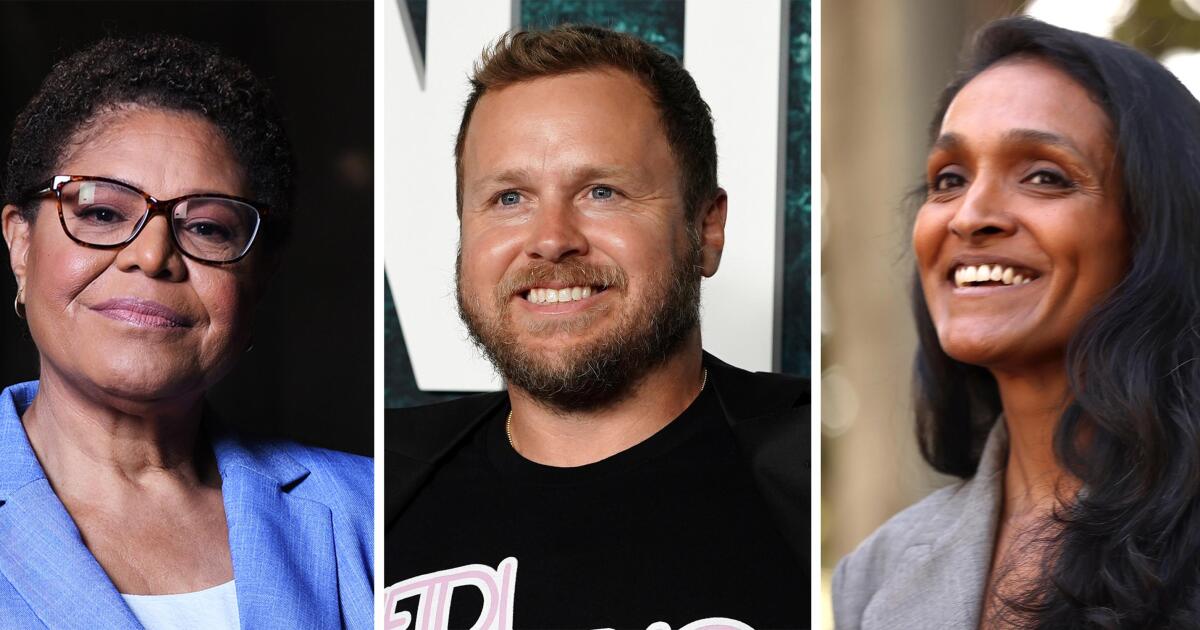
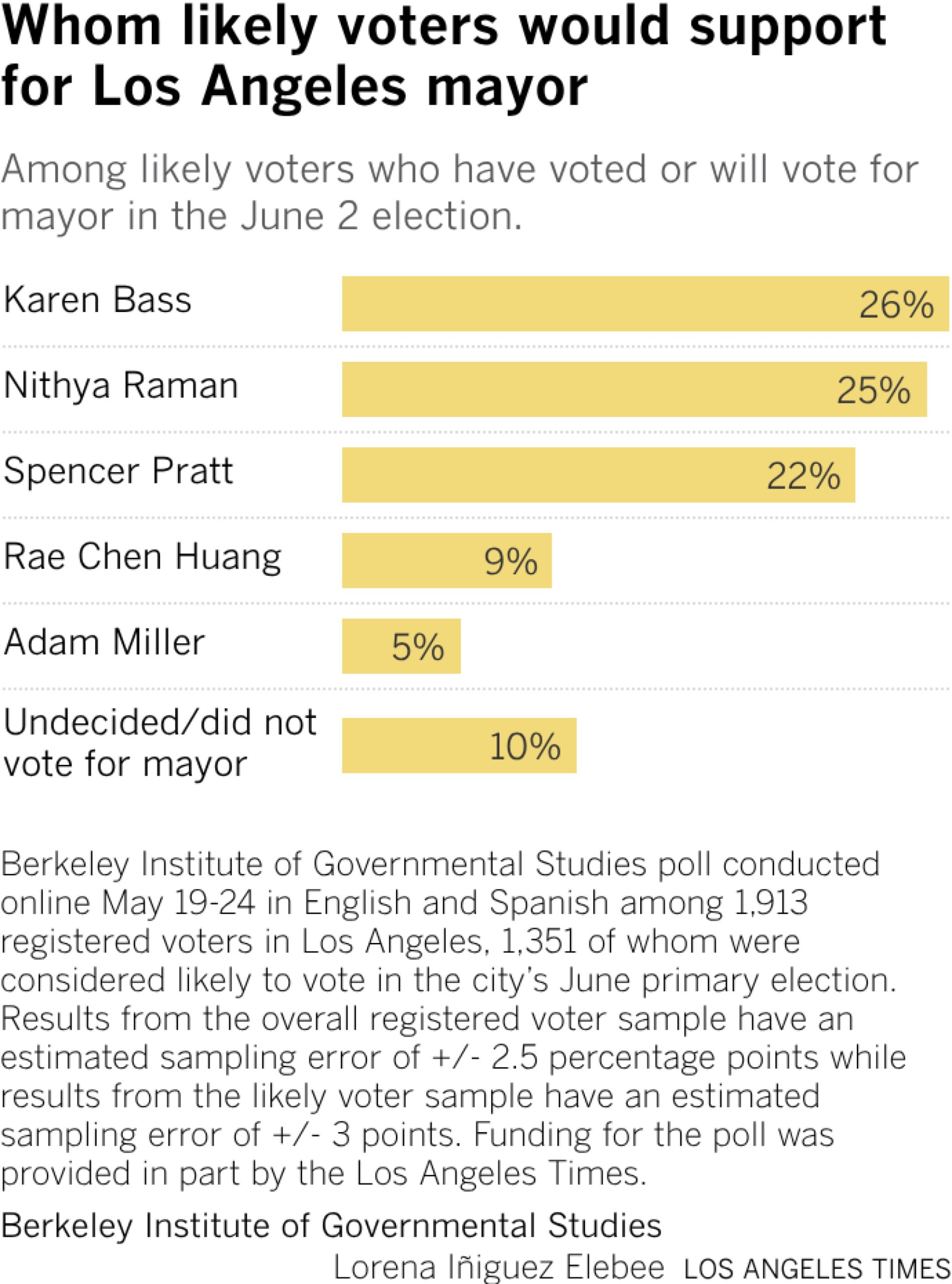
Fourteen Angelenos have qualified to run for mayor, including incumbent Karen Bass, City Councilmember Nithya Raman and former reality TV star Spencer Pratt.

Seven City Council incumbents face at least one challenger, while Councilmember Monica Rodriguez is running unopposed to represent her northeast San Fernando Valley district.

City Atty. Hydee Feldstein Soto is running against three opponents — deputy attorney general Marissa Roy, human rights attorney Aida Ashouri and Deputy Dist. Atty. John McKinney.

In the race for city controller, incumbent Kenneth Mejia will battle it out against Zach Sokoloff, who is on sabbatical from his job as senior vice president of asset management at Hackman Capital Partners.

For the last week and a half, workers at the City Clerk’s Office have been verifying the legitimacy of voter signatures submitted by the candidates, finishing the last batch on Friday.

Gathering the required 500 signatures is relatively easy in citywide races but harder in council and school board districts. Some candidates who submitted petitions by the March 4 deadline failed to qualify because some of their signatures were deemed invalid.

In each race, if no candidate gets more than 50% of the vote in June, the top two finishers will compete in a November runoff.

The field of 14 for mayor narrowed significantly from the roughly 40 who filed initial paperwork on Feb. 7. The qualifiers include a game streamer, a singer-songwriter and a tech entrepreneur, as well as government veterans like Asaad Alnajjar, a longtime engineer for the city. Rae Huang, a pastor and housing advocate, will also appear on the ballot.

Raman, a former Bass ally, shook up the race with her surprise entry, hours before the filing deadline.

A recent poll found that about 51% of Los Angeles voters are undecided on who they want for mayor. Bass led at 20%, followed by Pratt at just over 10% and Raman at slightly more than 9%, according to the Emerson College Polling/Inside California Politics poll.

Tech entrepreneur Adam Miller was supported by just over 4% of those polled, with Huang at about 3%.

In District 1, which stretches from Glassell Park and Highland Park to Chinatown and Pico Union, four challengers are looking to unseat City Councilmember Eunisses Hernandez. They are Maria Lou Calanche, a former Los Angeles Police Commissioner and founder of the nonprofit Legacy LA; Nelson Grande, an executive consultant and former president of Avenida Entertainment Group; Raul Claros, founder of CD1 Coalition, which organizes cleanup days; and Sylvia Robledo, a small-business owner and former council aide.

Councilmember Bob Blumenfield is terming out in District 3, leaving the race to represent the southwestern San Fernando Valley open to a newcomer. The three candidates are Timothy K. Gaspar, who founded a private insurance company; Barri Worth Girvan, a director of community affairs for an L.A. County supervisor; and Christopher Robert “C.R.” Celona, a tech entrepreneur.

In District 5, which includes Bel-Air, Westwood, Hancock Park and other West L.A. communities, Councilmember Katy Yaroslavsky faces two challengers: tenants rights attorney Henry Mantel and accountant Morgan Oyler.

With Councilmember Curren Price terming out in District 9, six candidates are vying to represent parts of downtown and South L.A. They are Jose Ugarte, who was formerly Price’s deputy chief of staff; Estuardo Mazariegos, a lead organizer at the Alliance of Californians for Community Empowerment; nonprofit director Elmer Roldan; entrepreneur Jorge Nuño; professor and therapist Martha Sánchez; and educator Jorge Hernandez Rosas.

Councilmember Traci Park, who represents the Westside communities of District 11, including Brentwood, Pacific Palisades and Venice, will face off against civil rights attorney Faizah Malik.

In District 13, which includes Hollywood and East Hollywood as well as parts of Silver Lake, Echo Park and Westlake, Councilmember Hugo Soto-Martínez is defending his seat against three challengers. They are Colter Carlisle, vice president of the East Hollywood Neighborhood Council; Dylan Kendall, an entrepreneur and founder of Grow Hollywood; and Rich Sarian, vice president of strategic initiatives for the Social District.

And in District 15, which includes San Pedro and other harbor-area communities as well as Watts, Councilmember Tim McOsker is running against community organizer Jordan Rivers, who is continuing his campaign after reports that he stabbed a neighbor when he was 12. Rivers said it was an “accident” that happened a decade ago.

Three seats are open on the Los Angeles Unified School District board.

In District 2, incumbent Rocío Rivas is being challenged by Raquel Zamora, an LAUSD teacher and attendance counselor.

In District 4, incumbent Nick Melvoin is facing off against Ankur Patel, director of outreach at the Hindu University of America.

District 5 school board member Kelly Gonez is running unopposed for her third term.

Source link

Becerra blasts USC and ABC for excluding candidates of color from gubernatorial debate

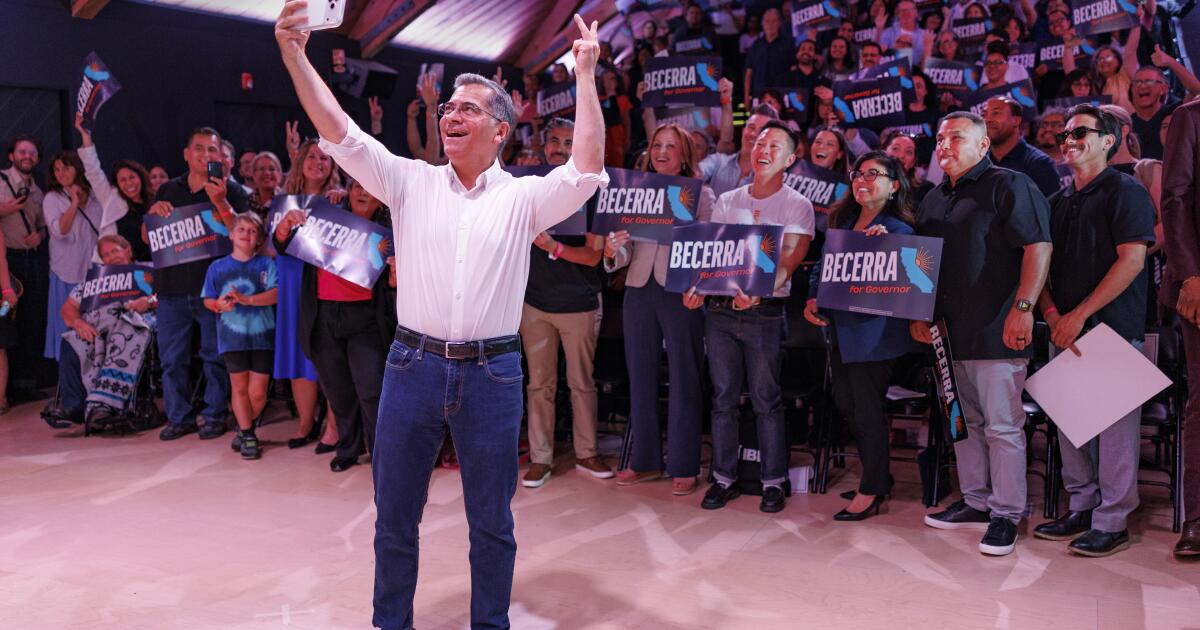
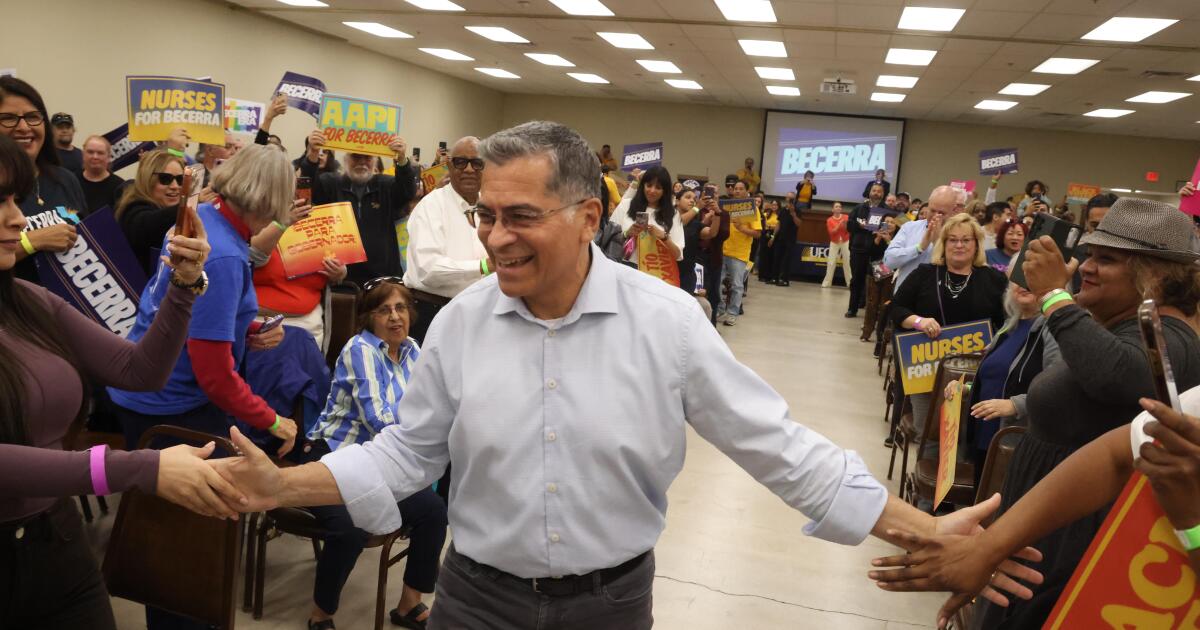
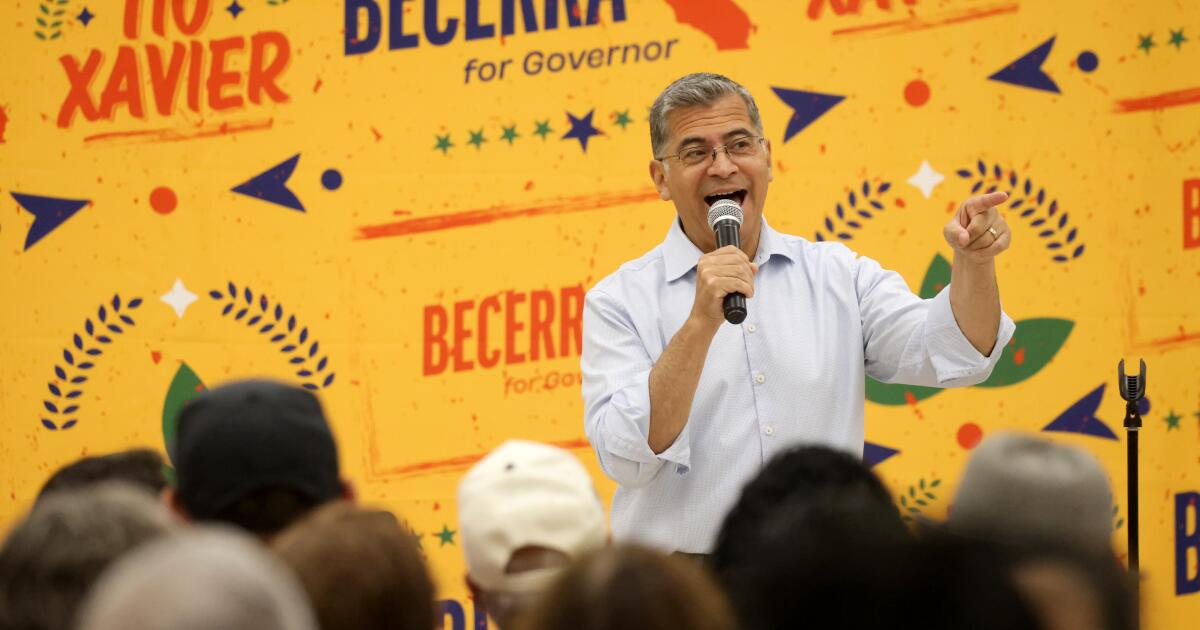
Former U.S. Health and Human Services Secretary Xavier Becerra, one of the top Democrats running for California governor, on Friday blasted USC and the ABC affiliate in Los Angeles for hosting a debate that he argues purposely excludes all candidates of color.

Becerra said he and the other candidates were excluded from the televised debate unfairly, a decision that he said “smells of election rigging” in a hotly contested race less than three months before the June primary.

“My father used to tell me of the days when he would encounter signs posted outside establishments that read ‘No Dogs, Negroes or Mexicans Allowed,’” Becerra wrote in a public letter to USC President Beong-Soo Kim. “USC’s actions may not seem so transparent. But, you have deliberately chosen to selectively filter the voters’ view of the field of gubernatorial candidates in what all observers characterize as a wide-open race.”

The university said in a statement that it authorized a political expert to create the formula to determine who would be included in the debate.

“At the request of the Center for the Political Future, Dr. Christian Grose, Professor of Political Science and International Relations, independently established the methodology that determined eligibility for the debate,” according to a statement from the center. “No one in the USC administration had any role in developing, reviewing or approving those criteria.”

The center later said in a statement on Friday that it reiterated the criteria that determined which candidates were invited to participate in the debate, and that nothing had changed since the forum was first planned.

The criteria for gubernatorial candidates to participate considered opinion polling and campaign fund raising. Six candidates were asked to participate in the March 24 debate, which is cosponsored by ABC7 Los Angeles and Univision.

There was conflicting information about USC’s stated criteria, however. The methodology says that the fundraising totals considered were based on semi-annual reports campaigns filed with the California Secretary of State’s office. However, the document later says that the fundraising figures also includes large donations that campaigns are required to immediately report.

This is a critical difference, because San José Mayor Matt Mahan did not enter the race until late January, and thus far has not been required to file any semi-annual fundraising disclosures with the state. However, he has received significant donations since he entered the race.

Mahan agreed with Becerra, saying that he ought to be part of public forums about who will lead the state.

“The former Secretary is absolutely correct, he should be included in the debate,” Mahan said in a statement. “His long record of service to California has earned him a place on every debate stage in this campaign for Governor.”

USC officials said they are clarifying how they selected candidates to participate in the race.

“We are reissuing the criteria to make clear that they include current fundraising totals, including semi-annual and late reports, which were always part of the formula,” the Center for the Political Future said in a statement. “We are not changing the criteria. We have updated even as of today and the rank order includes the same top 6 candidates.”
Grose said that the selection of candidates was based upon polling and fundraising numbers, and that the sentence about semi-annual fundraising reports was inaccurate.

“It was just a wording issue. It’s not a methodology issue,” he said.

Six candidates are scheduled to appear at the debate: Republicans Riverside County Sheriff Chad Bianco and conservative commentator Steve Hilton; and Democrats Northern California Rep. Eric Swalwell, former Orange County Rep. Katie Porter, billionaire hedge-fund founder Tom Steyer and Mahan.

The kerfuffle occurs after Democratic candidates of color accused state party leaders of trying to oust them from the race in favor of white candidates, who have more support in opinion polls.

In addition to Becerra, other prominent Democratic candidates excluded from the debate include former state Controller Betty Yee, state Supt. of Public Instruction Tony Thurmond and former Los Angeles Mayor Antonio Villaraigosa, who also condemned the candidate-selection formula.

“Californians deserve a fair process, and voters deserve to hear from all qualified voices,” Villaraigosa, who taught public policy at USC for three years after leaving office, said in a statement. “But this biased and bigoted action by USC to manipulate the data to exclude every qualified Black, Latino, and API candidate in favor of a less qualified white candidate is shameful.”

Becerra said USC went to great lengths to justify the candidates that were excluded, but the bias was clear.

“You can’t escape the detestable outcome: you disqualified all of the candidates of color from participating while you invited a white candidate who has NEVER polled higher than some of the candidates of color, including me,” he said.

Becerra was clearly referring to Mahan, who recently entered the race and has received millions of dollars of support from Silicon Valley leaders. Becerra noted that veteran GOP strategist Mike Murphy, co-director of the USC Center for the Political Future, which is a sponsor of the debate, is assisting an independent expenditure committee backing Mahan.

Murphy said he had recused himself from anything involved in the debate, and that he was a volunteer for the outside group backing Mahan. If he becomes a paid advisor to the independent expenditure committee, he said he has requested unpaid leave from the university through the June 2 primary.

“I’ve been transparent that I’m personally a Mahan supporter,” Murphy said. “I’ve had zero to do with the debate.”

Source link

Scottish Premiership: What’s next in best title race in Europe?

Where does that leave Rangers, then?

Head coach Danny Rohl has been the subject of criticism from fans of the Ibrox club after his players failed to capitalise on total domination during their Old Firm cup exit last weekend.

And with the German’s side six points off top spot – a margin that could be extended by the time they start against managerless St Mirren on Sunday (12:00) – there is increased pressure and little room for error.

Craig McLeish, Jamie Langfield and Allan McManus will lead an interim team for the League Cup holders and Scottish Cup semi-finalists, who are scrapping for their top-flight status, following Stephen Robinson’s departure to Aberdeen.

The Paisley club have won just one of their past 13 Premiership matches – which came against leaders Hearts – but Rangers’ recent form is not too clever either.

Rohl and his players are now facing questions about mentality – an all too familiar story at Ibrox – despite the 36-year-old saying a month ago that he was heartened by a mindset shift in his players.

A defeat at Tynecastle in December was followed by a run of seven wins and a draw in eight league matches, but Rangers have since won one of their past four league games – a 4-2 victory against Hearts.

That form stretches to one win in five when you include Sunday’s cup game. In fact, they have won just three of their past nine in all competitions.

If this alarming drop-off is not addressed urgently, it will prove terminal for Rangers’ title hopes and intensify the pressure on Rohl from a demanding support.

Source link

Big Pork attacks California law on caging

Spring has sprung on Leo Staples’ family farm in Oklahoma, and his Berkshire pigs couldn’t be happier about it.

Weighing in at about 550 pounds, Woody, his largest hog (named by a grandson after the “Toy Story” icon) plays “like a puppy” in his free-range paddock, Staples told me, gobbling up the rye, clovers and winter peas that have grown knee-high under the Southern sun.

Swine life on Staples’ sustainable family farm is a jarring contrast to the existence of a pig on one of America’s “intensive” corporate-owned mega-farms, where some sows are confined to cages so small they literally can’t turn around or take more than a step or two in any direction.

“It’s not necessary and it hasn’t proven to be good science,” Staples, a self-described conservative Republican, said of Big Ag porcine lockups. “It’s also cruel.”

That confinement is at the heart of a congressional fight over animal welfare standards that Staples — and California — is likely to lose, though we shouldn’t.

At issue is the Save Our Bacon Act, a sneak attack backed by foreign corporations currently hidden deep inside the farm bill. It would severely curb the ability of states to enact limits on animal confinement and maybe accidentally open the door for ending all kinds of state-level food safety laws.

The SOB Act, an apt nickname, would not only cripple small family farmers such as Staples (though its supporters claim it helps family farmers), it would negate the will of California voters, potentially introduce risk into the food chain, and turn greater power of our food supply over to China.

It would also limit consumer choice at a time when more Americans — from fans of far-right Health Secretary Robert F. Kennedy Jr. to far-left granola grandmas — are demanding a say in how their food is produced.

Let’s break that down.

What is the SOB Act?

For the vegetarian hard-liners out there, it is true that Woody himself will someday likely be bacon.

But, increasingly over the past decades, meat-friendly consumers have moved toward wanting animals to “live a really great life and have one bad day,” as Nate Beaulac, another conservative Oklahoma pork farmer, describes it.

In 2018, to further that aim, about 63% of California voters passed Proposition 12, which increased the space that breeding sows were required to have, from something about the size of a small car trunk to the size of a coat closet. We’re not talking rolling acres here — just enough room to turn around. Some of these sows are basically caged for the majority of their breeding life — years — and are about the size of a black bear.

But here was the real bite in Proposition 12: No pork from any state could be sold in California if it didn’t come from a farm that met the new standard.

Overnight, the corporate breeders were locked out of the Golden State market. They sued bigly, and lost bigly in 2023 at the Supreme Court, which upheld California’s right to impose the state standard.

Big Pork tried to revive the issue with the Supreme Court in 2025 and was rebuffed. Surprise, surprise, the drums started pounding for the SOB Act shortly after (though various legislative attempts have floated since Proposition 12 was passed) backed by a Midwestern congresswoman from a Big Pork state.

The SOB Act would negate Proposition 12 (and a similar law in Massachusetts) and forbid states from making laws regarding animal confinement, according to an analysis by the Animal Law & Policy Program at Harvard Law.

That would emphatically overturn the will of the majority of California voters who want those standards.

But hey, Big Pork would make big bank.

“They want to limit American consumers’ ability to fight,” Beaulac told me. “They wanted to limit Americans’ ability to pursue any sort of change. And that is why me, not only as a farmer, but as an American and a capitalist, I’m strongly opposed to the Save Our Bacon Act, and in staunch support of Proposition 12.”

What Prop. 12 did

Beaulac was once a Californian himself, before heading to the Sooner State for college. He describes himself as a “Christian, capitalist, conservative environmentalist,” and a sustainable farmer who depends on consumers’ desire for healthy food to sell his pigs, chickens and cows.

Proposition 12, Beaulac said, “was a huge help to smaller farms, and the only people that it really hurt were the huge multinational conglomerates.”

“I mean very simply, we want the opportunity to compete,” he said.

Staples, Woody’s owner, who is also an expert in project management and environmental compliance from a previous career in the power industry, makes the case that the mega-farms can also come with mega-dangers.

“You have 100,000 pigs within two miles of each other, the chance of issues with a swine flu or natural disaster just increases,” he said. He points out that issues such as disease, groundwater contamination and waste disposal have already become problems for some large farms.

The flaws in the SOB Act don’t stop there.

The Harvard Law analysis points out that the loose language of the bill could have other consequences, maybe even gutting some state safety, labeling and cleanliness standards.

And some Republicans in Congress, including Californian Reps. David Valadao and Young Kim, oppose the measure and sent a letter to the Agriculture Committee late last year urging them to dump the act, pointing out that at least a quarter of Big Pork is owned by Chinese companies and does not represent American interests.

“Foreign-owned corporations — particularly those tied to adversarial nations — already hold a disturbing amount of control over U.S. agricultural assets,” the letter read, citing Chinese-owned Smithfield Foods, the largest pork producer in the United States.

The SOB Act “could further consolidate the influence of such foreign entities,” the letter‘s authors warned.

Armed with those arguments and others, Staples and Beaulac traveled to Washington recently to make their case against the SOB Act with lawmakers.

But, both men told me, they were met with a wall of lobbyists and money.

“It’s very eye-opening in terms of how many lobbyists are there every day,” Beaulac said. “The reality is Big Ag donates big money to the senators, and so when they need their bill to go through or they need a bill shut down, they’re going to have a lot more leeway than the small farmers.”

The lobbyists, Staples said, had the debate wrapped up tight long before the farmers even knocked the dirt off their boots and entered Congress.

“It was very obvious,” he said. “I was not prepared for what Big Ag had done, how they had prepared members of Congress to address the issues we wanted to address.”

Beaulac said he’s discouraged and fears the SOB Act will pass, but also isn’t giving up hope. He sees it as a bipartisan issue, and one he hopes for which people will stand up. This week, a social media post featuring a sad photo of a caged pig went viral, drawing attention across party lines.

“Blue, red. It doesn’t matter. People want healthy food,” Beaulac said. “They want to know how it’s raised. They genuinely care how they’re feeding their family, and it has nothing to do with who they vote for in November.”

What else you should be reading

The must-read: Thune Is in a Vise as Trump and Far Right Demand Fight on Voter Bill
The deep dive: The exodus of California’s tech billionaires from the Golden State to Florida’s Gold Coast
The L.A. Times Special: California could be attacked by drones because of Iran war, memo warns. Officials downplay threat
Stay Golden,
Anita Chabria

P.S. Here’s a post by right-wing commentator Michael Cernovich on the SOB Act, just a taste of how much some of the MAGA folks don’t like this measure.


Was this newsletter forwarded to you? Sign up here to get it in your inbox.

Source link

Most L.A. voters undecided about mayor’s race, with support for Bass at 20%, poll finds

A majority of Los Angeles voters are undecided about the race for mayor, with support for incumbent Karen Bass at 20%, according to a new poll.

The poll by Emerson College Polling/Inside California Politics found that about 51% of Angelenos have not made up their minds about who should lead the city for the next four years.

Spencer Pratt, a conservative reality TV star, came in second to Bass, at just over 10%. City Councilmember Nithya Raman, a former Bass ally who shook up the field with her last-minute entry, polled at slightly more than 9%. Tech entrepreneur Adam Miller was supported by just over 4% of those polled, with leftist candidate Rae Huang at about 3%.

Although Bass had the most support among the candidates in the June 2 primary election, the poll showed that nearly half of Angelenos are unhappy with her performance. She was weakened politically by her handling of the devastating Palisades fire but has touted reductions in homicides and homelessness.

About 25% of those polled said they approve of the job Bass is doing as mayor, while about 47% disapprove. About 28% said they have no opinion or felt neutral.

The poll, based on interviews with 350 likely voters March 7-9, revealed just how up for grabs the mayoral election is, with less than three months before the primary.

“This is a wide open race,” said Zev Yaroslavsky, a former city council member and L.A. County supervisor who runs the Los Angeles Initiative at the UCLA Luskin School of Public Affairs. “The general narrative [of the poll] is that the mayor is not popular for somebody going into reelection, but the majority of people have not made up their mind whether they’ll come back to her or go to someone else.”

Los Angeles Councilmember Nithya Raman meets with reporters after filing paperwork to run for mayor.

City Councilmember Nithya Raman meets with reporters after filing paperwork to run for mayor of Los Angeles.

(Christina House / Los Angeles Times)

Bass campaign spokesperson Doug Herman did not respond directly to the poll. But he said in a statement that the mayor “took on the challenge to change Los Angeles after decades of decline from long ignored issues; resulting in first ever back to back drops in homelessness, 60 year lows in homicides and an unprecedented 40,000 affordable housing units accelerated.”

Pratt said through a campaign spokesperson, “The Emerson poll confirms what we’ve been seeing on the ground — this is a two-person race for Mayor of Los Angeles between me and Karen Bass. Angelenos are frustrated with the direction of the city and it’s reflected in her low approval numbers. Our campaign is gaining real momentum as more voters look for new leadership focused on results and accountability. This race is just getting started.”

Raman’s campaign, however, said she’s the one gaining momentum.

“It’s clear that voters want change, and we’re gaining momentum for our campaign to make L.A. more affordable and to govern with urgency and accountability,” the campaign said in a statement.

The field of candidates did not take shape until the week of the February filing deadline. Billionaire developer Rick Caruso and L.A. County Supervisor Lindsey Horvath both flirted with a run before deciding against it, and former L.A. schoolsSupt. Austin Beutner dropped out after the death of his 22-year-old daughter. With no other major candidate opposing Bass, Raman filed her paperwork with hours to spare.

With petitions still being verified, 13 mayoral candidates have qualified for the June ballot. If no one gets 50% of the vote in the primary, the top two finishers will head to a runoff in November.

“This race could shift dramatically come June,” Spencer Kimball, executive director of Emerson College Polling, said in a statement.

Kimball cited the large percentage of undecided voters of all stripes — 67% of independents, 49% of Democrats and 37% of Republicans are undecided. Pratt is a Republican, and the other major candidates are Democrats in a heavily blue city.

Pacific Palisades resident Spencer Pratt, who lost his home in the Palisades fire, stands with supporters.

Pacific Palisades resident Spencer Pratt, who lost his home in the Palisades fire, stands with supporters after announcing his run for Los Angeles mayor on the one-year anniversary of the Palisades fire in the Palisades Village on Jan. 7, 2026.

(Genaro Molina / Los Angeles Times)

The poll is not the first to show negative views of Bass.

Last year, after the Palisades fire, a poll of L.A. County residents by the UCLA Luskin School of Public Affairs found that 37% held favorable views of the mayor, while 49% held unfavorable views.

The Emerson poll also featured questions on issues such as public safety and homelessness.

More than 82% of Angelenos in the poll said they feel very safe or somewhat safe in their communities, while about 17% said they feel not too safe or not safe at all.

On homelessness, the view was grimmer. Only 15% of Angelenos polled said that homelessness is getting better, while more than 55% said it is getting worse. Almost 30% feel it is staying the same.

Los Angeles has seen significant reductions in street homelessness for the last two years, after years of steady increases.

Bass has attributed the declines to her signature Inside Safe program, which clears encampments and places homeless people in short term housing.

“There is no doubt that Inside Safe, by bringing thousands of people inside and reducing street homelessness by 17.5 percent, has saved lives and helped drive this decline,” Bass said in a statement Tuesday.

The Emerson poll also asked California residents about the governor’s race. Rep. Eric Swalwell (D-Dublin) had the most support at slightly more than 17%, followed by Republicans Steve Hilton at just over 13% and Chad Bianco at more than 11%. Billionaire Tom Steyer came in at about 11%.

Nearly a quarter of California voters were undecided, according to the poll.

Paul Mitchell, a political data expert, called the Emerson poll flawed. Not enough Angelenos were polled, and the sample skewed too heavily toward young people, when older residents are more likely to vote, he said.

Mitchell called the poll an “amuse-bouche.”

“This tells all of the candidates [they] should be doing a poll,” he said.

Source link