WASHINGTON — The Pentagon says the firing squad execution of Fort Hood shooter Nidal Malik Hasan will be livestreamed after Defense Secretary Pete Hegseth said the execution would be “public.”
Hegseth, speaking to the conservative TV outlet Real America’s Voice News on Wednesday, said the execution of Hasan will take place at Fort Hood on Dec. 3. Hasan was convicted of killing 13 people and injuring 32 others in a shooting at the military base in 2009.
“We’ll make sure that people are able to watch it, that it’s public,” Hegseth said.
Hegseth spoke to the outlet aboard the USS Abraham Lincoln aircraft carrier while visiting the long-deployed crew, who supported the Iran war, before their arrival at their home port in San Diego.
When asked if Hasan had made any final requests or reached out to the Trump administration, Hegseth simply replied: “Don’t care. We’ll see him on December 3rd.”
Officials in the Pentagon clarified Thursday that the execution will be livestreamed and that more details would follow.
Pentagon spokesperson Sean Parnell had said Monday that President Trump had approved the execution of Hasan.
Trump has previously been critical of public executions in Iran, at times using the possibility of protesters being killed by the Iranian government as a possible rationale for military action. Those warnings preceded his ultimate choice to attack Iran at the end of February over its ballistic missiles and the risk of it developing nuclear weapons.
“We’ve been told that the killing in Iran is stopping,” Trump told reporters on Jan. 14 of this year. “It’s stopping and there’s no plan for executions.”
He repeated that claim on Jan. 20 at a White House press briefing, saying: “We let them know that if that happens, that will be a very bad day for them. And they decided not to do it. They didn’t hang the people.”
Slightly more than a month later in his State of the Union address, Trump said, “We stopped them from hanging a lot of them with the threat of serious violence.”
The White House on Thursday immediately referred questions about the plans for the livestreamed execution to the Pentagon.
However, experts on military law said Hasan could choose to resist execution and file a habeas petition in civilian court, which could significantly delay the execution.
“It frankly might outlast the current administration, and who knows if the next one will have the same penchant for executions,” said Eugene R. Fidell, a visiting lecturer at Yale Law School specializing in military law.
Hasan, an Army psychiatrist who held the rank of major, walked into a medical building where soldiers were waiting in long lines to receive immunizations and medical clearance for deployment. He shouted “Allahu akbar” — Arabic for “God is great!” — and opened fire with a laser-sighted handgun.
During the trial it was revealed that Hasan spent weeks planning the deadly attack, and his preparation included videotaping a sales clerk showing him how to change the magazine on the pistol that he purchased. He would later go to a gun range outside Austin and ask for advice on how to reload with speed and precision from an instructor.
Soldiers later testified that Hasan’s rapid reloading made it all but impossible to stop the shooting. Investigators recovered 146 shell casings inside the building and dozens more outside, where Hasan shot at the backs of soldiers fleeing toward the parking lot.
Hasan said it was an effort to stop them from going to Afghanistan and killing his fellow Muslims. A military judge barred him from presenting that as a defense during his trial. Hasan made almost no effort to defend himself in court, telling jurors when he acted as his own counsel that evidence would show he was the shooter and describing himself as a soldier who had “switched sides.”
Hegseth said the military hasn’t executed a servicemember by firing squad since World War II. The last military execution took place on April 13, 1961, when Army Pvt. John Bennett was executed by hanging.
And you probably figured Freddie Freeman would get it going. You had faith in playoff risers Max Muncy, Kiké Hernández and Teoscar Hernández — and in the Dodgers’ playoff-proven offense overall.
You were not, however, so bullish on the bullpen.
That was the proverbial, annual question mark entering the best-of-five National League Division Series against the Atlanta Braves, whom the Dodgers vanquished with a 4-1 victory Wednesday at Truist Park to set up an NL Championship Series rematch with the Milwaukee Brewers.
Edwin Díaz, the Dodgers’ purported closer, had a disastrous, injury-marred first season with the team — or he was having one.
That left Tanner Scott — last season’s purported closer — handling the bulk of the ninth-inning duties this season, and he finished with a career-high 25 saves. But you were going to have to see him sustain that in the postseason to believe in Scott, whose first season with the Dodgers also was so disastrous that he wasn’t even included on the playoff roster.
The Dodgers are paying Díaz $69 million and Scott $72 million. A steep price and a sign of how badly the team wants to avoid having to turn to starting pitchers to finish off important postseason games, as they have in the past with Julio Urías, Walker Buehler and, last season, Yamamoto.
But until now, the Dodgers haven’t had much but frustration to show for their investment in Scott or Díaz — who were two names among four, including Roki Sasaki and Evan Phillips, that manager Dave Roberts suggested could close games in the playoffs.
It was a tangled trust tree that needed lots of water.
Or how about champagne? Maybe ice-cold beer?
Because after Alex Vesia, Edgardo Henriquez, Scott and Díaz combined to get the final 13 outs of Game 4 without giving up a run, they helped lead the charge in the clubhouse afterward, dousing one another to celebrate.
In the series, the Braves went one for 23 (.043) with runners in scoring position. That, according to OptaStats, is the second-lowest such batting average in a postseason series in history — and it doesn’t happen without a bullpen being locked in; the Braves went 0 for 13 with runners in scoring position against the Dodgers’ relief pitchers.
In the deciding Game 4, Vesia took the baton from Glasnow with two outs and two runners on in the fifth, got the inning’s final out on one pitch and came back out in the sixth. He gave up a double but got Drake Baldwin to line out before handing the ball to the hard-throwing Henriquez, who hit 100 mph or higher on 11 of his 15 pitches, retired five of six batters and earned his first postseason win.
Then Scott had the inning of his Dodgers career in the eighth — sitting down the Braves’ 3-4-5 hitters with a nasty array of sliders and fastballs. He punctuated his performance with a fastball on the corner that ended the inning and wound up costing Atlanta its final ABS challenge.
And, finally, in closing, Díaz.
Share via
He earned his second consecutive save with an efficient, eight-pitch, 1-2-3 inning. He isn’t the closer, not officially. But, darn, is he important: “For us to win the World Series,” Roberts said, “he’s got to be a relevant part of this equation … I’ve got to trust him.”
The way Díaz is dealing, why wouldn’t he? Díaz has given up just one hit in three postseason innings. And he’s feeling good.
“The last two nights it’s been amazing,” Díaz said. “That’s why I came here, to win games and close games like this one. So I’m really happy.”
Andrew Friedman, the Dodgers’ president of baseball operations, raved about Díaz’s resilience, referencing the roller coaster of a season that included an 8.68 earned-run average, neck and elbow injuries, a stint on the injured list and in triple A.
“He would say, ‘Hey, I’m ready to come back,’” Friedman said. “And it was like, ‘Hey, we need to see more, we need to see this really lock in.’ And at every turn, he said, ‘Whatever you guys need … anytime you want me to pitch, I’ll be ready.’
“It was never a question of the heartbeat and his ability to handle these moments. It was about just getting him right mechanically and getting back to the stuff that we’ve all seen over the years.”
Vesia is similarly impressed with his friend Scott’s resurgence.
“Going back to last year with ups and downs and adversity and all that stuff, we definitely leaned on each other,” said Vesia, who missed the World Series after the October death of his newborn daughter, Sterling Sol.
“And, you know, for this year to watch [Scott] really take off and have a great year, it’s been awesome, you know? It’s really awesome. With the closing role being undefined and all that stuff, he stepped up. Every year, there’s always guys that step up.
“Now, we got eight more.”
Eight more wins to three-peat, and no weak links anywhere.
Fred Claire was an unorthodox choice for general manager, a former sportswriter and public relations man who didn’t play baseball beyond the junior varsity level in high school, and his 1987 promotion to head the Dodgers’ front office was met with skepticism around the game.
A year and a half later, after his shrewd moves helped turn the Dodgers into World Series champions in 1988, Claire was named Major League Baseball’s executive of the year by the Sporting News.
Claire, who spent 30 years in the Dodgers’ front office, died Monday on his 91st birthday. The news was shared on social media by former Dodger broadcaster Ross Porter.
An avid runner and golfer fit and trim enough to pass for a man a decade younger, the silver-haired Claire was diagnosed with squamous cell carcinoma in 2015 when what looked like a harmless spot on his lip turned out to be cancerous.
The growth was surgically removed, but the cancer returned in August 2016, and spread into the left side of his face. Claire underwent radiation and chemotherapy treatments to kill the malignant cells in his body, but the cancer returned again in 2017.
An immunotherapy clinical trial saved his life, according to a story in Pasadenanow.com, but then an infection forced him to undergo even more extensive facial reconstruction surgery at City of Hope in Duarte, replacing his jawbone with a bone from his leg.
Claire was so impressed with his treatment at City of Hope that he teamed with author Tim Madigan in 2021 to publish a book chronicling his career and capturing the hospital’s history as well the stories of patients and doctors. The book, “Extra Innings,” can be purchased at Amazon, with all net proceeds donated to City of Hope.
“The main thing that I liked and appreciated about the book was people buying it because of their interest in baseball,” Claire told the Desert Sun in 2021, “then to discover what a great place [City of Hope] is after reading it.”
Claire was also active in helping fund research — he and his wife, Sheryl, set up a scholarship fund with the USC Keck School of Medicine for research in head and neck cancer.
Claire was born Oct. 5, 1935, in Jamestown, Ohio. His parents moved the family — Claire had a brother and a sister — to Torrance when Claire was a teenager. After graduating from Torrance High, Claire earned a degree in journalism from San José State in 1957 before taking his first newspaper job.
“I graduated on a Sunday afternoon,” Claire told The Times in 1997, “and by Monday morning, I had a job at the Whittier Daily News.”
For 30 years, Dodger Stadium was Fred Claire’s home. “Honestly, in my heart and soul, it was a thrill and honor to have the opportunity to walk into Dodger Stadium every day and go to work,” Claire told the Times in 2017.
(Jack Harris / Los Angeles Times)
Claire spent 11 years as a sportswriter and was covering the Dodgers for the Long Beach Press-Telegram in the spring of 1969 when a position opened in the team’s public relations department.
Claire, who always longed to be involved in baseball, expressed interest in the job and was hired as a public relations assistant, remaining in the position until 1975, when he was promoted to vice president of public relations.
He was instrumental in creating the branding that came to be known as “Dodger Blue” and was directing the team’s marketing efforts when the Dodgers passed the 3-million mark in attendance for the first time. He also hired Ross Porter, a Dodgers broadcaster from 1977 to 2004.
In April 1987, then-Dodgers general manager Al Campanis was fired after making controversial and what many said were racist remarks about Black Americans on “Nightline,” during which he told the show’s host, Ted Koppel, that Black people may lack “some of the necessities” to be the field manager or GM of a major league baseball team.
Claire was then-Dodgers President Peter O’Malley’s surprise choice to replace Campanis, and his hiring raised the eyebrows of his new peers, who saw Claire as an outsider with no background as a player, coach, manager or scout.
“I knew some people might say, what does this guy know about baseball, he covered it from behind a typewriter?” O’Malley said in 2017. “But I knew Fred could do it. And he did it. He deserves a lot of credit for stepping in quickly, without advance notice, and doing a great job.”
The Dodgers suffered their second straight losing season in 1987, but Claire made several off-season moves — acquiring outfielders Kirk Gibson and Mike Davis, shortstop Alfredo Griffin and pitchers Jay Howell and Jesse Orosco — that fortified the club.
The Dodgers, led by National League Cy Young Award-winning pitcher Orel Hershiser and most valuable player Gibson, won the National League West in 1988 and upset the 100-win New York Mets in the NL championship series.
The gimpy Gibson hit his memorable pinch-hit, walk-off homer off Oakland closer Dennis Eckersley in Game 1 of the World Series to push the Dodgers toward their fifth championship since moving from Brooklyn to Los Angeles in 1958.
Kirk Gibson reacts to his game-winning two-run homer in Game 1 of the 1988 World Series.
(John Swart / Associated Press)
Claire dealt a smallish and seemingly fragile pitcher named Pedro Martínez to Montreal for second baseman Delino DeShields in what turned out to be one of the game’s most-lopsided trades. DeShields hit .241 in three years in Los Angeles, while Martinez went on to have a dominant 17-year career that earned him a 2015 Hall of Fame induction.
But during Claire’s 11-year tenure as GM, the Dodgers won a World Series, two division titles, a wild-card berth and a first-place finish in the strike-shortened 1994 season.
Claire also changed the culture in the front office, hiring an analytics expert, holding regular conference calls with coaches and scouts and canvassing the clubhouse to talk with players about everything from their families to their on-field performance.
“Fred gave us that first edge of being progressive and aggressive,” Hershiser told the Times in 2017. Added former Dodgers utility man Mickey Hatcher: “Fred Claire was amazing. For a guy who was suddenly put into the limelight, he asked all the right questions, listened to everyone and believed in all of us.”
Claire was fired along with then-Manager Bill Russell on June 21, 1998, five weeks after executives from Fox News Corp., which purchased the Dodgers earlier that year, engineered a blockbuster trade — deflating to many fans — of All-Star catcher Mike Piazza to the Florida Marlins without Claire’s involvement.
Claire, a man of “integrity and dignity,” as former Times baseball columnist Ross Newhan wrote, walked away with no harsh words or public regrets.
“Honestly, in my heart and soul, it was a thrill and honor to have the opportunity to walk into Dodger Stadium every day and go to work,” Claire told the Times in 2017. “This is truly enough for me.”
After his departure from the Dodgers, Claire worked as a columnist and analyst for MLB.com, a radio show host, an instructor at USC and a consultant to companies involved with sports. He co-authored an autobiography, released in 2004, titled “Fred Claire: My 30 Years in Dodger Blue.”
His response during an interview with Business Renaissance Quarterly in 2007 shed some light on Claire’s philosophy. The question: What do you want to be remembered for?
“I was once in the presence of the late Dodgers owner Walter O’Malley when he was asked this question by a reporter from United Press International,” Claire said. “Mr. O’Malley spun his ever-present cigar, paused for just a second and replied, ‘I want to be remembered for planting a tree.’
“Walter O’Malley’s answer, in my mind, overshadowed the great question. He wanted to be remembered for helping things grow, and in my mind, that meant his family, his friendships, the good causes he was involved in.
“I have seldom planted a tree, but I would proudly borrow Mr. O’Malley’s answer to this question.”
Claire is survived by his wife, Sheryl, and their three children, Jen, Jeff and Kim.
Coco Gauff is calling out the racist abuse she’s received online after following the rules during her latest match at the China Open.
The two-time Grand Slam champion defeated 16-year-old Sun Xinran 7-5, 6-1 on Monday to move on to the round of 16 at the Beijing event. After the match, Gauff took to social media to address the racist comments and messages she’d received for halting a point mid-rally and explained the point in question.
“[H]ey everyone, you can dislike me or disagree about what happened without being racist,” Gauff wrote in a post on X, replying to a user who directed profanity and a racist slur toward her. “[T]he amount of racist comments/dms I’ve received in the last few hours is insane. Lastly, I’m not a cheater or a thief.”
The tennis star then shared a screenshot of the lengthy explanation she posted to Instagram explaining the rules and why she stopped play when she did.
The point in question occurred during the first set, when Gauff was serving and down 4-5. She raised her hands to halt the point toward the end of a lengthy rally, just before Sun returned a volley that could have put her just two points shy of winning the first set.
But just as Sun closed into position to take her shot, the electronic advertising boards around the court flickered as it changed what was displayed.
“I saw it flicker in the beginning of the point but was not sure if that is what I actually saw,” Gauff wrote in her explanation. “[W]hen it flickered again I raised my hands before she hit her shot because this is when I was sure I saw the light flicker and it wasn’t my mind doing tricks.”
The chair umpire then conducted a video review of what happened, and ruled that the flickering ad constituted a “hindrance” outside of the control of the players, like some paper getting blown onto the court. According to the WTA rules, a point should be replayed from the beginning in such instances.
In her Instagram post, Gauff also explained that players are told that they can keep playing a point and challenge once it is over. Both Sun and Gauff would have been permitted to challenge the point regardless of who won it.
She called it an “unfortunate situation” and added that “it’s weird” that she’s “getting hate for following the rules.” Gauff also praised Sun and her talents, saying “it was an honor to share the court in front of her home crowd.”
Portugal manager Jorge Jesus fires back at a question from the media over his handling of Cristiano Ronaldo after the veteran forward left the squad in a row over playing time.
Readers of the Los Angeles Times Sports section give their thoughts on USC’s loss to Oregon, and the horrific late hit, the Dodgers playoff chances and more.
In the same news conference, Jesus said he did not expect to start Ronaldo against Denmark.
“I don’t know what’s going to happen in the game,” Jesus said. “If we need him to play, he’ll play. If not, he won’t.”
This time, the player did make the decision for the coach.
“Following the national team coach’s news conference, and after a conversation with the president of the Portuguese football federation, I decided to leave the national team’s training camp,” Ronaldo posted on social media hours after Jesus spoke.
“In due time, I will tell all the Portuguese about the reasons that motivated my departure from the national team, which I always dedicated myself to. Now it’s time to wish good luck to Portugal and all my teammates, without exception.”
Democrat Xavier Becerra and Republican Steve Hilton debated for 60 minutes Wednesday night on a soundstage in Burbank. Times columnists Gustavo Arellano, Anita Chabria and Mark Z. Barabak watched the gubernatorial match-up and weigh in.
Arellano: Steve Hilton came in with next to no chance of becoming the next California governor, but maybe if he focused on touting the feel-good messages he’s been spouting since launching his campaign in front of the Huntington Beach Pier earlier this year — Make California Gold Again! Califordable! I’m a Legal Immigrant with a British Accent! — he might’ve convinced at least a few voters to go with him.
Instead, Hilton debated like someone already preparing to launch a podcast or beg for his old Fox News job back after he gets walloped. When your solution for solving California’s housing crisis is building 10 new cities, you’re not running for California governor — you’re angling for an influencer job with the Irvine Co.
He whined and grumbled and grinned and quoted someone calling Becerra a “bitch ass,” which would’ve been a funny dig if he wasn’t running to run the greatest state on Earth. Hilton is charming in person, in the way all British people inevitably, initially come off as to Americans, and he has traveled to every California county — and especially to Latino-majority cities. He should’ve shared some of the many stories of hardship that I’m assuming he’s heard over the last year.
Nope! Instead, Hilton attacked Becerra again and again — why? California is a super-blue state, Latino Trump supporters notwithstanding, so Hilton should’ve tried to at least offer a reason for voters to choose him instead of saying — not completely inaccurately — that the problems Californians deal with are the fault of Democrats.
But blaming the other side only gets you so far — just ask Democrats how it worked out with them in 2024.
“We’ve got to try something different,” Hilton said in his concluding remarks. Californians agree — and his name is Xavier Becerra, who last I heard isn’t Gavin Newsom, no matter how much the California GOP is trying to convince people otherwise.
Becerra, meanwhile, didn’t offer much in terms of vision, mostly because he played defense most of the evening. But he didn’t have a major flub, except maybe raising a CNN coffee cup a few too many times. Why, Becerra sometimes even smiled — proof that he’s not some Chicano automaton. He hasn’t agreed to any more debates with Hilton — but after this blowout, Becerra should take the both of them on the road to make Hilton the next John Cox.
Chabria: Becerra came out as more of a fighter than we’ve seen before, even in the earlier Democratic debates. He held his own against Hilton, who is a skilled orator and attacker with a pointed wit and slick accent. But please, for the love of God, Hilton, button that shirt. This is not a casino.
Becerra was the clear winner, and to be honest, Hilton — usually a nimble pugilist — came across flat too much of the time. Maybe he’s already signed his Fox contract, as Gustavo suggests.
But Becerra also failed to lay out any kind of vision for the future of California. He did a good job of fending off Hilton’s attacks, but never told us what a vote for him will bring to the average Californian. There was some talk about housing, about protecting health insurance, but no big picture of what the California Dream of the future is and how we deliver it for the next generation.
I walked away from this debate certain that Hilton hadn’t gained a single voter, and equally certain Becerra hadn’t lost one. But also certain that Californians are rightfully disenchanted with this political moment because it offers little for the people who are voting. Becerra is going to ghost-coast into leading the most powerful state in the nation, and none of us will know what that will mean or why we should care one way or another.
Yes, there is a strong Legislature that will certainly keep the next governor focused on Democratic priorities. But what Becerra stands for remains a mystery that only the next four years will reveal. Let’s hope it has to do with our collective well-being.
Becerra exited the stage a little over an hour later, still the overwhelming favorite to become California’s next governor.
As the Democratic nominee in a state where Democrats enjoy big numerical, structural and political advantages — and have for decades — Becerra needed only to show up at CNN’s Burbank studio, field some questions alongside Hilton and avoid a Bidenesque disaster. (Even that might not have mattered.)
It was an exceedingly low bar, and one Becerra easily surmounted.
He was authoritative, crisp and kept on the offense most of the night, which raises the question of why his campaign handlers have been sheltering him up to now. Yes, it did get a bit repetitive when the Democrat’s response to so many questions amounted to: Trump, Trump, Trump! But that’s hardly surprising in a state where the president is about as popular as $6-a-gallon gas and $10-a-pound hamburger.
What was surprising was Hilton’s failure to do more to unshackle himself from the ball-and-chain sitting in the White House.
He allowed a smidgen of daylight here and there, but not enough to doff the MAGA mantle Becerra has draped around him. If anything, Hilton yoked himself even closer to Trump, sounding at times like his wacky Health secretary, Robert F. Kennedy Jr,. as he talked about vaccines — Hilton said he was for them, but also favored more parental discretion — and re-litigated masking and other pandemic policies from the Biden administration.
Hilton’s most effective moments came when he asked why unhappy California voters should expect anything different if they keep electing Democrats. Not an unreasonable question. Trump Lite, however, doesn’t seem like the remedy most are looking for.
Little to nothing seems likely to change as a result of Wednesday night’s encounter. Still, it was important to give California voters an opportunity to take the measure of the two gubernatorial hopefuls side by side and hear — in something more than a 30-second commercial — how they would lead the state.
It’s far more probable than not Becerra will be the candidate voters choose on Nov. 3. But for those who don’t like Becerra’s vision, his record, Democratic affiliation or, heck, his glasses or salt-and-pepper hair, Hilton offered an alternative — albeit more of a grouchy one than the happy warrior who’s appeared on the campaign trail.
Hilton gave it his best shot. Becerra ably deflected him.
SIOUX FALLS, S.D. — Former Department of Homeland Security Secretary Kristi Noem has filed for divorce from her husband of 34 years.
Noem, who was tasked with leading President Trump’s immigration crackdown from January 2025 to March 2026 and previously served as South Dakota’s governor, is seeking a divorce from Bryon Noem in their home state. The two married in May 1992 and have three children.
The filing, made in April but posted online Monday, comes after questions arose earlier this year about the nature of Kristi Noem’s relationship with a top advisor. The complaint, filed in Hamlin County, notes “irreconcilable differences” as grounds for the divorce.
In a statement, Kristi Noem’s attorney confirmed she has filed for divorce and said she will reserve further comments for the legal process. Lawyers for Bryon Noem did not immediately respond to requests for comment.
A day before Noem was ousted from her post in Trump’s Cabinet, members of Congress questioned her about an alleged extramarital affair with Corey Lewandowski, a special government employee and one of the secretary’s lead advisors. He was Trump’s first campaign manager in 2016 and appeared to play an outsize role in Noem’s department, even though his position was supposed to have a limit on days worked.
Noem denied the allegations that they were having an affair, dismissing them as “tabloid garbage.”
Once a close ally to Trump, Noem became a liability for the Republican president as questions arose over her conduct following the shooting deaths of two protesters in Minneapolis at the hands of immigration officers. Noem characterized Renee Good and Alex Pretti, both U.S. citizens, as aggressors, contradicting videos from the scene and descriptions of their deaths from bystanders. She also faced criticism from fellow Republicans for her spending at her department.
Trump nominated Markwayne Mullin, then a U.S. senator from Oklahoma, in Noem’s place and made her a special envoy for the Shield of the Americas, a new security initiative focused on the Western Hemisphere.
Schoenbaum and Raza write for the Associated Press. Schoenbaum reported from Salt Lake City, Utah.
When USC and Oregon meet Saturday at the Coliseum, the stakes couldn’t be higher for Trojans coach Lincoln Riley. A win could catapult USC into serious contention for the College Football Playoff. A loss could send its season into a sudden spiral. And looming over it all are questions about the coach’s future — questions that could be answered, at least in part, by the Trojans’ performance this week.
“It’s definitely an important game,” Riley said Tuesday. “There’s no question about it.”
But ask his star quarterback if there’s any extra motivation this week to beat Oregon, and you won’t exactly get the same sentiment.
“Eh, not really,” Jayden Maiava said. “We’re just kind of attacking it the same every single week.”
Or what about the Trojans starting left tackle?
“It’s the exact same [this week],” senior Elijah Paige said. “We treat every opponent the exact same.”
At the start of arguably the most consequential week of their season, the Trojans certainly gave their best efforts not to make a big deal out of the big game with Oregon. Cliches were wielded like shields Tuesday, protecting against the imminent threat of social clips construed as bulletin board material.
But there’s no hiding from the significance of Saturday’s meeting for USC. Not when the messaging all off-season, like the billboards all around town, suggest that “the time is now.”
That’s definitely true right now for the Trojans, who face a gauntlet of a schedule in the coming weeks after Oregon. Three of their next five opponents after Oregon are ranked in the top 13, with two of those games on the road.
“This game should have a lot riding on it,” Riley said. “You kind of look forward and look ahead, it feels like a game that’s going to be relevant for a long time. I think it’s good for college football. It’s good for the West Coast.”
The rivalry between the two teams has grown especially heated in recent years. But on the football field, it hasn’t really been much of a matchup over the past two decades. USC has beat Oregon just twice in their last 10 meetings. And while USC has yet to play in the College Football Playoff, Oregon has already made three appearances and finished once as runner-up.
Oregon coach Dan Lanning has bested Riley in both of their head-to-head meetings, too. But the Ducks have not been at their best so far this season. After barely squeaking by Boise State in the season opener, they were upset on the road by Oklahoma State, which had previously lost 12 in a row.
Plus, they haven’t played at the Coliseum since the pandemic-shortened 2020 season, when they beat USC in L.A. for the Pac-12 title.
“It’s certainly not just another game,” Lanning said of the matchup with USC. “It’s as intense as it gets, when you talk about two teams that are competitive, that want to be really good, that have great talent. It means a ton to the fanbase. It means a lot to our team.”
The same is true at USC, even if no Trojan players are willing to admit it at the moment.
Though Paige did seem to let some enthusiasm slip Tuesday, when asked what it would be like to beat Oregon in his final opportunity to do so.
“It’d be awesome,” Paige said, before snapping back to attention.
“It’s an awesome game,” he continued. “We play a lot of awesome games.”
Injured DL Jahkeem Stewart still ‘touch and go’
Standout sophomore defensive lineman Jahkeem Stewart was dressed and looking ready to return at the start of USC’s Week 2 win over Louisiana. But after being a late scratch in that game, Stewart was ruled out early of USC’s Big Ten opener against Rutgers.
So what exactly changed in between?
Riley assured Tuesday that there was “no setback” with Stewart’s foot injury, which has held him out since the start of the season, but that USC “made the decision to pull him back a little bit” after seeing him warm up during Week 2.
Stewart is “hopefully not too far away,” Riley said. But his status for this Saturday certainly doesn’t sound optimistic.
“He’s continuing to rest, continuing to get healthier,” Riley said. “We do feel like we’re going to have him here at some point. But it’s a little bit kind of touch-and-go as that goes on, trying to manage … the time to rest without being too conservative with it. And so we’re definitely making progress. He’s definitely getting better and better each week.”
WASHINGTON — Supreme Court nominee Clarence Thomas and law professor Anita Faye Hill gave sworn testimony Friday so starkly irreconcilable that members of the Senate–and millions of other Americans–could not avoid a simple but devastatingly difficult question: Who is lying?
Thomas, eloquent in his injured defiance, “categorically denied” that he ever had asked Hill for a date or talked to her about sex. “I cannot imagine anything that I said or did to Anita Hill that could have been mistaken for sexual harassment,” he said.
An hour later, Hill delivered a prepared statement that was staggering in its specificity. Among other things, she said, Thomas “spoke about acts that he had seen in pornographic films involving such matters as women having sex with animals and films showing group sex or rape scenes.”
After such testimony, there seemed no way to finesse the allegations with a compromise. This could not be put down to differing interpretations of events or a regrettable misunderstanding. Thomas’ nomination could survive only if Hill’s seeming credibility did not.
As a result, members of the committee–almost all of them lawyers–quickly turned the hearing into the highly adversarial “trial” that they had vowed to avoid.
They bombarded Hill with the kinds of questions lawyers use to impeach, confuse and trip up witnesses in criminal trials. And, like the complaining witness in a rape trial, she became a defendant–called on to explain and justify her motives and her conduct in minute detail.
The Republicans, serving as the defense attorneys for Thomas, tried to shake Hill’s testimony by suggesting that she had “fantasies” about a more personal relationship with the fast-rising chairman of the Equal Employment Opportunity Commission.
They suggested that she had had such fantasies before, about at least one other associate.
Why did she wait so long to go public with her accusations? Sen. Arlen Specter (R-Pa.) asked. Why did she follow Thomas from the Department of Education to the EEOC? she was asked again and again in different ways?
Because she feared retaliation, Hill said in response to the first question. And because, as a special assistant to Thomas, she might not have been kept on by his successor at the Education Department, she replied to the second.
Did she not understand that, under civil service rules, she was protected? No, she said, and President Reagan at that time was trying to abolish the entire Education Department.
Why did she maintain a “cordial” relationship with Thomas after years of allegedly abusive treatment? Because she was afraid he would retaliate, she answered.
Back and forth, through the day and into the evening, the interrogation and the answers continued. The Democrats, apparently afraid of appearing partisan, only occasionally rose to Hill’s defense.
As an explosive face-to-face clash over who was telling the truth, the scene recalled the 1948 hearing in which Whittaker Chambers charged ex-State Department official Alger Hiss with being a closet communist.
But times have certainly changed. If a person’s communist sympathies were the most personal of secrets in the politics of the late 1940s, even sex was not entirely private in the politics of the 1990s.
Later Friday night, it was Thomas’ turn to answer questions, and he immediately went on the offensive, calling the hearing a “travesty” that “should never occur in America.” And he suggested that his attackers were motivated by racism. “From my standpoint as a black American, as far as I’m concerned, it is a high-tech lynching for uppity blacks,” he said.
Under solicitous questioning by Republican Orrin G. Hatch of Utah, Thomas repeated his unqualified denial of Hill’s allegations. And, although professing himself baffled as to her motives, he gently suggested that she may have been disgruntled at failing to win a promotion while on his staff, that she sometimes had temper tantrums and that an aide had once warned him she was his “enemy”–a suggestion that, he said, he had loyally dismissed out of hand.
Faced with such testimony, how could the senators, or the millions watching on television, decide who was telling the truth?
Congressional committees rarely face such directly contradictory testimony, but judges and jurors do in courtrooms every day. And criminal law experts say that jurors rely on three means of judging the truth: the demeanor of the witnesses, the detail of their testimony and their motivations for telling the truth.
Both Thomas and Hill spoke with the demeanor of truthful witnesses. Both described themselves as the real victims of the bitter controversy.
During his five days of testimony in mid-September, Thomas often seemed hesitant and uncertain as he discussed his legal views. But, in his opening statement Friday, he spoke with force and emotion as he angrily denied Hill’s allegations.
“I have been racking my brains and eating my insides out trying to think of what I could have said or done to Anita Hill to lead her to allege . . . that I talked with her about pornographic or X-rated films,” he declared.
Thomas noted that he had written his own statement without the help of political handlers or advisers and said that he was “shocked, surprised, hurt and enormously saddened” by Hill’s accusations. “I have not been the same person since. I am a victim of this process.”
Hill, a 35-year-old University of Oklahoma law professor, seemed to be nervous and reluctant as the hearing began. But, as she testified, her confidence seemed to grow. She spoke in the quiet but firm manner of a person forced to recount painful incidents in her past.
“It is only after a great deal of agonizing consideration and a great number of sleepless nights that I am able to talk of these unpleasant matters to anyone but my close friends,” she said.
Hill gave far more detail than Thomas. She spoke of lunches in government cafeterias and meetings in Thomas’ office. She said that he once spoke of a pornographic film actor named “Long Dong Silver” and that he talked of his own anatomy. The explicit details surprised committee Republicans, because her account of Thomas’ sexual comments went beyond what FBI agents reported after interviewing her.
She recounted in some detail her humiliation and dismay at Thomas’ behavior. In 1983, she said, she entered a hospital for an acute stomach pain that she blamed on stress over sexual harassment.
Thomas spoke more generally, explaining how he hired Hill and how they had worked together. In his opening statement, Thomas said that he would not enter into specific discussions of strictly “private” matters.
Who had a motivation for not telling the truth?
Committee Republicans tried with increasing force as the hearing wore on to suggest that Hill might have reason for concocting a “fantasy” about Thomas. Specter, a former Philadelphia prosecutor, tried with little visible success to suggest that she came forward with her 11th-hour accusations because she wanted to derail Thomas’ confirmation to the Supreme Court.
“Are you a scorned woman?” asked Sen. Howard Heflin (D-Ala.) “Are you a zealot (sic) civil rights believer? Do you have a martyr complex? Are you interested in writing a book?”
Heflin’s questions, nominally critical, were a friendly ploy. They gave Hill an opportunity to attempt to convince her audience that she had no reason to lie and nothing to gain from making up such a story.
“I’m not given to fantasy,” Hill said. “I can only tell you what happened.”
Hill’s sexual harassment charges were especially powerful because her supervisor, Thomas, was then EEOC chairman. As such, he was the nation’s chief official with responsibility for enforcing federal laws against sex discrimination and sexual harassment.
By nightfall, Heflin, a former chief justice of the Alabama Supreme Court, summed up the day’s proceedings–and how the contradictions might be resolved.
“I, and I suppose every member of this committee, have to come down to the ultimate question of who’s telling the truth,” Heflin said.
“My experience as a lawyer, a judge, is that you listen to all the testimony and then you try to determine the motivation for the one that is not telling the truth.”
That’s the question everyone is trying to figure out, as the 32-page agreement is parsed, with pundits pouring over minutiae of cable streaming and tax credits. I’ll leave that to the business experts, but I’m here to give you a big picture of politics, power and possibilities — and one short but unsatisfying answer about whether this deal is good for the Golden State: Yes and no.
I’ll start with this: Did California win is the wrong question. There was always something bigger at play here that was lost behind the fear of further decimation to an industry so central and crucial to the state. The question the lawsuit asked is, “Do we live in an America where government institutions are so broken that power makes its own rules?”
The settlement might not give the entertainment industry all it hoped for but it was “a fight worth fighting,” said George Hay, a professor at Cornell Law School and a former attorney with the U.S. Department of Justice’s Antitrust Division, because it sought to answer that question in favor of consumers, and showed that states like California can and will step up to fill a dangerous void.
Under the Trump administration, the U.S. Department of Justice hasn’t so much abdicated its responsibility to enforce antitrust laws — it has embraced an oligarchic ethos that seems happy to feed the American economy into the mouths of behemoths, allowing companies such as Paramount free reign to gobble up whatever lies in their paths like an old-school Pac-Man.
Our president personally invests in industries he’s supposed to regulate (I’m looking at you, Silicon Valley). Corporations dump money into elections that average people can never hope to match. The free press is under increasing attack with multiple outlets banned from the White House — including CNN, which Paramount hopes to own along with CBS and whose editorial independence is at least addressed in this settlement, albeit weakly.
States, even powerful states such as New York and California, don’t have the muscle or money of the federal apparatus, and were never meant to play the role of national enforcer on issues such as these.
The fact that Bonta and the 11 other states involved in the antitrust litigation pulled together not just a credible, but effective team is a victory for all American consumers, and a message to other Pac-Man companies out there that even if federal regulation is on life support, there are still rules.
The states “showed that they could quickly and effectively put together a formidable litigation team, and achieve significant initial success. That’s a big deal. That that changes the role of the states for a long time into the future,” said William Kovacic. He’s a law professor at George Washington University and a former chair of the Federal Trade Commission, so like Hay, he knows a bit about antitrust enforcement.
“This has a ripple effect that goes through the entire federal enforcement system because they showed they could do something that was very difficult,” Kovacic said. “That’s a big institutional win for the states.”
To hear Bonta describe it, California is absolutely a winner in its own right, though, and this will be “very good” for the state. Which to be fair, is exactly what any decent politician would say.
“It will be good for consumers, good for prices, good for jobs, good for choice, quality, competition,” Bonta told me Monday afternoon.
Kovacic is a bit more measured, calling it a “modest win.”
The deal has many parts, but it covers a five-year period in which the new Paramount mega-studio must release between 30 to 32 films each year, many in theaters and some independent. It also has to keep open and running both the Paramount and Warner Bros. lots, a not-insignificant source of L.A. jobs — and maybe one of the most visible wins for the city.
The new company also must spend at least $1.5 billion over the five years on production in the U.S., and increase that figure if there are certain, uncapped federal or state tax credits available to them.
In California, where the budget deficit is in the billions, creating uncapped credits may be a hard sell, but Bonta told me he’s making it a priority in the next legislative session and will push the next governor — likely Xavier Becerra, who once held his job — to back them.
“I think we’re going to get it in California,” he said. It’s somewhat important because the settlement doesn’t specifically address production in California — and tax credits from other states have been drawing production away for years.
We’ll see how successful Bonta is on that endeavor — he hasn’t always gotten what he wants from governors.
Much has been made about the recent threats from Paramount Skydance Chief Executive David Ellison to move business operations out of California. That pressure has been cited as one of the factors pushing the state to settle, and it probably was — but not just because of Ellison.
Gov. Gavin Newsom made it clear that he preferred a settlement to a drawn-out court case, especially after that threat.
You may recall our governor has presidential aspirations, and is in a long-running battle with Trump over whether California is a wasteland for business beset by fraud and regulation, or a utopia of economic activity fueling the world’s fourth largest economy. Paramount reupping its threat to leave, or even worse, decamping for someplace such as Nashville, is not a great look.
So this case, which was never going to be a slam-dunk to win in court and which could easily have run into 2028 if it proceeded, was never a winning issue for Newsom.
Newsom Monday called the deal “a practical path forward,” which it definitely is — for him.
Hay, of Cornell, said it was a “big blow” when the governor failed to back Bonta and go all-in on litigation.
“Once [Newsom] once came out on the other side, it made things really, really difficult,” Hay said.
So there was pressure on Bonta to make a deal even from his friends, though Bonta told me that “what you call pressure was just noise to me. I never felt pressured in this process.”
But of course, nearly everything that happens in politics and litigation is about pressure — who has the power to apply it and who has the power to withstand it. Bonta, to his credit, applied pressure where Paramount never expected it.
“If I were in California, I’d be proud of the attorney general. At the end of the day, he got the best he could,” Hay said. “I’m glad they were there when the government bailed out because it made Paramount tow the line, and maybe that’s all that we could hope for.”
The Paramount settlement is more about possible than perfect, but it proved that states — and consumers — are not powerless, and every brawl that proves that is, as Hay said, a fight worth fighting.
Some ITV The Chase viewers complained on X minutes into Monday’s programme.
ITV The Chase viewers issued the same complaint (Image: ITV)
The Chase viewers have been left asking the same question.
The ITV gameshow returned on Monday, September 21, but viewers were quick to notice a repeat episode was airing, rather than the new series, which launched weeks ago.
During the show, Bradley Walsh and Chaser Darragh Ennis put four contestants to the test, Faith from Holmfirth, George from Hertfordshire, Anne from Pontypool, and Jamie from Liverpool.
However, after noticing the episode had aired in 2025, viewers were left asking the same question, with one writing: “Why is it back on repeats already? For the coming week. Perhaps they’re really struggling with their contestant quota,” reports the Express.
“Repeats already?” another echoed. “At least repeat the decent episodes!” someone else fumed. Another fan wrote: “Is it just me, or is this a repeat I’m watching? As far as I know, this ep was first shown in January 2025! What is going on, ITV?!”
The episode saw the four contestants ultimately lose against The Chaser. “I hope you’ve enjoyed your day, all of you, it’s been lovely meeting you,” Bradley told them.
“Sadly, I’ve got to take the £4,000 away and tell you that you that Faith, Anne, George and Jamie, you have been caught.” He added: “Once more, the Menace is triumphant! Could you take him down? Get together and apply, we’ll see you on The Chase.”
The Chase’s repeat comes after spin-off series, The Chase Around The World, aired earlier this year on ITV. The six-part special saw six teams of two battling to win £100,000 as they took on the beloved quiz show in destinations all over Europe.
ITV had teased: “The Chasers – The Beast and The Governess – have set a series of quiz questions, puzzles and cryptic clues that the teams must solve in order to navigate their way across the city and find Bradley at the finish line.
“Their route could take them to some of Rome’s iconic landmarks, such as the Colosseum, the Trevi fountain and the Spanish Steps. The teams must answer questions correctly to complete the course but they better be correct as wrong answers have serious consequences, costing them time and taking them off-course.
“Competition is fierce as the team that finishes last in each city will face a head-to-head showdown with the Chasers themselves. In Rome, the Beast and The Governess await. The final pair will need to beat them to stay in the competition. Lose, and it’s the first flight home.”
Speaking about the series, Bradley shared: “I would describe it as The Chase… but around the world! It’s out and about. It was very different doing it on location, in these incredible places, instead of being in a studio.
“I’ve been locked in Elstree Studios for 17 years! The locations were unbelievable. I loved it, I really did, but then again, I wasn’t chasing around, literally chasing around, the cities we were in.
New Delhi, India – On the morning of August 26, the Himalayan landscape above Nepal’s Rasuwa district changed in minutes.
A mass of ice and rock broke loose high in the mountains and sent a violent surge of water, mud and debris down the Lhende Khola River. The torrent travelled through valleys, swept away settlements and infrastructure and eventually reached the Nepal-China border.
What followed was not simply a flood.
It was a chain reaction.
By mid-September, more than 1,400 people had been reported dead and at least 6,000 remained missing in Nepal and across the border in Tibet. Twelve hydropower plants were destroyed, while roads, bridges and homes were buried or washed away.
The scale of the destruction has left scientists and disaster managers confronting a difficult question: How do you warn communities about a disaster whose trigger may occur high above them, in terrain that is difficult to monitor and where there may be only minutes to react?
Basanta Raj Adhikari, director of the Centre for Disaster Studies at Tribhuvan University in Kathmandu, described the event to Al Jazeera as unprecedented in size, affected area and mechanism. His estimate suggested that the energy involved was greater than that released by the Hiroshima atomic bomb, a comparison intended to illustrate the scale of the physical forces involved rather than suggest that the event was equivalent to a nuclear explosion.
For scientists who study the Himalayas, the disaster demonstrated how quickly an event originating in a remote, high-altitude environment can become a regional catastrophe.
And Nepal is not alone.
The warning problem
A warming climate is altering glaciers, snow cover, permafrost and high-altitude lakes. At the same time, roads, hydropower projects, tourist facilities and settlements have pushed deeper into mountain valleys.
That combination is creating a new risk landscape in which one hazard can trigger another.
An avalanche can block a river. A blocked river can form a temporary lake. A sudden release can become a debris flow. That debris can destroy a road or bridge, block another river and create another flood downstream.
The August disaster in Nepal showed how quickly such a sequence can unfold. It also exposed a weakness in the way early-warning systems are often designed.
Many systems are built around a particular hazard: rainfall, river level or glacial lake outburst flood. But the Himalayas do not always respect those categories.
In July, the International Centre for Integrated Mountain Development, or ICIMOD, warned that a below-normal monsoon should not be interpreted as a safer one.
“The biggest misunderstanding is that less seasonal rainfall means lower flood risk,” said Saswata Sanyal, a disaster risk reduction specialist at ICIMOD.
“A drier monsoon can still be a dangerous monsoon,” he added, warning that seasonal averages cannot capture the cloudbursts capable of producing catastrophic flooding in mountain valleys.
The Nepal disaster went a step further.
The immediate trigger was not simply heavy rainfall.
Scientists have been examining an ice-rock avalanche and other possible processes that temporarily obstructed the river system before releasing a destructive surge. ICIMOD has described the event as an ice avalanche rather than a conventional glacial lake outburst flood, while other scientists have examined the role of local seismic activity and other high-altitude processes.
That distinction matters.
A warning system waiting for rainfall or a rising river may not provide enough time when the real trigger happens several kilometres upstream and above the line of sight of the communities below.
Indian National Disaster Response Force (NDRF) personnel conduct a search and rescue operation at the site of a flash flood at a village in the Kishtwar district of Indian-administered Kashmir on August 16, 2025 [AFP]
Kashmir’s warning signs
Thousands of kilometres away, scientists studying Kashmir’s Himalayas are seeing another part of the same problem.
A study published in the Journal of Glaciology this year mapped 155 glacial lakes above 2,500 metres (8,200ft) across the Himalayas in Indian-administered Kashmir.
The researchers found that the area of ice-contact proglacial lakes – bodies of water that form directly against the margin of a melting glacier, trapped by moraine ridges, bedrock basins, or ice dams – had increased by 26 percent between 1992 and 2024.
Five lakes were classified as having very high susceptibility to glacial lake outburst floods.
An outburst from those lakes, the researchers found, could threaten several thousand buildings, 15 major bridges, roads and a hydropower project.
More significantly, the study warned that hazards could occur in chains, with an upstream lake outburst potentially triggering secondary events downstream.
For Irfan Rashid, a glaciologist and associate professor at the University of Kashmir who co-authored the study, the implications extend beyond individual lakes.
Rashid recently told Al Jazeera that without action, the melting, thinning, and destabilisation of glaciers, seasonal snow cover, and permafrost along the Hindu Kush-Himalayas system would increase, and water shortages could become a major problem across the Upper Indus, Ganga and Brahmaputra basins by the end of the century.
That is why the Nepal disaster resonates in Kashmir.
The landscapes are different, the rivers are different and the individual hazards may differ. But the underlying problem is increasingly similar: Communities living downstream of a rapidly changing high-altitude environment may have little time to respond when something breaks loose above them.
The challenge is particularly acute in places where roads, bridges and hydropower projects occupy narrow valleys.
Once a mountain river begins carrying enormous quantities of rock, ice and mud, infrastructure designed for conventional floods can quickly become irrelevant.
Volunteers rescue flood-affected victims along with their livestock using a boat following heavy rains and overflowing of the Sutlej River, on the outskirts of Multan in Punjab province, Pakistan, on September 4, 2025 [Shahid Saeed Mirza/AFP]
Pakistan has already begun building a warning network
The same concern runs across the western Himalayas and Karakoram ranges.
The Gilgit-Baltistan region in Pakistan-administered Kashmir contains hundreds of glaciers and glacial lakes, while communities and infrastructure sit along valleys exposed to sudden floods and landslides.
Pakistan has responded by expanding early-warning infrastructure.
Under a United Nations-supported programme, early-warning systems, evacuation shelters, disaster-management centres and other protective measures have been established in vulnerable valleys.
But technology alone cannot solve the problem. A sensor can detect a change. Someone still has to receive the message. Someone has to understand what it means. And people downstream have to have a route to safety.
That last part is often the weakest link. A siren is useful only if the people hearing it know where to go. An automatic warning is useful only if it arrives before the flood. A satellite image is useful only if the information can be converted into a decision quickly enough to save lives.
This is why disaster scientists increasingly talk about anticipatory action rather than simply disaster response.
“The era of preparing for a single, predictable hazard is over,” Sanyal said earlier this year. “Anticipatory action and early warning must now be the foundation.”
Nepal army soldiers work during a search and rescue operation outside a tunnel near a hydropower project site, following deadly flash floods and mudslides, in Rasuwa district, Nepal, on September 1, 2026 [Reuters]
The infrastructure trap
The Himalayas are also becoming more heavily engineered.
Hydropower is central to Nepal’s economy. Roads are being expanded. Border crossings are growing in importance. Tourism is pushing deeper into remote valleys.
The benefits are obvious. So are the risks.
The August disaster struck an area where hydropower infrastructure was concentrated along the river corridor. At least 900 workers were believed to have been inside tunnels and other facilities in the aftermath, making rescue operations extraordinarily difficult. Two workers were eventually pulled alive from a hydropower tunnel nine days after the disaster.
The question is no longer simply whether infrastructure can withstand a flood. It is whether planners have adequately considered what happens when a flood is carrying an enormous mass of rock and ice, when a river changes course, or when one mountain hazard triggers another.
For decades, engineering risk assessments have often relied on historical records. But history becomes a less reliable guide when the physical conditions producing disasters are changing.
A river that flooded once every several decades may no longer behave according to the same pattern. A glacier that appeared stable from satellite imagery may sit beneath an increasingly unstable slope. A lake that was considered remote may suddenly become a threat to a road, village or power plant hundreds of metres below.
Relatives of victims and missing people react outside the morgue of the Tribhuvan University Teaching Hospital (TUTH), in Kathmandu, Nepal, August 29, 2026 [Narendra Shreshtha/EPA]
The border problem
There is another complication that no satellite can solve on its own.
Borders.
The Himalayas are divided among countries with different political systems, security concerns and approaches to sharing information. But rivers do not stop at international boundaries. Neither do floods.
The August disaster reached the Nepal-China border and damaged the Gyirong crossing, an important trade and pilgrimage route. The disaster also raised questions about how quickly information about hazards in high mountain areas can move between countries.
This is where regional cooperation becomes more than a diplomatic slogan, experts say. A sensor positioned in one country can provide warning to people in another. A satellite image collected over one mountain range can reveal a developing hazard that threatens a valley downstream. A river gauge can provide critical information before floodwaters reach a settlement.
The technical capability already exists in many cases. The missing piece is often the architecture connecting it.
A 2026 assessment of Himalayan disaster risks has argued for stronger monitoring, early-warning systems and regional coordination because hazards are increasingly interconnected.
The idea is simple: Information about a mountain hazard should not stop at the same line where a political boundary begins.
Buildings are inundated after flash floods triggered by sudden heavy rainfall swamped Rangpo town in Sikkim, India, Friday, October 6, 2023 [Prakash Adhikari/AP Photo]
From Nepal to Sikkim to Kashmir
The August disaster in Nepal isn’t a tragedy belonging to one country, point out experts.
The Kashmir Himalayas study has already identified lakes capable of producing destructive outburst floods and has warned of cascading processes.
Northeast India’s Sikkim provides another example.
Today, 40 high-risk glacial lakes have been identified in Sikkim, including 16 placed in the highest-risk category, with authorities working on drainage, flood-retention and other protective measures.
But the lesson from each disaster is broadly the same: Waiting for a disaster to prove the risk is the most expensive form of preparedness.
The world’s second largest mountain, the 8,611-metre- (28,251ft-) high K2 (seen in the distance), and the 8,051-meter- (26.414ft-) high Broad Peak (R), are illuminated by the moon at Concordia, the confluence of the Baltoro and Godwin-Austen glaciers, in the Karakoram mountain range in Pakistan, September 7, 2014 [Wolfgang Rattay/Reuters]
The Third Pole test
The Himalayas are sometimes called the Third Pole because they contain one of the world’s largest concentrations of snow and ice outside the Arctic and Antarctic.
Major Asian rivers depend on water originating in these mountains. Hundreds of millions of people live downstream.
That makes the changing Himalayas not only an environmental issue but a security, infrastructure and humanitarian one.
The August disaster demonstrated the most frightening version of that future. A mountain can collapse without warning. A river can become a weapon of debris. A hydropower tunnel can become a trap. A border crossing can disappear in minutes. And by the time people downstream understand what is happening, the water may already be there.
It’s a future that a region stretching from northeast India, spanning Tibet, Nepal, Kashmir and Pakistan, can no longer ignore. Yet disaster management remains largely divided by national boundaries. That contradiction is becoming harder to navigate.
The next glacial collapse could begin in Kashmir. It could begin in Pakistan’s high mountains. It could begin in Sikkim, Nepal or Tibet.
Wherever it starts, the same question will follow the mountain downstream: Who knew, how early did they know, and did the warning reach the people in time?
For a region entering an era of increasingly complex mountain hazards, that may be the real measure of whether the Third Pole is prepared.
Folks confuse the medicine with the symptoms when they ask for dollarization or argue against it, as if the magic wand of switching to the dollar would cure the deep debt and the fiscal imbalances of the broken State-led model that crippled Venezuela.
Marcos Planchart wrote on this site last week that “it is certainly not the paper where the bolívar is printed the element that corrupts people or destroys the economy: it is the system behind it.” I agree with that sentence entirely. However, dollarization is not the first decision. There is a sequence that comes before it, and it is the sequence, not the currency, that determines whether any of this holds.
Antonio Ecarri and Steve Hanke want to change the unit of account. Planchart wants to keep it and repair the institutions standing behind it. Both are arguing about the currency. The currency is the second question, and it answers itself once you have answered how to fix the fiscal imbalance.
Those imbalances have four fixes: a legitimate and credible government, a closed deficit, restored conditions for private investment, and an open and transparent market for trading bolívares and dollars. Or you can dollarize. Notice that the first four require no change in the unit of account at all.
Here is the simplified mechanism: A government running a deficit it cannot finance has the Central Bank issue bolívares to cover it. The new money goes looking for dollars and for hard assets, and the rate moves. Running an official rate alongside the market one does not stop that. It only decides who captures the difference.
Top: Venezuela’s exchange premium, the parallel rate over the official rate, on a log scale, rising from near zero to over a million percent in 2017 and back down. Bottom: the fiscal balance as a share of GDP, in deficit every year from 2006. The exchange premium and the fiscal balance. The premium rose every year the deficit was monetized. Premium from the assembled official and parallel series. Fiscal balance from Trading Economics, central government. The 2012 diamond is the consolidated public sector deficit used in the 2013 paper, which included PDVSA and FONDEN; no consolidated series is published after 2013.
Dollarization is a reasonable destination after the fiscal work and a ruinous substitute for it. Do the work and you may not need it, because the inflation it was sold to cure will already be gone. Skip the work and it will cost you more than the bolívar does. Redundant or ruinous. There is no third case.
The three consequences, one at a time
Planchart lists what the case for dollarization claims: eliminating inflation, forcing fiscal discipline, eradicating corruption. Take them in that order.
First: it does eliminate inflation. This is Hanke’s most popular claim, and it is true. Ecuador dollarized in January 2000. Inflation averaged 39% a year through the 1990s and 2.9% from 2003 to 2024. The policy does achieve inflation reduction, and it does so quite fast.
Top: Venezuela’s exchange premium, the parallel rate over the official rate, on a log scale, rising from near zero to over a million percent in 2017 and back down. Bottom: the fiscal balance as a share of GDP, in deficit every year from 2006. The exchange premium and the fiscal balance. The premium rose every year the deficit was monetized. Premium from the assembled official and parallel series. Fiscal balance from Trading Economics, central government. The 2012 diamond is the consolidated public sector deficit used in the 2013 paper, which included PDVSA and FONDEN; no consolidated series is published after 2013.
Now notice what that concession costs the other side. Inflation is the entire platform. It is why the argument is popular in Caracas, and why anyone is listening to Ecarri in 2026. The harder thing to see is this: if we stabilize the fiscal accounts and jump-start private investment, inflation can be tamed and the case for dollarization goes with it. You cannot sell a cure for a disease the patient no longer has.
Second, it does not force fiscal discipline. Ecuador ran deficits in twelve of the thirteen years from 2013. The one exception was 2022, by four hundredths of a percentage point. Public debt went from 19% of GDP in 2011 to 64% in 2020, and Ecuador defaulted that year. It is 54% now. Growth averaged 6.4% a year from 2011 to 2014 and 1.4% from 2015 to 2019.
The mechanism is the one Planchart names himself. He warns that dollarization leaves a country “even more vulnerable to external shocks, such as a sudden plunge in oil prices.” That is precisely what happened to Ecuador after 2014. Oil fell, Ecuador could not devalue, and the shock had nowhere to go except the budget, and from the budget into debt and into lost growth. He states the fear and never uses the country it happened to. It is the best evidence in his own case and he leaves it on the table.
The deficit does not disappear when the currency changes. It simply has to be paid in a currency you cannot print.
Dollarization took away the printing machine, not the deficit, so the adjustment fell on debt instead of on prices. Ecuador does not show that dollarization is harmful. It shows that it is not enough. Of its two defaults, 2008 is the weaker example: it fell in a surplus year and was a choice rather than a financing crisis.
Third, regarding corruption, Planchart has already answered it, and I will not repeat a good argument badly. The exchange differential was never an oversight. It was an instrument. Change the currency and the people who built it still hold the pen.
What getting the sequence wrong costs
Planchart says a failed dollarization would force the government into more debt and severe cash shortages. He is right. Here is the size of it.
We ran the model with the same economy twice from the same starting position, $13.4 billion of reserves in 2026, changing one thing. Dollarize now on today’s deficit, alter nothing else, and the state’s dollar position will fall through zero in the third year and reach minus $24 billion by 2034. Dollarize after fiscal consolidation, with private investment recovering, and the same position accumulates to plus $127 billion. Same reserves, same model, one difference.
The deficit does not disappear when the currency changes. It simply has to be paid in a currency you cannot print.
Two lines from the same starting point of $13.4 billion in 2026. The green line, dollarization after the deficit is closed, rises steadily to about $80 billion by 2031. The red line, dollarization alone with the deficit unchanged, falls steadily and crosses zero in 2029, marked “dollars run out, 2029”. Dollarizing without fiscal reform is a recipe for disaster. Shown to 2031; the simulation runs to 2034, by which point the red path is minus $24 billion and the green one plus $127 billion. Every assumption behind it is a control the reader can move at https://www.bolivarjesus.com/KangarooPegRevisited2026/
Why 576% inflation sits on a deficit near 6%
Planchart gives the number: inflation reached 576% year on year in July. The mechanism above explains the direction. It does not explain the size, and the size is the interesting part.
The bolívar base has collapsed; measured at the parallel rate, it was around $15 billion in 2011 and 2012. In July 2026, it was $1.7 billion. The base that can be monetised is a ninth of what it was.
In 2013, Gino Bettocchi and I wrote about a State running a consolidated deficit of 15% to 20% of GDP, including PDVSA and FONDEN. On the narrower central government measure that is still published, the deficit has roughly halved since then, from 9.9% in 2012 to 5.8% last year. A far smaller deficit now carries the inflationary force that an enormous one carried then, because there is so little left to dilute. That cuts against both camps. It is not evidence that the bolívar is cursed, and it is not evidence that only the dollar can fix it. It is arithmetic about a very small base.
Where I actually disagree
Planchart wants to keep the bolívar permanently, in part to preserve room for industrial policy. The unit of account does not carry that weight, in either direction.
What breaks or holds a monetary regime is the deficit, private investment, and the institutions behind them. Those three decide the outcome, whether prices are quoted in bolívares or in dollars.
The argument about maintaining the unit of account in bolívares is about the State’s capacity to protect and nurture strategic industries. But industrial policy is paid for by a State with fiscal room, and Venezuela has neither. It becomes possible after stabilization, not instead of it.
Without credible rules, there is no private investment. Without investment, there is no oil and no tax base. Without revenue, there is a deficit. And a deficit breaks any exchange rate regime, whether it is denominated in bolívares or in dollars.
Planchart may well be right. His is a claim about what Venezuela becomes over the medium and long term; mine is about what stops the bleeding now. Our hope is that between the two visions, readers get the order of operations.
His best line is that starting dollarization under chavista rule is like handing the reconstruction of the oil sector to a man who helped destroy the electricity grid. I would make it structural rather than personal, because it is an argument about order.
Stage one is not monetary. It is a legal framework credible enough that private capital comes back. Without credible rules, there is no private investment. Without investment, there is no oil and no tax base. Without revenue, there is a deficit. And a deficit breaks any exchange rate regime, whether it is denominated in bolívares or in dollars. Once those policies are in place, they will open the market and the premium will close on its own. Then, the decision about Venezuela adopting the dollar formally can be taken calmly, from strength, rather than desperately as a rescue.
In 2013 we wrote that the choice was reform or hyperinflation. Maduro chose hyperinflation, and it ran from 2017 to 2021. The 2026 version of that choice is not dollar or bolívar. A currency is imported. A State is built.
“The Kangaroo Peg” was written by Gino Bettocchi and Jesús Bolívar, Second Year Policy Analysis, Harvard Kennedy School, 2013, advised by Ricardo Hausmann. The thirteenth year update, with both figures, the model and its sources, is available here.
STOCKHOLM: Sweden’s national election results showed a dead heat on Sunday, with a partial count by the election authority indicating a one-seat majority for the opposition center-left bloc that could halt the Nordic nation’s drift away from its liberal heritage.
The bloc, headed by the Social Democrats’ party leader Magdalena Andersson, was expected to win 175 seats in the 349-seat parliament, the Riksdag, based on votes from 4,853 of Sweden’s 6,312 election districts, the election authority said.
The right-wing governing bloc of Prime Minister Ulf Kristersson was seen winning 174 seats, with ballot-counting continuing.
The election, while unlikely to change the course of Sweden’s pro-Western and pro-Ukraine stance, will decide whether Kristersson’s push toward a hard-right clampdown on migration continues.
Given the closeness of the race, the winner may not be known for several days, after all overseas ballots have been counted.
In a pre-election pledge, Kristersson broke a longstanding taboo and said he would bring into government the Sweden Democrats, a far-right party with roots in the Nazi fringe, as he aims to create a majority-right coalition.
Many voters on the right say a win would amount to an endorsement of policies that have helped to curb gang violence and cut immigration dramatically.
But some Swedes have expressed wariness, saying Kristersson’s invitation to the far right was a step too far.
“I think it will be a long night,” said Maria Malmer Stenergard, minister for foreign affairs and a member of Kristersson’s Moderate Party. “Maybe we won’t even have the results until Wednesday when the votes that have been cast abroad arrive.”
Kristersson, who has trailed in opinion polls throughout his four years in office, had been catching up in the final weeks of campaigning, with Andersson and her Social Democrats losing ground.
Critics say the Kristersson government’s immigration policies, whose incentives and penalties press migrants either to conform more closely to Swedish cultural norms or leave the country, are undermining civil liberties.
Electoral success for the Sweden Democrats would be welcomed by Europe’s ascendant far-right parties, which were bolstered by the anti-immigrant Alternative for Germany’s win in a German state election last week.
The far right hopes for gains in upcoming elections across Europe, with the National Rally’s bid for the French presidency next year potentially its biggest prize.
‘DOESN’T LOOK LIKE SWEDEN’
While voting on Saturday in Rinkeby, near Stockholm, the Sweden Democrats’ longstanding leader Jimmie Akesson said the suburb, home to one of the country’s biggest Swedish-Somali populations, “doesn’t look like Sweden.”
Sweden was long one of Europe’s most welcoming countries for immigrants until Kristersson came to power four years ago. His government abolished permanent residency for refugees, tightened welfare rules and stepped up expulsions of those without a right to stay.
The Sweden Democrats acknowledge that their party was founded in part by neo-Nazis and white supremacists in the 1980s, but say they have eliminated such extremists from their ranks and have apologized for their past.
Cheers broke out at the Sweden Democrats’ election party after an updated projection from Swedish broadcaster SVT showed a much narrower gap than an initial exit poll, which had put the center-left opposition ahead with 51 percent of the vote.
“You cannot imagine how nervous I am right now. It feels like my life’s work is hanging in the balance,” said Ludvig Aspling, a member of parliament and immigration spokesperson for the Sweden Democrats. “It is going to be super tight. We still have a chance,” he said.
“It felt like a movie” — that’s what we all said in the days and weeks after Sept. 11, 2001, when a Michael Bay action film slammed uncomfortably into real life. But with the perspective of 25 years, what’s lingered for the most part aren’t the most literal depictions of the day, but oblique dramas that capture something more subtle: the free-floating anxiety of a nightmare. In our list, you’ll find titles that confront Sept. 11 directly, but others that bring to mind a deeper, broader canon of trauma.
‘Donnie Darko’ (2001)
Jake Gyllenhaal in the 2001 movie “Donnie Darko.”
(NewMarket Films)
Going to the movies in the fall of 2001 was a solace and escape for many New Yorkers, though the films themselves often had an eerie, unplanned timeliness that made them resonate in an unshakable way. You could ache for the cozy city of the past in “The Royal Tenenbaums” or grapple with the schism of everything suddenly feeling different in “Mulholland Drive.” Or you could envelop yourself in Richard Kelly’s moody “Donnie Darko,” a teen drama touched by metaphysical doominess in which plane engines fall from the sky and death wears a rabbit costume. The movie has since become an unexplainable piece of comfort for a spooked generation. In its weather, its soundtrack and the haunted stare of Jake Gyllenhaal, it evokes the weeks after 9/11, even if it anticipated them. — Joshua Rothkopf
‘25th Hour’ (2002)
Edward Norton in the movie “25th Hour.”
(David Lee / Touchstone Pictures)
Only months after the attacks, Spike Lee took on 9/11 with a boldness that only 15 years of provocative filmmaking — and a lifetime of loving New York — could sharpen into an artist. This interpersonal drama, about the fallout of a drug dealer (Edward Norton) going to prison, was deep in development when real-life events altered its trajectory. Lee insisted on including the American flags dotting lawns, the general sense of unease and, in a somber touch, a credits sequence featuring the Tribute in Light. Overwhelmingly, one scene takes place in a Tribeca hi-rise with a view of ground zero, and even though the conversation itself concerns a friend in trouble, it quickly shifts onto metaphorical grounds of guilt, responsibility and rage. There still may not be a better 9/11 film than this one. — J. Rothkopf
‘Munich’ (2005)
A scene from the movie “Munich.”
(Karen Ballard / Universal Pictures)
On the surface, Steven Spielberg’s “War of the Worlds,” released earlier in 2005, may seem like his more obviously 9/11-coded film (“Is it the terrorists?” Dakota Fanning’s character asks). But “Munich,” which followed six months later, goes straight to the questions of terrorism and endless cycles of retaliation that hung over the period. Eric Bana plays Avner, a Mossad operative sent to hunt down the Palestinians whom Israel holds responsible for the 1972 Munich Olympics massacre. As the revenge killings mount, the mission begins to eat away at him — and Avner’s belief in closure is shaken. Spielberg makes the contemporary connections hard to ignore. In a final scene, set in mid-’70s New York, after Avner and his handler Ephraim, played by Geoffrey Rush, argue over what they have done, the camera pans across the Manhattan skyline southward, toward the Twin Towers, which Spielberg had digitally added to the shot. — Josh Rottenberg
‘United 93’ (2006)
A scene from the movie “United 93.”
(Jonathan Olley / Universal Pictures)
Five years after 9/11, it still wasn’t clear whether audiences were ready for a Hollywood movie that directly re-created the attacks. Director Paul Greengrass, then most recently of “The Bourne Supremacy,” took on the hijacked flight whose passengers fought back before it crashed in Pennsylvania. He used a largely unknown cast and shot with an almost documentary immediacy, cutting between the plane and air-traffic controllers trying to make sense of what was happening. There’s no movie star to take charge, and Greengrass doesn’t inflate the passengers into larger-than-life heroes. We simply watch as they piece together the situation from phone calls and scraps of information and realize what they have to do. We know from the beginning that none of them will survive. Watching them slowly come to that realization is what makes “United 93” so devastating. — J. Rottenberg
‘The Dark Knight’ (2008)
Christian Bale in the movie “The Dark Knight.”
(Warner Bros. Pictures)
It was probably inevitable that the anxieties of the post-9/11 era would find their way into a Batman movie. In “The Dark Knight,” Christopher Nolan fills Gotham with bombings, acts of mass surveillance and questions about how far is too far. Heath Ledger’s Joker is an enemy who doesn’t play by the rules, attacking the city with no clear political goal beyond creating panic and chaos. Christian Bale’s Batman, meanwhile, builds a Patriot Act-like system that turns every cellphone in Gotham into a tracking device and uses increasingly brutal methods to stop him. Nolan folds all of that into a hugely entertaining superhero movie without turning it into a lecture. — J. Rottenberg
‘Man on Wire’ (2008)
Philippe Petit, as seen in the documentary “Man on Wire.”
(Jean-Louis Blondeau / Polaris)
By the time James Marsh’s Oscar-winning documentary arrived in 2008, the Twin Towers had been gone for seven years. The film recounts French high-wire artist Philippe Petit’s astonishing 1974 stunt, in which he and a small band of co-conspirators secretly rigged a cable between the towers, allowing Petit to walk high above lower Manhattan. The movie never needs to mention 9/11 to feel devastating. We already know what became of those buildings. Watching Petit step onto the wire lets us see them differently, not as the site of catastrophe but as the setting for something beautiful and absurdly daring. A ghostly montage of the Twin Towers being constructed, set to composer Michael Nyman’s “Fish Beach,” brought New Yorkers to tears. For me, that feeling is also personal. I was living in New York on 9/11 and had been at an outdoor concert in the plaza beneath the towers just weeks before the attacks, so there was something especially moving about seeing them again as part of the city’s everyday life. — J. Rottenberg
‘The Hurt Locker’ (2009)
Anthony Mackie, left, and Jeremy Renner in the movie “The Hurt Locker.”
(Jonathan Olley / Summit Entertainment)
Has there ever been a better cinematic metaphor for the War on Terror than Jeremy Renner in a bomb suit, kneeling over a device in a Baghdad street while everyone around him scans the rooftops for danger? Kathryn Bigelow’s film narrows the Iraq War down to the nerve-shredding work of an explosives-disposal unit, with Renner’s Staff Sgt. William James almost eerily comfortable in situations that terrify everyone around him. The suspense often comes down to the simplest question: Is this thing going to blow up? Bigelow, the action expert behind “Point Break” and “Strange Days,” mostly leaves the larger politics offscreen and stays with the men doing the dangerous work, their detachment a survival tactic. Though initially little-seen, “The Hurt Locker” pulled off its own improbable feat, becoming, at the time, the lowest-grossing movie to ever win Oscar’s best picture — while Bigelow became the first woman ever to win best director. — J. Rottenberg
‘Margaret’ (2011)
Anna Paquin and Matt Damon in the movie “Margaret.”
(Myles Aronowitz / 20th Century Fox)
Kenneth Lonergan shot this seething, richly authentic New York City drama in 2005, when the rawness of post-9/11 NYC was already a part of everyday life. But the trauma feels ingrained in every frame, and there are shots of wary street life — an occasional flinch or look upward — that New Yorkers could watch and think: Yes, that’s what it felt like. The plot itself concerns a teenage girl, Lisa (Anna Paquin, never better), whose hyperdramatic tendencies are both recognizable and lovable. She is involved in a bus accident that results in a fatality and, with the crusading passion that so many people felt after 9/11, decides to get involved as a witness and truth-teller. The need to fix things — amid so much that was unfixable — is a marker of all the movies on this list. — J. Rothkopf
‘Zero Dark Thirty’ (2012)
Jessica Chastain, center, in the movie “Zero Dark Thirty.”
(Jonathan Olley / Columbia Pictures)
Perhaps the most explicit film on our list, Kathryn Bigelow’s daring military procedural about the 2011 midnight raid that took out Osama bin Laden was a political hot potato in its moment. Now with distance, it impresses as a skilled piece of political moviemaking, one that captures the era’s sense of moral compromise and queasy vengeance. It contains scenes of torture and goes deeply into the CIA’s planning and execution of the operation — choices that remain provocative. But the movie’s most lingering piece of drama is a silent shot of one woman crying in a cargo plane: a high-level analyst played by Jessica Chastain, who has accomplished the unthinkable but doesn’t feel relief. The fight will not end. Only a filmmaker who had just won Oscars and made history would have been granted the artistic freedom to make this movie, arguably Bigelow’s finest. — J. Rothkopf
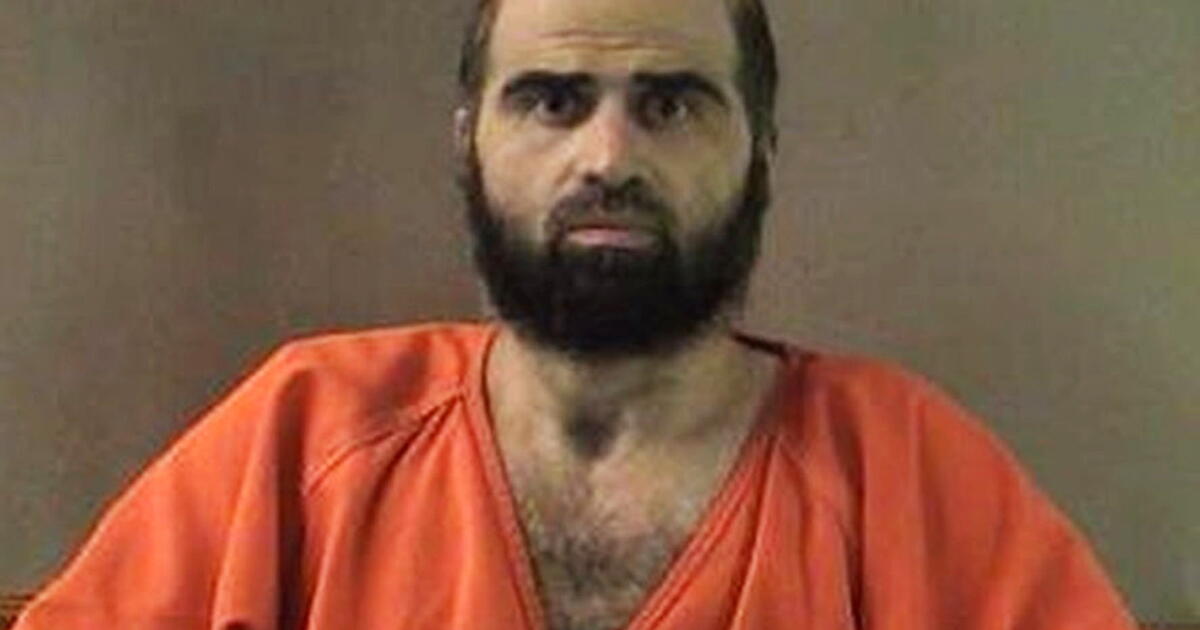






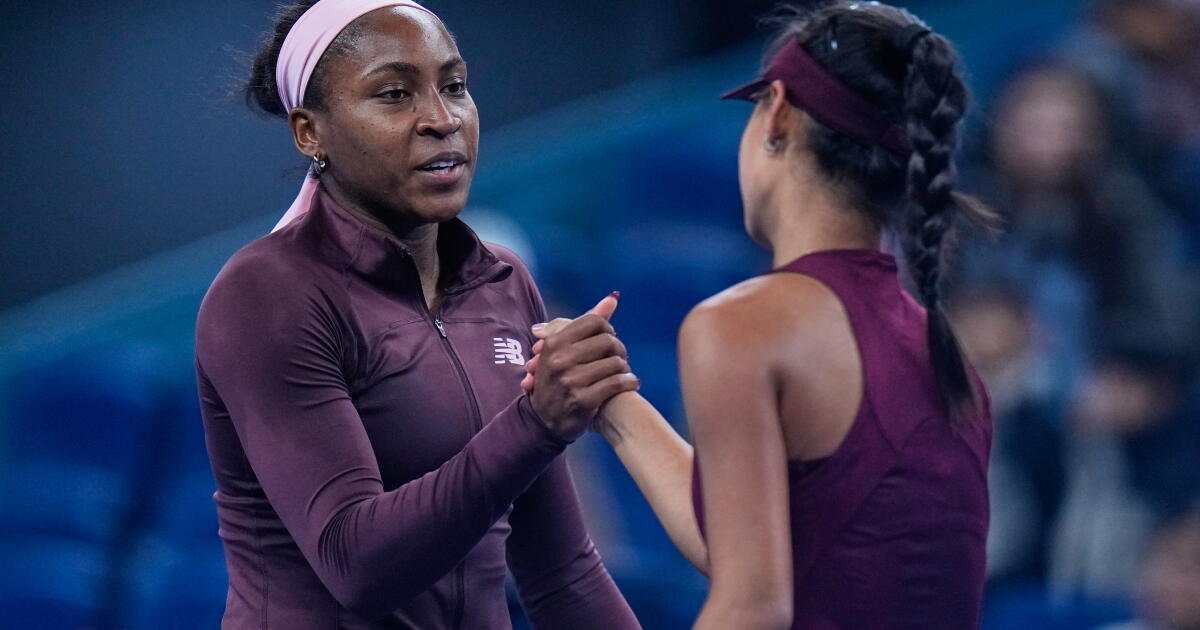
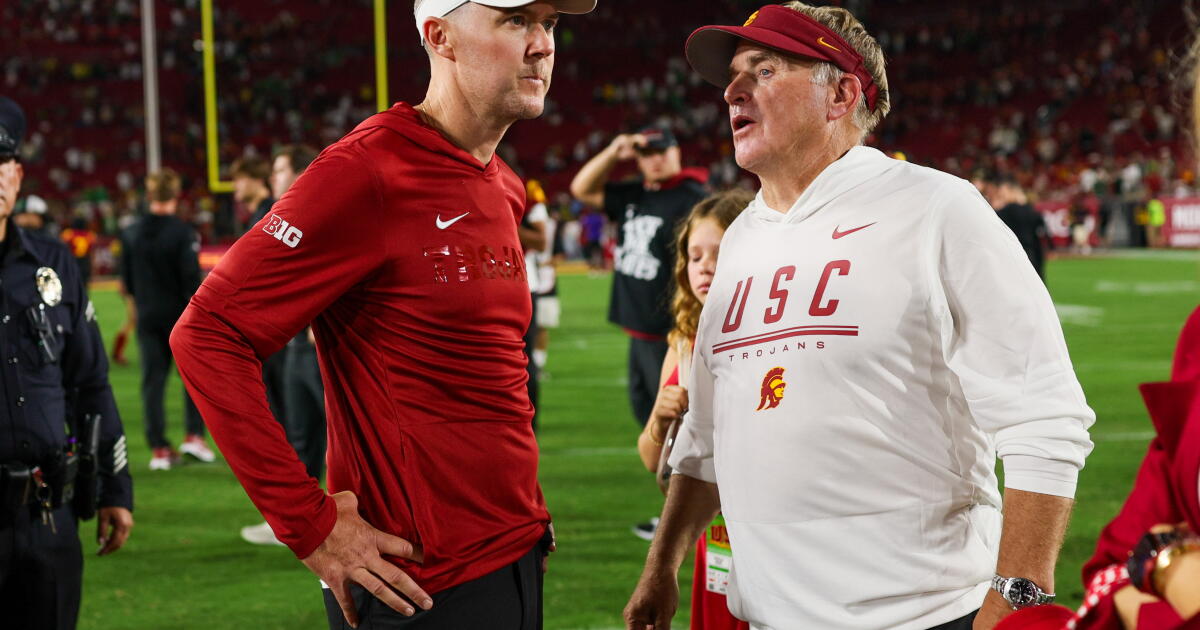
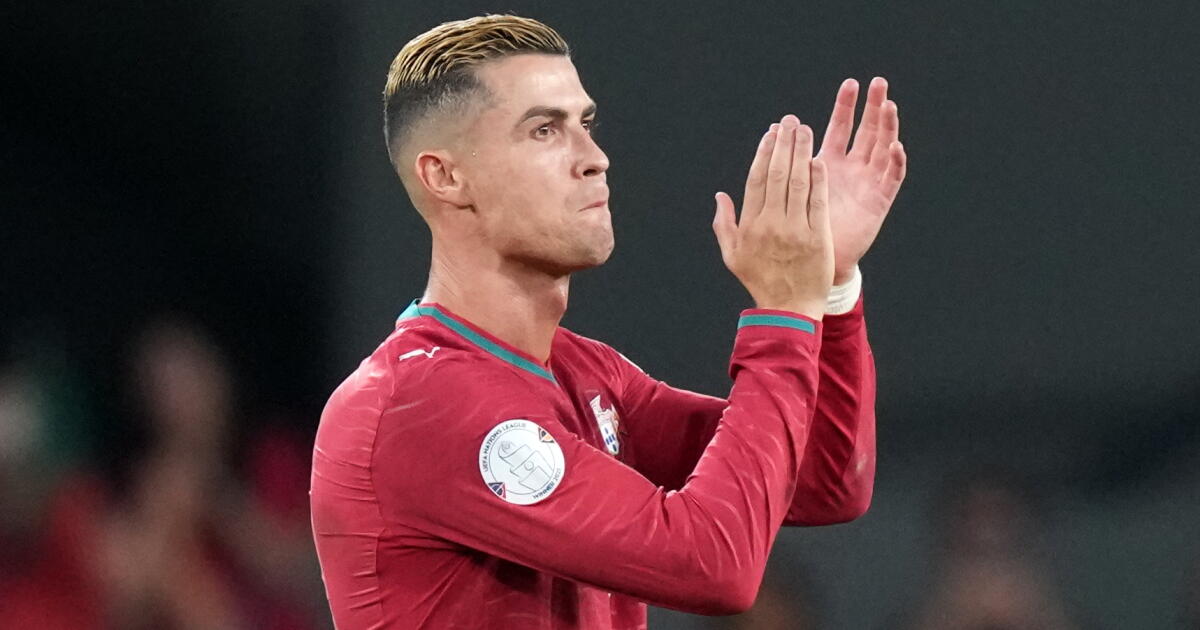
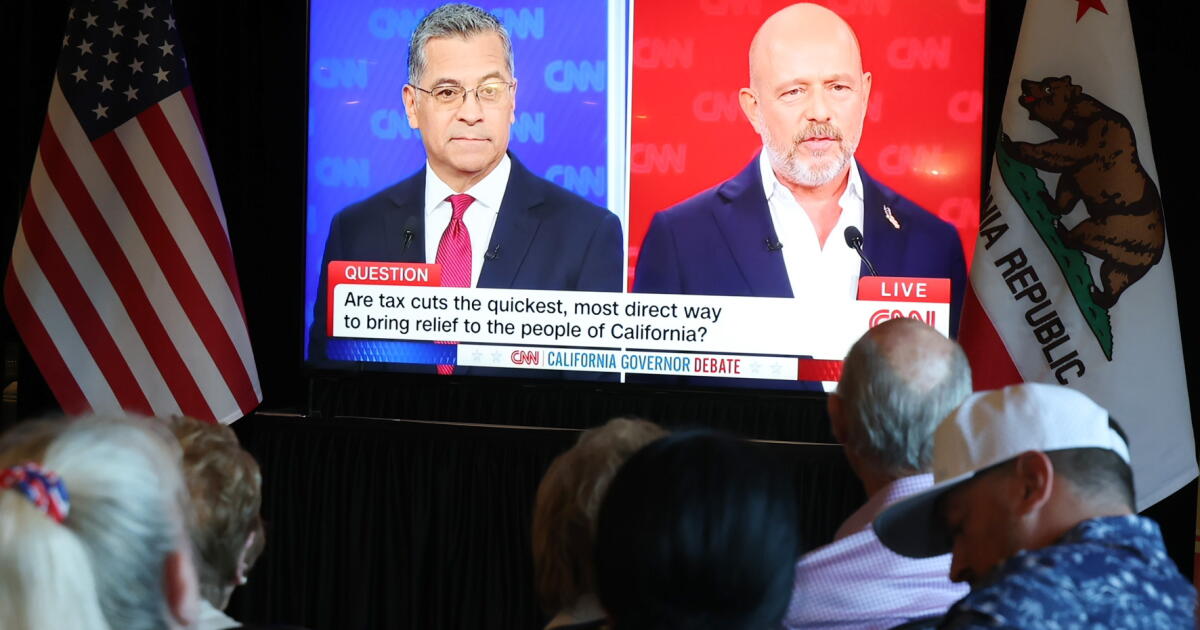
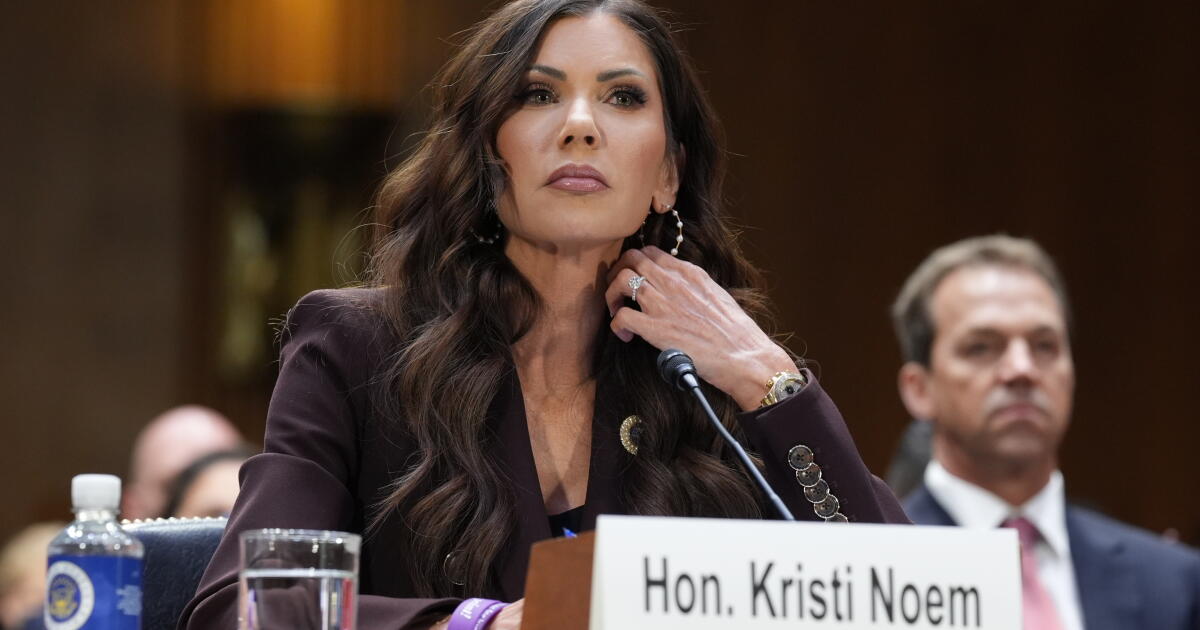
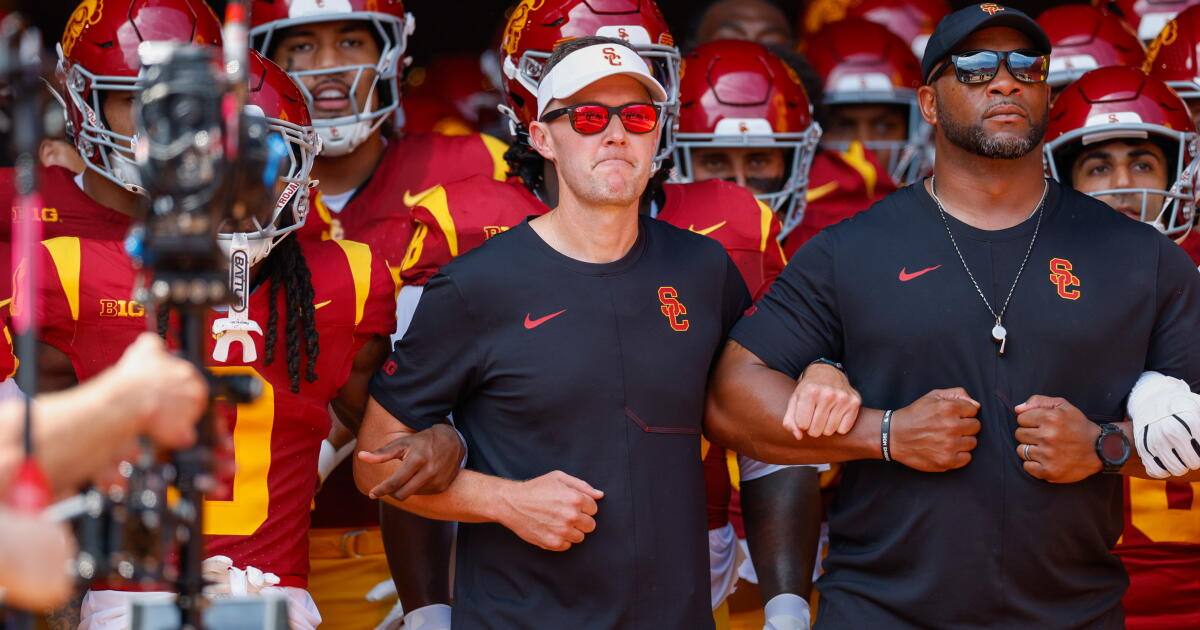

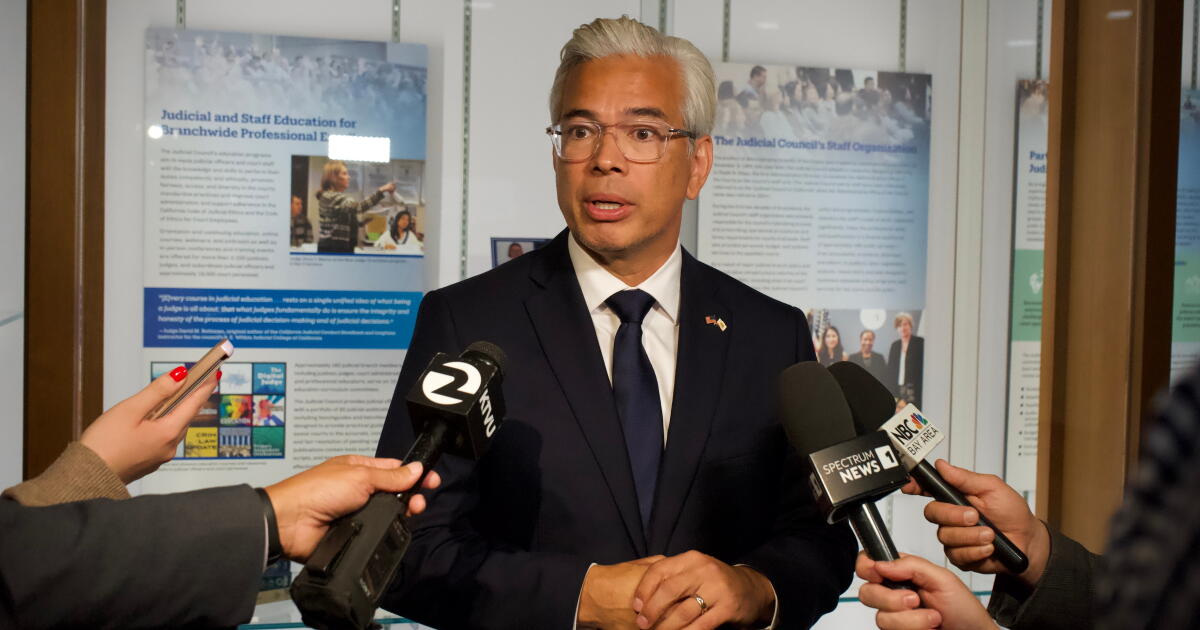


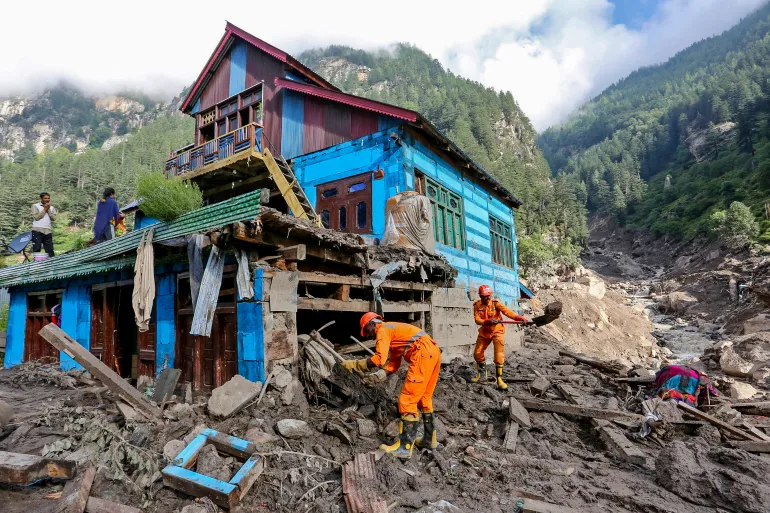
![Indian National Disaster Response Force (NDRF) personnel conduct a search and rescue operation at the site of a flash flood at a village in the Kishtwar district of Indian-administered Kashmir on August 16, 2025 [AFP]](https://i0.wp.com/occasionaldigest.com/wp-content/uploads/2026/09/afp_68aac36f5150-1756021615.jpg?w=640&ssl=1)