quaint

Quaint UK village with secluded beach and lighthouse linked to alleged serial killer who ‘poisoned family’

The village in Norfolk is known for its natural beauty, archaeological sites, coastal erosion and beautiful beach walks, but in the 19th century, it was also the home of alleged serial killer Jonathan Balls

Britain is dotted with charming villages and towns, but few harbour a sinister history quite like Happisburgh, a coastal village in Norfolk. While celebrated for its stunning scenery, archaeological treasures, dramatic coastal erosion and picturesque beach walks, the village was also home to Jonathan Balls during the 19th century.

Following his death in 1846, he was posthumously accused of murdering at least 22 individuals, predominantly family members, between 1824 and 1845 through poisoning.

Little is documented about Mr Balls’ earlier years before these alleged atrocities, though he was regarded as a “bad character” locally, having previously served time for minor offences.

Who was Jonathan Balls and what were his alleged crimes?

Mr Balls wed a woman called Elizabeth at some stage and fathered three daughters, who each went on to have children themselves. The family lived in poverty, depending on relief funds to survive.

Yet as Mr Balls aged, he became increasingly reliant on his relatives for financial assistance, which is thought to have driven him to systematically poison family members so their money would pass to him, reports the Express.

It’s understood that Mr Balls started purchasing substantial quantities of arsenic during the 1830s from neighbouring towns, using the excuse of a rodent problem at his property. The first questionable death was that of his daughter, Maria Lacey, aged 24, who is thought to have succumbed to mistreatment by her husband and an unidentified illness.

A year on, on Christmas Day in 1836, a tragic event occurred when Mr Balls’ granddaughter, Maria Green, who was just 13 months old, died under mysterious circumstances. This was followed by the death of Ann Peggs, aged 8, on June 7, 1839, and the deaths of 13-month-old Martha Green and her three year old brother, William, both on October 31, 1841. All three were Mr Balls’ grandchildren.

In the subsequent years, several members of Mr Balls’ family met with suspicious ends, including one of his children and one of his parents. Both died mysteriously after relocating from their home to live with him.

Despite the family’s neighbours calling for an inquest into the deaths on two separate occasions, no investigation was carried out. In September 1845, another tragedy struck when Mr Balls’ grandson, Samuel Green, passed away, followed by his ailing wife, Elizabeth, just four months later.

The last confirmed victim is believed to be his granddaughter, Elizabeth Anne Pestle, who died on April 17, 1846.

Three days following the death of Ms Pestle, Mr Balls also passed away at his residence in Happisburgh, succumbing to an illness. In the wake of his passing, local residents requested the area’s coroner, Mr Pilgrim, to exhume and reexamine the bodies for cause of death.

Eventually, Mr Pilgrim authorised the exhumation of both Mr Balls’ and Ms Pestle’s remains. The post-mortem examinations revealed a substantial amount of arsenic in both bodies, prompting further investigation into other family members.

Interviews were conducted with surviving relatives of Mr Balls and several servants employed at the property. One maid, Sarah Kerrison, alleged she had witnessed Mr Balls adding a suspicious white powder to a teacup, which he then served to his bedridden wife.

Her health deteriorated progressively, leading to her eventual demise. After tasting some food prepared in the household, the maid fell ill, exhibiting signs of poisoning.

The case garnered extensive media coverage and was even a topic of discussion in Parliament.

The village of Happisburgh

Despite its murky history, Happisburgh is a must-visit if you find yourself in Norfolk. This coastal village boasts some of the UK’s earliest known human footprints, a significant archaeological discovery that places early humans in Northern Europe.

Believed to be the oldest human footprints in the UK, they date back 800,000 years.

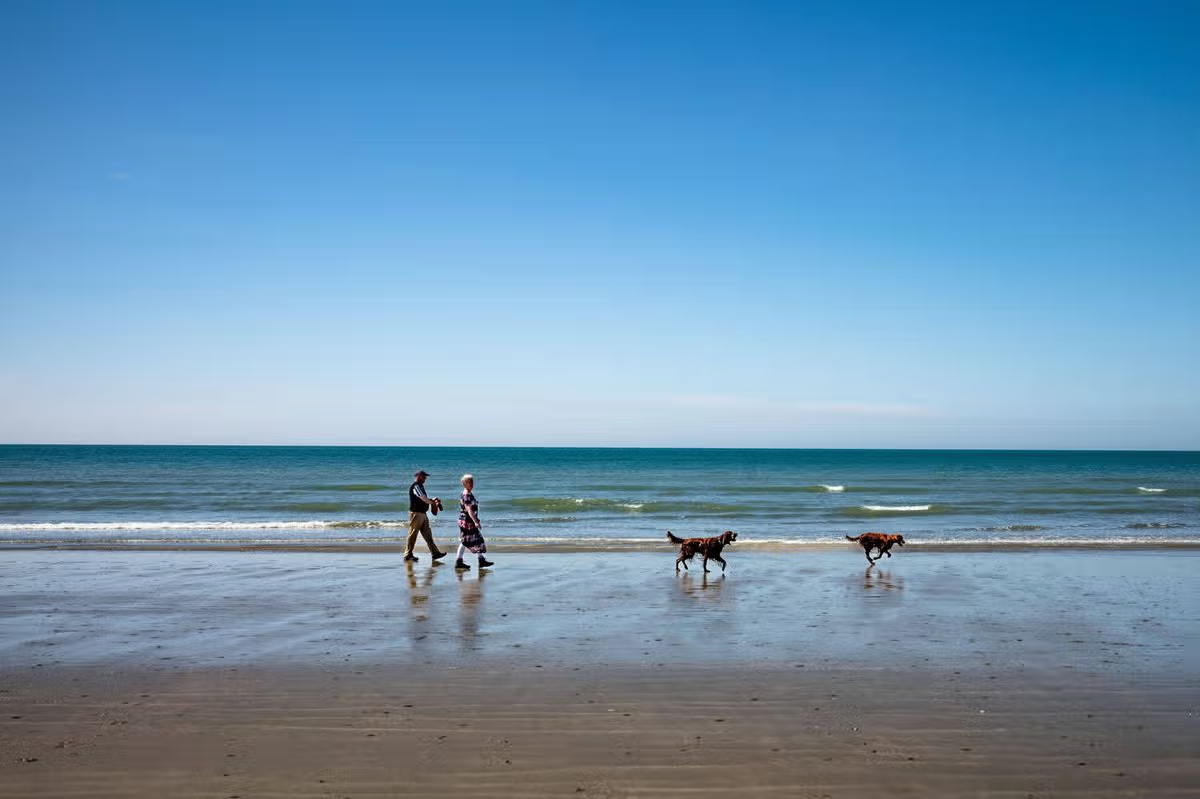
The village’s rugged coastline boasts some stunning walking trails, with the sandy beach staying peaceful all year round. It’s also dog-friendly year-round, making it an ideal destination for dog walkers keen to discover this dramatic coastline.

That said, visitors walking along the cliffs or beach are urged to take care due to the danger of coastal erosion. The cliffs are composed of glacial till, which has resulted in the loss of land and cliffs in recent years.

One of Happisburgh’s most recognisable landmarks is Happisburgh Lighthouse, which dates back to 1790, making it East Anglia’s oldest working lighthouse. It’s also Britain’s only independently operated lighthouse, offering stunning coastal views from 85 feet up.

The Hill House Inn is a dog-friendly local pub serving up classics such as fish and chips, alongside a warm atmosphere and welcoming vibe. The pub has earned a rating of 4.3 out of five on Google, with one reviewer describing it as the “kind of pub you dream of stumbling into on a windswept Norfolk day”.

The review, from Neil, said: “The Hill House Inn in Happisburgh is the kind of pub you dream of stumbling into on a windswept Norfolk day. Perched not far from the cliffs, it has that mix of cosy charm and a bit of history woven into the beams.

“Inside, it feels like the sort of place where smugglers probably once traded contraband rum under the table while pretending to just be ‘popping in for a pint’. The ale is well-kept, the food hearty, and the welcome as warm as the fire in winter.”

Another review from Patricia added: “My first time visiting the inn. A lovely, typical village pub. Dog-friendly, with friendly staff. Nice sandwich, I had ham on the bone, and my friend had salmon, with chips and salad plus two coffees. Reasonable price too.”

Alternatively, there’s Smallsticks Cafe at Cart Gap Beach, located slightly further along the coast from Happisburgh beach. The cafe offers everything from coffee, cake and sandwiches to fish and chips and a full English breakfast.

This friendly, family-run establishment has earned a rating of 4.6 out of five on TripAdvisor, with visitors praising both the staff and the delicious food on offer.

One reviewer said: “We ended up here five times during our week in Norfolk! It was simply outstanding and so fabulous! The menu was great, such a fabulous choice, and the hardest thing was choosing what to eat! The whitebait was awesome and absolutely delicious, and cooked to perfection! Food was well-presented and cooked perfectly! Staff were so warm and friendly and so polite and true ambassadors to the establishment! ! ! Prices were fantastic and certainly won’t dent a hole in your wallet! So doggy friendly and the toilets were spotless!”

Another individual commented: “Very welcoming and the coffee and cake we had were lovely. Very friendly staff and a very pleasant way to spend an hour. Didn’t eat the cooked food, but what we saw looked very nice.”

Source link

Quaint seaside town filled with colourful homes and bakeries just 30 mins from airport

This town offers Victorian charm with colourful cottages, stunning coastal walks including the Blackhead Path, and highly-rated dining

Venture slightly away from the usual tourist routes and you’ll discover this charming town, perfect for a peaceful coastal retreat, boasting picturesque strolls and breathtaking vistas.

Whitehead presents all the appeal of a Victorian seaside resort, featuring period architecture and meandering pathways that overlook the tranquil azure waters. Like any worthwhile destination, it boasts an array of delightful bakeries, cafés and public houses, all providing refreshments and a welcome break after a day spent discovering the coastline.

However, the Lighthouse Bistro and Bakehouse truly stands apart from the rest, earning the top spot for dining on TripAdvisor in the locality. Patrons keep returning for the delicious seafood chowder, fresh bakes and the lovely panoramas whilst enjoying a drink overlooking the ocean during summer months.

One delighted visitor said: “What a great find! This bakery/restaurant is excellent. We each had a delicious bowl of soup accompanied by freshly baked bread. Perfect lunch after our Blackhead Beach walk.”

Outdoor enthusiasts frequently find themselves drawn to explore this region, renowned for its trails, including the legendary Gobbins Cliff Path. Rich in heritage, this route offers more than simply a stroll but rather a voyage through the ages, where you’ll encounter all the natural forces and feel more connected to the ocean than ever.

You can peer down into the thundering waters of the North Passage whilst standing on a metal bridge suspended between clifftops, providing unparalleled panoramas. A passionate adventurer documented their visit on TripAdvisor, saying: “The views are spectacular, and the history is so interesting. Keep your eyes open in the water – we saw several seals in the water. “

The location is temporarily shut following recent rockfall, though it’s expected to welcome visitors back shortly. However, there are numerous other routes to appreciate the stunning Northern Irish coast, such as the Blackhead Path.

Renowned for its charming white lighthouse backdrop, this route attracts walkers of all kinds, being a manageable trail suitable for various fitness levels. One hiker said: “You’ll enjoy stunning views across Belfast Lough of North Down, Scotland and nearby islands. You can walk up to the lighthouse in a circular route – through the caves and up the back steps – or take a left up across the Golden Steps. Incredible views and all free!”.

Railway enthusiasts or those seeking educational experiences should definitely visit Whitehead Railway Museum. Here, guests can climb aboard a locomotive featuring a 140 year old engine and enter a genuine 1950s carriage, all maintained by the Railway Preservation Society of Ireland’s collection.

Punters can wander through the venue independently or absorb fascinating insights from the knowledgeable staff stationed at the museum. When the weather’s playing up, it’s a perfect spot for some indoor entertainment. One visitor confessed they “nearly didn’t call in” but were “so glad” they did, even expressing a wish to have allocated more time.

Source link

UK’s quaint fishing village with blue boats and stunning views feels ‘frozen in time’

Northumberland village is one of the UK’s most picturesque fishing villages, boasting charming cottages, sweeping views of the sea and plenty of fresh air — perfect for a serene getaway.

Tucked away in the heart of the Northumbrian coast lies a charming fishing village with a dark history, seemingly frozen in time.

Located approximately six miles east of the lively market town of Alnwick, this historic fishing hamlet is a must-see for those looking to experience the UK’s natural splendour away from the masses. As the next village up the coast from Alnmouth, it offers a stark contrast to Alnmouth’s abundant facilities and leisure spots.

This captivating village is famed for its picturesque chocolate-box cottages and iconic blue coble fishing boats, which have been a hallmark of the region for centuries and are still utilised by local fishermen today. Interestingly, this fishing village doesn’t have a formal harbour, so boats are hauled ashore by tractors, making it an ideal location for rock pooling and coastal walks.

The beautiful coastal village of Boulmer boasts a small population (likely less than 120 residents) and primarily consists of a long row of cottages and houses providing uninterrupted views of the North Sea. It’s regarded as one of Northumberland’s last authentic fishing villages, and little has altered within its confines over the past century.

The tranquil village is an ideal spot for those seeking to escape the hustle and bustle of tourist hotspots, offering a peaceful setting for relaxation. However, Boulmer doesn’t offer much in terms of recreational activities, reports Chronicle Live.

The Fishing Boat Inn is the only place to eat and drink in this village. Despite its somewhat murky history, akin to Boulmer itself, it’s now a favourite haunt for locals looking for a pint and a bite to eat. Indeed, there isn’t a single retail shop in Boulmer, so anyone hoping for a shopping spree would need to travel approximately a mile and a half to the village of Longhoughton or 13 miles to the town of Alnwick.

Historically, a significant shift in the village’s routine came with the opening of the Royal Air Force (RAF) base in Boulmer. Located on the outskirts of the fishing village, RAF Boulmer became operational during World War II and is arguably more renowned than the village itself.

The base continues to play a crucial role in the UK’s defence and serves as a key search and rescue base for the Royal Air Force.

Aside from the arrival of the Royal Air Force, little has changed in Boulmer over the past century. It remains one of the few traditional fishing villages still found along Northumberland’s coast.

Nefarious past

Boulmer could be dubbed the smuggling hub of the North, given its rich and complex history with smugglers and pirates. The 18th and 19th centuries marked the height of smuggling activities in Boulmer, as pirates and smugglers from across the Northumbrian coast and Scotland flocked to the small fishing village to trade their illicit goods.

The Fishing Boat Inn was at the epicentre of this unlawful activity, serving as a base for these criminals.

In fact, during the 18th century, William Faa – also known as the King of the Gypsies and one of Britain’s most infamous smugglers – resided just 35 miles away from Boulmer, in the Scottish village of Kirk Yetholm. Reportedly, the landlords of the Fishing Boat Inn were quite accommodating during Boulmer’s smuggling heyday.

Nowadays, Boulmer is a tranquil fishing village boasting picturesque views, with the Fishing Boat Inn being its main attraction.

How to get there

Boulmer can be accessed by car via the village of Longhoughton or from the south through the village of Lesbury. Parking is available in the Fishing Boat Inn’s car park and directly on the seafront.

A limited bus service operates through the village, so visitors relying solely on public transport should check the latest updates and schedules before planning their trip.

Source link

World’s oldest pier train in quaint UK seaside town to stay shut for months

THE future of a historic pier and its record-holding railway remain in doubt as repairs and ownership questions drag out.

Hythe Pier in Hampshire is the UK’s seventh-longest of its kind but has been shut for more than a year, and has kept essential ferry services out of reach.

Hythe Pier is home to the world’s oldest pier railwayCredit: Getty
The Hythe Pier in Hampshire leads into Southampton WaterCredit: Getty

Located in Hampshire, the pier is a crucial stopping point for the Hythe Ferry, which ran regular services to Southampton before the closure.

The pier is also home to a historic ferry train which having opened in 1922 makes it the world’s oldest, a feat recognised by Guinness World Records.

Concerned residents have been searching for answers about when the pier would open and ferry services resume given that repair and electrical works seem to have concluded.

Services were suspended in August last year over health and safety concerns when damage was found underneath the landing pontoon.

MOVIE MAGIC

Best-loved travel scenes from famous Christmas movies revealed


WARM UP

‘2026 place to visit’ has £25 Ryanair flights, £12 rooms & T-shirt weather in Jan

But the ferry service never resumed, and the pier was once again closed in autumn this year to carry out electrical work.

“Essential works to support the pier and ferry operations are progressing,” a spokesperson for the ferry company told the BBC.

When contacted by The Sun, the ferry’s spokesperson said algae on the pier needed to be cleared out before services could resume. However, cleaning could only occur once the weather had dried up for a period of time, so the algae was likely to be removed in spring.

This is a blow for locals who have waited months for answers about when they could expect the ferry to be up and running again.

What has made the situation more complicated is a change in ownership of the Hythe and Southampton Ferry Company.

Investment firm Njord Partners has taken over Red Funnel, which owned the ferry company, but it has not been made clear how this would impact services.

“We simply don’t know anything about whether the Hythe Ferry was included in the takeover, and as the tenant of the pier, it’s their responsibility to determine when it can reopen again – we’ve asked them and had no answer,” vice-chair of the parish council, Mark Clark, told the BBC.

A PR firm representing Red Funnel issued a statement on the matter saying there was work being done to find solutions for a “sustainable future.”

“We’re pleased to confirm that the owners of Hythe Pier recently completed critical electrical repairs,” read the statement to the BBC.

“This is an important step forwards but there is still work to be done.

“The ferry is a historic and much-loved service, and we are working hard behind the scenes, together with local partners, to find the right solution and secure a sustainable future”.

The pier is owned by local councillor Ashleigh Mutimear-MacMillan who said it was closed by the tenant – Southampton and Hythe Ferry Company – and she was considering getting the pier registered as a charity.

“Decisions about access, operation and reopening sit with the Hythe Ferry,” she wrote in a Facebook post.

“As the pier owner, I continue to engage with the tenant and have been working to resolve electrical issues affecting the pier and associated community facilities.”

Mutimear-MacMillan said her idea of switching the pier business to a charity was because “the only income to the pier is rental income, and the full annual income has already been spent on essential electrical works.”

“There are no further funds available at this time through the private limited company, which is why longer-term funding options are being considered,” she wrote.

The pier and railway have been closed since August 2024Credit: Getty

Source link

England’s ‘most scenic’ train journey passes quaint seaside villages

The heritage steam railway trundles through pretty seaside villages and along stunning North Norfolk coastline

A stunning train route has been crowned England’s “most scenic” after travellers discovered it winds through charming seaside villages and breathtaking landscapes. Better still, the heritage steam railway itself is rich in history as it chugs along picturesque old tracks.

The Poppy Line, running between Sheringham and Holt in North Norfolk, meanders for 5.25 miles (8.45km) across the region’s flat countryside. East Anglia’s self-proclaimed “premier heritage railway” is run almost entirely by volunteers, lending the entire journey a welcoming atmosphere.

Yet it’s far from amateur – first class carriages provide dining experiences where passengers can tuck into delicious meals and enjoy exquisite bottles of wine.

Options range from a Comedy Dining Experience to various gourmet services, a Murder Mystery Dining experience – and even a Gin Train for those seeking a more relaxed affair.

Passengers board at Sheringham, a classic Victorian seaside town where fishing remains a thriving trade and shops stock an array of local goods. The town boasts an expansive beach with golden sands – ideal for a winter ramble whilst the train prepares for departure.

For those wanting a lengthier excursion, continue along the coast atop the gently rising cliffs to take in the diverse mix of wildflowers, butterflies and sweeping vistas of the North Sea.

From this point, the train chugs along for a few miles to the quintessentially English village of Weybourne, reports the Express.

Here you can also bask in the stunning coastal views, or perhaps pop over to the Muckleburgh Military Collection, the UK’s largest privately owned military museum, boasting over 120 tanks, guns and vehicles among its collection of 10,000 items.

Once you’ve had your fill of military history, meander over to one of the traditional British pubs where you can tuck into fish and chips, or locally sourced seafood or other produce. Notable establishments include The Ship Inn and The Red Lion.

Afterwards, hop back on the train and you’ll be whisked off to Kelling Heath Park, which is just a brief stop. From here you can embark on hikes around Kelling Heath, a 221-hectare Site of Special Scientific Interest.

Following this, Holt is the final stop, where you’ll alight to discover a treasure trove of 18th-Century Georgian buildings, with charming antique and book shops tucked away in the many hidden courtyards and alleyways. Don’t miss the cross in the marketplace that commemorates soldiers who fell in the war.

Just a stone’s throw away is Holt Country Park – a 100-acre woodland filled with oak, pine and silver birch trees. The ruins of Baconsthorpe Castle are also well worth a visit.

This moated and fortified manor house dates back to the 15th century and is teeming with intriguing history.

Source link

All Creatures Great and Small village is just as quaint in real life

This lesser-known village features in All Creatures Great and Small, which is set in the 1930s Yorkshire Dales, and offers a ‘true taste of rural England’ with cobbled market squares and beautiful walks

All Creatures Great and Small captivated viewers when it debuted on our screens in 2020, with its delightful period Northern England backdrop – and it transpires the historic town is nearer than you might imagine.

Envision cobblestone market squares, quaint cottage-style shops, and panoramic vistas of the Yorkshire Dales. This perfectly describes Grassington, both in reality and on television. The village provides a charming shopping experience featuring handicrafts, art exhibitions and regional products all curated by independent artisans, plus welcoming establishments for refreshments. Among these establishments is The Hutch Handmade Gift Shop, adored by residents and highly rated amongst Grassington’s attractions.

A visitor described the shop as a “gorgeous spot”, noting on TripAdvisor: “A treasure trove of handmade gifts. Lots of colourful, unique, one-off gifts made by small independent artists, designers and crafters…mostly from Yorkshire.” Another popular attraction that attracts numerous visitors is Grassington Folk Museum. It showcases a fascinating collection of historical artefacts unearthed locally, transporting visitors through time via medical equipment, vintage garments, household objects, geological samples and agricultural keepsakes.

Many regard it as a “lovely museum”, with one recent visitor saying: “We stopped by on a whim and were so glad we did! Lovely collection of items, and the delightful volunteer in the museum was so friendly and knowledgeable! I wish I had gotten her name. Well worth a visit.”

The settlement provides a “true taste of rural England”, which is precisely why it served as the perfect backdrop for a popular television programme. The plot centres around three veterinarians operating in the Yorkshire Dales during the 1930s and draws inspiration from novels penned by writer Alf Wight.

The village serves as an excellent base for outdoor enthusiasts eager to discover the surrounding countryside. Numerous walking and cycling trails await exploration, including a brief circular route connecting Grassington with neighbouring Dales settlement Hebden. Another pathway offers a seven-mile return journey from Kettewell to Grassington.

Home to approximately 1,000 residents, this peaceful location provides genuine serenity. Nowhere captures this tranquil atmosphere better than the town’s Linton Falls, where the River Wharfe tumbles dramatically over spectacular limestone formations. The area’s natural splendour attracts countless visitors. One recent reviewer said: “This place is magnificent! Standing on the bridge as the water thunders beneath is breathtaking. We were even able to have a little paddle upstream.” For those yearning for more natural beauty, Widdop Reservoir is equally stunning and provides a tranquil atmosphere throughout the year. The secluded moorland presents a delightful walk that spans approximately three miles around the reservoir.

Source link