put

Treasury plans to put Trump’s signature on U.S. bills in first for sitting president

The U.S. Treasury Department is working on plans to put President Trump’s signature on all new U.S. paper currency, the agency announced Thursday.

The move would be a first for a sitting president. The news was first reported by Vanity Fair.

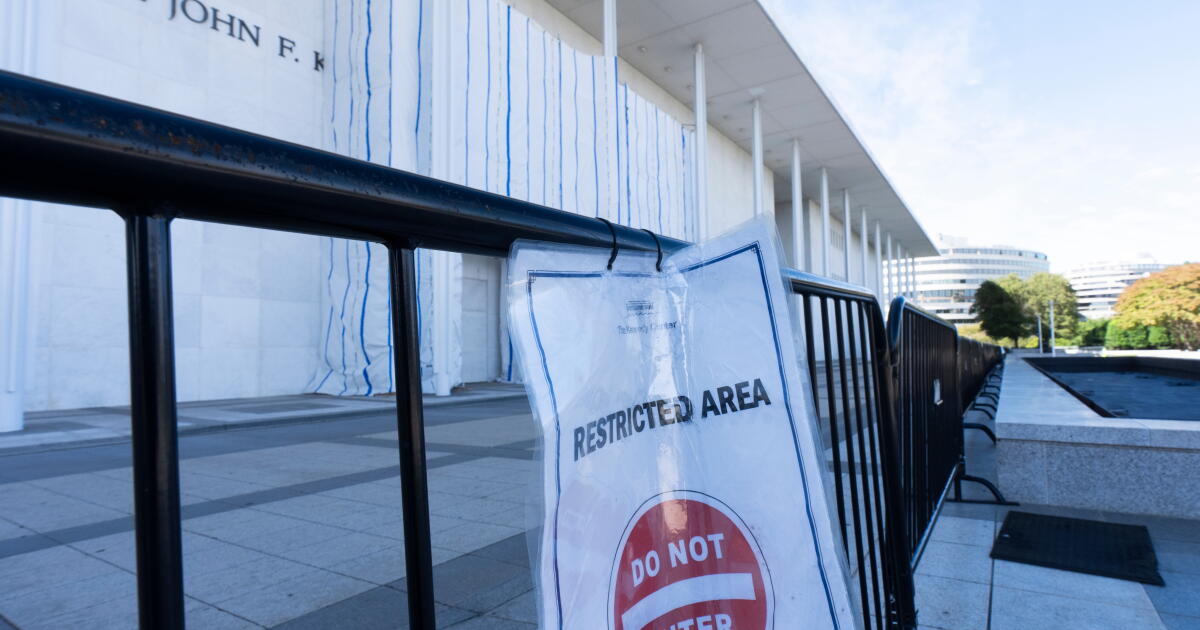
It’s the latest instance of Trump putting his name and likeness on American cultural institutions, following his renaming of the U.S. Institute of Peace, the Kennedy Center performing arts venue and a new class of battleships, among other tributes.

The plans come in tandem with an effort to get Trump’s face on a coin.

This month, a federal arts commission approved the final design for a 24-karat gold commemorative coin bearing Trump’s image to help celebrate America’s 250th birthday on July 4.

Treasury Secretary Scott Bessent’s signature would also appear on the currency, according to a Treasury news release.

Bessent said in a statement that “there is no more powerful way to recognize the historic achievements of our great country” than with U.S. dollar bills bearing Trump’s name.

U.S. Treasurer Brandon Beach said in a statement that printing Trump’s signature on the American currency “is not only appropriate, but also well deserved.”

The Mint, which is part of the Treasury Department, manufactures and distributes the currency.

Hussein writes for the Associated Press.

Source link

How Dodgers’ Shohei Ohtani can put himself in the 2026 NL Cy Young conversation

Shohei Ohtani’s three straight strikeouts in the fourth inning of his final spring start Tuesday featured a different putaway pitch for each.

He got Angels slugger Jorge Soler to whiff on a sweeper. Jeimer Candelario went down on a curveball. And Jo Adell struck out on a fastball.

“Just shows the confidence he has and different ways he had to attack guys, to get ahead and also put guys away,” manager Dave Roberts said after the Dodgers’ 3-0 loss to the Angels in the Freeway Series finale. “And today the feel was really good, even better than the first outing.”

Pretty much everything was clicking for Ohtani heading into the regular season, even though it was only his second spring training start on the mound. Ohtani recorded 11 strikeouts in four-plus innings. He held the Angels to four hits, three of which were consecutive singles in the fifth, and was charged with three runs, all scored in the fifth.

For the first time in three years, Ohtani is set to begin the season as a fully healthy pitcher. And it will be the Dodgers’ first time managing his two-way schedule all year. Limited the last two seasons by his recovery and build-up from elbow surgery, Ohtani last made 20-plus starts in 2023 with the Angels.

“The desire is high,” Roberts said when asked about Ohtani’s aim to pitch wall to wall. “I think it’s realistic. Then the bigger question is, how are we going to manage that and navigate it?”

Thinking through the plan going into the season, Roberts floated the idea of giving Ohtani a little extra rest between starts. Dodgers starters are already on a six- to seven-day rotation. But a six-man starting pitching group gives the team flexibility as they map out their pitching plan.

“My intent is to be in the rotation under normal rest, normal circumstances,” Ohtani said through interpreter Will Ireton last week in Arizona. “Now if management thinks that I need extra rest, I’ll take it. But I’ll let management handle that. Just looking at our roster, we have a lot of pitchers. It doesn’t hurt to rest more.”

Ohtani’s in-game limits, after a build-up slowed by his participation in the World Baseball Classic as a position player, will be adjusted before each start. But his Freeway Series outing Tuesday set him up well. He stretched out to 86 pitches.

“When you’re talking about the first game of the season, could he get through six innings? Could he touch the seventh? Yes,” Roberts said Tuesday afternoon. “But he won’t touch the eighth inning. So there’s got to be some responsibility as far as how we manage him.”

When it comes to awards, Ohtani is going after a third World Series title. But his trophy case is well stocked with individual accolades too. He’s won four MVPs, five All-Star selections, four Silver Sluggers and a Rookie of the Year award.

The Cy Young, however, has remained elusive. He came close in 2022, when a 2.33 ERA and league-leading 11.9 strikeouts per nine innings earned him a fourth-place finish in the American League. It was the only time in his career that he crossed the 25-start threshold, with 28.

“I would never want to sacrifice our chance of winning and performing in the postseason,” Ohtani said. “So I think that’s really the No. 1 goal in my mind. Just because I want to try to win the Cy Young and throw more innings, that’s not necessarily the priority over winning a championship. So with that being said, if there’s a situation where there’s some injuries and I do have to pitch on shorter rest, I’m happy to do so.”

Would showing that he can make regular starts all year automatically put him in the Cy Young conversation?

“Oh yeah,” Roberts said. “Because of just talent, ability, will. If he does that, he’ll be in the conversation, absolutely. I have no doubt about that.”

Of course, besides reigning NL Cy Young winner Paul Skenes, Ohtani would also be competing for the award with his own teammate, Yoshinobu Yamamoto, who enters the season with the edge.

If Ohtani continues to pitch like he did on Tuesday, while building up the rest of the way, he and the Dodgers will be in good shape.

“It was another good one for him,” Roberts said, “and he’ll be ready to go.”

Source link

Yoshinobu Yamamoto’s lead-up to Dodgers opening day ‘hard to put into words’

The first pitch of the Dodgers’ 2026 season won’t capture the exuberance of the last pitch of 2025. But it will be meaningful in its own right, as the official first step of the team’s quest for a third straight championship.

How poetic that the same arm should deliver both pitches.

“It’s an honor for me,” Dodgers opening day starter Yoshinobu Yamamoto said Tuesday through interpreter Yoshihiro Sonoda. “And then it’s opening day at a Dodger Stadium home game, and that’s very [much an] honor to me. I also feel the responsibility.”

Yamamoto is scheduled to make one more Cactus League start, against the Padres on Friday, before taking the Dodger Stadium mound next Thursday when the Diamondbacks come to town. It will be the second opening-day start of Yamamoto’s MLB career, and his first at home.

It will also mark the end of a whirlwind offseason and spring training for Yamamoto, who not only shouldered a demanding postseason workload, but also navigated an especially quick turnaround to pitch for Team Japan in the World Baseball Classic.

“It’s hard to put into words,” manager Dave Roberts said. “He is just very driven, he’s very disciplined in his work. That’s some of the things that allows him to compete at a high level. Where most people would feel that you win the World Series MVP, you don’t have enough to pitch in the WBC. He wanted to pitch for his country, and now he’s really excited about the start of 2026.

“He is a very determined person. He really is. We’re just lucky he’s on our team.”

No one needs to be reminded that Yamamoto was a playoff hero last year, but let’s really break down his efforts.

On Oct. 14, Yamamoto made his third start of the postseason and threw a complete game against the Brewers to put the Dodgers ahead 2-0 in the NL Championship Series.

Eleven days later, he tossed another nine innings to help the Dodgers even the series against the Blue Jays. And he wrapped up the World Series with appearances on back-to-back days, starting Game 6 and finishing Game 7.

Yamamoto threw 526 pitches in the postseason, 235 in the World Series alone, and he still touched nearly 97 mph in his final inning of work.

Most pitchers would need at least a full offseason to recover. When Blake Snell slow-played his offseason because of lingering shoulder discomfort after the World Series run, the decision made all the sense in the world.

Yamamoto, however, was already pitching in meaningful games by March 6.

In Yamamoto’s first start of the WBC, he held Chinese Taipei hitless for 2 ⅔ innings. Then in the quarterfinal game against Venezuela last Saturday, he surrendered a leadoff homer to Ronald Acuña Jr. and a second-inning RBI double to Gleyber Torres before settling in for two scoreless innings. The eventual 8-5 loss eliminated Team Japan from the WBC.

“As Team Japan, the result was not what we were aiming for,” Yamamoto said. “But at a personal level, my condition was good.”

The season will be the true test for Yamamoto’s training methods, which have been infamous since before his transition from Japan’s Nippon Professional Baseball, and are already spreading across the Dodgers’ clubhouse. Look no further than shortstop Mookie Betts this week lauding the effects of throwing a javelin.

If they continue to work, Yamamoto could be in the running for the Cy Young Award, after finishing third in National League voting last year.

“There’s high competition, there are a lot of great pitchers out there,” Yamamoto said, “but I hope that I get there.”

Yamamoto’s offseason work, however, wasn’t simply geared toward getting to opening day or winning an individual award. He knows as well as anyone that this team has set a high bar with back-to-back championships.

“The same goal,” Yamamoto said of 2026, “winning a world championship with this team.”

Now over four months removed from that final pitch of the 2025 World Series, one lesson has stuck with Yamamoto.

“I learned how difficult [it is] to get one win,” he said. “As a team, I want to be able to share that joy.”

Source link

LAFD testimony details missed chances to fully put out Lachman fire

Jacob Ulibarri spent about six hours on New Year’s Day last year squashing hot spots where the Lachman fire had burned.

The rookie Los Angeles firefighter arrived sometime after 7 a.m., when the smoky areas were all over and easy to see. By the time the next crew swapped with his that afternoon, they were scarcer: “One every 30 minutes, roughly,” Ulibarri recalled.

At that point, Battalion Chief Martin Mullen, who was running the mop-up operation, had walked three laps around the perimeter of the fire. He recalled one hot spot he saw at about 10 a.m., which crews hit with water. Later in the afternoon, Mullen did his fourth and last loop and left the area for good.

He decided to leave the hoses out overnight, just in case.

Over the next two days, a series of communication failures and questionable decisions led crews to leave the area prematurely, with embers from the small Jan. 1 fire later reigniting into the devastating Palisades fire. A firefighter picking up hoses on Jan. 2 found crackling, red-hot coals in the dirt and warned colleagues that a more thorough mop-up was needed. Also that morning, a captain cautioned his chief that it was too soon to pick up the hoses. In yet another missed opportunity, crews apparently did not walk the entire perimeter of the burn scar after a caller reported smoke in the area on Jan. 3.

Because of the holiday, some were filling in for others outside of their normal assignments. Firefighters said they adhered to the LAFD’s strict chain of command and did not question higher-ups, while those in charge had fuzzy memories or shifted responsibility to others.

The revelations, contained in the sworn testimony of a dozen firefighters earlier this year as part of a lawsuit filed by Palisades fire victims, corroborate previous reporting by The Times and call into question the LAFD’s repeated claims that commanders left the fire “dead out.” More than a year later, with much of the Palisades still in ruins, LAFD leaders have refused to explain how or why the breakdowns occurred.

The LAFD employees mentioned in this story either could not be reached or declined to comment.

In a statement Monday, LAFD spokesperson Stephanie Bishop pointed to the alleged arsonist charged by federal prosecutors with deliberately setting the earlier fire. “The Lachman and Palisades Fire incidents would not be matters of discussion had this individual not allegedly initiated the original fire,” she said.

“It is important to allow the legal process to proceed without external influence or speculation. Offering running commentary on depositions outside of the courtroom risks compromising witness testimony, affecting the integrity of evidence review, and impacting ongoing judicial proceedings. We stand by the investigation conducted by the ATF,” Bishop added, referring to the Bureau of Alcohol, Tobacco, Firearms and Explosives.

Around 6 a.m. on Jan. 2, 2025

At the end of his 24-hour overtime shift, Mullen handed the reins to Battalion Chief Mario Garcia, recommending that the incoming chief scope out the fire perimeter.

“I told him I left him hose lines in place overnight. You need to walk that and make sure there’s nothing going up on there,” said Mullen, whose regular job is managing the LAFD’s 106 fire stations and 30 or so other buildings.

Before Garcia set foot on the burn scar, he put word out to station captains about the plan for the morning: Pick up hoses.

At Fire Station 19 in Brentwood, Capt. Alexander Gonzalez got a text from the chief’s aide, directing him to bring a “plug buggy” — a pickup truck used to carry equipment — “to help pick up hose.”

The plan reached Capt. David Sander at Fire Station 23 in the Palisades and Capt. Michael McIndoe at Fire Station 69.

McIndoe had reservations.

He told the chief’s aide that he thought the hoses should stay out longer. He had seen the forecast that day — a National Weather Service alert had warned of weather conducive to wildfires — and handling any lingering hot spots would be easier with hoses in place. The aide told him to take it up with the chief.

So McIndoe shared his concerns with Garcia over the phone.

Garcia “said something along the lines of, ‘OK. Let me go check it out, and then I’ll get back to you,’” McIndoe testified.

But the orders for the morning never changed.

8:30 a.m. on Jan. 2, 2025

After a briefing at Fire Station 23, Scott Pike and his partner took their ambulance to a cul-de-sac near the burn area. They spotted some hose dangling over a retaining wall covered in ivy.

An engine crew threw a 20-foot ladder to get over the wall. Soon, Pike said, they got another call and left.

“We were kind of making jokes, like, ‘It’s on us,’’’ recalled Pike, a firefighter normally assigned to a station in Sunland.

He grabbed his brush jacket, helmet and gloves and climbed over. He decided to hike to the end of the hose line — he was feeling good and thought he’d get a workout in.

Pike followed the main line — called the trunk line — which had hoses branching off in other directions. About 100 feet in, he saw where grass had burned. He navigated through culverts and climbed a steep hill of about 300 feet before hitting a hiking trail.

When he got to the end of the line, at about 8:45 a.m., he noticed a handful of smoky areas in heavier brush, and a hand line that wasn’t cut properly.

One ash pit was so hot he didn’t want to touch it, even with gloves. So he kicked it with his boot, exposing red-hot coals. He heard crackling and smelled smoke. He looked around, and there were no other firefighters.

We shouldn’t be picking up hoses, he thought to himself. Instead, we should be filling the hoses with water to do a more thorough mop-up.

He pinched the hose, directing any residual water to the ash pit. It steamed and crackled. He felt defeated when he only got a couple of gallons out, which wasn’t enough.

He slowed down, in case the pickup plan were to change because of his observations, and was relieved when more crews began hiking over.

“Hey, guys, are you seeing what I’m seeing?” Pike told a couple of firefighters. He was working an overtime shift away from his usual fire station, so he didn’t know them. “Like, maybe we should be charging these lines instead of picking them up.”

Since they were already there, he figured, some extra mop-up could save them work down the line if the fire were to reignite.

The firefighters shrugged him off and seemed eager to finish the assignment.

“They were like, ‘Yeah, I see what you’re saying,’ And then it was like, ‘We’ll tell one of the skippers. We’ll tell one of the captains.’ But, like, in the meantime, people were just very much like, just get the hose picked up,” Pike testified.

Shortly after, he saw a captain and raised the same concerns.

“That’s how I approached him, is like, ‘Hey, Cap … We have hot spots in general. We have some ash pits,’” Pike said. “That’s an alert to double-check the whole area and maybe we need to switch our tactics.”

Pike testified that it was not his job “to overstep and tell him what to do. He earned that rank.”

The captain suggested possibly bringing hand tools or a backpack filled with water up the hill to extinguish any hot spots.

Pike went back to picking up the hose while awaiting new orders, which never came.

The LAFD has declined to say whether the captain has been identified. Pike believed the captain was from Engine 69, which would have been McIndoe. But McIndoe told The Times he did not speak with Pike that day.

McIndoe said he also came across a smoldering ash pit during the couple of hours he was on the hill.

He retrieved a backpack with water from his engine, sprayed into the ground with a couple of gallons of water and dug up the dirt with his hand tool until he was satisfied it was cool.

At one point, he saw Garcia, the battalion chief, and brought up their earlier conversation.

“I just went up to him, and I said, ‘Hey, I hope you don’t think I’m just trying to get out of work,’” McIndoe said. “And he said, ‘No, that’s — that’s fine.’ Something along those lines, and that that’s all I can really recall.”

He said he was trying to tell Garcia that he believed “that the hose should stay up a little bit longer.”

By the time Gonzalez, who was backfilling that day at the Brentwood station, got to the scene, the operation was well underway, with half the hose already down the hillside.

“When I got there, it was just, it’s like a big daisy chain of hands pulling hose off and getting it down to the street. And rolling it, hosing it off and loading it into the plug buggy,” he testified.

He did not see smoldering that day. He testified that he went about 200 to 300 feet up, to where piles of hose were being dropped. “The next person brings it back down and that was it,” he said.

Some firefighters on hose pickup duty that day have not been deposed in the lawsuit. Aside from McIndoe and Pike, the four other firefighters who testified that they were at the burn scar on Jan. 2 said they did not see smoldering.

Garcia testified that at the burn scar, no one raised any concerns with him about the hose pickup. Nor did he see any need to leave the hoses at the site.

At 1:35 p.m. on Jan. 2, Garcia texted two higher-ups: “All hose and equipment has been picked up.”

Around 4:30 p.m., Garcia walked the area again with his aide to see if they had left any equipment behind. He saw no issues.

“We both walked the whole area,” Garcia said. “We went separate directions, but covered the whole area, and there was nothing that would bring any concern.”

11:51 a.m. on Jan. 3, 2025

Shortly before noon, someone called the LAFD about a grass fire in the burn area.

Engineer Edward Rincon, who had been on Engine 23 retrieving hoses the day before, pulled up to the same cul-de-sac. Once again, his crew threw the 20-foot ladder over the retaining wall. As on the previous day, he never entered the burn scar. He stayed with the engine while the captain and two firefighters went to scope out the area. He set the volume high on his radio to hear if they needed anything.

On the other side of the wall, Capt. Cesar Garcia walked for what he said was more than a couple of football fields, while the two firefighters went to different peaks to look around for smoke or fire.

“Everything is completely burned. I don’t smell anything. I don’t see any smoke. I don’t see any fire,” he testified.

He canceled another engine that was assigned to the call.

Firefighter Michael Contreras said he also didn’t see smoke. He said he could not see the entirety of the burn scar from his vantage point. He also said he did not suggest to his captain, Cesar Garcia, that they walk the whole perimeter.

“Is there a reason you did not?” a plaintiffs’ attorney asked.

“Again, would not be my lane to tell him that, you know,” he said.

Battalion Chief Mario Garcia was on duty again that day. Like Rincon, he stayed with his vehicle. Cesar Garcia said the chief pulled up a live feed on an iPad from two cameras on the mountain, which showed no smoke or fire.

An incident report shows they spent about 34 minutes on the call.

On the morning of Jan. 7, LAFD records show, a captain on duty in the Palisades called Fire Station 23 and told colleagues: The Lachman fire had started up again.

Source link

Italy upsets the U.S. at World Baseball Classic to put Americans on brink of elimination

Kyle Teel, Sam Antonacci and Jac Caglianone homered as Italy built a big lead and held on to stun the United States 8-6 Tuesday night in the World Baseball Classic.

The U.S. is done with pool play at Houston’s Daikin Park and needs the Italians to beat Mexico Wednesday night to be guaranteed a spot in the quarterfinals. If Mexico beats Italy, the three teams will be knotted at 3-1 and the winners will be determined by a tiebreaker, with the team that allowed the most runs eliminated.

Italy starter Michael Lorenzen allowed two hits in 4 2/3 scoreless innings to keep the Americans off balance.

Pete Crow-Armstrong homered twice and drove in four runs, and Gunnar Henderson added a solo shot for the U.S., but the rally came up short when Greg Weissert struck out Aaron Judge with a runner on to end it.

Crow-Armstrong’s second homer, a shot to the second deck in right field, cut the lead to 8-6 with one out in the ninth. Bobby Witt Jr. singled and Henderson struck out before Judge whiffed to start the Italian celebration.

The U.S. was down by 8-1 with two out in the seventh when Crow-Armstrong hit a majestic three-run homer to right field.

Kyle Schwarber and Will Smith hit back-to-back singles with two out in the eighth before Roman Anthony’s RBI single on a line drive to left field. But Ron Marinaccio retired pinch-hitter Bryce Harper on a fly ball to end the inning.

Teel’s home run to the Crawford boxes in left field gave Italy an early lead with two out in the third. McLean then plunked Caglianone before Antonacci’s homer to the bullpen in right-center made it 3-0.

Caglianone’s two-run shot off Ryan Yarbrough pushed the lead to 5-0 with no outs in the fourth.

The Italians added a run on an error, another on a sacrifice fly and a third on a wild pitch by Brad Keller to push the lead to 8-0 in a sloppy sixth by the U.S.

The U.S. finally got on the board with Henderson’s homer in the sixth.

Source link

Football regulator proposals put diversity on the subs bench, says Kick It Out

The head of anti-discrimination body Kick It Out says that initial proposals by English football’s independent regulator “put equality, diversity and inclusion on the subs bench”.

The watchdog for the top five tiers of the men’s game is devising a new code of governance, with clubs having to show what they are doing to tackle under-representation of minorities in order to be granted a licence.

In correspondence sent to the independent football regulator (IFR) as part of a consultation process – and seen by BBC Sport – Kick It Out claims that the proposed measures are “inadequate”.

“[It] doesn’t go far enough in addressing the stubborn challenges that the game currently sees,” said Kick It Out chief executive Samuel Okafor.

“We’ve been really clear with the regulator in terms of the gap that currently exists. And the gap is significant.

“We’re really concerned that what we’ve seen in the first proposal, in essence, puts EDI [equality, diversity and inclusion] on the subs bench, [and] maintains the status quo.

“It’s really important that the regulator uses the powers that it has to drive the change that we all want to see.”

Among a series of recommendations, Kick It Out says it wants annual publication of clubs’ workforce diversity data, and every club to have board-level accountability for EDI.

Last month, police confirmed they were investigating after four Premier League players experienced online racial abuse over the course of one weekend, and Okafor said the spate of incidents showed why change was required.

“It should send a message to the regulators [over] the importance of why EDI really matters, why they need to prioritise it, why they need to take it seriously,” he said.

In response, an IFR spokesperson said that it will shortly be launching a second consultation on its licensing policy, “and so it is premature to assert deficiencies in our approach to EDI”.

Source link