Ryanair has lowered the price of a number of its basic fares
Many people are likely now dreaming of a holiday abroad(Image: Getty/Antony Whittaker)
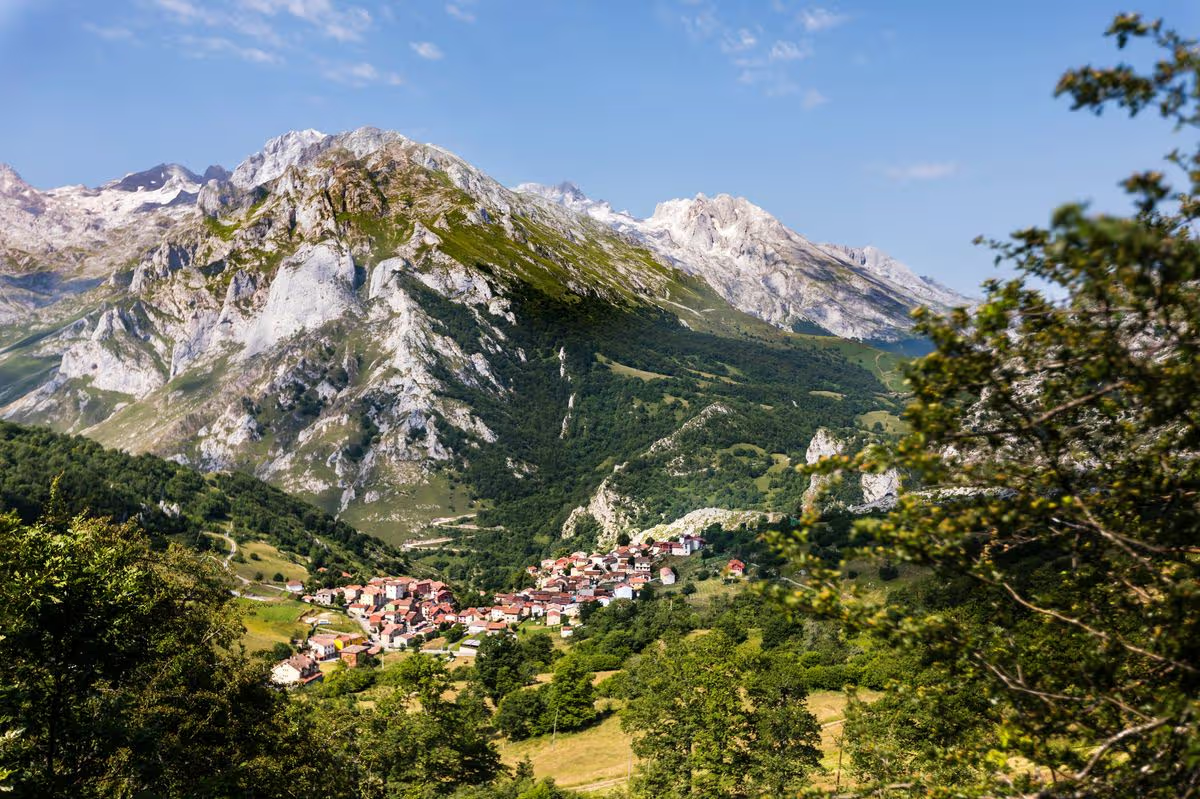
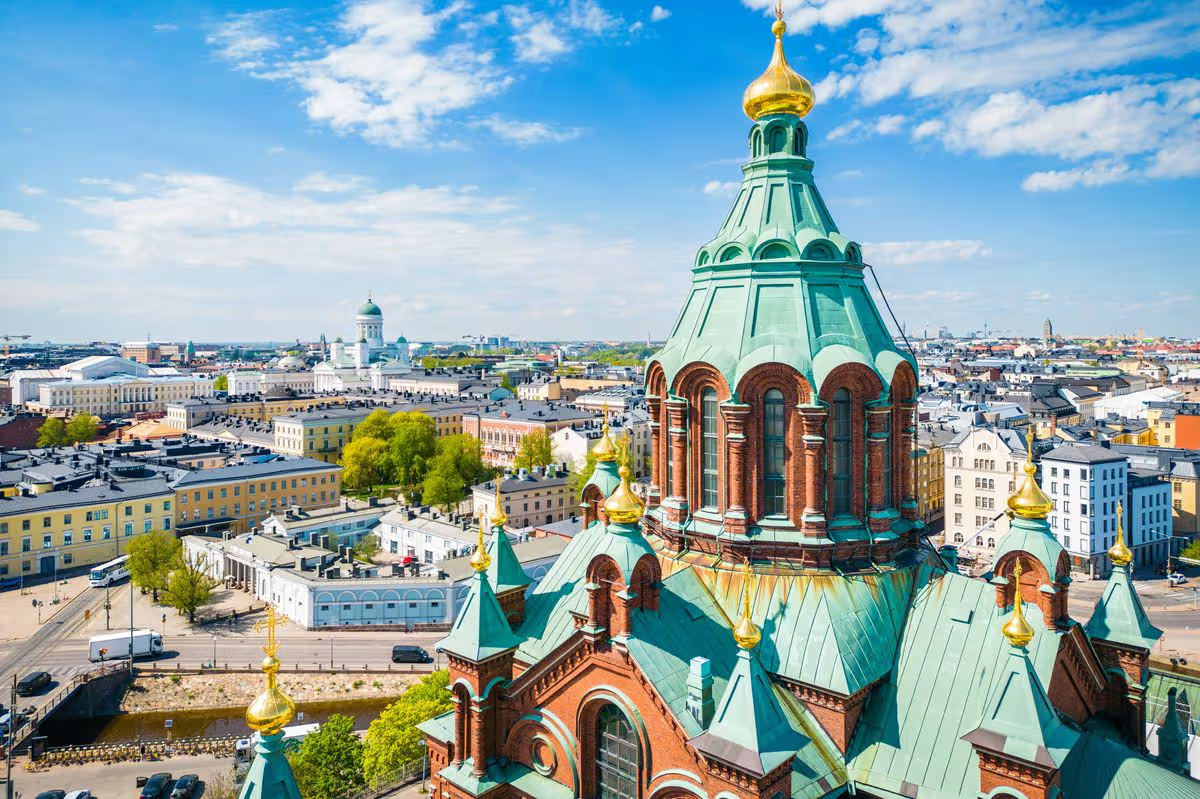
With the winter now feeling like it’s rumbled on for almost an eternity, many people will be looking ahead to the warmer seasons and dreaming of a holiday abroad. But if you have school-aged children, you’ll probably be painstakingly aware of how much the cost can rise when the kids break up.
Amid the ongoing cost of living crisis, it can be hard to pay for an overseas family trip. With this in mind, we’ve taken a look at some of the cheapest Ryanair flights to Spain for this year’s summer holidays.
And if you’re not picky about where you go, you may be able to save some money. For instance, travellers flying from London Luton can travel to Palma de Mallorca from £26 one-way.
The cheapest return fare for is £109, departing on August 26 and returning on September 3. From Manchester, we found a one-way flight to Castellon (Valencia) for £23, departing on August 27.
A return fare on September 3 is available for £27, meaning you could travel both there and back for £50 each. And from Birmingham, holidaymakers can book a return trip to Santander for £85 each.
The outgoing flight departs on August 17 and returns on September 3. Travellers flying from Aberdeen to Alicante can get a return journey for £86 when leaving on August 19 and returning on August 25.
If you do book with Ryanair it’s important to remember that baggage and other add-ons come at an additional fee. Only one ‘personal’ bag is permitted with each basic fare.
As of last summer, following an EU rule change, the dimensions for this bag are 40cm x 30cm x 20cm and the bag must weigh less than 10kg. All flight prices were correct at the time of publication.
Forgotten village in Wiltshire was evacuated in 1943 for US troops to train ahead of World War II, and residents were never allowed to return home
06:00, 18 Feb 2026Updated 08:36, 18 Feb 2026
It sits within the British Army’s training area(Image: William Dax / SWNS)
Just a stone’s throw from the ancient monument of Stonehenge, and roughly an hour from Bath, lies a hidden village frozen in time.
The abandoned village of Imber in Wiltshire stands devoid of inhabitants, its buildings crumbling into decay. This once-bustling parish on Salisbury Plain now remains eerily silent, cut off from civilisation and accessible to visitors for only a handful of days each year.
Similar to several other communities nationwide, Imber’s residents were forcibly removed from their properties in 1943 as war loomed. They received just 47 days’ warning before their village was requisitioned to provide training facilities for American forces preparing for the Second World War.
Locals are believed to have assumed they would reclaim their homes following the conflict’s conclusion, but permission to return was never granted. Salisbury Plain subsequently evolved into Britain’s most extensive military training facility, now spanning more than 94,000 acres.
History
Whilst evidence suggests a modest community existed at Imber from as far back as 967 AD, with documentation indicating habitation in the Domesday Book of 1086, the village housed over 150 inhabitants when evacuation occurred.
Best Cotswolds holiday cottage deals
This article contains affiliate links, we will receive a commission on any sales we generate from it. Learn more
The Cotswolds is famous for its rolling hills, honey-coloured villages and quintessential English charm. Sykes Cottages has a wide range of places to stay, starting from £38 per night.
During the 14th century, its population peaked at approximately 250 residents, declining to roughly 152 by the 1940s, and following the conflict, the village mourned 28 of its men who had been in service.
A correspondence sent to a resident, providing brief notice of evacuation, read: “Arising out of the decision that increased training facilities are to be made available in the Imber area, I regret to inform you that it is necessary to evacuate the major part of the Department’s Imber Estate, including your dwelling.”
Despite protests from villagers, their efforts proved unsuccessful, and authorities determined even years after the conflict that the terrain remained invaluable for military purposes and too hazardous for civilian habitation.
Initially, however, many people were prepared to leave, viewing it as their patriotic responsibility and wanting to support those serving on the battlefield.
Numerous structures within the settlement sustained damage from explosions during and following the conflict, as well as from military exercises, and subsequently deteriorated further due to exposure to the elements. Even had former inhabitants been permitted to return, the properties would have been uninhabitable.
Battle for the village
In 1961, following years of separation and discontent, over 2,000 individuals gathered to campaign for the villagers’ return. This triggered a public inquiry, though it ultimately ruled in support of Imber’s ongoing military utilisation.
It wasn’t until the 1970s that certain evidence finally emerged, resulting in an agreement permitting villagers to return, but by that point it was considerably too late.
It was subsequently determined that the church could be preserved and would welcome worshippers on the Saturday nearest to St Giles’ Day each year for residents and locals to gather. This tradition continues to this day.
Present Day
Whilst the remainder of the parish has fallen into decline, neglected and forgotten, St Giles’ church in Imber stands preserved as it always has been, safeguarded by the Diocese of Salisbury.
The church achieved Grade I listed status in 1987 and remains a meaningful site for those wishing to commemorate the village and its formerly thriving community.
Annually around St Giles’ Day, a service takes place which draws former inhabitants alongside soldiers who trained in the village and other members of the public. A further service occurs on the Saturday preceding Christmas, a custom established in 2009.
The Ministry of Defence must permit public entry to the village on these occasions, which are now restricted to merely three times annually. Honouring the village’s heritage, ImberVillage.co.uk commemorates the lives of former inhabitants and enables their stories and recollections to be preserved.
The number of visitors is “overwhelming” the picture-perfect village
Ketsuda Phoutinane Spare Time Content Editor and Carmelo Garcia
15:21, 14 Feb 2026
Bourton-on-the-Water Parish Council is calling for an order that would restrict coach access(Image: John Keeble, Getty Images)
The “Venice of the Cotswolds” is now pushing for coaches to be barred from the village centre as fears mount over “Disneyfication” and excessive tourism. Roughly 100 residents of Bourton-on-the-Water raised their worries about overtourism during a November gathering before Shire Hall and District officials.
This week, the Parish Council backed a motion requesting an experimental traffic regulation order (ETRO) to limit coach entry into Station Road from the Fosseway, Rissington Road and the Steeps. The move represents a major development in Bourton’s continuing battle to tackle longstanding local anxieties regarding the effect of substantial coach traffic volumes on principal routes cutting through the village.
District Councillor Jon Wareing (LD, Bourton Village), who has championed the cause in recent years, urged parish councillors to back the proposal asking Gloucestershire County Council for the ETRO, reports Gloucestershire Live.
“This is not a new position,” he stated. “The Parish Council previously supported similar measures in 2024, reflecting sustained public concern about congestion, safety and quality of life impacts linked to unrestricted coach access through the village centre.”
He noted that circumstances have shifted, with greater clarity that enforcement is now feasible, including via Automatic Number Plate Recognition technology.
This development is viewed as eliminating one of the traditional obstacles to implementing traffic restrictions. Cllr Wareing stated that all parties must begin collaborating to identify a sustainable long-term solution akin to those implemented in destinations including Clovelly, St Ives, York, Bath, Oxford and Cambridge.
He emphasised that the decision ought to be viewed as an initial step towards addressing the broader systemic problem of the substantial volume of visitors descending on Bourton in vehicles annually.
“It’s not just coaches – it’s cars as well,” he said. “People often refer to Bourton as the Venice of the Cotswolds.
“Venice is widely seen as unsustainable because visitor numbers overwhelm a small, fragile historic city – pushing out residents, damaging heritage and infrastructure, and putting pressure on the environment, retail and public services.
“The same risks exist here. We could become Venice in the Cotswolds in terms of the impact on our heritage village.
“We need to reverse the ‘Disneyfication’ of Bourton and develop a regenerative approach, where tourism is managed deliberately to support local life rather than displace it.”
County Councillor Paul Hodgkinson (LD, Bourton-on-the-Water and Northleach) revealed he understands residents’ exasperation with certain coaches failing to utilise the designated drop-off and collection point on Meadow Way.
He confirmed that Shire Hall is currently assessing the effectiveness of the interim measure, which was devised to divert coach traffic away from the village centre.
“We are reviewing the effectiveness of that this week and will do so again in May. It’s really important that all coaches use the point legally,” he said.
“I am committed to making sure residents are safe and that coaches cause the minimum disruption, whilst helping local businesses to be successful.
“At the County Council we will definitely take this request seriously and I’ll be talking to council officers about how it could work.”
Adam Toms visited a classic British market town and was left shocked shortly after arriving.
Shania King-Soyza and Adam Toms
15:42, 11 Feb 2026
Shops lay eerily empty in Burgess Hill(Image: Adam Gerrard / Daily Express)
Some UK towns can feel like they are in a state of decay, leaving locals feeling their taxes are little better than money down the drain. Many high streets have become ghost towns, with only large chains or resilient independent businesses managing to survive.
Burgess Hill, once renowned for its thriving brick and tile-making industry and an annual St. John’s Sheep Fair, is nestled just north of the affluent coastal city of Brighton in Sussex. However, some locals claim it’s now a town in decline, teetering on the brink of oblivion.
The story they tell is one that will be familiar to many: once a bustling hub with its own market, attracting shoppers from far and wide to its array of local shops, it has since fallen into disrepair. And shortly after arriving in the town and paying for parking, journalist Adam Toms was confronted with what he described as a scene more reminiscent of The Last of Us than a typical English provincial town.
A desolate patch of land, eerily reminiscent of Margaret Thatcher’s infamous “walk in the wilderness”, was flanked by vacant retail units, their interiors hauntingly empty. Messages left by former staff were scrawled on the doors.
Adam went on to share: “A piece of barren land – which put me in mind of the famous photos of Margaret Thatcher’s ‘walk in the wilderness’ – was surrounded by empty retail units with ghostly, empty interiors. On their doors were messages written by staff who had since moved elsewhere.”
Signs declared “STORE CLOSING. EVERYTHING MUST GO” and “SALE 50%”. Windows had been boarded up after apparently being smashed by local youths, rainwater leaked from pipes, and metal fencing and red plastic barriers cordoned off a particularly dismal passageway.
He continued: “It wasn’t all this bad. Burgess Hill has a number of shops operating in its actual high street, and an amazing Creative Community Hub, which is run by volunteers and puts on skill-sharing activity sessions, including sewing and pottery.”
Run by volunteers, the hub hosts skill-sharing activities such as sewing and pottery. However, the locals he chatted with seemed somewhat embarrassed and disheartened, feeling their hometown was being eclipsed by more prosperous areas like Horsham.
“One woman, Susan Truran, 68, a retired revenue analyst, asked if I was lost when I explained who I was. People added that they have been let down by promises to improve the area,” said Adam.
The latest proposal aims to revamp the shopping district into a contemporary, lively retail and leisure hotspot, while also creating new homes and jobs. Developer New River is collaborating with Mid Sussex District Council on this project.
Planning permission has been granted for 50,000 square feet of fresh retail space, including a 21,000 square foot food store, 172 new residences and a 102-room hotel.
Jo Homan, a volunteer at the creative hub, stressed that Burgess Hill isn’t the only UK town facing challenges. She commented: “It’s pretty much the same everywhere, isn’t it? A lot of towns are like it.”
This is certainly accurate, and numerous other local authorities are pledging to spruce up their areas. Adam said that he has also visited Margate and Weston-super-Mare, where locals spoke of their towns’ urgent need for regeneration.
Folkestone in Kent presented a unique scenario, with businessman Sir Roger De Haan sharing details of his £100million investment that’s rejuvenating the area. And over in Hampshire, locals expressed their disappointment at the current state of Aldershot.
Back in Burgess Hill and Andrew Griffin, 56, an employee at an insurance firm, highlighted to Adam that it has room for growth, being home to major employers like American Express.
Last week, Prime Minister Sir Keir Starmer discussed Labour’s Pride in Place plan, announcing that around 40 new areas across England will have the power to decide where up to £20million is invested in their localities: “It is the same story in towns across the country. Youth clubs that have been abandoned, shops boarded up and high streets decimated,” he said.
“We must reverse the devastating decline in our communities and give power, agency and control to the very people who want to improve their community – those who have skin in the game. Through the Pride in Place Programme, communities – backed by the state and fired up by pride – will join the fight for national renewal and a Britain built for all.”
It’s the ultimate winter sun destination with white sand beaches, balmy temperatures and affordable food and drinks — because who doesn’t want to escape the UK’s February gloom and doom?
Cheap pints and flights, what’s not to love?(Image: David Marsden via Getty Images)
There’s a breathtaking island which is frequently crowned as the ‘ultimate winter sun destination’ and it’s just a four-hour direct flight from the UK.
Even better, that flight will only set you back £25 one-way.
Whilst the Canary Islands remain a perennial holiday favourite throughout the year, they’re especially alluring during this season. After all, who wouldn’t fancy escaping Britain’s dreary skies, freezing nights, and persistent February downpours?
Well, search no further for your next February getaway, because we’ve got the perfect suggestion for you.
This magnificent Spanish island, boasting spectacular scenery, pristine waters, and endless stretches of golden sandy coastline, represents the perfect retreat for anyone seeking a swift departure from Britain’s winter gloom.
As the eldest island in the chain – formed nearly 20 million years ago through fierce underwater volcanic eruptions from the Canary hotspot – Fuerteventura is genuinely awe-inspiring, reports the Express.
The archipelago’s second-largest island (trailing just behind Tenerife ) sits a mere 100 kilometres from North Africa’s shores, and features the chain’s most extensive white sand coastlines.
Regarded as a paradise for water sports enthusiasts, particularly those passionate about surfing, waterskiing, and windsurfing, this captivating Spanish isle embodies the perfect blend of sunshine and adventure.
With direct flights departing from London Stansted and Luton airports on 8th February priced at just £25 at the time of writing (including one cabin bag and one handbag), holidaymakers can find themselves basking carefree in the sunshine in just four hours and 20 minutes.
The affordability doesn’t end with the airfare in Fuerteventura. A pint of beer costs a bargain £1.70 on this lively island, and better still, temperatures on Fuerteventura seldom dip below 18C or climb above 32C, establishing it as the quintessential tropical haven.
February in Fuerteventura delivers ideally mild conditions – perfect for fleeing Britain’s bitter winter. Indeed, the island enjoys approximately 3,000 hours of sunshine annually.
Boasting 152 distinct beaches, including at least 50 kilometres of pristine white sand stretches and 25 kilometres of dramatic black volcanic shingle – this Canary Islands gem possesses a distinctive landscape.
Speaking of distinctiveness, Fuerteventura has another remarkable claim to fame. It’s home to one of just two surviving populations of the threatened Canarian Egyptian vulture, whilst the island itself harbours hundreds of species of rare flora and fauna.
Among Fuerteventura’s most spectacular beaches are Playa de Sotavento, Playas de Corralejo, Playas de El Cotillo, Playa de Cofete, Playas de Jandia, and Playa de Ajuy.
The northern part of the island features predominantly untouched white sand dunes, striking volcanic landscapes and craggy coastlines, while the south offers vast stretches of white sandy beaches and secluded coves – ideal for surf fans and water sports devotees.
Playa de Sotavento emerges as amongst the island’s most unique and sought-after beaches. Located on the south-eastern coast, this extraordinary beach displays an intriguing double-shore effect during low tide.
When the sea recedes, lagoons appear between the principal beach and sandbars, forming an additional golden shore.
The Sotavento stretch is famed for its extensive white sandy beaches and sparkling azure waters, making it a favoured spot for holidaymakers.
Popular locations including Corralejo and Caleta de Fuste feature well-established holiday complexes, eateries and countless activities suitable for every generation.
Corralejo’s historic quarter radiates authentic Spanish character through its narrow streets, tapas bars and freshly-caught seafood establishments.
This lively resort additionally features the impressive Parque Natural de las Dunas de Corralejo, whilst the Calderón Hondo volcano walking route lies nearby, offering breathtaking panoramic views.
The family-friendly Caleta de Fuste, boasting its upmarket harbour and traditional markets, equally merits inclusion on any Fuerteventura travel plan. El Cotillo, a delightful and vibrant fishing village celebrated for its surfing conditions and tranquil lagoon, represents another popular destination for visitors, whilst the remote Cofete Beach and the ancient Ajuy Caves are equally essential attractions.
After spending last summer interrailing around Europe, one journalist and ‘travel addict’ has named his favourite place – and it’s so close to the UK.
Brian Dillon What’s On and Travel reporter and Nicola Roy Spare Time writer
10:27, 01 Feb 2026
Brian’s favourite country isn’t far from the UK(Image: Brian Dillon)
If you’re planning a holiday for this year, the choice of destinations can sometimes feel overwhelming. There are so many amazing places to choose from, many of which are just a few short hours’ flight away in Europe.
But one journalist and ‘travel addict’ who has visited 27 countries in total recently went interrailing around Europe and discovered his new favourite place.
It had ‘endless experiences’ to offer, from a rich history to amazing landscapes and underrated food too. Brian Dillon from The Express said: “Jumping from hostel to hostel between seven cities in these five countries, Germany blew me away. I had been to Germany in the past, and every time I go there, I have a completely different experience.”
He had previously visited Berlin but spent time in Munich and Stuttgart in the summer – and they all offered a unique experience.
But the highlight of his visit had to be Munich, as he explained: “This city simply blew me away. First arriving in the Bavarian city on a train from Vienna, I was impressed by the architecture. It seemed like at every turn, there was another stunning building to gawk at.
“The historic Old Town was superbly charming, and you really feel like you have been transported back in time to a centuries-old Germany. However, one aspect of Munich that I fell in love with was its local parks.
“Every major city has some nice parks to explore. But Munich does it differently. Not only are the green spaces here stunning, but they all have lovely beer gardens where you truly feel like you are living like a local when you sit there, sipping a local beer and taking in the unique surroundings. “
Stuttgart was quieter, but Brian was happy to spend the day exploring before moving on to his next destination.
And Berlin is a ‘thrilling city’ too – partly due to tourist attractions like the Brandenburg Gate and the Berlin Wall but also thanks to the unique bars, markets and ‘otherworldly’ nightclubs.
But it’s not just the cities that impressed Brian. The natural landscapes are beautiful too, as Brian wrote: “When I travelled on a sleeper train between Brussels and Prague, much of my journey was spent speeding through the stunning German countryside. The sweeping green fields, the old-timy villages and the staggering mountains were a sight to behold. Waking up in a train cabin and seeing all of this first thing in the morning is an experience I will never forget.”
So if you’re in need of some inspiration on where to book your next holiday, Germany is a fantastic option. Brian added: “If you were to tell me that for my next holiday, I had to go back to a country I had been to before, I would book a flight to Germany. Although I have been to three different cities and through stunning countryside, I suspect that this country has a lot more for me to experience.
“The port city of Hamburg, the historic Cologne, the Christmas markets in Dresden, and the classic architecture of Nuremberg are definitely on my bucket list.”