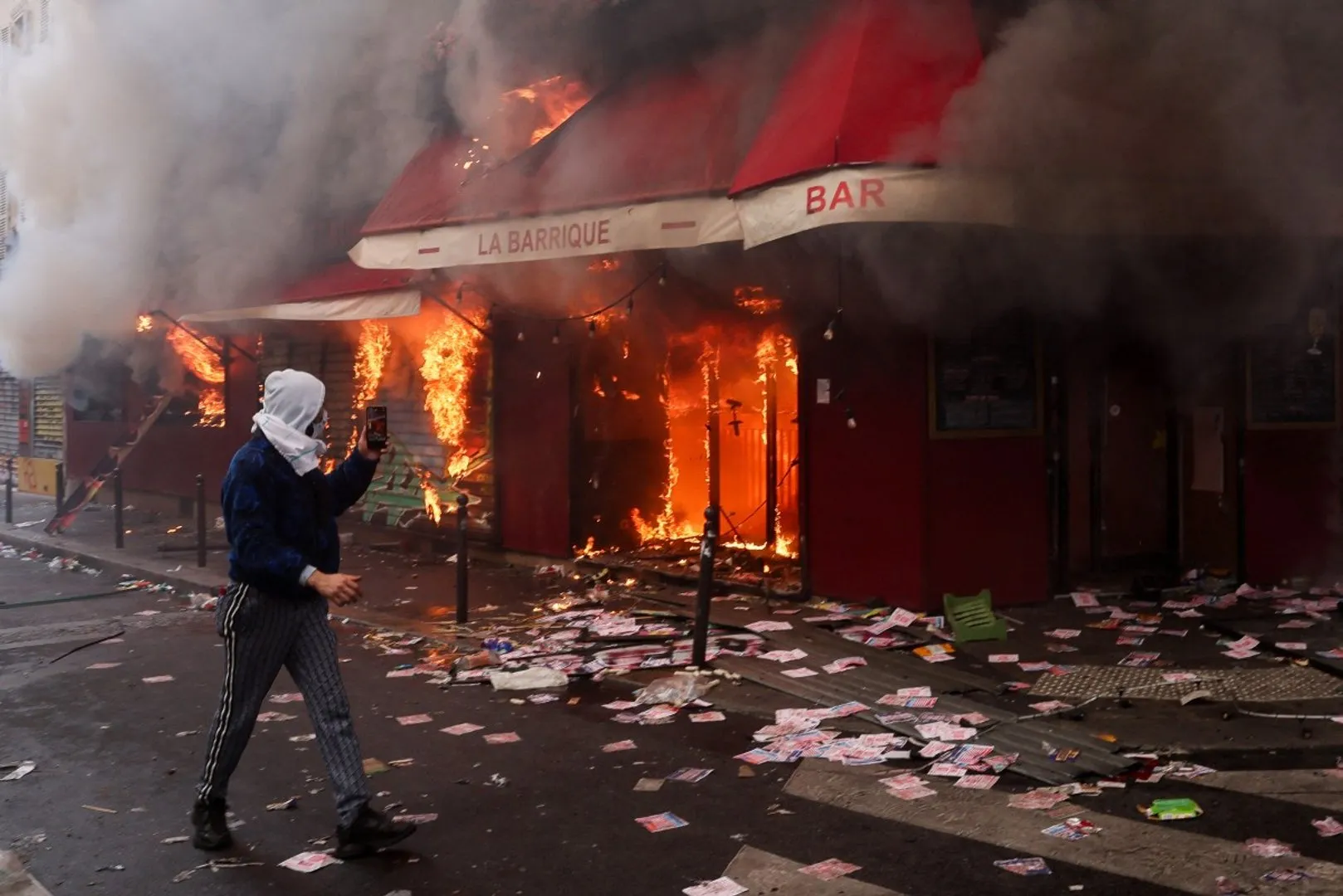
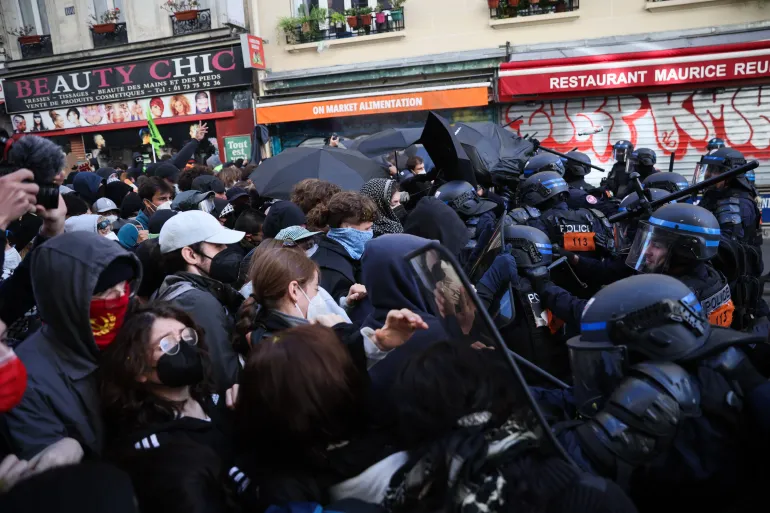
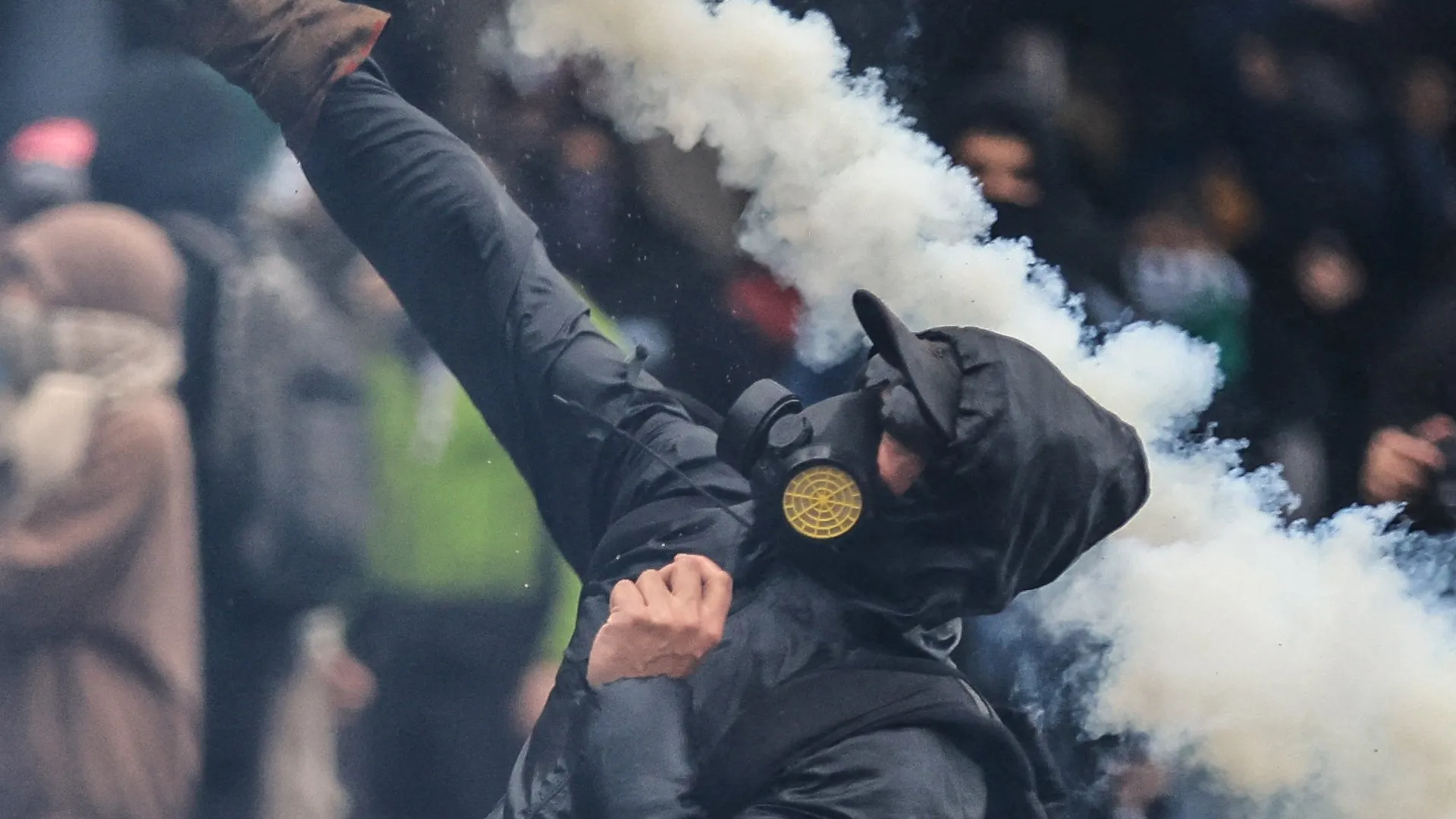
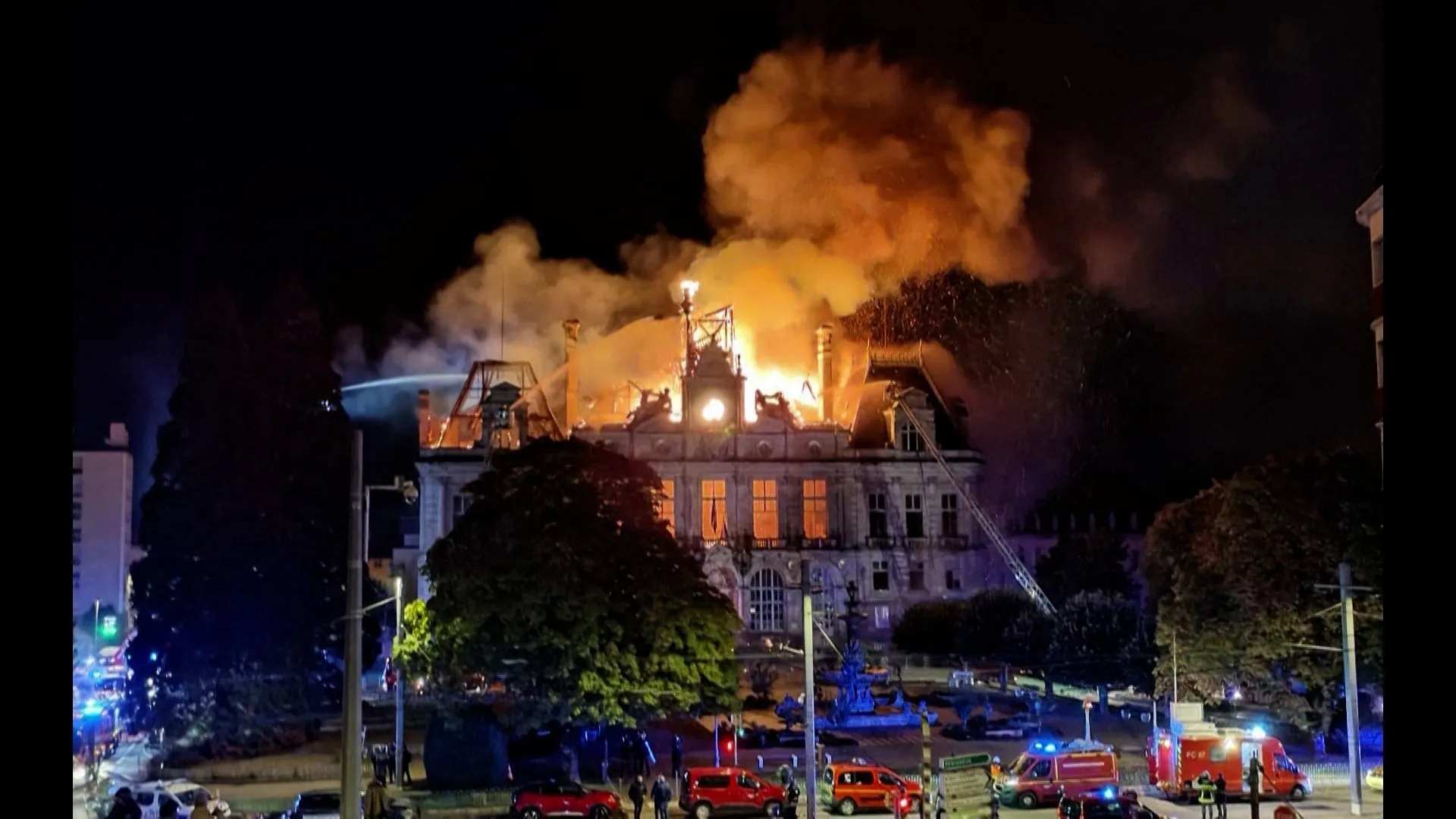
Witnesses say masked protesters set fire to Limoges town hall, which officials say is now ‘largely lost’. In Paris, fires, looting and tear gas marked a night of unrest as cost-of-living protests raged on throughout the country.
Hundreds of thousands of Europeans took to the streets for separate demonstrations putting pressure on governments across the EU.
Published On 17 Oct 202617 Oct 2026
Hundreds of thousands of Europeans have taken to the streets in separate, uncoordinated demonstrations to protest against the rising cost of living in their countries.
Saturday’s protests were in Belgium, France, Italy and Portugal in a wave of unrest that has put pressure on national governments across the European Union.
Recommended Stories
list of 3 itemsend of list
France experienced one of its most turbulent days of protests in decades, with over 550,000 people joining demonstrations and police facing off with protesters across the country – but it was not the only country to see significant demonstrations.
In Belgium’s capital Brussels – which has already seen weeks of protests by students against university registration fees – police fired tear gas and water cannon to disperse protesters, who they accused of launching missiles at them and setting fires.
In Liege, a smaller city east of Brussels, police also deployed water cannon to break up demonstrations. Police did not say how many people attended.
An estimated tens of thousands of protesters marched in Lisbon, the Portuguese capital, against the cost of living crisis, low wages and an inability to access housing in major cities. House prices in Portugal have more than doubled since 2017, while rents for new leases have increased nearly as much.
Portuguese Parliamentary Affairs Minister Carlos Abreu Amorim said on Friday that the “government will not yield to shouts from the street”.Protesters said their leaders are “out of touch” with the problem.
In Milan and Bologna, Italian police reported that, alongside peaceful cost of living rallies, protesters threw stones and clashed with officers.
Italian media reported several injuries and arrests.
Portuguese demonstrators in Lisbon set up tents to protest against the housing shortage, soaring rents and low wages [Filipe Amorim/AFP]
French protests spill over
None of the protests reached the same scale as the nationwide rallies in France but they may be a sign of spilling over into other European nations, according to Alberto Alemanno, Professor of EU Law & Policy at HEC Paris business school.
“France is the epicentre of this movement … and there are signs now that this is spreading beyond France,” Alemanno told Al Jazeera.
He said Saturday’s protests may not be the last in many of these countries and new hotspots could emerge.
In Greece, Germany, and Austria, the “early stages” of a movement is emerging, with mobilisation expected “in the coming week”, he said.
They are not a single movement, he explained, but several protests happening at the same time, with some “shared grievances”: underfunded education, rising costs and, for students, uncertain prospects after graduation.
The unrest comes at a crucial time for Europe, as the continent prepares for what Alemanno called an “unprecedented super-cycle of national elections” in the coming 12 months, with votes scheduled in Spain, France, Italy and Poland.
“Inevitably, all these protests, all these mobilisations, are going to be at the centre of the political conversation,” Alemanno said.
Riot police fire water cannon during a youth protest in Brussels [Nicolas Maeterlinck/AFP]
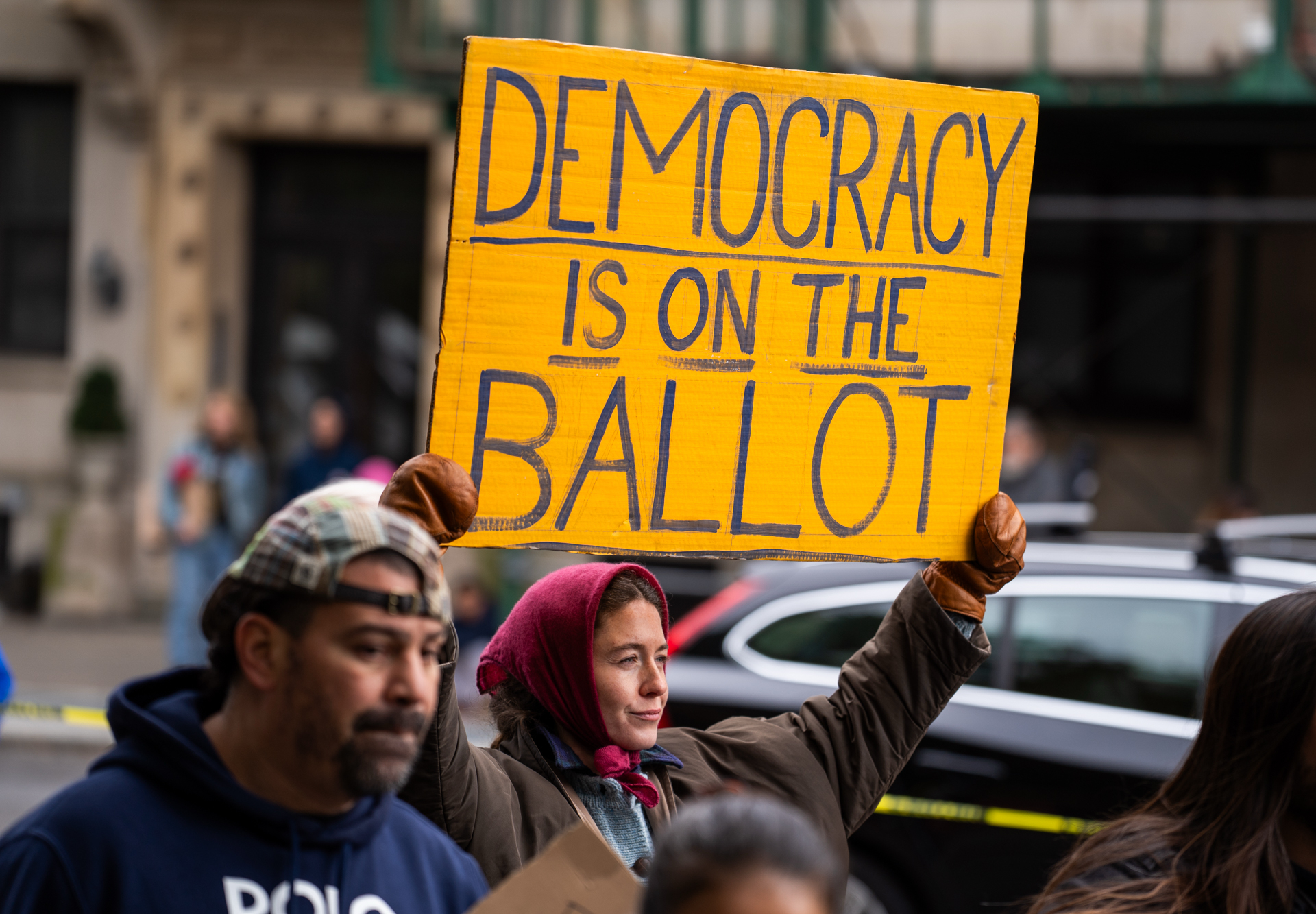
Rallies organised by the No Kings network opposed to United States President Donald Trump were held Saturday in cities and communities across the US, with an aim of getting people out to vote early in the midterm elections.
No Kings has more than 3,000 events planned across the US. The planned events, this time dubbed “No Kings: Vote Early”, were billed as nonpartisan, though they sought to build on nearly two years’ worth of No Kings marches and demonstrations by people upset with Trump’s presidency.
“It’s a day of nonpartisan voter participation: we are bringing our community together to make a plan to vote early and ensuring every eligible voter understands their options for how to vote and has the opportunity to make their voice heard,” organisers said in a statement.
By advocating for voting early, the “No Kings” organisers hope to cut off the potential for any malfeasance once election day rolls around.
A band entertained what appeared to be a few hundred people in caps and coats at the Lincoln Memorial in Washington, DC. Despite the chilly weather, many in the crowd danced to the tunes. “VOTE EARLY” and “HANDS OFF MY VOTE!” were among the many signs held aloft.
At an Atlanta rally, City Councilman Michael Julian Bond told the crowd to urge others to vote ahead of the November 3 general election.
“The Constitution gives you one power, right? That is the power to vote. Are you gonna use that power?” he said.
“You don’t see Superman giving up his power,” Bond continued. “You don’t see Black Panther giving up his power. You don’t see Wonder Woman giving up her magic lasso. So why would you give up your right, your power, your obligation to vote? Be a superhero, use your power. Go to the polls and vote.”
Trump has long been suspicious of mail voting and has claimed without evidence that voting fraud cost him the 2020 presidential election.
His administration sued California election officials Thursday, asking a judge to bar the state from counting mail-in ballots for the midterm elections from people whom the federal government has identified as “likely” noncitizens until their immigration status can be confirmed.
On Friday, the Department of Justice warned that local officials who process and tabulate ballots submitted by suspected noncitizen voters are putting themselves at risk of criminal investigation and potential prosecution.
Earlier that day, Democratic Senators Alex Padilla of California, Sheldon Whitehouse of Rhode Island and Dick Durbin of Illinois wrote to Attorney General Todd Blanche, demanding that the Justice Department commit to not seizing ballots or other election materials before the midterm elections are certified.
Al Jazeera reporter harassed, struck on head amid France protests, looting
Al Jazeera’s Rosie Rosie Birchard was harassed by protesters looting shops in Rennes, France, and struck on the head by an object thrown during the unrest. Her report comes amid nationwide demonstrations over education and living costs, with clashes, fires and looting reported across several cities.
Five days of clashes rock Tirana as students join a wider movement demanding Prime Minister Edi Rama’s resignation.
By AFP and The Associated Press
Published On 17 Oct 202617 Oct 2026
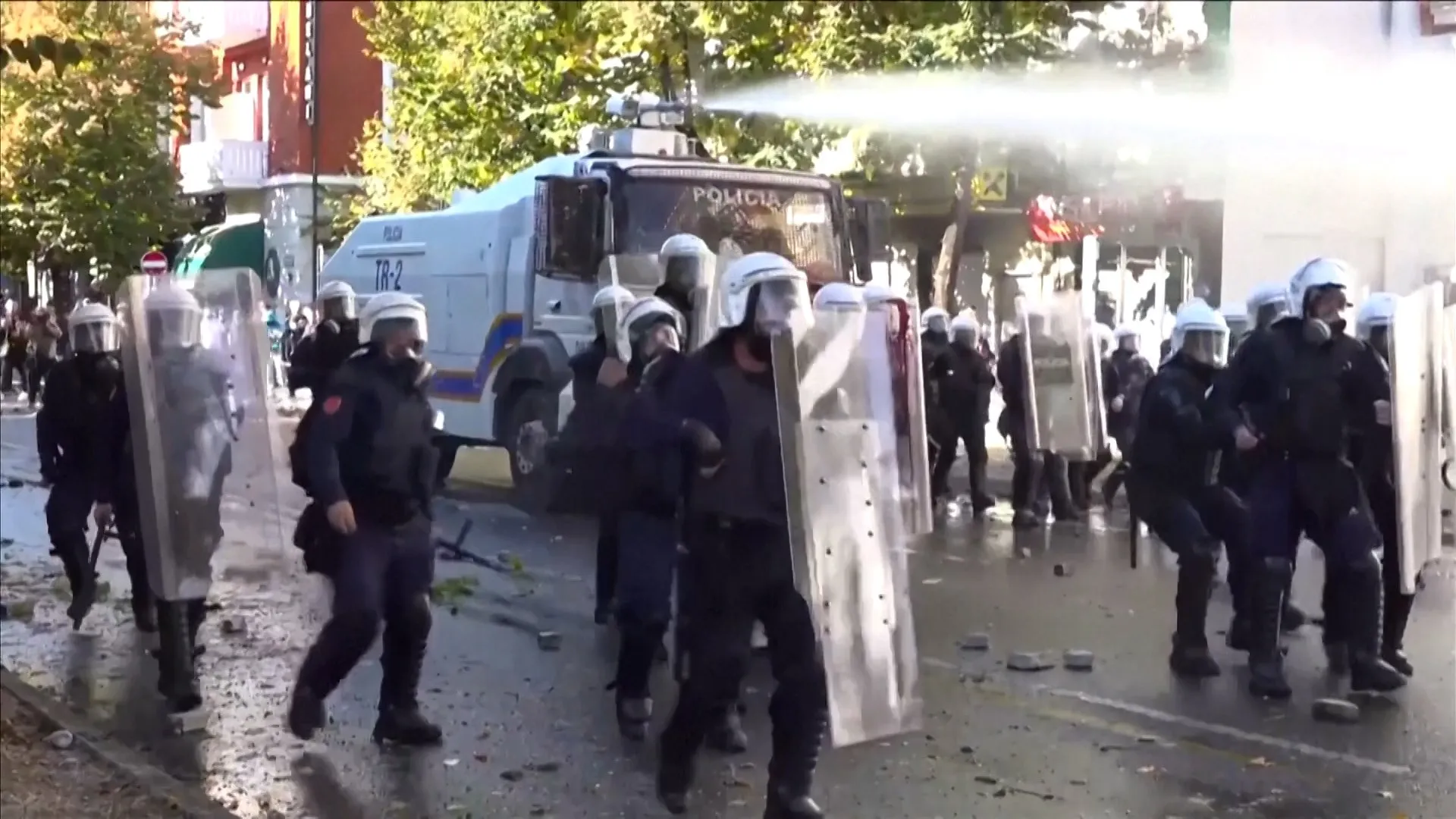
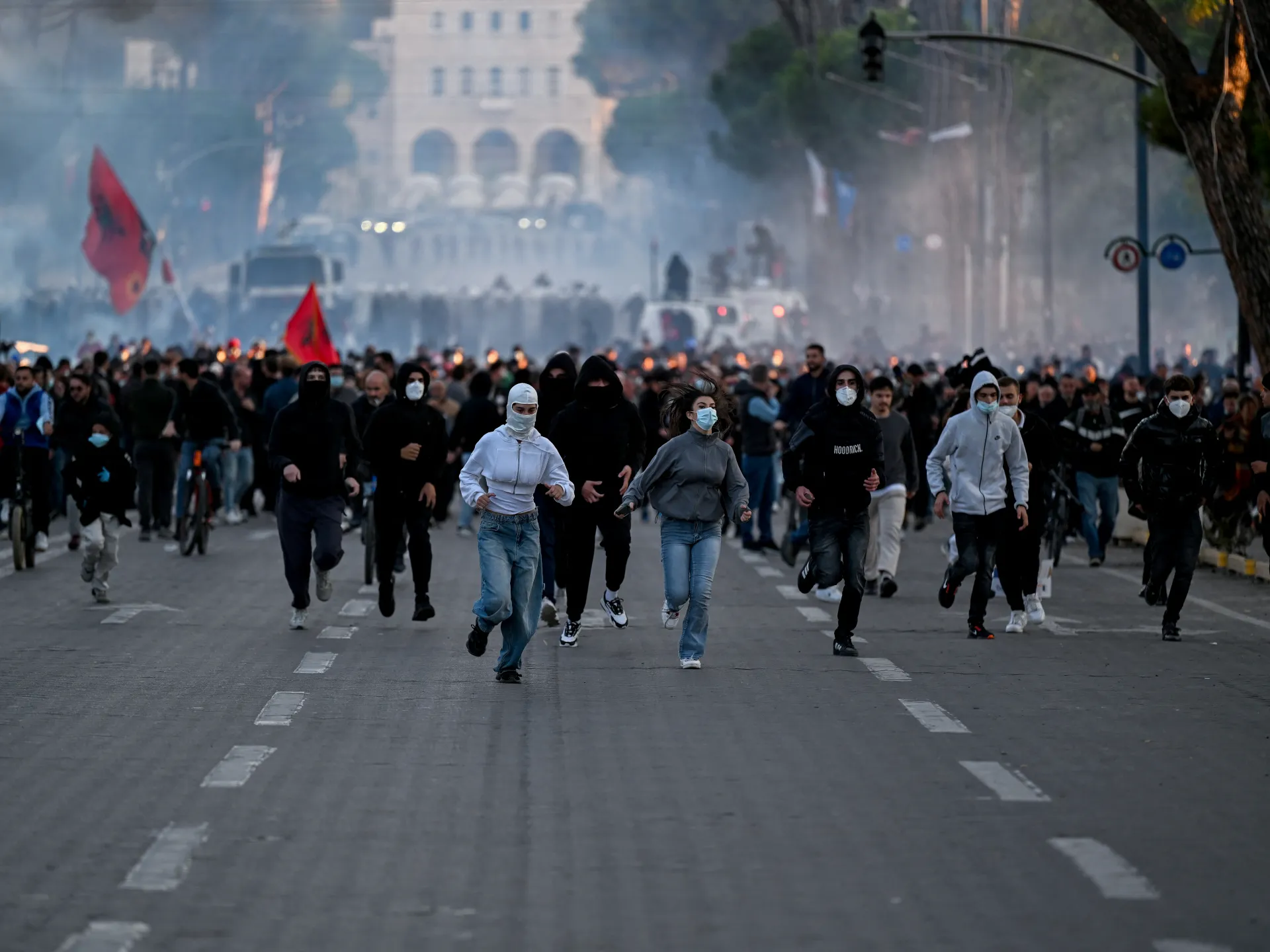
Police in Albania have fired rubber bullets at antigovernment protesters in the capital, Tirana, as violent clashes intensify over demands for Prime Minister Edi Rama to resign.
The clashes continued on Saturday for a fifth consecutive day after high school and university students joined a broader movement against Rama, whose governing centre-left Socialist Party has held power since 2013.
Recommended Stories
list of 2 itemsend of list
The unrest has brought growing anger over education, unemployment and alleged corruption into a wider confrontation with the government.
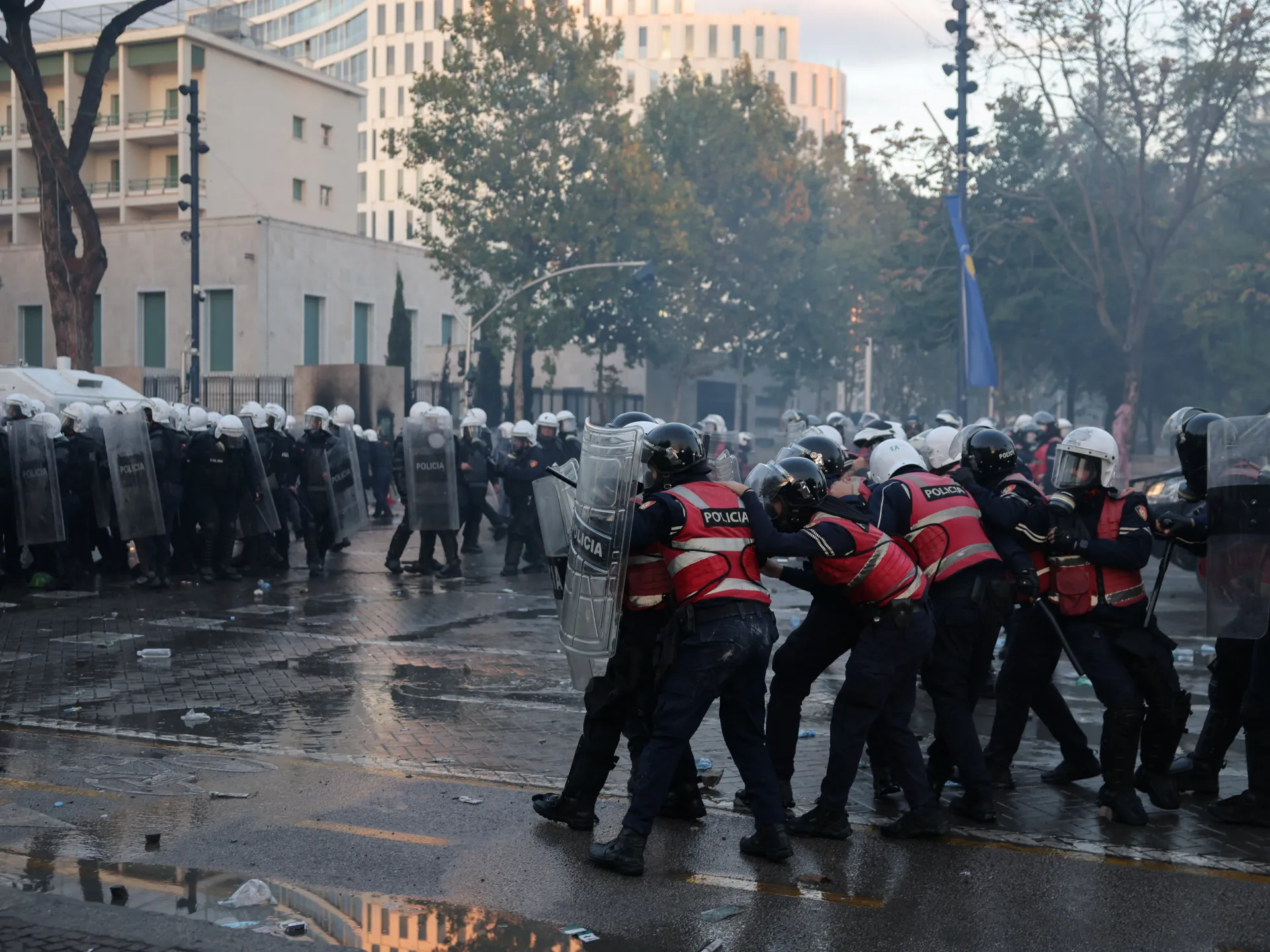
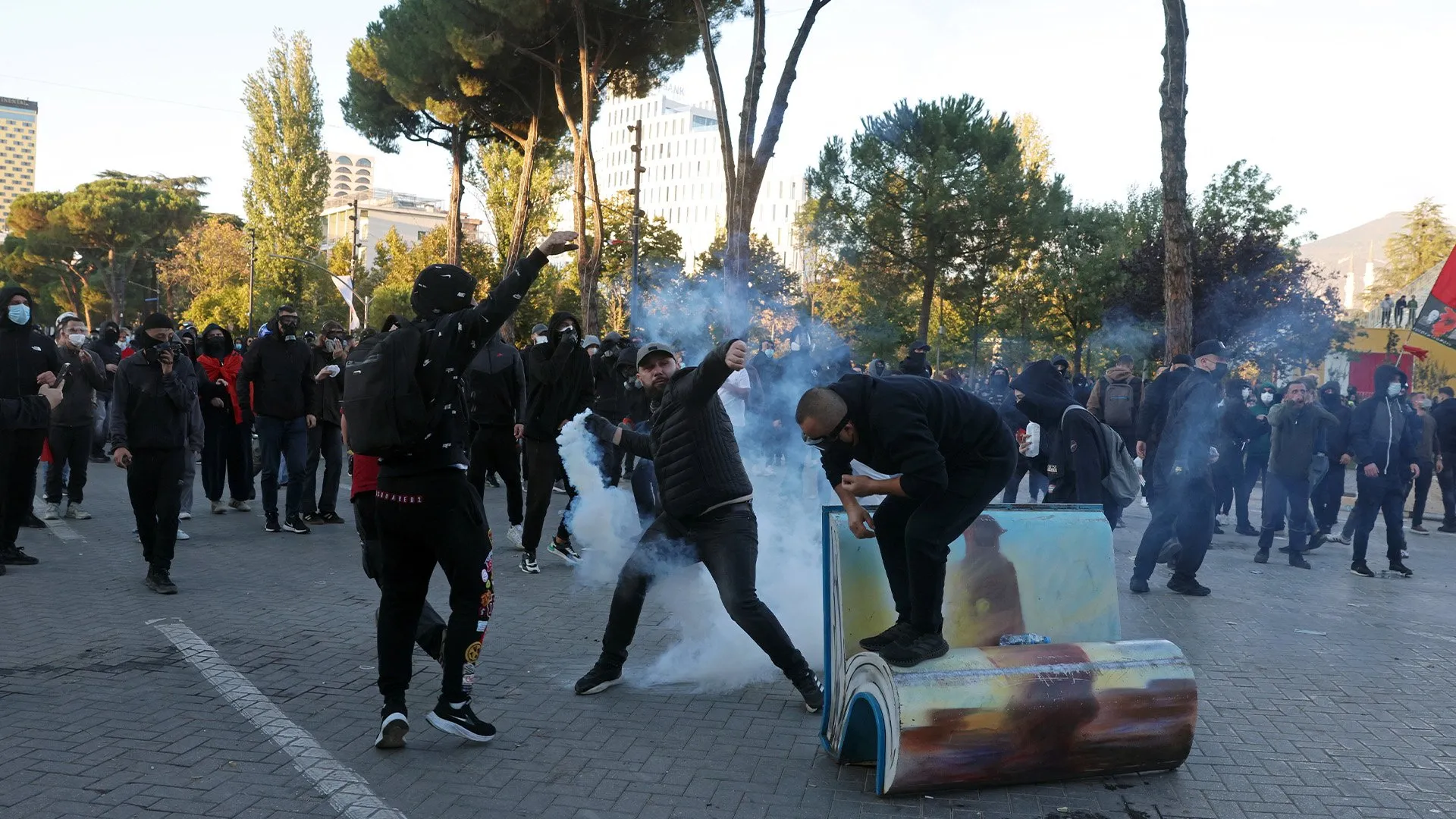
Protesters threw stones, petrol bombs and fireworks at police near Rama’s office and elsewhere in central Tirana.
Some set cars and rubbish bins alight, creating burning barricades across streets.
Police responded with tear gas, water cannon and baton charges as demonstrators pushed against security lines.
The AFP news agency reported that officers used rubber bullets for the first time since the demonstrations began.
National police chief Skender Hita confirmed their use at a news conference on Saturday, saying they had been deployed “in a limited manner”.
The Ministry of Health and Social Welfare said nine protesters and four police officers received medical treatment on Saturday.
Hita said 167 people had been arrested over five days of unrest, while 132 officers had been injured.
Seven police officers were also suspended pending investigations into allegations that they had exceeded their authority.
Rama, who is serving his fourth term and has refused to resign, visited businesses damaged during the unrest on Saturday. He promised to listen to students and protect their right to demonstrate, while warning against further destruction.
He also accused his conservative political opponents of encouraging the violence.
Growing discontent
The students have complained about expensive university fees, poor educational facilities and limited employment opportunities, alongside allegations of government corruption.
At the start of Saturday’s demonstration, protesters set fire to a suitcase and threw it into the Ministry of Education’s courtyard. AFP reported that the gesture symbolised their determination not to leave Albania in search of better opportunities.
“We are demanding our rights, our future and a better country,” journalism student Sinan Billa told AFP.
The student demonstrations have added to months of antigovernment rallies organised by the Flamingo movement, which began as a campaign against a luxury tourism development on Albania’s southern coast.
The project is linked to an investment company founded by Jared Kushner, the son-in-law of US President Donald Trump.
The movement has since widened its demands to include Rama’s resignation amid allegations of corruption against his government.
The unrest has also spread beyond Tirana. Local media reported that protesters in the coastal city of Durres damaged a post office and blocked roads with burning barricades, extending the confrontations beyond the capital.
In Paris, thousands are protesting teacher shortages, poor school facilities and cuts to public services. The student-led movement has widened into broader anger over living costs and police repression, with officers firing tear gas at demonstrators. Al Jazeera’s Virginia Pietromarchi reports.
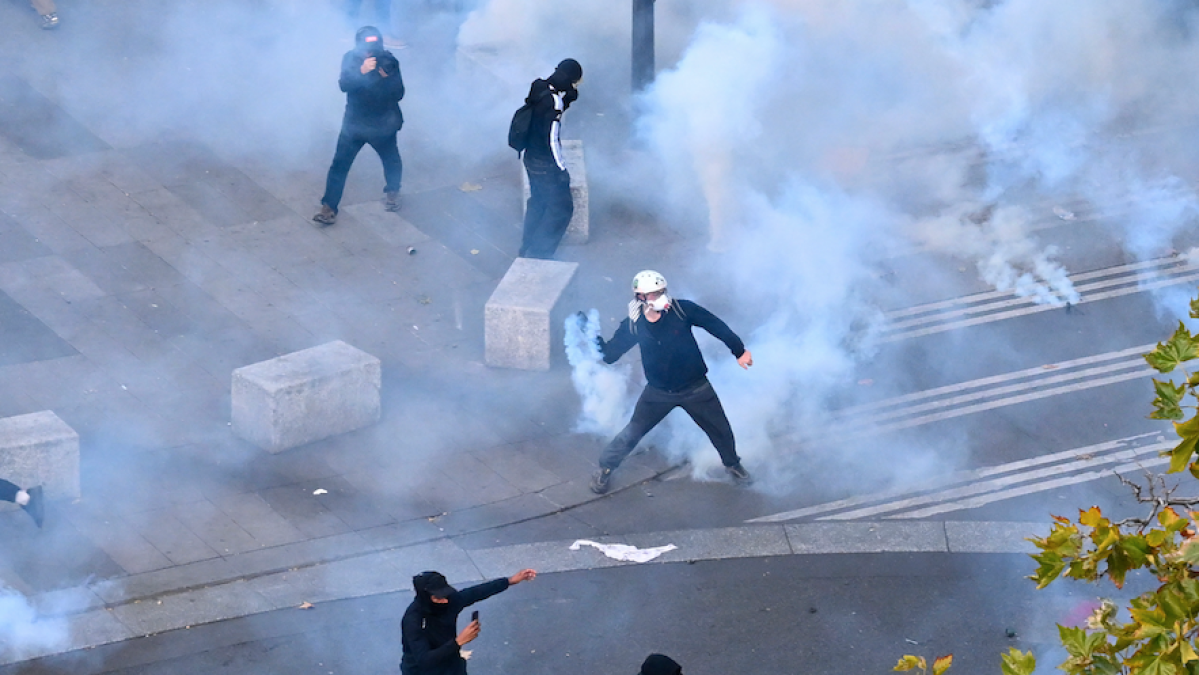
Protesters have set fire to cars and buildings in France as demonstrations against the cost of living and declining public services escalate. There is serious unrest in Paris and multiple locations across the country.
Paris, France – Saturday is a day of many unknowns. That was how the French newspaper Le Monde described it as France braced for possible nationwide demonstrations bringing together high school students, trade unions and “yellow vest” activists.
The protests began in mid-September at a high school in the Paris suburb of Creteil, where students took to the streets over dilapidated buildings, overcrowded classrooms, teacher shortages and what they see as a deeply unequal education system.
Recommended Stories
list of 3 itemsend of list
Since then, the mobilisation has spread to thousands of “lycees”, or upper secondary schools, across the country. It is now beginning to reflect broader anxieties in a country grappling with a combination of fiscal pressures, economic stagnation and mounting social discontent.
Teachers, trade unions and university students have joined the movement.
On Saturday, some “yellow vest” activists – remnants of the participants in the grassroots cost-of-living protests that shook President Emmanuel Macron’s first term in 2018 – have also called on supporters to join the students.
“High school students are fighting for their future. Workers are fighting to earn a living from their labour. Retirees are fighting to preserve their dignity. Our paths may differ, but our concerns can converge,” Jerome Rodrigues, a prominent “yellow vest” activist, said in a video message released last week that called on people to join Saturday’s demonstrations.
Now France is waiting to see whether those calls will translate into a large, coordinated mobilisation.
Warlike injuries
Authorities have described the unrest as among the most violent in decades, saying more than 900 police have been injured since the start of the protests. But critics argued that although some demonstrators have engaged in violence, they represent a minority and the actions of a few risk overshadowing the grievances of the wider movement.
The government has also faced criticism over its response to the protests, including the detention of thousands of minors and the use of force against young demonstrators.
More than 6,700 children had been taken into police custody since mid-September, according to reports published this week.
Protesters clash with police during a demonstration against the high cost of living, in Paris on October 17, 2026 [AFP]
Human rights lawyers said several teenage students have suffered warlike injuries.
Two cases have drawn particular attention: A 15-year-old lost his hand in the explosion of a stun grenade outside a school in the northern city of Lens, and a 16-year-old in western Tours lost his sight due to an injury caused by a rubber bullet.
There are fears of further clashes on Saturday.
“This is a moment of fatigue in the country,” Prime Minister Sebastian Lecornu said on Thursday. “We are in an atmosphere of perma-crisis: wars, inflation and issues surrounding purchasing power.”
The government has accused the far-left France Unbowed (LFI) party of inflaming the protests. The party has rejected the accusation.
While France suspended the use of stun grenades for the student demonstrations, Interior Minister Laurent Nunez said on Friday that he authorised police to use them in the event of what he called “urban violence”.
Nunez also said he is expecting a “fairly significant” turnout on Saturday.
Hundreds of protest sites
Calls on social media for members of past protest movements to join the current one have been made for weeks. The website 17octobregiletjaune.net, which tracks “yellow vest” actions, listed more than 1,750 planned protest locations across the country.
The government has tried to quell student anger by scrapping plans to increase some higher education registration fees and promising to deploy 3,000 substitute teachers to high schools. This week, it set up a national online survey for pupils to hear their concerns.
But Mathieu Roger-Lacan, a French literature teacher in a disadvantaged area and author of A Language of One’s Own, a book about the growing language gap, argued that these measures fail to address the deeper problem: an education system that struggles to provide equal opportunities.
“If you have a pool that is leaking, the answer should not be to put more water into it but to work on its structure – and that costs money too,” he said.
For Roger-Lacan, the problem is not simply how much France spends on education but how it distributes those resources.
A government report published this week said that 32 percent of the French education ministry’s budget for next year will go towards funding the pensions of retired civil servants.
Students are not only complaining about deteriorating school buildings and overcrowded classrooms but also expressing a deeper anxiety about their future.
For many, a diploma no longer feels like a guarantee of stable employment or social mobility. That concern is compounded by questions about the quality of education itself amid evidence of persistent weaknesses in French students’ academic performance.
In September, the Organisation for Economic Co-operation and Development (OECD) said that French 15-year-olds’ results in mathematics and reading had fallen to among their lowest levels on record.
“There is a gap between the diploma we give at the end of school, which is given to a huge part of the population, and the reality around us, which is that many of these young students have great difficulties even in writing French,” Roger-Lacan said.
Competing demands
The protests come at a very difficult time for the government, which is caught between demands for better-funded public services and the need to rein in France’s debt.
The government recorded a deficit of 152.5 billion euros ($171.3bn) last year, equivalent to 5.1 percent of France’s gross domestic product (GDP). By contrast, the European Union average is 3.1 percent.
Meanwhile, public debt ballooned to 115.6 percent of GDP, the third highest in the EU after Greece and Italy.
Lecornu’s proposed 2027 budget seeks to reduce the deficit through spending restraint and tax measures, including a freeze on public sector pay and limits on pension increases.
Whether the government can make those savings without deepening public anger is another question.
The debate touches a nerve in France, where the welfare state and access to public services remain central political issues.
Macron’s decision to raise the retirement age from 62 to 64 triggered months of mass demonstrations in 2023, exposing deep opposition to reforms that many saw as unfairly burdening workers.
Now as the government prepares its next budget, it faces the challenge of persuading the public that spending cuts and other savings are necessary without further eroding confidence in public institutions.
The political stakes are high. The budget bill will be debated in a deeply divided parliament as parties position themselves before the 2027 presidential election, which will mark the end of Macron’s presidency.
Albanian PM Edi Rama claimed ‘foreign hands’ are driving protests that have rocked the country for months. Demonstrators accuse his government of corruption, neglect and are demanding Rama’s resignation.
Riot police clash with protesters for fourth day, as young Albanians protest corruption and poor university conditions
Published On 16 Oct 202616 Oct 2026
Albanian Prime Minister Edi Rama has blamed “foreign hands” for the increasingly violent student-led protests that are calling on him to resign.
Riot police clashed with protesters outside the education ministry for the fourth day in a row, as thousands of young Albanians marched through the capital, Tirana, on Friday to protest government corruption and poor university conditions.
Recommended Stories
list of 3 itemsend of list
“This is not a student phenomenon,” Rama said in a video address on Friday. He said there were “foreign hands that do not wish for Albania to be at peace”.
Rama insisted that the protest had “absolutely nothing to do with the hardships, problems or legitimate aspirations of anyone who desires a better life”.
Police officers used water cannon and tear gas as demonstrators hurled rocks.
The protests have spread beyond the capital to Elbasan, Shkodra and Korca, where demonstrators broke windows and set fire to rubbish bins, local media reported.
The ongoing escalation follows months of mostly peaceful demonstrations, originally sparked by the sale of part of Albania’s coastline to a luxury resort development linked to Jared Kushner, US President Donald Trump’s son-in-law.
Days of unrest have increasingly targeted banks and government buildings. Protesters hurled bricks and concrete blocks at the education ministry on Tuesday. They also set fire to several buildings across the city, including the prime minister’s office, the finance and justice ministry buildings and branches of several banks.
According to a police statement, 160 people were detained over alleged acts of violence on Thursday evening.
The EU question
Demonstrators are demanding Rama’s resignation, as well as electoral and education reforms.
The prime minister, whose government denies corruption, said he would be ready to discuss rising education costs but rejected the calls to resign.
He said on Thursday, “My responsibility is to listen, address legitimate concerns and keep Albania moving forward.”
His dismissal “would be a betrayal of the Albanians who gave me a strong mandate to complete negotiations on European Union membership”, he added.
Corruption scandals have complicated Albania’s efforts to join the EU. Analysts say the country is a hub for gangs seeking to launder money from drugs and weapons trafficking.
Rama won a fourth term last year on promises to take Albania into the EU, aiming for membership as early as 2028.
Violent unrest is gripping several countries across Europe, as student activists demand better education systems. Albanian Prime Minister Edi Rama has blamed the demonstrations in his country on ‘foreign hands’.
Police reviewing social media post by writer Sarah Helm, wife of Burnham’s National Security Adviser Jonathan Powell.
Published On 16 Oct 202616 Oct 2026
British police are reviewing a social media post by the wife of National Security Adviser Jonathan Powell in which she appears to endorse Palestine Action, a group proscribed in the country as a “terrorist” organisation.
“God help us authors who support Palestine and Palestine Action,” Sarah Helm, a writer who is married to Powell – Prime Minister Andy Burnham’s national security adviser – wrote on X on Thursday.
Recommended Stories
list of 3 itemsend of list
She was responding to a post defending Irish novelist Sally Rooney, who this week announced her books would no longer be sold in the United Kingdom over her plans to use her royalties to support Palestine Action.
A Metropolitan Police spokesperson on Friday said Helm’s post is “being assessed to determine whether any further police investigation may be required”.
A government spokesperson cited by the Reuters news agency said the views expressed in Helm’s post “are held by an individual who does not represent the government in any capacity”.
‘Absurdly authoritarian ban’
UK-based activist group Defend Our Juries defended Helm for defying what it called an “absurdly authoritarian ban on Palestine Action”.
“We know of 36 people who have been arrested and had their homes raided for similarly expressing support for Palestine Action on social media,” said a spokesperson for the group.
“We hope Sarah will not face the same treatment for standing up for free speech and Palestinian lives.”
The UK government outlawed Palestine Action in July 2025, after activists from the group broke into a Royal Air Force base and sprayed red paint on two aircraft to protest against UK military support for Israel’s genocidal war on Gaza. Being a member or a supporter is punishable by up to 14 years in prison.
Since the ban went into effect, police have arrested more than 3,500 people in the UK for alleged support of the group, many of them for holding up placards, according to rights group Amnesty International.
Palestine Action has contested its proscription, but the Court of Appeal upheld it in June.
The UK’s new Foreign Secretary Ed Miliband last month said the government was “looking at” the Palestine Action ban, adding that he did not believe mass arrests resulting from its proscription were “anyone’s intent”.
Judge fines government for failing to fund universities as protests over Milei’s cuts turn violent.
Reporting from Buenos Aires
Published On 16 Oct 202616 Oct 2026
“This cannot go on!” students shout during an assembly in the middle of the central hall of the University of Buenos Aires Exact and Natural Sciences building.
It is part of Argentina’s prestigious public university system.
Recommended Stories
list of 3 itemsend of list
The faculty’s central hall is covered with dozens of banners protesting President Javier Milei’s spending cuts. Students have called an assembly to announce the occupation of the university, a traditional form of protest in Argentina meant to raise public awareness and pressure the government.
They say they will take over the building for a day. Many students and professors here are concerned about the impact of Milei’s austerity policies on public universities and say the future of free higher education is at risk.
Students gather in protest at a university in Buenos Aires [Lagmi Chavez/Al Jazeera]
“Our best professors are leaving en masse. With salaries that cannot cover their basic needs, they are leaving for private universities,” Emiliano Gato, a physics student who is part of the group, told Al Jazeera.
“I dream of doing research and teaching at the public University of Buenos Aires. It’s a prestigious school. But now, with this austerity plan, I don’t know what will happen.”
Public universities in Argentina have become a major battleground of Milei’s austerity plan. Students and professors are protesting the lack of funding and the erosion of salaries, which they say is a major threat to the country’s public education.
Milei is implementing one of the harshest austerity plans in Argentina’s history.
Since taking office in 2023, he has laid off thousands of state employees, shut down ministries, reduced subsidies and cut government-funded programmes. The measures were meant to fight high inflation, which was a major problem in Argentina. Almost three years later, inflation has fallen to around 2 percent a month. Milei says his plan is going well.
“Argentina is growing at a remarkable pace. We have now recorded 27 consecutive months of sustained growth, and today the country is expanding at four times its historical rate. This growth is being felt across almost every sector of the economy,” said Milei during a recent visit to Washington.
Ripple effects
But not everyone agrees. His plan is also having a profound impact on public education, welfare plans for people with disabilities, pensioners and others who depend on state support. The opposition has tried to block many of Milei’s reforms.
Last year, Congress overturned presidential vetoes and approved two laws, one increasing funding for public universities and another declaring a disability emergency. But Milei’s government has refused to implement them, arguing that Congress failed to identify how they would be financed.
A federal judge has now begun fining the government 100,000 pesos (around $70) a day for failing to implement parts of the financing law, which requires Milei’s government to restore university salaries and student scholarships lost to inflation, regularly update budgets and provide funding for research, hospitals and infrastructure.
And that’s why thousands of people took to the streets on Thursday to demand that the government implement it. All around Buenos Aires, long columns of people blocked the centre of the city as they called for a general strike. Although the protest was meant to be peaceful, it soon turned violent. Police fired tear gas and rubber bullets as protesters threw rocks.
The plaza in front of Congress resembled a battleground. At least 25 people were detained, and several others were injured, including members of the security forces.
Maria Teresa de Jesus is a professor in the University of Buenos Aires chemistry department. She says she makes around $700 a month and it has become difficult to make ends meet. “I have come to this protest as a last resort. I am professor. I love teaching, doing research. I shouldn’t be here,” she told Al Jazeera. “Public education is crucial in this country, to make education accessible to all. And the government is ignoring it.”
Many in Argentina continue to support Milei’s economic plan. They are hoping the government’s plan to exploit the country’s vast natural resources will pay off and translate into more jobs, higher wages and improved living standards.
But many others have stopped believing and are prepared to raise the stakes. They accuse Milei’s government of protecting the interests of a privileged few while asking the rest of the country to bear the cost of his economic plan.
Protesters clashed with police in Buenos Aires as students and teachers vented fury at the government’s refusal to enact a law to boost education funding. President Javier Milei says implementing the law would threaten his budget-balancing plan.
Formula One returns to Africa for the first time in more than three decades, but DR Congo slams decision to race in Rwanda.
Published On 15 Oct 202615 Oct 2026
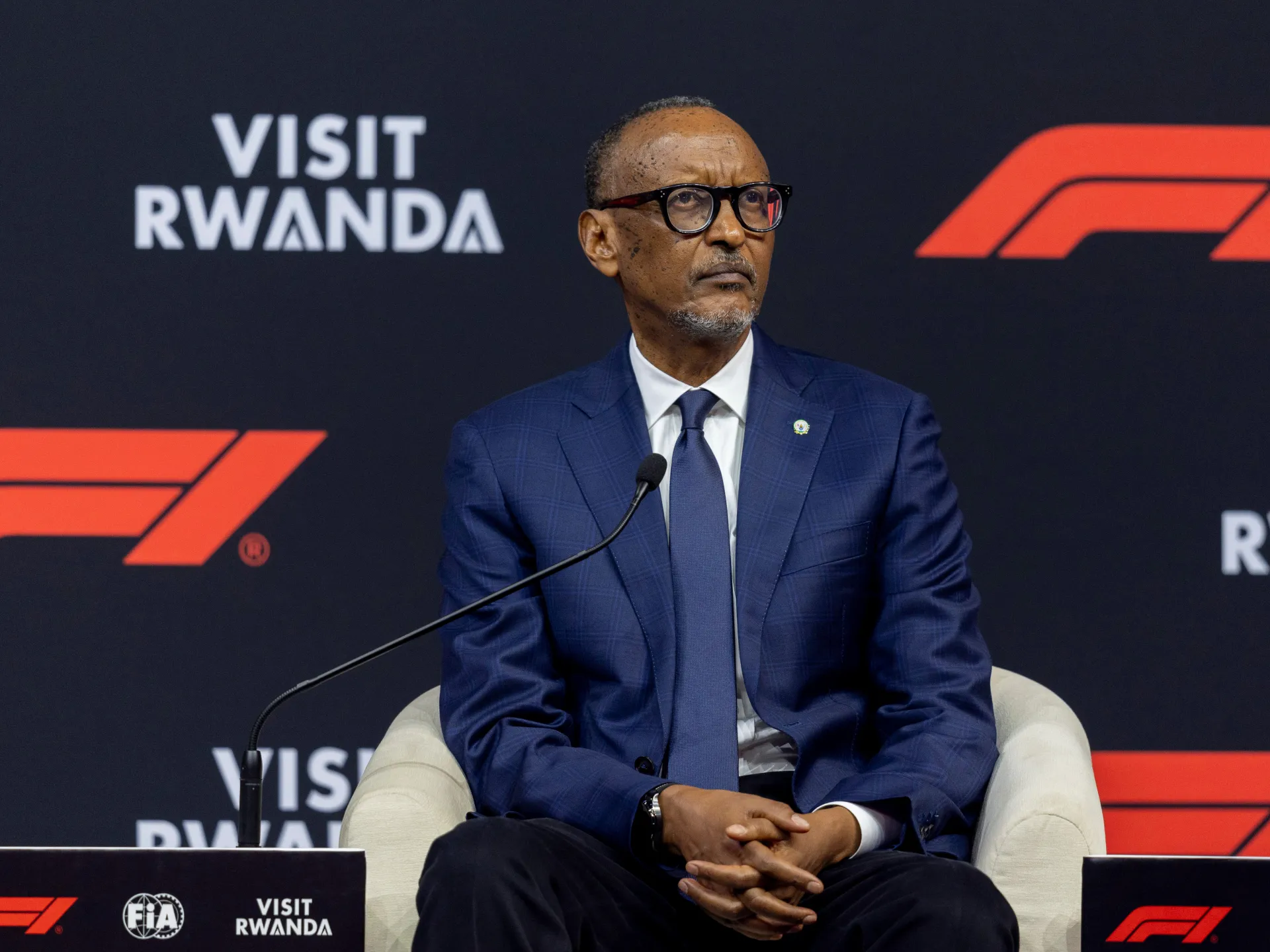
Formula 1 will “polish the image of an authoritarian leader” if it goes ahead with plans to hold an African Grand Prix in Rwanda, the foreign minister of neighbouring Democratic Republic of Congo, Therese Kayikwamba Wagner, said Thursday.
Rwandan President Paul Kagame joined F1 Chief Executive Stefano Domenicali and FIA President Mohammed Ben Sulayem on Tuesday to announce the race. It will be held at a circuit yet to be built at Bugesera, near Rwanda’s capital Kigali, in “the early 2030s,” F1 says. The series last raced in Africa in 1993.
Recommended Stories
list of 4 itemsend of list
The DRC, the United States and UN experts accuse Rwanda of backing M23 rebels in eastern DRC. Rwanda says its security measures are intended to protect it against threats from armed groups operating across the border.
“In February 2025, I warned Stefano Domenicali and the F1 authorities that allowing Rwanda to host a Grand Prix would be morally indefensible,” Kayikwamba Wagner said in a statement. “[The DRC] welcomes Formula 1’s return to Africa, but giving Paul Kagame this platform would help polish the image of an authoritarian leader whose government has helped fuel a devastating war in our country.”
Kayikwamba Wagner said the DRC backs rival efforts from South Africa to host a race instead.
“This is also an opportunity for F1 to show its audiences and supporters what the sport truly stands for,” she added. “It should require credible, independent guarantees that no money used to host the race comes from conflict-linked minerals or the exploitation of Congolese resources.”
The DRC has previously objected to other Rwandan efforts to promote its brand through sports, especially a string of high-profile sponsorship agreements with leading European football clubs.
The US imposed sanctions on Rwanda’s military and four senior officers in March over their support for M23 rebels in eastern DRC. Rwanda rejected the sanctions as one-sided and said they misrepresented the conflict.
Student protests against poor conditions in Albania’s education system have continued for a third day in the capital, Tirana, as Prime Minister Edi Rama insists he will not resign.
Demonstrators have called on Rama to quit in often violent protests since Tuesday. They have set fire to several buildings across the city, including the prime minister’s office, ministry buildings and branches of several banks.
Recommended Stories
list of 4 itemsend of list
Dozens of police officers and protesters have been injured amid attempts to disperse the crowds using water cannon and tear gas.
“What you are seeing is the boiling point of months of suppressed grievances,” Albanian journalist Arlis Alikaj told Al Jazeera.
A protester during clashes in Tirana on Tuesday demanding the resignation of Prime Minister Edi Rama [Hameraldi Agolli/AP]
Students have complained for months about the high cost of education and their limited employment prospects after graduation.
Afrim Krasniqi, a professor and researcher at the Institute for Political Studies in Tirana, told Al Jazeera that students and young people protested peacefully for nearly three months, “yet their demands were largely ignored, while the government often responded with discrediting campaigns rather than genuine dialogue”.
He added that the current escalation reflects “frustration not only with the government itself, but also with the lack of institutional accountability and responsiveness.”
The protests represent one of the most serious waves of public discontent directed at Rama, who won a fourth term last May but has since faced public anger over corruption allegations involving senior officials.
The unrest in Tirana coincides with a broader wave of student protests across Europe. In France, secondary school students have spent weeks protesting and blockading schools, demanding more teachers and better learning facilities. They have warned that deteriorating school buildings and overcrowded classrooms are undermining the quality of education.
Protests against Rama’s government began a few months ago, fuelled by plans to build a luxury resort along Albania’s largely unspoilt southern coast. Jared Kushner, US President Donald Trump’s son in law, is involved in the project.
Local media reported that the protests spread from Tirana to universities in Elbasan and Shkoder on Wednesday.
Albania is among the economies of the Western Balkans seeking to catch up with European living standards. However, the gap with the European Union average remains evident in purchasing power, wages, productivity and the quality of public services. Despite economic progress, the country continues to face challenges including emigration, regional inequalities and the need for stronger institutions and the rule of law.
After Montenegro, Albania stands out as one of the countries that has made the most progress towards full EU membership. However, behind the optimistic political rhetoric, frustration is growing among citizens over the slow pace of European integration and the lack of tangible improvements in their daily lives.
A protester throws a plastic bottle towards riot police during clashes in the Albanian capital on Thursday [Hameraldi Agolli/AP]
While opposition groups seek to support the demonstrators and capitalise on the moment to strengthen their own position, Alikaj said the protests are being driven by young people and students demanding systemic change.
On Thursday, Rama – who has been PM since 2013 – told Reuters, “As for calls for my resignation, governments change through democratic elections. Last year, we had elections, not a revolution.”
Sokol Lleshi, a lecturer at the University of New York Tirana specialising in political science and international relations, said social change is more likely to emerge from a broader coalition of different social groups, rather than mass mobilisation limited to university and secondary school students.
“Elite defection from the current ruling political elite could enable the institutional means to channel societal dissatisfaction or resentment into political and policy changes. Yet, the current student protest does not seem to replicate the December 2018 mass movement of university students and its effects”, Lleshi said.
The student protests that shook Albania in December 2018 began over rising education costs and forced Rama to dismiss eight ministers as part of a cabinet reshuffle and announce a package of measures known as the “Pact for the University”.
But some of the students’ demands remained unmet.
Lleshi drew some more positive conclusions from Albania’s past experience of social unrest.
Albanian society is polarised and unequal, “with hollowed intermediary political institutions”, he said, but the legacy of unrest and political confrontation will serve as a “warning to avoid destabilisation”, he said.
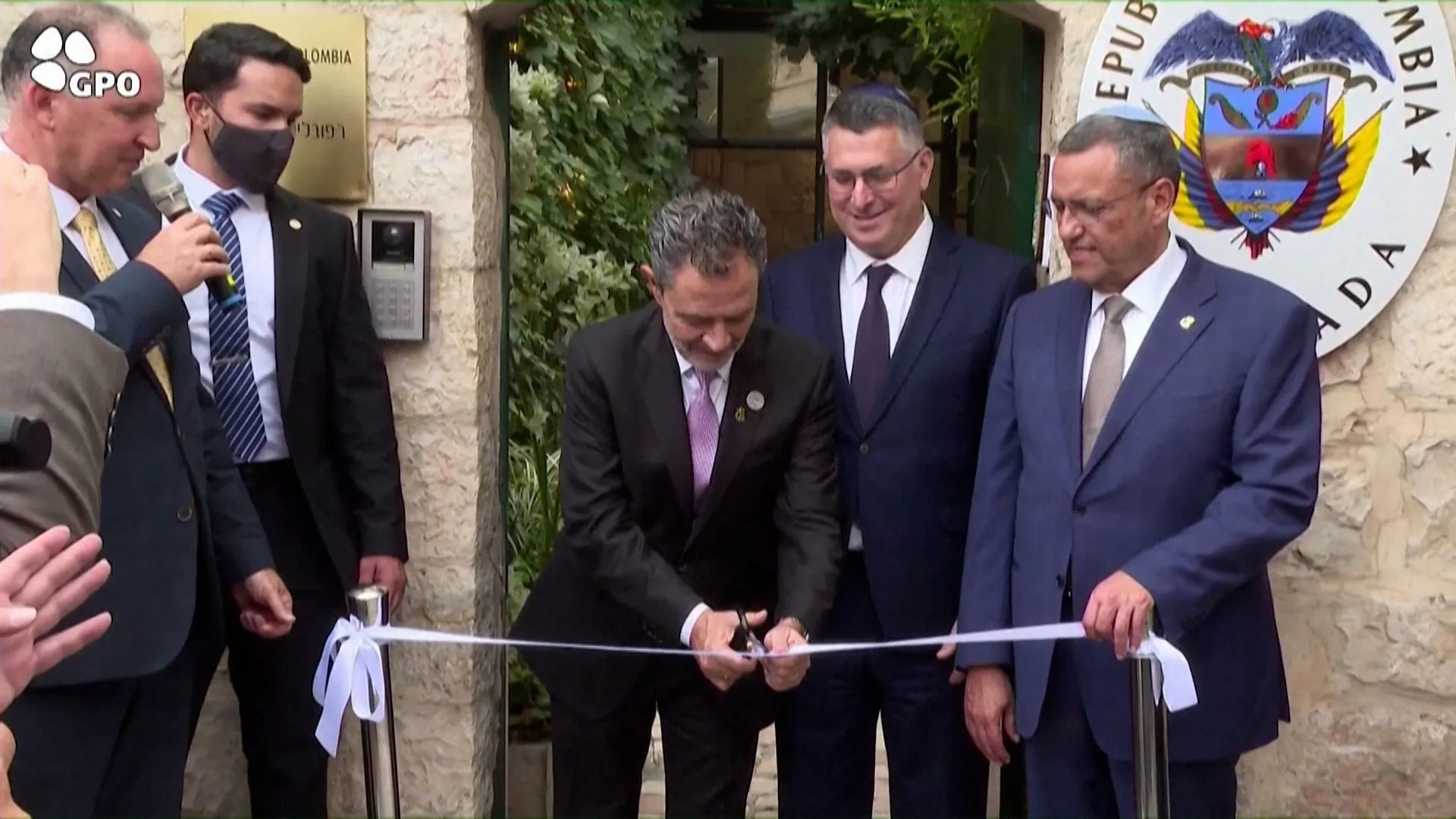
Colombia has opened an embassy in West Jerusalem under new far-right President Abelardo de la Espriella, who is reversing his predecessor’s break with Israel by also restoring a free trade agreement.
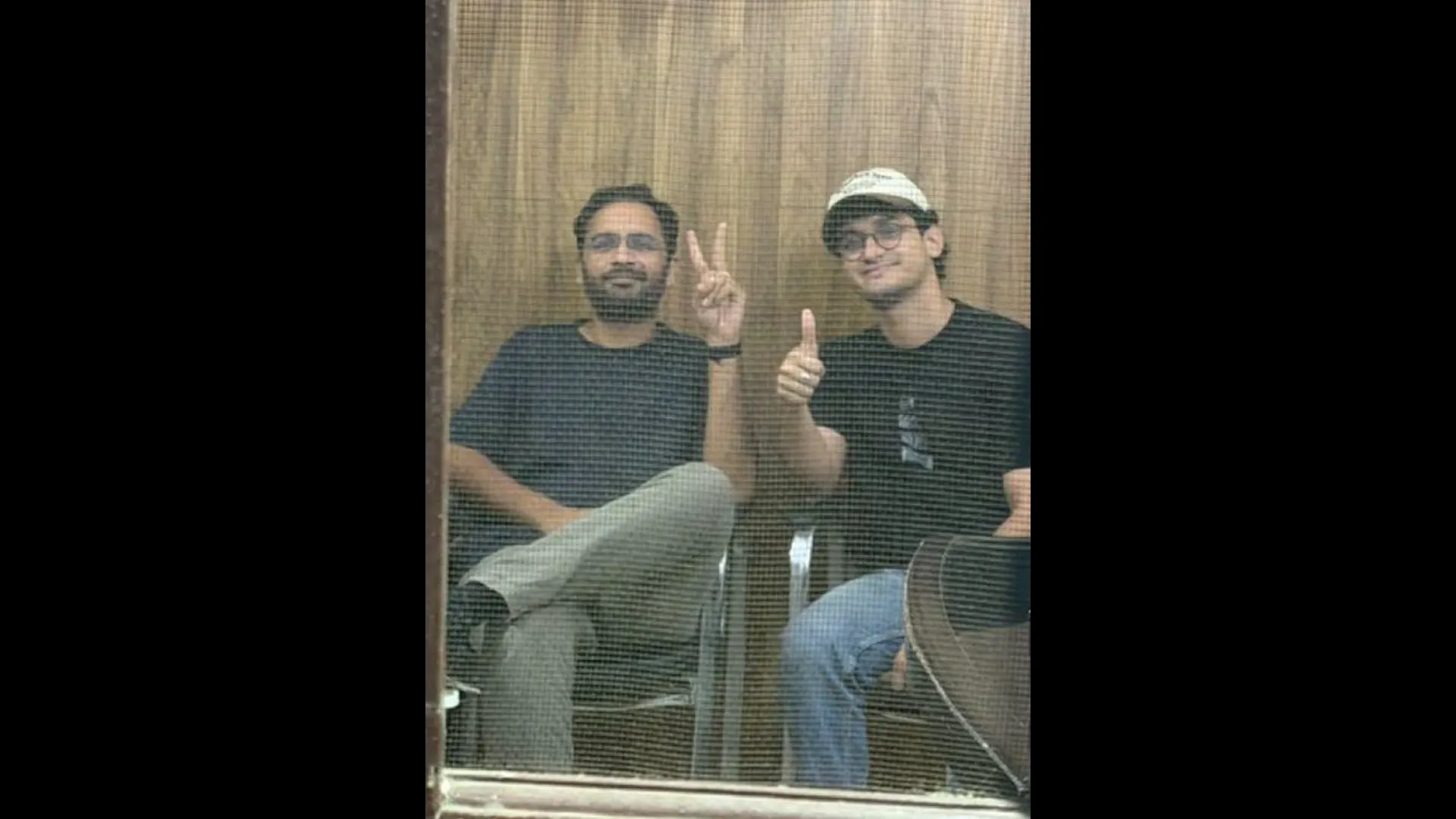
Two leaders of India’s Cockroach Janta Party have been jailed for five days after entering Delhi’s ‘Jantar Mantar’ protest site to demand the election chief’s resignation. The previously designated protest area recently lost its status as an authorised protest venue.
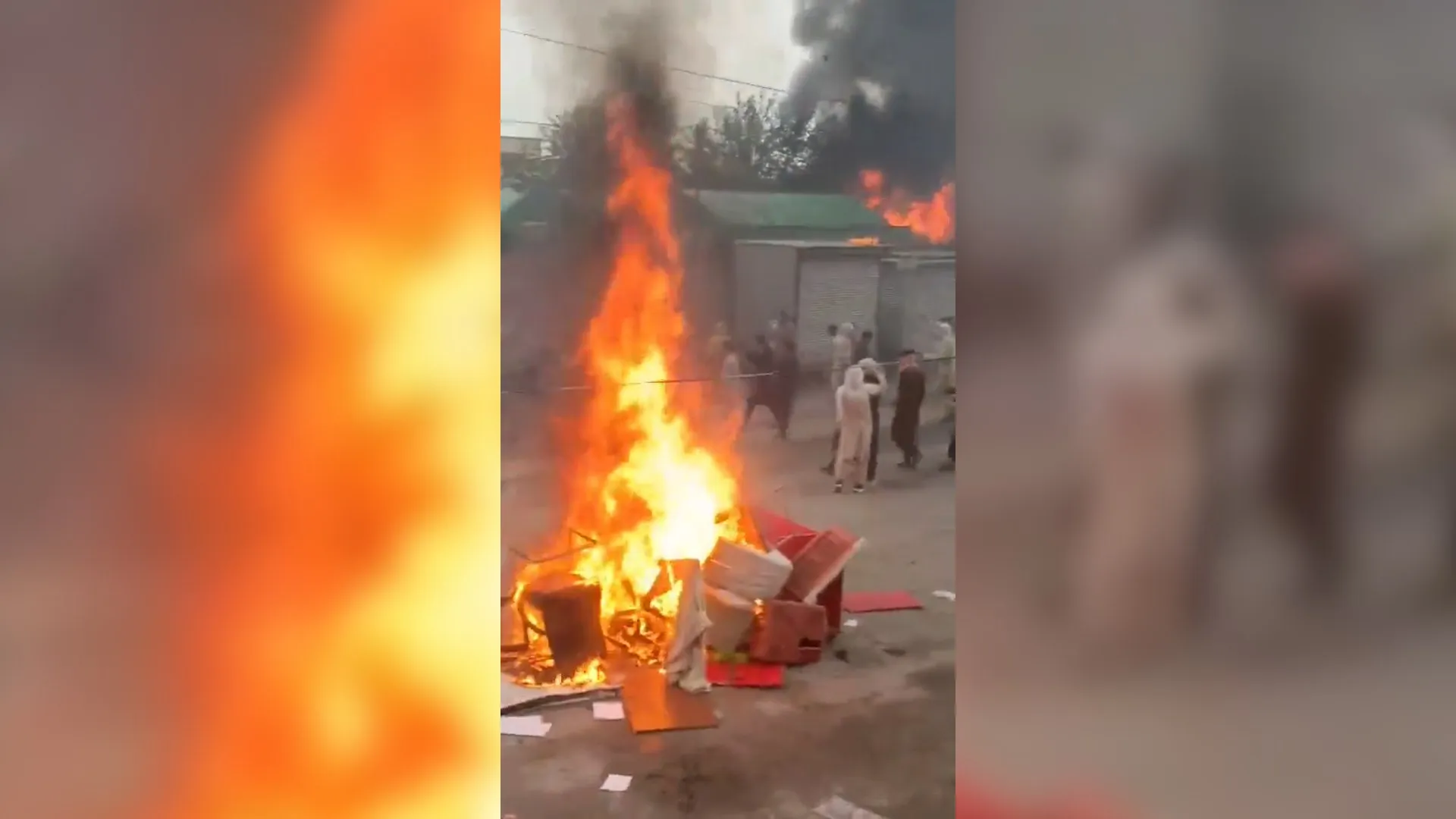
Protesters in Pakistan’s Khyber Pakhtunkhwa province clashed with police over emergency and governor’s rule put in place over the local government’s alleged failure to crackdown on Tehrik-e-Taliban Pakistan fighters. Police fired on protesters, injuring at least five people.
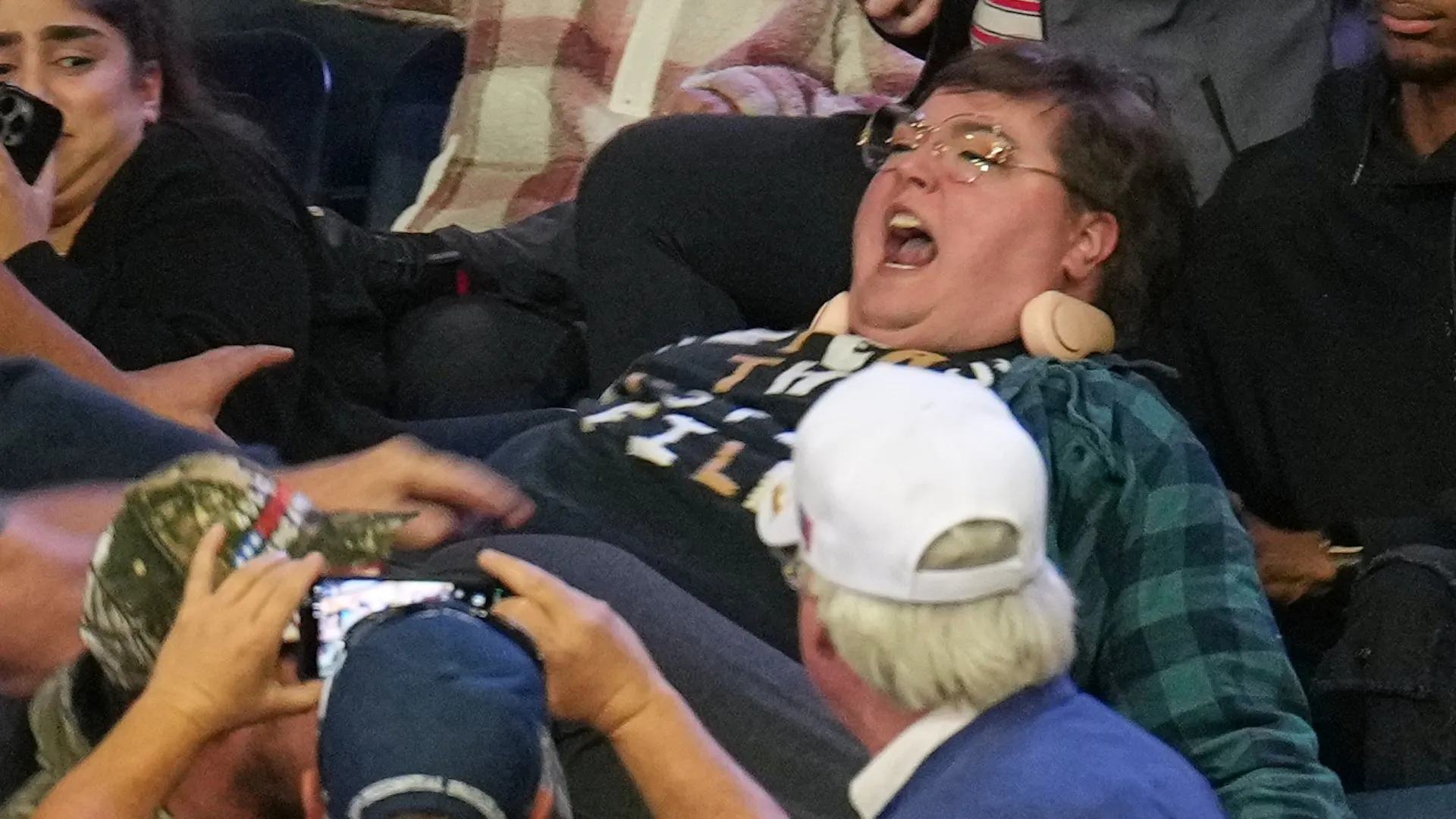
A protester wearing a ‘Release the Epstein files’ shirt was punched by Trump supporters at a Republican rally in Youngstown, Ohio. The US president mocked the protester as law enforcement officers took them away.
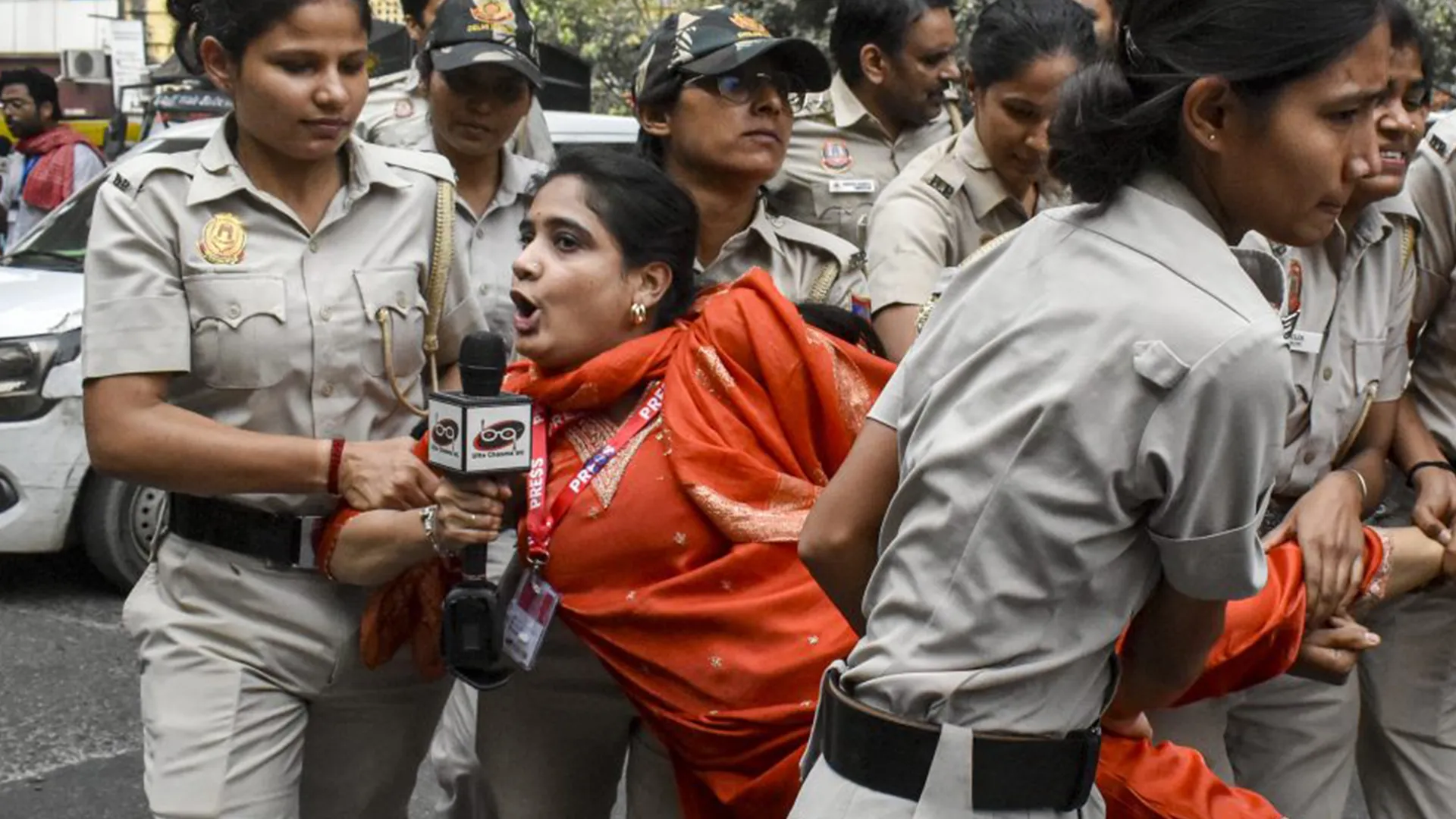
Police in India detained at least 35 media workers covering protests in New Delhi over a 48-hour period, according to the US-based Committee to Protect Journalists. Authorities allege they were obstructing police duties.
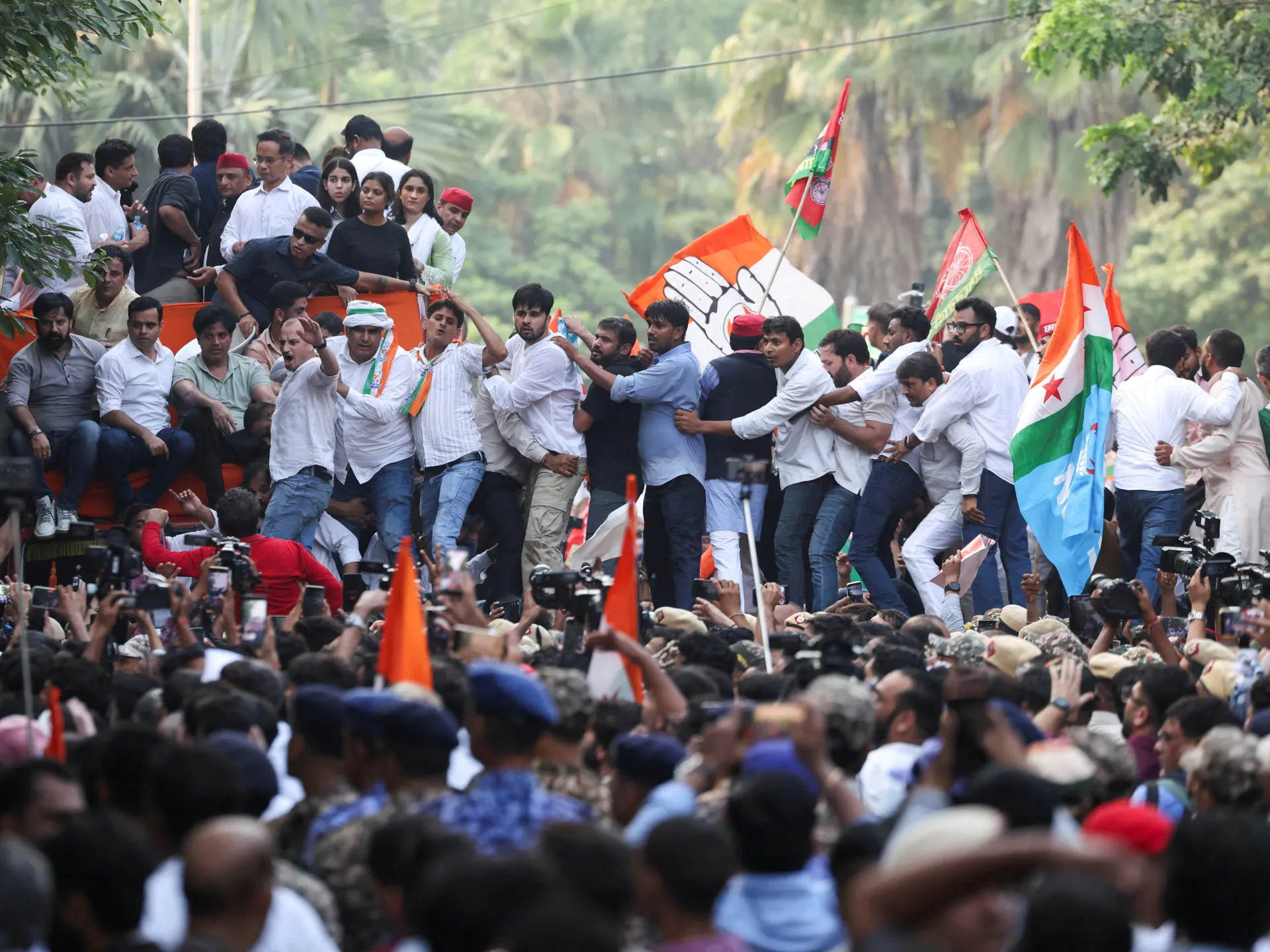
Thousands of protesters have marched in New Delhi, demanding the resignation of India’s top election official over alleged misconduct during a voter roll revision.
The demonstrations on Monday marked the latest confrontation with authorities in the heavily fortified capital.
Opposition parties and supporters of the youth-led Cockroach Janta Party protest movement have taken to the streets in recent days, defying a strict security clampdown to demand the government stop deleting voters from the rolls and calling for the resignation of Chief Election Commissioner Gyanesh Kumar.
More than 133 million names have been removed from voter lists since last year, according to media reports. About 969 million people were eligible to vote in India’s 2024 polls.
Critics say the large-scale revision of electoral rolls could benefit Prime Minister Narendra Modi’s ruling Hindu nationalist Bharatiya Janata Party (BJP).
The Election Commission of India, which oversees the voting process in the world’s most populous nation, has denied any wrongdoing.
Authorities deployed thousands of security personnel across central Delhi for a third straight day, erecting heavy metal barricades and closing key metro stations.
Public attention has also focused on the police response, after a weekend in which thousands of protesters, including organisers, were detained, according to local media reports.
Most of those detained, including three top leaders of the Cockroach movement, have since been released.
Several journalists covering the protests said they were detained despite clearly displaying their press cards.
The demonstrations have become a major political challenge for Modi, drawing together opposition parties, student groups and activists angered by the voter roll revision.
Critics say the measure has disproportionately affected minorities, particularly Muslims.
Election authorities say the move was intended to eliminate duplicate, deceased and fraudulent names.


![Demonstrators sit amid 40 tents set up to protest against housing shortage, soaring rents and low wages on Rossio square in central Lisbon on October 17, 2026. Thousands of people marched on October 17, 2026 through the centre of Lisbon at the call of the CGTP trade union to protest against increasingly difficult living conditions. The slogans and demands focus mainly on higher wages and pensions, as well as protests against the rising cost of housing and fuel. [Filipe Amorim/AFP]](https://i0.wp.com/occasionaldigest.com/wp-content/uploads/2026/10/AFP__20261017__D3LK2MC__v1__HighRes__PortugalPoliticsHousingDemo-1792267175.jpg?w=640&ssl=1)
![Riot police uses a water cannon against demonstrators in Brussels during a youth protest [Nicolas Maeterlinck/AFP]](https://i0.wp.com/occasionaldigest.com/wp-content/uploads/2026/10/afp_6ad3d52b2c56-1792267563.jpg?w=640&ssl=1)