Arrest comes after appeals court handed jail terms to opposition leaders, businessmen and lawyers on charges of conspiracy to overthrow President Kais Saied.
Published On 29 Nov 202529 Nov 2025
Share
Tunisian police have arrested prominent opposition figure Chaima Issa at a protest in the capital Tunis on Saturday, lawyers said.
The protest came after an appeals court on Friday handed jail terms of up to 45 years to opposition leaders, businessmen and lawyers on charges of conspiracy to overthrow President Kais Saied. Issa was handed a 20-year sentence during the trial.
Recommended Stories
list of 3 itemsend of list
“They will arrest me shortly,” Issa had told the Reuters news agency moments before her arrest.
“I say to the Tunisians, continue to protest and reject tyranny. We are sacrificing our freedom for you”.
She described the charges as unjust and politically motivated.
Police are also widely expected to arrest Najib Chebbi, the head of the opposition National Salvation Front, the main opposition coalition challenging Saied.
He received a 12-year prison sentence, and opposition figure Ayachi Hammami received a five-year sentence.
Human Rights Watch on Friday described the trial as a “travesty of justice”, saying it was “political, unfair, and without the slightest evidence” against the defendants.
In a statement to the AFP news agency, the US-based rights group condemned the “shameless instrumentalisation of the judiciary to eliminate Saied’s opponents”.
Meanwhile, UK-based rights group Amnesty International said the ruling was “an appalling indictment of the Tunisian justice system”, condemning “a relentless campaign to erode rights and silence dissent” in Tunisia.
During a sweeping power grab in July 2021, Saied suspended parliament and expanded executive power so he could rule by decree. Since then, the president has jailed many of his critics.
Many of the powers that Saied had taken for himself were later enshrined in a new constitution, ratified in a widely boycotted 2022 referendum, while media figures and lawyers critical of Saied have been prosecuted and detained under a “fake news” law enacted that same year.
Saied says his actions are legal and aimed at ending years of chaos and rampant corruption.
Photographer Yasin Akgul says he will continue on his path ‘with even more reporting’ following his acquittal.
Published On 27 Nov 202527 Nov 2025
Share
A Turkish court has acquitted four journalists accused of taking part in an allegedly unlawful demonstration they were covering in Istanbul earlier this year.
The ruling was issued on Thursday morning after the court found no evidence that the media workers – a photographer with the AFP news agency and three local journalists – had committed any offence, according to AFP and local media reports.
Recommended Stories
list of 3 itemsend of list
Those cleared are AFP’s Yasin Akgul, Ali Onur Tosun of Turkish broadcaster NOW Haber and freelancers Bulent Kilic and Zeynep Kuray.
Turkiye’s Hurriyet Daily News reported three other journalists had also been acquitted.
The reporters were arrested in March amid a mass protest movement triggered by the arrest of Istanbul’s Mayor Ekrem Imamoglu, who is a critic of President Recep Tayyip Erdogan. The Turkish government has rejected accusations of political interference, insisting the judiciary acts independently.
They, along with thousands of protesters, had been accused of violating Turkiye’s Law 2911 on meetings and demonstrations – a measure rights groups say is used to curb peaceful assembly.
Supporters of Law 2911 say that it is necessary for public order to regulate all protests and assemblies. They cite its legal basis for dispersing gatherings that impede public movement or violate security instructions.
‘Journalists must be allowed to work unhindered’
AFP, which had repeatedly called for Akgul’s acquittal, hailed the court decision.
“AFP welcomes the acquittal of Yasin Akgul and his colleagues. This case against photographers doing their job on the streets of Istanbul should never have been brought,” Phil Chetwynd, AFP’s global news director, said.
“Journalists must be allowed to cover demonstrations and protests unhindered,” he added.
Media rights group Reporters Without Borders (RSF) also welcomed the decision in a case it has described as “unlawful”.
AFP’s Akgul said the decision was expected even though it came late. “Now that the psychological strain of the trial process and my difficulty in focusing are gone, I will continue on my path with even more reporting,” he told AFP after the verdict. “The right decision has been made. I hope that other journalists who are still inside will also be freed as soon as possible.”
Dhaka, Bangladesh – Shahina Begum broke down in tears the moment a special court in capital Dhaka sentenced deposed Prime Minister Sheikh Hasina and her close aide, former Home Minister Asaduzzaman Khan, to death for crimes against humanity.
Begum’s 20-year-old son Sajjat Hosen Sojal was shot and his body burned by the police on August 5, 2024, hours before a student-led uprising forced Hasina to resign and flee the country she had ruled with an iron first for 15 years.
Recommended Stories
list of 4 itemsend of list
Prosecutors allege that six student protesters were killed that day in Ashulia, a readymade garments hub on the outskirts of Dhaka: five shot and their bodies burned, while another was allegedly burned alive inside the police station.
The killings, allegedly ordered by Hasina in a desperate bid to hang on to power, were part of a brutal crackdown by security forces on what is referred to in Bangladesh as the July Uprising, during which more than 1,400 protesters were killed, according to the United Nations.
After a months-long trial held in absentia as Hasina and Khan had fled to neighbouring India, Dhaka’s International Crimes Tribunal on Monday sentenced the two to death, while a third accused – former police chief Chowdhury Abdullah al-Mamun – was given a five-year jail term because he had turned a state witness.
“I cannot be calm until she [Hasina] is brought back and hanged in this country,” Begum told Al Jazeera on Monday night, as the historic verdict triggered a surge of emotions across the country of 170 million people.
“My son screamed for help inside that police station. No one saved him. I will not rest until those who burned him can never harm another mother’s child again.”
Begum with her son Sojal at the City University campus where he studied [Courtesy of Shahina Begum]
But as hundreds of families who lost their loved ones during last year’s uprising come to terms with Monday’s landmark sentencing, many wonder if Hasina will actually face justice.
There are questions around whether India, a close ally of Hasina during her 15 years of rule, would extradite her and Khan, or whether it might instead help them escape justice.
“They took five minutes to burn my son alive, but it took almost a year and a half to deliver this verdict,” said Begum from her ancestral home in Shyampur village in the northern Gaibandha district.
“Can this government really bring her back from India? What happens if the government changes and the next one protects Hasina and her collaborators? Who will guarantee that these killers won’t escape?”
‘Sentence must be carried out’
As hundreds gathered outside the tribunal building in Dhaka on Monday, Mir Mahbubur Rahman Snigdho – whose brother Mir Mugdho was shot dead during the uprising – said Hasina “deserves the maximum penalty many times over,” urging the authorities to bring her back to Bangladesh to enforce the judgement.
Standing close to him was Syed Gazi Rahman, father of killed protester Mutasir Rahman. He called for the sentence to be carried out “swiftly and publicly,” accusing Hasina of “emptying the hearts of thousands of families”.
Some 300km (186 miles) away, at Bhabnapur Jaforpara village in the northern district of Rangpur, family members of Abu Sayeed also welcomed the death sentence against the former prime minister.
Sayeed was the first casualty of the July Uprising, which started with mainly student-led protests against a controversial quota system for government jobs that disproportionately favoured the children of people who fought in the 1971 war for independence from Pakistan.
On July 16, 2024, Sayeed, a student leader, was shot dead by the police while demonstrating in Rangpur.
“My heart has finally cooled down. I am satisfied. She must be brought back from India and executed in Bangladesh without delay,” said his father, Mokbul Hossain.
“My son is gone. It pains me. The sentence must be carried out,” added his mother, Monowara Begum. She said the family distributed sweets to those visiting them after the verdict.
Sanjida Khan Dipti, mother of Shahriar Khan Anas, a 10th-grade student who was shot dead in Dhaka’s Chankharpul neighbourhood on August 5, 2024, told Al Jazeera the verdict is “only a consolation”.
“Justice will be served the day it is executed,” she said.
“As a mother, even 1,400 death sentences would be insufficient for someone who emptied the hearts of thousands of mothers. The world must see the consequences when a ruler unleashes mass killing to cling to power. God may grant you time, but He does not spare.”
Dipti said she was not satisfied with the verdict against former police chief al-Mamun.
“Abdullah al-Mamun should have received a longer sentence because, as part of the nation’s security force, he became a killer of our children,” she said.
‘No dictator should rise again’
Several processions were taken out in Dhaka and other parts of the country on Monday after Hasina was sentenced to death.
During a march inside the campus of the Dhaka University, Ar Rafi, a second-year undergraduate student, said they will rally to demand Hasina’s extradition from India.
“We are happy for now. But we want Hasina brought back from India and executed. We, the students, will remain on the streets until her sentence is carried out,” he told Al Jazeera.
Meanwhile, a group called Maulik Bangla staged a symbolic enactment of Hasina’s execution at Dhaka’s Shahbagh intersection area after the tribunal’s verdict.
“This is a message that no dictator should rise again,” said Sharif Osman bin Hadi, spokesperson for Inquilab Manch (Revolution Front), a non-partisan cultural organisation inspired by the July Uprising.
Political parties, including the main opposition Bangladesh Nationalist Party (BNP), and the Bangladesh Jamaat-e-Islami party, also welcomed the verdict.
“This judgement proves that no matter how powerful a fascist or autocrat becomes, they will one day have to stand in the dock,” BNP leader Salahuddin Ahmed told reporters on Monday.
Jamaat leader Mia Golam Porwar said the ruling proves that “no head of government or powerful political leader is above the law”, and that the verdict offers “some measure of comfort” to families of those killed during the uprising.
The United Nations human rights office said while it considered the verdict was “an important moment for the victims”, it stressed that a trial held in absentia and resulting in a death sentence may not have followed due process and fair trial standards, as it reiterated its opposition to capital punishment.
Rights group Amnesty International also raised concerns about the fairness of the trial, saying the victims “deserve far better” and warning that rushed proceedings in absentia risk undermining justice.
“Victims need justice and accountability, yet the death penalty simply compounds human rights violations. It’s the ultimate cruel, degrading and inhuman punishment and has no place in any justice process,” it said.
But the families of the victims say the verdict was a recognition of the brutality of the crackdown, and raises hopes for a closure.
“This verdict sends a message: justice is inevitable,” said Atikul Gazi, a 21-year-old TikToker from Dhaka’s Uttara area who survived being shot at point-blank range on August 5, 2024, but ended up losing his left arm.
A selfie video of him smiling – despite missing an arm – went viral last year, making him a symbol of resilience. “It feels like the souls of the July martyrs will now find some peace,” Gazi told Al Jazeera.
Earlier in the week, some Gen Z social media influencers said they no longer backed the protests, while mainstream figures like former President Vicente Fox published messages of support.
Thousands of people in Mexico City have taken part in protests against growing crime, corruption and impunity, which, though organised by members of Generation Z, ended up being mostly backed and attended by older supporters of opposition parties.
Saturday’s march was attended by people from several age groups, with supporters of the recently killed Michoacan Mayor Carlos Manzo, attending the protest wearing the straw hats that symbolise his political movement.
Recommended Stories
list of 4 itemsend of list
Earlier in the week, some Gen Z social media influencers said they no longer backed Saturday’s protests, while mainstream figures like former President Vicente Fox and Mexican billionaire Ricardo Salinas Pliego published messages in support of the protests.
Mexican President Claudia Sheinbaum also accused right-wing parties of trying to infiltrate the Gen Z movement, and of using bots on social media to try to increase attendance.
In several Asian and African countries this year, members of the Gen Z demographic group have organised protests against inequality, democratic backsliding and corruption.
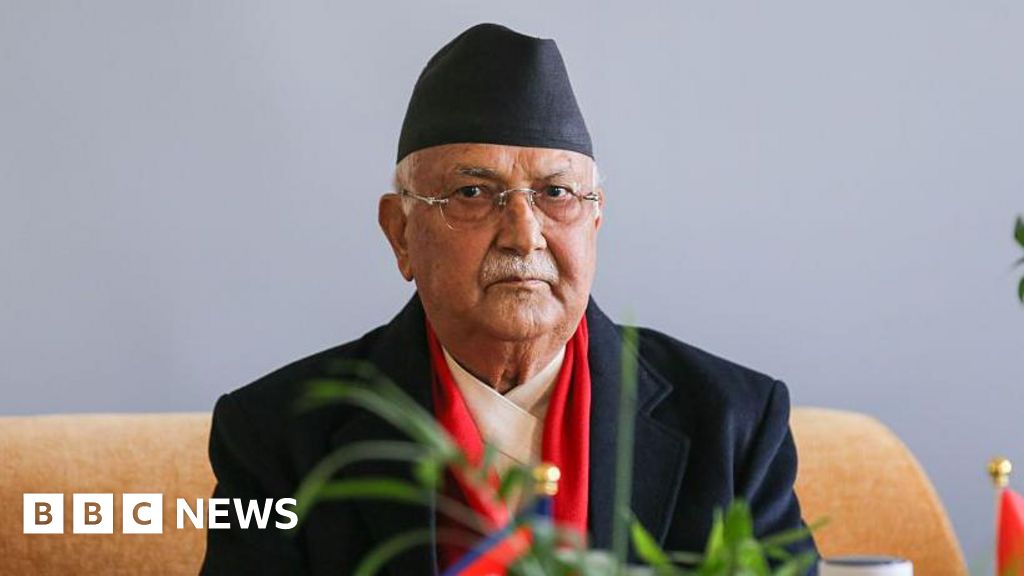
The largest Gen Z protests took place in Nepal in September, following a ban on social media, and led to former Prime Minister KP Sharma Oli’s resignation.
Madagascar also saw major protests that same month, initially driven by severe, prolonged water and electricity shortages that exposed wider government failures and corruption. The weeks of unrest led to the dissolution of the government, forcing President Andry Rajoelina to flee the country last month and regime change.
Saturday’s protests quickly turned violent, as “protesters accuse the federal government of repression”, reported Mexican news outlet El Universal.
Security forces fired tear gas and threw stones at protesters as they entered the perimeter of the National Palace, located in the city’s main square of Zocalo, El Universal reported.
“With their shields and stones, they [security forces] physically assaulted young people demonstrating in … Zocalo, who ended up injured and assisted by doctors who were also marching and ERUM [Emergency Rescue and Medical Emergencies Squadron] personnel,” said El Universal.
Police officers, after “chasing and beating protesters on the Zocalo plaza” for a few minutes, “forced people to leave the area and dispersed the last remaining protesters”, it added.
In Mexico, many young people say they are frustrated with systemic problems like corruption and impunity for violent crimes.
“We need more security,” said Andres Massa, a 29-year-old business consultant, who carried the pirate skull flag that has become a global symbol of Gen Z protests, told The Associated Press news agency.
Claudia Cruz, a 43-year-old physician who joined the protests, said she was marching for more funding for the public health system, and for better security because doctors “are also exposed to the insecurity gripping the country, where you can be murdered and nothing happens”.
President Sheinbaum still has high approval ratings despite a recent spate of high-profile murders, including that of Manzo.
The Los Angeles City Council will consider an ordinance that would prevent the LAPD from using crowd control weapons against peaceful protesters and journalists.
Councilmember Hugo Soto-Martínez, who represents District 13, is pushing for regulations that would prohibit the Los Angeles Police Department from using “kinetic energy projectiles” or “chemical agents” unless officers are threatened with physical violence.
The Public Safety Committee unanimously approved the proposal and forwarded a vote with all council members on Wednesday. The items would be considered by the council in November or December, said Nick Barnes-Batista, a communications director for District 13.
The ordinance would also require officers to give clear, audible warnings about safe exit routes during “kettling,” when crowds are pushed into designated areas by police.
After the first iteration of the “No Kings” protest over the summer that saw multiple journalists shot by nonlethal rounds, tear-gassed and detained, news organizations sued the city and Police Department, arguing officers had engaged in “continuing abuse” of members of the media.
U.S. District Judge Hernan D. Vera granted a temporary restraining order that restricted LAPD officers from using rubber projectiles, chemical irritants and flash bangs against journalists.
Under the court order, officers are allowed to use those weapons “only when the officer reasonably believes that a suspect is violently resisting arrest or poses an immediate threat of violence or physical harm.”
LAPD Chief Jim McDonnell called the definition of journalist “ambiguous” in a news release Monday, raising concerns that the preliminary injunction could prevent the LAPD from addressing “people intent on unlawful and violent behavior.”
“The risk of harm to everyone involved increases substantially,” McDonnell wrote. “LAPD must declare an unlawful assembly, and issue dispersal orders, to ensure the safety of the public and restore order.”
The L.A. Press Club, plaintiffs in the lawsuit that led to the injunction, has alleged journalists were detained and assaulted by officers during an immigration protest in August. The Press Club is also involved in a similar lawsuit against the U.S. Department of Homeland Security.
“This case is about LAPD, but if necessary, we are ready to take similar action to address misconduct toward journalists by other agencies,” the organization wrote in a news release from June.
Vera ruled in September that “any duly authorized representative of any news service, online news service, newspaper, or radio or television station or network” would be classified as a journalist and therefore protected under the court’s orders. Journalists who are impeding or physically interfering with law enforcement are not subject to the protections.
Any ordinance passed by the City Council would apply to the LAPD but not other agencies that could be responding to protests that turn chaotic, such as the Los Angeles County Sheriff’s Department or California Highway Patrol, thereby complicating operational procedure.
Barnes-Batista, the District 13 spokesman, said the City Council would need to discuss how to craft the rules.
“There are definitely unanswered questions about [how] the city wouldn’t want the city to be liable for other agencies not following policy,” he said. “So that will have to be worked out.”
Last month, the City Council, led by Councilmember Eunisses Hernandez, voted unanimously to deny a request by the city attorney, Hydee Feldstein Soto, to push for Vera’s injunction to be lifted.
“Journalism is under attack in this country — from the Trump Administration’s revocation of press access to the Pentagon to corporate consolidation of local newsrooms,” Hernandez said. “The answer cannot be for Los Angeles to join that assault by undermining court-ordered protections for journalists.”
Hundreds of protesters gathered to demand government action on the worsening air quality and pollution in India’s capital New Delhi. Protesters say the government must come up with a time-bound plan to address the pollution crisis.
PORTLAND, Ore. — A federal judge in Oregon ruled Friday that President Trump’s administration failed to meet the legal requirements for deploying the National Guard to Portland after the city and state sued in September to block the deployment.
The ruling from U.S. District Judge Karin Immergut, a Trump appointee, followed a three-day trial last week in which both sides argued over whether protests at the city’s U.S. Immigration and Customs Enforcement building met the conditions for using the military domestically under federal law.
The administration said the troops were needed to protect federal personnel and property in a city that Trump described as “war ravaged” with “fires all over the place.”
In a 106-page opinion, Immergut found that even though the president is entitled to “great deference” in his decision on whether to call up the Guard, he did not have a legal basis for doing so because he did not establish that there was a rebellion or danger of rebellion, or that he was unable to enforce the law with regular forces.
“The trial record showed that although protests outside the Portland ICE building occurred nightly between June and October 2025, ever since a few particularly disruptive days in mid-June, protests have remained peaceful with only isolated and sporadic instances of violence,” Immergut wrote. “The occasional interference to federal officers has been minimal, and there is no evidence that these small-scale protests have significantly impeded the execution of any immigration laws.”
The Trump administration criticized the judge’s ruling.
“The facts haven’t changed. Amidst ongoing violent riots and lawlessness, that local leaders have refused to step in to quell, President Trump has exercised his lawful authority to protect federal officers and assets. President Trump will not turn a blind eye to the lawlessness plaguing American cities and we expect to be vindicated by a higher court,” said Abigail Jackson, a White House spokeswoman.
“The courts are holding this administration accountable to the truth and the rule of law,” Oregon Atty. Gen. Dan Rayfield said in an e-mailed statement. “From the beginning, this case has been about making sure that facts, not political whims, guide how the law is applied. Today’s decision protects that principle.”
Democratic cities targeted by Trump for military involvement — including Chicago, which has filed a separate lawsuit on the issue — have been pushing back. They argue the president has not satisfied the legal threshold for deploying troops and that doing so would violate states’ sovereignty.
Immergut issued two orders in early October that had blocked the deployment of the troops leading up to the trial. The first order blocked Trump from deploying 200 members of the Oregon National Guard; the second, issued a day later, blocked him from deploying members of any state’s National Guard to Oregon, after he tried to evade the first order by sending California troops instead.
Immergut has called Trump’s apocalyptic descriptions of Portland “simply untethered to the facts.”
The 9th U.S. Circuit Court of Appeals has already ordered that the troops not be deployed pending further action by the appeals court. The trial Immergut held further developed the factual record in the case, which could serve as the basis for further appellate rulings.
Witnesses including local police and federal officials were questioned about the law enforcement response to the nightly protests at the city’s ICE building. The demonstrations peaked in June, when Portland police declared one a riot. The demonstrations typically drew a couple dozen people in the weeks leading up to the president’s National Guard announcement.
The Trump administration said it has had to shuffle federal agents around the country to respond to the Portland protests, which it has characterized as a “rebellion” or “danger of rebellion.”
Federal officials working in the region testified about staffing shortages and requests for more personnel that have yet to be fulfilled. Among them was an official with the Federal Protective Service, the agency within the Department of Homeland Security that provides security at federal buildings, whom the judge allowed to be sworn in as a witness under his initials, R.C., because of safety concerns.
R.C., who said he would be one of the most knowledgeable people in Homeland Security about security at Portland’s ICE building, testified that a troop deployment would alleviate the strain on staff. When cross-examined, however, he said he did not request troops and that he was not consulted on the matter by Homeland Security Secretary Kristi Noem or Trump. He also said he was “surprised” to learn about the deployment and that he did not agree with statements about Portland burning down.
Attorneys for Portland and Oregon said city police have been able to respond to the protests. After the Police Department declared a riot on June 14, it changed its strategy to direct officers to intervene when person and property crime occurs, and crowd numbers have largely diminished since the end of that month, police officials testified.
The ICE building closed for three weeks over the summer because of property damage, according to court documents and testimony. The regional field office director for ICE’s Enforcement and Removal Operations, Cammilla Wamsley, said her employees worked from another building during that period. The plaintiffs argued that was evidence that they were able to continue their work functions.
Rush and Johnson write for the Associated Press. Johnson reported from Seattle. AP staff writer Michelle L. Price contributed to this report from Palm Beach, Fla.
WASHINGTON — Hurling a sandwich at a federal agent was an act of protest for Washington, D.C., resident Sean Charles Dunn. A jury must decide if it was also a federal crime.
“No matter who you are, you can’t just go around throwing stuff at people because you’re mad,” Assistant U.S. Atty. John Parron told jurors Tuesday at the start of Dunn’s trial on a misdemeanor assault charge.
Dunn doesn’t dispute that he threw his submarine-style sandwich at a U.S. Customs and Border Protection agent outside a nightclub on the night of Aug. 10. It was an “exclamation point” for Dunn as he expressed his opposition to President Trump’s law enforcement surge in the nation’s capital, defense attorney Julia Gatto said during the trial’s opening statements.
“It was a harmless gesture at the end of him exercising his right to speak out,” Gatto said. “He is overwhelmingly not guilty.”
A bystander’s cellphone video of the confrontation went viral on social media, turning Dunn into a symbol of resistance against Trump’s months-long federal takeover. Murals depicting him mid-throw popped up in the city virtually overnight.
“He did it. He threw the sandwich,” Gatto told jurors. “And now the U.S. attorney for the District of Columbia has turned that moment — a thrown sandwich — into a criminal case, a federal criminal case charging a federal offense.”
A grand jury refused to indict Dunn on a felony assault count, part of a pattern of pushback against the Justice Department’s prosecution of surge-related criminal cases. After the rare rebuke from the grand jury, U.S. Atty. Jeanine Pirro’s office charged Dunn instead with a misdemeanor.
Customs and Border Protection Agent Gregory Lairmore, the government’s first witness, said the sandwich “exploded” when it struck his chest hard enough that he could feel it through his ballistic vest.
“You could smell the onions and the mustard,” he recalled.
Lairmore and other agents were standing in front of a club hosting a “Latin Night” when Dunn approached and shouted profanities at them, calling them “fascists” and “racists” and chanting “shame.”
“Why are you here? I don’t want you in my city!” Dunn shouted, according to police.
Lairmore testified that he and the other agents tried to de-escalate the situation.
“He was red-faced. Enraged. Calling me and my colleagues all kinds of names,” he said. “I didn’t respond. That’s his constitutional right to express his opinion.”
After throwing the sandwich, Dunn ran away but was apprehended about a block away.
Later, Lairmore’s colleagues jokingly gave him gifts making light of the incident, including a subway sandwich-shaped plush toy and a patch that said “felony footlong.” Defense attorney Sabrina Schroff pointed to those as proof that the agents recognize this case is “overblown” and “worthy of a joke.”
Parron told jurors that everybody is entitled to their views about Trump’s federal surge. But “respectfully, that’s not what this case is about,” the prosecutor said. “You just can’t do what the defendant did here. He crossed a line.”
Dunn was a Justice Department employee who worked as an international affairs specialist in its criminal division. After Dunn’s arrest, Atty. Gen. Pam Bondi announced his firing in a social media post that referred to him as “an example of the Deep State.”
Dunn was released from custody but rearrested when a team of armed federal agents in riot gear raided his home. The White House posted a highly produced “propaganda” video of the raid on its official X account, Dunn’s lawyers said.
Dunn’s lawyers have argued that the posts by Bondi and the White House show Dunn was impermissibly targeted for his political speech. They urged U.S. District Judge Carl Nichols to dismiss the case, calling it a vindictive and selective prosecution. Nichols, who was nominated by Trump, didn’t rule on that request before the trial started Monday.
Dunn is charged with assaulting, resisting, opposing, impeding, intimidating and interfering with a federal officer. Dozens of Trump supporters who stormed the Capitol were convicted of felonies for assaulting or interfering with police during the Jan. 6 attack. Trump pardoned or ordered the dismissal of charges for all of them.
Taiwan has brushed off China’s protest over a meeting between its representative and Japanese Prime Minister Sanae Takaichi at last weekend’s APEC summit, calling the encounter “very normal.” Beijing lodged a formal complaint with Tokyo after Takaichi met Taiwan’s APEC representative Lin Hsin-i on the sidelines of the summit in South Korea.
Takaichi had posted about the meeting on her X account, describing Lin as a senior adviser to the presidential office a remark that drew Beijing’s ire, as China claims Taiwan as part of its territory. Lin, a former economy minister, told reporters in Taipei that all APEC delegations “participated on an equal footing” and that such meetings were routine.
Why It Matters
The exchange underscores Taiwan’s determination to engage internationally despite China’s diplomatic pressure. APEC is one of the few global platforms where Taiwan participates, though its presidents are barred from attending. The meeting also signals Japan’s willingness to maintain contact with Taiwan amid growing regional tensions.
Taiwan: Reiterates its right to equal participation and rejects Beijing’s sovereignty claims.
China: Continues to oppose any official or symbolic recognition of Taiwan by other governments.
Japan: Balances unofficial ties with Taiwan while seeking stable relations with Beijing.
United States: Watches closely as Tokyo and Taipei deepen cooperation, given its own security interests in the region.
What’s Next
Beijing’s protest is unlikely to derail Japan-Taiwan engagement, but it could add friction to China-Japan ties already strained over regional security. With Prime Minister Takaichi’s past remarks about forming a “quasi-security alliance” with Taiwan, any future interactions between Tokyo and Taipei at multilateral events will be closely monitored by both Beijing and Washington.