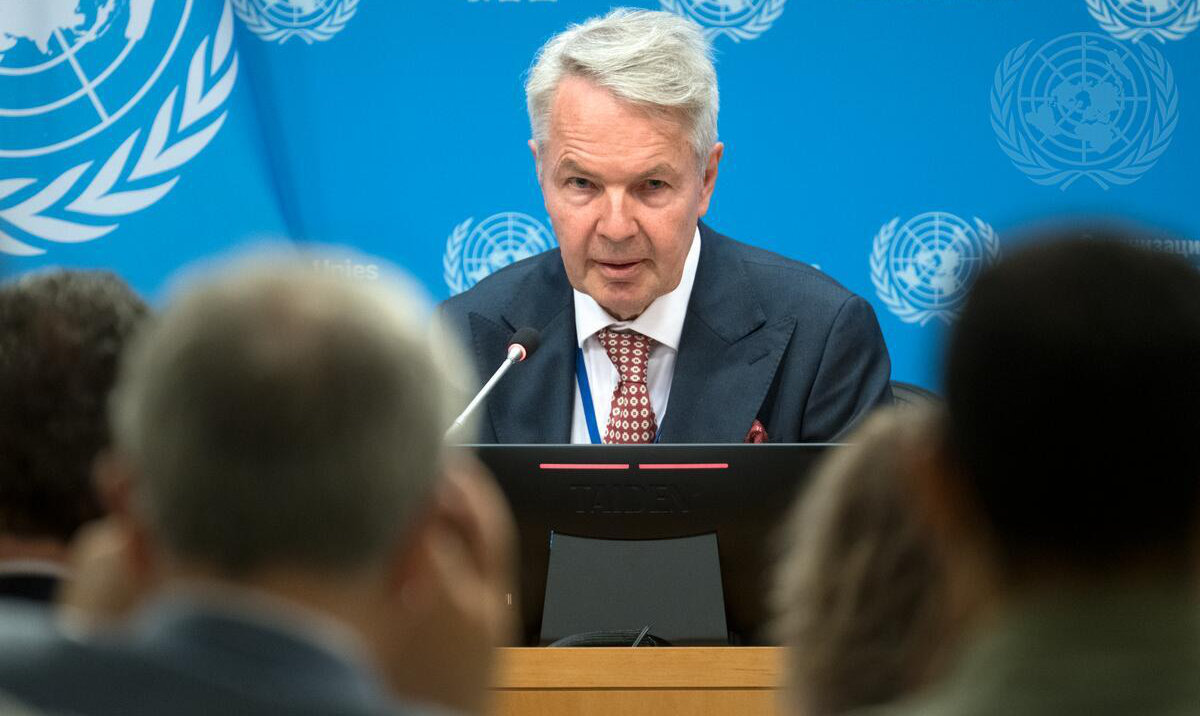
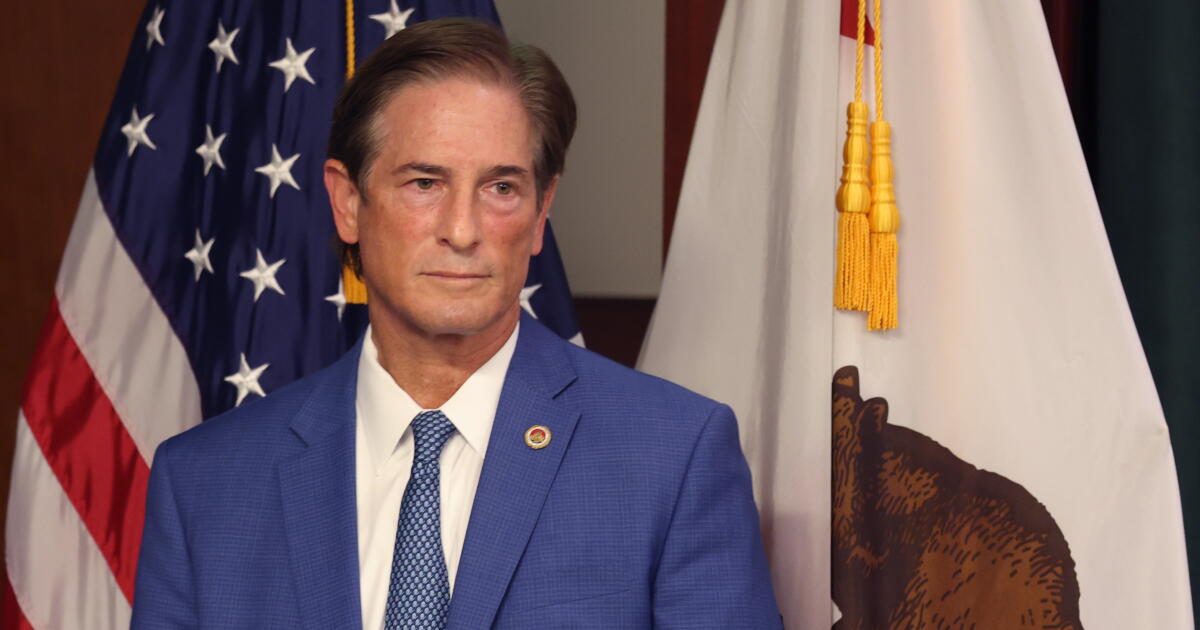
Alfredo Ruiz (left), Tarek William Saab (center) and Larry Devoe (right). (AFP)
Caracas, February 27, 2026 (venezuelanalysis.com) – Venezuelan National Assembly President Jorge Rodríguez announced on Wednesday that he had received the resignations of Attorney General Tarek William Saab and Ombudsman Alfredo Ruiz.
Both officials had been ratified in their positions in October 2024 for a seven-year term extending through 2031. Rodríguez did not specify the motives expressed by Saab and Ruiz in their resignation letters.
Following the officials’ departure, lawmakers declared a parliamentary urgency and appointed a 13-member committee tasked with selecting candidates and appointing new figures to both posts within 30 days.
In the interim, at Rodríguez’s proposal, the Venezuelan parliament appointed Saab as acting ombudsman, while naming Larry Devoe—formerly executive secretary of the National Human Rights Council—as acting attorney general.
Under normal legal procedure, Saab’s post would be temporarily filled by the deputy attorney general. However, Rodríguez explained that the position is currently vacant, requiring parliament to adopt extraordinary measures.
A lawyer by training, Tarek William Saab was part of the legal defense team for Hugo Chávez following the 1992 civil-military uprising and later represented relatives of leftist militants and guerrillas who were tortured or disappeared during the Fourth Republic period. He served as ombudsman from 2014 to 2017, when the National Constituent Assembly appointed him attorney general after the removal of his controversial predecessor Luisa Ortega Díaz.
As the country’s top prosecutor, Saab took charge of several high-profile cases, including the arrest of former Oil Minister Tareck El Aissami. Saab likewise headed Venezuela’s relations with the International Criminal Court, accusing the tribunal of “lawfare” in its investigation of human rights abuses committed by Venezuelan authorities.
Alfredo Ruiz, a professor and founding member of the social organization Red de Apoyo por la Justicia y la Paz (Support Network for Justice and Peace), had served as ombudsman since 2017.
Larry Devoe is a lawyer specializing in criminal and criminological sciences. He previously held several positions within the Ombudsman’s Office and was appointed executive secretary of the National Human Rights Council in 2014. He is currently a member of the Peace and Coexistence Program established in January by Acting President Delcy Rodríguez.
Following the temporary appointments, opposition lawmaker Henrique Capriles described Saab’s designation as acting ombudsman as “an insult to victims.”
Speaking to reporters after the legislative session, Capriles accused Saab of being “responsible for persecution and criminalization” in Venezuela and criticized his new role.
“It is an insult to victims, to those of us who expect that public powers in this country will change—that there will be institutions serving the interests of Venezuelans and not the government,” he said.
Regarding Devoe, Capriles argued that he is “someone close to the ruling party,” adding that the country “needs a truly independent attorney general and ombudsman.”
The resignations come amid the implementation of an Amnesty Law that has facilitated the release of detainees accused or convicted of political violence dating back to 1999. The legislation covers 13 specific periods between January 1, 1999, and 2026, mostly related to “protests and violent events.”
Jorge Arreaza, head of the National Assembly’s Special Commission for the Development and Implementation of the Amnesty Law for Democratic Coexistence, reported on Friday that 8,110 individuals have filed petitions for amnesty since the law’s approval last week.
According to the Socialist Party deputy, 223 individuals previously in prison have been released, while 4,534 people subject to parole-type measures—such as mandatory court appearances or house arrest—have been fully cleared.
Far-right politicians Freddy Superlano and Juan Pablo Guanipa, both accused by authorities of terrorism and criminal conspiracy, were among those released in recent days.
In total, 4,757 individuals have benefited from the law to date, according to Venezuelan officials. Arreaza added that Venezuela’s justice system remains on permanent alert to expedite procedures for cases that qualify for amnesty.
The following article contains spoilers forEpisode 7, “1:00 P.M.,” of “The Pitt” Season 2.
The education begins almost immediately. A young woman who has just experienced a sexual assault is in triage, and “The Pitt’s” Dr. Robby (Noah Wyle) enlists Dr. Al-Hashimi (Sepideh Moafi) to assist charge nurse Dana Evans (Katherine LaNasa) with the patient.
“We can call for a SANE,” another nurse suggests when Dana says she’ll be occupied.
“On a holiday? Could be hours,” responds Dana, a veteran who knows better, as the Fourth of July shift enters afternoon hours. “We’re not going to make this patient wait. And since I’m the only SANE on staff …”
A what? The quick reference sets in motion what “The Pitt” aims to shed light on: a sexual assault forensic exam, also known as a rape kit exam. The episode delves into the confidential medical procedure to collect DNA and evidence and gives one of the most detailed depictions of the process for television.
But before cameras venture into the room with the patient, Dana gives recent nursing school graduate Emma (Laëtitia Hollard) — and the audience — an overview. A SANE is a sexual assault nurse; they perform forensic exams, collect evidence and hand it over to the police, if a report is made. They also provide resources, support and may even testify in court.
The storyline serves a dual purpose, according to Kirsten Pierre-Geyfman, who co-wrote the episode with the show’s creator, R. Scott Gemmill. “We wanted to highlight the very important and incredible work of a SANE, especially in the department setting,” she says. “And we also wanted to see the bravery it takes for a survivor to come forward, let alone do a rape kit … It’s not an easy decision for somebody to make, and it’s not an easy process for somebody to go through.”
“I wanted people to understand the extent of the exam, I think that’s a misconception among a lot of people,” said Dr. Kathleen Sekula, a SANE at Duquesne University in Pittsburgh who also consulted the show’s team.
Ilana (Tina Ivlev) arrives at the ER in Episode 7 of “The Pitt.”
(HBO)
The case in Episode 7, “1:00 P.M.,” involves a visibly shaken young woman, Ilana, played by Tina Ivlev. The writing team knew they wanted to detail the process, not the trauma, Pierre-Geyfman said, so the information about what Ilana experienced is minimal: She was at a barbecue with friends when she was assaulted by a male friend.
“The thing that struck me was the fact the other shows might focus on what happened and then dive into that,” Ivlev said. “What I loved about this, the minute she starts talking about it, they cut [away]. There’s so much underneath it. I wanted it to be similar to real life when you have a traumatic situation happen — sometimes you can be hyperfocused on certain details, then other things are cloudy. Her head is spinning. She’s in shock.”
As with many of “The Pitt’s” cases, the story serves to bolster the emotional arc of the show’s healthcare providers, in this case Dana, who assists with the exam from start to finish as the department’s certified SANE nurse. Last season, she was brutally punched in the face by a disgruntled patient while taking a smoke break. That violent attack left her rattled and contemplating an exit from the job, but after taking a few weeks off, she ultimately returned to work — though the assault’s lingering impact has sharpened her edges.
“With Dana’s arc and her own assault last season, she’s definitely calcified a little this season,” Pierre-Geyfman said. “She’s trying to create a little bit of distance between her and her patients, and is really trying to prioritize her nurse’s safety. You see her struggle a little bit with that with this patient. She’s wanting to do more for her.”
On screen, the assessment begins with Dr. Al-Hashimi checking to see if Ilana has any injuries that need immediate attention and getting an intake of prescription medications and any known allergies to medications. Securing two triage rooms to complete the exam as a way to ensure privacy in the busy emergency department, Dana, with help from Emma, begins the evidence collection while carefully outlining the process to Ilana. For starters, once Dana opens the kit, Ilana cannot leave the room but is free to take a break as needed.
To avoid contamination, Dana puts on a face shield and opens the kit, which is a rectangle-shaped box that contains items like paper bags to store evidence and swabs for collecting biological samples. The first step requires Ilana to change into a robe, undressing on top of pads placed on the floor so each item of clothing can be packaged into separate bags and collected as evidence. She’ll be given new clothes, Dana assures her. Dana raises a large piece of cloth to give Ilana privacy as she completes the process.
Eventually Dr. Al-Hashimi returns to examine Ilana, checking for any pain on her body or need for X-rays or imaging — she notes two areas of bruising to be documented by Dana with photos. Dana seals the camera’s memory card in an evidence envelope. Next, with the lights off, Dana runs a black light over Ilana’s body. Dana relays that if there’s a part of Ilana’s skin that glows, she’ll swab it with a wet, then dry, cotton swab. Dana next swabs Ilana’s mouth — the inside of her cheek and along the gum line — and her finger nails. At various points, Dana is careful to assess Ilana’s comfort with each step and uses statements like “This will not define you,” while Ilana shows signs of stress about the length of the process.
Emma (Laëtitia Hollard) assists Dana (Katherine LaNasa), who leads the exam as the SANE (sexual assault nurse) on duty.
(HBO)
At one juncture, an advocate from Pittsburgh Action Against Rape, otherwise known as PAAR, arrives to further detail the resources and assistance they can offer, a service that’s available regardless of whether a patient decides not to complete the rape kit exam. Throughout the process, Ilana is assured that she can complete the exam even if she’s vacillating on whether to file a police report — that decision can be made at a later time and none of it goes on her permanent medical record. But when the exam pivots to external and internal vaginal collection, Ilana panics once she’s instructed to place her feet in stirrups to get into position. Dana suggests a break.
“I don’t want a break, I want to stop,” Ilana proclaims. “He’s my friend. He knows all my friends. It was just a dumb — he was drunk. He didn’t mean — it didn’t mean anything.”
It brings a pause to the process, which will carry over into Episode 8. In trying to show the scope of the exam, the medical drama takes liberties in its completion time. Sekula said it’s rare for an exam to be completed in under three to four hours.
Not all nurses are certified to be a SANE, and certification requirements vary by state, according to Sekula. It’s a role that requires extreme attention to detail and thoroughness, as their work bridges the healthcare and legal systems. While preparing for the episode, Hollard said she marveled at the precise protocols involved and the support that’s provided.
“On a technical level, it’s so meticulous,” Hollard said. “There’s so many parts, so many envelopes. You have to take these swabs and they can’t touch each other. And the legality of it all — the way this kit is happening is how they would do it with PAAR in Pittsburgh, but that’s not the same way they do it in California, or [the way] they do it in different states.”
While “The Pitt” is frequently recognized for its hyperrealistic medical procedures, the episode’s director, Uta Briesewitz, knew she wanted to film the exam in a way that mirrored the sensitivity healthcare professionals strive to exhibit, with shots that weren’t invasive or fixated on Ilana’s body. For example, when Ilana is undressing, the camera is fixed on Dana being mindful to give her privacy even in their close proximity — an out of focus glimpse of Ilana’s bare backside comes only when getting a reaction of Emma taking in the weight of the moment. Later, when the blue light is being run down Ilana’s body, her hospital gown is carefully place to avoid exposure. In addition to a SANE consultant being on set to assist with queries about the process, there was also an intimacy coordinator to help with the comfort level of filming the scenes.
“On a technical level, it’s so meticulous,” said Laëtitia Hollard of the process. “There’s so many parts, so many envelopes. You have to take these swabs and they can’t touch each other.”
(HBO)
“It was a very sensitive line because women can get re-traumatized,” Briesewitz said. “I remember one of our more detailed conversations with our SANE nurse was about when Dana had to look with the black light for bodily fluid. How do we make sure she would not miss anything but, at the same time, give the victim the feeling that they’re still protected? It was super helpful to have our SANE advisor on set to say the way she would do it. ‘One arm comes out of the sleeve, then I hold up her gown this way, and I would do it like that …’”
LaNasa found her time at the UCLA Health Rape Treatment Center crucial to chart both her character’s ease in the room and her sensitivity to the task at hand: “I went back a second time because I knew I was going to have to use the kit … I wanted it to look like I had used the kit many times and I knew what I was doing.”
Reflecting on the case as a mirror to her character’s journey, LaNasa pointed out that Dana never pressed charges against Doug Driscoll, the man who assaulted her.
“It’s different in this situation,” LaNasa acknowledged. “I thought it was great information that we got out of this, which is that you can go and do a rape kit, you can have the evidence collected, and you don’t have to decide on that day when you’re traumatized if you want to press charges or not. I think that part of Dana’s hypervigilance is probably because there was no justice for her. I think why she’s cracked this season is because she didn’t take care of herself. She’s reeling from that. She let him beat her up. At the same time, she doesn’t want Tina’s character to feel any pressure, but I think she wants it for her. She wants her to have the ability to change her mind later.”
“We’re going to hear Dana, later in the season, refer back to this process that these people have to go through, in defense of a sexual assault victim,” LaNasa teased. “It’s big on her mind. She’s been doing it quite a while.”
Warner Bros. Discovery is cracking open the door to allow spurned bidder, Paramount Skydance, to make its case — but Warner’s board still maintains its preference for Netflix’s competing proposal.
Warner’s move to reopen talks comes after weeks of pressure from Paramount, which submitted an enhanced offer to buy Warner last week. Paramount’s willingness to increase its offer late in the auction attracted the attention of some Warner investors.
On Tuesday, Warner Bros. Discovery responded with a letter to Paramount Chairman David Ellison and others on Paramount’s board, giving the group seven days to “clarify your proposal.”
“We seek your best and final proposal,” Warner board members wrote. Warner set a Feb. 23 deadline for Paramount to comply.
The closely watched sale of the century-old Warner Bros., known for “Batman,” “The Big Bang Theory,” “Casablanca,” and HBO, the home of “Game of Thrones” and “Succession,” is expected to reshape Hollywood.
The flurry of activity comes as Warner Bros. Discovery and Netflix are seeking to enter the home stretch of the auction. Warner separately issued its proxy and set a special March 20 meeting of its shareholders to decide the company’s fate.
Warner Bros. Discovery is recommending that its stockholders approve the $82.7-billion Netflix deal.
“We continue to believe the Netflix merger is in the best interests of WBD shareholders due to the tremendous value it provides, our clear path to achieve regulatory approval and the transaction’s protections for shareholders against downside risk,” Warner Chairman Samuel A. Di Piazza, Jr., said in a Tuesday statement.
Still, the maneuver essentially reopens the talks.
Warner Bros. is creating an opportunity for Paramount to sway Warner board members, which could perhaps prompt Netflix to raise its $27.75 a share offer for Warner’s Burbank-based studios, vast library of programming, HBO and streaming service HBO Max.
Netflix is not interested in buying Warner Bros. Discovery’s basic cable channels, including CNN, TBS, HGTV and Animal Planet, which are set to be spun off to a stand-alone company later this year.
In contrast, Paramount wants to buy the entire company and has offered more than $30 a share.
Last week, Paramount sweetened its bid for Warner, adding a $2.8-billion “break fee” that Warner would have to pay Netflix if the company pulled the plug on that deal. Paramount also said it would pay Warner investors a “ticking fee” of 25 cents a share for every quarter after Jan. 1 that the deal does not close.
“While we have tried to be as constructive as possible in formulating these solutions, several of these items would benefit from collaborative discussion to finalize,” Paramount said last week as it angled for a chance to make its case. “We will work with you to refine these solutions to ensure they address any and all of your concerns.”
Netflix agreed to give Warner Bros. Discovery a temporary waiver from its merger agreement to allow Warner Bros. Discovery to reengage with Paramount, which lost the bidding war on Dec. 4.
“We granted WBD a narrow seven-day waiver of certain obligations under our merger agreement to allow them to engage with PSKY to fully and finally resolve this matter,” Netflix said Tuesday in a statement. “This does not change the fact that we have the only signed, board-recommended agreement with WBD, and ours is the only certain path to delivering value to WBD’s stockholders.”
Netflix has matching rights for any improved Paramount offer. The company renewed its confidence in its deal and its prospect to win regulatory approval.
“PSKY has repeatedly mischaracterized the regulatory review process by suggesting its proposal will sail through, misleading WBD stockholders about the real risk of their regulatory challenges around the world,” Netflix said in its statement. “WBD stockholders should not be misled into thinking that PSKY has an easier or faster path to regulatory approval – it does not.”
Warner Bros. Discovery acknowledged that Paramount’s recent modification “addresses some of the concerns that WBD had identified several months ago,” according to the letter to Paramount.
But Warner Bros. Discovery added Paramount’s offer “still contains many of the unfavorable terms and conditions that were in the draft agreements … and twice unanimously rejected by our Board,” Warner Bros. Discovery said.
Warner’s board told Paramount it will “welcome the opportunity to engage” during the seven-day negotiation period.
Paramount has been pursuing the prized assets since last September.
“Every step of the way, we have provided PSKY with clear direction on the deficiencies in their offers and opportunities to address them,” Warner Chief Executive David Zaslav said in a statement. “We are engaging with PSKY now to determine whether they can deliver an actionable, binding proposal that provides superior value and certainty for WBD shareholders.”
North Korea appears to have begun designating leader Kim Jong-un’s (R) daughter Ju-ae (C) as successor, Seoul’s spy agency told lawmakers Thursday. In this photo, Ju-ae is seen with her parents at a New Year’s event on Dec. 31, 2025. File Photo by KCNA/EPA
North Korea appears to have entered the stage of designating leader Kim Jong-un’s daughter Ju-ae as the successor, the spy agency was quoted as saying by lawmakers Thursday, marking a stepped-up assessment from its earlier evaluation of her as the “most likely successor.”
The National Intelligence Service (NIS) cited signs of Ju-ae expressing her views on certain state policies as one of the grounds for its latest assessment during a closed-door briefing to the parliamentary intelligence committee, Reps. Park Sun-won and Lee Seong-kweun told reporters.
“As Kim Ju-ae has shown her presence at various events, including the founding anniversary of the Korean People’s Army and her visit to the Kumsusan Palace of the Sun, and signs have been detected of her voicing her opinion on certain state policies, the NIS believes she has now entered the stage of being designated as successor,” Lee said.
Lee said the latest assessment marked a step forward from the agency’s previous views when it described Ju-ae as being “trained” to become a successor, to now assessing her as being at the stage of “successor designation.”
The NIS also said it will keep close tabs on whether she attends the North’s key party congress late this month.
In January 2024, the NIS assessed Ju-ae, believed to be born in 2013, as the North’s “most likely successor” in its first evaluation of her possible succession in the reclusive regime.
Earlier in January, Ju-ae paid tribute at the Kumsusan Palace of the Sun, the Kim family’s mausoleum, for the first time, together with her parents amid growing speculation about her potential succession.
If Ju-ae appears at the party congress or is awarded with an official title at the event, speculation about her being groomed as Kim’s successor will likely gain traction.
Meanwhile, on talks between the United States and North Korea, the NIS noted, “There is a possibility that North Korea could respond to dialogue with the U.S. if certain conditions are met.
“North Korea has expressed dissatisfaction with the U.S. over the South Korea-U.S. fact sheet or the deployment of U.S. strategic assets on the Korean Peninsula, but it has not ruled out the possibility of talks with the U.S. and has refrained from criticizing President Donald Trump,” the spy agency said.
The NIS also noted that the North has refrained from firing intercontinental ballistic missiles (ICBMs) apparently to avoid provoking Trump, who is sensitive to such missile launches.
Around 10,000 North Korean combat troops and 1,000 engineer troops are currently deployed in the front-line Kursk region of Russia to support Moscow’s war with Ukraine, the spy agency said, with an estimated 6,000 North Korean soldiers killed or injured.
Some 1,100 combat and engineer troops that returned to the North last December could be dispatched again, it added.
“Despite suffering 6,000 casualties, the North Korean military has achieved the results of acquiring modern combat tactics and data in the battlefield, as well as upgrading its weapons systems with technical assistance from Russia,” the NIS said.
The agency also noted that Pyongyang has established a new department on unmanned aerial vehicles and is accelerating efforts to set up a system capable of developing and mass-producing drones.
As for inter-Korean relations, the NIS said North Korea is continuing to maintain its rhetoric of defining the two Koreas as “two hostile states,” adding that it has recently given guidelines to its officials and overseas missions to avoid engagement with South Korea.
On North Korea’s ties with China, the agency said they have “not gained momentum yet.”
“Although trade between North Korea and China reached US$3 billion last year, the highest in six years, this is only half the level before the imposition of sanctions,” it said.
Meanwhile, the intelligence committee discussed the issue of repatriating two North Korean soldiers held by Ukrainian forces.
The government is making every effort to assist their defection to South Korea as they have expressed their willingness to defect to the South, the NIS said.