Deaths of immigrants held in US detention centres have surged during Donald Trump’s second term.
Published On 26 Jun 202626 Jun 2026
The United Nations High Commissioner for Human Rights, Volker Turk, has called for an independent investigation into the severe uptick in deaths in migrant detention centres during President Donald Trump’s second term in office.
In a statement on Friday, Turk expressed concern over the lack of transparency over those deaths, at least 19 of which have occurred so far this year, according to US government statistics.
Recommended Stories
list of 3 itemsend of list
“Those responsible for violations of the law must be held to account, and the rights of the victims’ families to truth, justice and reparation and guarantees of non-recurrence must be upheld,” the UN rights chief said.
Deaths in immigrant detention centres have surged during Trump’s second term in office, a by-product of what rights groups and immigration lawyers have depicted as systematic neglect, inhumane conditions and abuses.
The Trump administration has sought to rapidly expand the network of immigrant detention centres, some operated by private contractors, as it seeks to carry out the mass deportation of immigrants in the US.
Trump stated in a social media post on Friday that his administration has the “Highest Average Daily Arrest Rate by ICE and CBP, including Total Detention, with Final Orders of Removal, than any other president, by far!”
The reported death of a Georgian man, Mamuka Artmeladze, in a detention facility in Louisiana on June 4 increased the number of fatalities so far this year to 19, compared to 33 last year and 11 in 2024.
“The mortality rate of deaths in ICE custody is at its highest level in over a decade and has more than doubled since Trump’s second term began,” the watchdog group Human Rights Watch wrote in a report on detention deaths earlier this month. “The rate is nearly four times that of the Biden administration and more than two and a half times as high as that of the first Trump administration.”
That report said the 52 people who have died in detention during Trump’s second term ranged in age from 19 to 75 and came from 20 different nationalities.
Turk wrote on Friday that there have been “concerning allegations regarding the use of force” at such facilities and that five of the deaths recorded in 2026 were classified as suicides.
He also expressed concern over the reported use of solitary confinement, which is associated with a heightened risk of suicide and considered a form of torture by the UN after a period of 15 days.
“All these factors exacerbate vulnerability and raise serious concerns as to whether some of these deaths in ICE custody could have been prevented,” he said.
A hospital has launched an investigation after the medical details of a child seriously injured in a crocodile pit were accessed by up to 40 members of staff.
Cambridge University Hospitals (CUH) said it was exploring if there were legitimate reasons for the records to be accessed and it had referred itself to the Information Commissioner’s Office (ICO).
“Where any member of staff is found to have accessed patient records without legitimate clinical or operational reasons we take robust disciplinary action,” it added.
Officers said they were called to the zoo at 13:34 BST on 18 June.
Police said the boy, who was from Cambridgeshire and visiting the zoo with his family, sustained serious injuries “while in the enclosure” and was pulled out by members of staff.
A 30-year-old man from Norfolk was subsequently arrested and bailed on suspicion of attempted murder.
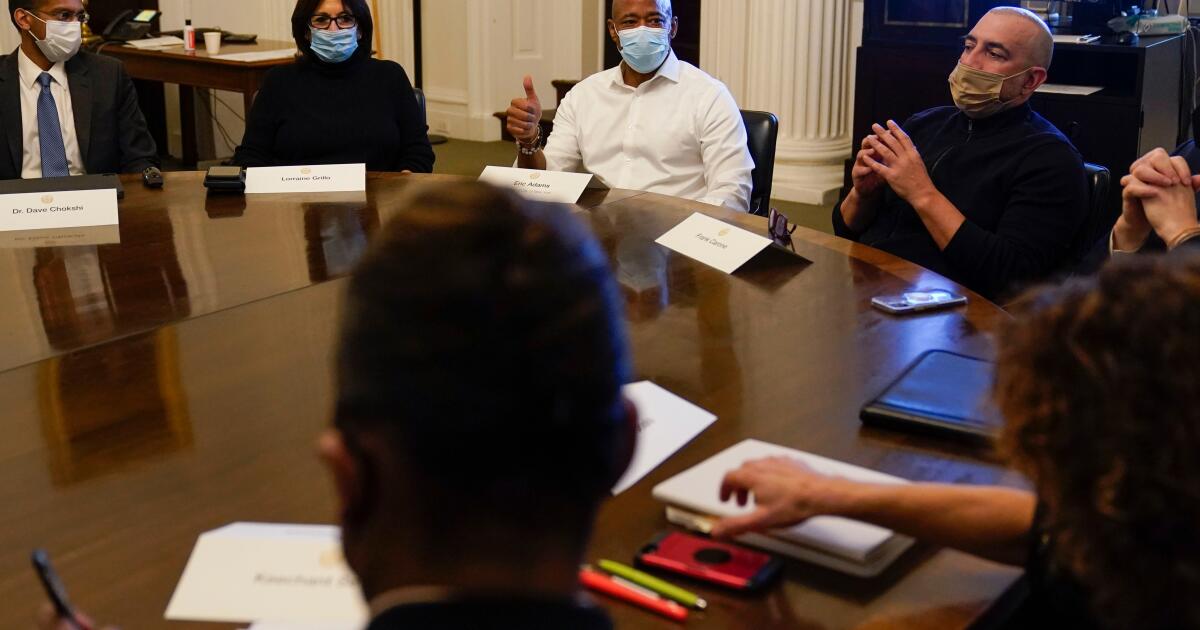
NEW YORK — A chief of staff to former New York City Mayor Eric Adams has been charged with accepting more than $100,000 in bribes to steer a lucrative migrant shelter contract to a Queens hotel, according to a federal indictment unsealed Wednesday.
Frank Carone’s arrest Wednesday was the latest in a string of corruption allegations that have rocked the one-term mayor and his inner circle. And it came the same day federal authorities executed search warrants related to a separate bribery investigation involving high-ranking police officials under Adams, the latest sign that prosecutors are continuing to hone in on the previous administration.
In the indictment, returned June 12, prosecutors accused Carone of leveraging his position as Adams’ chief of staff to commit multiple acts of bribery, wire fraud and money laundering. His brother, Anthony Carone, as well as the Queens hotel owner, Yan Po Zhu, and Crystal Chen, an employee of the hotel, were also charged.
They were expected to appear in federal court in Brooklyn on Wednesday afternoon.
Prosecutors said Carone accepted a series of bribes from Zhu and Chen in order to steer a multimillion dollar shelter contract to their hotel, which city officials had said was smaller than two other proposed hotels and could house fewer migrants. The contract was awarded amid an influx of migrants to New York that overwhelmed the city’s homeless shelters.
Frank Carone’s lawyer, Arthur Aidala, called the new indictment “not worth the paper upon which it is printed.”
“Today’s indictment is a sad day for our criminal justice system,” Aidala said in a statement. “It epitomizes the government first finding a target and then spending three years and enormous taxpayer resources to find a crime.”
Frank Carone known for link to Sabrina Carpenter church controversy
Carone, a longtime Brooklyn power broker, is widely credited as one of the architects of Adams’ political rise. Among the wider public, he is perhaps most notorious for his role in an episode that led to a Brooklyn pastor being stripped of his duties partly for allowing pop star Sabrina Carpenter to film scenes for a provocative music video at his Roman Catholic church.
The church was later subpoenaed by federal investigators seeking information about business dealings between Monsignor Jamie Gigantiello, who approved the video, and Carone.
Adams himself was indicted on bribery charges in 2024 for allegedly accepting illegal campaign contributions from Turkish officials and others in exchange for political favors. The case was tossed by the Justice Department, which said it was distracting Adams from assisting in President Trump’s immigration crackdown. Adams has denied wrongdoing but abandoned his campaign for a second term last year.
The former mayor was not accused of wrongdoing in Carone’s indictment.
A lawyer for Zhu, Stephen Scaring, said the hotel owner “will be entering a plea of not guilty and is anxious to establish his innocence.”
Chen’s lawyer declined to comment. Messages were left for Anthony Carone’s lawyer.
Hotel at center of alleged bribery had been rejected by city
In total, Frank Carone was paid around $120,000 by Zhu and Che for the emergency shelter contract, prosecutors said. The money was passed through a law firm owned by his brother, Anthony Carone, according to the indictment.
The city’s Social Services Department had initially rejected the hotel’s application to house migrants due to growing resistance to the high number of shelters already operating in the neighborhood, the indictment said.
Carone then interceded on the hotel’s behalf, prosecutors allege. In one text exchange in September 2022, Zhu wrote: “Thank you my big guy,” according to the indictment.
The Carones and Zhu socialized frequently and attended gatherings at Zhu’s Long Island home, the indictment said.
In a separate statement, Todd Shapiro, a spokesperson for Adams, said Frank Carone “dedicated decades of his life to public service, the legal profession, and helping countless individuals, businesses, and charitable organizations throughout New York.”
Carone played a key role in Adams’ campaign for mayor in 2021 and served as Adams’ chief of staff in 2022. In 2023, he formed a political consulting firm. He also was a one-time lawyer for the Brooklyn Democratic Party.
Separately Wednesday, federal agents searched the homes of current and former New York Police Department leaders as part of a bribery investigation that grew out of an inquiry into Jeffrey Maddrey, the chief of department under Adams, according to a law enforcement official briefed on the searches.
As part of that inquiry, the FBI and the NYPD executed warrants on the home of NYPD Chief of Manhattan South James McCarthy and former Deputy Commissioner Tarik Sheppard, according to the person, who requested anonymity because they were not authorized to discuss the investigation.
Maddrey’s home was also searched by federal agents, the person said.
The searches were not related to the arrest of Frank Carone, according to another person familiar with the matter who also spoke on condition of anonymity because they were not authorized to publicly discuss details of the case. There is no public indication of any arrests as part of those searches.
Once the highest-ranking uniformed officer in the department, Maddrey resigned in late 2024 over allegations that he demanded sex from a subordinate in exchange for opportunities to earn extra pay.
An inquiry to his attorney was not immediately returned. Attorney information for Sheppard and McCarthy was not immediately available.
Collins, Offenhartz, Sisak and Richer write for the Associated Press. Collins reported from Hartford, Conn., and Richer reported from Washington.
MINNEAPOLIS — A federal judge has blocked an attempt by the Trump administration to subpoena Minnesota Gov. Tim Walz and other state officials, calling it an effort to “harass and retaliate against them.”
In a ruling unsealed Monday, U.S. District Judge Patrick Schlitz found the “dominant purpose” of the subpoenas was to “coerce Minnesota officials into assisting the federal government with enforcing civil immigration law and to harass and retaliate against them for failing to do so.”
The subpoenas were served in January as part of an investigation into whether Walz and other officials obstructed or impeded law enforcement during a sweeping immigration operation in the Minneapolis-St. Paul area.
The subpoenas, which seek records, were sent to the offices of Walz, Atty. Gen. Keith Ellison, Minneapolis Mayor Jacob Frey, St. Paul Mayor Kaohly Her and officials in Ramsey and Hennepin counties.
The judge ruled that there appeared to be “extremely weak to nonexistent” connections between the information sought in the subpoenas and any possible criminal violation. The subpoenas seek materials “that largely if not entirely relate to constitutionally protected conduct,” the judge wrote, noting that Minnesota has the legal right not to devote its resources to enforcing federal immigration law.
The Justice Department “is not conducting a criminal investigation,” the judge wrote, “but is instead using the grand jury process for other (unlawful) purposes.”
The evidence that the subpoenas were issued for unlawful reasons is overwhelming, the judge said, arguing that the Justice Department “has struggled — without success — to identify a single plausible investigatory justification” for them.
Walz, in a statement, called the ruling “a victory for the rule of law and our democracy.”
“The U.S. Justice Department is pursuing criminal investigations into the President’s political opponents,” said Walz, the 2024 Democratic nominee for vice president. “This case was just one example of that, but we are seeing daily reminders of this administration’s lawlessness — in Minnesota and around the country. We all must continue to seek justice and uphold the rule of law.”
Ellison said “it should disturb every American that Donald Trump is weaponizing the criminal justice system against people he disagrees with.”
The subpoenas are “a politically motivated retaliation against our city for lawfully standing up to ICE and fighting for our residents,” Her said in a statement, referring to U.S. Immigration and Customs Enforcement.
Frey said the investigation was “never about justice, law, and order, but the absence of it.”
“Subpoenaing political opponents because they spoke on behalf of their constituents violates the core tenets of our democracy and human decency,” he said.
Frey also observed that criticizing government action is not a crime.
“One of the defining strengths of our democracy is the ability to challenge those in power without fear of retribution. Elected officials have both the right and the responsibility to speak honestly about how government decisions affect the people they serve,” he said.
Bauer and Richer write for the Associated Press. AP writer Eric Tucker in Washington contributed to this report.
LAUSD Superintendent Alberto Carvalho interacts with students in a classroom at Marlton School in Los Angeles on August 15, 2022. Carvalho submitted his resignation to the LAUSD school board on Sunday. File Photo by Etienne Laurent/EPA-EFE
June 22 (UPI) — The superintendent of the Los Angeles Unified School District, Alberto Carvalho, has resigned months after the FBI raided his home and offices, the school board announced Monday.
The LAUSD Board of Education said it received Carvalho’s letter of resignation Sunday.
“The Board remains steadfast in its commitment to ensuring stability, continuity and continued progress through strong leadership,” a statement said. “Our focus remains unchanged: providing every student with a high-quality education, supporting our dedicated workforce and maintaining the trust of the communities we serve.”
The board said former teacher and principal Andrés Chait would continue as acting superintendent until a permanent hire to replace Carvalho is made.
Carvalho’s letter, obtained by the Los Angeles Times, said he resigned to allow the district to focus on students “without distraction.”
The district put Carvalho on administrative paid leave after the FBI executed search warrants at his home and the district’s headquarters in February. Agents were spotted leaving Carvalho’s San Pedro home with boxes at the time.
The raid was connected to an FBI investigation into LAUSD contracts and a failed artificial intelligence project, KTLA-TV in Los Angeles reported.
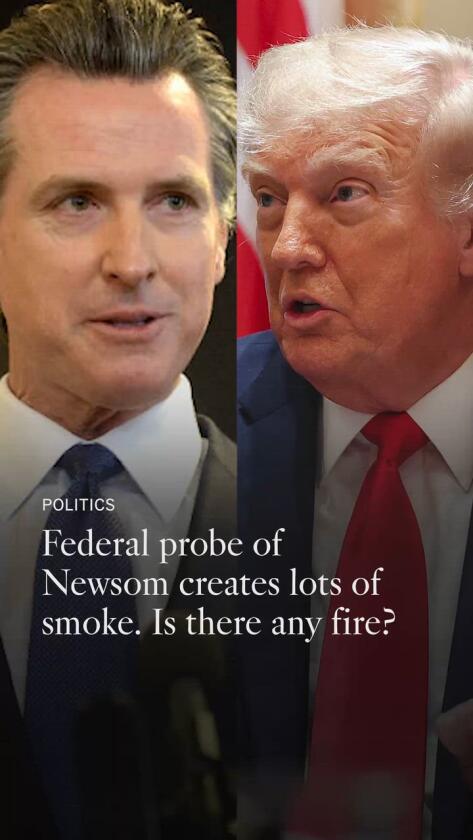
This is widely seen as a throw-me-in-the-briar-patch gift from President Trump, coming as California’s governor edges ever closer toward a 2028 run for the White House. The presumed effort to cut down a political foe could instead boost Newsom’s chances of winning the Democratic nomination, or so it’s being suggested.
After all, look at how Trump’s verbal bludgeoning elevated former Rep. Adam Schiff. The House has typically been a dead end for lawmakers seeking statewide office in California. Today, the former Burbank congressman and Trump tormentor is a United States senator.
In truth, however, it’s far too early to say how the investigation of Newsom and his wife plays out politically, not least because it’s unclear whether there’s merit to the probe or if it’s merely a fruitless search-and-destroy mission by Trump’s Department of Retribution, Vengeance and Settling Old Scores
Beyond that, the first ballots of the 2028 campaign won’t be cast for roughly a year and a half. The Democratic National Convention, where the party will install its nominee, doesn’t begin for another 778 days.
Your friendly political columnist won’t resort to that hoariest of cliches about such-and-such duration being a lifetime in politics. But for some perspective, let’s go back 778 days.
President Joe Biden was running for reelection and about to challenge Trump to a pair of early debates. Trump was sequestered in a New York City courtroom being prosecuted on 34 felony counts.
A lot happened in the weeks and months that followed, including Biden’s self-immolation on the debate stage and Trump’s criminal conviction. A lot more will happen in the weeks and months to come. There’s no telling what. But it’s safe to say the fight for the 2028 Democratic presidential nomination will not be decided by anything that’s taken place in June 2026.
With his exquisitely tuned political antennae, the governor jumped out front of the president by announcing last week the feds were targeting him and his wife. (Naturally, Newsom’s revelation was accompanied by a rage-bait email — subject line: “Because I am thinking of running for president” — that denounced the “political witch hunt” and asked for money.)
“After calling for my arrest last year, Donald Trump directed his Department of Justice to investigate me,” Newsom said in a 4 ½-minute, direct-to-camera video that framed the investigation before prosecutors had the chance. “And just in the last week, I’ve learned his campaign has reached my own home: To get me, he’s coming after my wife, Jen.”
Share via
Newsom and his wife both adamantly denied any wrongdoing and, of course, they must be presumed innocent until and unless proven otherwise.
But there was something a bit disingenuous about the governor’s chivalrous defense. Siebel Newsom, a documentary filmmaker who calls herself California’s “First Partner,” is no mere housewife baking cookies and holding teas, in the famous words of Hillary Rodham Clinton. (Hold the outrage, folks, this is not some retrograde criticism of career-seeking women.)
Among her many public-facing activities, Siebel Newsom heads The Representation Project, a nonprofit focused on challenging gender stereotypes. The organization has faced criticism for accepting donations from companies that lobby the governor, so it’s not unreasonable to ask whether those interests have improperly sought to influence Newsom by giving money to Siebel Newsom’s causes.
My Times colleagues reported that an investigation related to Siebel Newsom has been underway for about a year and was launched by federal prosecutors in Sacramento based on whistle-blower information provided in California. It was not, their source said, the result of a directive out of Washington.
“This is a huge problem,” Randall Eliason, former chief of the Public Corruption Section of the U.S. Attorney’s Office in Washington, told Politico. “In any political corruption prosecution, the defense almost always claims it is a ‘political witch hunt,’ that prosecutors are targeting him or her for some political reason.
“The best defense to that has always been [the Justice Department’s] tradition of independence from politics and long track record of pursuing corruption cases based only on the facts and law, without regard to political considerations,” Eliason said. “The Trump administration has abandoned that independence without even trying to hide it.”
The probe of Newsom and his wife presents more questions than answers.
It’s grody, but not criminal on its face, for lobbyists to curry favor with the governor by throwing cash at his wife’s endeavors — if, in fact, that’s been the case. Special interests spending money to gain access and influence is about as common in Sacramento and other capitals as statues, domed buildings and manicured lawns.
So why then are the feds investigating Newsom? Why now? Is there any fire, or is it all a lot of smoke?
Perhaps most important, where can you turn to get an impartial answer?
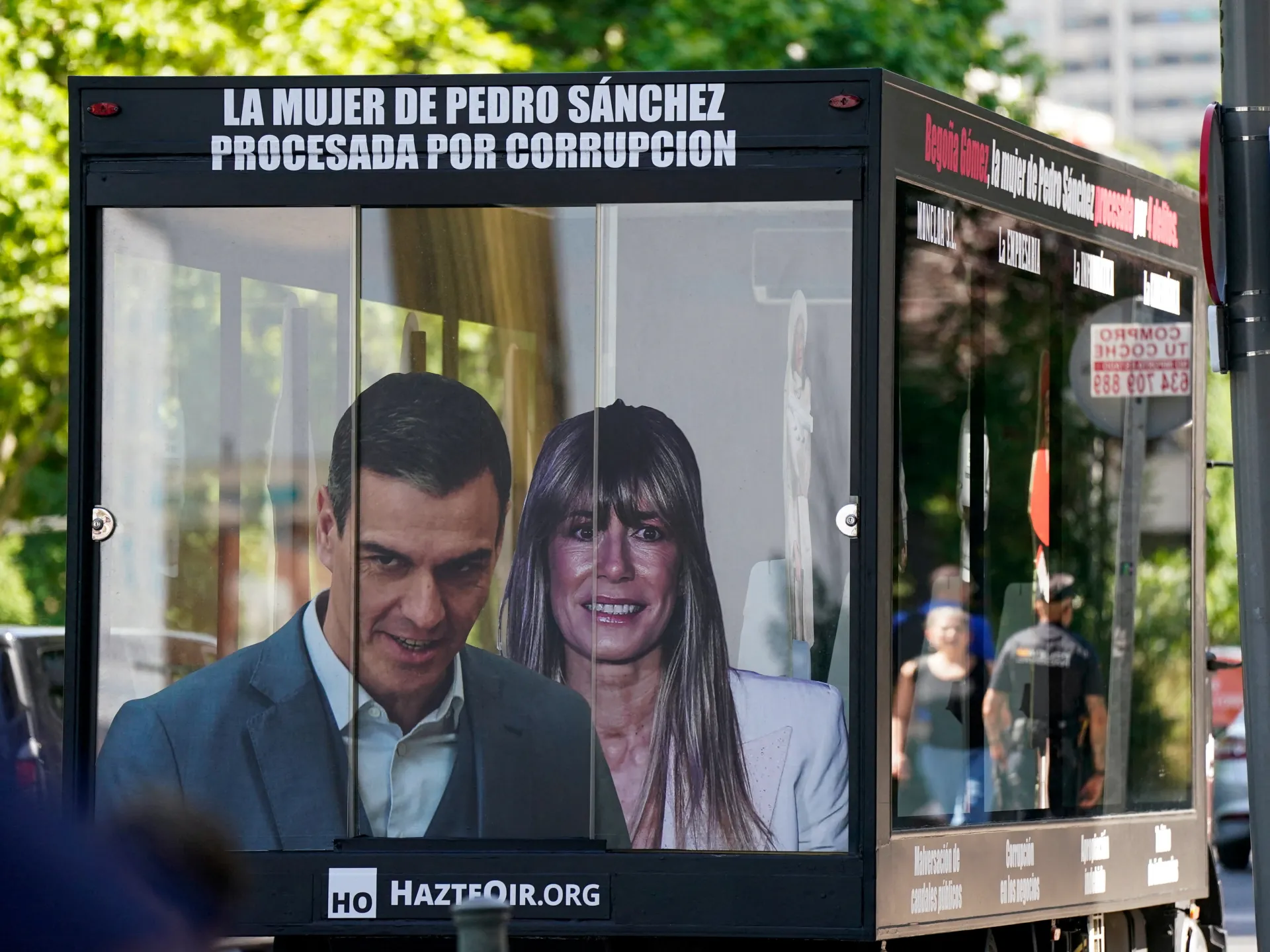
Begona Gomez is accused of using her position as the prime minister’s wife to secure work contracts.
Published On 20 Jun 202620 Jun 2026
The wife of Spain’s Prime Minister Pedro Sanchez has been barred from travelling abroad as she prepares to face trial on corruption charges.
Investigating judge Juan Carlos Peinado issued the ruling on Saturday, ordering Sanchez’s wife, Begona Gomez, to hand in her passport and appear in front of court twice per month until a verdict is issued. She is charged with embezzlement, influence peddling, corruption in business dealings and misappropriation of funds.
Recommended Stories
list of 3 itemsend of list
Gomez has consistently denied any wrongdoing in the case, which stems from a complaint filed by an anticorruption group with far-right ties. It focuses on the creation and management of a chair at Madrid’s Complutense University that was co-directed by Gomez, as well as the alleged use of public resources and personal connections to advance private interests.
Sanchez has dismissed the allegations against his wife as an attempt by the right wing to undermine his government. Sanchez’s Socialist Party has said Gomez is innocent and subject to a years-long campaign of political persecution
No date has yet been set for the politically explosive trial.
The case is one of several corruption investigations involving Sanchez’s allies that are approaching trial or already before the courts, increasing pressure on the prime minister.
Several close allies, including the Socialist Party’s number three and Sanchez’s former transport minister, are under investigation in cases involving alleged kickbacks linked to public works, oil and gas contracts, and the procurement of masks during the pandemic. They deny wrongdoing.
Separately, Spain’s High Court said it was investigating former Prime Minister Jose Luis Rodriguez Zapatero over allegations he led a network that profited from lobbying public authorities on behalf of third parties, including airline Plus Ultra. He denies the claims.
Sanchez, who has not been named in any of the cases, has rejected opposition calls to step down and call early elections.
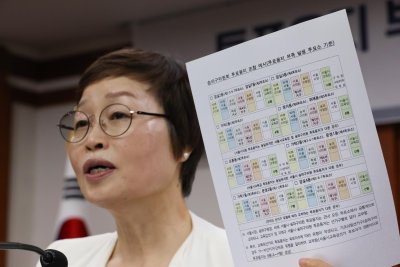
Cho Hyun-wook, chairperson of a fact-finding committee of the National Election Commission, speaks during a briefing at NEC headquarters in Gwacheon on Friday. Photo by Yonahp
The National Election Commission’s (NEC) fact-finding committee investigating ballot shortages during the recent local elections called for a criminal probe into the commission’s former chief Friday, citing systemic failures in the election management system.
Cho Hyun-wook, chairperson of the committee, made the announcement during a briefing at the NEC headquarters in Gwacheon, south of Seoul, as the panel wrapped up a weeklong investigation conducted to determine the cause of the ballot shortages.
The committee recommended that former NEC Chairman Roh Tae-ak, who stepped down from his post over the debacle, and other key officials be referred for criminal investigation.
Cho also stressed that the NEC requires a sweeping overhaul tantamount to dismantling the organization.
“Given the systemic failures in the election management system exposed by the ballot shortage incident, the NEC requires sweeping reforms akin to dismantlement,” she said.
According to the committee, 140 of the country’s 14,288 polling stations requested and received additional ballot papers after anticipating shortages on election day. Of those, 91 used the additional ballots they received, while voting was at least temporarily disrupted at 26 polling stations due to ballot shortages.
The committee, launched on June 10, consisted of six members recommended by civic organizations, media, legal and academic communities.
Copyright (c) Yonhap News Agency prohibits its content from being redistributed or reprinted without consent, and forbids the content from being learned and used by artificial intelligence systems.
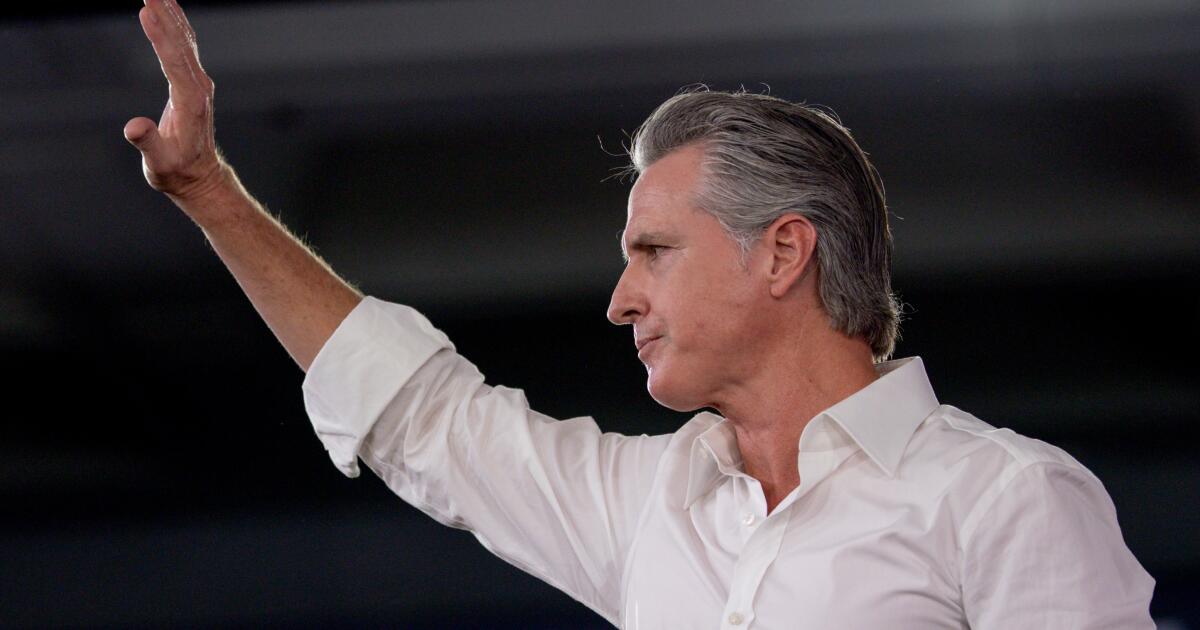
SACRAMENTO — Gov. Gavin Newsom did something this week that most politicians would only in a nightmare: He announced that the federal government is investigating him and his wife.
The revelation, delivered in a direct-to-camera 4½-minute video set against a backdrop of U.S. and California flags, became a top headline across the country.
In the upside-down politics of the Trump era, that was exactly as intended.
“He seems to be wearing this as a badge of honor because his brand is being the strongest opponent of Donald Trump,” said Thad Kousser, a professor of political science at UC San Diego. “The ability to show that you’re going on offense and that you know how to effectively fight back against this president is part of making your case for office.”
As he eyes a run for president in 2028, an antagonistic relationship with President Trump is Newsom’s political currency.
So when friends and former employees said the FBI and Internal Revenue Service had knocked on their doors and asked about him and his wife, Jennifer Siebel Newsom, last Wednesday, the governor took advantage of the situation to boost his political profile.
“Mr. President, come after me,” Newsom said in the video he posted online. “I’m not going anywhere, and the country is watching.”
Newsom, who is in his final year as California’s governor, has not declared his intent to run for president, though his claim that Trump is targeting him because he’s considering a bid for the White House was an open acknowledgment of his thoughts about the future. Announcing the probe himself — before federal authorities had a chance to describe it on their terms — allowed him to get ahead of and try to discredit any findings as a “personal vendetta” long before potential charges are brought.
Celinda Lake, a Democratic strategist and national pollster, said Newsom publicly defending his wife could also play well with voters.
“He’s positioned himself as the front-runner because he’s the one who’s under attack,” Lake said. “Primary voters love it when he engages Trump, and I think the combination of engaging Trump and then also the sexism of going after your wife is just a real home run for a primary electorate that’s 59% female.”
The video released Monday seemed similar to a speech Newsom delivered after Trump sent federal troops to Los Angeles last summer.
That address, in which he countered Trump’s version of events and challenged the president to come after him instead of women and child immigrants, made Newsom the captain of the Democratic response to the unprecedented deployment and ended his attempt to play the part of respectful statesman and ease political tensions following the 2024 election.
Liberals have since seemed to relish Newsom’s near-constant derision of the president on social media.
But David McCuan, a professor of political science at Sonoma State University, said casting the case as another instance of Trump’s political weaponization ignores questions about the murky timeline and origin of the investigation.
Newsom’s aides point to Trump saying that the governor should be arrested during last summer’s anti-ICE protests as evidence that he personally called for the inquiry. The claim has gained oxygen — and been echoed by other Democratic leaders in the state — while going largely unchallenged by federal officials. The Justice Department has declined to comment, as has the White House.
A source familiar with the matter, who requested anonymity because they were not authorized to discuss it publicly, said two federal probes have been going on for about a year, and that they originated not from Washington, D.C. but from conversations between whistleblowers and federal prosecutors based in Sacramento. The probes are linked to Newsom’s former chief-of-staff, Dana Williamson, and Siebel Newsom’s taxes, the source said.
Newsom’s critics have also noted that federal prosecutors under the Biden administration had pursued questions about his involvement in a state lawsuit against Activision Blizzard Inc., a major video game distributor, before Trump retook office.
“This is something that could lead to other elements that blow up, so there’s a risk,” McCuan said.
Newsom’s aides described the investigation as a fishing expedition, with federal authorities searching for anything they can use against the governor.
They said federal authorities appeared to initially investigate allegations that turned up nothing about the Activision case before refocusing their questions on nonprofits and other entities tied to the couple. Investigators also asked about personal information related to the family’s household, Newsom’s office said.
McCuan said three nonprofits that surround the couple have received millions of dollars from donors and political interests and are not subject to campaign finance limits.
The California Partners Project is a nonprofit that promotes gender equity. The Representation Project is an avenue for Siebel Newsom’s documentary films. The California State Protocol Foundation uses private donations to pay for gubernatorial expenses and was founded under former Republican Gov. Arnold Schwarzenegger.
“It’s a long-running game,” McCuan said. “It’s just the Newsom first couple has perfected it and moved it forward.”
Newsom getting out ahead of prosecutors and framing their probes as nothing but a “witch hunt” — borrowing a phrase often used by Trump during his own previous prosecutions — carries risk.
If prosecutors do turn up evidence of wrongdoing, Newsom’s decision to parade his indignation could backfire.
Publicly challenging Trump also runs the risk that the president could instruct the Justice Department to dig in deeper on an investigation that might have otherwise petered out.
But Lake and others said there’s no placating Trump, who has targeted Newsom and other Democrats.
While traditional politics suggest facing federal charges could sink Newsom’s political ambitions, the rules have been thrown out under Trump.
“You know the last person who got tied up in courts on the campaign trail?” Kousser asked. “That was Donald Trump, and nothing elevated Donald Trump more than doing courthouse press appearances and being seen as the target of an unfair political prosecution.”
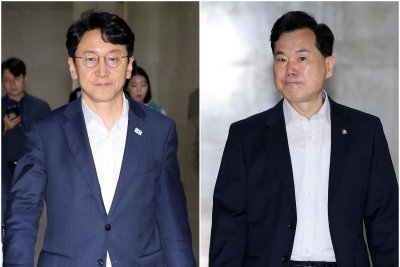
This composite photo, taken Tuesday, shows Rep. Cheon Jun-ho (L), deputy floor leader of the ruling Democratic Party, and Rep. Kim Seung-soo, deputy floor leader of the main opposition People Power Party, prior to their talks at the National Assembly in Seoul. Photo by Yonhap
The rival parties agreed Tuesday to conduct a 45-day parliamentary investigation into the National Election Commission (NEC) over ballot shortages reported during the recent local elections, party officials said.
In a meeting of their deputy floor leaders at the National Assembly, the ruling Democratic Party (DP) and the main opposition People Power Party (PPP) agreed to put the plan to a vote at a parliamentary plenary session on Thursday.
“We agreed to launch the parliamentary probe to swiftly uncover the truth behind the alleged infringement of voting rights of the citizens caused by the ballot shortages and to lay the groundwork for sweeping reforms of the NEC,” Rep. Cheon Jun-ho of the DP told reporters after the meeting.
According to officials from both parties, the special parliamentary committee will be chaired by the PPP and comprise 18 members — nine from the ruling party, seven from the PPP and two from non-negotiating parties.
Rep. Kim Seung-soo of the main opposition PPP said the rival parties agreed to set the investigation period at 45 days in an effort to conduct the probe as swiftly as possible, while leaving open the possibility of an extension if further investigation becomes necessary.
Ballot shortages were reported at more than a dozen polling stations in Seoul during the June 3 local elections, temporarily disrupting voting and prompting protests.
Last week, the DP and the PPP separately submitted requests for a parliamentary probe, though they differed over the scope of the investigation and the number of seats to be allotted to each party on the committee.
Copyright (c) Yonhap News Agency prohibits its content from being redistributed or reprinted without consent, and forbids the content from being learned and used by artificial intelligence systems.
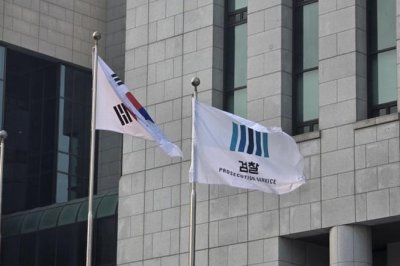
A prosecution flag is seen in South Korea. Photo Asia Today
June 12 (Asia Today) — A joint prosecution-police investigation team searched National Election Commission servers for a second consecutive day Friday as part of an inquiry into ballot shortages during South Korea’s June 3 local elections.
The team was conducting a search and seizure operation involving the commission’s servers, officials said.
Investigators on Thursday raided seven locations, including the National Election Commission headquarters in Gwacheon, south of Seoul, the Seoul election commission and district election offices in Songpa, Seocho, Gangnam, Gwangjin and Dongjak.
The raids were conducted as part of an investigation into suspected violations of the Public Official Election Act and alleged dereliction of duty.
The warrant reportedly listed more than 10 people as suspects, including former National Election Commission Chairman Noh Tae-ak, former Secretary-General Huh Chul-hoon and heads of regional election commissions.
The team has also begun sorting materials seized in the raids, including ballot printing plans, budget documents, voting records and electronic files. The seized materials are believed to include meeting minutes related to the commission’s decision to reduce the number of ballots printed.
Investigators plan to question election commission officials after reviewing the seized materials to determine how the ballot shortage occurred.
The Seoul Metropolitan Police Agency’s major crimes investigation unit notified election commission officials Monday to appear for questioning and is coordinating interview schedules.
The investigation follows widespread criticism over ballot shortages at some polling stations during the June 3 local elections. The incident led to public complaints, calls for accountability and the resignations of senior election officials.
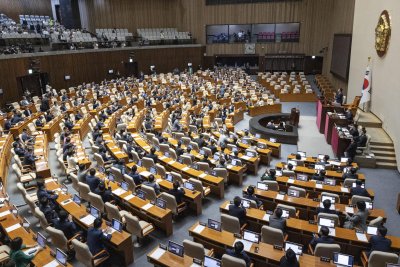
A plenary session of the National Assembly is held in Seoul on Thursday. Photo by Yonhap
The National Assembly on Thursday launched formal procedures for a potential parliamentary investigation into ballot shortages reported during last week’s local elections, with requests for the probe submitted by both the ruling and opposition parties being reported to a plenary session.
The head of the Proceedings Division of the National Assembly Secretariat said that the requests for a parliamentary probe were submitted separately by the ruling Democratic Party (DP) and the main opposition People Power Party (PPP), with all lawmakers from each party sponsoring their respective requests.
The move marks the first step toward establishing a special parliamentary committee to examine allegations of mismanagement by the National Election Commission during the voting process.
The establishment of the committee is expected to undergo negotiations, as proposals from the DP and the PPP differed over the scope of the probe and the number of seats to be allotted to each party on the committee.
The PPP has argued that a separate special counsel probe should be launched alongside the parliamentary investigation, while the DP has maintained that such a move should be considered after the parliamentary probe.
In a meeting chaired by National Assembly Speaker Cho Jeong-sik, the rival parties shared a consensus on holding a plenary session as early as next week to adopt a plan for the parliamentary probe, according to officials.
Separately, the PPP’s new floor leader Jeong Jeom-sig met with Hong Ik-pyo, presidential secretary for political affairs, and stressed the need for a special counsel probe into the incident.
Hong said the presidential office would be open to the idea of a special counsel investigation if the rival parties reach an agreement, according to PPP spokesperson Choi Soo-jin.
Ballot shortages were reported at more than a dozen polling stations in Seoul during last Wednesday’s local elections, temporarily disrupting voting and prompting protests by people alleging election fraud.
Copyright (c) Yonhap News Agency prohibits its content from being redistributed or reprinted without consent, and forbids the content from being learned and used by artificial intelligence systems.
The Competition and Markets Authority is investigating whether Ryanair’s practice of charging parents around £8 each way to sit with their children on flights is a breach of the law
Ryanair’s practice of charging parents to sit with their kids on flights could break consumer law, says the competition watchdog(Image: Getty Images)
Budget airline Ryanair is being investigated over its practice of charging parents to sit with their children on flights.
Watchdog the Competition and Markets Authority said it will decide whether it is “in line with consumer law”. Ryanair responded by branding the probe “bogus” and a “failed effort by the Starmer Government to pretend it cares about consumers”.
The Irish carrier requires at least one parent to sit with their children aged between two and 11, according to the watchdog. But it does this through what the airline calls a mandatory family seat, which typically costs about £8 each way. Paying to reserve a seat is optional for other passengers.
The CMA is investigating whether Ryanair’s approach means “parents are being charged for the airline to meet its child safety and disability-related obligations as set out under aviation rules”. Ryanair is “the only major airline flying out of the UK to impose this charge”, according to the watchdog.
Other carriers offer to seat children flying with a parent without the need for a paid reservation, or automatically allocate seats together during booking, the CMA said.
The investigation will also examine whether Ryanair’s mandatory family seat fee is dripped in during the booking process, which is when a business does not initially present customers with all unavoidable charges. The CMA added it is at the beginning of its investigation and has “reached no conclusions about whether Ryanair has broken the law”.
Hayley Fletcher, senior director of consumer protection at the CMA, said: “Lots of families save up to afford a summer holiday and we know that extra charges can quickly bump up the price. Our investigation will consider Ryanair’s approach to family seat reservations and how the cost is presented to consumers, to determine whether they comply with consumer law.
“For the past year, we’ve told businesses to ensure their customers are shown the total price upfront – those who don’t face the very real possibility of action from the CMA.”
Ryanair said in a statement: “Ryanair’s family seating policy fully complies with all relevant laws and regulations, and saves families money when travelling on the UK’s lowest fare airline.”
It said it “does not charge any fee for children to sit beside their parent”, and “parents travelling with children pay for only one (adult) reserved seat”.
It added: “This bogus CMA investigation is a failed effort by the Starmer Government to pretend it cares about consumers when it has failed to abolish APD (air passenger duty) which would immediately deliver lower fares for all consumers and growth for the UK aviation, tourism and wider economy. Ryanair looks forward to disproving these false CMA claims.”
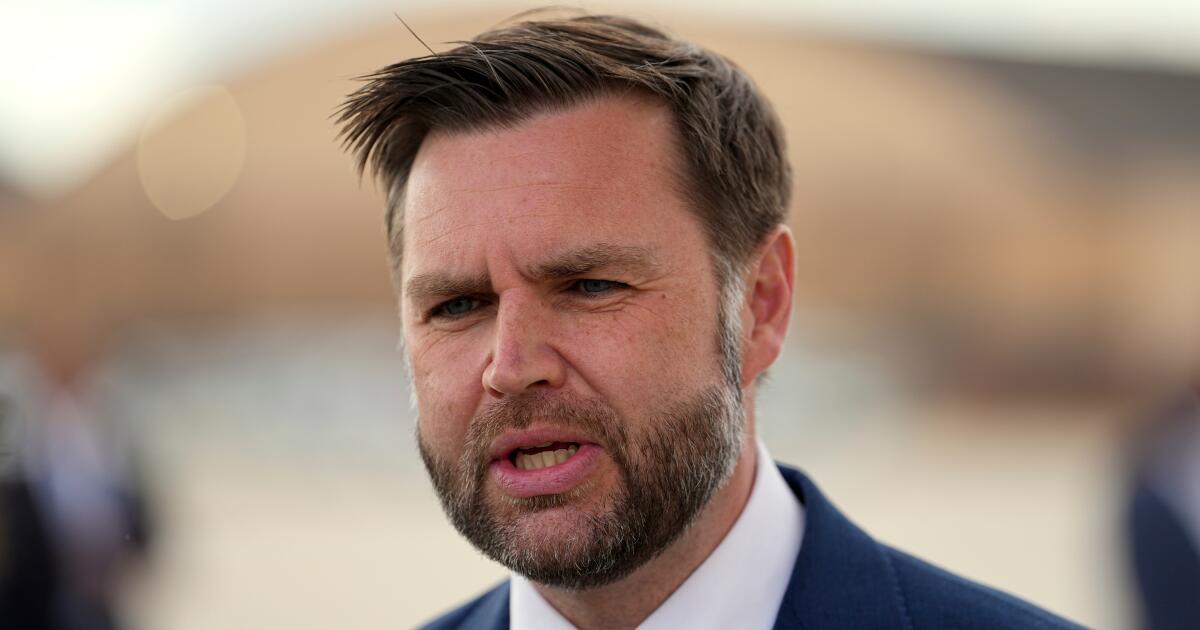
WASHINGTON — Vice President JD Vance is pressing federal prosecutors to investigate Minnesota Gov. Tim Walz and state Atty. Gen. Keith Ellison over allegations they failed to stop widespread social services fraud, amplifying concerns the White House will use a new Justice Department division to target political rivals.
Vance, who has been tapped to lead the Republican Trump administration’s anti-fraud efforts as he seeks to raise his political profile as a potential 2028 presidential candidate, cited in a letter to the Justice Department a report from the Republican-led House Oversight Committee that alleges Walz and Ellison were aware of pervasive misuse of government programs for years and let it flourish.
The Justice Department didn’t immediately respond to questions Tuesday about whether it would open an investigation. It was unclear what, if any, potential violations of federal law could support a probe into the Democratic Minnesota officials, who have characterized a separate Justice Department investigation involving state leaders as politically motivated.
A spokesperson for Walz didn’t immediately respond to a message seeking comment. Ellison called the allegations unfounded and said there’s no evidence his office ignored wrongdoing or failed to act as required by law. He dismissed Vance’s referral as “a political stunt from an administration that uses the machinery of government to target its perceived opponents while extending leniency to those aligned with its interests.”
“It is deeply troubling to see official powers and public resources diverted away from serving the people and instead aimed at pursuing political adversaries,” Ellison said in a statement. “That is not what government is for, and it diminishes public trust in our institutions.”
Vance’s referral to the Justice Department’s new National Fraud Enforcement Division marks an escalation in the Trump administration’s stated “war on fraud” in government programs that officials have said would not be political or partisan.
The new division has drawn intense scrutiny over the potential for political influence given its close relationship with President Trump’s White House, which announced its formation in January and initially said its leader would answer directly to the president instead of the typical Justice Department command.
In his referral, Vance wrote that officials in Minnesota or anywhere else in the country “must be held accountable” if they facilitated fraud, prevented officials from stopping it or retaliated against whistleblowers who tried to report it.
“Minnesota state officials are not above the law,” Vance wrote in a post on X.
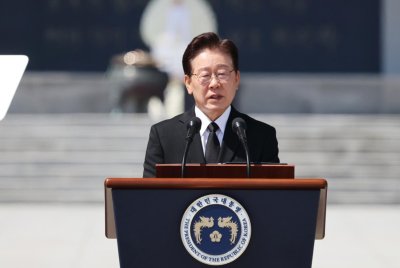
South Korean President Lee Jae-myung delivers his speech during a ceremony marking the country’s 71st Memorial Day to commemorate veterans and independence activists at the National Cemetery in Seoul, South Korea, 06 June 2026. Photo by KIM HONG-JI / EPA
June 7 (Asia Today) — President Lee Jae-myung sharply criticized the National Election Commission on Sunday over allegations that voting rights were violated during South Korea’s June 3 local elections.
Lee called on the National Assembly to conduct a parliamentary inquiry and ordered the administration to create a joint investigation team involving prosecutors and police.
“The National Election Commission caused serious disruption to the people’s exercise of voting rights during the June 3 local elections,” Lee wrote on Facebook. “The incident itself is difficult to understand, but its response afterward and explanation to the public were also insufficient.”
Lee said the right to vote is a constitutional right that must not be restricted or infringed upon for any reason.
“This is a grave matter that damaged the foundation of popular sovereignty,” he said. “As one citizen and as the president responsible for the government, I express deep regret.”
Lee asked lawmakers to quickly pursue a parliamentary inquiry to determine the facts and prepare measures to prevent a recurrence.
He also called for discussions on fundamental institutional reforms of the election commission.
“The government will also consider every possible measure at the administrative level, given the seriousness of the matter,” Lee said. “I have instructed the creation of a joint investigation team involving prosecutors and police to clarify responsibility and thoroughly determine the full circumstances of the case.”
Lee noted that the commission is an independent institution and said its independence comes with major responsibilities.
“The chairperson of the National Election Commission is regarded as one of the five highest constitutional officeholders because the commission is an independent institution with corresponding authority, duties and responsibility, just like the executive, legislative and judicial branches,” Lee said.
“The more independent an institution is, the more important public trust becomes,” he said. “An independent institution that has lost public trust has no reason to exist.”
Lee urged the commission to conduct a fundamental review of its organization and election management system. He said the commission should take the incident seriously and show a strong commitment to reform at a level the public can trust.
French activists who took part in a Gaza-bound foreign aid flotilla accuse Israeli forces of abuse and torture.
Published On 5 Jun 20265 Jun 2026
French anti-terrorism prosecutors say they have opened a preliminary investigation into suspected “torture” and “war crimes” over Israel’s alleged mistreatment of French activists who took part in a Gaza-bound aid flotilla last month.
The probe was opened on Friday following a referral from the foreign ministry late last month, said the national counterterrorism prosecutor’s office (PNAT), after activists on the Global Sumud Flotilla accused Israeli authorities of severe mistreatment during their detention.
Recommended Stories
list of 3 itemsend of list
Israel abducted and detained some 430 activists from about 40 countries after intercepting them in international waters on May 18 as they made the latest in a string of attempts to break the blockade on Gaza, which the United Nations and human rights organisations say is illegal, describing it as a form of collective punishment.
Israeli far-right National Security Minister Itamar Ben-Gvir attracted widespread condemnation after he posted a video mocking the flotilla activists while they were bound.
France banned Ben-Gvir from entry and, like several other allies of Israel, summoned the Israeli ambassador over the incident.
Several French activists described what they said was a violent and humiliating ordeal when eight of them returned to France on May 22.
Two of the more than 30 French people who were on board the flotilla were still hospitalised in Turkiye, they told reporters.
One returnee described a soldier groping and slapping her in a dark container, and being terrified that she would be raped.
Another recounted detained activists being put in what she called a “stress position”, on their knees with their foreheads on the ground for several hours, while the Israeli national anthem played on repeat.
‘Most severe case of ill-treatment’ in a decade
Speaking to Al Jazeera late last month, Suhad Bishara, legal director at Adalah, the Israeli legal centre for Palestinian rights, said that without accountability, Israel will continue to use violence against activists.
“Based on accounts received, and drawing on over a decade of representing flotilla participants, this appears to be the most severe case of ill-treatment documented in the past 10 years, potentially amounting to torture,” said Bishara.
Adalah lawyers have been informed of repeated physical violence resulting in serious injuries, prolonged stress positions, and sexual humiliation and harassment.
The Global Sumud Flotilla said it has documented at least 15 cases of sexual abuse.
Lawyers for French flotilla activists have said they plan to file a separate complaint on behalf of their clients over allegations of rape, torture and humiliation.
The activists have refused to meet with the French government to discuss their experiences, accusing it of supporting Israel’s genocidal war on Gaza.
Asked by the AFP news agency to respond to the claims of mistreatment, the Israeli prison service said the accusations were “entirely without factual basis”.
Francesca Albanese, an outspoken UN expert on the Palestinian territory, has said the treatment of the flotilla activists “is a luxury compared to what is inflicted on Palestinians in Israeli prisons”.
To the surprise of few, President Trump has once again claimed without evidence that Democrats are somehow cheating to win California’s primary elections — writing on social media late Wednesday that federal prosecutors in Los Angeles are investigating the matter.
“The Dumocrats are at it again! They are trying to STEAL THE GOVERNOR OF CALIFORNIA PRIMARY, AND THE MAYOR OF LOS ANGELES, PRIMARY, AWAY FROM TWO GREAT REPUBLICAN CANDIDATES. Here we go with the very late and massive numbers of MAIL IN BALLOTS,” Trump posted to his social media platform Truth Social.
“There’s BIG cheating by the Dumocrats in California. Votes are all tied up. May not be in for weeks. Under investigation by the U.S. Attorney’s Office in Los Angeles,” he wrote in a second post. “Why the vote counting DELAY???”
A spokesperson for the U.S. attorney’s office in Los Angeles — run by Trump loyalist First Assistant U.S. Atty. Bill Essayli — declined to comment Thursday morning on Trump’s claims of an investigation.
California Secretary of State Shirley Weber’s office also did not immediately respond to a request for comment.
Gov. Gavin Newsom’s office responded directly to Trump late Wednesday with its own social media post, writing, “Trump is lying about California again — time to take the phone away from grandpa and put him to sleep.”
On Thursday morning, Newsom’s office wrote that there “is a lot of misinformation floating around about California’s election — including from the President,” and recommended people watch a CNN video about California’s election process. It concluded that delays in vote counting in the state are essentially a result of state leaders deciding that providing voters with “last minute options” for casting ballots is more important than a quick count.
“And yes, for the record: we wish the votes were counted faster, too,” Newsom’s office wrote — a nod to the fact that the issue isn’t new.
In an email, Brandon Richards, Newsom’s deputy director for rapid response, said Trump’s claims are part of “a tinfoil hat level conspiracy theory that has been debunked repeatedly.”
The president’s claims of cheating were predicted before the election by both elections experts and Democratic leaders in California, who dismissed them in advance as more baseless bluster from a president beset by low approval ratings.
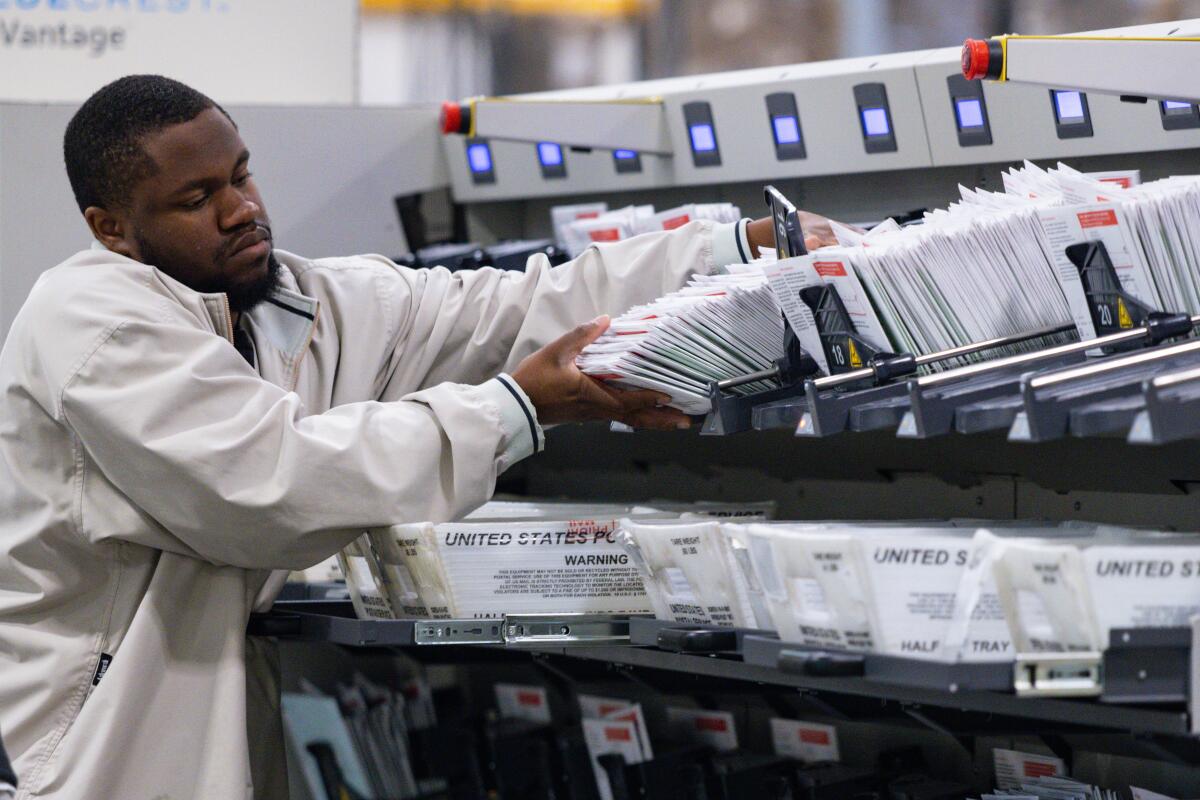
A worker puts ballots in a counting machine at the Los Angeles County Ballot Processing Center on Wednesdayin City of Industry.
(Kayla Bartkowski/Los Angeles Times)
Those same experts and Democratic leaders acknowledge that California’s system for counting votes takes a long time and should be quickened, but stress that is not because of anything nefarious. Rather, it is because California allows voters to cast ballots by mail up until election day — and then has to count those ballots, which can number in the millions and are subject to manual signature verification.
Trump has long dismissed such explanations. An election denier since he first entered politics more than a decade ago, Trump has pushed skepticism about elections he and his party lose time and again since — most notably when he claimed, again without evidence, that the 2020 election he lost to Joe Biden was stolen.
Trump even challenged Biden’s victory in court, but his claims were rejected completely because neither he nor his attorneys could produce any evidence substantiating them.
He has combined his tactic of targeting undocumented immigrants for political gain with his skepticism of election integrity by claiming, again without evidence, that such immigrants somehow vote in large numbers, particularly in big blue states such as California, despite experts saying there is no evidence of that.
He has alleged that mail ballots — such as those used by the majority of California voters — are a particularly rich source of voter fraud, despite again having no basis for the claim and it being disputed by experts.
A consistent feature of his election fraud claims is that they arise and target races only when Republicans lose or lose ground.
And, he has tried to use the power of his administration to make sweeping changes to election laws to bar mail ballots and require strict voter ID and proof of citizenship measures, despite the control of elections and their rules being constitutionally given to the states.
Those efforts have prompted a wave of litigation between the Trump administration and California and other blue states, with multiple cases pending in the courts over voter ID, proof of citizenship, mail balloting and the role that the U.S. Postal Service may be allowed to play in processing such ballots.
Trump’s latest remarks came as additional vote counting on Wednesday narrowed the advantage of Republican Steve Hilton over his Democratic challengers in the California governor’s race and closed the gap in the L.A. mayoral race between the MAGA-aligned candidate Spencer Pratt, currently running second, and City Councilmember Nithya Raman, who is running third.
The trend was anticipated. Elections experts warned before vote counting began of the potential for a “red mirage,” wherein earlier voting among Republicans and late voting among Democrats — many of whom were unsure of whom to vote for in the two high-profile races — would create an early illusion of Republican victories despite large volumes of liberal votes from major population centers still to be counted.
It is a trend that has played out repeatedly in past elections, and one that does not come as a surprise to careful elections watchers.
Elections officials in California knew such claims were going to be made, as they’ve been made in the past. Some local elections officials made a point of preparing their staffs for baseless claims of election fraud in advance of this year’s primaries. State officials made repeated efforts to explain the reasons why California elections take time, precisely to undercut claims amid counting that the delays were the result of fraud.
But those claims have come regardless, and not just from Trump.
Above an X post Wednesday suggesting Pratt was losing ground to Raman as more counts came in, Florida Gov. Ron DeSantis wrote, “California keeps dumping votes. Odds are shifting because the vote dumps always seem to go one way. Count until you get the result you want?”
Above another X post Wednesday noting that the California count would take time, Katie Miller, a former Trump administration official and conservative podcaster married to Trump’s top advisor Stephen Miller, wrote, “The Democrats are about to steal the LA mayoral race once again using mail-in voting.”
Both of the posts that DeSantis and Miller were responding to were from Polymarket, a prediction market where people can bet on the outcomes of political races, pop culture events and a slew of other subjects.
Such emerging financial markets, which process billions of dollars in bets, are causing rising concerns about political meddling for profit — including by campaign staffers and other individuals with insider knowledge of polling and other campaign information, or by politicians and their operatives, whose public remarks about politics can swing those markets.
The sentencing of Aspiration co-founder Joseph Sanberg to 14 years in federal prison on Monday brings the NBA a step closer to concluding its nine-month investigation into the Clippers allegedly circumventing the salary cap.
Sanberg pleaded guilty in October to federal charges of conspiring to bilk investors out of $248 million for portraying the now-defunct Aspiration as a “socially-conscious and sustainable banking services and investment products” firm.
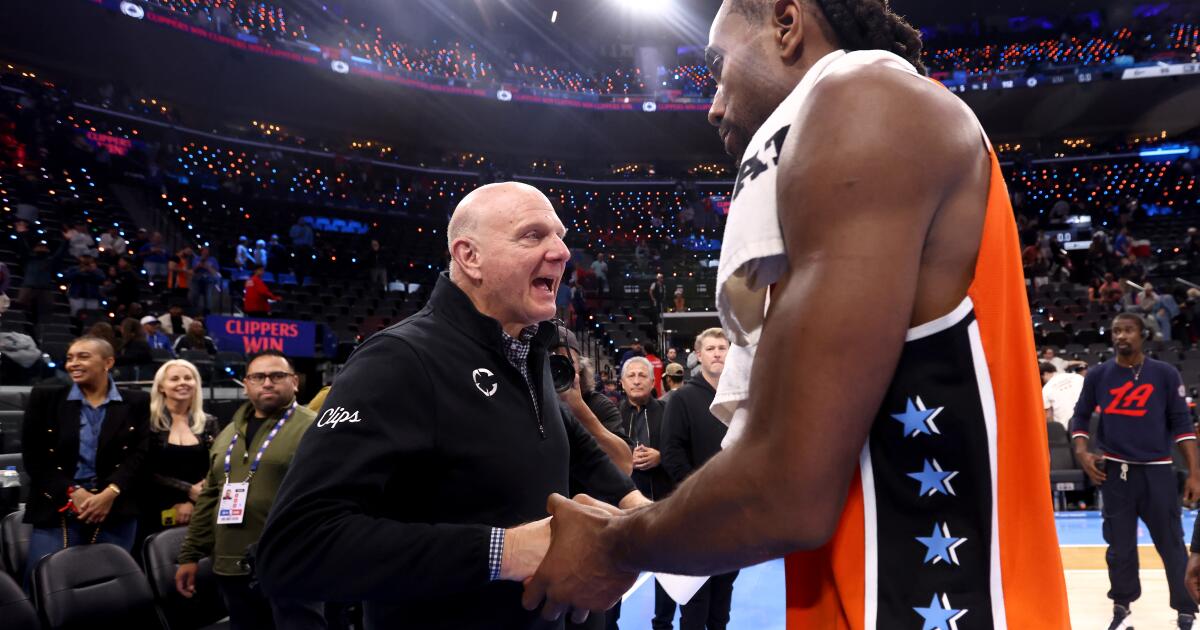
The NBA has declined to comment on the status of the probe centered on $60 million invested in Aspiration by Clippers owner Steve Ballmer and the $28-million contract Clippers star Kawhi Leonard signed with Aspiration for endorsement and marketing work that he never delivered.
Players are allowed to have separate endorsement and other business deals, but at issue is whether the Clippers participated in arranging the side deal beyond simply introducing Aspiration executives to Leonard. Doing so would be a violation of Article 13 of the NBA collective bargaining agreement, punishable by a $4.5-million fine, the loss of a first-round draft pick and the voiding of Leonard’s contract.
The NBA draft takes place June 23-24 and the Clippers have three picks, including the fifth overall selection. The league is not expected to release its findings until after the NBA Finals, which begin Wednesday between the New York Knicks and San Antonio Spurs.
Clippers officials haven’t commented on the investigation. But Leonard, who has one year left on a three-year, $149.5-million contract that will pay him $50.3 million next season, told The Athletic after the Clippers’ season-ending game April 15 that “I think we’re going to be in the clear. I’m not stressing.”
Otherwise, among the few public comments about the investigation were letters submitted to federal court judge Stephen V. Wilson ahead of Sanberg’s sentencing by Ballmer and the law firm conducting the probe on behalf of the NBA.
The letter from Dave Anders of Wachtell Lipton stated that Sanberg provided documentation and information helpful to the NBA investigation during two in-person interviews.
“In all our dealings with Mr. Sanberg, both directly and through his counsel, he provided information that was consistent with our review of contemporaneous documents and other evidence,” Anders wrote. “Mr. Sanberg’s cooperation substantially assisted our investigation, including our ability to develop a more complete understanding of key events.”
Ballmer countered by asking Wilson for a stiff sentence in a five-page Victim Impact Statement posted on social media by his lawyer, David N. Kelley.
“Sanberg continues to exploit his fraud of Mr. Ballmer for his benefit, providing information to the NBA in return for a sentencing letter that the league submitted on his behalf,” Kelley wrote. “The reliability of Sanberg’s information is suspect given that he has pleaded guilty to federal fraud charges, and the government has made its own determination that he is not credible.”
Before handing down the sentence, Wilson made it clear that Sanberg’s credibility was questionable.
“He portrays himself as a do-gooder who was in business to help the world, but he did personally gain from his fraud,” Wilson said, later adding, “I would put the grade of his fraud at the zenith.”
Ballmer, a former longtime CEO of Microsoft who has owned the Clippers since 2014, accused Sanberg of targeting him for his well-known interest in environmental sustainability and exaggerating their relationship to convince others to invest in the fraudulent company. He said he met Sanberg only once.
Ballmer invested $50 million in Aspiration in September 2021. A month later, the Clippers announced a $300-million sponsorship deal with the company. Ballmer nearly granted Aspiration naming rights to the team’s new $2-billion venue as well, but instead chose financial services firm Intuit. Ballmer made an additional $10-million investment in Aspiration on March 9, 2023.
Ballmer was added in November as a defendant in a civil lawsuit against Sanberg and several others associated with Aspiration. Ballmer and the other defendants are accused by 11 investors in Aspiration of fraud and aiding and abetting fraud, with the plaintiffs seeking at least $50 million in damages.
Kelley contended that Ballmer was added as a defendant because of his “visibility and resources,” and portrayed the Clippers owner as a victim, saying “Mr. Ballmer’s losses are not measured solely, or even primarily, on a balance sheet. They are measured in the reputational damage that will take years to remediate, and in the chilling effect on future endeavors intended to do good.”
The lone public comment about the investigation from NBA Commissioner Adam Silver came during All-Star Weekend in February at the Intuit Dome when he described the issue as “enormously complex.”
“You have a company in bankruptcy, you have thousands of documents, multiple witnesses that needed to be interviewed,” Silver said.
The investigation was triggered by reports from podcaster Pablo Torre that Leonard’s sponsorship deal with Aspiration was to circumvent the salary cap. Torre and the staff of “Pablo Torre Finds Out” won a Pulitzer Prize for Audio Reporting for their efforts.