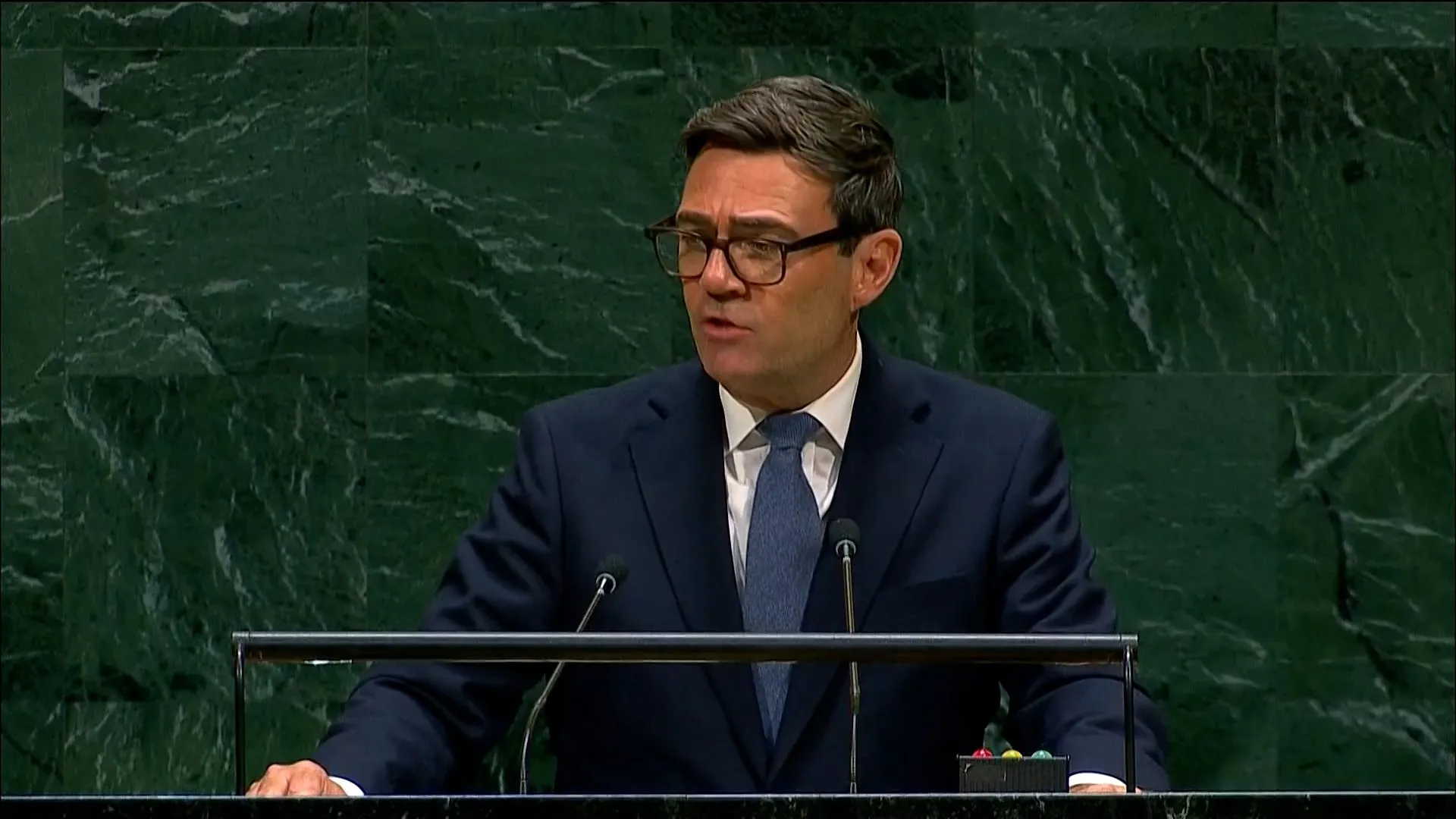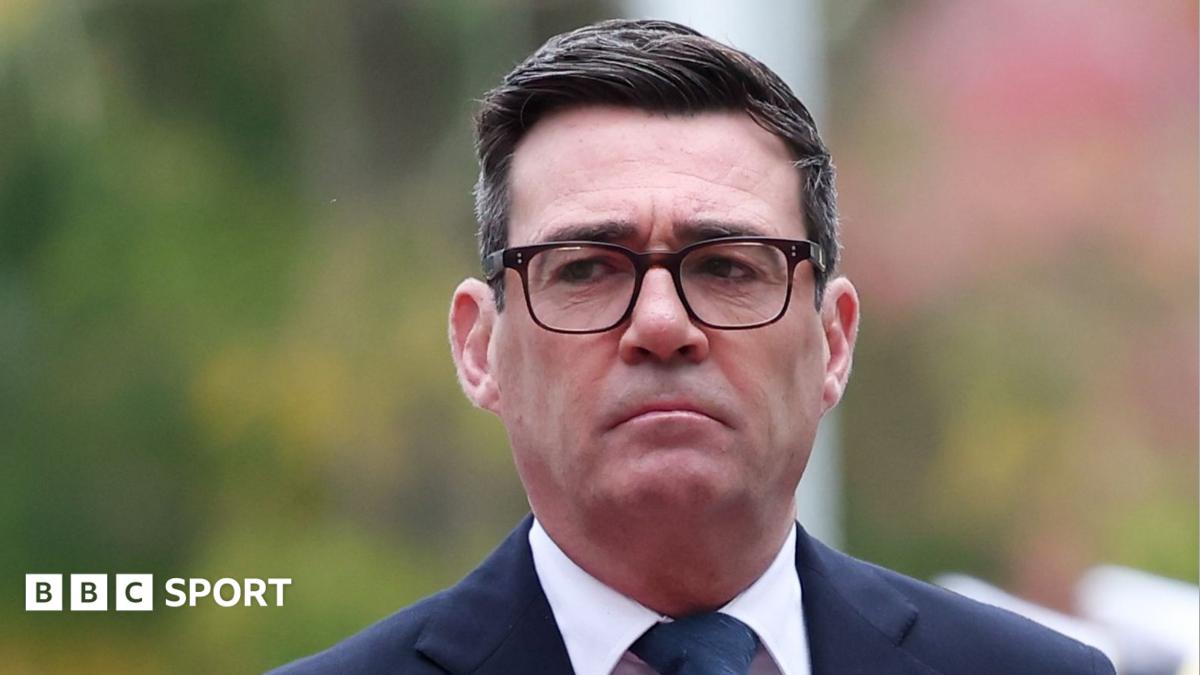
Britain was set to get its seventh prime minister in 10 years Monday when the king invites Andy Burnham (L) to form a new government, only four weeks after the former Mayor of Manchester was elected to parliament in a by-election. Photo courtesy of House of Commons/EPA
July 20 (UPI) —Andy Burnham was set to become British Prime Minister on Monday after a private audience with King Charles III at Buckingham Palace, at which he will ask the former Manchester Mayor to form a government.
Burnham is expected to head to the palace late morning after outgoing Prime Minister Keir Starmer gives a farewell speech outside No. 10 Downing Street at around 11:15 a.m. local time and departs to make the 1-mile journey to meet with the king to officially tender his resignation.
Burnham will be the country’s seventh prime minister in 10 years and brings to five the number among those leaders installed in Downing Street by their respective parties and without initially winning a mandate from the electorate.
He takes over just two years after Starmer led the party to a landslide general election victory that returned Labour to power after 14 years in opposition.
On his arrival in Downing Street but before going inside, Burnham will make his first speech as prime minister in which he is expected to promise to give people “breathing space” from cost of living pressures.
Afterward, he will head inside for briefings on classified national security matters, including the launch codes for the country’s nuclear missile arsenal, before getting on with appointing his chancellor of the exchequer, foreign and home secretaries and the rest of his cabinet, as well as other ministers and departmental heads.
Burnham inherits a daunting in-tray of complex, deep-seated problems to tackle that Starmer was perceived as failing to get to grips with or failing to do so with sufficient pace, which led to his downfall.
Those issues include cutting spending on welfare, sickness and disability benefits which is projected to rise from its current $78 billion to $105 billion by 2030, finding $12.1 billion a year to fund the outgoing administration’s Defense Investment Plan, fixing the “social care” system that looks after the elderly in the community or in retirement homes, meeting a 300,000 a year house-building target, and getting over a million 16-24 year-olds into work.
What little specifics Burnham has set out include ditching a national digital ID scheme, easing a ban on new oil and gas drilling in the North Sea by allowing existing fields to expand into adjacent untapped areas, some form of public control of water utilities, and cuts to taxes on local businesses funded by major multinational corporations which currently pay a lower rate.
Emma Burnell of the LabourList website told the BBC that while the mood within the party was upbeat, members of the Parliamentary Labour Party believed it was their last chance to get it right.
“It’s going to be a long, hard project. I don’t think he’s going to be able to do it overnight, he will need to show that there is real, tangible progress being made,” she said.
In a letter to Burnham posted on X on Sunday, Conservative opposition leader Kemi Badenoch accused Burnham of lacking “a clear plan on any of the issues facing our country” and avoiding legitimate questioning regarding his intentions.
“You have refused calls to come to Parliament for questions from MPs, and you have not submitted yourself to serious media scrutiny. This is not a promising start.”
She vowed the Conservatives would back any bid to slash benefits, saying the country was in danger of becoming “a welfare state with a country attached” and called on Burnham to rule out tax rises and to grant new licenses to drill for oil and gas in the North Sea.
“Where we support your agenda, I will say so. But I will always stand against the instincts of Labour MPs for higher taxes and more spending,” wrote Badenoch.
Astronaut Buzz Aldrin walks on the surface of the Moon during the Apollo 11 mission on July 20, 1969. Photo by NASA/UPI | License Photo
July 16 (UPI) — U.S. retail spending was weaker than expected while tourists from around the world came to the country for the World Cup.
Retail sales rose 0.2% in June from a revised 1% in May, and up 6.7% from June 2025, the U.S. Census Bureau said Thursday. Expectations from the data firm FactSet were at 0.3%.
The World Cup and Amazon‘s Prime Day helped boost spending, but lower gas prices slowed the rise. Excluding gas sales, June spending rose 0.7% after 0.9% in May.
A measure of retail spending that removes sales of building materials and gasoline rose 0.5% in June, which is down from 0.8% in May, but slightly higher than the expected 0.4% increase, CNN reported. It shows consumer demand continued steadily in June.
Strong economic growth along with rising inflation means that the Federal Reserve is less likely to lower interest rates. For the Fed to cut rates, inflation would need to slow to toward the 2% annual target or signs of a slowing economy, CNN said.
“Despite challenges, consumers are still spending and the labor market shows no signs of cracking,” Ellen Zentner, chief economic strategist at Morgan Stanley Wealth Management, wrote Thursday.
“This type of data won’t move the Fed’s needle either way, but it underscores the ongoing resilience of the U.S. economy.”
Another economist said the second half of the year’s economy could slow even more.
“A renewed slowdown in spending, however, beckons over the second half of this year,” Oliver Allen, senior economist at Pantheon Macroeconomics, wrote in an analyst note Thursday.
“The lift to cashflow from tax refunds now has faded, leaving consumers far more exposed to the real income shock from the jump in gas prices.”
Ukraine has appointed veteran energy executive Sergii Koretskyi as its new prime minister, marking a significant leadership change as the country continues to battle Russia’s invasion and prepares for another difficult winter.
Parliament approved the 48-year-old on Thursday as part of a wider government reshuffle announced by President Volodymyr Zelenskiy. Koretskyi becomes Ukraine’s third wartime prime minister and takes office at a time when Kyiv faces mounting military, economic and energy challenges.
A Political Outsider Takes Office
Unlike many of his predecessors, Koretskyi arrives in government without a political background. An engineer and economist by training, he has never held elected office or served in government and is not affiliated with any political party.
Analysts say that independence could work in his favour. Volodymyr Fesenko, director of the Penta think tank, has described Koretskyi as an experienced manager whose political neutrality makes him well suited to lead a technocratic government focused on wartime priorities rather than party politics.
Stay ahead of the geopolitical week.
MD Briefing delivers expert analysis across five global fronts — the Indo-Pacific, energy, geoeconomics, European security, and the Middle East — every Monday morning. Free.
More Than Two Decades in Ukraine’s Energy Sector
Koretskyi is best known for his extensive career in Ukraine’s energy industry, where he has spent more than two decades working across oil production, refining, retail fuel operations, wholesale energy management and international financing.
Since May 2025, he has served as chief executive of Naftogaz, Ukraine’s state-owned oil and gas company that oversees much of the country’s natural gas production, imports and distribution. Before taking over Naftogaz, he led Ukrnafta, Ukraine’s largest oil producer and a subsidiary of the Naftogaz Group.
Earlier in his career, Koretskyi headed Western Oil Group, served as chief executive of the Continuum Group, and managed WOG, one of Ukraine’s largest fuel station networks. Outside the energy sector, he also founded a coffee chain business in his hometown of Lutsk in western Ukraine.
Winter Energy Security Will Be the First Test
His appointment comes as Ukraine’s energy sector remains under relentless pressure from Russian missile and drone strikes. Last winter, Russia launched its most extensive campaign against Ukraine’s power infrastructure since the war began, damaging power plants, substations and transmission networks across the country.
Preparing the energy system for another winter has become one of the government’s most urgent priorities. President Zelenskiy has said ensuring stable electricity and heating supplies while strengthening protection for critical infrastructure will be among the new government’s immediate tasks.
Leading Ukraine During Wartime
Koretskyi also takes office as Ukraine faces continued battlefield pressure despite making gains through long-range strikes against Russian energy facilities and military logistics. At the same time, Kyiv continues to rely heavily on international military and financial assistance while confronting shortages of air defence interceptors needed to counter Russian missile attacks.
His background suggests the government will place a strong emphasis on energy security, infrastructure resilience and economic management as the war enters another challenging phase.
Whether Koretskyi’s experience in managing some of Ukraine’s largest energy companies translates into effective wartime leadership will likely become one of the key tests for Zelenskiy’s newly reshuffled government in the months ahead. His ability to secure Ukraine’s energy network, maintain economic stability and coordinate with international partners will be closely watched as the country prepares for another winter under the shadow of war.
Ali al-Zaidi met US President Donald Trump in the Oval Office on Tuesday as Iraq’s prime minister. He carried the title. The power was another matter.
Eleven weeks earlier, after months of paralysis, the Shia alliance which is known as the Coordination Framework had taken just 25 minutes to choose him. That sudden consensus was forged under intense pressure from Washington DC.
The United States Treasury had frozen Iraq’s dollar lifeline, the cash shipments that fly from New Jersey to the Central Bank of Iraq. Nouri al-Maliki, a former prime minister, and the top contender to return to the premiership had to abandon his plans because of Washington’s veto.
Al-Zaidi, a 40-year-old banker with no political base, was the man left standing.His lack of an established political base is part of his usefulness. He owes his position less to Baghdad’s ballot box than to the pressure exerted by Trump’s Treasury.The banker’s own ledger is not clear.
In 2024, Iraq’s Central Bank barred al-Zaidi’s own institution, Al-Janoob Islamic Bank, from US-dollar transactions as part of a wider crackdown intended to curb illicit dollar flows to Iran. He was never charged. Neither the bank nor the man is currently sanctioned. But the file exists. Its existence could give Washington another source of leverage should al-Zaidi drag his feet.
The real power in Baghdad now sits in one man’s portfolio. Tom Barrack holds three titles at once: ambassador to Turkiye, envoy to Syria, and now envoy to Iraq. His influence rests less on diplomacy than on Washington’s financial leverage over Baghdad. Iraq’s oil revenue sits in an account at the Federal Reserve Bank of New York. In April, Washington blocked a cash shipment of nearly $500m drawn from those revenues and suspended parts of its security cooperation. Oil funds roughly 90 percent of Iraq’s budget. Barrack does not need to threaten military force when the administration he represents can reach directly into the financial system on which the Iraqi state depends.
Washington’s demand that Iraq bring all armed factions under state control remains far from resolved. Shia Cleric Muqtada al-Sadr dissolved his Saraya al-Salam militia in late May. Other militias such as Asa’ib Ahl al-Haq and Kataib Imam Ali have announced steps towards handing over their weapons or placing them under fuller state control. That is real movement. But Kataib Hezbollah and Harakat al-Nujaba, the two factions most tightly bound to Tehran, have rejected full disarmament. In their own words, their weapons are not for bargaining. Washington has answered in kind. US strikes killed dozens of Iranian-backed Popular Mobilization Forces (PMF) fighters this spring; the Treasury has sanctioned seven militia commanders by name. Baghdad has set September 30 as its disarmament deadline, the same date on which the remaining US forces are expected to leave Iraq. Whether the hardest factions bend by then remains the open question that Washington has yet to answer honestly.
Even Grand Ayatollah Ali al-Sistani’s authority has limits here, as it always has. Al-Sistani’s 2014 fatwa built the PMF’s founding myth. But his call was for men to defend Iraq under the state’s command, not to form independent militias. The hardline factions never answered to Najaf. They answer to Tehran. al-Sistani’s own representative in Karbala has also pressed publicly for exclusive state control of weapons. His influence remains significant, but it has never extended to full control over these factions, and the current standoff is making that reality harder to ignore.
The prize Washington actually wants, however, lies underground. Chevron is negotiating an expanded role in Iraq’s oil sector, while other US companies are pursuing contracts in gas, electricity and export infrastructure. Baghdad wants production up from 4.5 million barrels a day to 7 million within three years, though doing so would require a substantially larger OPEC quota. Western Iraq’s gas reserves, largely untapped, could one day elevate the country into a dominant regional energy player and exporter. This is the potential bonanza al-Zaidi is being asked to unlock in exchange for the loyalty Washington is seeking.
Kurdistan’s place in this emerging arrangement is still unclear. Barrack has called the old Baghdad-Erbil federal model outright “Balkanization”, a structure he blames for letting Iran fill the vacuum. Yet the same envoy spent much of June pressing the prime minister of the Kurdish region, Masrour Barzani, to reactivate the Kurdistan parliament and form a new cabinet, not dissolve it. Read together, these positions suggest a clear message: Washington wants a functioning, cooperative Kurdistan region, firmly inside Washington’s orbit, not an autonomous wildcard and not a vassal of Baghdad’s sectarian blocs either.
Stripped of diplomatic varnish, Washington’s vision for Iraq is this: no militias operating outside the state; no Iranian veto over Iraqi policy; no single sect running the table from Baghdad; a Western economic orientation locked in by contracts, not sentiment; American energy firms as the primary beneficiaries; and a prime minister who answers, in practice, to Tom Barrack before he answers to his own parliament. Whether Iraq is pressured towards the Abraham Accords, whether the old nationalist and Ba’athist-adjacent currents find any oxygen again, whether sectarian parties actually lose their seats at the ballot box, these remain predictions, not settled facts.
What is clear is simpler and starker. Iraq spent two decades as the ground on which Iran and America fought indirectly, through proxies and sanctions. It is now becoming something else: a state whose oil, banking system and militias are all being renegotiated at once under intense US pressure. At the centre of this transformation is a banker-premier chosen in twenty-five minutes and now expected to deliver by September 30.
The Gulf model, from Riyadh and Abu Dhabi to Manama, Kuwait, Doha and Muscat, took decades to lock in. Trump’s Washington wants to compress Iraq’s version into a single presidential term. Whether Baghdad survives that compression intact, or merely changes which capital it answers to, is the question al-Zaidi’s visit left unresolved.
The views expressed in this article are the author’s own and do not necessarily reflect Al Jazeera’s editorial policy.
Yulia Svyrydenko resigned Sunday as Ukraine’s prime minister. File Photo by Teresa Suarez/EPA
July 13 (UPI) — Yulia Svyrydenko has resigned as prime minister of Ukraine, as President Volodymyr Zelensky announced that she would be assuming a new position amid a shift in the war-torn country’s political strategy.
Svyrydenko stepped down on Sunday, five days short of serving a full year as prime minister. No reason was given.
Her resignation came as Zelensky said in a statement that “Ukraine is changing its political strategy.”
Though he did not detail specifically how or why the change was necessary, he indicated the new strategy would prioritize implementing the agreement with the United States for Ukraine to manufacture Patriot missile systems, advancing Europe’s anti-ballistic missile defense project, progressing Kyiv’s European Union membership, improving relations with Poland and Hungary and creating ties with the Middle East for security and economic cooperation and with China to help Russia’s War.
“Accordingly, personnel changes will begin in Ukraine to ensure the implementation of the updated political strategy,” Zelensky said in a statement.
He said he discussed the details with Svyrydenko and together, “we determined that these changes require a renewal of the Cabinet of Ministers.”
“I am grateful to Yulia for her clear, steady and effective work as prime minister, for her years of productive service on Ukraine’s team, and I have offered her the opportunity to lead a new and important area of relations with a key partner,” he said.
“I expect that, together with MPs, we will make the corresponding changes in the government of Ukraine. There will also be changes among the heads of law enforcement agencies.”
Svyrydenko said in a separate statement that she was grateful to Zelensky and was proud to have led the government as the country defended itself against Russia’s invasion.
“At this moment, it is critically important to unite all our strength and resources to make Ukraine stronger,” she said.
“I remain ready to serve the Ukrainian state and carry out every task aimed at strengthening Ukraine’s position, defending our national interests and bringing a just peace closer.”
The announcement also came about seven months after Zelensky’s administration underwent a major reshuffle after 11 officials quit following a mass corruption scandal that rocked the government.
Zelensky separately said Sunday that he met with Interior Minister Ihor Klymenko, Defense Minister Mykhailo Fedorov, Energy Minister Denys Shmyhal and Kharkiv Mayor Ihor Terekhov, among other officials.
I discussed with the President the challenges facing our country, the changes needed to strengthen the Government’s work, and our relations with international partners.
At this moment, it is critically important to unite all our strength and resources to make Ukraine stronger…. pic.twitter.com/lRIgk5yqh0— Yulia Svyrydenko (@Svyrydenko_Y) July 12, 2026
If he becomes PM, Burnham has already ruled out an early election, telling an online forum last week: “I’m going to work to the 2024 manifesto.”
By September at the latest, the UK will have had seven prime ministers in the past decade.
Four prime ministers took over mid-term without having fought and won a general election: Theresa May in 2016, Boris Johnson in 2016, and Liz Truss and Rishi Sunak, both in 2022.
In each of these cases, there have been questions from opposition parties about their legitimacy in office.
But the next prime minister, like their predecessors, is under no obligation to call a general election before the scheduled end of the Parliament in 2029.
The current system sees the electorate vote for their MPs and a party, and those MPs and that party choose their leader.
The last general election was held on 4 July 2024, with Labour winning a landslide majority, meaning the next election must legally be held by August 2029, though a prime minister can choose to call one at any point before this.
A PM calling an early election depends on a number of factors – how the party is performing in the polls, and whether the prime minister wants to seek a new mandate from the electorate to set out his own agenda in government.
So while Burnham has ruled out an immediate election, there may still be one before the end of 2029.
Prime Video’s It’s Not Like That ended on the ultimate cliffhanger and fans are keen to know what happens next.
The series ended on a frustrating cliffhanger(Image: PRIME VIDEO)
Prime Video has left viewers with plenty to say following the latest news about It’s Not Like That.
Streaming giant Prime Video has quietly axed a drama that fans hailed as an “emotional rollercoaster” after just a single season. Deadline reported that the eight-episode series, which follows a newly-divorced woman and a recently widowed man as they explore the possibility of a romantic future together, has been shelved.
The show only made its debut at the start of 2026, yet it has been widely reported that it will not be returning for a second run, leaving the couple’s fate hanging in the air. It’s Not Like That is the series in question, sitting alongside major hits such as Clarkson’s Farm.
Deadline noted: “The cancellation of It’s Not Like That is somewhat surprising. In addition to its strong reviews, it seems to have been doing well. Prime Video is not releasing viewership numbers, but it started putting out weekly Top 10 rankings, and the first one, which came out June 3, featured It’s Not Like That at No. 9 on the global series list.”
The Mirror has reached out to Prime Video seeking clarification on the cancellation, which has left devoted fans absolutely furious.
On X, formerly Twitter, one viewer raged: “@PrimeVideo what is this you are doing, cancelling #ItsNotLikeThat?! Great TV. Great writing! Great talent! We have loved this. Why are you doing this? ! Bring it back! Bring it back!”
Over on Reddit, another viewer added: “I actually found it charming and was hoping for more. It was extremely corny, though.”
The finale saw recently widowed minister Malcolm (played by Scott Foley) finally confessing his feelings for Lori (Erinn Hayes), though it emerged this was merely happening inside his own head.
Viewers will now never discover whether Malcolm ultimately chose to share his true emotions with Lori.
Prior to the programme’s axing, one fan wrote on IMDb reviews that they would be “absolutely devastated” if it wasn’t brought back. They said: “I love everything about this show, and will be absolutely devastated if it’s not renewed! It was a beautiful ride through faith, family, friendship, love, relationships.”
Another viewer remarked: “It’s not overly dramatised and doesn’t give you that feeling that the producers are trying too hard for ratings.
“Character development met with healthy emotional moments had me reflecting on my own life and really connecting with the families and their circumstances.
“It was a breath of fresh air in the sense that families of all ages could watch this together without having any inappropriate content to worry about.”
A final fan pleaded: “Please renew this! This show is so raw and emotional and everything I didn’t know that I needed right now. I cried, I laughed, I felt all the emotions with these 2 families.”
The frontrunner to succeed Keir Starmer was criticised for not taking questions after a speech setting out his policy vision.
Published On 29 Jun 202629 Jun 2026
Andy Burnham, the frontrunner to become Britain’s next prime minister, has vowed to “bring about the biggest rebalancing of power our country has seen” by handing more autonomy to the regions if he succeeds Keir Starmer.
In a speech on Monday setting out his policy vision, in Manchester where he spent nine years as mayor, Burnham pledged fiscal discipline and promised to reduce Britain’s ballooning welfare bill, having already sought to calm markets by committing to the government’s current borrowing limits.
Recommended Stories
list of 4 itemsend of list
“Growth cannot be ordered from the top down. Instead, it can only be nurtured from the bottom up,” Burnham said.
“If councils can’t fix potholes, what chance do they have of bringing forward major regeneration schemes to get growth going?”
He set out a 10-year plan to get “good growth in every postcode”, in a country where wealth and power are concentrated in London and the south of England.
Burnham won a by-election on June 18 to regain a seat in parliament, where he was sworn in on June 22, the same day Starmer announced that he will resign as soon as a successor is chosen.
Burnham is so far the only contender in the Labour Party leadership contest. If nobody challenges him, he will become prime minister by July 20.
Although he is considered more charismatic than Starmer, Burnham will face the same political and economic challenges, including a sluggish economy, tattered public services and a cost-of-living squeeze.
He will be constrained by the platform the Labour Party was elected on in 2024, with a pledge not to increase taxes on working people.
Like other NATO countries, Britain is also under pressure to dramatically increase defence spending to counter a more aggressive Russia and less reliable United States.
The government’s long-awaited defence investment plan is expected to be published before a NATO summit in Turkey on July 7 and 8. Starmer’s successor will be expected to stick to the commitments in the plan.
Burnham drew criticism from political commentators and opposition leader Kemi Badenoch of the Conservative Party for declining to take any questions after his speech.
“He doesn’t have a plan beyond telling the mayors to go and sort it out,” Badenoch said. “If he wants to be the leader of our country, it’s time to start acting like it.”
Andy Burnham, Britain’s likely next leader, vowed to enact radical change to the nation’s politics during a speech in Manchester on Monday. Burnham could become Britain’s seventh prime minister in a decade as soon as July 20.
The Sheep Detectives is a charming murder mystery film that arrived on the streaming service back on June 24, reports the Express.
The film centres on a flock of sheep assisting a bumbling police officer in solving the murder of their cherished shepherd George Hardy (portrayed by Hugh Jackman).
Expect unruly, talking sheep and abundant countryside chaos that makes Jeremy Clarkson’s Easycare sheep appear positively angelic. The Sheep Detectives features an impressive ensemble including Succession’s Nicholas Braun, Nicholas Galitzine from Purple Hearts and Masters of the Universe, Booksmart’s Molly Gordon, The Whale’s Hong Chau, and Emma Thompson.
The stellar line-up also includes Veep’s Julia Louis-Dreyfus, Bryan Cranston from Breaking Bad, The I.T. Crowd’s Chris O’Dowd, One Battle After Another actress Regina Hall, Patrick Stewart, Game of Thrones’ Bella Ramsey, and Brett Goldstein.
Despite its fantastical concept, the film holds a 95 per cent Fresh rating on Rotten Tomatoes and garnered glowing reviews on IMDb.
One viewer declared in their 10/10 review that The Sheep Detectives is “an absolute must see”.
The user explained: “The Sheep Detectives is a clever, charming, sweet, heartwarming and hilarious romp with a very intelligent script and an excellent ensemble cast (both the voice cast and the on screen live action actors).”
They added: “The biggest pleasant surprise of 2026 so far.”
A second reviewer gave the film a 9/10 rating, writing: “This is a brilliant piece of work. It is almost perfect and is the most fun I have had in the cinema this year. An absolute A+ movie. I can’t think of a single way this movie could be made better.”
Get 30 days of Prime Video totally free
This article contains affiliate links, we will receive a commission on any sales we generate from it. Learn more
TV lovers can get 30 days’ free access to binge great shows like Clarkson’s Farm by signing up to Amazon Prime. Just remember to cancel at the end and you won’t be charged.
A third viewer also awarded 9/10 stars, commenting: “This is an amazing film that gets you emotional and talks about grief and how we handle things while also telling us and showing us how do we deal with the grief of losing loved ones when it happens to us?”.
Clarkson’s Farm favourite Kaleb Cooper sat down with lead actor Jackman to chat about the film, even introducing some lambs into the mix — which behaved impeccably for the X-Men legend, yet proceeded to kick the farmhand square in the face before defecating on him.
Content cannot be displayed without consent
The much-loved Clarkson’s Farm star wrestled with a troublesome lamb before telling Hugh: “This is bad, you’re holding a sheep perfectly fine.”
Hugh quipped about the sedate lamb in his arms: “That’s because he knows he’s loved.”
The Sheep Detectives is streaming on Prime Video now
Clarkson’s Farm Season 5 is streaming on Prime Video now.
Amazon’s Prime Day sale is underway, and members can subscribe to platforms such as Apple TV, Paramount+ and MGM+ with up to 60% off.
This article contains affiliate links, we will receive a commission on any sales we generate from it. Learn more
Project Haily Mary is streaming now on MGM+
Amazon has slashed the price of Apple TV, Paramount+ and MGM+ by up to 60% to mark the start of its latest Prime Day sale. On Tuesday (June 23), the retail giant kicked off its latest site-wide sales event, where subscriptions for several major streaming platforms now start at £2.99.
During the sale, Amazon customers can bag an Apple TV subscription for half price at £4.99 (was £9.99) per month. Those securing the deal will lock in the lower price for two months, after which it reverts to the usual £9.99 until cancelled.
Similarly, MGM+ – the home of Project Hail Mary – is now £2.99 (was £5.99) for two months, while Paramount+ is £2.99 (was £7.99) for one month. The deals are running until July 2 and come as Amazon kicks off its Prime Day 2026 sale.
A caveat is that both the reduced streaming subscriptions and free trials will roll on to standard paid subscriptions at the end of the promotional period. This means subscribers should make sure to cancel their subscription before the end of the discounted or free period if they want to avoid paying the standard rate.
Amazon customers can subscribe to Apple TV through Prime Video for £4.99 per month for two months until July 2.
Elsewhere, Sky is giving away streaming subscriptions at no extra cost with its TV packages, with customers signing up for the £24 Ultimate TV bundle able to claim free access to Netflix, HBO Max and Disney+. It also comes with around 135 channels, including Sky Atlantic
For those opting for Apple TV, the streamer has released some highly acclaimed titles already this year. Including comedy horror Widow’s Bay, which holds an impressive 98% Rotten Tomatoes score.
Just launched is the sophomore season of Sugar. The neo-noir detective series led by Colin Farrell as private investigator John Sugar.
Also available to stream are beloved series like Ted Lasso, Severance and Slow Horses. Alternatively, Apple TV offers a seven-day free trial when signing up directly on the platform.
MGM+ also has some hit new titles streaming now, such as Ryan Gosling’s space epic Project Hail Mary. The box-office smash only hit cinemas in March but is included at no extra cost with the Amazon deal, alongside series like Outlander and the James Bond film catalogue.
On Paramount+, members can catch the latest series of Michael Fassbender’s spy thriller The Agency and new episodes of Yellowstone spin-off Dutton Ranch. These are also available on the Paramount+ platform, which is running its own £2.99 deal.
Stock index futures were down on Monday as traders awaited updates from U.S.-Iran negotiations, with the Middle Eastern country describing the talks as showing “progress.”
Now, here are 4 news stories that broke overnight to watch out for:
Keir Starmer is under intense pressure from his own Labour party to announce plans to step down as Prime Minister.
By AFP, Reuters and The Associated Press
Published On 22 Jun 202622 Jun 2026
Prime Minister Keir Starmer could shortly announce a plan to step down, according to UK media reports, as his likely successor Andy Burnham is expected to be sworn in as a member of parliament.
Government ministers said the Labour leader was reflecting on his political future over the weekend.
Recommended Stories
list of 4 itemsend of list
Starmer could set out an exit timetable on Monday, conceding to pressure from his Labour Party to hand over the reins of power.
The threat to the British leader, which has been building for months, increased sharply on Friday when Burnham, the Greater Manchester mayor, decisively won a parliamentary election to return to Westminster, beating a candidate from Nigel Farage’s Reform UK party, which has led national opinion polls for more than a year.
That victory gave hope to Labour lawmakers that Burnham, a career politician known for his communication skills, could transform the fortunes of a party that has lost support under Starmer, whose popularity ratings have sunk.
If Starmer does announce his exit, he will be the sixth prime minister in a decade to stand outside 10 Downing Street and announce a premature departure.
The beleaguered leader “is expected to announce on Monday that he will step down as prime minister after overwhelming pressure from Labour MPs to make way for Andy Burnham”, The Guardian said.
The BBC said “signs are growing” that Starmer could set out a plan to resign on Monday, while newspapers splashed with headlines like “Game Over”.
But the widely expected change of leader is not without risk.
Beyond saying that the country needs fundamental change and to bring down the cost of living, Burnham has yet to make clear his approach to foreign affairs, the economy and defence.
Like Starmer, he could find he has little room to manoeuvre, hemmed in by bond market investors opposed to any additional government borrowing, and confronted by an angry electorate who believe the country is not working properly.
Starmer had pledged to fight
Starmer had said on Friday he would stand in any formal Labour leadership contest that sought to replace him.
While Starmer’s team believes his landslide national election win in 2024 gives him the mandate to stay in post until 2029, business minister Peter Kyle said on Sunday the prime minister was reflecting on “the political challenges that he faces in this moment”.
If Starmer does step aside, it is unclear whether Burnham would face a coronation or a challenge. Wes Streeting, who resigned as health secretary last month to protest against Starmer’s leadership, has said that he will run in a contest if there is one.
Burnham, if he succeeds, would become Britain’s seventh prime minister since the Brexit vote to leave the European Union, which took place 10 years ago this week.
That level of turnover – the highest in Britain in nearly two centuries – underlines the struggle of maintaining the support of voters angry at successive failures to improve living standards, public services and tackle undocumented immigration.
Spanish first lady Begona Gomez, left, and her husband, Spanish Prime Minister Pedro Sanchez pictured earlier this month visiting Pope Leo XIV during his week-long trip to Spain. Photo by Alejandro Garcia/EPA
June 20 (UPI) — Begona Gomez, the wife of Spanish Prime Minister Pedro Sanchez, had her passport revoked on Saturday because a judge said she is a flight risk ahead of her trial on corruption charges.
Gomez is alleged to have exploited her position in Spain’s government to obtain a position at the Complutense University of Madrid and used public money for her own private interests, Politico, El Pais and The New York Times reported.
In barring Gomez from leaving the country, Judge Juan Carlos Peinado also is requiring her to appear in court every 15 days until her trial, a date for which has not been set.
The first lady has been under investigation since 2024, and is one of several of Sanchez’s allies and relatives that have been accused of corruption, as well — including his predecessor Jose Luis Rodriguez Zapatero.
In addition to Gomez, Peinado ruled to allow her assistant, Cristina Alvarez, and a businessman who allegedly benefited Gomez’s actions, Juan Carlos Barrabes Consul, to also stand trial.
Allies of both Gomez and Sanchez calling the ruling unprecedented, as well as “delusional, obsessive and shameful.”
“She is innocent,” the Spanish Socialist Workers’ Party, which Gomez runs and her husband is member of, said in a statement on X.
“She has been judicially and politically persecuted for two years,” PSOE said in the statement. “What happened today is just another step, a democratic scandal that doesn’t hold up. They won’t stop.”
The investigations into Gomez over the last two years are based on complaints alleging that she aimed to benefit from public contracts for companies she has ties to.
“Behaviors such as these emanating from presidential palaces seem more characteristic of absolutist regimes, thankfully long forgotten in our country,” Peinado said in Saturday’s ruling.
President Donald Trump presents a Medal of Honor to Tom Ripley on behalf of his father, John W. Ripley, during a Medal of Honor award ceremony in the East Room of the White House on Thursday. Photo by Aaron Schwartz/UPI | License Photo
Romanian President Nicusor Dan announced Sunday that he is nominating Adrian Vestea as Prime Minister after the resignation of Eugen Tomac. File Photo by Bogdan Cristel/EPA-EFE
June 14 (UPI) — Romanian President Nicusor Dan nominated a new candidate, Adrian Vestea, for prime minister Sunday after the resignation of Eugen Tomac.
Vestea, a former mayor, is a member of the National Liberal Party. A former development minister, he highlighted development as a central focus.
“We are the sixth-largest country in Europe and we need to put a major emphasis on development, which I will do from day one,” Vestea said.
Vestea added that he plans to form a “political government that will undertake real reforms and keep Romania on a pro-Western path.
“Eugen Tomac resigned this morning, and under these circumstances, I am appointing Adrian Vestea as Prime Minister,” Dan posted on social media. “Neither Mr. Tomac nor I have been playing at governing. We moved in this direction following consultations with the political parties. At this point, however, it is clear that a political solution is the right one.”
Romania is facing the highest rate of inflation in the European Union and is operating at a fiscal deficit. Meanwhile it has upped its defense spending in recent years.
The Romanian government collapsed last month after a vote of no-confidence against then-Prime Minister Ilie Bolojan. The Social Democratic Party withdrew from the government coalition in April, joining the call for a motion on a vote of no confidence.
In this week’s episode of The Envelope podcast, Riz Ahmed talks about drawing on his own experience for “Bait,” his Prime Video series about a British Muslim actor whose life is upended when he’s rumored to be the next James Bond.
Kelvin Washington: Hello, everyone, and welcome to the next episode of The Envelope. Kelvin Washington, Yvonne Villarreal, we have Mark Olsen. And Mark, I’ll stay with you for a second. You had a chance to speak with Riz Ahmed, who is the creator and the star of “Bait,” which centers around the idea of who could be the next James Bond. So then, dang it, I’m asking you two the same question: Who could be, should be the next James Bond? Is there somebody or somebodies that you’ve thought about for a while and said, “Well, that would fit, that could work”?
Mark Olsen: It was recently announced that they have begun the casting process to replace Daniel Craig in the beloved and long-running James Bond franchise. And there have already been at least one sort of confirmed person, the actor Tom Francis, auditioned. But then there’s a lot of other names being thrown around, like Callum Turner, Jacob Elordi, Aaron Taylor-Johnson. Kind of everybody about that age bracket you could think of. You know, it’s funny, in the last movie, “No Time to Die,” Lashana Lynch was given the number 007, so she was not James Bond, but she was 007. And I always thought, actually, in the last couple of movies, that Léa Seydoux would make a perfect [00 agent] — she’s cool, she feels kind of dangerous. She would have seemed to me like a great person for that kind of role. But then also, that’s obviously not James Bond. So who knows who it could be. Yvonne, what do you think? Do you have anybody in mind?
Yvonne Villarreal: Can it be a toss-up between you two? How would you fare?
Olsen: I don’t know if I’d pass basic training.
Washington: They have doubles, OK? They got stunt doubles and CGI and AI for all of that and for you, OK.
Villarreal: It’d be like the Leslie Nielsen version.
Washington So it’d be like 007 with a question mark: 007?
Villarreal: More seriously — not that I don’t take you two seriously as candidates — I would throw my enthusiasm around Jonathan Bailey or Damson Idris.
Washington: I’m gonna one-up your Idris and just go [with] the obvious, Idris Elba. It’s been sitting there for the last 15 years or so.
Villarreal: That’s why I didn’t [say that], because I’m like, “It’s been sitting there and they still haven’t.”
Washington: But sometimes it just makes sense. Sometimes it’s just sitting smacking you in the face, or shooting you with a silent 9mm — whatever he uses, James Bond. It just makes sense, and to be honest, it’s one of those, he’s probably passing [on the role] because you wanna have a franchise you can hold on to for 20 years with a particular actor, give or take, and he seems like he’d be probably too senior for that at a certain point. The podcast, the conversation behind what really happened there is going to be fascinating because, to your point, it just seems like the momentum was building for it and it didn’t happen. So it would be interesting to hear what actually comes out of that. But those are my are my guesses right there.
All right, Mark, you had a chance to speak with Riz Ahmed, obviously the creator and the star of “Bait.” Fascinating to me, just the concept of the show as a whole.
Olsen: Riz Ahmed is someone who, he’s so thoughtful about his own career, but also his place in the world. And so he does such a great job with this show and taking this idea of like, “Could an actor like Riz Ahmed, could he be James Bond? Should he be James Bond? Why not?” And so the show is just so thoughtful and finds all these really inventive ways of exploring that idea. He’s playing a little-known actor who it becomes public that he’s auditioned for the role and that throws his whole life into tumult both within the industry, with sort of like online hate towards him, but then also with his own family. And the show is also meant to be kind of a real love letter to the South Asian communities of London. Riz in the conversation talks about how they went out of their way to shoot in parts of London that you don’t normally see. So the show, it’s just so inventive and fun in a lot of really terrific ways.
Washington: Well, let’s hear more of your conversation with Riz now.
Riz Ahmed.
(Christina House / Los Angeles Times)
Mark Olsen: On the show, you play an actor who auditions for the part of James Bond. It leaks to the press, and then his whole world turns upside down. For you, is the premise of the show predicated on the idea that someone like you would never get that part, or is it that, of course you should get that? Which end of the telescope are you looking at it from?
Riz Ahmed: Kind of neither, really. The premise of the show was something a bit more emotional than that. The James Bond thing came right at the end, to be honest, of the creative process. Really, the heart of the show is the idea of auditioning. James Bond really serves as a symbol in the show, a symbol of aspiration, pinnacle of achievement in this industry and also of alpha masculinity and all this kind of stuff. And so it’s really the idea of trying to be that guy, which on some level, we’re all trying to be this kind of preferred version of ourselves, right? We’re all performing. We’re actually all always auditioning. So it’s about that feeling, [which] I think extends outside this industry. We’re doing that on LinkedIn or social media, on this podcast right now. We’re performing a version of ourselves. When actually the true version of ourselves is kind of messy, chaotic and vulnerable. So it’s that distance between the public and private self that I was really interested in, and James Bond just served as an aspirational symbol of that public way that you would love to be seen.
Olsen: But Bond, because of the specific cultural baggage that comes with that franchise, did you feel like it fit thematically with what you were trying to do?
Ahmed: Oh, perfectly. It was a godsend. It was like one of those moments where it’s like, “OK, so we want to do something about, like, aspiring to be anything but yourself. We want to do something about feeling like life is one big audition, but we need something that encapsulates success and cultural acceptance.” And it was like … Of course: Bond. And because the process of making this show was one of pulling so much from my own personal life, there was a moment or two when my name was mentioned in that conversation. I mean, along with, you know, everyone and their dog. But it was an interesting kind of thought experiment, it was an interesting, as I said, kind of vessel to place all of the themes into. And so when that idea came about, it was like, “This is perfect. We can talk about everything we want to talk about using this symbol.” We’re like, “OK, now how are we gonna get it?” And everyone told us Barbara Broccoli would never let us use it. Rightly so, she was very protective of this IP. But I wrote her a letter, sat down with her, showed her the scripts and she understood. She understood that it’s not really about Bond. It’s a show about self-love, and she really kind of vibed with that. Shout out Barbara Broccoli, thank you for letting us use Bond exactly how we wanted to.
Olsen: You recently hosted the new “SNL UK” and in your monologue, you made this joke that you don’t just play intense roles, that there’s this image of you that it’s all that you do. Did you purposely want to make “Bait” as a way to break you out of that perception?
Ahmed: It wasn’t that careerist and calculating, to be honest. I was just trying to make something that was authentically me. And I think the people who know me know that I’m a lover of comedy. My first rap song was a comedy rap song. I got banned on British radio back in the day because it was a quite an acerbic kind of satire. And actually it’s funny because I think that’s an American perception of me. In the UK, nine times out of 10, when I get stopped is for a British comedy I did called “Four Lions.” Which is like a kind of cult classic British movie. It’s a very British comedy. That’s like me, that’s like how I am in real life. And so when I wanted to make my own show, it just stands to reason it would be a reflection of my taste. So the overall frame was comedy, but I kind of have quite a maximalist sensibility. I want to have my cake and eat it. So I also wanted it to be a spy thriller and a family drama and quite surreal and psychological thriller and all of these elements kind of put together, but the frame of it all, I would say, is comedy. And yet it was really actually important to us that we tried to defy genre and defy categorization in that way.
Olsen: Did you feel like this was a role that, like, nobody was going to give you, like you had to write this for yourself?
Ahmed: It wasn’t so much out of a kind of frustration or a desire to create work for myself or break out of a pigeonhole or anything like that. Honestly, I just tried to make something as honest and authentic and vulnerable as possible, if that doesn’t sound too eye-rolly. I guess I reached a point in my life as a creative where I realized, actually, performance isn’t about putting on the mask, it’s about taking it off. It’s about sharing with the world who you are, sharing your privacy and your insanity. And if you do that, people will connect with it because it’s honest. And if you name your pain and your craziness, there’s something healing in that for yourself and others. I had kind of gotten to that place in my life. And so I wanted to kind of follow that through to a place that felt quite scary and pull on the most personal aspects of my own neuroses and my life and my neighborhood that I grew up in — so many locations are literally where I’ve grown up. So many moments in the show I pulled very directly from my life experience. My character has a panic attack at the end of Episode 1 at this particular music venue in North London. I had a panic attack in that venue in North London when I was supporting Wu-Tang Clan. My character is approached by MI5 and MI6. They say, “Hey, you’re a rising actor, do you wanna work with us, help with messaging?” That happened to me specifically once I started to become a bit more well known. There’s just so many things that kind of came from that place, and it was all based on this idea of like, “If I wanna make a show about a character who needs to learn how to take off the mask, then I need to do that as well.” And we kind of had a mantra in the room, which was like, “If it feels scary and it’s true, do it.” And there were times when I didn’t want to do it, definitely times when I wanted to kind of hide, but I just increasingly have this feeling that if you can offer up a part of yourself, then that’s one of the most liberating things you can do as an artist. And also for an audience, it just feels honest. That’s where you can connect most with people, if you’re willing to share that vulnerability.
Olsen: What was the writing process of the show like for you? Was there a moment where you had like a whiteboard with a list of awkward things that had happened to you?
Ahmed: That whiteboard would be very, very big, very, very large. Let’s say we’ve got a lot left in the tank if we ever do another season. The writing process was a learning curve for me, never having been in an American writers’ room system before. Hugely grateful to my co-showrunner, Ben Karlin, who’s got himself a really eclectic background. He’s one of the founding writers of the Onion, the satirical website. He has this track record, “The Daily Show With Jon Stewart” and “The Colbert Report,” but also “Modern Family.” And so I wanted someone who had that eclectic background, and we had a writers’ room that was similarly very eclectic. We had stand-up comedians. We had novelists. We had playwrights. We had experienced TV writers. We had U.S. [people], we had UK people. I just knew that I wanted this to feel quite eclectic, and as I say, kind of genre-bending. And so I wanted that breadth. So actually the writing process for this was like, “How do we make this feel as chaotic and messy and unpredictable as possible?” That requires a crazy amount of craft. And there were a lot of late nights, there was a lot of hair being pulled out. And it was, I think, one of the most intense periods, more so than the shoot, even. It was just trying to figure out what this show was. And I came to this realization, which is, Shah Latif, my character, is having an identity crisis. He’s trying to work out who he is. So it stands to reason the show should also be trying to work out what it is. The show needs to be having an identity crisis. So then we gave up on this mission of trying to make it feel coherent and consistent. And we said, “Of course, he’s an actor trying to work out who he is. Every episode should be a different genre. We should have our James Bond-goes-to-the-gala-in-a-tux episode. We should to have our Bollywood-proper episode. We should have our Linklater walk and talk. We should have our Greengrass does a spy thriller.” So we really deliberately and really defiantly tried to embrace the identity crisis of the character in how we told the story. And when we did that, everything fell into place. We would stop trying to straitjacket this into something more predictable.
Olsen: And what was it like for you to be filling this role of not just actor but also writer, producer, showrunner? How did you feel about taking on all those roles?
Ahmed: I felt scared. I felt out of my depth. I felt like I needed the help of people much smarter than me. Luckily, I had that help. And more than that help, their patience. I continually said, “No, we’ve got to go back and do it again. We’ve got to rewrite that episode. We’ve gotta redo this whole section,” as it felt so personal to me. Not just because it’s my personal experiences, but because there’s a world that hasn’t quite been put on screen before in this show, and I felt a tremendous sense of responsibility and emotional connection to that world and these characters. So at times it felt overwhelming. ButI’m of this philosophy that usually when you’re making something, you kind of end up feeling how the character is feeling. The character feels out of his depth, feels overwhelmed, feels like he does not quite know what he’s doing, it stands to reason I should feel like that. If I really feel like I’ve got it all worked out and I’m in control, we’re doing something wrong. So as far as possible, I tried to remind myself that that was a sign of almost being in touch with the material. At least that’s how I tried to talk myself off the ledge, man.
Olsen: Can you just talk to me a little bit about the title? As I understand it, “Bait” is UK slang?
Ahmed: The title actually has many different layers to it. I always say this is a show that’s hard to sum up in a sentence, but it’s really easy to sum up in one word, and that word is bait, because it has like five or six different meanings. So one key meaning is British slang. It means really blatant and in your face. So if you’re blowing up someone’s spot, you’re baiting them up. You’re being really kind of, “Look at me, look at me,” you’re being bait. So that speaks to Shah Latif, the character, and his attention seeking. But bait also means, online, trolling. It also means, in Urdu, your loyalty or your allegiance. It also mean in Arabic, in Hebrew, home. And it also, in literal meaning, it’s something used as part of a trap, which speaks to the spy thriller element to the show. So all these different layers to the word bait correspond to a different layer of show, correspond to each different episode. That’s exploring that meaning. And I wish I could tell you we had this all worked out upfront, but we struggled with the title for so long and it kind of like hiccuped itself up into the ether in a late-night kind of hair-pulling session. We realized, “Oh, my God, that’s it. That’s exactly what it should be.” So yeah, the title I think encapsulates how we’re trying to explore these different genres and all the different narrative threads in the show.
Olsen: All the things that your character of Shah Latif is going through trying to move forward in his career as an actor, remaining true to his community and his sense of self, how much of those are your own issues? Are there things that you feel like you’re on the other side of now? Are those things that you’re sort of constantly trying to figure out for yourself?
Ahmed: Of course, like this idea of searching for your identity in a world that either commodifies it or punishes it, that’s something I relate to. But I also kind of feel like that’s something we all relate to. There’s a lot of me in Shah Latif, but I actually think there’s a lot of Shah Latif in all of us. This idea of feeling as though you’re not enough. This idea of trying to cultivate a public version of yourself because you’re ashamed of the private version of your self. I think that’s such a universal feeling right now in this performative culture that we live in. We all wanna be looked at, but we don’t wanna be seen. And somebody once told me that the distance between your public and private self is the amount of shame that you carry. I think it’s true, more or less. I’m not saying you shouldn’t have a private life and some things shouldn’t be kept private. It probably should. But in a kind of deeper sense, I think there’s a truth in that. So I wanted to make a comedy in this playground of shame because it’s something that I can relate to, but I just had a sense that this is a very universal feeling.
Olsen: How much of these are issues or things you were going through in your career maybe five years ago, 10 years ago? What are the the sort of top-line things that you feel like you’re struggling with now?
Ahmed: This is where it becomes a full-blown therapy session. I would say that there was a period of time when I was just really desperate to be in the room. And now I’m in a place where I’m really excited to try and build my own room. And that, in a way, is a journey that the character goes on. I think it’s a journey that I’ve gone on, and the show, in a way, is a culmination of that journey. You know, it was just such a privilege to be able to create a playground and bring together this kind of ensemble. I don’t think there’s ever quite been a brown ensemble like this on screen before and [to] showcase all that talent and create that sense of family and specificity. And yeah, as I said, kind of build my own room rather than asking for a seat at someone else’s table. So I think that journey is one that I’ve been on and one that, I think, the show is exploring.
Olsen: There are these title cards throughout the series that give you these neighborhoods and locations, and I don’t know London super well, but like, it feels like it’s a very specific version of London. What was the importance of those locations for you?
Ahmed: The shows that I really adore and the ones that really inspired me on this journey are ones that are unapologetically specific. The Holy Trinity in my mind was “Atlanta,” “I May Destroy You” and “Fleabag.” These half-hour shows that are super personal, but also super specific in the world they’re exploring, whether they’re a city like Atlanta or a certain kind of Black London, or a very particular kind of white, middle-class British family in “Fleabag.” And so I wanted that unapologetic specificity. I wanted it to be a love letter to my London. And so I wanted to shout out these neighborhoods that really mean something to me. But more than that, I wanted to give a nod to the spy genre with those title cards. You know, in a Bond movie it says like, “Somewhere in the Caribbean,” you know, “Mexico City.” I wanted do that with Kentish Town, with Brick Lane, with Wembley. I wanted to elevate our daily experience and those neighborhoods to that kind of grand stage and those epic stakes and say, “Actually, this is as magical, as important, as exotic, as thrilling as any of those locations within that kind of genre.” Jordan Peele, when he made “Get Out,” said, “Being Black in America is like living in a horror movie. That’s why I made ‘Get Out.’” I can add this thesis that being brown in the West is like being in a spy thriller. And that’s why we made this. So I wanted those neighborhoods to feel like those chyrons you have in a spy thriller.
Olsen: You’ve often mentioned in the past, it’s a phrase I’m very taken with, “stretching culture,” expanding the idea of what’s possible. And I’m just curious, like, how is that going for you?
Ahmed: There’s the idea that the universe is expanding in all directions at the same time. I feel like that with culture. I feel like things are getting crazier and better at the same time simultaneously at an accelerating pace. You know, that’s kind of how I feel about it. And it’s like our consciousness, right? You get a little bit crazier, even as you get smarter. It’s that kind of feeling. For whatever it’s worth, it may sound pretentious, but I kind of feel it’s important to try and anchor myself in some sense of purpose. And I think that’s the purpose of storytelling, is to kind of constantly expand horizons of who is considered human and what is considered human. And I think for me, at least in this moment in my journey, I want that to be about telling stories that haven’t been told before, portraying worlds and communities and characters that maybe we haven’t been that familiar with.
Olsen: You’ve expressed some frustration recently with the phrase “representation” — that it’s become kind of a hollow gesture. What would you like to see happen moving forward?
Ahmed: Well, I was really proud to be part of the conversation, when we were kind of collectively coining that term, right, going from diversity to representation. But I do think it’s not an end in itself. Like I said, being in the room doesn’t necessarily change anything. It’s what are you allowed to do in that room? Does the room change you, or do you change it? It’s what the show’s exploring. And so at least for me right now, the kind of representation I’m interested in is how authentically we can represent ourselves. Do you know what I mean? Like, do I have to code switch? Do I have put on a mask or do I get to take it off? That to me is, I think, the most exciting kind of knot to unpick right now. And as I said, that’s kind of at the heart of the show.
Olsen: I want to be sure to ask you about some of the other cast on the show, specifically Guz Khan. I feel like I could watch the two of you just driving around in a car together for hours.
Ahmed: I’ll send you the rushes.
Olsen: Did you two have an immediate chemistry?
Ahmed: Can I tell you, the story of me and Guz is its own bizarre bromance. Here’s how I thought I knew Guz. Guz went viral in the UK because he did a joke, kind of like [a] shout-out against Steven Spielberg, right? Because there’s a kind of dinosaur in his “Jurassic Park” reboot that sounds like a racial slur in the UK. I’m just gonna let people check it out for themselves. I’m not gonna say more than that. This is like 10 years ago, something like that. He goes viral, he starts blowing up, people start offering him his own TV show. He DMs me on Twitter and he’s like, “Bro, like, what’s the industry like? Is it like crazy Illuminati vibes?” I was like, “Yes, but the Illuminatis are actually very fun, come and join us.” And just started this banter with him, and he goes on his journey, becomes one of the most beloved comedians. I’m on set with him, shooting “Bait.” And he goes, “You don’t remember the first time we met and we spoke, do you?” I said, “I remember, you DM’d me like a crazy guy.” And he was like, “No, no. We met 20 years ago.” I was like, “What are you talking about?” I was doing a spoken-word performance in the Midlands in the UK. No one was coming to see it. It was a completely empty club. So I take it upon myself to go outside and start flyering passers-by. Down a dark alley, I see guys with some of his friends engaged in a business of some sort. His legal team have asked me to refer to it as “selling tulips.” They were selling tulips, OK? I go down to this alleyway, I hand him flyers, him and his friends. I’m like, “How are you doing there, gentlemen? Would you like to come and see me do some spoken word?” They’re like, “What the hell? We’re in their mid-tulip transaction.” He decides out of the kindness of his heart with his boys to come and watch me do spoken word at Coventry Student Union. And he said it was the first time he saw someone that looked like him doing something like that in a space like that. … Twenty years later, we’re on set together. We met when we were like 20 years old and I’d completely forgotten him, but he remembered. We have like a brotherhood and a friendship in real life. I wrote that role for him. He is someone who constantly reminds me that as an artist, your art can only be as expansive as your heart is. He’s just that guy on set you want to be around. He brings the positive energy, he reminds you this is meant to be fun. And actually, when you’re having fun, you’re feeling relaxed and loose, you do great work. He’s evidence of that. And so I just have so much love for him, but I would only say that because he’s not here. If he was here, I would be making fun of him aggressively.
Olsen: Now that to me seems like this notion of stretching culture, where you’ve had this influence on him that you kind of didn’t even know.
Ahmed: I would love it if he would say that publicly, rather than me having to tell the world that I’m responsible for his career. Thank you for saying it. If we can clip that bit, that would be great. Send it to Guz, yeah? Email that to him. I don’t know, man. I kind of feel like we’re all in this relay race, right, and we’re just fumbling the ball to one another and trying to move forward. And one of the great things about this show was being in community in that way. I think for some people, particularly in the UK, they’re familiar with the world that’s portrayed here. I think, for a lot of Americans, they’re really not. Interestingly, I’ve had a lot of Latin viewers and Latina viewers approach me saying, “That’s my family, I get that, I know what that is.” And so I don’t know, I just think it’s kind of exciting. One of the things I love most about storytelling on screen is we can bring people into worlds they haven’t been to before. That’s what I remember falling in love with when I watched “Goodfellas” and “Mean Streets” in that world that Scorsese creates. So yeah, I think as long as we’re all leaning into this specificity, doing so in community, maybe that’s how we get to stretch culture.
Olsen: In a recent profile on you, the actor Sandra Hüller, who you work with on the upcoming movie “Digger,” she said that one of the things she most admires about you is that you take yourself and your work seriously. And I think I feel the same way, like there’s an intentionality to what you do, there’s a sense of purpose to what do.
Ahmed: It sounds so boring, though, when you put it like that. Doesn’t it? I hope I don’t take myself too seriously. I guess I take it seriously that I’ve got this opportunity to try and tell stories, and I believe that they matter. But I actually hope I don’t take myself seriously, very seriously. I hope this show in a way is evidence of that. That’s Exhibit A. Yeah, you got Hüller’s testimony here and then you got “Bait” over here. Who do you believe?
Olsen: Is there anything you can tell me about “Digger”? It’s a new film from Alejandro González Iñárritu, it stars Tom Cruise, and it has quickly become, I think, one of the most anticipated movies of the year. People are very excited about it. And there’s very little known about it, is there anything you can say about it?
Ahmed: It’s funny you should say that because I spoke to Alejandro today and he gave me permission to reveal something exclusively to you on this podcast. No, not really. There’s nothing. Absolutely nothing. I actually might get assassinated for just saying that even.
Olsen: And have you seen it?
Ahmed: I feel like anything I say, there’s like a bomb on my leg that might go off. I’ll say this, it was a really unique and incredible experience. Alejandro is this crazy genius and being around that level of — Tom Cruise as well — they’re all obsessive perfectionists that have just like endless rocket fuel in them. It’s just inspiring to be around, honestly. Really, really unique. I don’t know if I’ll ever have an experience like that again.
Olsen: And then you were nominated for an Academy Award for acting for “Sound of Metal,” but you won an Academy Award for the short film “The Long Goodbye” that was based on an album that you put out. As you’ve become busier in your acting career, has it become difficult for you to still make time for your music?
Ahmed: The projects that I have out right now with “Hamlet” and “Bait” are things that I’ve built. I’m not saying this is the way, necessarily, it’ll always be, but at least over the last several years, acting is like this cherry on the cake. I’m spending all this time building these other things and writing these things and producing these things. And in a way making music is part of that. It’s like being in a writers’ room, with musicians in a studio. And one of the things that I’ve enjoyed most is bringing the development of stories together with the development of albums. “The Long Goodbye” short film is an example of that. But I mean, I joke about this to my friends, one of the main reasons I made “Bait” as a TV show is so that I could make a soundtrack. You know, I grew up on Bollywood where, in a way, the movie was just an excuse for the music. I partly almost feel the same way here. We’ve got a soundtrack for “Bait,” which I’m very, very proud of. And it’s a reflection, I think again, of that eclectic, multicultural London that I know and love. It pulls together artists from across the diaspora, from the Bay Area and the U.S. through to India and Pakistan, from Trinidad and Bangladesh and Karachi and London. And it’s something that I think kind of speaks to the genre-bendiness of the show as well. So in a weird way, as I’m developing more of my own stories, I’m able to incorporate music into that process more.
Olsen: But are you making music of your own?
Ahmed: Yeah, I’ve got two tracks on that soundtrack, for example. Yeah, one of them with a rapper who I’ve been a huge fan of for many, many years. So that was a lovely moment. His name is Casisdead, makes very kind of cinematic UK hip-hop. So I’ve got two tracks on that and yeah, I mean, watch this space. Hopefully I’ll have some more time.
Olsen: And then, this is a moment in the show, and I know it’s something that’s happened in the past, but are you still ever mistaken for Dev Patel?
Ahmed: Honestly, every time I’m mistaken for Dev Patel, I’ll take the flowers. I’m such a fan of his, personally, and he’s actually also from that very particular pocket of Northwest London where I’m from, that this show is almost a love letter to. That pocket of London has produced, if I may humbly put myself in that bracket, myself, but also Dev Patel, Jay Paul, Jay Sean and Jay Shetty. All the Jays. All of them. So I’m very proud of Dev and everything he’s doing, and he’s telling his own stories as well in a way that I find really inspiring.
Channel 4 abruptly cancelled plans to reboot the popular competition series
09:20, 03 Jun 2026Updated 09:21, 03 Jun 2026
The hit show has been dubbed ‘the best programme ever’(Image: Channel 4)
Channel 4 fans have pleaded with bosses to bring back a show they say is “prime British TV.”
The savage reality competition series titled Four Weddings quickly became a huge hit with fans all thanks to its chaotic moment.
The show saw four brides-to-be attend and score each other’s weddings, awarding marks for dress, venue, entertainment and food in hopes of coming out on top and winning a luxury honeymoon.
As expected there were some rather uncomfortable scenes as some contestants were rather harsh with their scores or were clearly opting for shady tactics.
The series originally broadcast on Sky Living between 2009 and 2013. With the success of smash hit shows such as Married At First Sight, it sparked the interest of Channel 4 producers decade later, who planned to reboot the show.
The team behind Come Dine With Me, were expected to run the show and it was said that they would be introducing a big change to the news – the star prize would be switched from a holiday to a £50,000 cash prize.
Despite fans’ excitement at the time, the network abruptly cancelled the reboot just days before it was supposed to start production. No official reason was given for the sudden cancellation of the series.
There are no plans of the show making a return since it vanished from our screens, however TV fans have urged Channel 4 to consider a revival again following a nostalgic post on social media.
One fan commented: “This is prime British TV.” Another said: “We need this show back.” A third wrote: “This was peak UK reality. LOVED this show, so underrated.”
Another commented: “This was the best programme ever.” One fan said: “This was so savage.” One insisted: “This is the best show ever.”
Meanwhile another fan added: “I don’t know why they stopped this show, I would watch it over Corrie.”
It comes as a former bride, who appeared on the show previously opened up about how the show left her completely blindsided.
Linsie Abshire, who was 26 when she was crowned winner, revealed that her honeymoon prize came with one major thing she was completely unprepared for.
The bride took to Reddit and explained that while they were being sent to Tuscany for five nights, with dinner, a spa day, a wine and olive oil tasting, and a $1,000 gift card all paid for, the most significant expense was not covered.
Linsie wrote: “They do not pay for the plane tickets.” Her husband was naturally “kind of upset” because they had been under the impression that the entire trip would be paid for.
Approval of populist former leader is a shift for the EU country that was recently run by a liberal government.
Published On 22 May 202622 May 2026
Slovenia’s parliament has voted to bring back right-wing politician Janez Jansa as prime minister, after his last stint in power ended in 2022.
Legislators in the 90-member assembly voted 51-36 for Jansa on Friday – marking a shift for the small European Union country recently run by a liberal government.
Recommended Stories
list of 3 itemsend of list
Jansa will need to return to parliament within the next 15 days for another vote to confirm his future Cabinet.
His appointment concludes a post-election stalemate after the vote two months ago ended in a tie when former liberal Prime Minister Robert Golob’s Freedom Movement was unable to create a parliamentary majority by only securing a thin margin.
On Thursday, Jansa and his populist Slovenian Democratic Party (SDS) signed a coalition agreement with several centre-right groups to form a new government, which now holds 43 seats in the assembly.
It will be the fourth time 67-year-old Jansa has been in office.
He was the country’s leader from 2004 to 2008, 2012 to 2013 and 2020 to 2022.
In the March 22 elections, the SDS came second with 28 seats, behind Golob’s Freedom Movement, which secured 29 seats.
Former Prime Minister of Slovenia Robert Golob during the NATO summit on June 25, 2025 [Pierre Crom/Getty Images]
The new coalition government is made up of the SDS, New Slovenia, Democrats, the Slovenian People’s Party and Focus. It also secured additional backing from the right-wing Resnica party, which will not formally join the government.
In a speech laying out the government’s future goals, Jansa listed the economy, the fight against corruption and red tape, and decentralisation.
He also promised to lower taxes for the rich and support private education and healthcare.
Earlier this month, Jansa told reporters that the coalition would ensure a “cheaper state but with better quality”.
Jansa is an admirer of US President Donald Trump and was also a close ally of Hungary’s former populist Prime Minister Viktor Orban, who was defeated in a landslide election last month.
The former PM is a supporter of Israel and was a staunch critic of the Golob government’s decision to recognise a Palestinian state in 2024.
During his last term in office, Jansa faced accusations of clamping down on democratic institutions and press freedoms, leading to protests then and scrutiny from the European Union.
NUUK, Greeland — Greenland’s Prime Minister Jens-Frederik Nielsen said Monday that he had a respectful and positive meeting with President Trump’s special envoy to the Arctic territory, but that he made it clear that the Greenlandic people continue to insist on self-determination.
Greenland is a semiautonomous territory of NATO ally Denmark, and Trump in the past has frequently insisted that the U.S. should take control of the island for security reasons, which has raised sovereignty concerns and pushback from Greenlandic and Danish leaders.
“The Greenlandic people are not for sale. Greenlandic self-determination is not something that can be negotiated,” Nielsen was quoted by Danish TV 2 as saying after meeting on the island with the envoy, Louisiana Gov. Jeff Landry.
Nielsen also reiterated that the Greenlandic people “seek good cooperation” with the U.S., and said his “courtesy meeting” with Landry took place with “mutual respect and in a positive atmosphere.”
Landry reportedly said upon his arrival in Greenland on Sunday that Trump had told him to “go over there and make as many friends as we can get,” public Danish broadcaster DR reported.
Greenland’s Foreign Minister Múte B. Egede told reporters Monday that a working group involving the U.S., Greenland, and Denmark continues to try to find a solution to the repeated U.S. demands for control over Greenland. Trump has suggested that Russia or China may be on the verge of seizing Greenland, a notion that regional experts have dismissed.
“We haven’t been the ones creating obstacles to cooperation between the United States and Greenland,” said the Greenlandic foreign minister, who also participated in the meeting with Landry and his delegation in the Greenlandic capital of Nuuk.
“So if we are to continue down this positive and constructive path, we must await the working group’s report,” he said, according to TV 2, adding that the work in the group appears “more promising” than before.
U.S. Ambassador to Denmark Ken Howery, who is also part of the American delegation in Greenland, is expected to inaugurate the U.S. Consulate’s new offices in Nuuk, and both he and Landry are to attend a business fair on Tuesday and Wednesday, local media reported.
King Charles III waves from his State Carriage during the royal procession bringing him and Queen Camilla from Buckingham Palace to Westminster on Wednesday for the State Opening of Parliament. His Imperial State Crown, worn to deliver his King’s Speech, was transported in a separate carriage protected by the Sovereign’s Escort of the Household Cavalry. Photo by Tolga Akmen/EPA
May 13 (UPI) — King Charles III set out the British government’s legislative program at the State Opening of Parliament on Wednesday, focusing on expediting new agreements on closer U.K.-EU economic ties, tackling the cost of living, boosting defense AI and tech innovation and easing financial sector regulation.
The king’s 17-minute speech in the House of Lords referenced 37 bills in total, including legislation to renationalize British Steel, a Competition Reform Bill to fast-track reviews by the competition watchdog and a bill to help small businesses by hiking the interest suppliers can charge clients that fail to pay on time.
Charles opened his address with the geopolitical situation, saying Britain faced threats from an “increasingly dangerous and volatile world,” with the conflict in the Middle East the most recent example, and warned every “element of the nation’s energy, defense and economic security” would be challenged.
Honing in on the economy, Charles said the government would harness the power of the state “in partnership with business and enable reforms that support higher growth and a fair deal for working people.”
“My Government believes that the United Kingdom’s economic security depends on raising living standards in every part of the United Kingdom. My Ministers will support measures that maintain stability and control the cost of living. They will use public investment to shape markets and attract further private investment,” he said.
The speech pledged progress on airport expansion and highway infrastructure projects and a Northern Powerhouse Rail program to better connect the big cities in the north with each other and the rest of the country, along with reforms to the police, National Health Service and criminal justice system.
An immigration and asylum bill was also promised to help tackle the issue of migrants and asylum seekers arriving on small boats.
One issue that received no mention was cutting welfare spending, an area where the Labour administration of Prime Minister Keir Starmer has twice been forced to back down in the face of his own MPs since coming into office in 2024.
While the address is called The King’s Speech, it is purely ceremonial with the speech actually given to him by the government to read out.
It was Charles’ third time to open parliament, a historic tradition that dates back to the 16th century as a way to periodically bring together three normally separate elements of British polity: the democratically elected members of the House of Commons, the House of Lords and the Crown.
The proceedings include Buckingham Palace taking an MP “hostage” to ensure the king is returned unharmed and a “search” of the basements of the Palace of Westminister for dynamite by the King’s ceremonial Yeomen bodyguards, a throwback to the gunpowder plot to blow up the House of Lords during the State Opening of Parliament on Nov. 5, 1605.
Wednesday’s opening of parliament comes amid a leadership crisis at the top of government with scores of Starmer’s own MPs demanding he either stand aside or set a timetable for his departure after the party suffered heavy losses in local elections on Thursday.
“There’s deep uncertainty as to whether Starmer will be leading the government over the next 12 months or so. So it’s a bit of a paradox,” Craig Prescott, an expert in the constitutional and political role of the monarchy at Royal Holloway, University of London, told NBC News.
Starmer has insisted he is staying put and will lead his party into the next election, not a big stretch given his 165-seat parliamentary majority and that no MP or cabinet member has mounted a formal challenge to his leadership.
Nevertheless, Prescott described the parliament into which the king ventured on Wednesday as “febrile.”
“The politics of all this is a bit too close for comfort,” he said.
The BBC said allies of Health Secretary Wes Streeting had told it that he would formally challenge Starmer as early as Thursday. The pair held talks in Downing Street early Wednesday but there was no word on the outcome of their meeting.
Wreathes are seen amongst the statues at the Korean War Veterans Memorial during Memorial Day weekend in Washington on May 27, 2023. Memorial Day, which honors U.S. military personnel who died while in service, is held on the last Monday of May. Photo by Bonnie Cash/UPI | License Photo