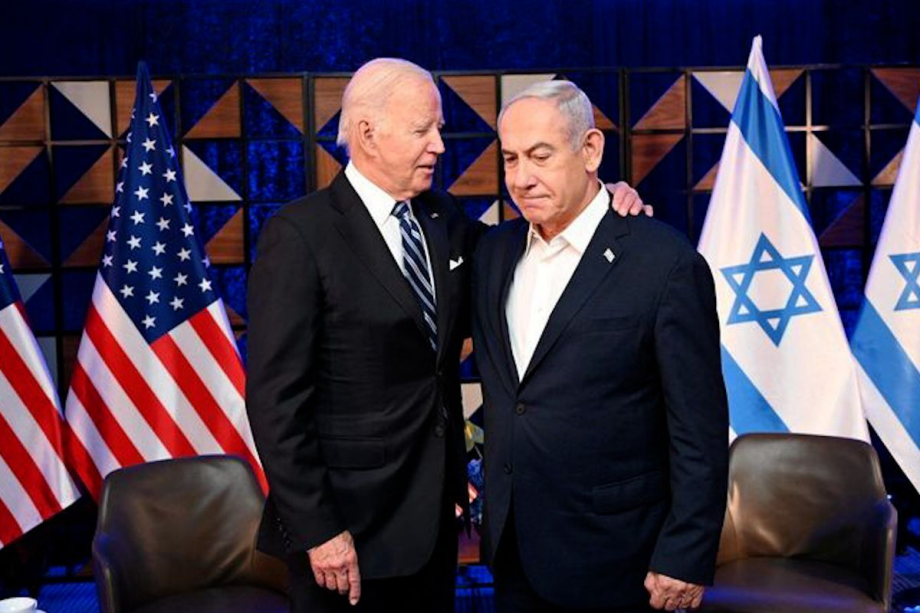
Biden never pressured Israel for ceasefire, as Israeli officials boast of exploiting US support – Middle East Monitor
The administration of former US President, Joe Biden, knowingly allowed Israel’s genocide in Gaza to continue long after it had lost any clear military objective, with senior officials in Washington privately admitting it amounted to “killing and destroying for the sake of killing and destroying”. This damning assessment, along with revelations of political manipulation, diplomatic cover-ups and sabotaged peace efforts, comes from a bombshell investigation aired by Israel’s Channel 13. Details of the investigation have been translated by Drop Site News and shared on X.
The Biden administration allowed Israel unprecedented leeway to carry out its military offensive, despite the enormous death and devastation it inflicted on Gaza. Former Israeli ambassador, Michael Herzog, made a startling admission about Biden’s support: “God did the State of Israel a favour that Biden was the president during this period. We fought [in Gaza] for over a year and the administration never came to us and said, ‘ceasefire now.’ It never did. And that’s not to be taken for granted.” His remarks encapsulated a broader sentiment that the White House gave Benjamin Netanyahu all the political space he needed to execute the military offensive, which has claimed the lives of more than 52,000 Palestinians, mainly women and children.
READ: ICC judges order prosecutor to keep arrest warrant requests confidential in Gaza probes
The investigation, which included interviews with nine current and former US officials, reveals a deeply troubling portrait of US complicity in Israel’s genocide in Gaza. Former national security aide, Ilan Goldenberg, stated that the war amounted to “killing and destroying for the sake of killing and destroying”, with no viable political alternative ever established. Despite the White House’s public messaging about restraining Israel, the internal consensus appeared to be that the administration had no intention of exerting real pressure on the Occupation state.
The Biden administration also shielded Israel from allegations of war crimes, prompting a major backlash from staffers in the State Department. Lawyer Stacy Gilbert, for example, resigned in protest after being excluded from a key report that falsely claimed Israel had not violated US arms laws. Gilbert described the report as “shocking in its mendacity”, pointing out that aid obstruction and settler attacks were well documented, yet ignored. Meanwhile, Washington continued to certify Israeli compliance with US law, ensuring the uninterrupted flow of weapons.
The investigation also revealed that Israeli Prime Minister, Benjamin Netanyahu, deliberately sabotaged hostage negotiations in order to prevent a ceasefire. US officials confirmed that Netanyahu tanked talks out of fear that a deal would compel him to halt the war.
Despite public backlash, Biden’s private approach remained deferential. Even after reportedly telling Netanyahu he was “full of shit” and hanging up mid-call, Biden ultimately maintained support. After briefly halting a shipment of 2,000-lb bombs due to concerns about their use in densely populated areas of Gaza, Netanyahu publicly accused Washington of broader arms delays. Biden, rather than escalating pressure, resumed the shipment process shortly thereafter.
The Channel 13 exposé further confirms that Biden’s reluctance to push Israel was deeply tied to a failed diplomatic initiative with Saudi Arabia. A landmark normalisation deal was in sight, but it required Israeli recognition of Palestinian statehood. These were flatly rejected by Netanyahu’s far-right coalition. Former US ambassador, Jack Lew, said he found Israel’s refusal “shocking”, while Amos Hochstein expressed disbelief that such a strategic opportunity was squandered. Sources confirmed that Netanyahu deliberately stalled negotiations in hopes that President Trump would return to office and claim the diplomatic win for himself.
These revelations lend significant weight to long-standing accusations that the Biden administration has not only provided diplomatic cover for Israel’s propaganda by repeating lies, but also actively enabled what many view as a campaign of ethnic cleansing. Critics note that Biden himself amplified false Israeli claims, such as the widely discredited allegations of Hamas beheading babies, rhetoric that helped to dehumanise a population in order to carry out genocide.
OPINION: Advisory opinions will not stop genocide
The views expressed in this article belong to the author and do not necessarily reflect the editorial policy of Middle East Monitor.