prepares

US Open 2026: Katie Boulter won’t repeat Andy Murray wedding ring mistake as she prepares for final major of season

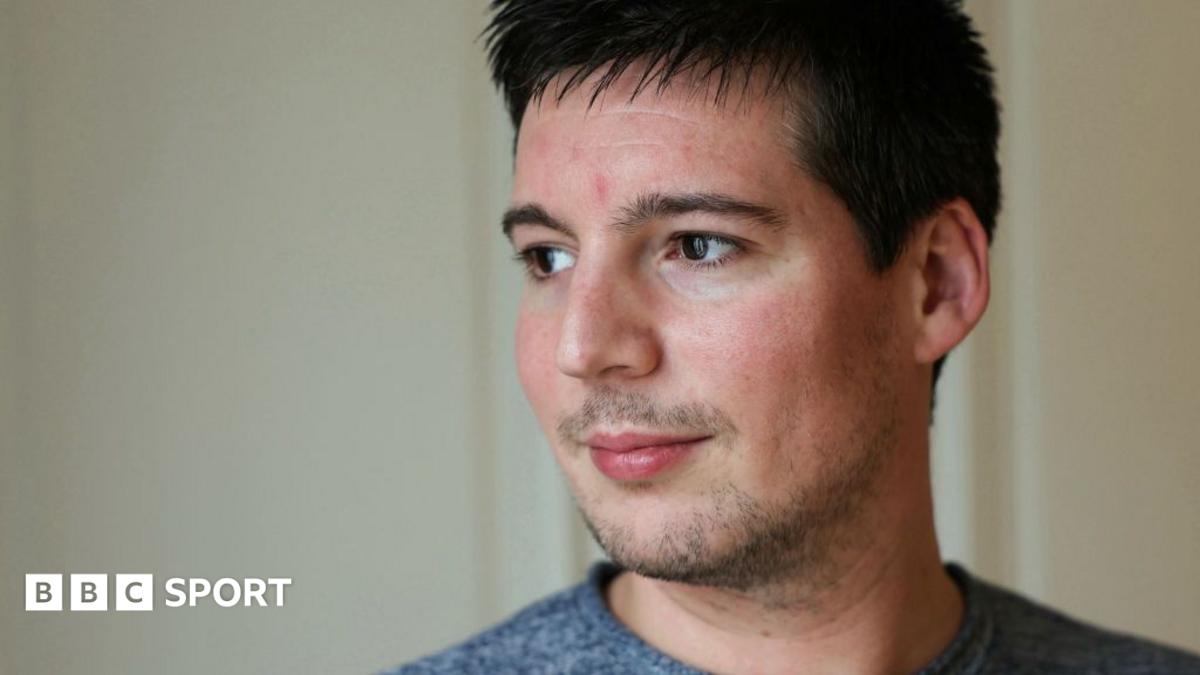
Andy Murray has long been a guiding figure for British tennis, but newly-married Katie Boulter will not be following his lead when it comes to keeping her wedding ring safe.

Three-time Grand Slam champion Murray, who married wife Kim in 2015, famously briefly lost his wedding band after playing with it tied to his shoe laces.

Murray had left his trainers – with the ring still attached – under a car to dry out after a practice session in California in 2021, and after discovering they were missing the next day, was eventually reunited with both after putting out an appeal for their return.

Boulter, who married Australia’s world number seven Alex de Minaur this summer, said she will not be making the same mistake.

“I learned from Andy. I’m not going to do that,” the 30-year-old said. “I don’t wear it. Not during matches.”

Boulter and De Minaur tied the knot at a small, private ceremony in England before holding a bigger celebration in Tuscany, Italy, in July.

Speaking to BBC Radio 5 Live, Boulter said: “One was in the UK for my nearest and dearest. It was like eight people – very, very small, very much for my grandpa.

“It was a huge contrast to the Italian wedding, which had all of our closest people, all of our friends, and was a little bit more of a party and a lot of fun.”

When it came to De Minaur’s speech, however, Boulter admitted she was “sceptical”.

“I hadn’t seen him do any preparation for the speech at all. And he was like, ‘I’m just going to wing it. It’s fine. How hard can it be?’,” she said.

“He was amazing. He was so, good. I was crying the whole time. I think I permanently cried for like three hours straight during all the speeches.”

Since their wedding, the world number 60 has wasted no time in throwing herself back into tennis before the US Open, which gets under way on Sunday.

“I actually just chose to go straight back into the conditions, go into the deep end and see what we’ve got,” said Boulter, who lost in the first round in Washington and Toronto before suffering a second-round exit in Cincinnati.

“I do think the conditions in the States are very different from the UK. I think you can’t really replicate them.

“So I felt like I’d be a little underprepared coming to the US and just getting used to the conditions again would have been quite difficult.”

Boulter’s US Open begins with a first-round encounter against American wildcard Carol Young Suh Lee, who is ranked 143rd in the world.

Source link

Iran prepares to keep economy alive as US threatens further sanctions | US-Israel war on Iran News

Amid trade embargoes, asset freezes and attacks on ships as part of a naval blockade, Washington has announced a plan to enact a new wave of restrictions on Iran, targeting its economy.

Treasury Secretary Scott Bessent said last Thursday that the United States was planning to inflict more economic damage on Tehran as early as this week. The US would apply measures that have “never been seen in the history of economic isolation on a country”, Bessent said.

Recommended Stories

list of 3 itemsend of list

A day later on Friday, President Donald Trump echoed Bessent and said that Iran would be hit hard economically.

As the memorandum of understanding (MoU) expired on Monday, Trump called on Tehran to hold up the “white flag of surrender” but insisted that he was in no rush to end the war.

Since February 2025, following the start of Trump’s second term in office, Washington has sanctioned “more than 1,000 Iran-related persons, vessels, and aircraft”, the Treasury’s Office of Foreign Assets Control (OFAC) said in May.

Remaining defiant, Iran’s authorities have said they could shift to offensive operations, and are simultaneously prepared to counter a potential ground invasion.

According to Mohammad Reza Farzanegan, professor of economics of the Middle East at Philipps-Universitat Marburg in Germany, the naval blockade creates a new situation in which traditional sanctions packages are combined with the use of military force to generate a physical shortage of goods in the Iranian economy.

“This is an additional burden that raises new questions for policymakers in Tehran: Should they choose a deal whose terms are dictated by the Trump administration, or should they continue the armed conflict to break the blockade of the ports? It currently seems that Iran is leaning toward the second option,” he told Al Jazeera.

Farzanegan said that for the US to achieve its goals, namely changing the behaviour of the Iranian government, it should also “open a diplomatic exit and offer it as an option”.

If armed conflict does fully resume, he said “the costs will not be confined to the target of sanctions; the global economy will also pay a price” through continued disruptions in the Strait of Hormuz and attacks across the region.

Iran emphasises MoU commitments

Meanwhile, talks have stalled in finding a way out of the war, although Iran’s negotiations have been ongoing with Oman and other mediators over a potential temporary arrangement in the Strait of Hormuz, where one-fifth of the global oil and natural gas used to flow before the war.

Iran’s parliament speaker and top negotiator, Mohammad Bagher Ghalibaf, told state media on Tuesday that the Strait of Hormuz would remain closed until the US meets the conditions of the now-expired MoU.

“Let me state clearly: Until the commitments made by the United States in the memorandum of understanding, including the lifting of the blockade, the release of frozen assets, the lifting of oil sanctions, the end of threats and military operations on all fronts, and other conditions to which America agreed in the memorandum, are implemented, the strait will not be opened,” Ghalibaf said.

With tensions soaring before the war, Iran’s government delegated some authorities to border provinces to import essential goods and build up inventories.

To survive the blockade over recent months, Iran has also focused more on rerouting imports of food, consumer goods and industrial inputs through land borders with Pakistan, Turkiye and others, as well as through the Caspian Sea with Russia and Central Asia.

During the brief ceasefire period established under the MoU, the blockade was lifted for several weeks in late June and early July, enabling the rapid export of oil stored on board supertankers and giving the military time to regroup.

But Iran’s oil exports have stopped once again since the breakdown of the deal, and US and Israeli authorities have discussed disrupting Iran’s inland imports to ramp up the pressure.

The mounting pressure has only exacerbated Iran’s structural economic issues, rooted in decades of domestic corruption and mismanagement, as well as sanctions and international isolation.

For the country’s roughly 90 million people, the consequences include persistent inflation, insecure and poorly paid work, declining purchasing power and growing uncertainty about the future.

Against this backdrop, President Masoud Pezeshkian’s administration this week named stabilising markets, protecting livelihoods and strengthening national resilience as its priorities for the next two years.

However, Mahdi Ghodsi, a senior economist at the Vienna Institute for International Economic Studies, said Iran’s prolonged stagnation over most of the past 15 years suggested that government policy had not been aligned with those objectives.

He told Al Jazeera that to guarantee sustainable economic growth, the Islamic Republic would have to reduce confrontation with the US, the West and Israel while pursuing meaningful domestic reforms that would involve moving away from coercive social controls to restore some public trust.

“Without both external de-escalation and domestic political reform, the government may be able to slow the deterioration in living standards and market conditions, but it is unlikely to deliver durable stability, stronger livelihoods or genuine national resilience,” Ghodsi said.

Energy in the crosshairs

US media outlets have reported that Washington’s forthcoming measures against Iran could include sanctioning additional independent Chinese refineries – known as “teapots” – that buy or process Iranian crude.

OFAC has already imposed secondary sanctions on smaller China- and Hong Kong-based entities processing Iranian oil money, but it could go a major step further by following through on its threat of designating larger Chinese banks if they touch Iran-linked funds.

That move risks prompting a response from China, at a time when Washington is concerned about curtailed exports of critical minerals.

Economist Ghodsi said energy remained the most powerful source of US leverage over Iran, particularly after US and Israeli attacks damaged the country’s infrastructure.

“If the blockade persists into autumn and winter, the country risks severe supply shortages. Iran was already struggling with electricity, gas and water imbalances before this shock; further constraints would mean deeper rationing and temporary shutdowns in industry to preserve household supply,” he said.

The government has also reduced some subsidised petrol quotas for personal vehicles and has been considering raising fuel costs – after an earlier increase last December. Necessary but costly fuel imports amounting to several billion dollars per year have stopped as a result of the war and blockade.

Ghodsi said that is why the US would likely target Iran’s external energy trade, involving maritime transport, shipping services, insurance, payments and the foreign buyers and intermediaries that keep those flows operating.

“In practice, that means tighter enforcement against entities in China and elsewhere that facilitate sanctioned energy transactions, together with closer scrutiny of trans-shipment and payment routes through neighbouring countries and other trade partners,” he said.

Source link

Trump-linked oil firm prepares to drill in Greenland but lacks permits

A demonstrator (C) holds a sign that reads “Make America go away” as others wave flags during a protest outside the US consulate in Nuuk, Greenland. File Photo Oscar Scott Carl/EPA

Aug. 8 (UPI) — Greenland has issued a “strong warning” to an American oil company linked to President Donald Trump, as it prepares to drill on the territory despite lacking proper permits.

Local residents in the southeastern region of Jameson Land recently spotted a barge carrying drilling equipment, The Guardian reported.

The equipment belongs to Greenland Energy, a Texas-based oil company whose chairman, Larry Swets, is part of Trump’s inner-circle.

Two days after a rebuke from the Greenlandic government, the president posted on Truth Social an AI-generated image showing a giant Trump, looming over the island, with the words, “Hello, Greenland!”

Greenland Energy officials said they plan to spend $60 million to drill two wells in Jameson Land, the Guardian reported. The company believes there could be as much as $1 trillion of crude in the region.

“The Department of Industry and Minerals can, in connection with the above, state that the licensee did not have the necessary approvals from the mineral resources authority in place before initiating this operation,” Greenland’s government said in a statement.

The statement added the government was sending a “strong warning” to the operators behind the move.

Due to environmental concerns, the Greenlandic government has not issued oil licenses since 2021.

But Greenland Energy acquired exploration rights previously held by British company 80 Mile. In exchange for funding exploration, Greenland Energy would retain a majority of the proceeds from the venture, the Helsinki Times reported.

Transferring the rights still requires government approval, which Greenland Energy has not yet managed.

“The approval has since expired and has not currently been renewed, but is under processing,” the government said in the statement.

A spokesperson for Greenland Energy said the company has 300 containers of drilling equipment ready to be shipped from Canada in September, with the goal of launching operations in earnest in October, the Guardian reported.

Trump has, for years, been adamant in his desire to annex Greenland. He has claimed the United States needs it “for defense.”

In January, he told European leaders that one of the reasons he renewed his push to own the territory was because he did not win the Nobel Peace Prize.

Trump has been rebuffed by officials in both Denmark and Greenland.

Source link

Teen Mom alum Nathan Griffith, 38, looks DECADES older in grim new mugshot as he prepares for prison release

TEEN Mom alum Nathan Griffith looks like he’s aged quickly during his latest stint in prison.

In his latest mugshot, former MTV star Nathan, 38, has deep wrinkles in his brows and a long beard as he serves time behind bars in Nevada after he was arrested twice for domestic violence in the past few years.

Nathan Griffith is serving a four-year sentence in a Nevada prison Credit: Nathan Griffith/Instagram
Nathan was recently granted parole Credit: Southern Desert Correctional Center

As The U.S. Sun previously reported, he was sentenced to four years in prison in May 2025 after he was charged with domestic battery in 2023 and again two years later.

He was busted for strangling his sister Heather in the first incident, then charged with assaulting his ex-girlfriend Anastasia and violating his probation in the second.

Nathan had a hearing to request an early release on parole in April, The Ashley’s Reality Roundup first reported.

“I have failed in my decision-making,” Nathan said during the hearing, according to the outlet.

“I have failed in numerous of things I have done in life. And I have failed as a human. Words cannot express how regrettable I am in for my decisions and actions.

“Over the last few years, I became so pathetic that I didn’t care about myself or anything, not even my life.

“I’m sure the parole board has received a few letters describing who I was in my former years, of how great of a person I was.

“We can sit here listening to the many marvelous things I have done and accomplished, or how nice, kind and charitable I am.”

Most read in Entertainment

Nathan is dad to Jenelle Evans’ son Kaiser Credit: Nathan Griffith/Instagram
Nathan was once engaged to Jenelle, but they split soon after Kaiser was born Credit: Twitter

“But the attributes and accomplishments did not land me here in prison.

“My lack of insight and compassion, and selfishness has put me here. I was hurting so intensely inside that I couldn’t manage my pain nor myself.”

He also admitted he struggles with alcoholism, The Ashley added.

As The U.S. Sun reported, he checked into rehab in 2024, though sobriety did not seem to stick.

Nathan is actively working to change his life in prison, he claimed during the parole hearing, completing 11 education certificates, including a trauma program and anger management course.

His parole was approved in July, though he does not have to legally be released until November.

Nathan is the ex-fiancee and second baby daddy of Teen Mom star Jenelle Evans, with whom he shares son Kaiser, 12.

Nathan is still married to May Oyola after their 2022 wedding, despite separating for a brief time in 2025.

In 2021, he told The U.S. Sun he struggles with PTSD and other mental health issues after serving time in the United States Marine Corps.

Source link

China prepares as Typhoon Bavi leaves Taiwan | News

NewsFeed

Typhoon Bavi brought heavy rain and powerful winds to Japan’s southern islands while skirting Taiwan, where rough seas, fallen trees and localized damage were reported.

Despite the storm, residents in Keelung ventured out to markets as Bavi weakened while tracking toward China’s east coast, where landfall is expected on Sunday.

Source link

Iran prepares to bury slain leader Khamenei after mass funeral processions | US-Israel war on Iran News

The late supreme leader will be buried in his hometown, the eastern holy city of Mashhad.

Huge crowds have gathered in the eastern holy city of Mashhad as Iran prepares to bury its slain Supreme Leader Ayatollah Ali Khamenei.

The burial in Khamenei’s hometown on Thursday follows a week of mass funeral processions, rallies and mourning ceremonies held across Iran, including a day dedicated to neighbouring Iraq.

Recommended Stories

list of 4 itemsend of list

There were marathon ceremonies to project strength and unity amid the US-Israel war on Iran, which began with strikes by the two countries on Tehran that killed Khamenei and several of his relatives on February 28.

Despite a promised pause in US attacks, Khamenei’s burial ceremony comes after the US and Iran traded attacks for a second day.

After massive processions in Iraq’s holy cities of Najaf and Karbala, Khamenei’s remains arrived on Thursday at Mashhad international airport, footage shared by the official news agency IRNA showed.

Iraq’s paramilitary group Popular Mobilisation Forces (PMF), or Hashd al-Shaabi, said on Wednesday more than 2.3 million people took part in Khamenei’s funeral procession in Najaf alone.

Khamenei’s remains, along with those of four family members killed alongside him, were also paraded through Tehran and the Shia clerical centre of Qom.

The Tasnim news agency and the broadcaster Press TV reported that millions of mourners attended the funeral procession in Tehran, with Iranian officials describing the event as the “largest public gathering in the country’s modern history”.

Crowds marched through Mashhad on Thursday morning, waving Iranian flags, photographs of Khamenei and placards with revolutionary slogans.

The mourners also chanted slogans demanding vengeance against US President Donald Trump for his role in the assassination.

“I swear by the blood of the supreme leader, Trump, we will kill you,” they shouted, with women holding up placards reading “Kill Trump”.

The incumbent supreme leader, Mojtaba Khamenei, has been notably absent from the processions. He has not yet appeared in public since taking over days after his father’s assassination.

Officials have said he was wounded in the air strikes that killed his father, but the severity of his injuries remains unclear.

Iranian state television reported that Khamenei’s burial ceremony in Mashhad would be pushed to 2:30pm local time (11:00 GMT) as larger-than-expected crowds had delayed the funeral processions in Iraq.

Reporting from Tehran, Al Jazeera’s Resul Serdar Atas said Iranian officials had confirmed that the overnight US attacks on the Tehran-Mashhad railway line, which have put it out of service, had not delayed the burial ceremony.

Mohammad Mohammadi Golpayegani, head of the late leader’s office, said Khamenei had requested to be buried in Mashhad, near the shrine of Imam Reza, a descendant of the Prophet Muhammad.

Source link

South Korea prepares Naro spaceport for private launches

The erector is lowered from the Korea Space Launch Vehicle-II (KSLV-II), also called Nuri, on the launch pad at Naro Space Center in Goheung, South Jeolla Province, southwestern South Korea. Photo by YONHAP / EPA

June 29 (Asia Today) — South Korea’s space agency released guidelines Monday for private companies seeking to use the Naro Space Center, beginning preparations for the country’s first dedicated commercial launch facilities.

The Korea AeroSpace Administration said the guidelines outline a four-stage consultation and approval process, methods for calculating fees and safety and security requirements.

They also establish procedures and fee standards for private companies seeking to use testing facilities at the space center in Goheung, South Jeolla Province.

The government plans to open the commercial launch site in two stages, beginning in the third quarter of 2027 and expanding it in the first quarter of 2031.

The first stage will include a mobile launch platform, propellant supply systems and launch control equipment.

The second stage will add an assembly and testing facility where companies can prepare launch vehicles and test payloads.

The expanded infrastructure is expected to accommodate commercial launch vehicles and eventually support reusable launch systems.

Companies seeking to conduct a launch at Naro must apply at least four months before their proposed launch date.

They will then undergo four stages: preliminary consultation, review and authorization, launch operations and post-launch procedures.

The guidelines also establish a system for calculating usage fees based on each company’s launch requirements and the facilities and services it uses.

An agency official said the guidelines were prepared to help private companies use the center systematically before the commercial launch site opens and South Korea continues launches of its domestically developed Nuri rocket.

The official said the government will seek to simplify procedures based on companies’ needs and establish reasonable usage fees.

South Korean launch companies have relied on overseas spaceports and sea-based platforms because the country has lacked a land-based commercial launch site available to private operators.

Opening the Naro facilities could allow companies to conduct more of the development process in South Korea, from ground testing to commercial launches.

“Opening the Naro Space Center to private use goes beyond simply granting access to a government facility,” said Taeseog Oh, administrator of the Korea AeroSpace Administration.

“It is meaningful because it strengthens the support system for private companies in the space industry,” Oh said. “We will continue providing support so a private-sector-led commercial space ecosystem can take root in a stable manner.”

The Naro Space Center has primarily supported government launch programs, including the Naro rocket and Nuri, South Korea’s first domestically developed space launch vehicle.

Nuri’s fourth launch took place in November 2025, with private company Hanwha Aerospace assuming a larger role in rocket production and assembly under a government technology-transfer program.

The opening of the commercial facilities is expected to further shift South Korea’s space industry from a government-led model toward one in which private companies develop and operate launch services.

The guidelines released Monday are scheduled to be submitted to the Korea Aerospace Research Institute’s board for approval on July 8 before being registered as internal operating rules.

— Reported by Asia Today; translated by UPI

© Asia Today. Unauthorized reproduction or redistribution prohibited.

Original Korean report: https://www.asiatoday.co.kr/kn/view.php?key=20260629010010286

Source link